Page 21 of 33

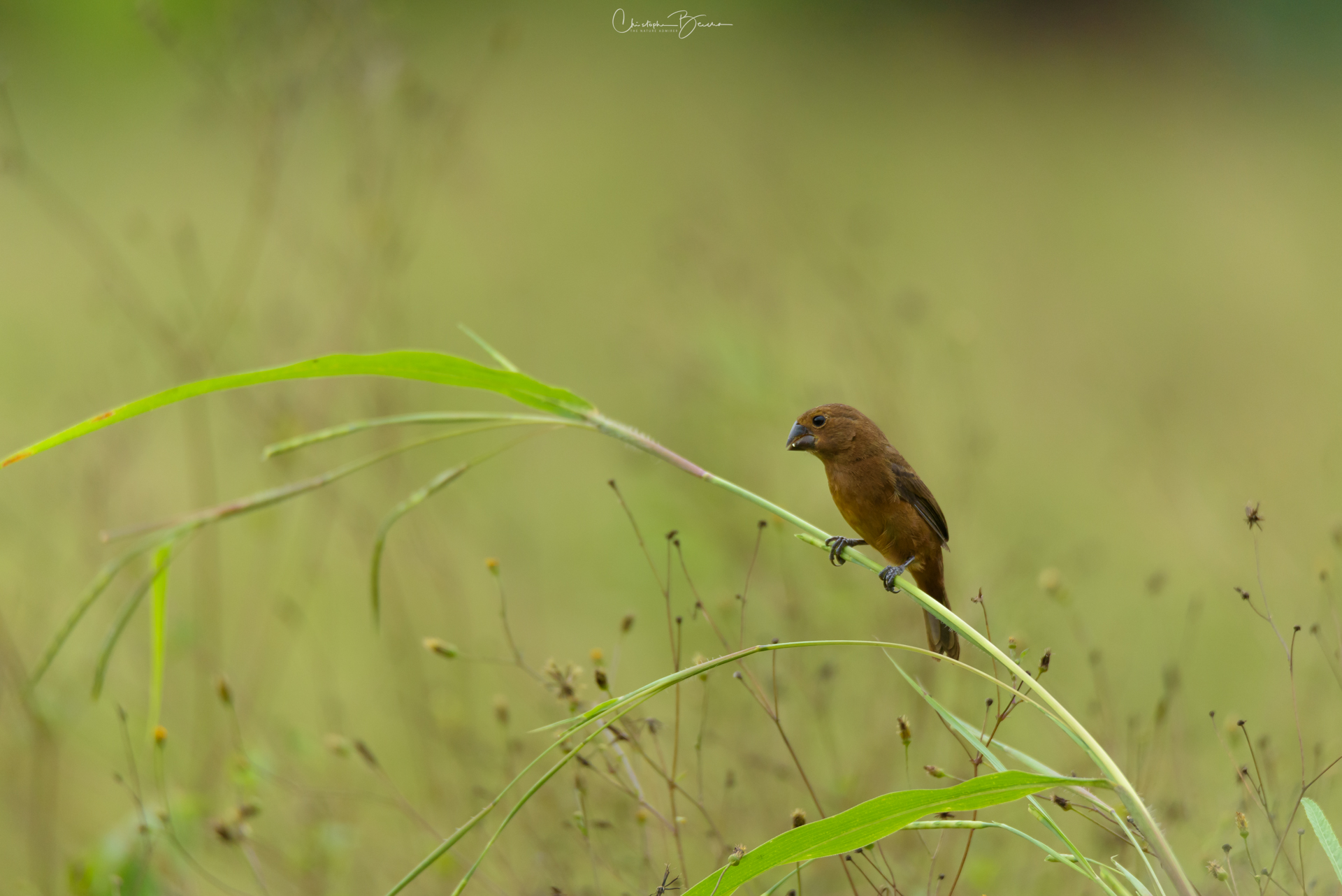
Nicaraguan Seed-Finch (Sporophila nuttingi)

The Nicaraguan Seed-Finch is one of Costa Rica’s biggest finches species, only surpassed by the Wedge-tailed Grass-Finch, which is even rarer and has a longer tail. It looks similar to the Thick-billed Seed-Finch, with the male being uniformly black and the female uniformly brown, albeit with a bigger size. Their bills are undoubtedly specialized for breaking down seeds and the male’s bill is particularly conspicuous, given its pink coloration. In Costa Rica, it can be found in lowland areas of the northern area, near the border with Nicaragua, and in a thin strip along the eastern coast of the Caribbean.
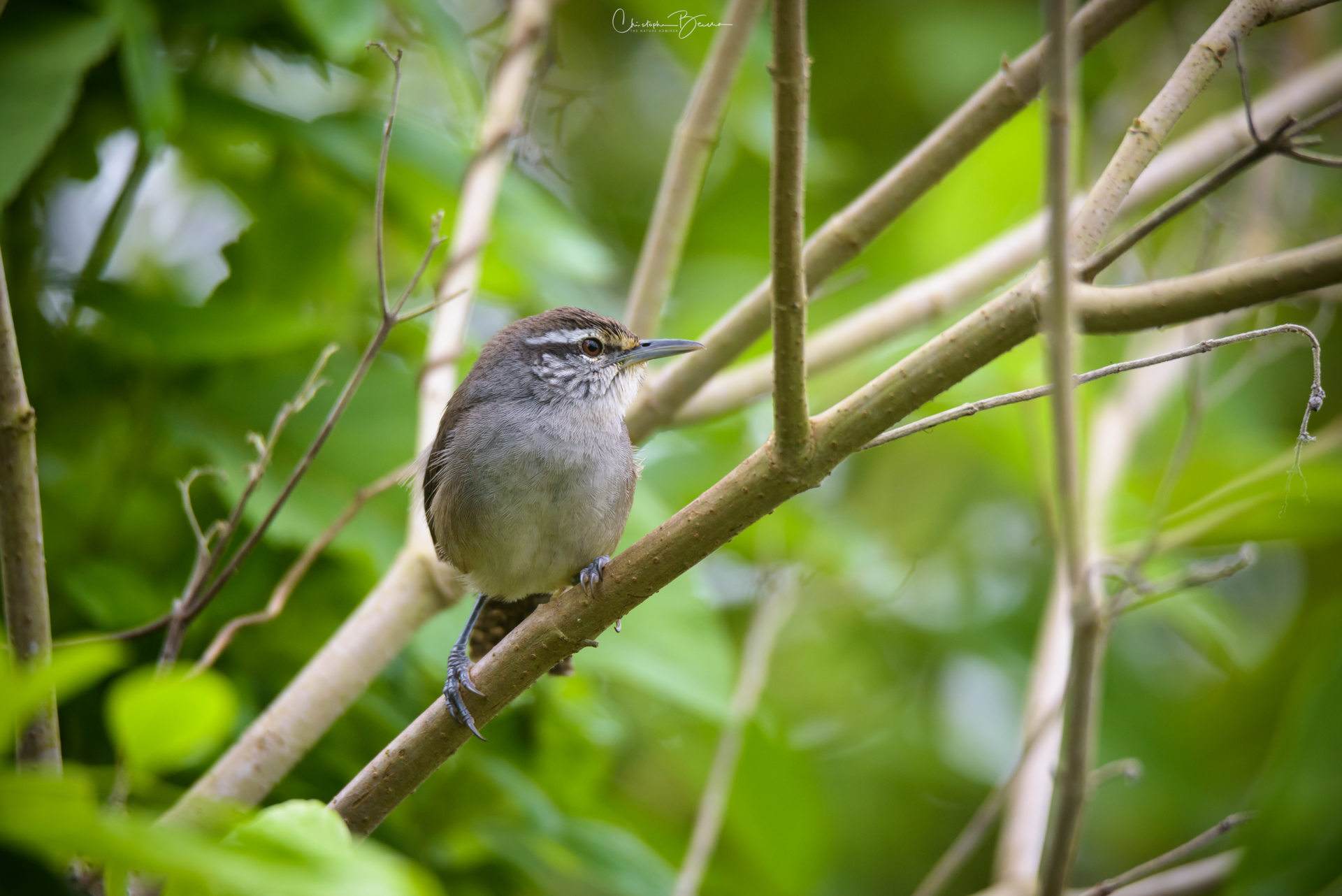
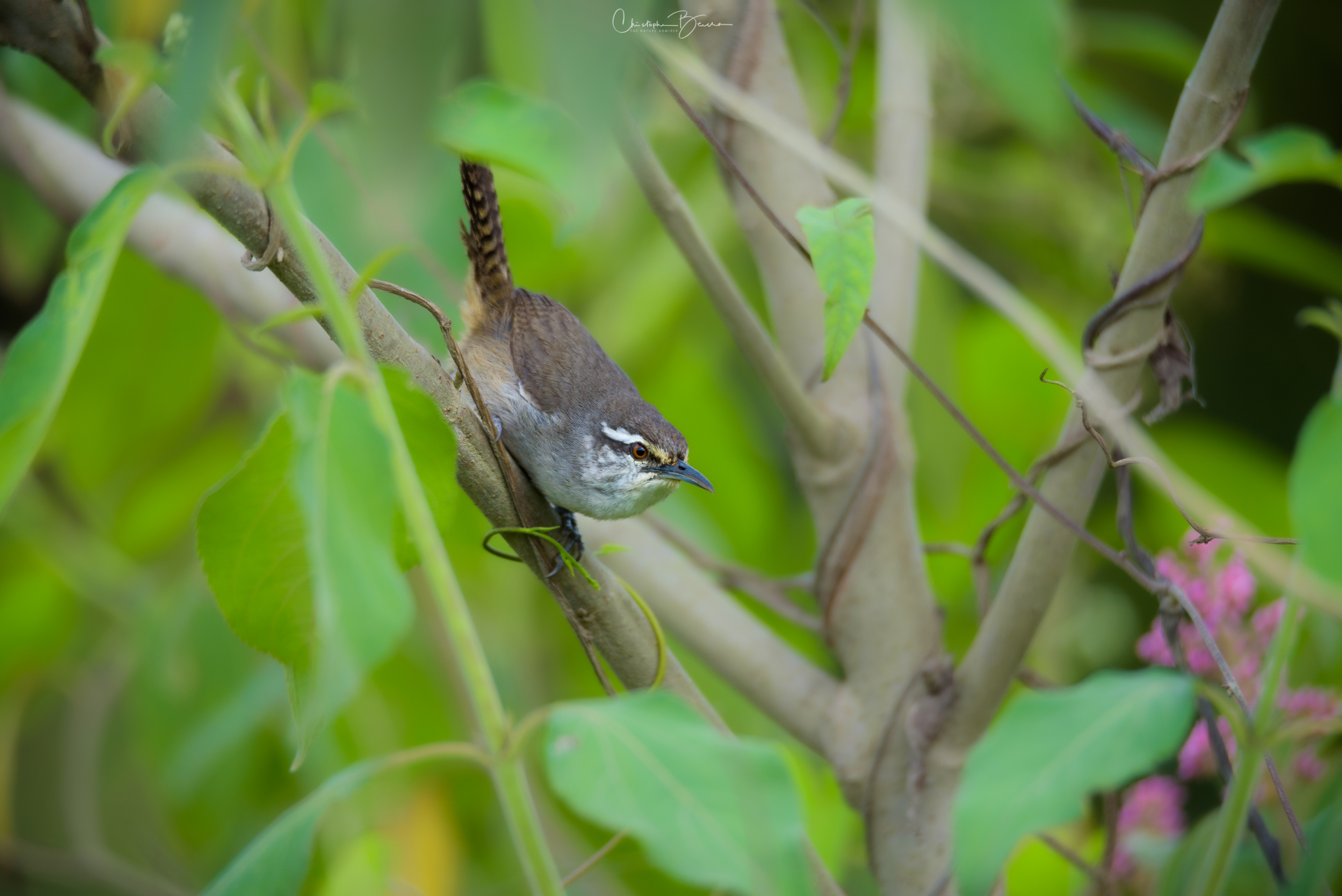
Cabanis’s Wren (Cantorchilus modestus)

A recent split from the Plain Wren, all three species held this name because of the lack of most field marks when compared with most other wrens. Along the Cabanis’s which can be found in the northwest region of Costa Rica, the Canebrake Wren occupies the Eastern portion (Caribbean), and the Isthmian Wren is found in southern region of the country. These small birds have a brown eye with white supercilliary, brown upperparts with the tail showing black stripes. The underparts are grayish to white. Like most wrens, the Cabanis’s is an avid songbird. Its song is complex, consisting of a variety of high notes and chirps that give away their presence. Even so, they are difficult to locate as their main habitat is dense forest edges, where they jump from branch to branch, camouflaged by the leafs and branches of bushes and trees.

Tropical Pewee (Contopus cinereus)

The Tropical Pewee is very similar to the Wood-Pewees (Eastern and Western), however the Wood-Pewees are migratory birds, found in Costa Rica only during two periods, August to November when they pass through in their journey to South America, and March to May when they return to the Northern hemisphere. They are difficult to differentiate, as their appeareance is very similar, however the Tropical is slighly smaller and has a yellowish belly, while the Wood-Pewees have a gray to white belly. Both Eastern Wood-Pewee and Tropical Pewee have a yellow lower mandible with dark tip, while the Western Wood-Pewee only has a small portion of the lower mandible being yellow. The Tropical Pewee has a darker crest than the Wood-Pewees as well.

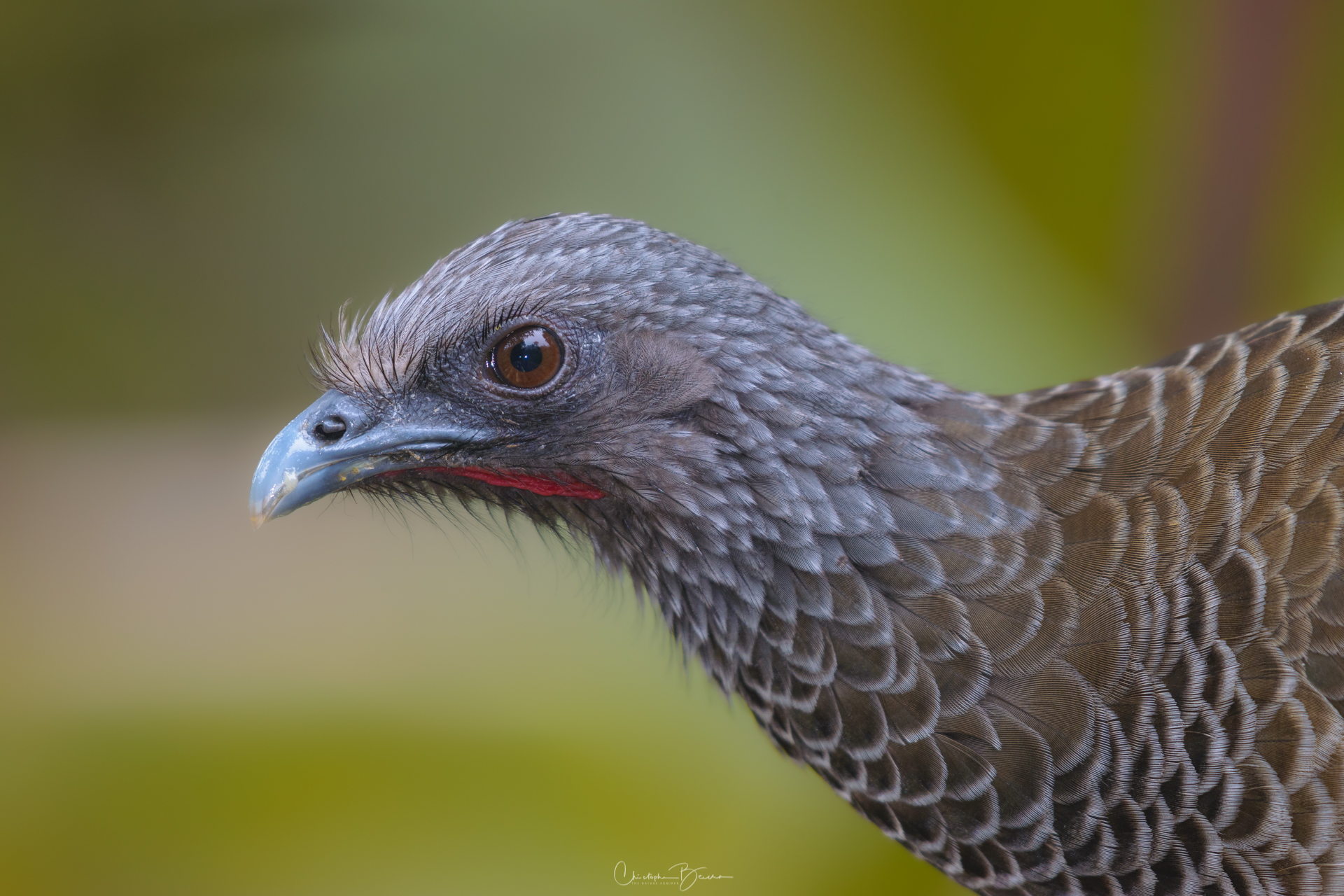
Colombian Chachalaca – Ortalis columbiana

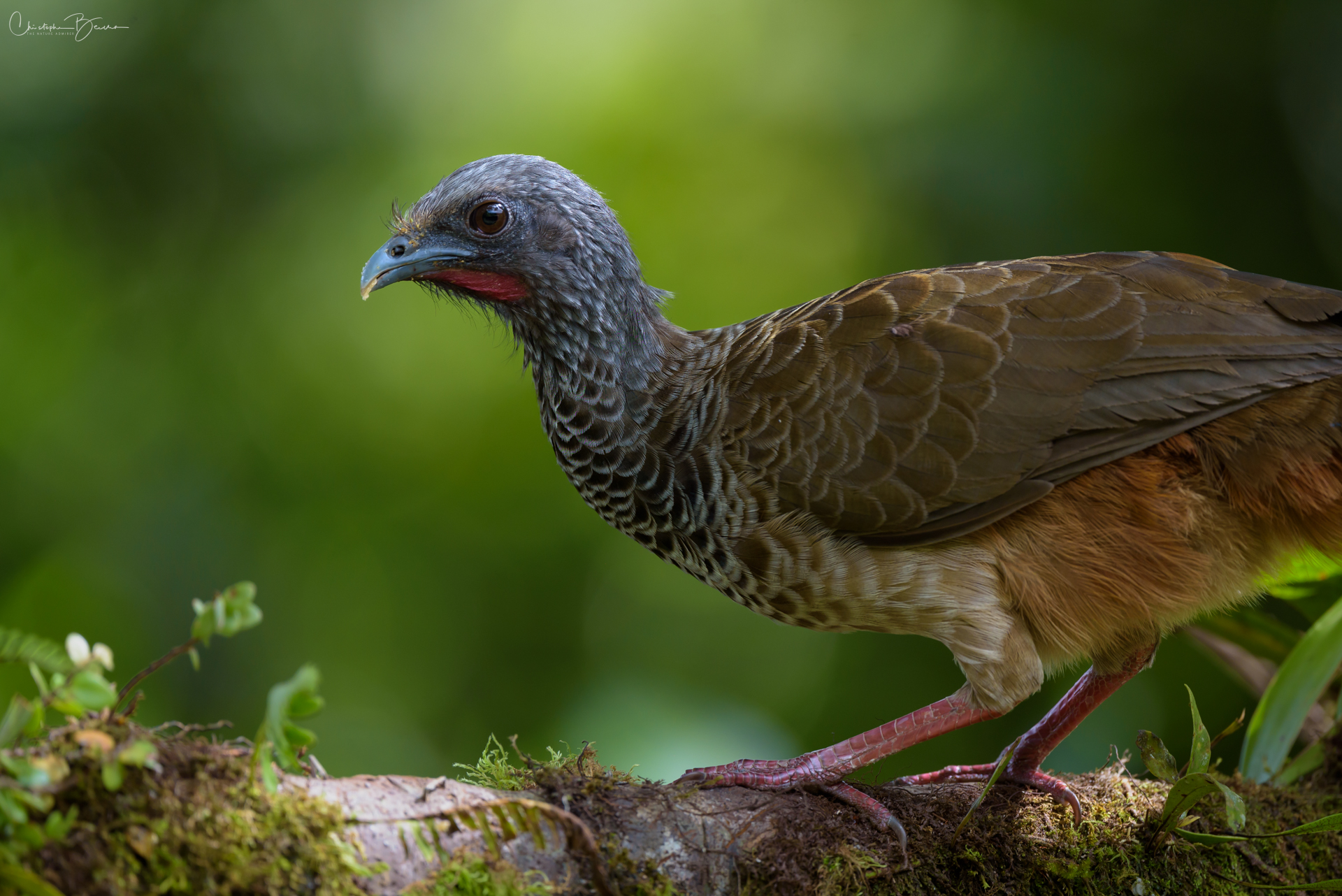
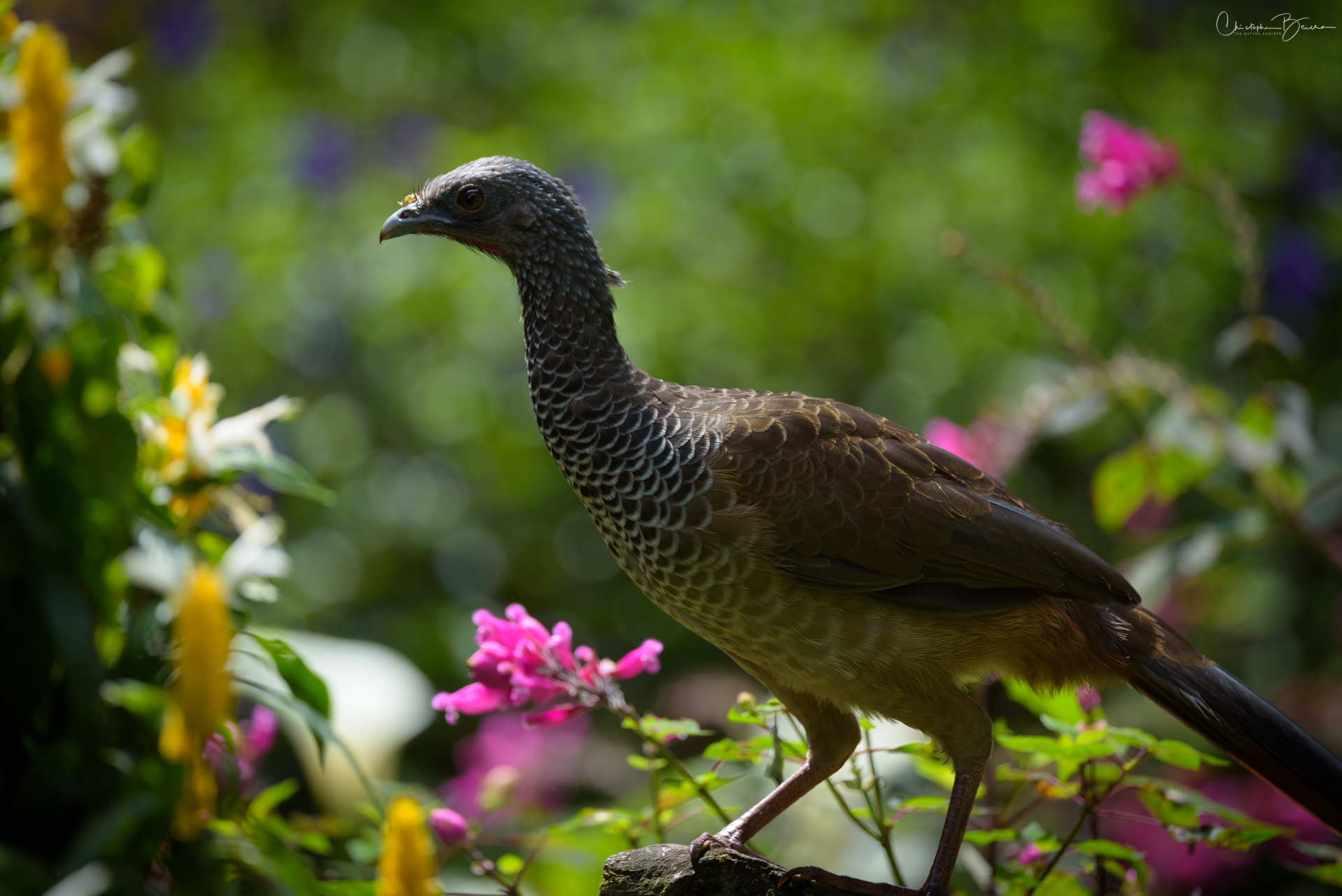
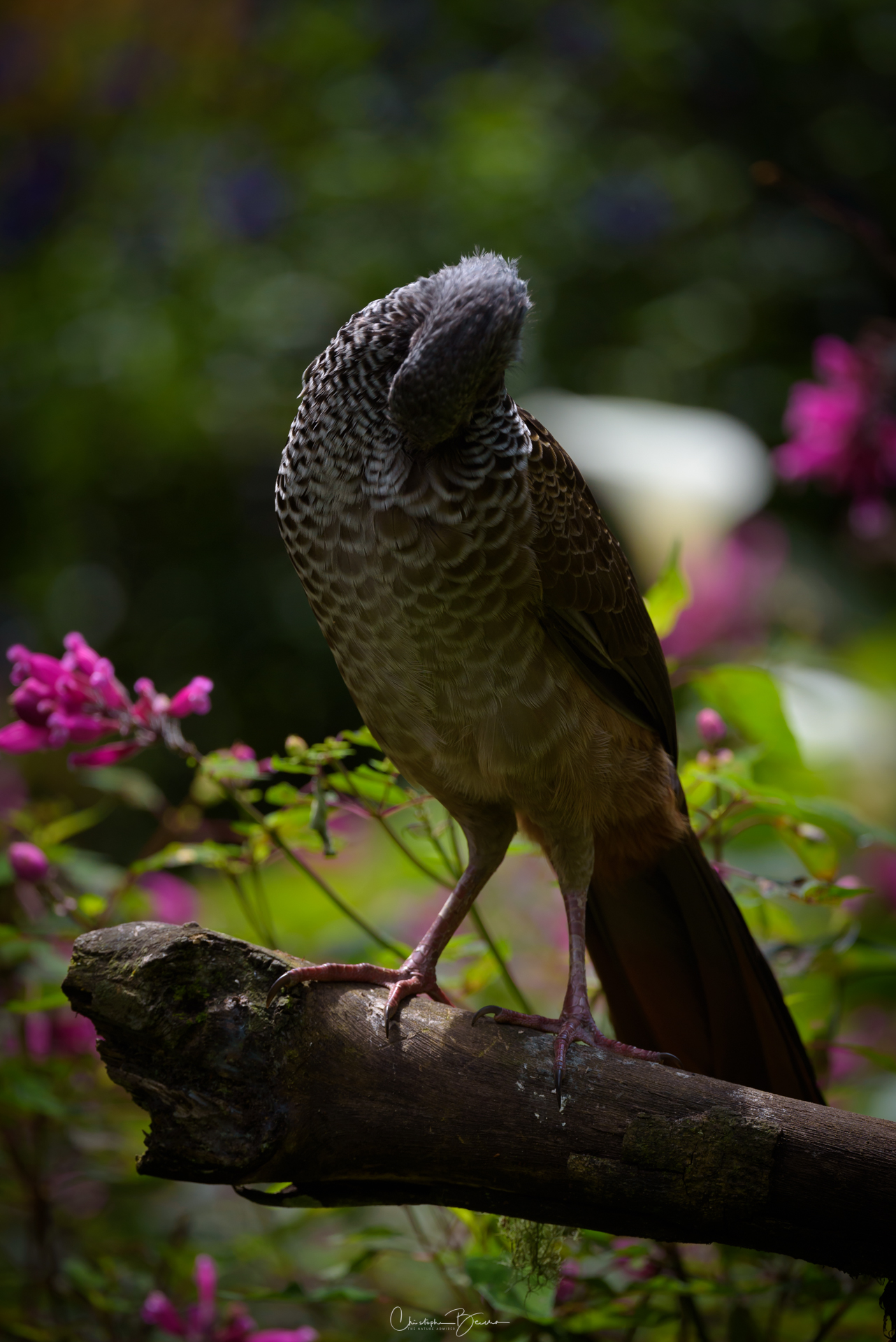
Most Guans and Chachalacas are big arboreal birds, and can show great agility when jumping from branch to branch on the top of the canopy some 20 or 30 meters above the ground. They perch to eat fruits and also to roost in the night. Most species avoid the ground but come down sometimes in search of fruits and seeds. The Colombian Chahcalaca is found in the Andes Region, having brown coloration but with an scaled look thanks to gray tips of the feathers’ barbs. Their head and beak is gray, and it has a bright red dewlap that is folded and inconspicuous, although it can hang freely and thus be seen clearly when the bird is high in the trees. The legs are also red. While shy of people, this species will come to fruit feeders and stay there undisturbed unless you get too close.

Band-tailed Pigeon (Patagioenas fasciata)

The Band-tailed Pigeon has an overall dull coloration, with gray upperparts and purplish underparts and head. A white band on the nape, iridescent green patch on the back of the neck, red eye ring and yellow bill distinguish it from any other pigeon or dove in Costa Rica. They inhabit the highlands, sharing habitat mostly with the Ruddy Pigeon, but the latter has an entirely different body color, hence they should not be easily confused.

Hairy Woodpecker (Picoides villosus)

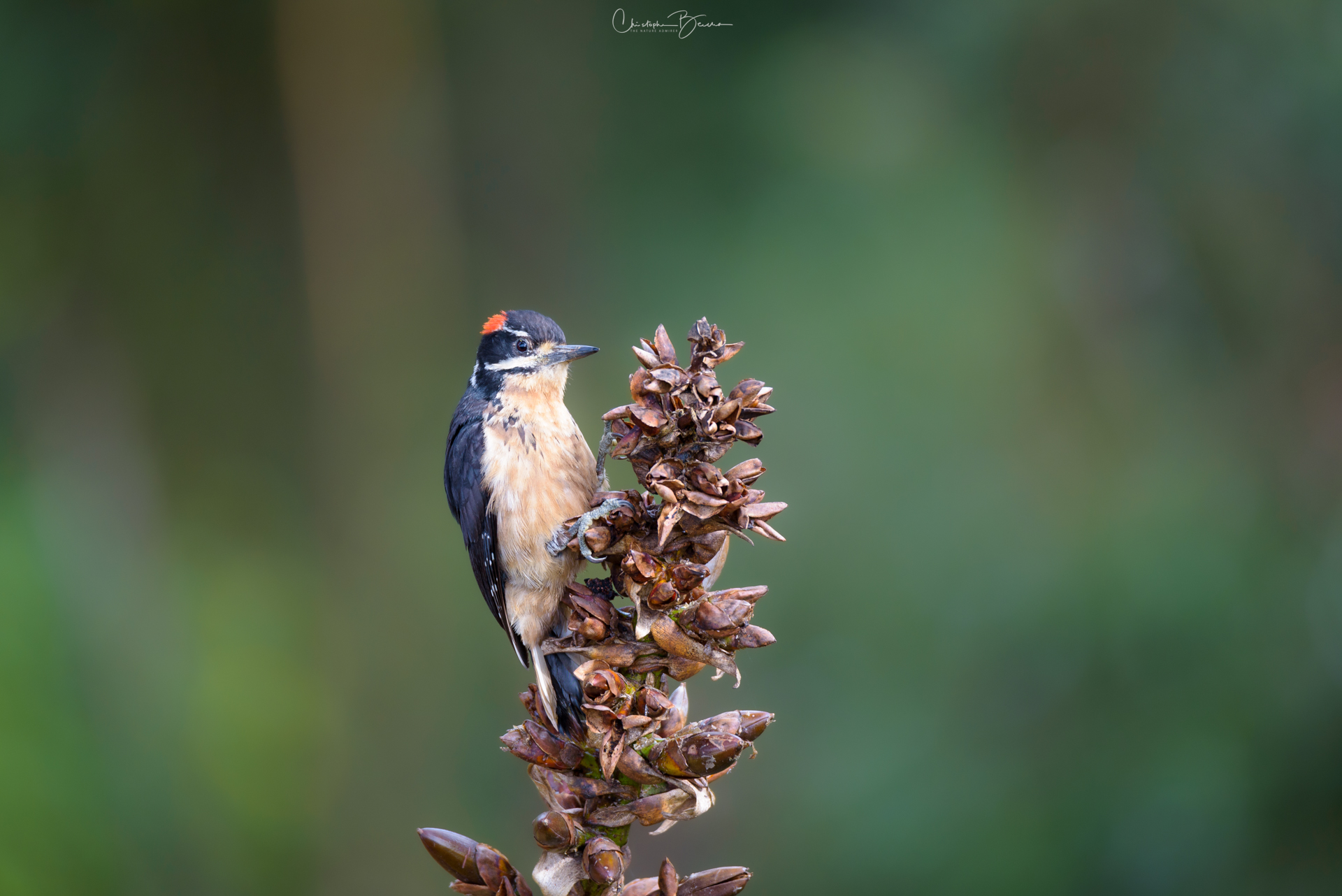
The Hairy Woodpecker is a common inhabitant in Costa Rica’s highlands. It is the same size as the Black-cheeked Woodpecker (which only inhabits the Caribbean lowlands), and hence smaller than the Acorn Woodpecker (which does occur on the highlands). It resembles both species by having black wings, but the face patterns is very different to them, with black and white stripes and just a small reddish patch on the nape. They also lack the barring and streaking that the Black-cheeked and Acorn show on their underparts. Normally woodpeckers are seen, well… pecking at wood, but we saw this individual pecking at the ground, which seemed pretty unusual. It was also totally unconcerned with our presence; a whole group of 15 people could get to within two meters and it would still not fly away. That’s when I decided to follow it around, trying to get a close up portrait, and this was the result.

Torrent Tyrannulet (Serpophaga cinerea)

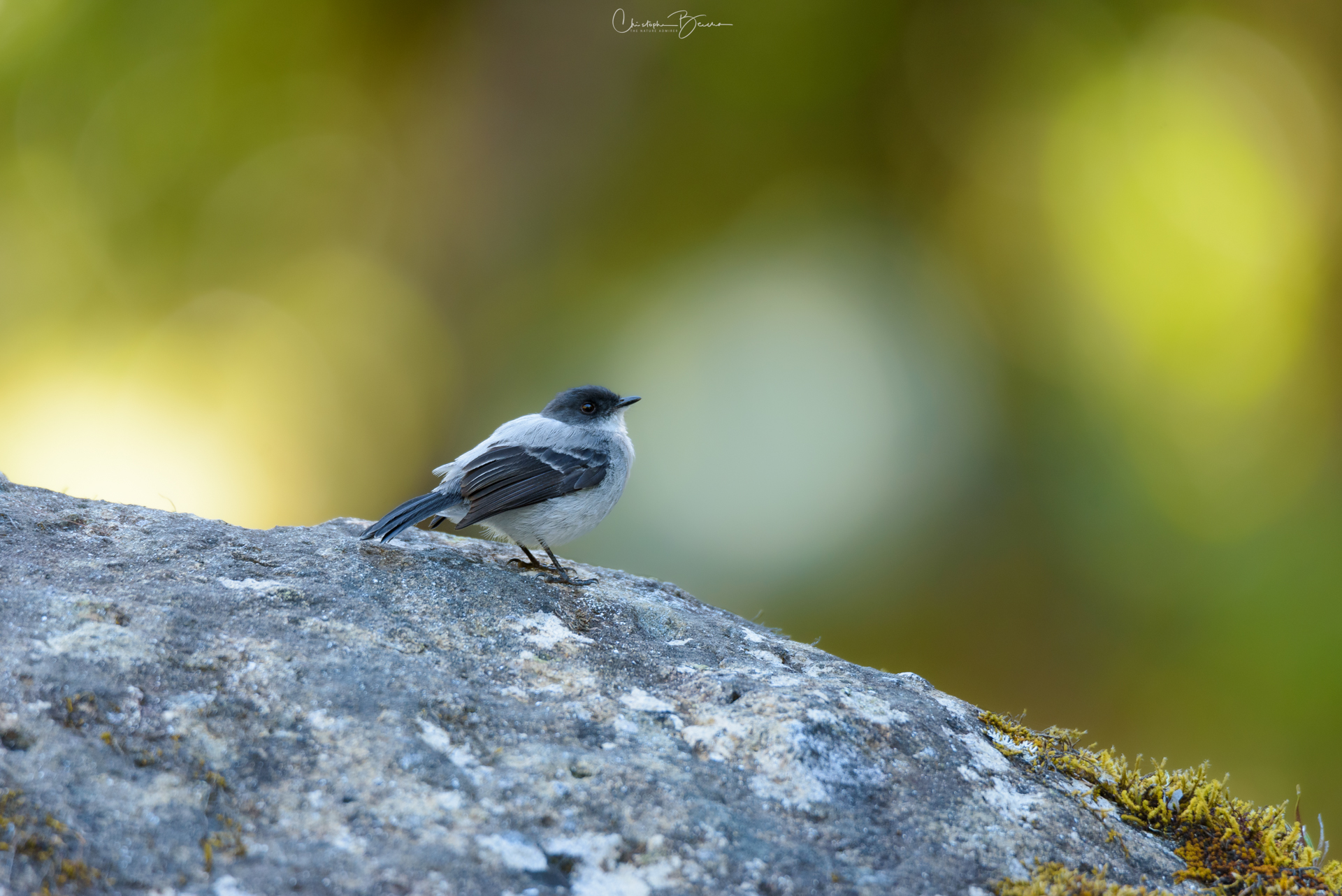
The Torrent Tyrannulet is a very small flycatcher; few other flycatchers are smaller like the Black-headed Tody-Flycatcher. The Torrent Tyrannulet inhabits river and torrents in the highlands of Costa Rica, which commonly feature rocks in and alongside the stream. It is rather dull, with overall white to gray body but black wings, tail and face. They catch insects in the air using acrobatic motions. They usually perch on rocks instead of branches, which means they are found close to ground or water level. While spooked easily by an approaching person, standing or sitting motionless for a while allows them to become used to a person’s presence, resulting in natural and even curious behavior. One such time, a bird perched on branch at a distance where my lens would not even focus (less than 2.2 meters away), and would look at me, like it was trying to decipher what I was.

Purple-throated Mountain-gem (Lampornis calolaemus)

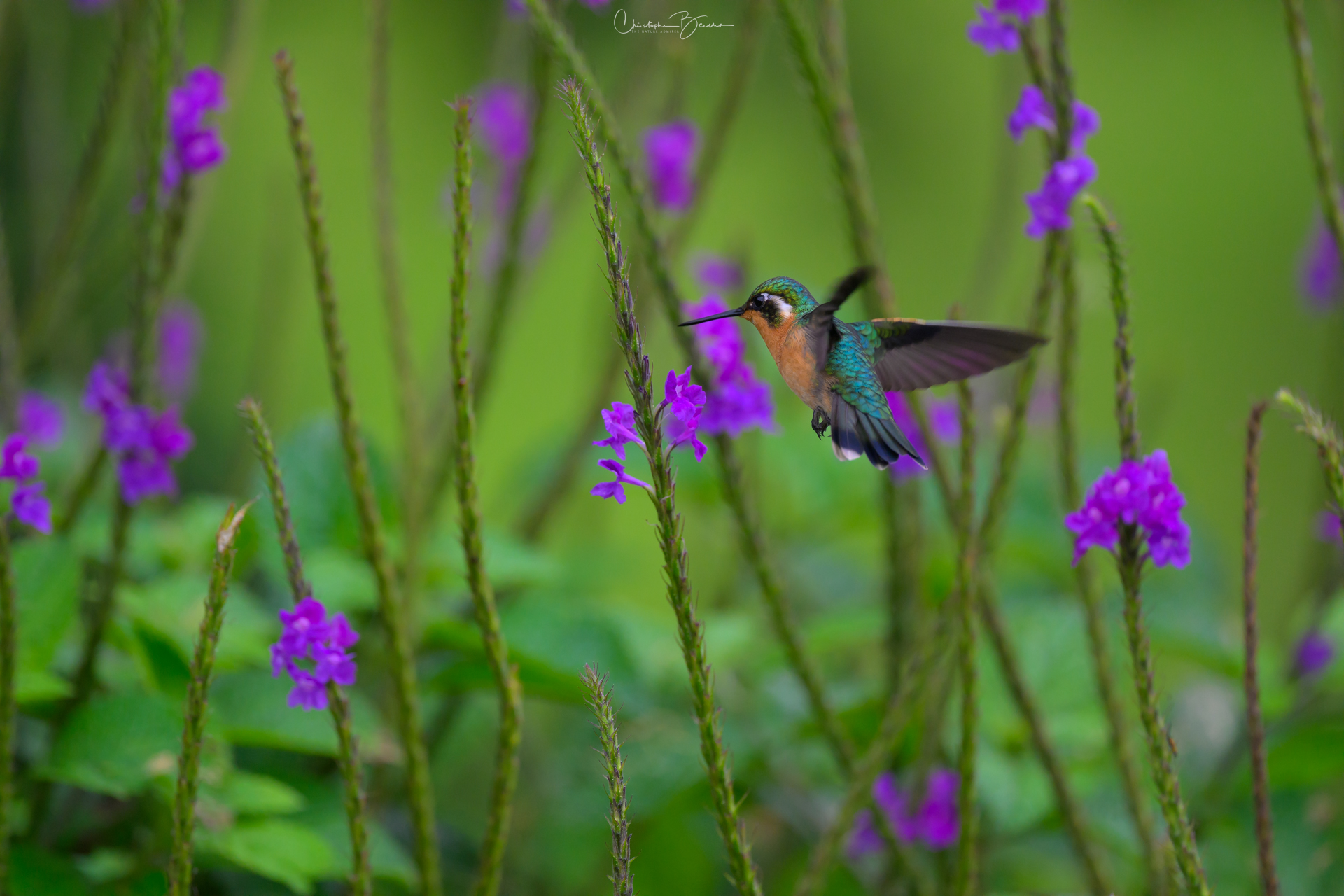
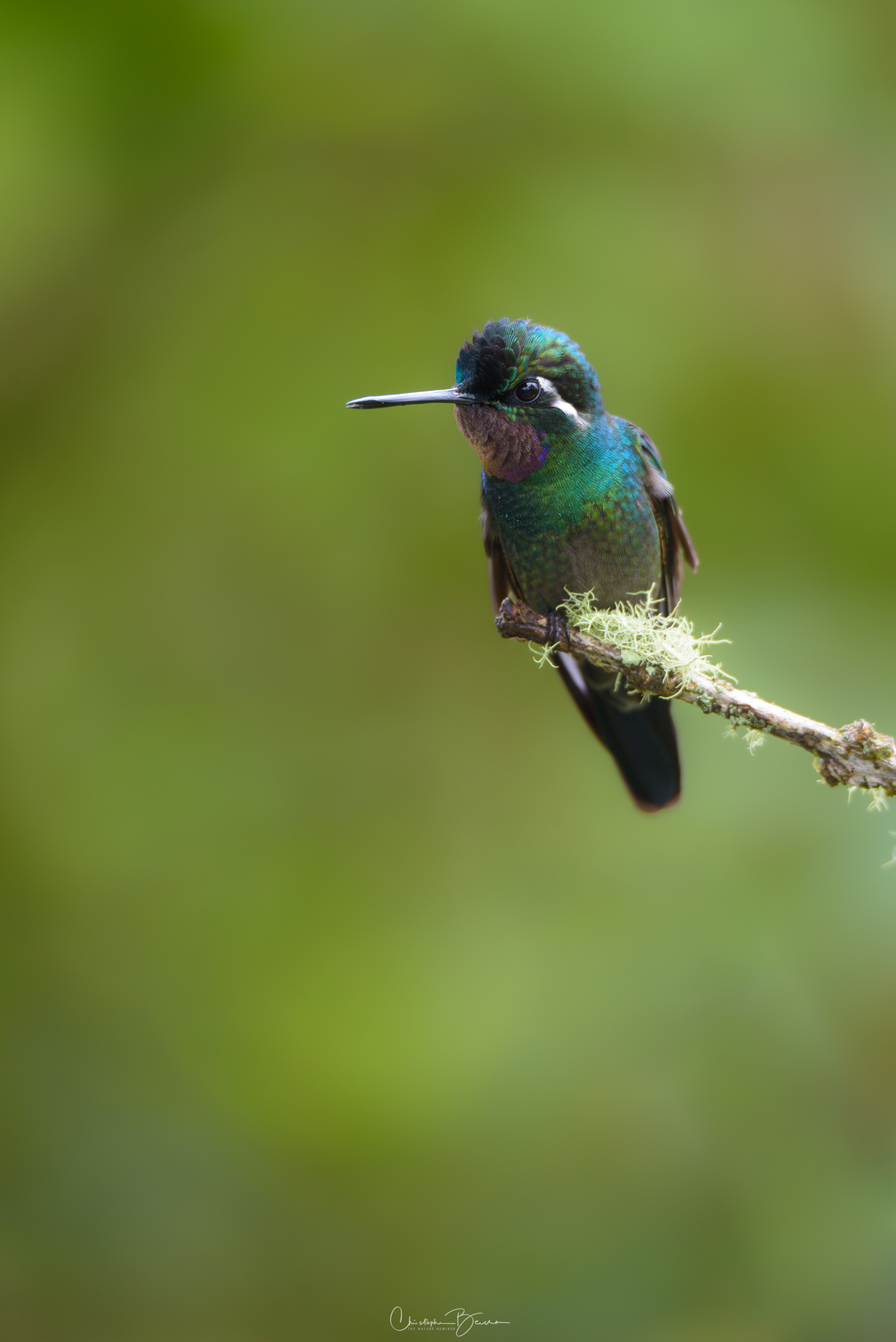
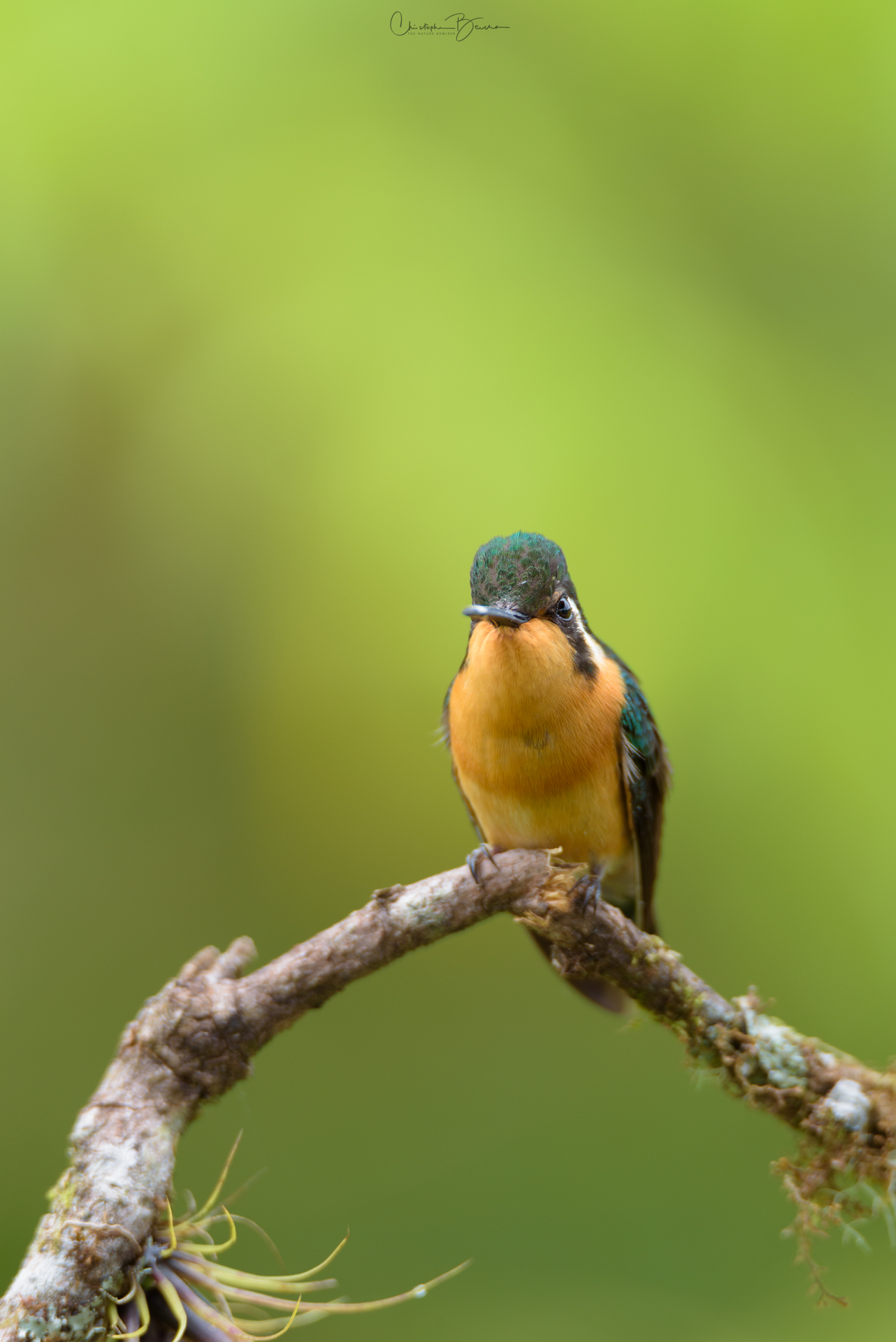
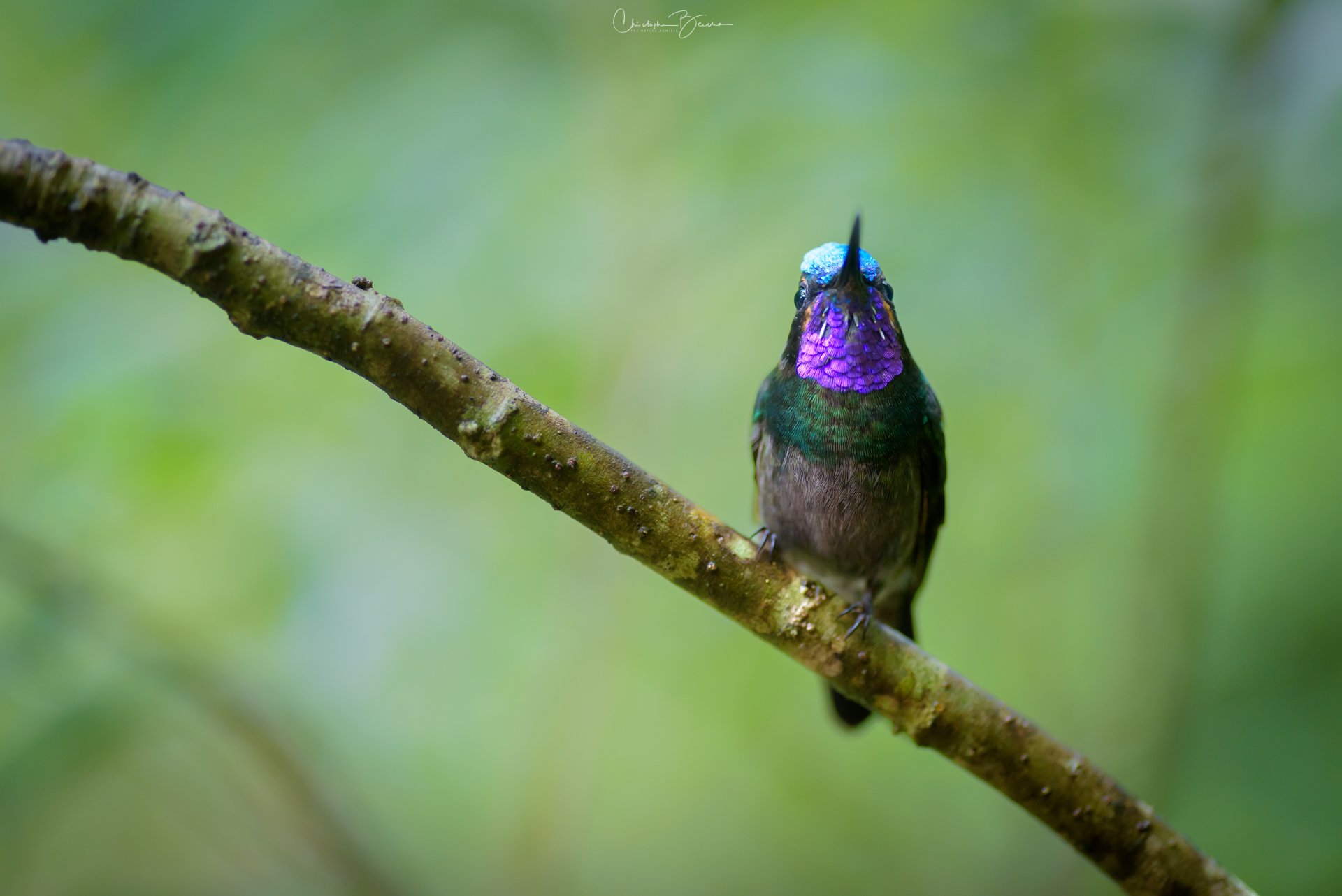
The Purple-throated Mountain-gem is a striking hummingbird, where the male has a brilliant, iridescent throat the turns purple. The crown also changes color, from dark purple to metallic blue, all due to the angle of light that is hitting it. The upperparts are mainly green, although the belly is gray and the chest has a broad metallic green band as well. The female is similar but has a cinnamon belly, chest and throat, which does make it look very contrasty and eye catching. Both sexes have a white postocular line that reaches down and back almost to the neck. They are mostly seen in mid elevation cloud forests. The iridescence in hummingbird means that there is something different about each picture, even of the same individual.