Red-capped Manakin (Ceratopipra mentalis)

This little pretty bird is sought after by many birders in Costa Rica, myself included. Like the White-collared Manakin, it is found in the Caribbean lowlands and foothills, but given that its preferred habitat is dense rain forest undergrowth, it is difficult to find and even more difficult to photograph. But then one can be lucky, and for me that means finding one male whose home habitat was very close to a fruiting tree, located right by the window of my room at Yatama Ecolodge; it actually came every single day to feed on the little purple fruits, sometimes having fights with a female Violet-headed Hummingbird which came to drink nectar from the tree’s white flowers. What’s even better, a female also visited a few times. We also heard other individuals as we hiked through the trails, although spotting them there is a lot more work.

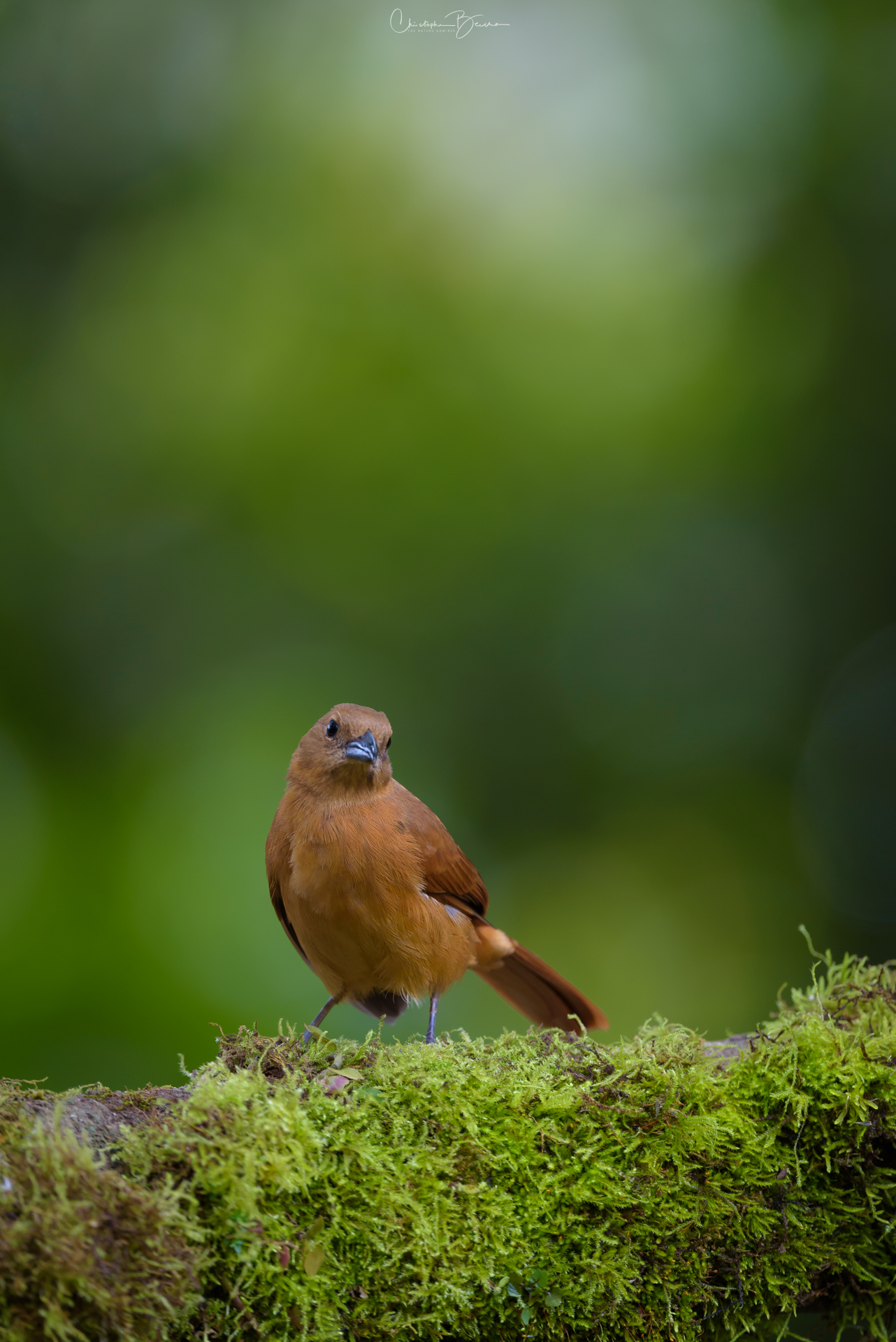
White-lined Tanager (Tachyphonus rufus)

The White-line Tanager has strong dymorphism, with the male being black with a small white line on the shoulder, and the female being entirely rufous. They normally forage in pairs, which helps in identifying them. Males can look very much like Scarlet-rumped Tanagers when the rump is not visible, but the bill is gray instead of blueish. The female is also similar to the Scarlet-rumped, however it has no marks and a black bill. They also approach fruit feeders but are more wary than Scarlet-rumped preferring to forage in the dense vegetation.

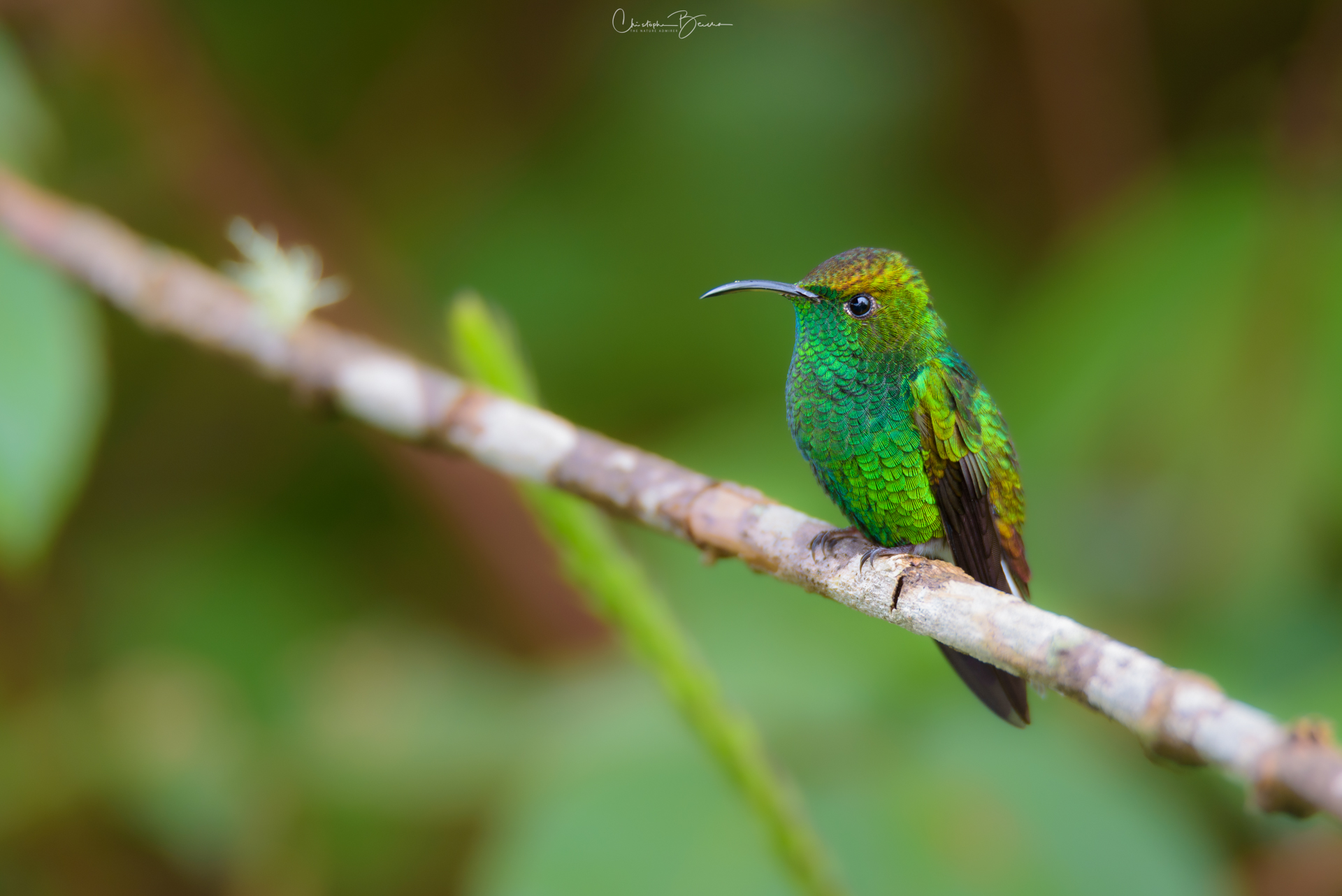
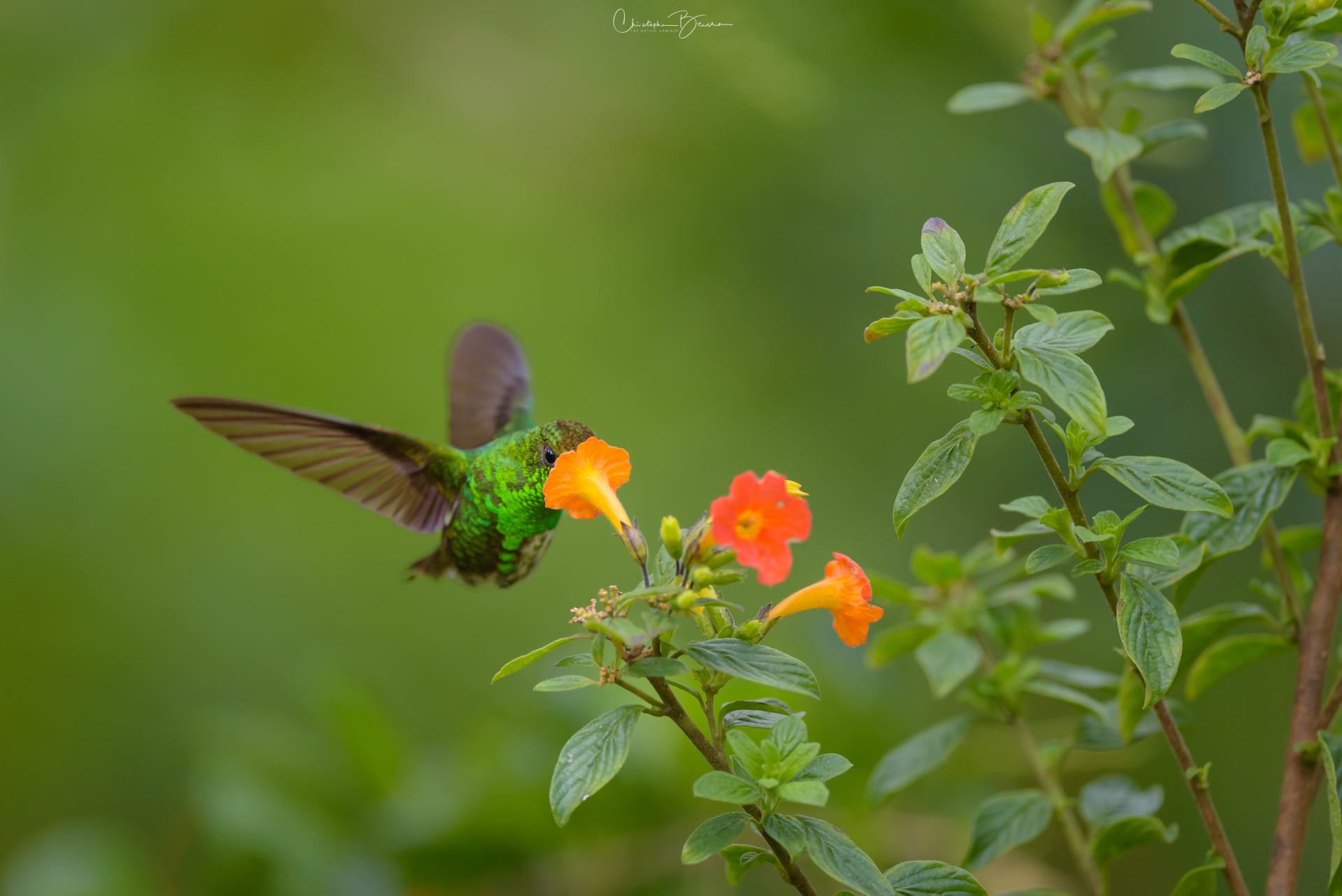
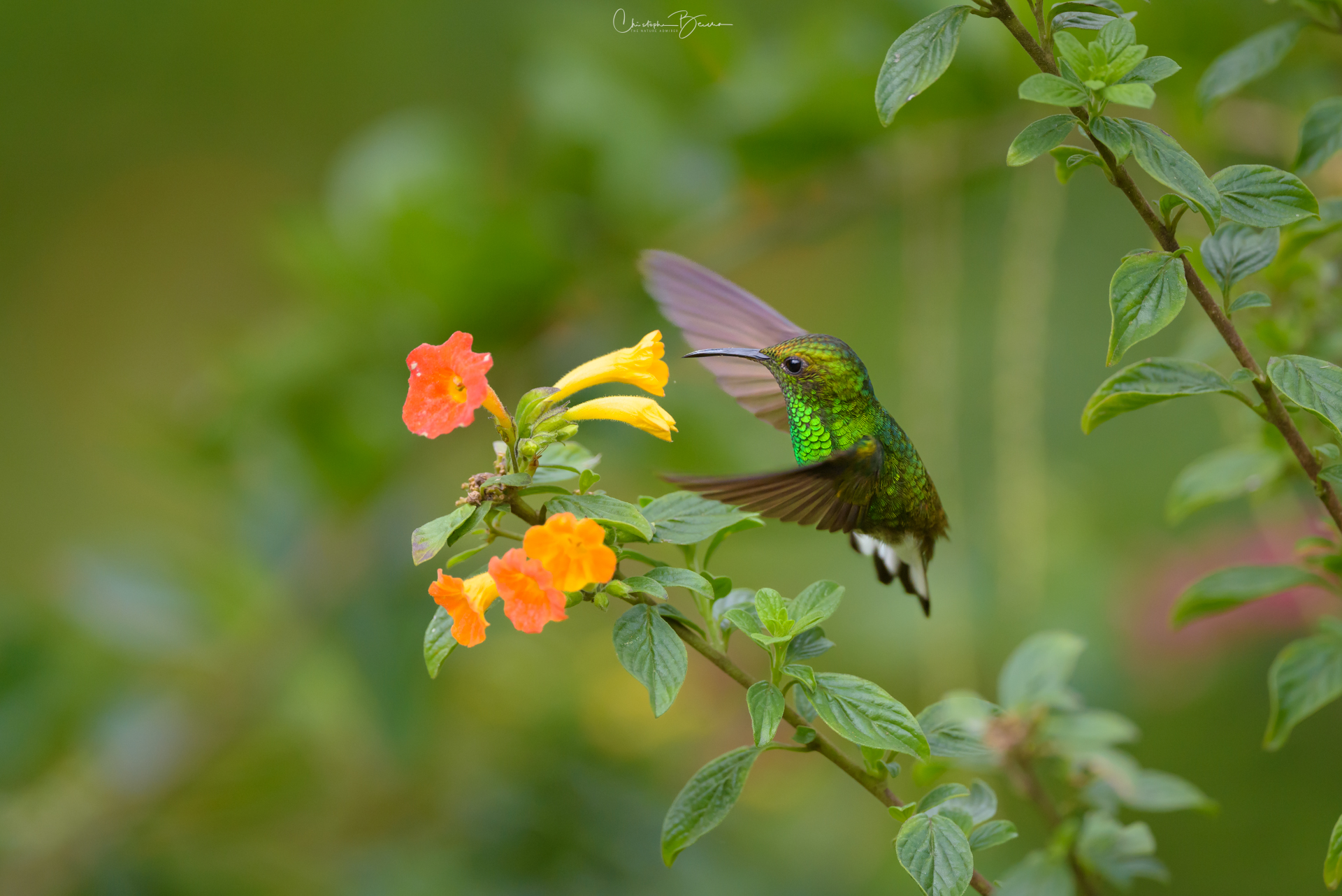
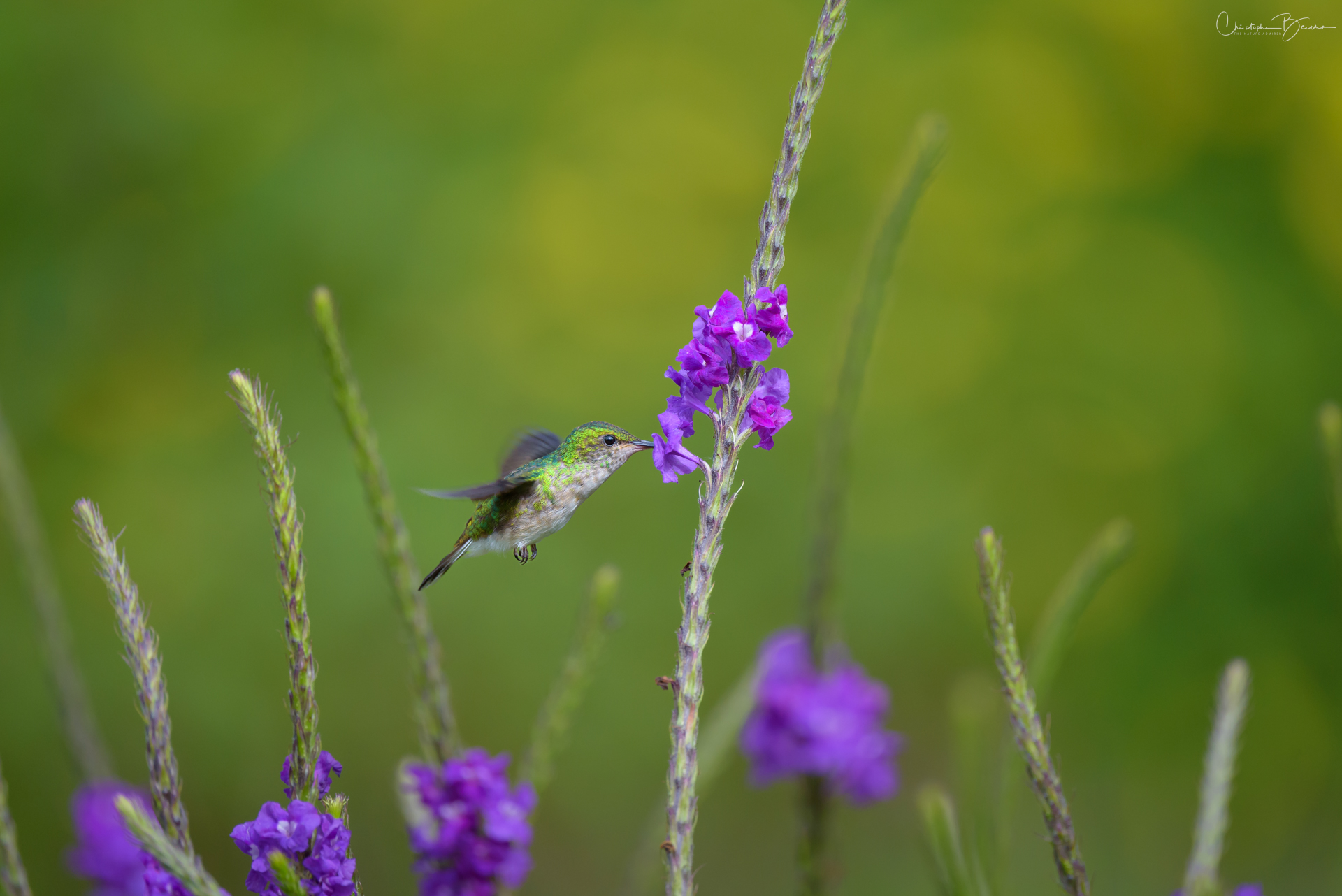
Coppery-headed Emerald (Elvira cupreiceps)

The Coppery-headed Emerald is one of the few species of birds that are true endemics of Costa Rica, meaning only found in this country. The male is mostly green, with the copper hues on the head that can only be seen in the appropriate light and angle. The female has grey underparts and lacks the copper colors on the head. Both have a black downcurved bill, which help with identification versus similar species like the Rufous-tailed Hummingbird, with which it shares the brownish-red rump. They are one of the tiniest species of hummingbirds in Costa Rica. They are seen in the mid to high elevations, in places where there is high humidity, but specially in the Cinchona and Vara Blanca zone.

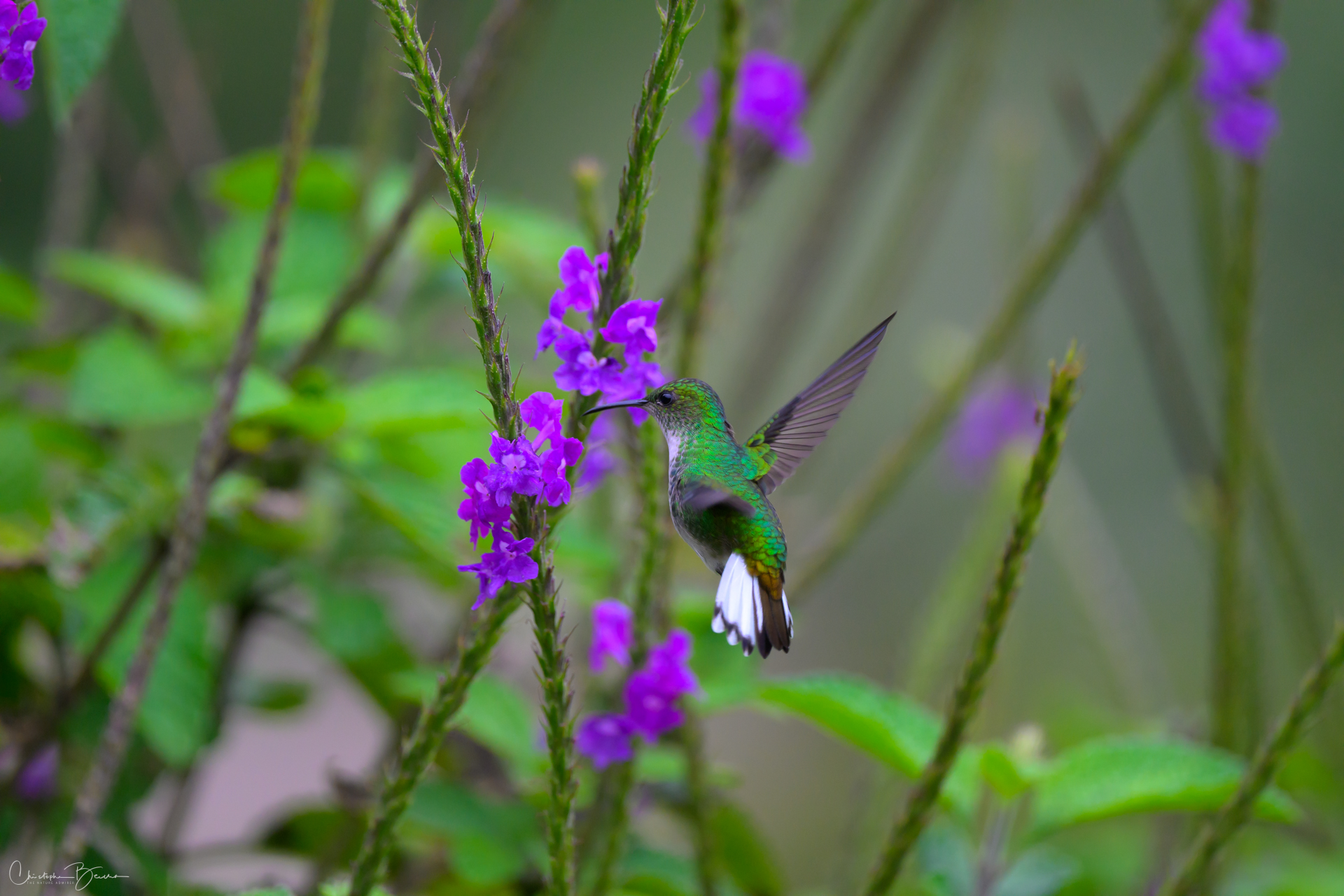
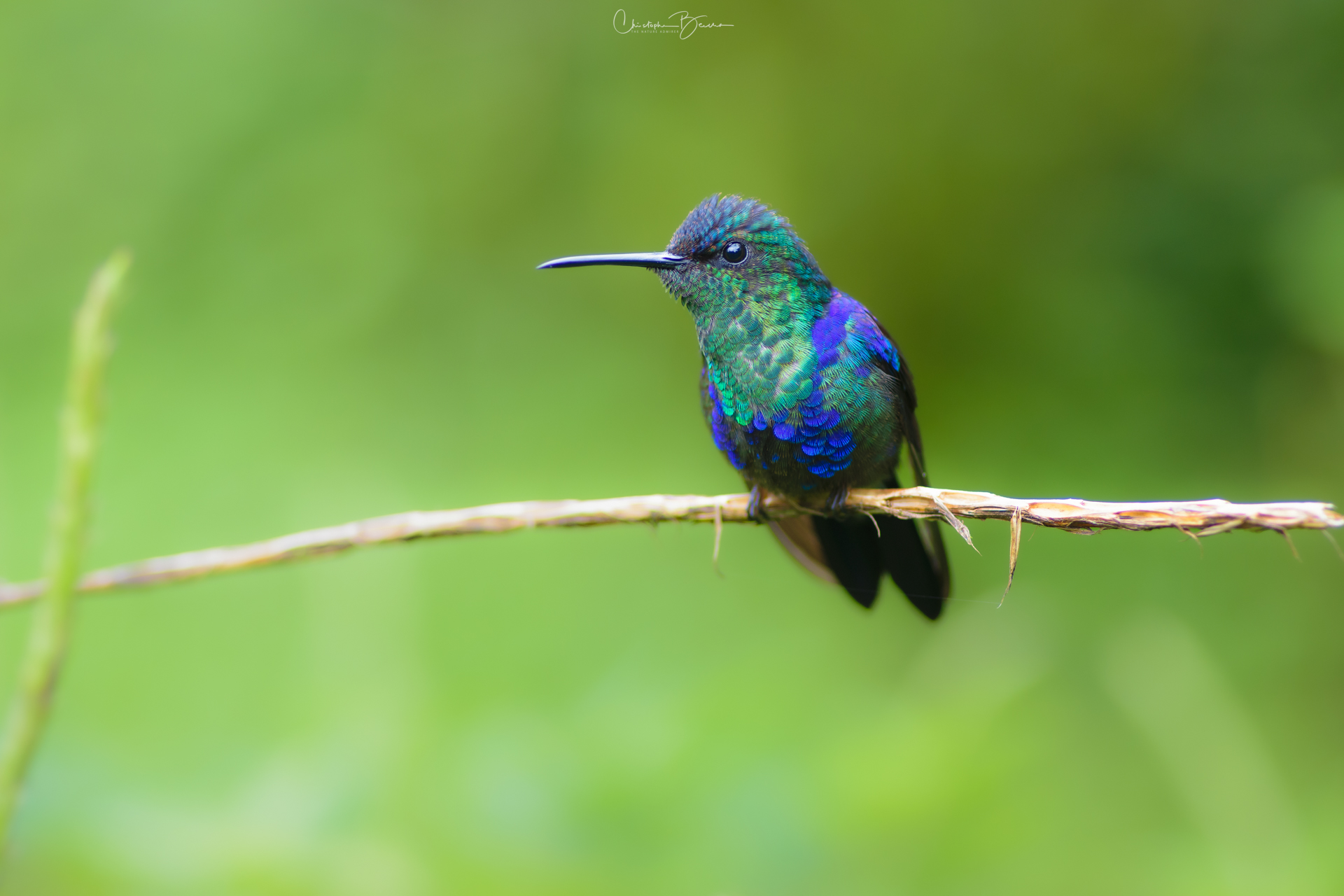
Crowned Woodnymph (Thalurania colombica)

The Crowned Woodnymph is a medium sized hummingbird with a violet belly and glittering green throat, along with different shades of blue and green on the back. The female has white underparts and throat instead, with golden patches along the neck and head; the rest of the body is green like the male. They are mid sized among Costa Rican hummingbirds and might resemble a little bit the Violet-bellied Hummingbird that is found in Colombia. They inhabit low tropical rain forest locations like Braulio Carrillo and Bosque Eterno de los Niños, where they feed from the nectar of a variety of flowers, including Porter Weed.
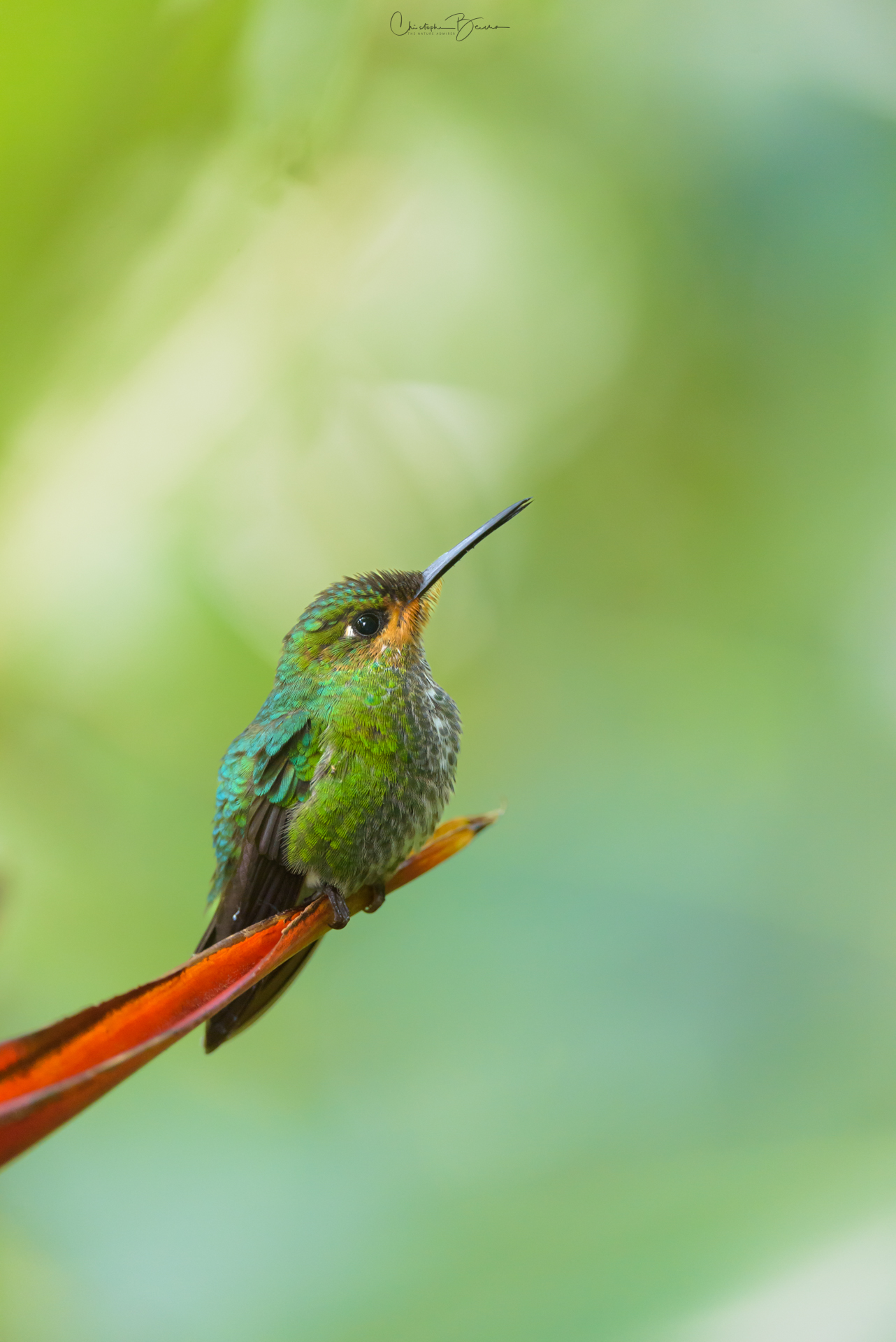
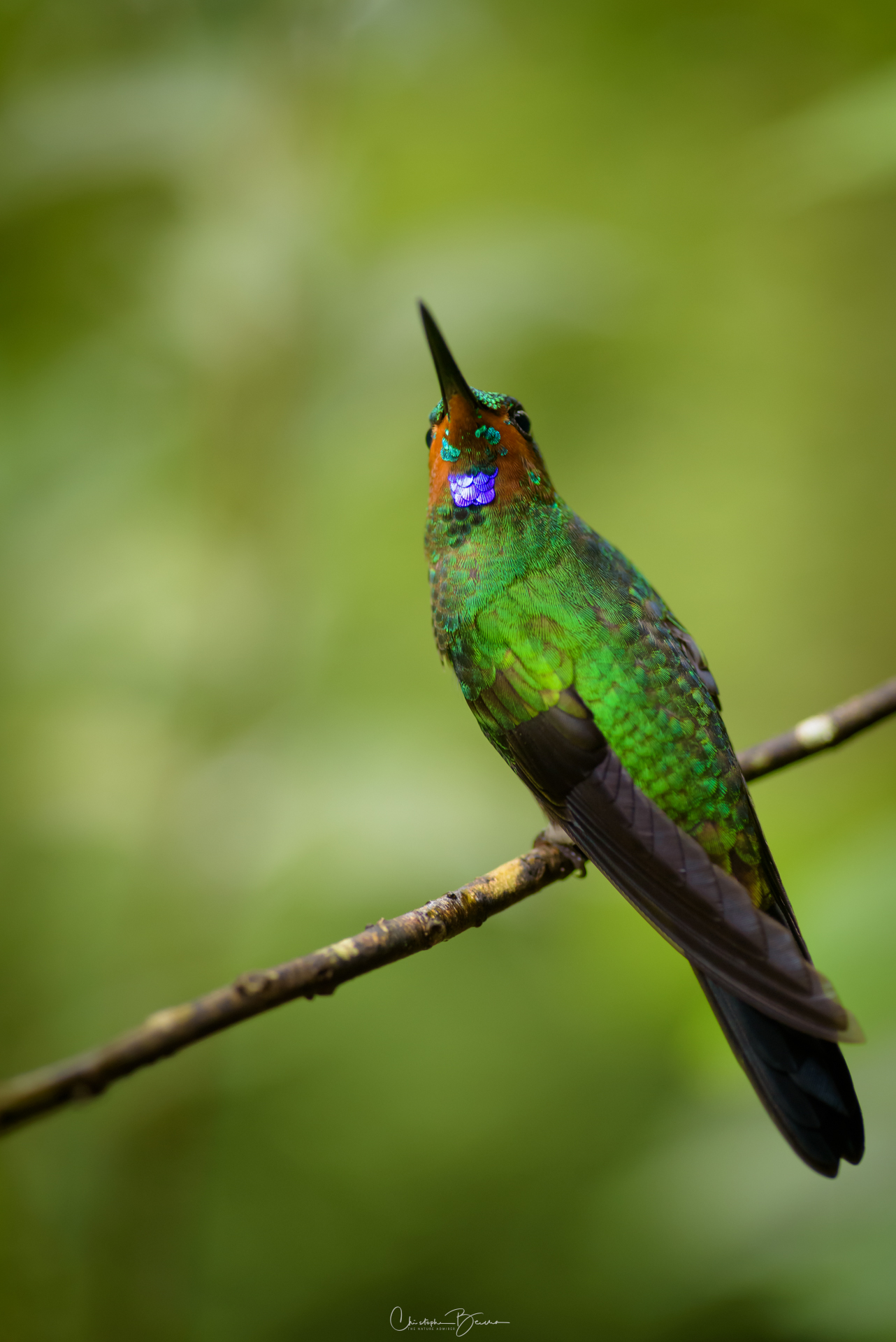
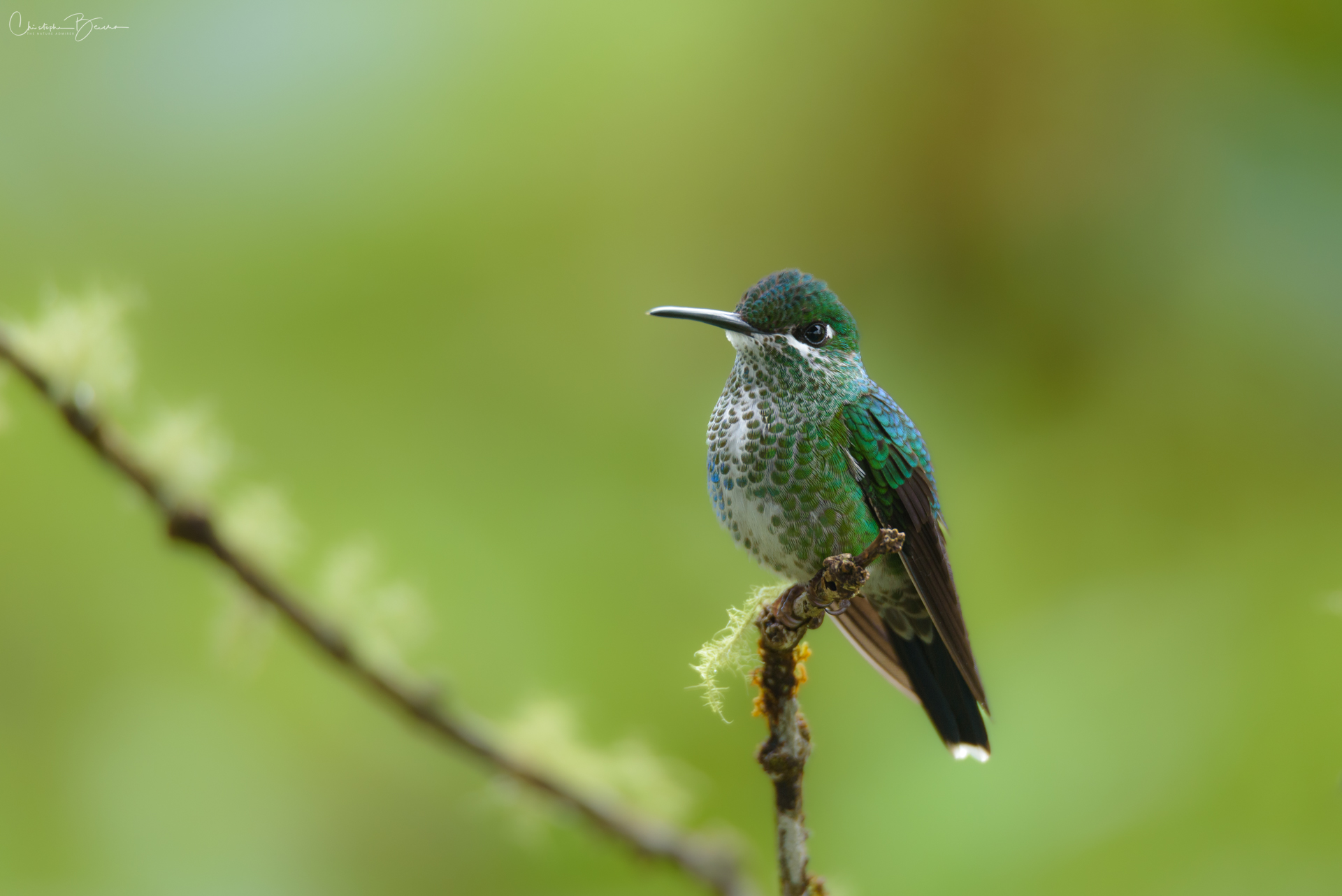
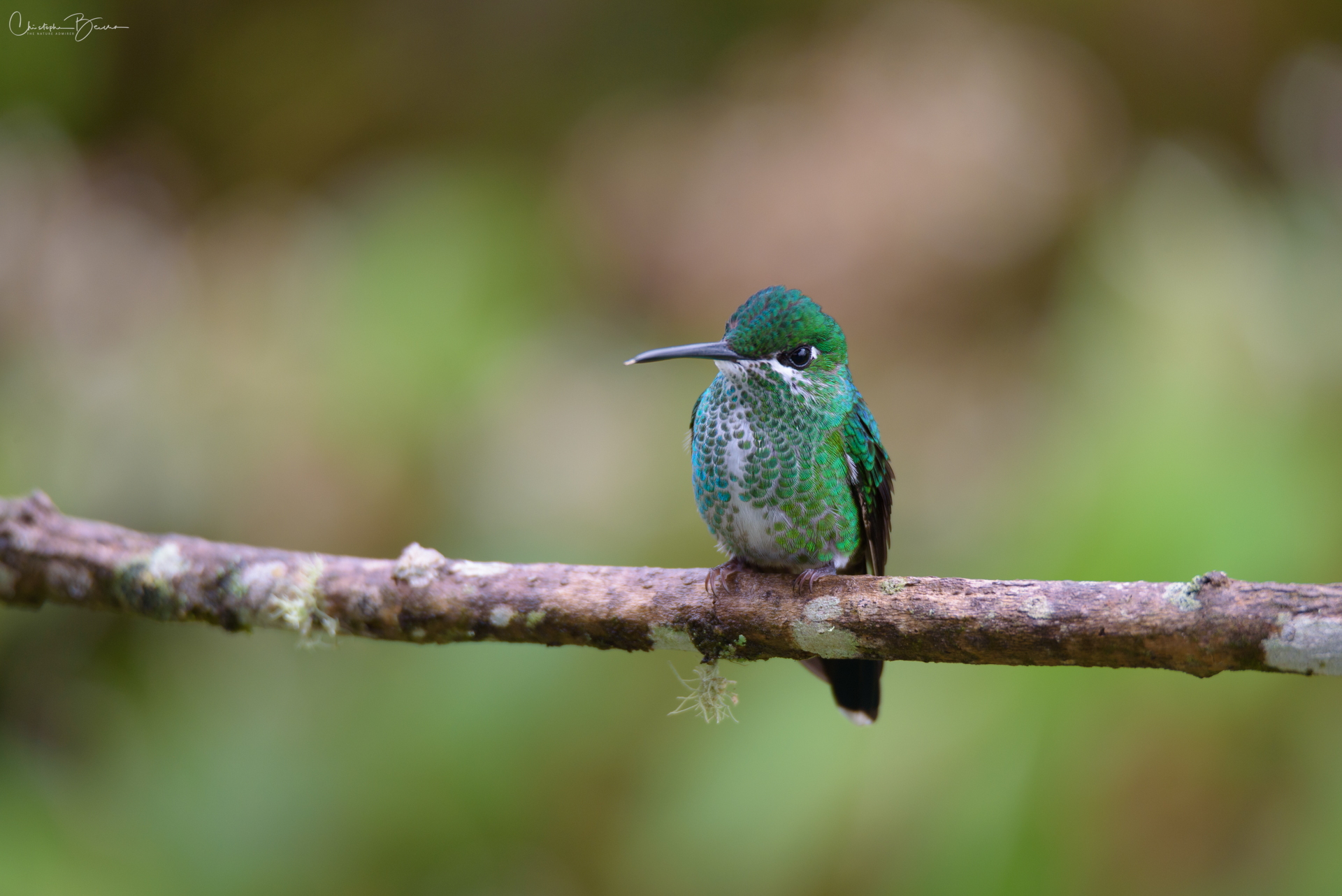
Green-crowned Brilliant (Heliodoxa jacula)

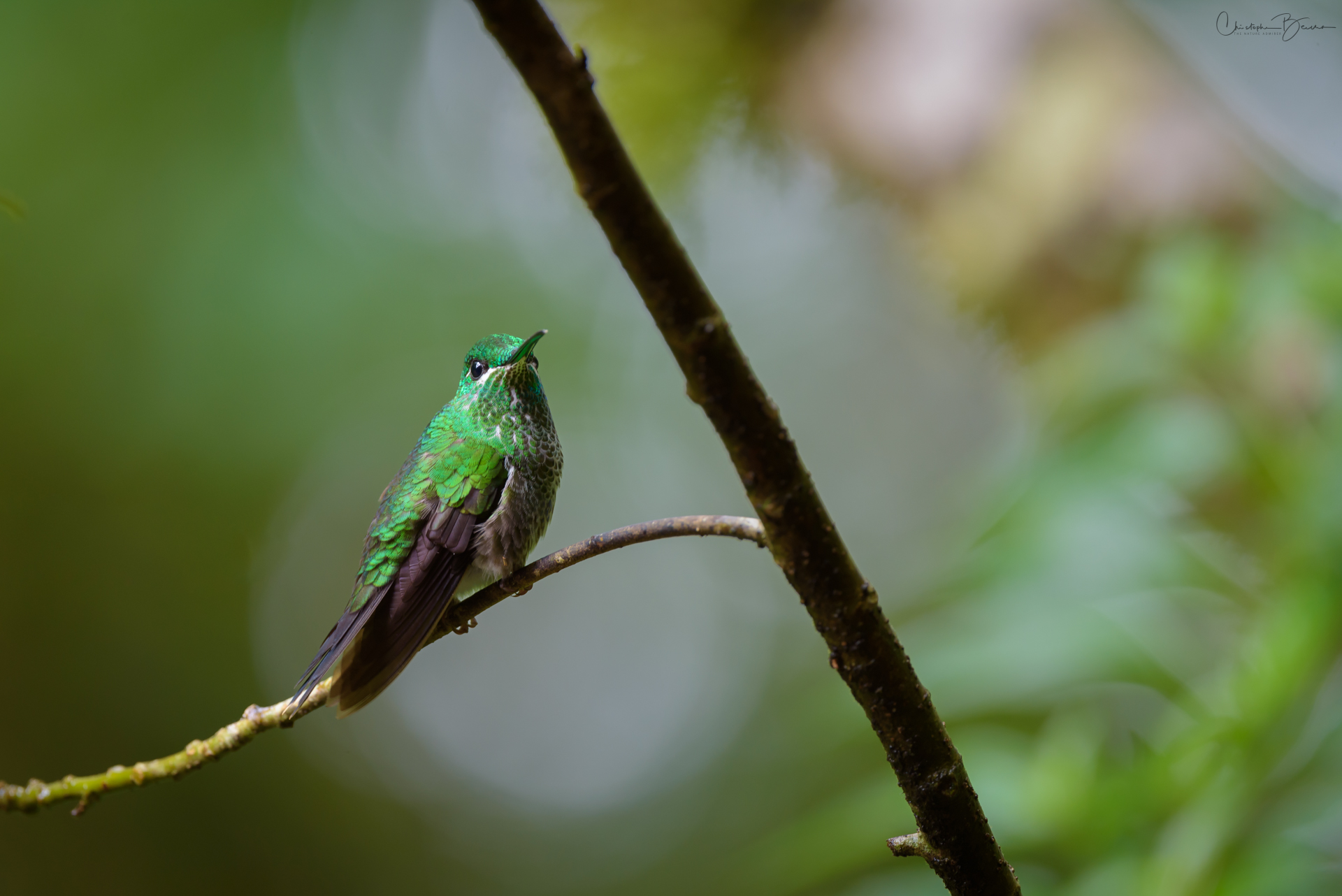
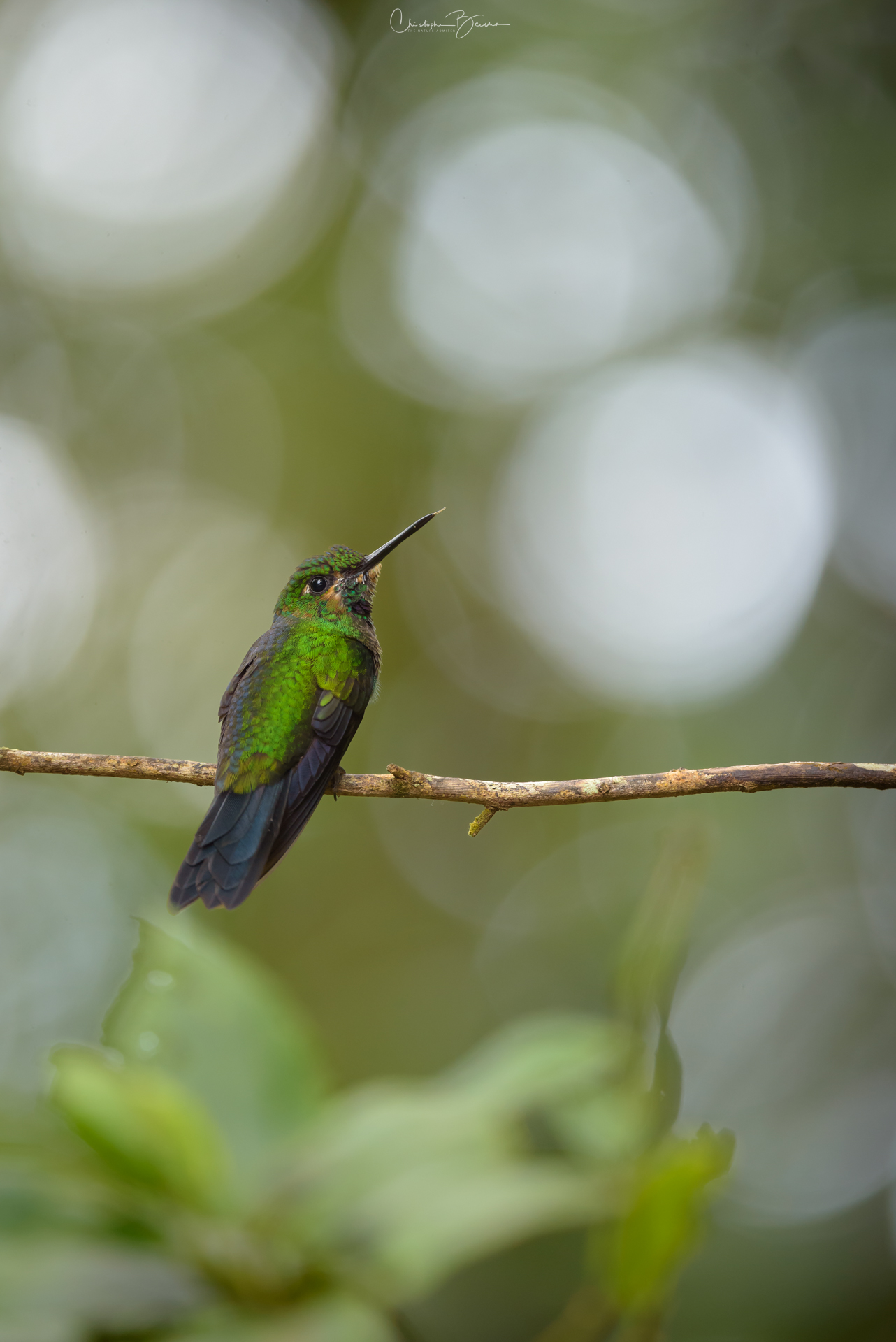
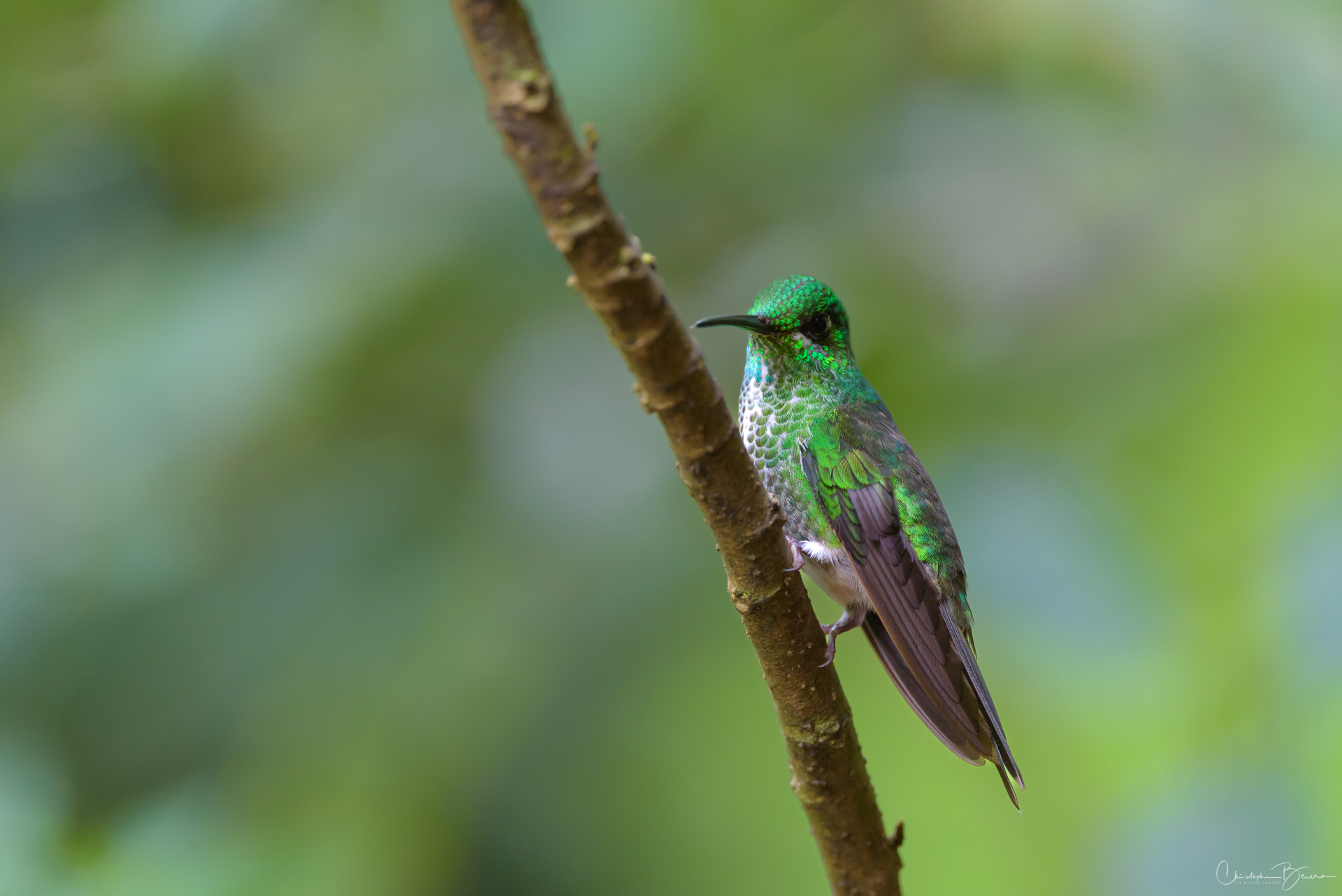
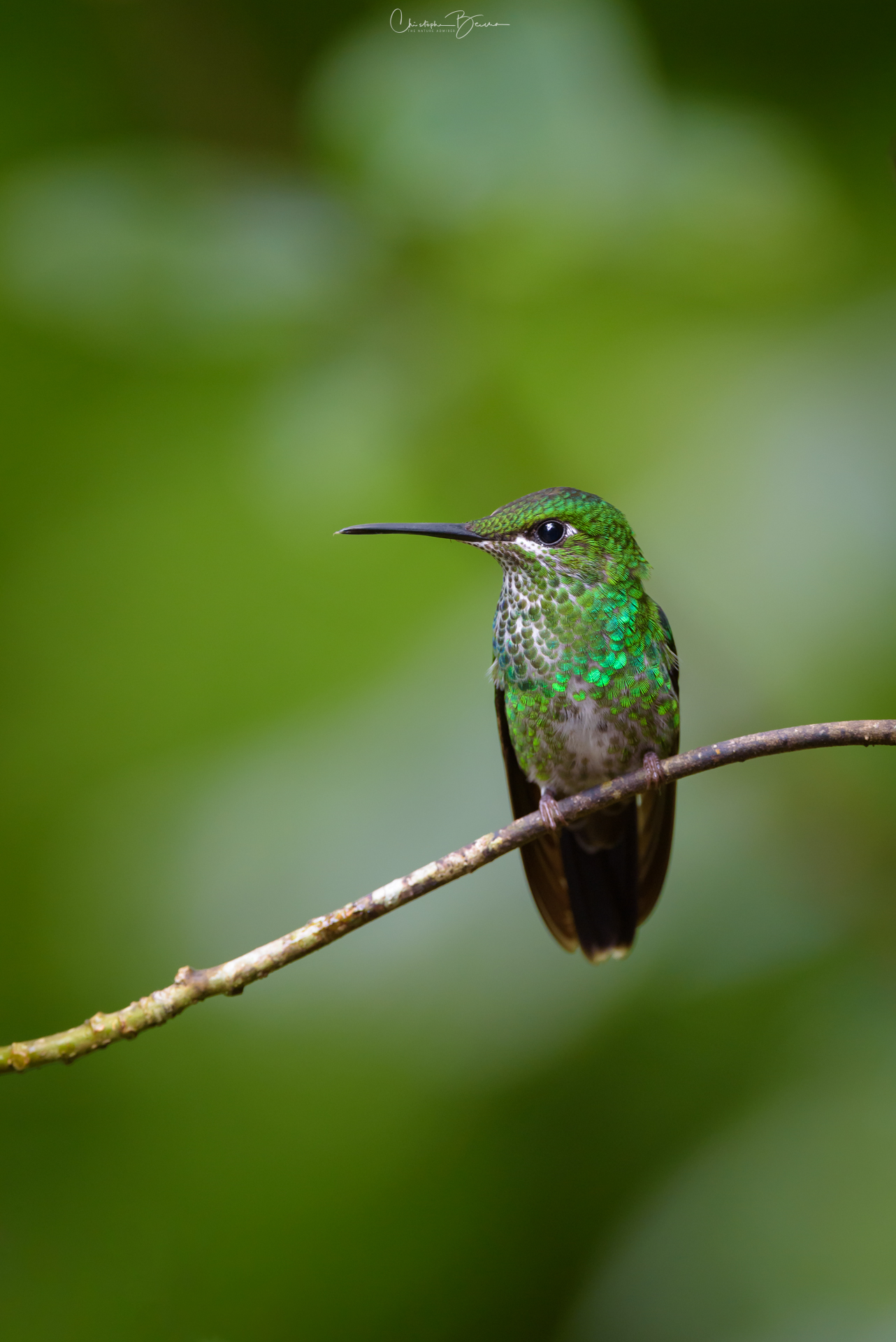
The Green-crowned Brilliant is a relatively large hummingbird of the Heliodoxa family, which contains nine species, but the jacula is the only species to inhabit Costa Rica. It has a weird face, resulting from the elongated form towards the long and thin bill. The male is mostly green with glittering metallic-green crown as the name suggests, which becomes visible only with some angles due to the iridescence phenomenon that the bird displays; it also has a small purple patch on the throat. The female is similar, but has a white belly with scaling pattern in the throat and the flanks.

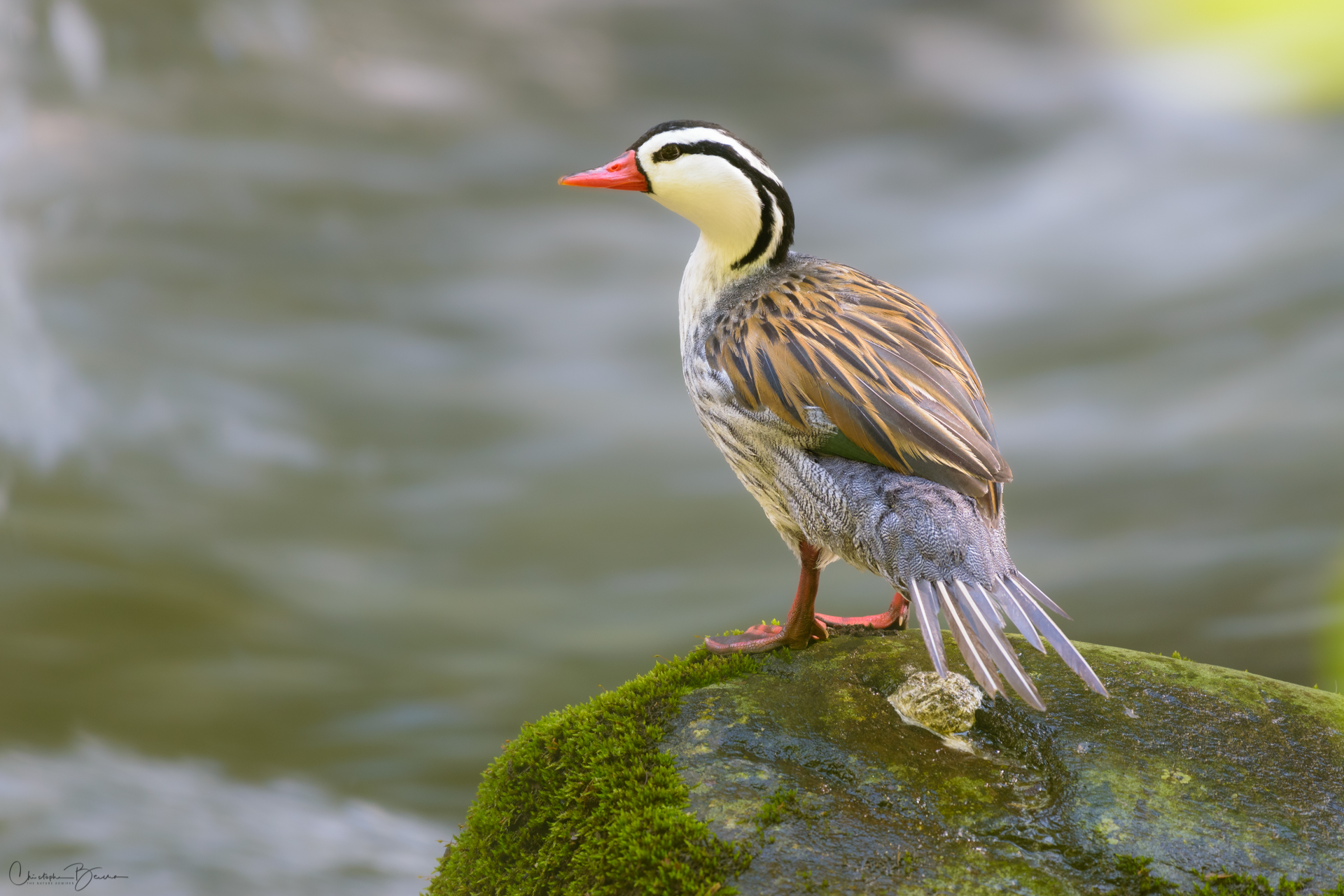
Torrent Duck (Merganetta armata)

The Torrent Duck is very special and one of the highlights of our trip to Colombia. They are only found living in the high courses of rapid flowing streams, with lots of rocks that serve as anchorage and resting places for them; most other ducks prefer calm waters and lakes to spend their time. This duck chooses a spot downstream for resting during the night, and at the morning it swims upstream against the strong current, until it finds a preferred feeding area. It then begins a cycle: Either the male or female mount guard from a comfortable rock, while the other feeds in a small pool or river region that has light current. When the food is gone, they both jump to the current and get dragged downstream until they reach the next feeding area, where again one of them mounts guard while the other one feeds. This is very unique behavior, one we could observe from very close at Yarumo Blanco SFF.

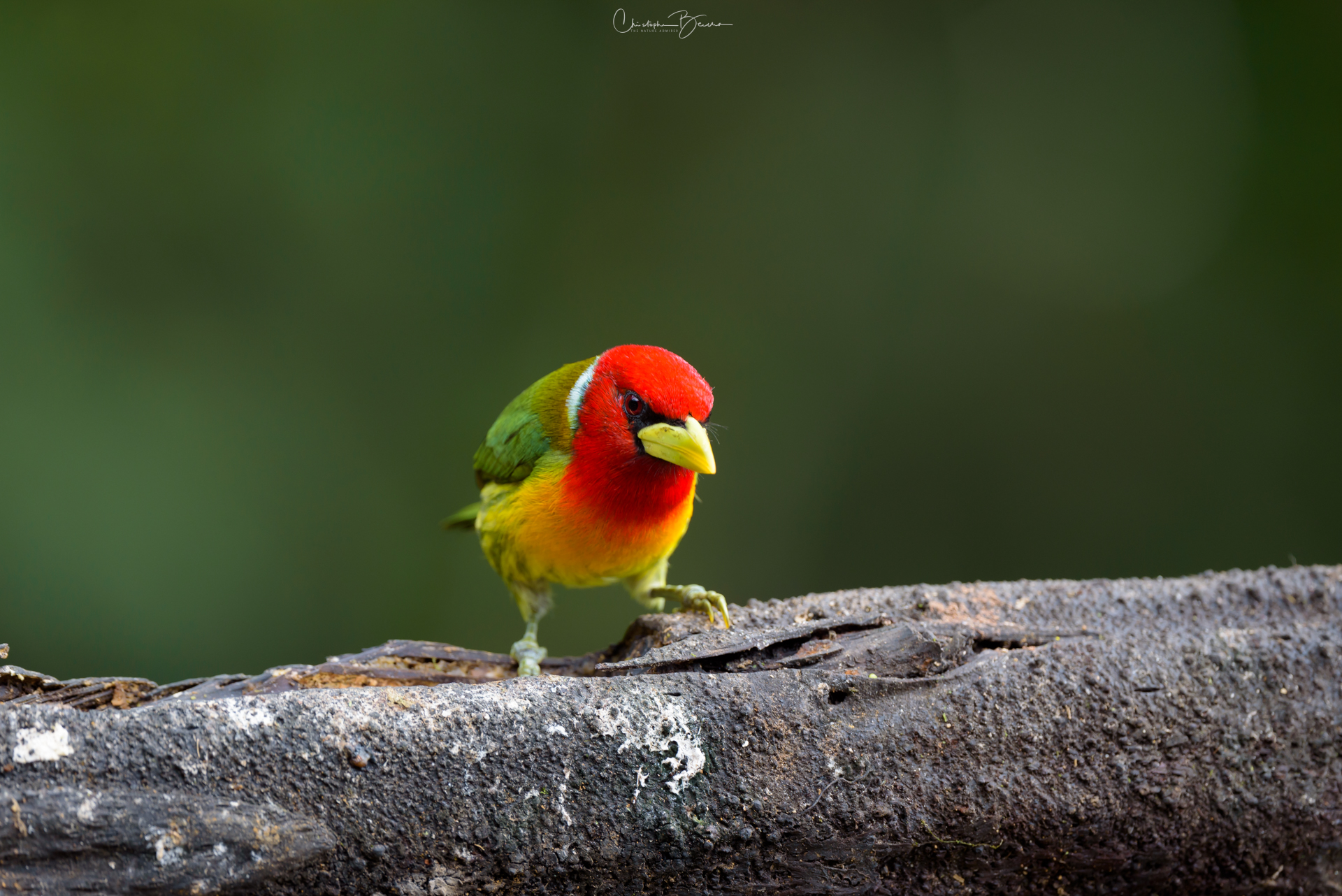
Red-headed Barbet (Eubucco bourcierii)

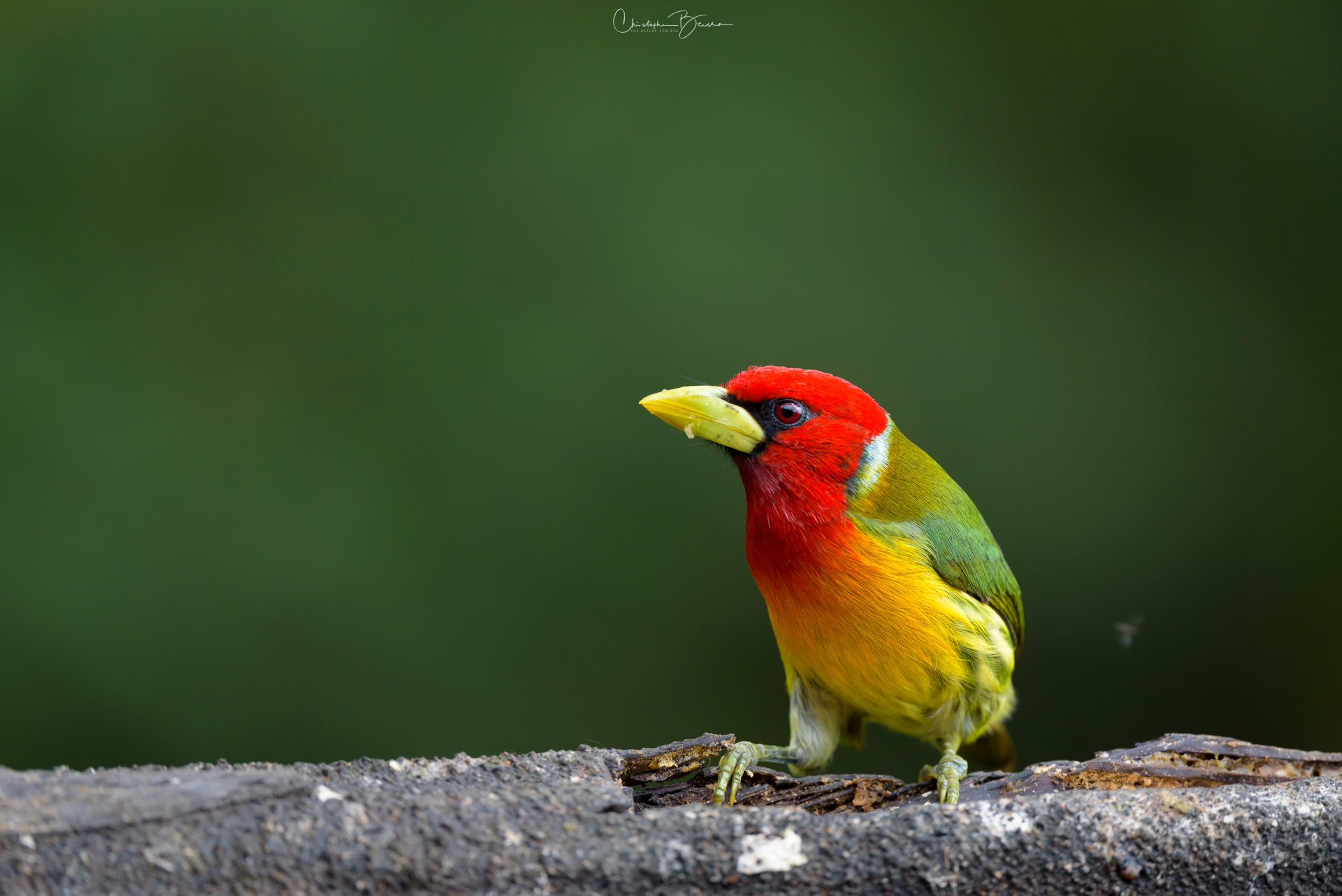
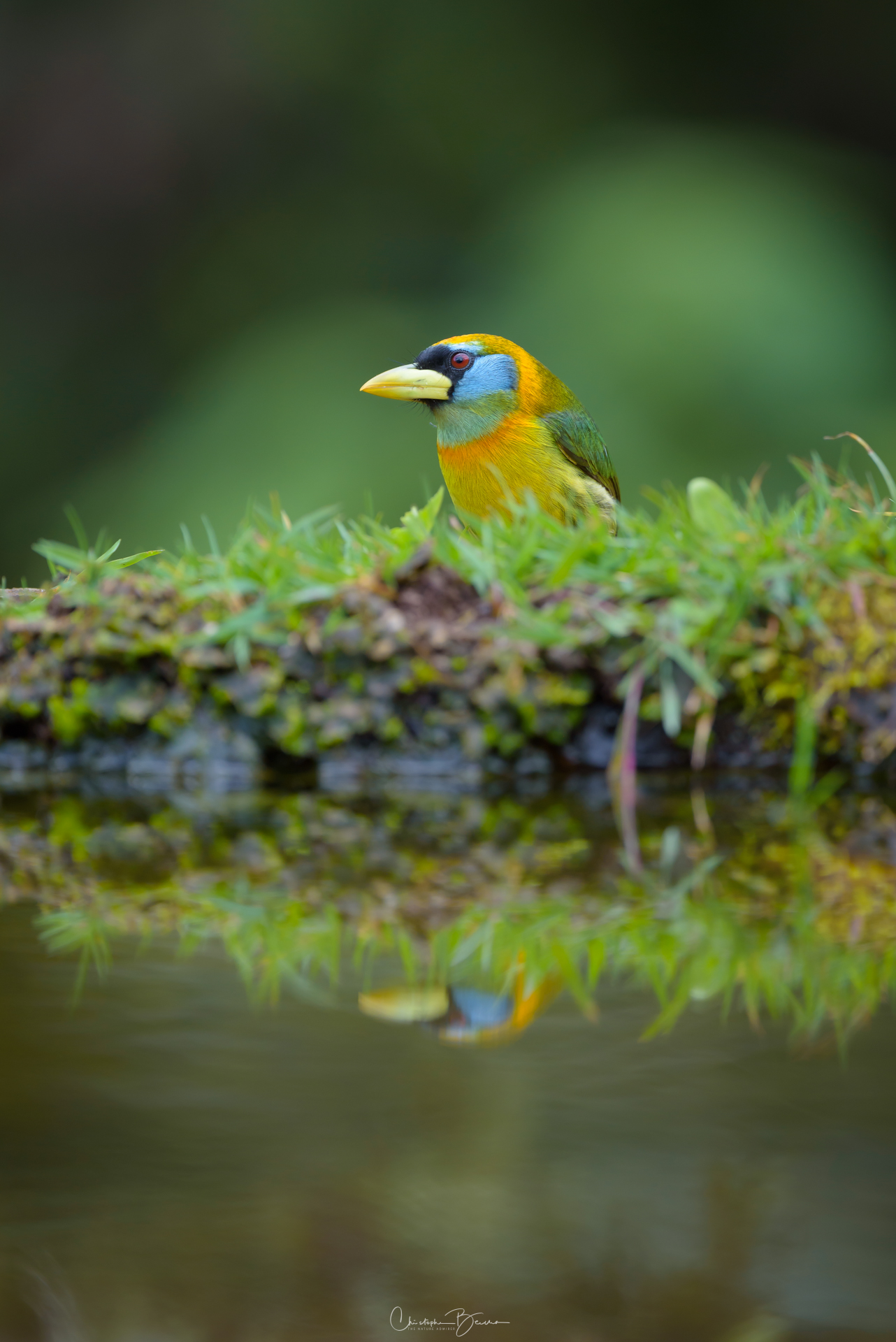
This bird is a beauty, one that we can find in some spots around Costa Rica like Cinchona and Braulio Carrillo. I first met it during this trip to Colombia in Finca Alejandría, where a pair of this species would come and go from the feeders frequently. It is bigger than most tanagers, however it is rather small when compared with how I imagined it. It is the sole species of the Eubucco genus that is found in Costa Rica, with Colombia also hosting the Lemon-throated Barbet. They are related to the toucans, and as such they eat a lot of fruit, however they do not share the Toucan’s behavior of raiding other birds’ nests for eggs and hatchlings. The male and female only share the green body and yellowish beak, with the male having a red face with a white ring separating it from the back, a belly that transitions from deep orange to yellow as it goes down, and flanks that are streaked green and light yellow. On the other hand, the female features a black face with light blue cheeks, orange half hood and patch on the chest, light yellow belly and again streaked flanks in green and light yellow.

Great Curassow (Crax rubra)

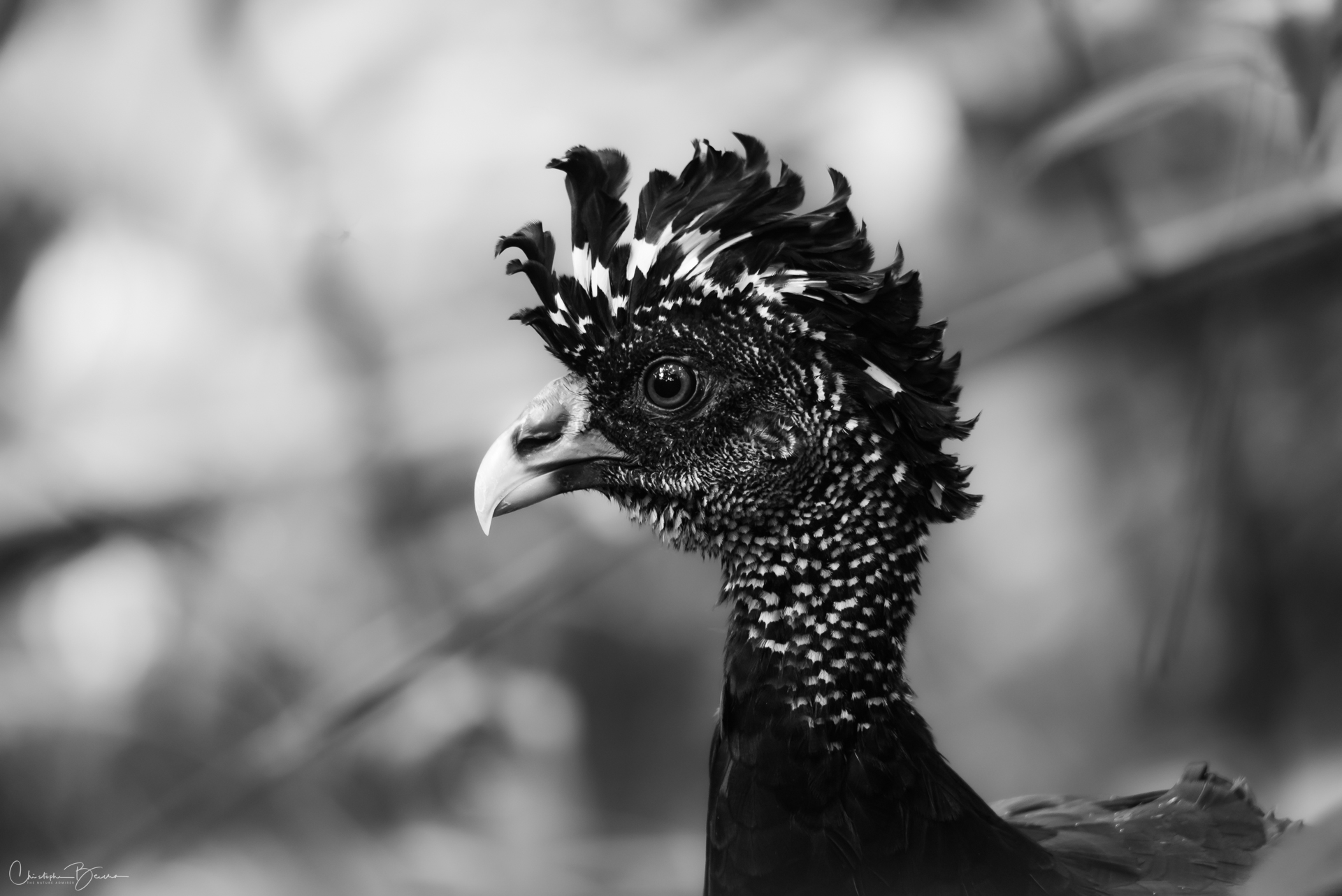
The Great Curassow is a pretty unique bird among Costa Rica species. It shows marked sexual dymorphism, with the female being mostly brown on the most common morph, and the male being almost entirely black. The female has a feather crest that looks just like a Roman Soldier’s helmet and it is barred black and white. Their size is about a turkey’s, yet they have the agility to climb pretty high on trees, as they typically inhabit forested areas. There is also a “barred” morph in females, but it is not common to see in Costa Rica. As a matter of fact, the only barred individual I know of lived in Laguna del Lagarto Lodge, however a Ornate Hawk-Eagle snapped it from the place and ate it, to the astonishment of the photographers present at the day. Life always has a way to leave us in wonder.

The vertical picture was taken at Laguna del Lagarto Lodge, Boca Tapada during a birdwatching tour with Fundación Rapaces de Costa Rica, on November 25th and 26th, 2017. It is incredible that such a big bird is able to balance itself so well on perches that are pretty high above the ground. It was even able to incline the body to the front and feed while standing there. The horizontal picture was taken at Yatama Ecolodge, where a group of no less than 5 females and 2 males foraged close to the visitor rooms.

Great-tailed Grackle (Quiscalus mexicanus)

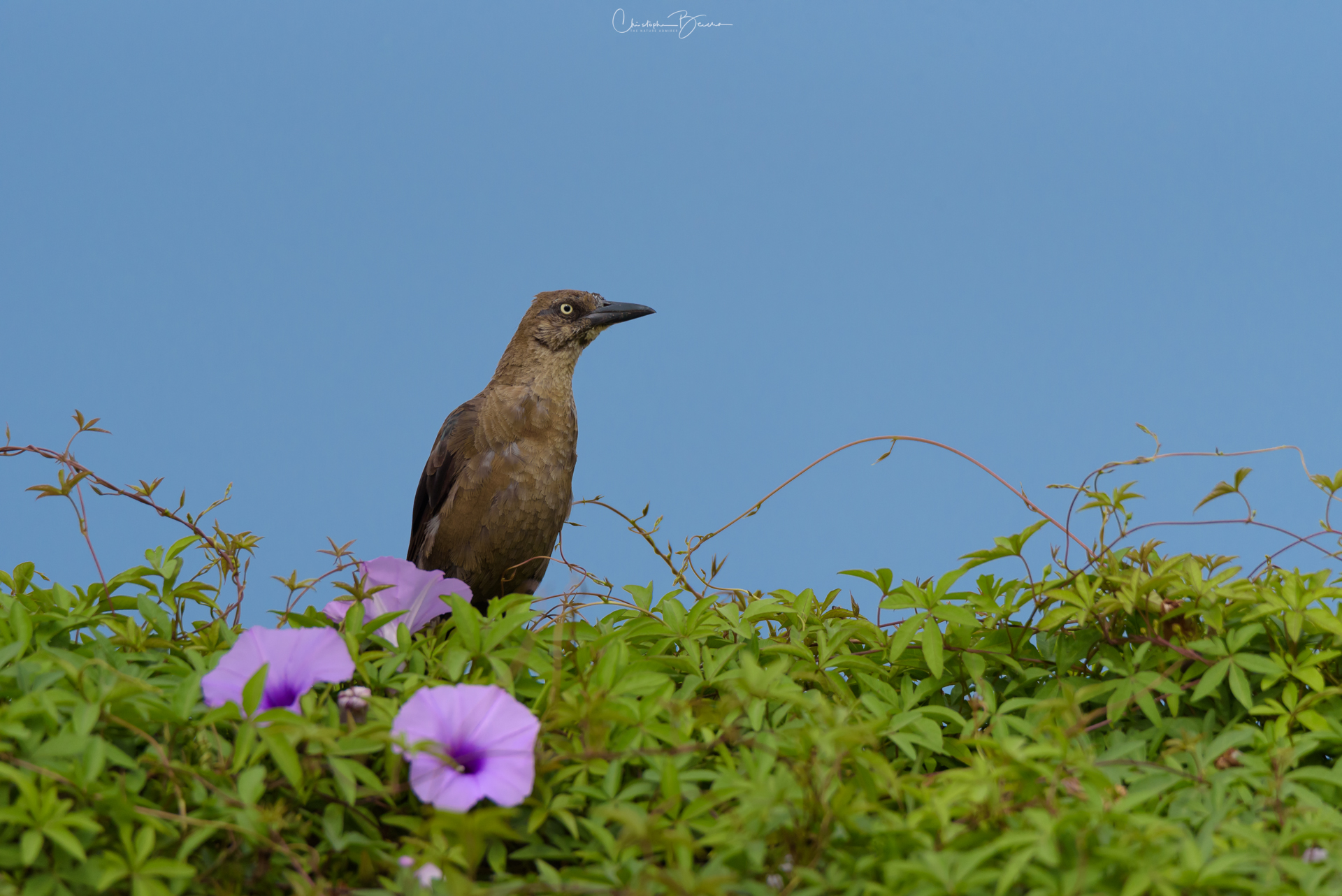
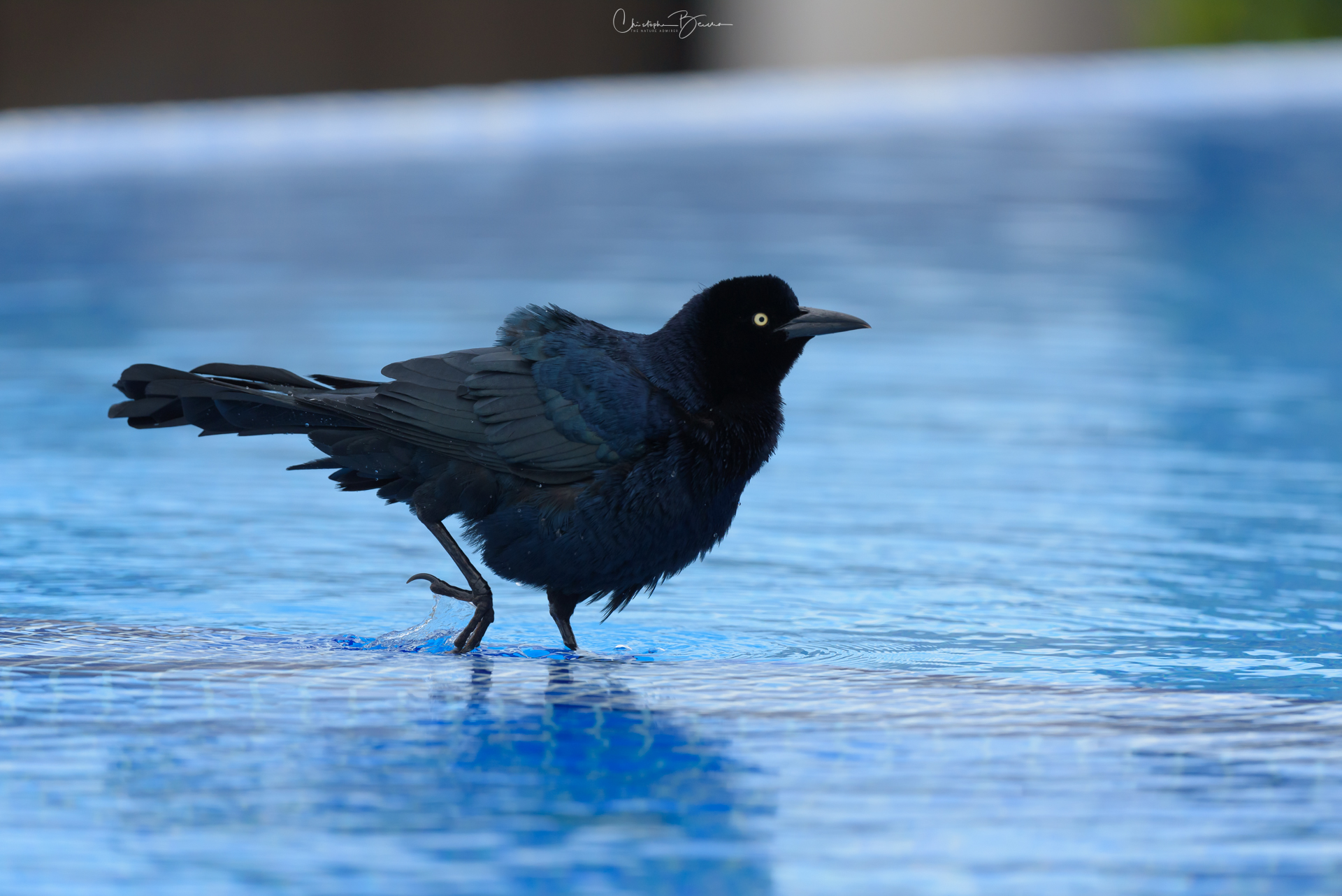
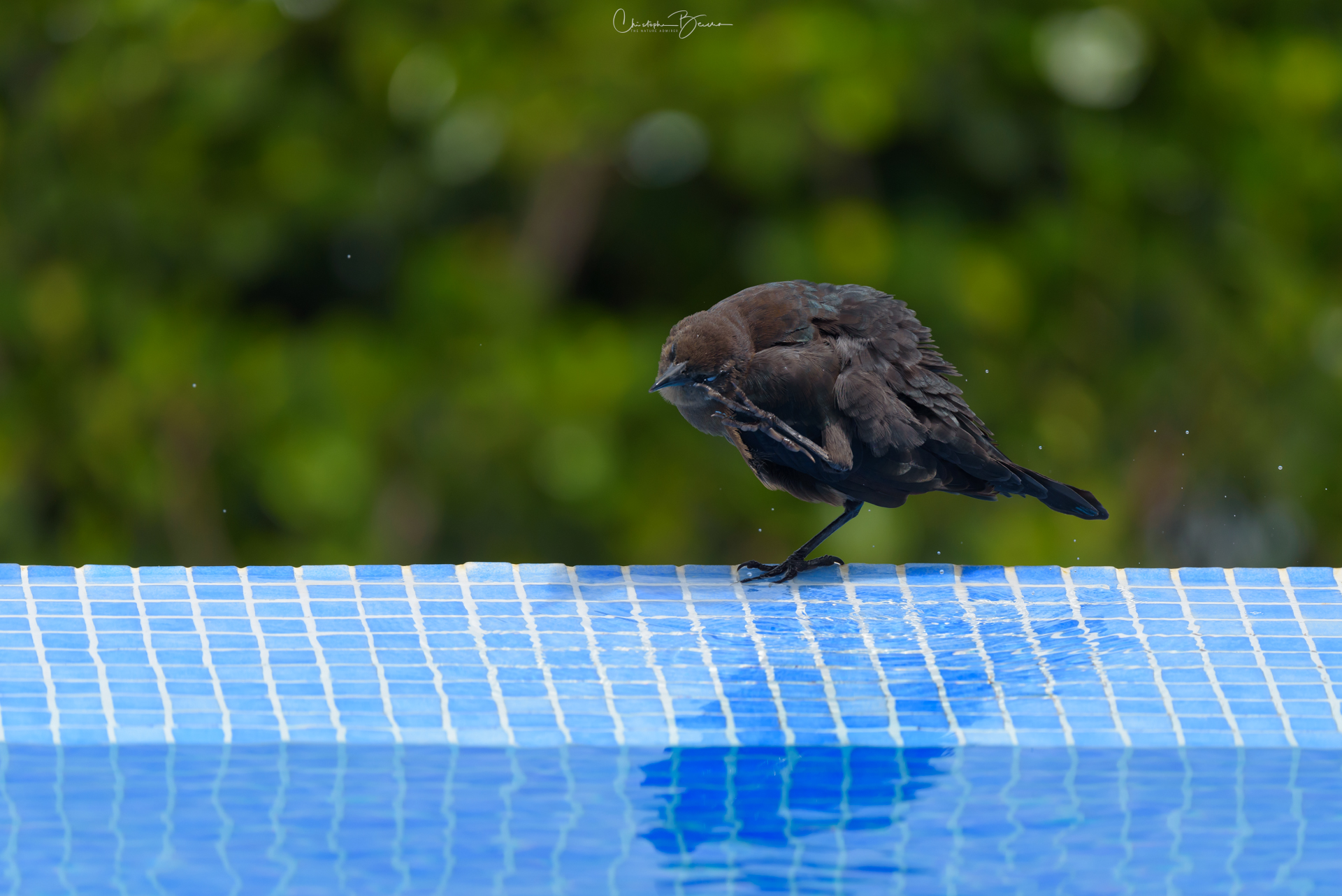
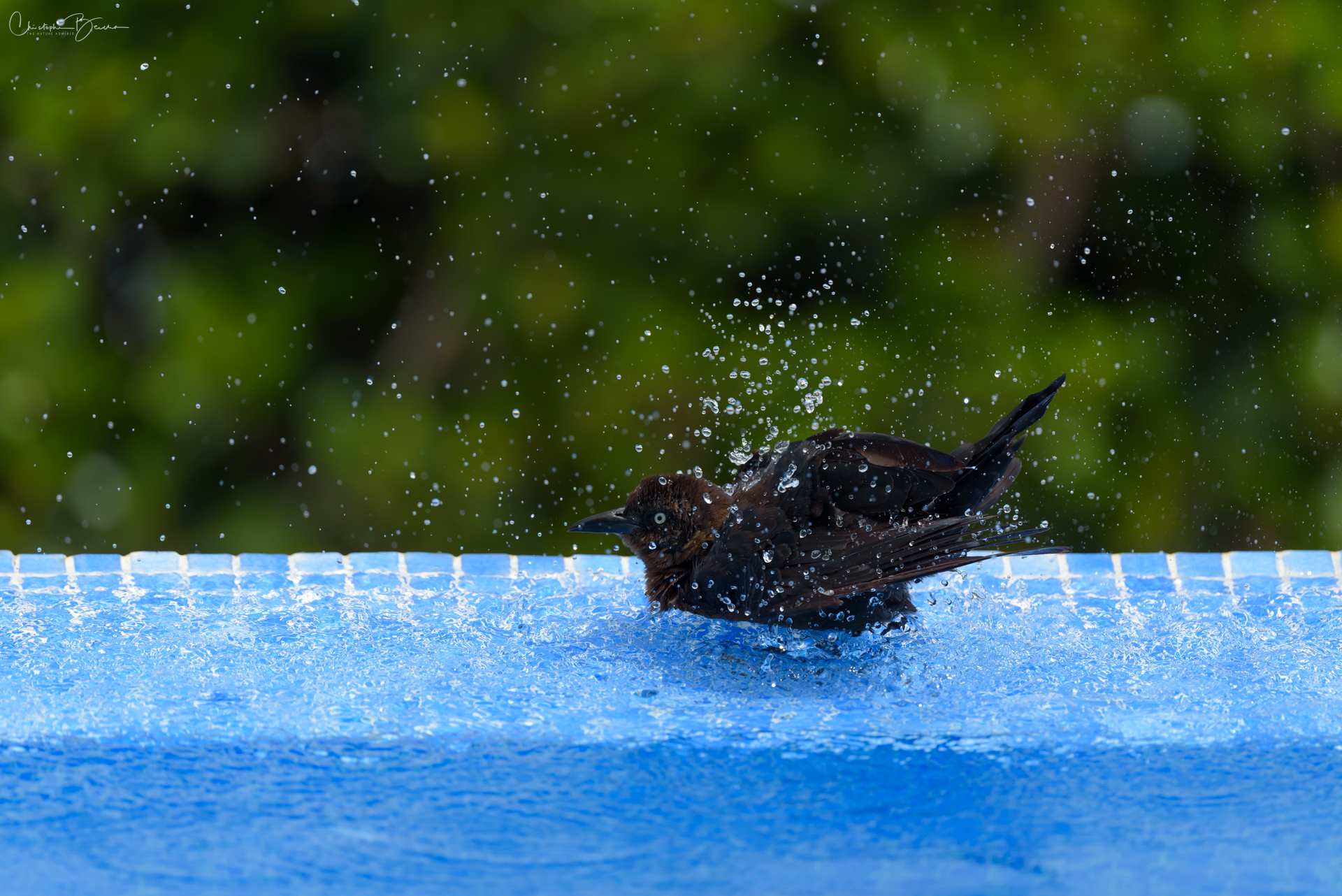
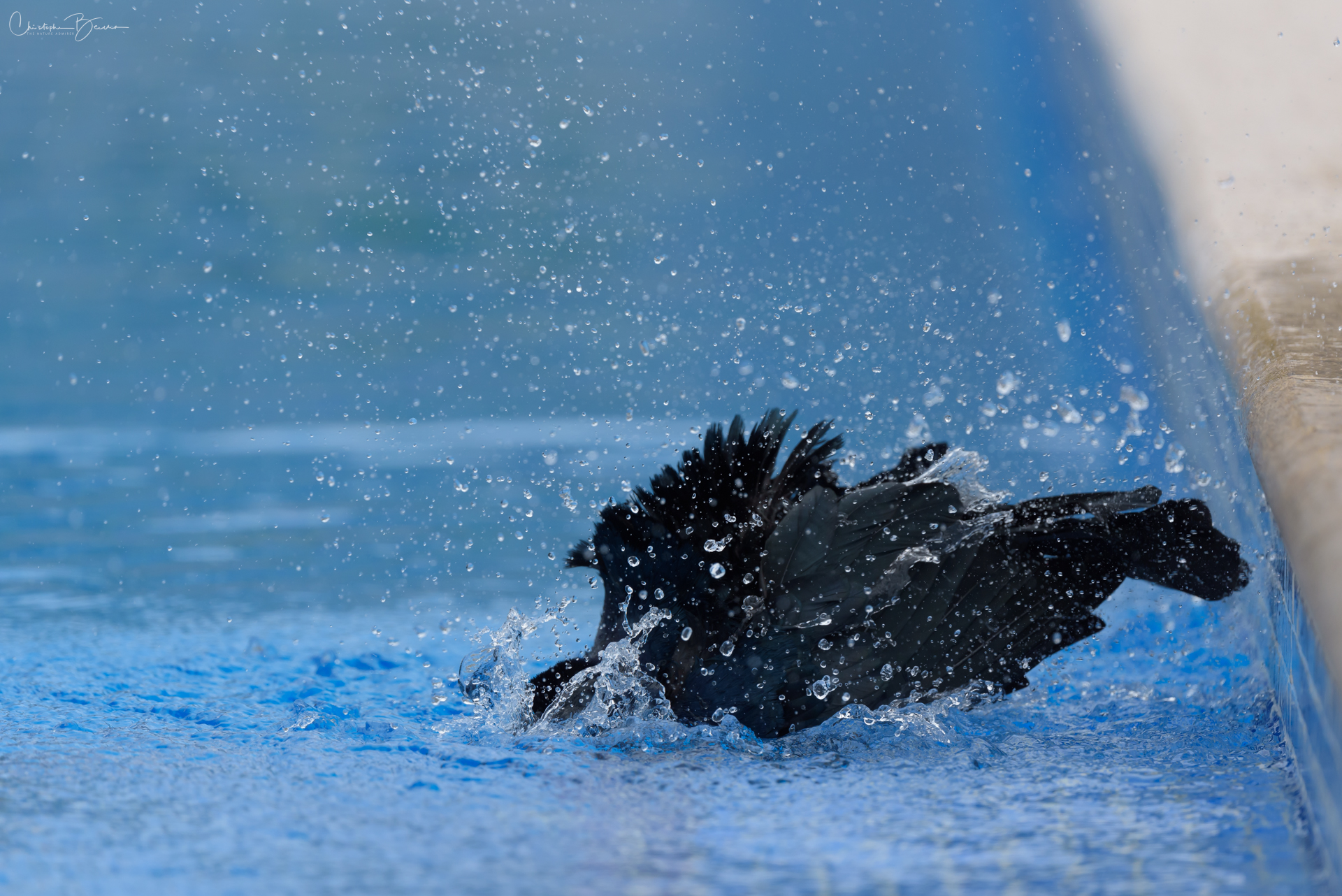
Even though the Great-tailed Grackle has become unpopular for most people due to their feeding habits, the male is a beautiful black bird that shines in blue when exposed to sunlight. Granted they cause trouble to other birds, as they will readily raid nests with eggs and hatchlings, but in some sense that’s really their role in the ecosystem, as with their predatory behavior they prevent some species to grow out of control. Males are very noisy and display as they sing their metallic tones into the air; their tails have a v-shape as they are wider in the end that in the base. The females are entirely drab brown with a yellow iris. They thrive near human settlements, eating insects, but also a variety of plants, including fruits, which has gained them the reputation of pests in many areas.