Page 17 of 31

Buff-rumped Warbler (Myiothlypis fulvicauda)

The Buff-rumped Warbler is a small, loud bird of the Caribbean and Pacific lowlands, usually found in close proximity to water streams and rivers, much like the Torrent Tyrannulet does in higher elevations. The places it inhabits are dark, hence it is difficult to see; look for two essential clues: 1) An accelerating high pitched song that seems to come from a water source and 2) a small white patch that swings from one side to the other close to the ground, which is caused by the bird’s habit to swing its tail in such a fashion. It can also be spotted as it flies away rapidly when people approach them.

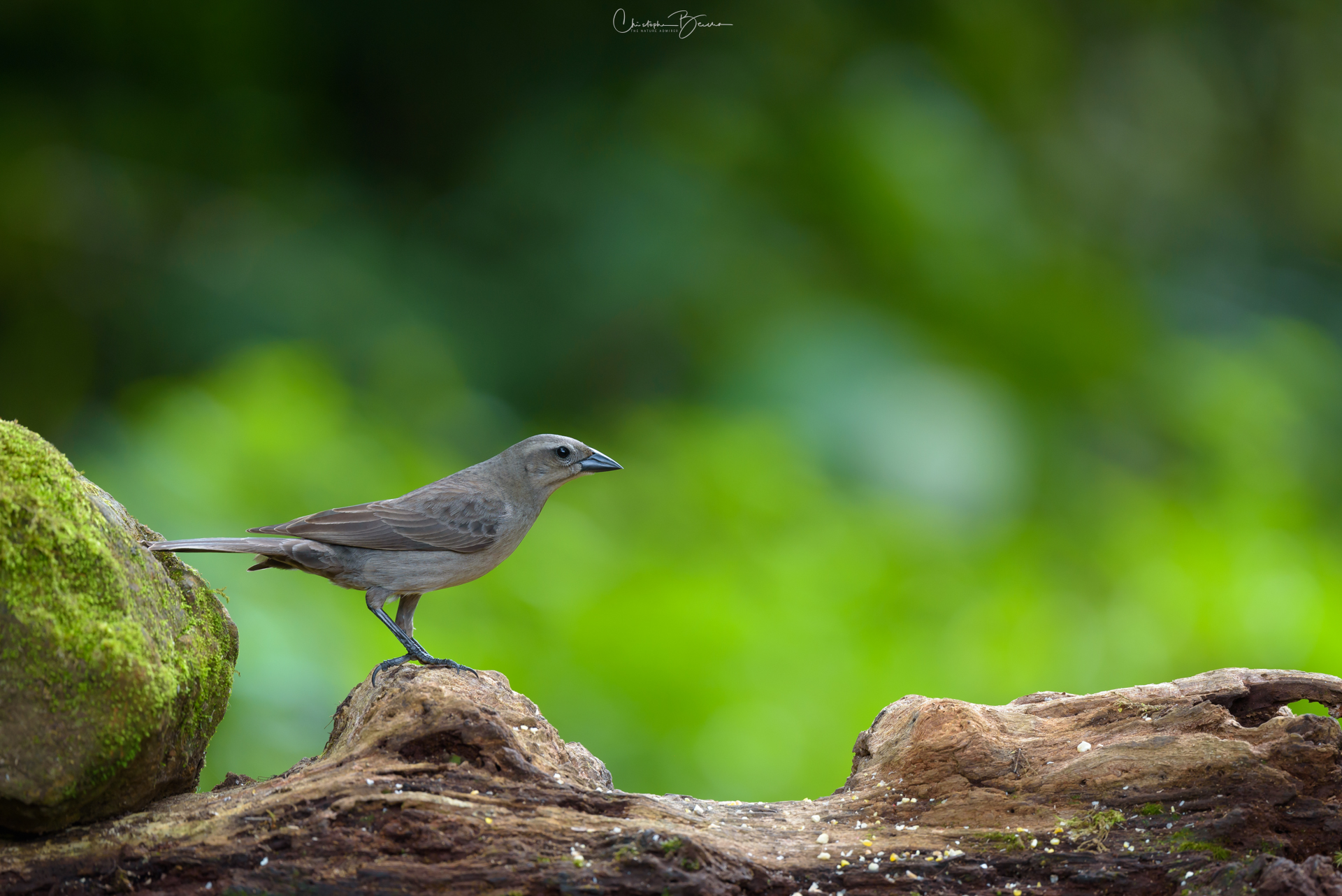
Grayish Saltator (Saltator coerulescens)

The Grayish Saltator belongs to the same family as the Black-headed Saltator, which at my parent’s home in Río Frío is much more common. As it name implies, its upperparts are gray, but the underparts are brownish, particularly close to the vent. The throat has a central white stripe, bordered by two black strips. It also shows a white supercilliary which ends right after the eye. The beak is strong as other Saltators. They sometimes come to fruit feeders, but are more wary that most other birds.

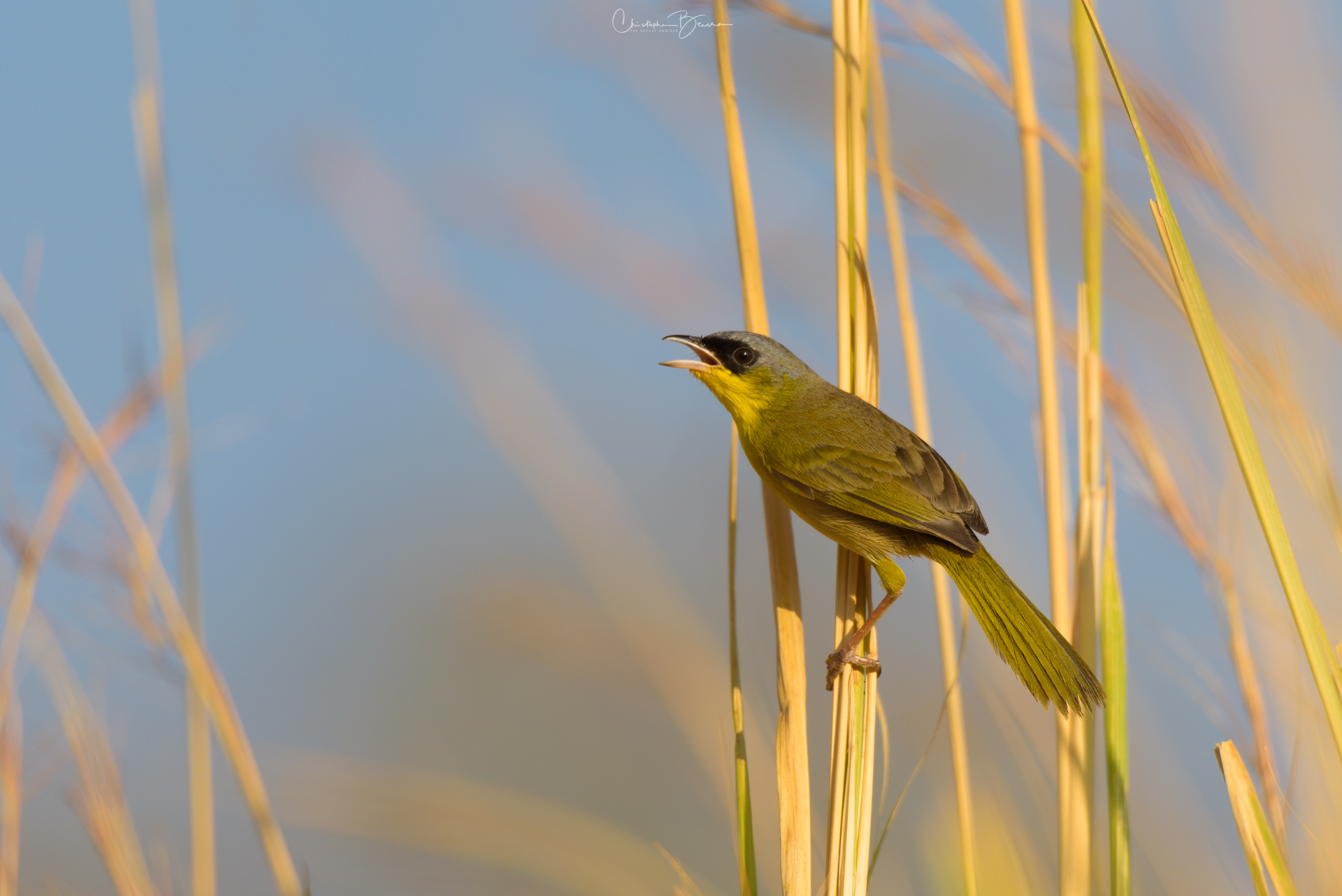
Gray-crowned Yellowthroat (Geothlypis poliocephala)

The Gray-crowned Yellowthroat is a member of the Warbler family. Its body is generally yellow, with a small black mask and gray crown in the male, features which are much smaller in the female. They have a longer tail and thicker bill than the other Yellowthroat species that occur in the country. The Gray-crowned Yellowthroat is resident and occurs throughout most of the country, while the Masked Yellowthroat is confined to a very small territory in San Vito, and the Olive-crowned Yellowthroat is only found on the caribbean lowlands and mid elevations. The Common Yellowthroat, on the other hand, is a passage migrant, seen from mid October to early April, with some individuals spending the whole winter in the country.

Ornate Hawk-Eagle (Spizaetus ornatus)

The Ornate Hawk-Eagle is one of the most sought-after birds in Costa Rica due to its elegant appearance and striking name. Juveniles are dull brown with white head and belly, while adults have a barred belly, black crest and chestnut sides of the face and throat. Its most flamboyant feature is the big crest that adults have. It also have feathered legs. Its preferred environment is the forest, where it catches a variety of prey, including big arboreal birds like the Great Currasow. It is most usually seen circling high on the sky, where it is difficult to identify in silhouette, however their vocalizations give them away easily.