Page 24 of 31

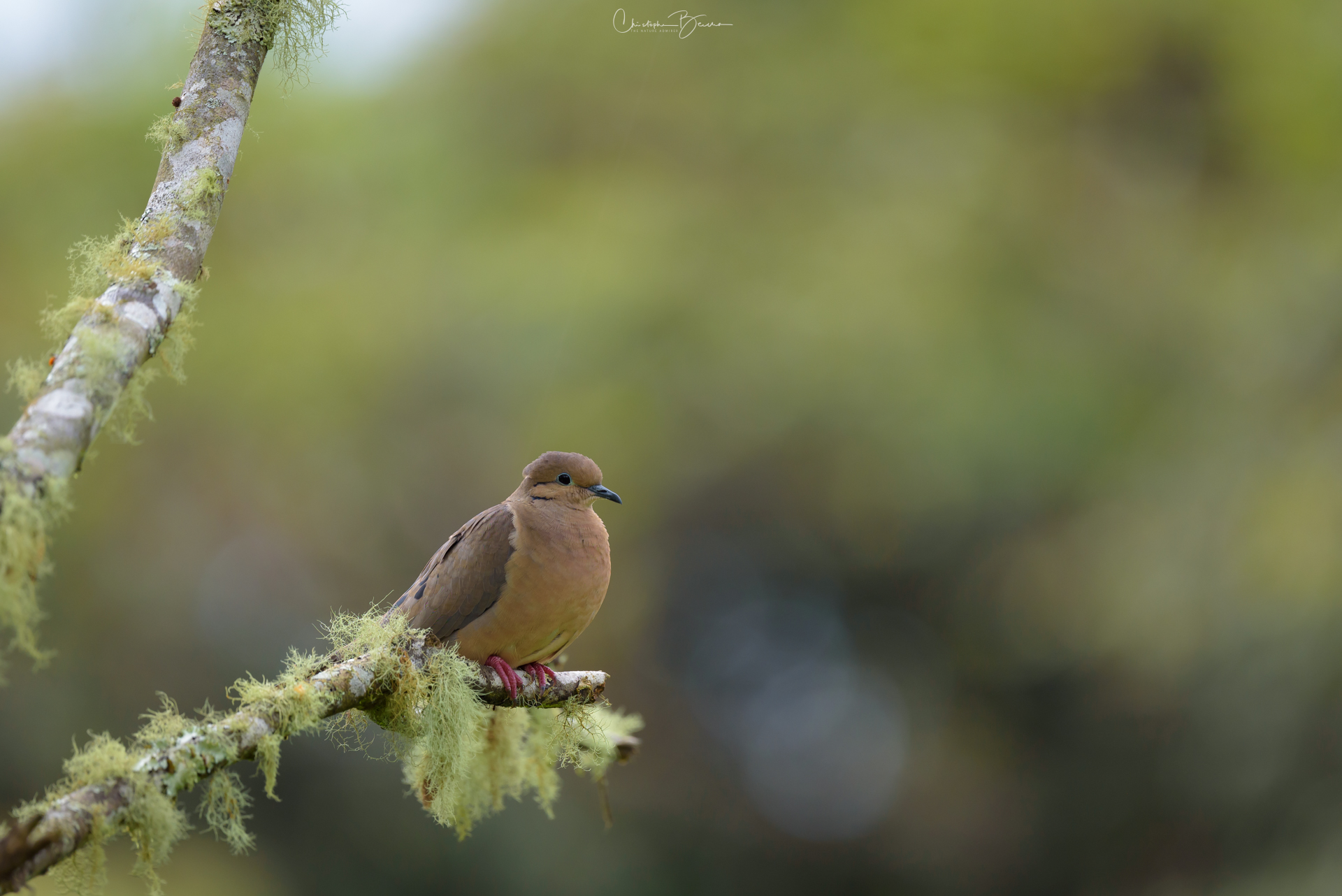
Plain-breasted Ground-Dove (Columbina minuta)

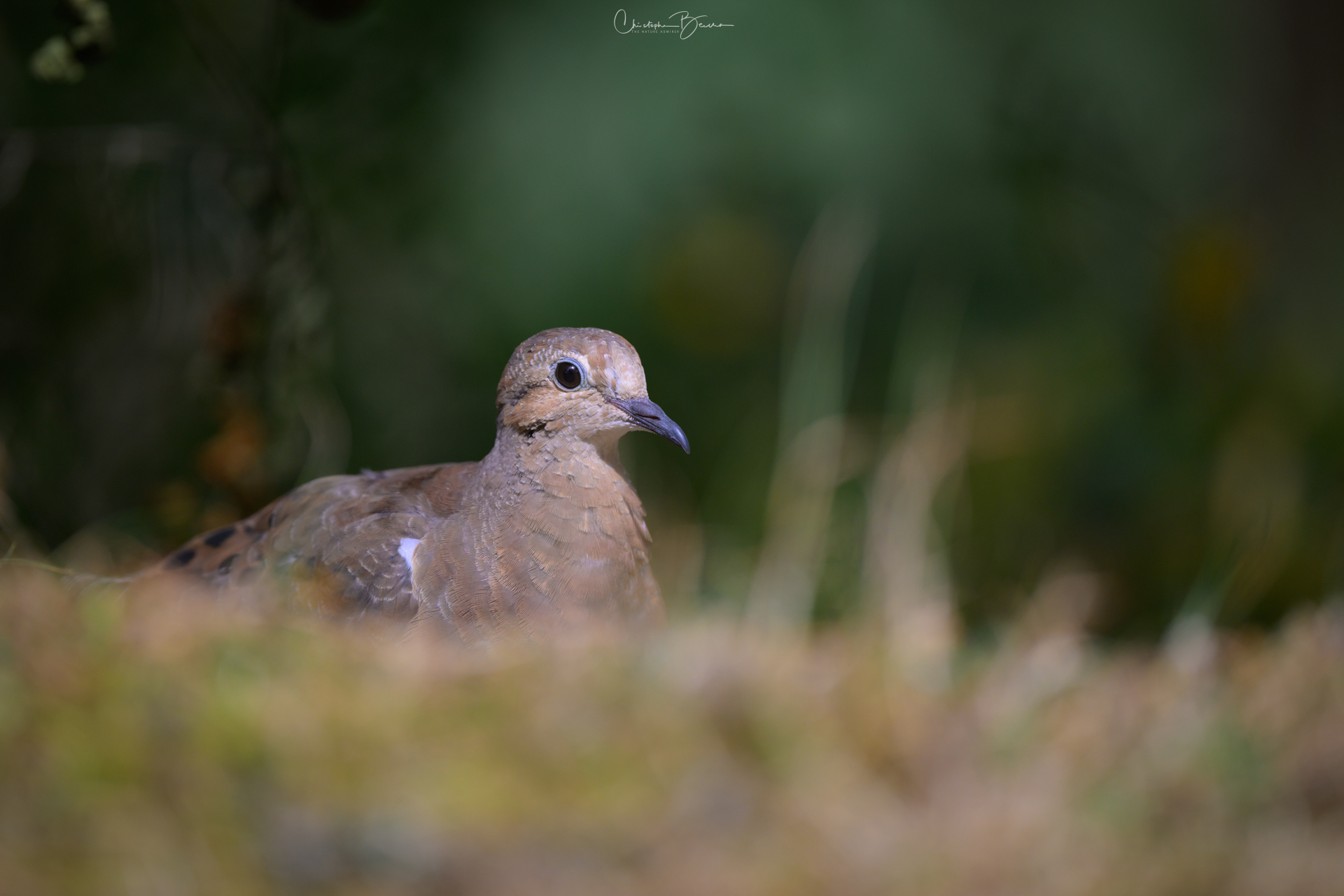
Although very similar in coloration and shape to the Ruddy Ground-Dove, this species is the smallest of all ground doves. They lack the scaled appearance of the Common and the Inca Doves. Their body is mostly uniform brown, with the male having a light gray head, and the female being duller in coloration overall. They both have red legs and a short yellowish bill. They sport black markings on the upper side of the wings. The female is even slightly smaller than the male. They forage by walking fast through the ground, picking out seeds, insects and fruit remains as they go. When startled, they fly away a few meters and land onto the ground to continue feeding.

Phelps’ Brush-Finch (Arremon perijanus)

The Phelps’ Brush-Finch is part of the Arremon genus, which has a variety of species that distribute through all South America, a few of which occur in Costa Rica. They are small birds that hop in the ground and forage by snatching worms and insects from their hides. Its back and wings are olive in coloration, with gray flanks that join with the supercilliary. It has black cheeks and a black line above the supercilliary, with a gray line that goes through the center of the head, and those features give it a striped look. It has a white throat and chest. Their eyes are reddish-brown.

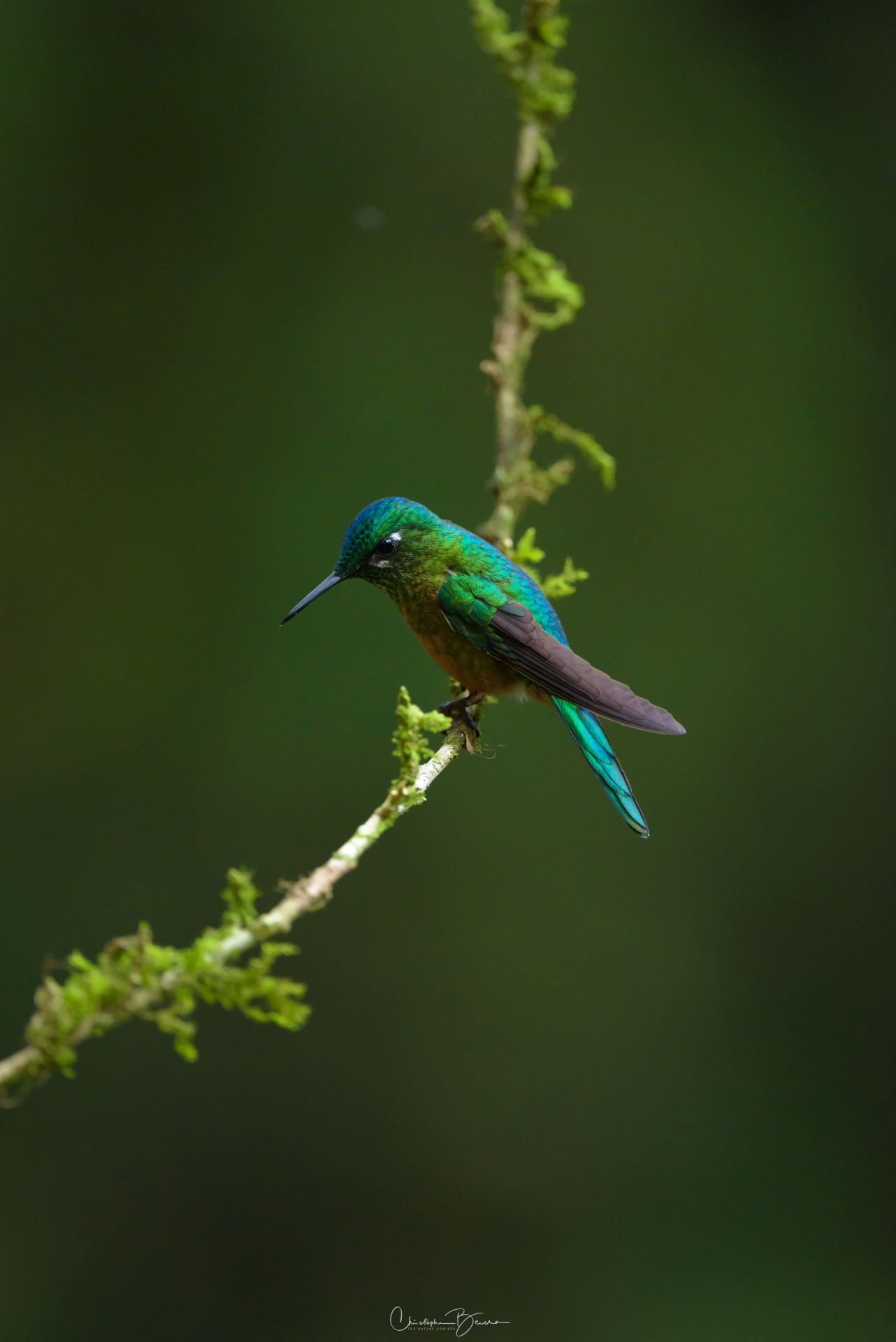
Long-tailed Sylph (Aglaiocercus kingii)

The Long-tailed Sylph is member of a genus with long tails, with the Violet-tailed Sylph being the other species that can be readily found in Colombia. The Long-tailed is overall very green, with a glittering emerald patch on the front of the head. The wings are very long and extend far beyond the base of the tail. However its most definitive feature is its long tail, which can measure up to 12 centimeters in length and account for around two thirds of the overall length of the bird; this is a huge burden for the bird as it flies around from flower to flower in search of nectar. The female has a fairly short tail instead, a characteristic known as dymorphism, which is very common in bird species.

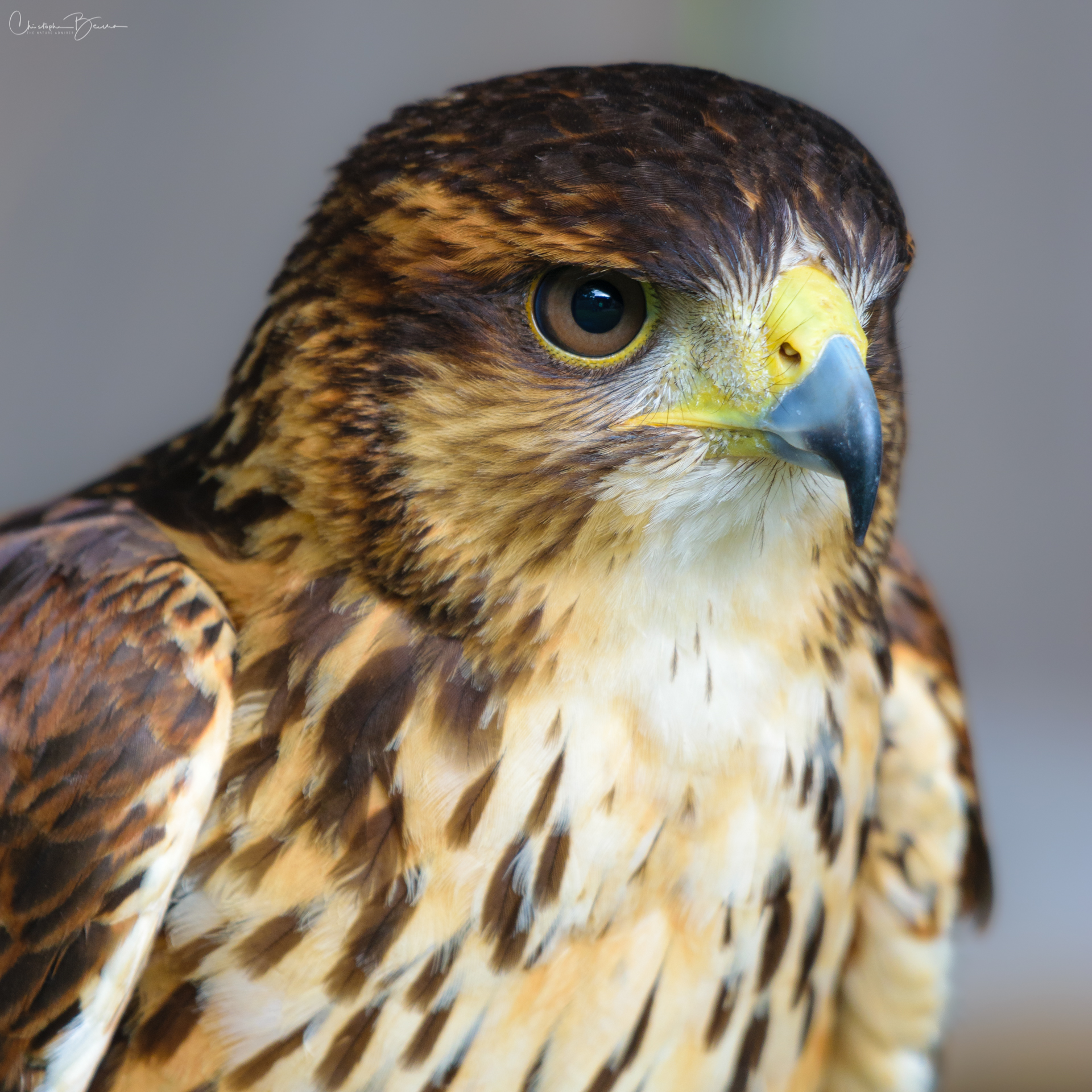
Harris’s Hawk (Parabuteo unicinctus)

The Harris’s Hawk is a medium-sized bird of prey that ranges from south United States all the way to Brazil and Argentina. Adults are very dark with chestnut on the shoulders, wings and legs, as well as some patches on the head. The juveniles are lighter in coloration overall, with wings underside being buff to white and having dark streaking. Their eyes are very big and situated all the way forward, allowing them for good tridimensional vision and distance judging, essential for spotting and catching prey. Due to their intelligence, they are sought after for falconry, particularly in some parts of Europe. In their natural environment, they are known for cooperating and hunting in groups up to seven individuals, with the mature female being the highest ranked individual.
Green-and-black Fruiteater (Pipreola riefferii)

The Green-and-black Fruiteater is a species of the Cotingidae family, despite having a body form similar to a Tanager. The female is entirely green with yellow streaking on the belly, and red bill and legs. The male is similar, but has a black head and a yellow necklace that separates the black head from the green belly. We saw this species as we searched for the Gold-ringed Tanager at Tatama National Park. It was not surprisingly perching on a branch that showed some small fruits, which presumably were being eaten by the bird.

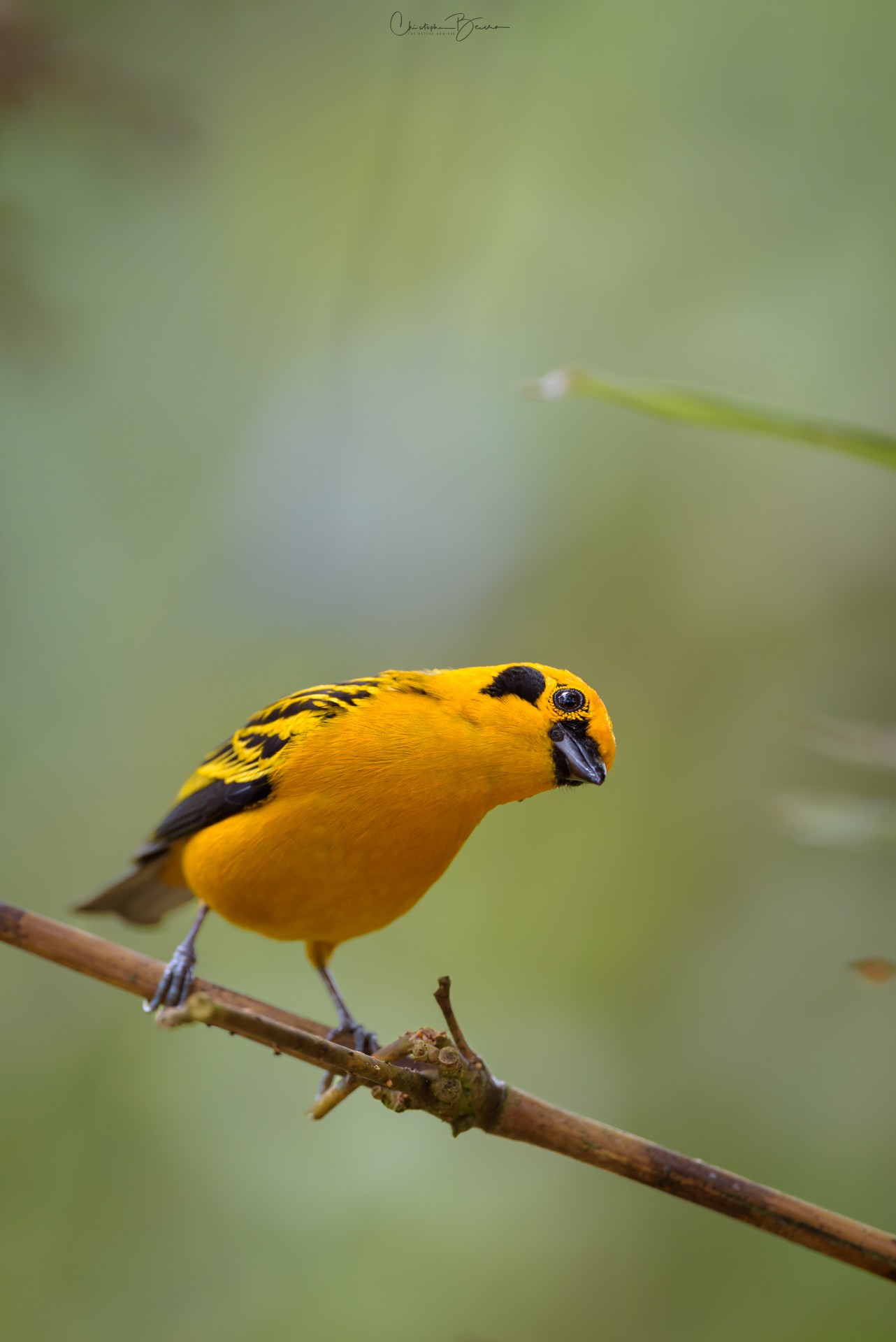
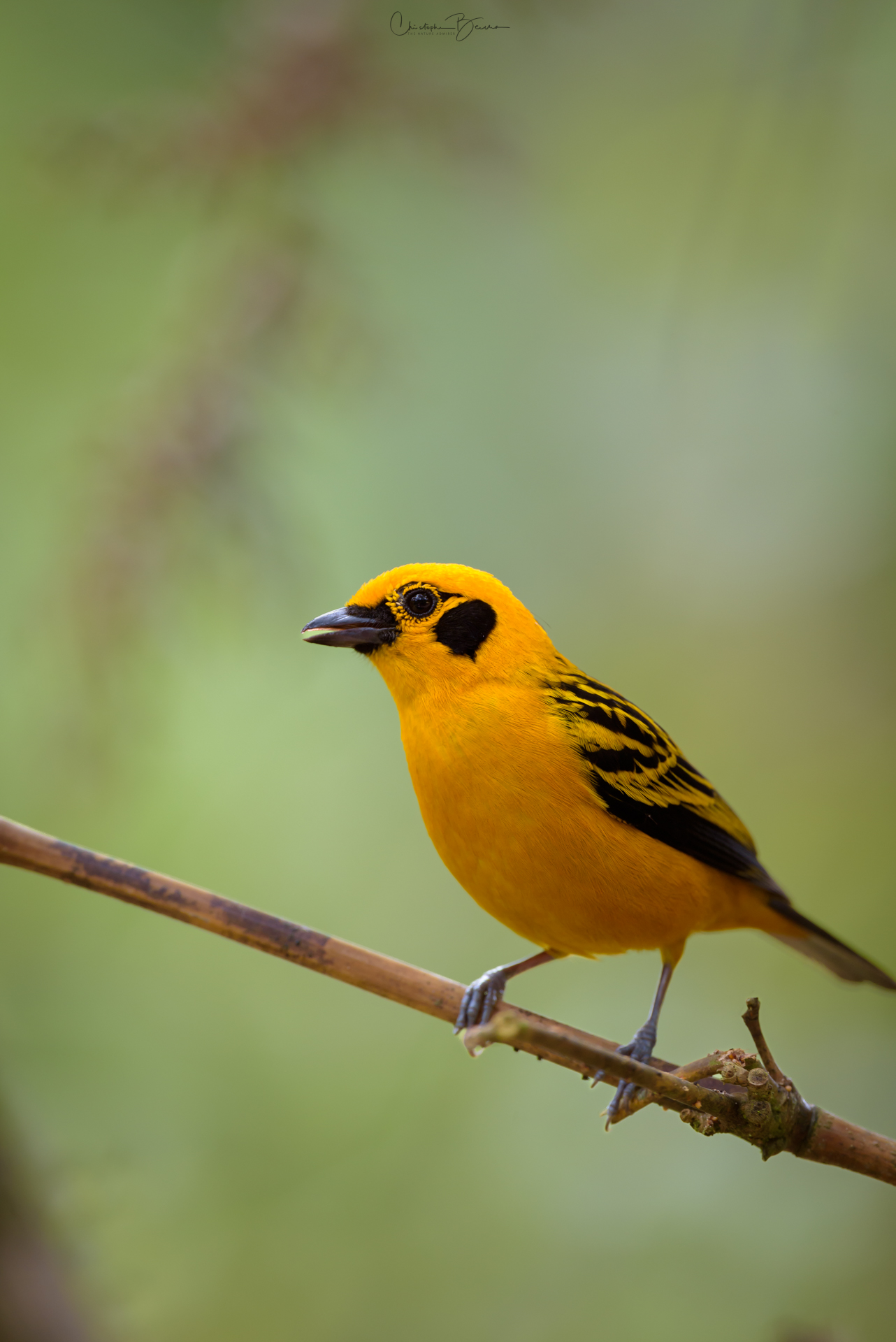
Golden Tanager (Tangara arthus)

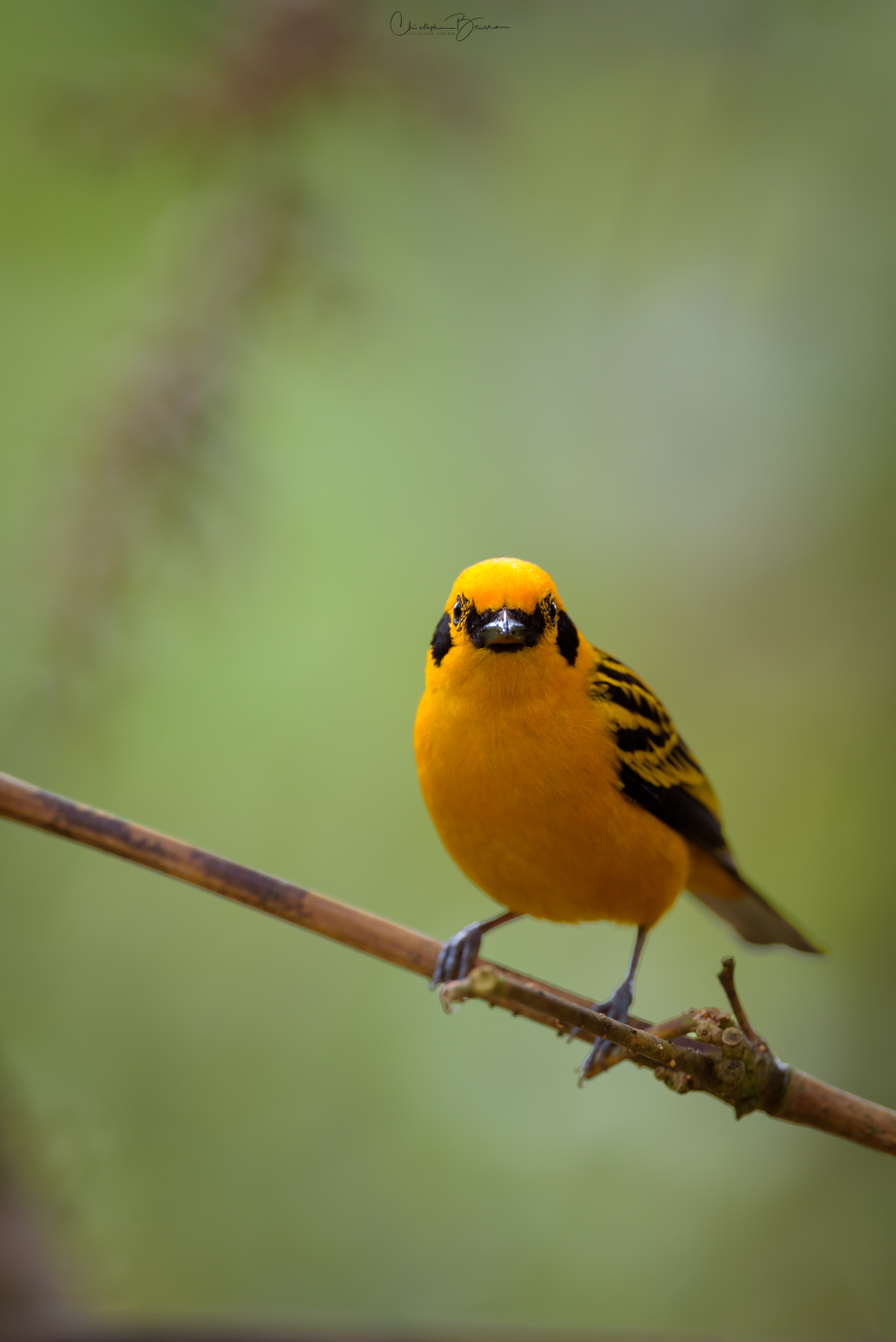
The Golden Tanager at first glance may resemble a bit the Silver-throated Tanager due to their similar body form, however the Golden is much darker in coloration with an orange body, and lacks the distinctive white throat of the Silver-thorated. Instead, it features a black ear patch. The back has heavy black markings all around, and the wings also are very contrasty. They readily come to fruit feeders and shares a space with other tanagers and honeycreepers.

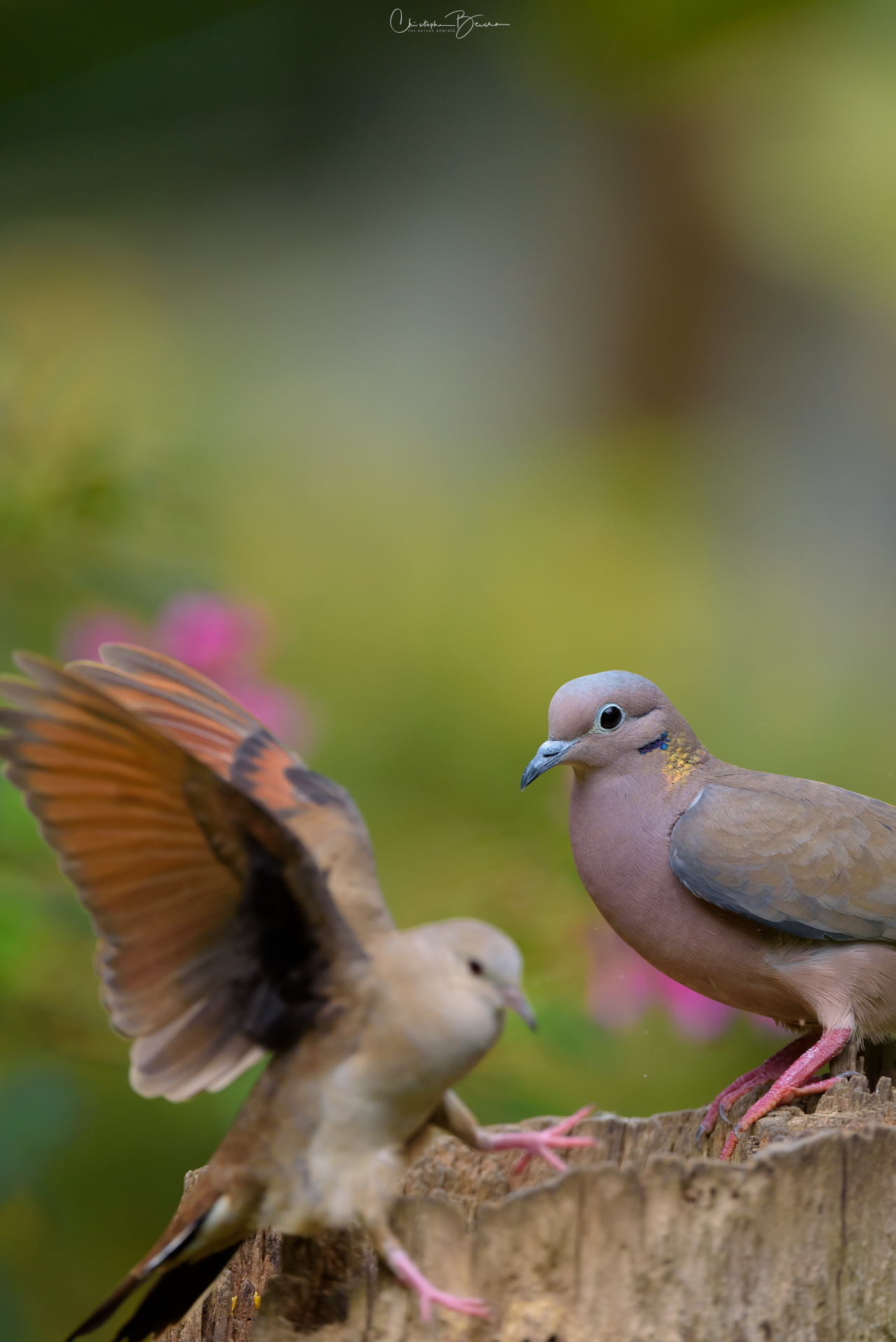
Eared Dove (Zenaida auriculata)

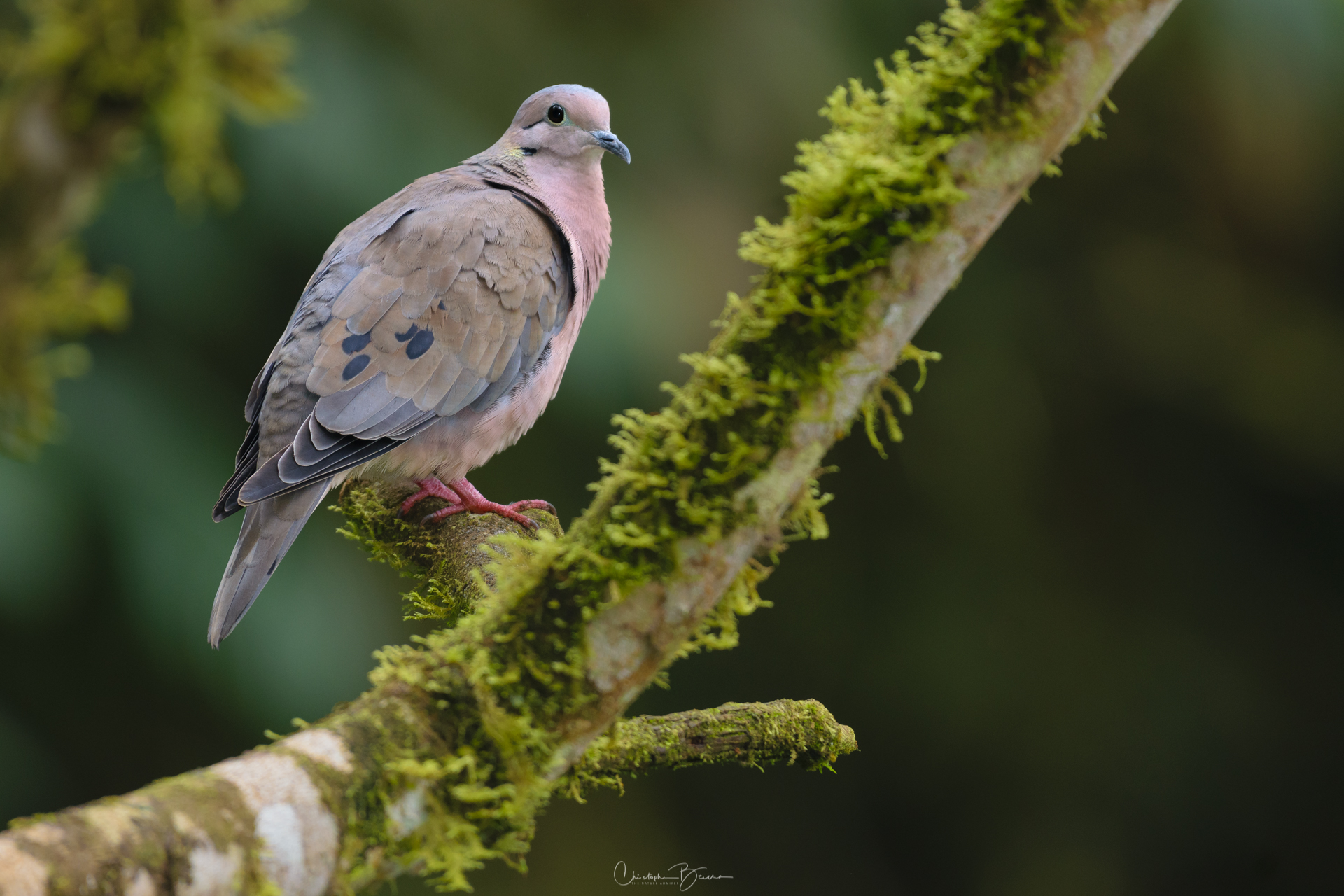
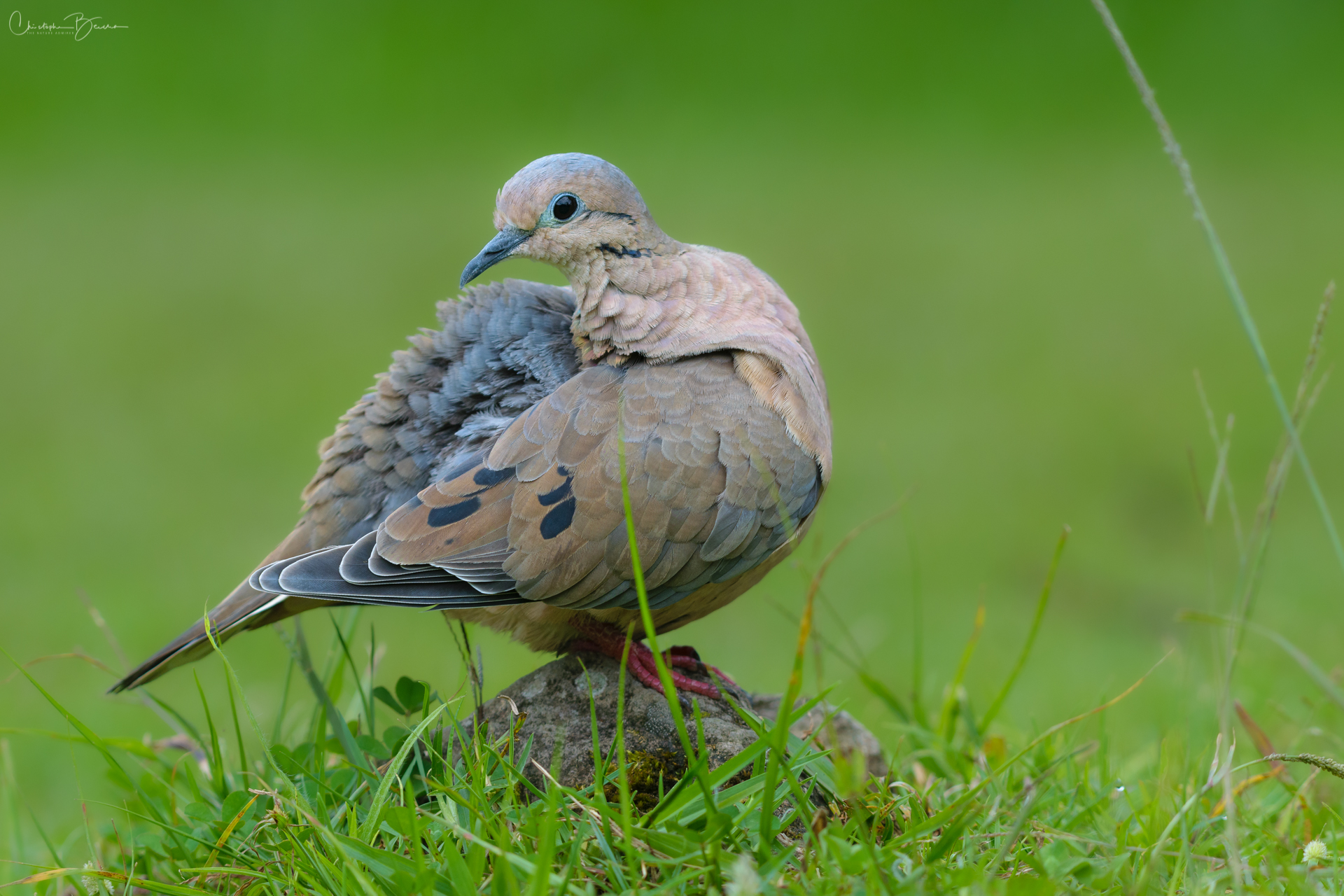
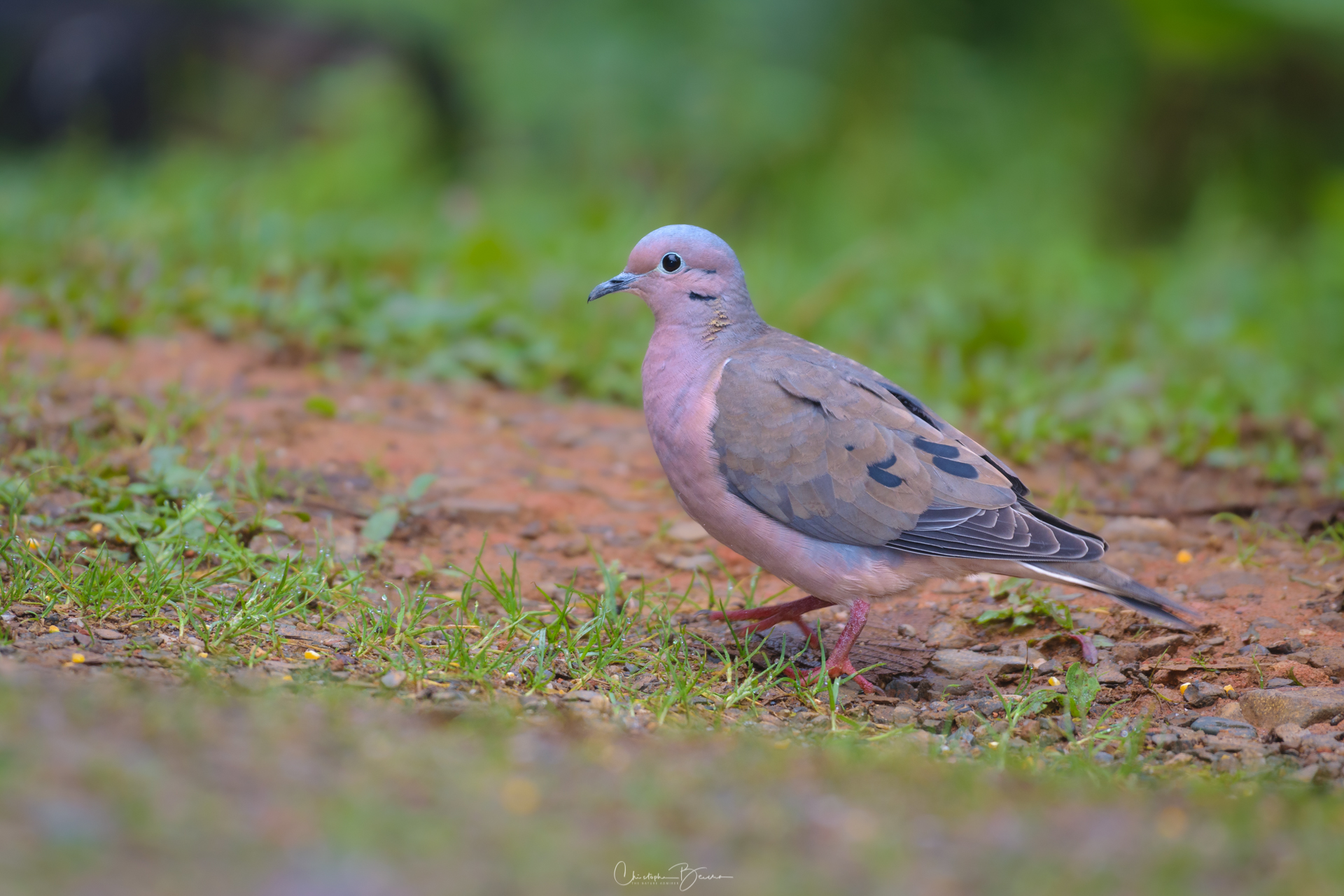
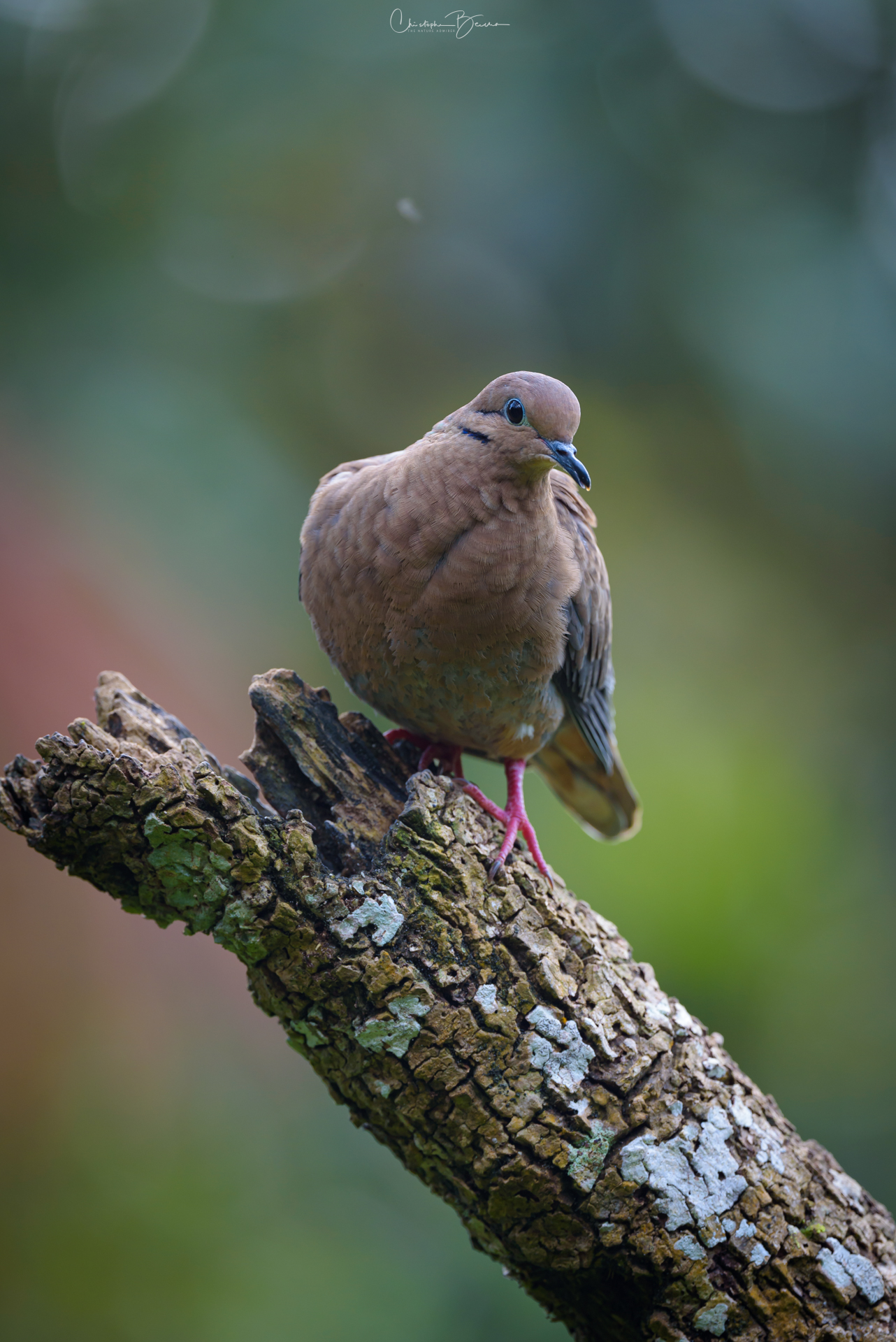
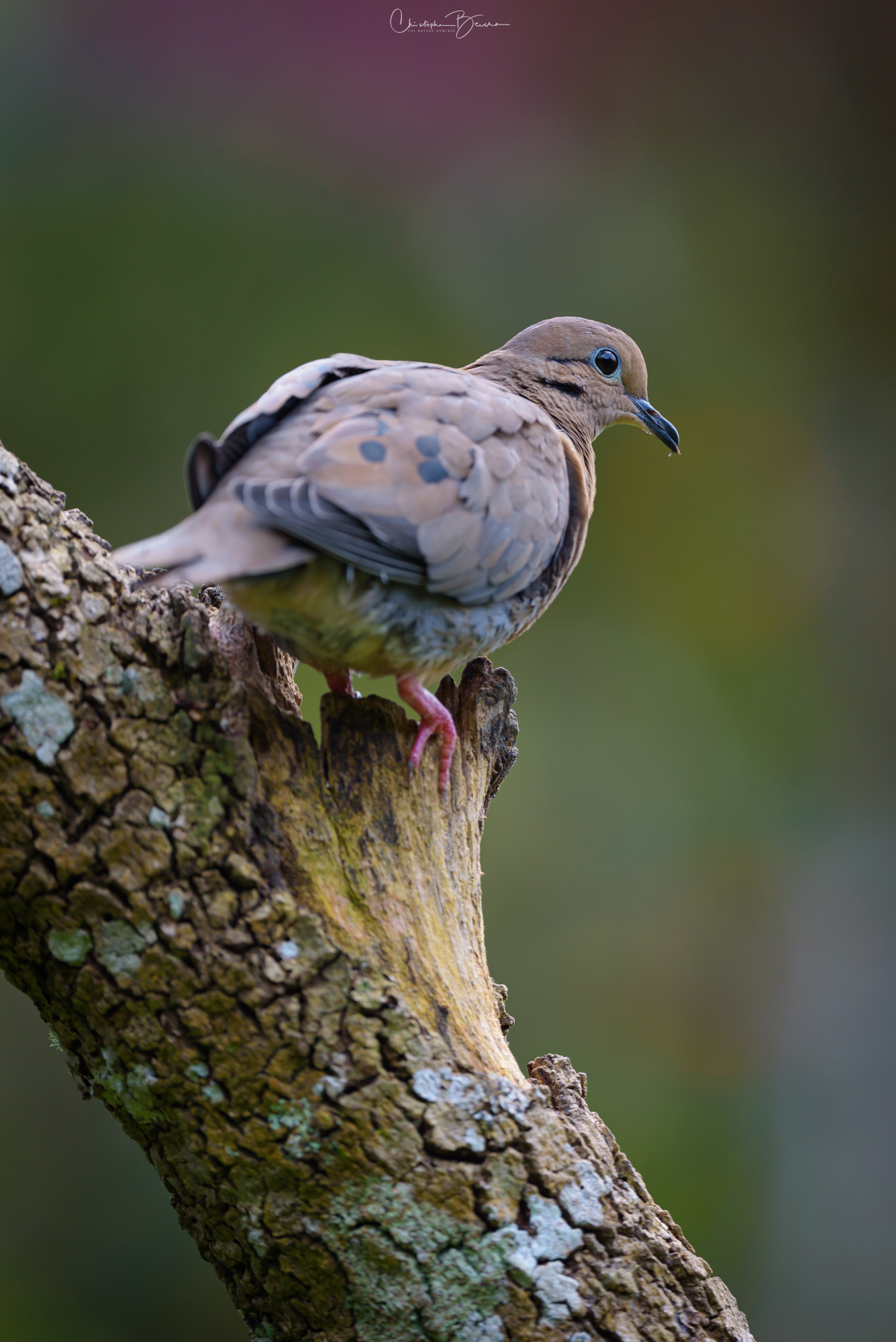
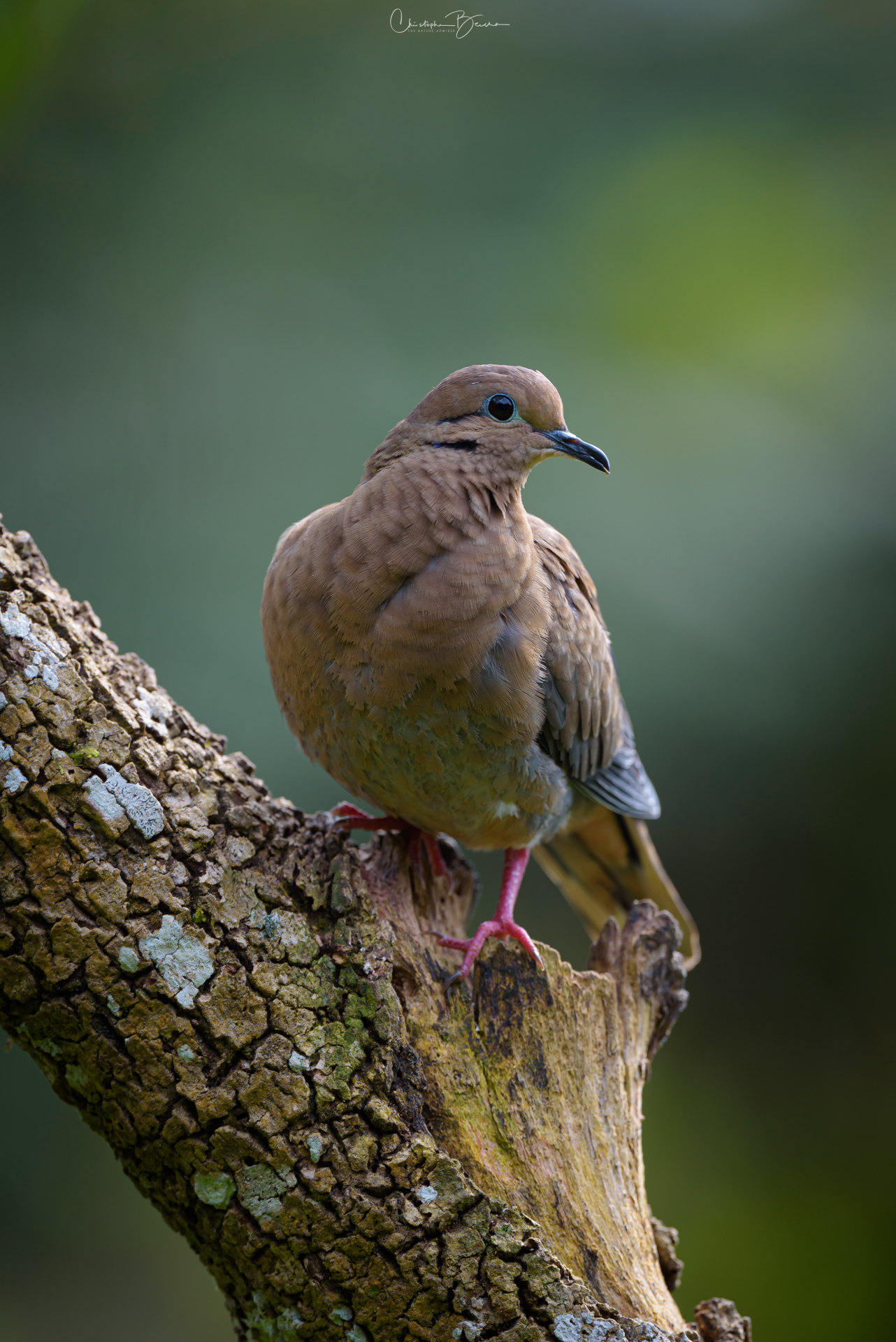
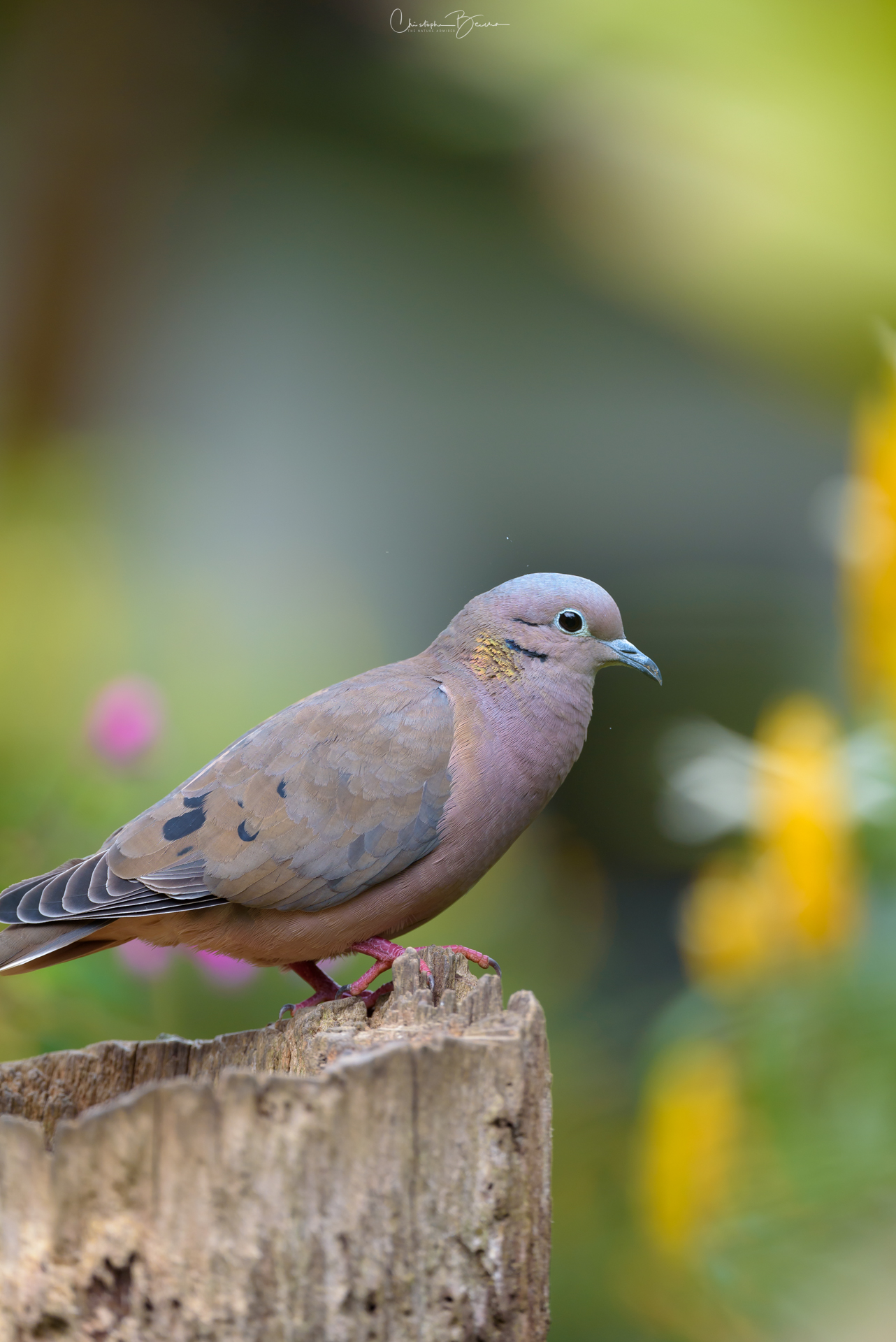
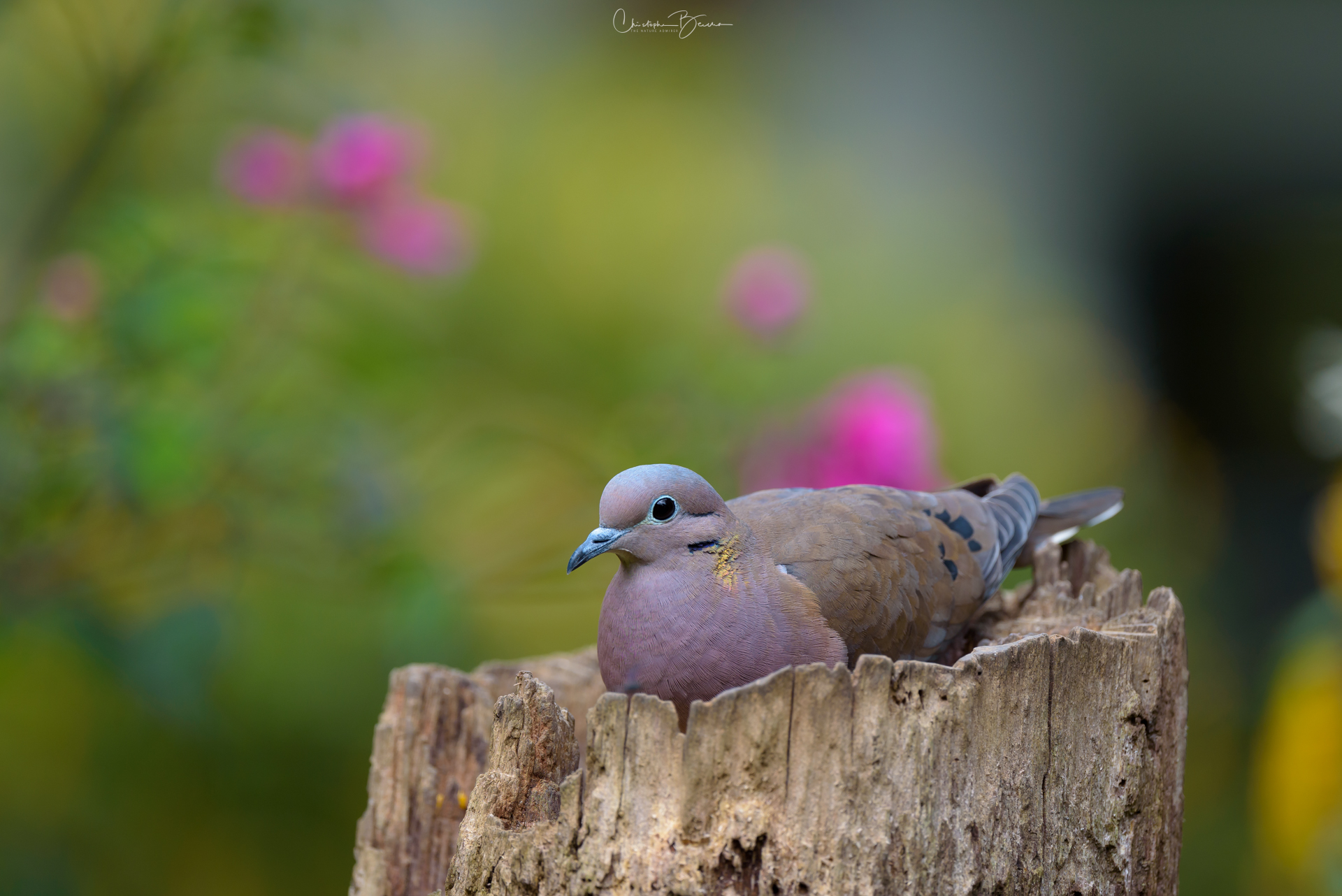
The Eared Dove is a relatively large dove, similar in size and shape to the White-winged Dove that we have in Costa Rica, but without the characteristic white on the wing. Its body is mostly grayish with olive tones on the back and wings, along with black spots. Its legs are red and the bill is short and a little bit curved down. An interesting feature is that it has some iridescence on the sides of the throat, which can be revealed when the neck is stretched out. They frequently forage on the ground, picking out seeds, but when flushed will look for branches high on the trees to remain safe. In some parts of South America, they are hunted down, yet their populations remain strong in numbers.
Chestnut-breasted Chlorophonia (Chlorophonia pyrrhophrys)

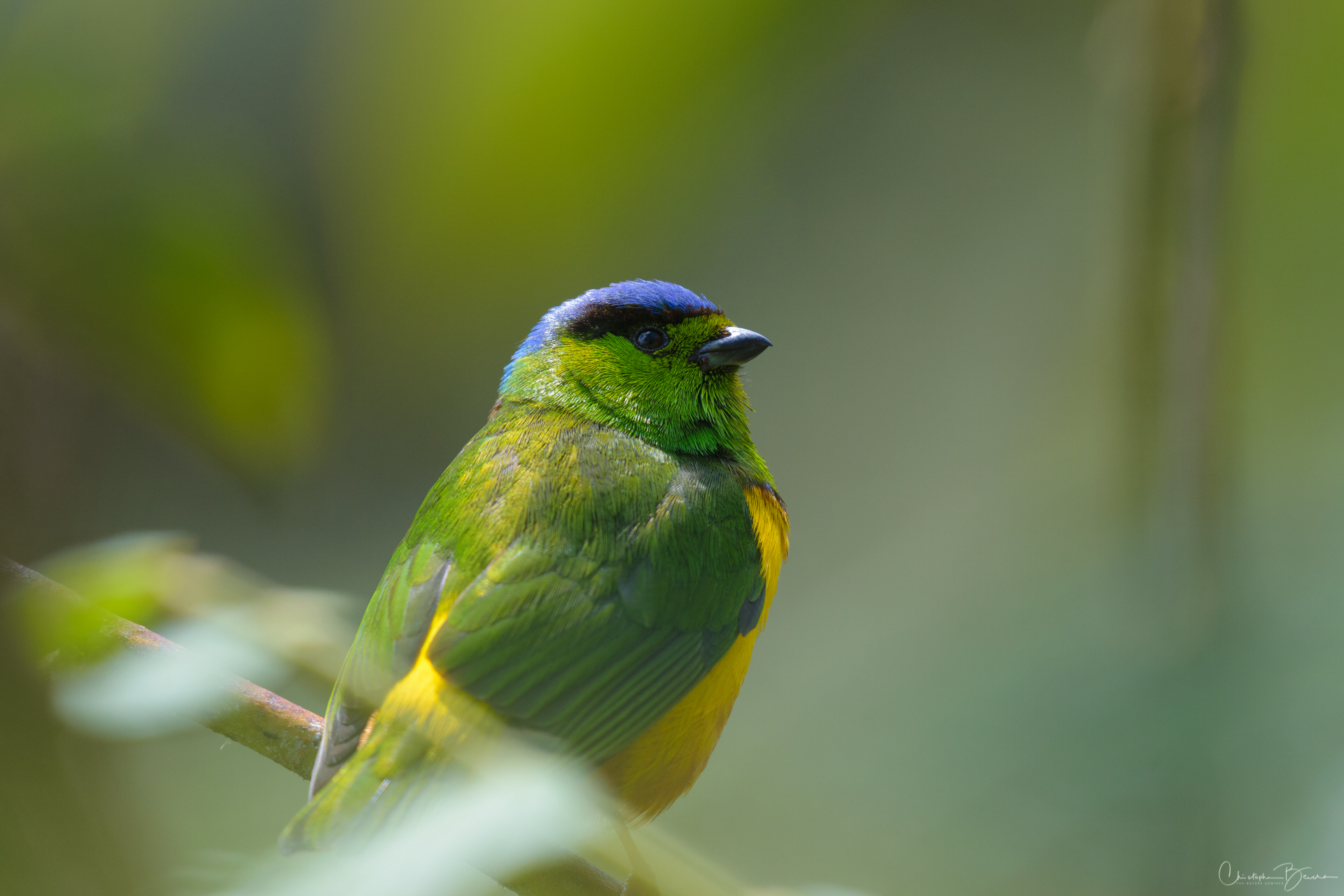
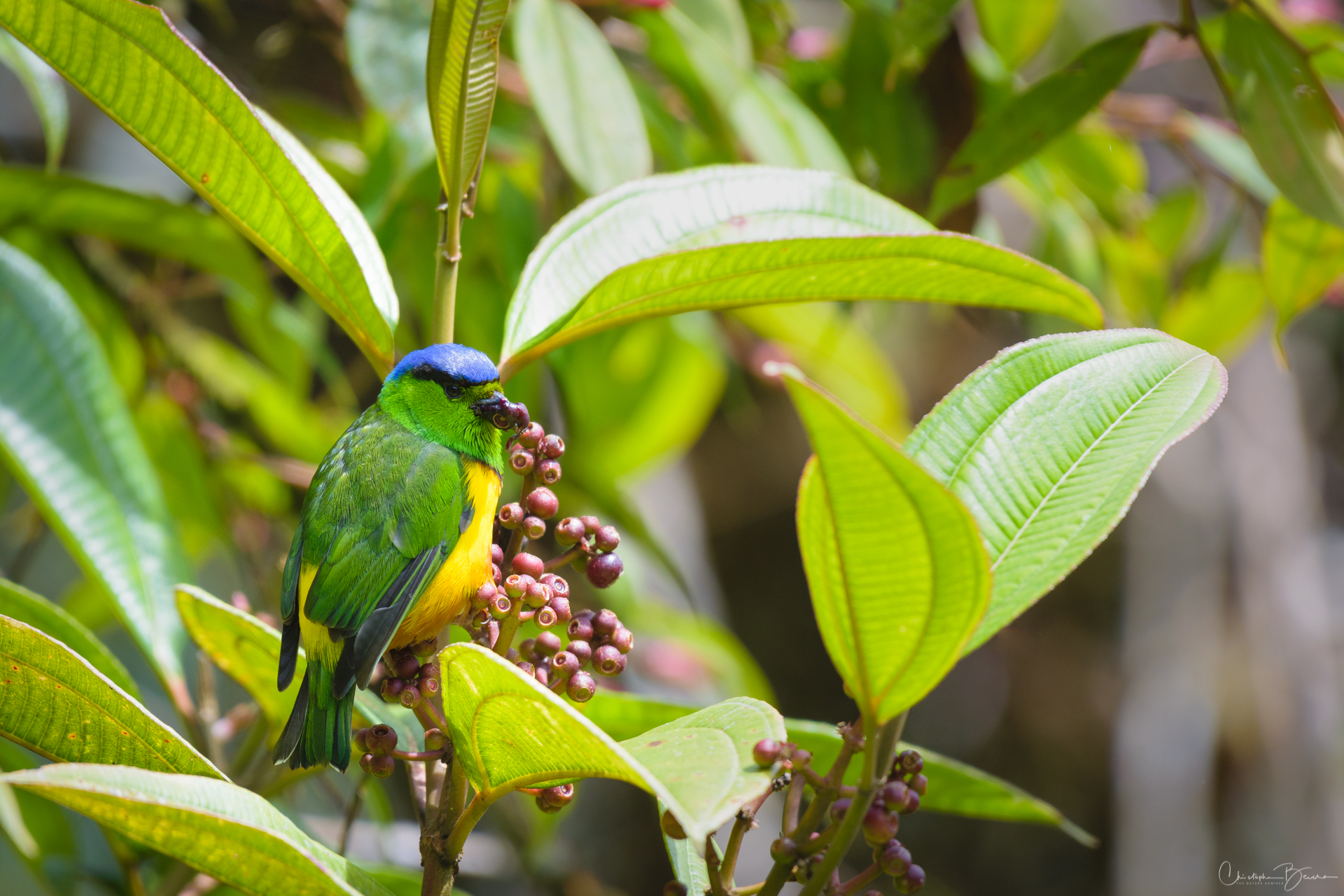
The Chestnut-breasted Chlorophonia has a very descriptive name, although I could not get any pictures where that breast is visible. Its colors range from dark green on the back and wings, lighter green on the throat and face, yellow rump, black supercilliary and blue cap. On the underside, the male features a yellow belly with a chestnut breast, whereas the female is mostly green below. They like to eat small fruits and do not seem to be too frightened of people. As a matter of fact, one bird almost perches on my lens but preferred to land on a nearby bush that could provide actual food. It stayed for about half an hour, not feeling threatened at all by us shooting pictures at him.

Buff-tailed Coronet (Boissonneaua flavescens)

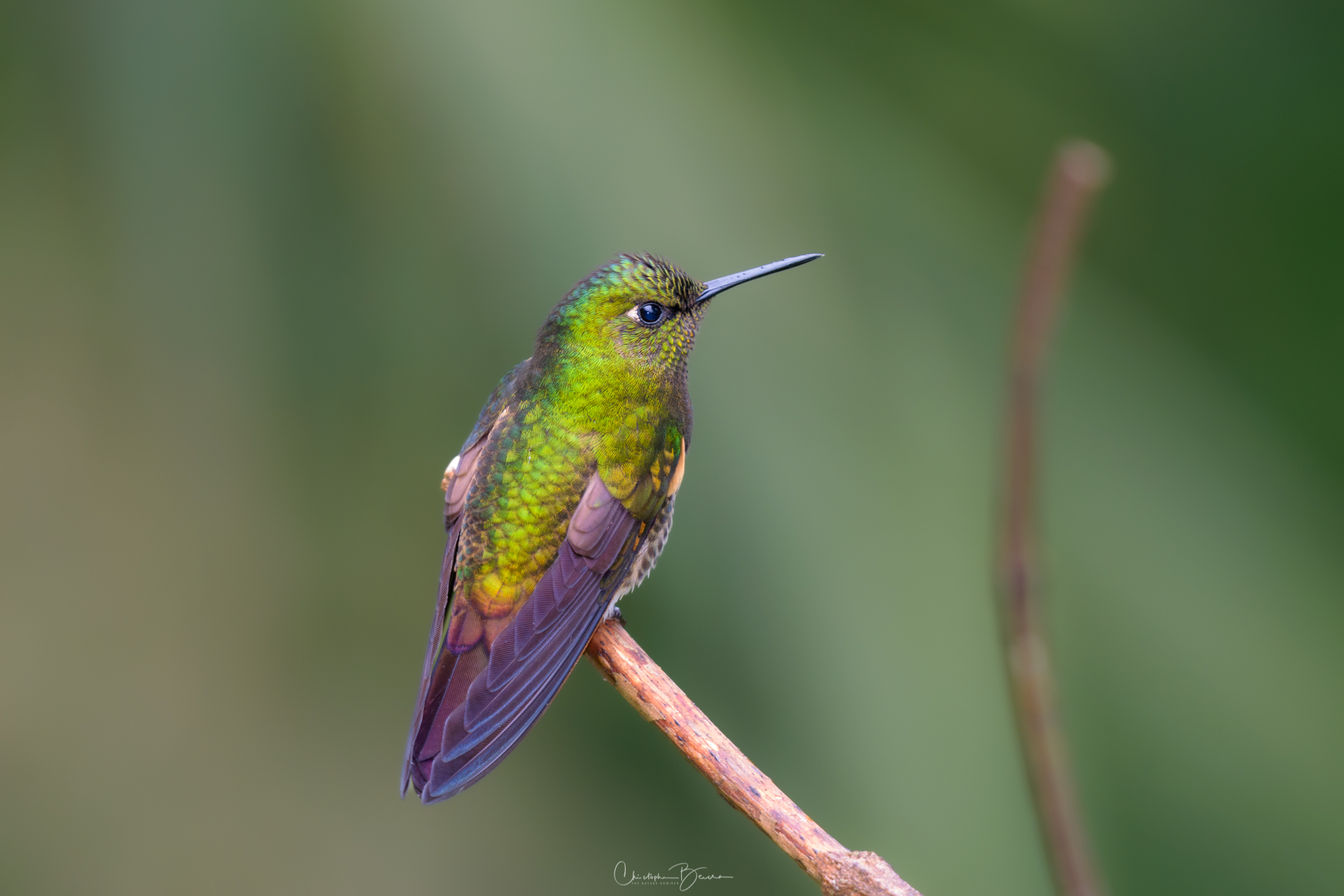
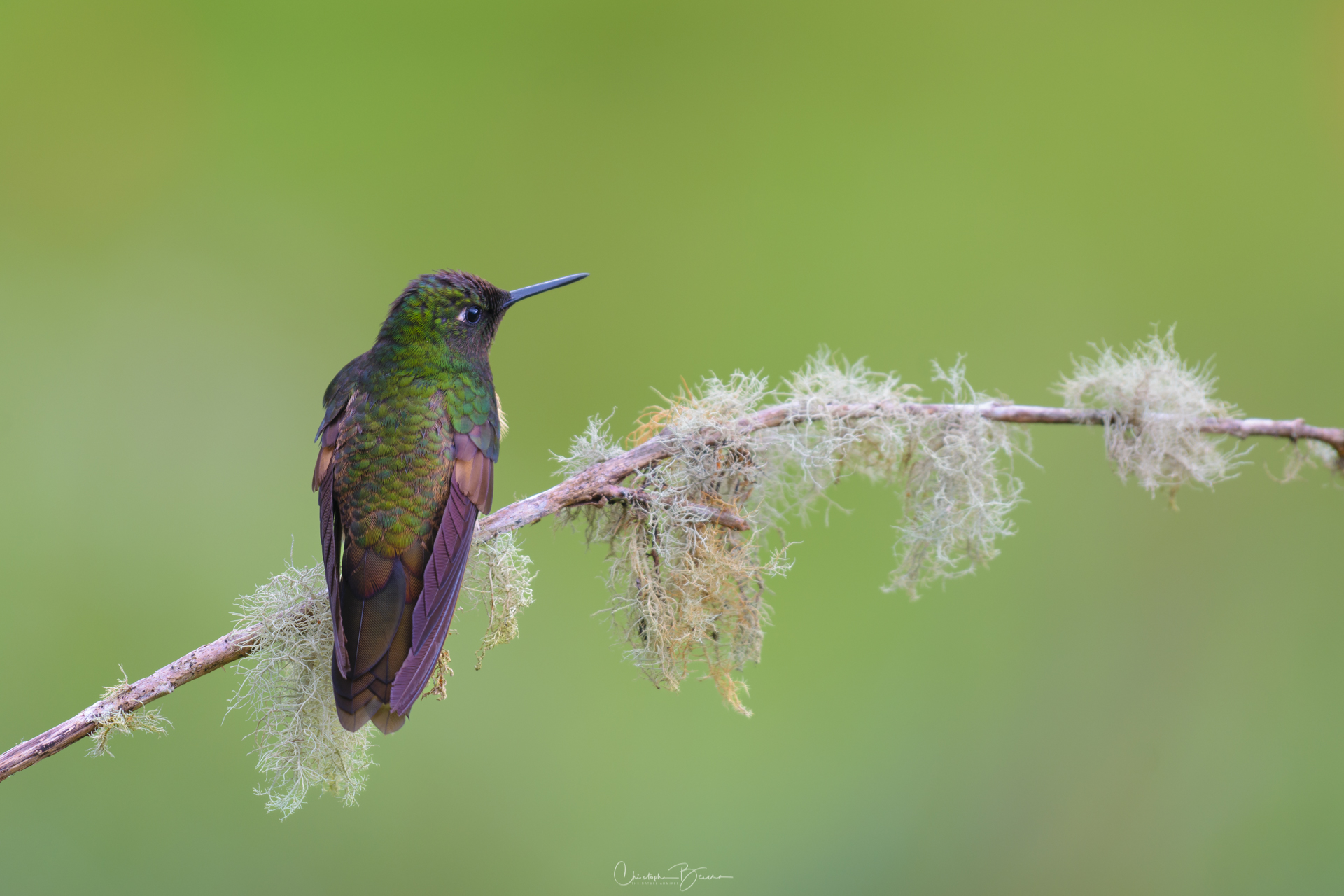
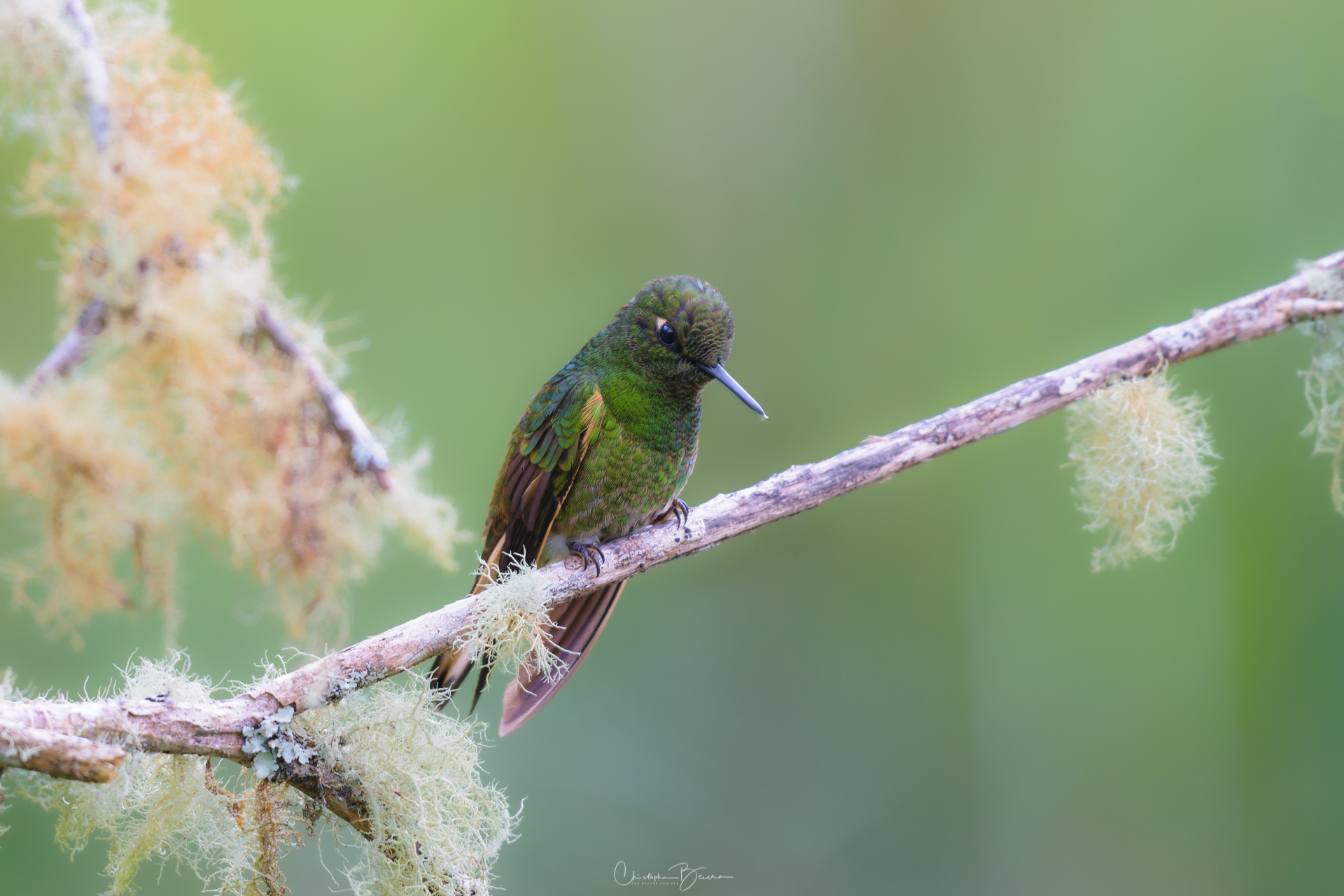
The Buff-tailed Coronet is among the most common hummingbirds in the areas of Colombia we visited. Its body color is green in general, with a scaled pattern on the belly, although the back can look reddish under the right light. The wings are brown and are long enough to cover the tail when folded down and perched. The white postocular spot is a defining feature, along with the buffy shoulders and white feathers that cover their feet, similar to the Booted Racket-tail. The bill is short and straight, entirely black. They like to perch for a few minutes in small branches, and when their feel their personal space is threatened by other individuals, they may put up a fight on the wing. Sometimes they perched alone, peacefully resting before flying again to drink more nectar, both from nearby flowers and from the feeders. It may not be the flashiest in terms of colors and anatomy, but it sure is beautiful to watch. In Rio Blanco Natural Reserve where we first saw them, they swarm in big numbers around the feeders, fighting each other and with other species.