Page 27 of 31

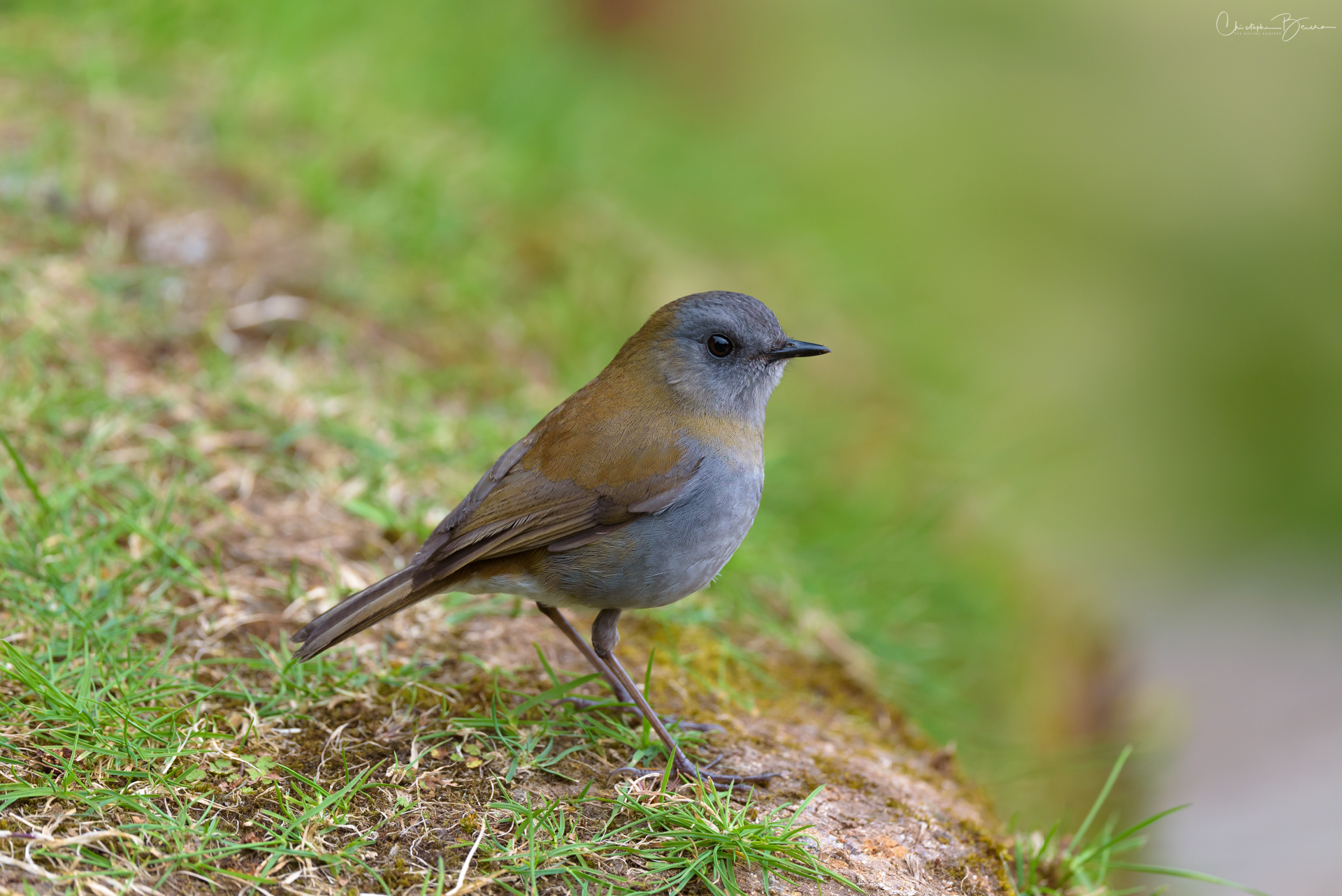
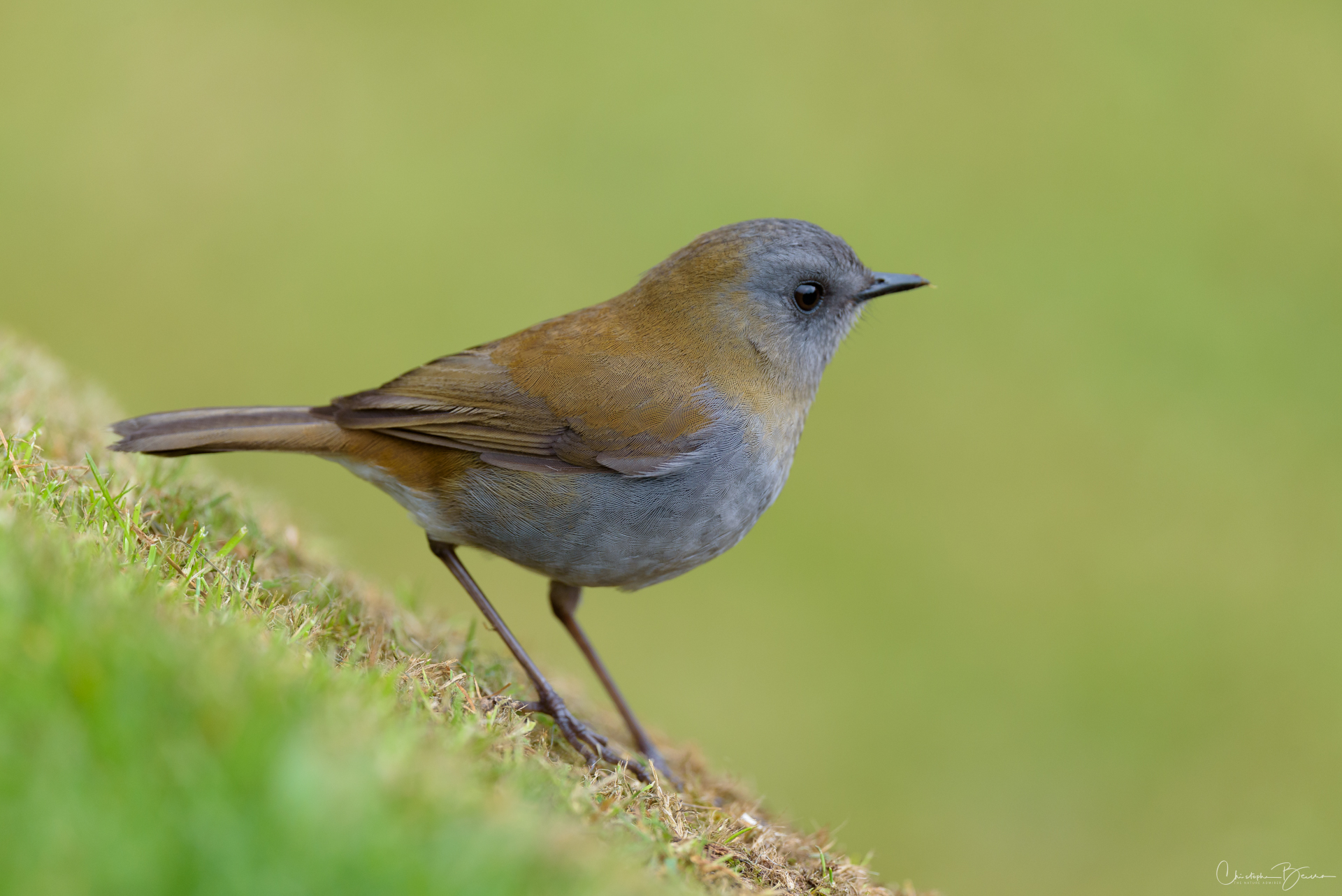
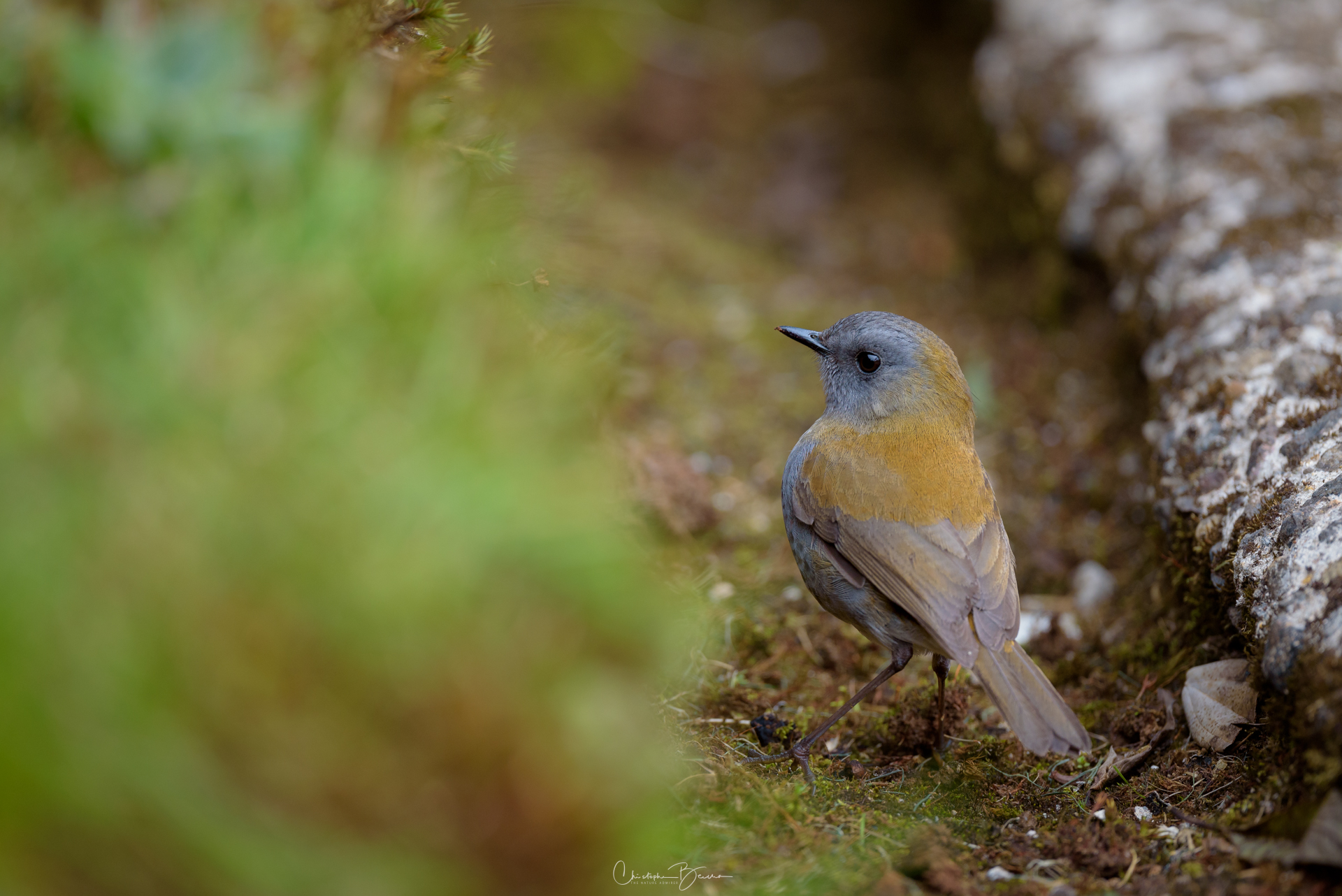
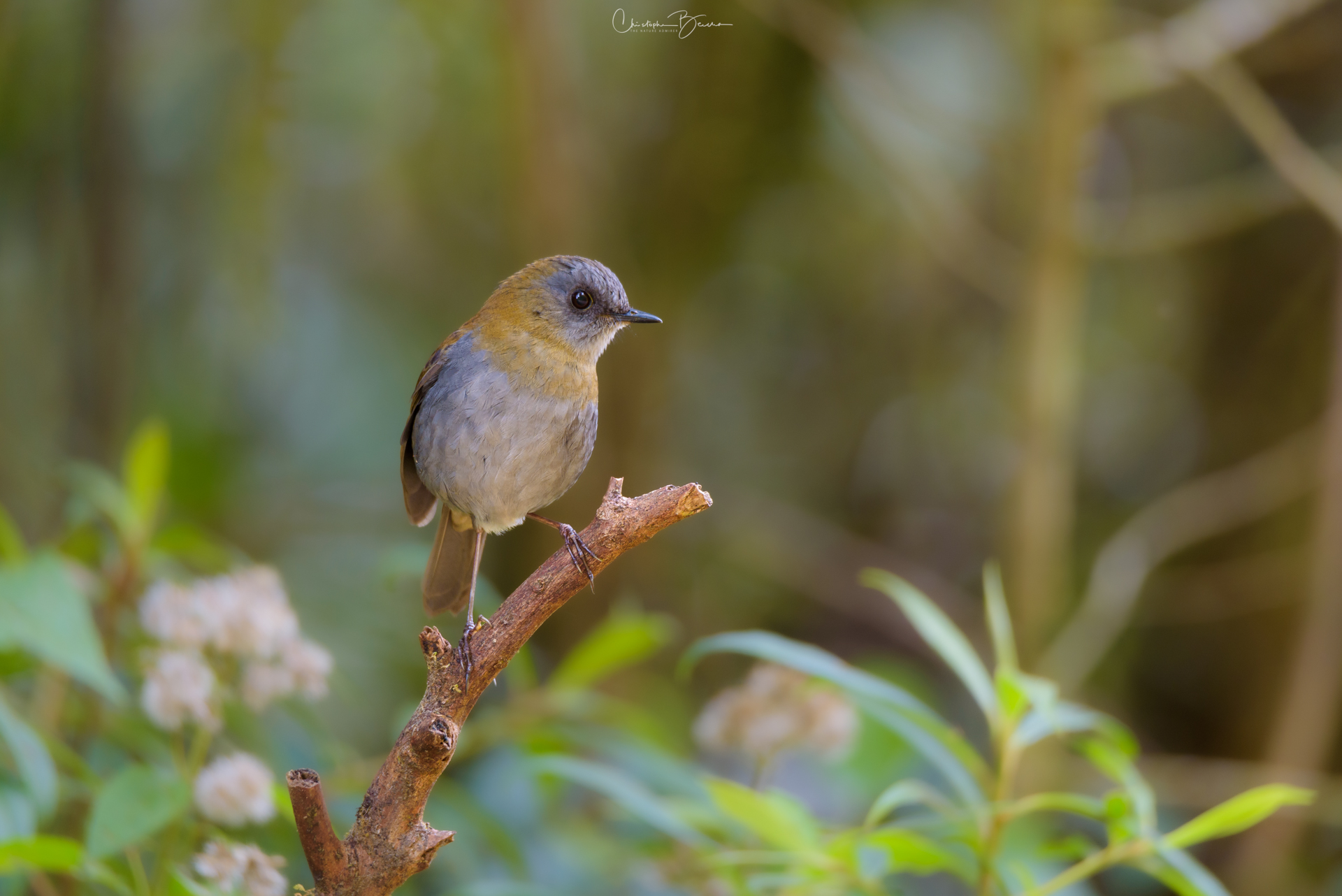
Black-billed Nightingale-Thrush (Catharus gracilirostris)

This small bird inhabits the highlands in Costa Rica. Its plumage is drab like most of the birds in its family, but its song is melodious, flute-like with a metallic quality. The belly and face are gray, with the upperparts being brown. While this colors are very similar to other birds in its family, it is identified by the black bill and the brown collar around the throat that separates the face from the belly. It perches in the understory of oak forest and can be found also hoping on the ground or through trails, in places where light is scarce. With enough patience, they will perch at eye level and remain motionless long enough for a good picture.

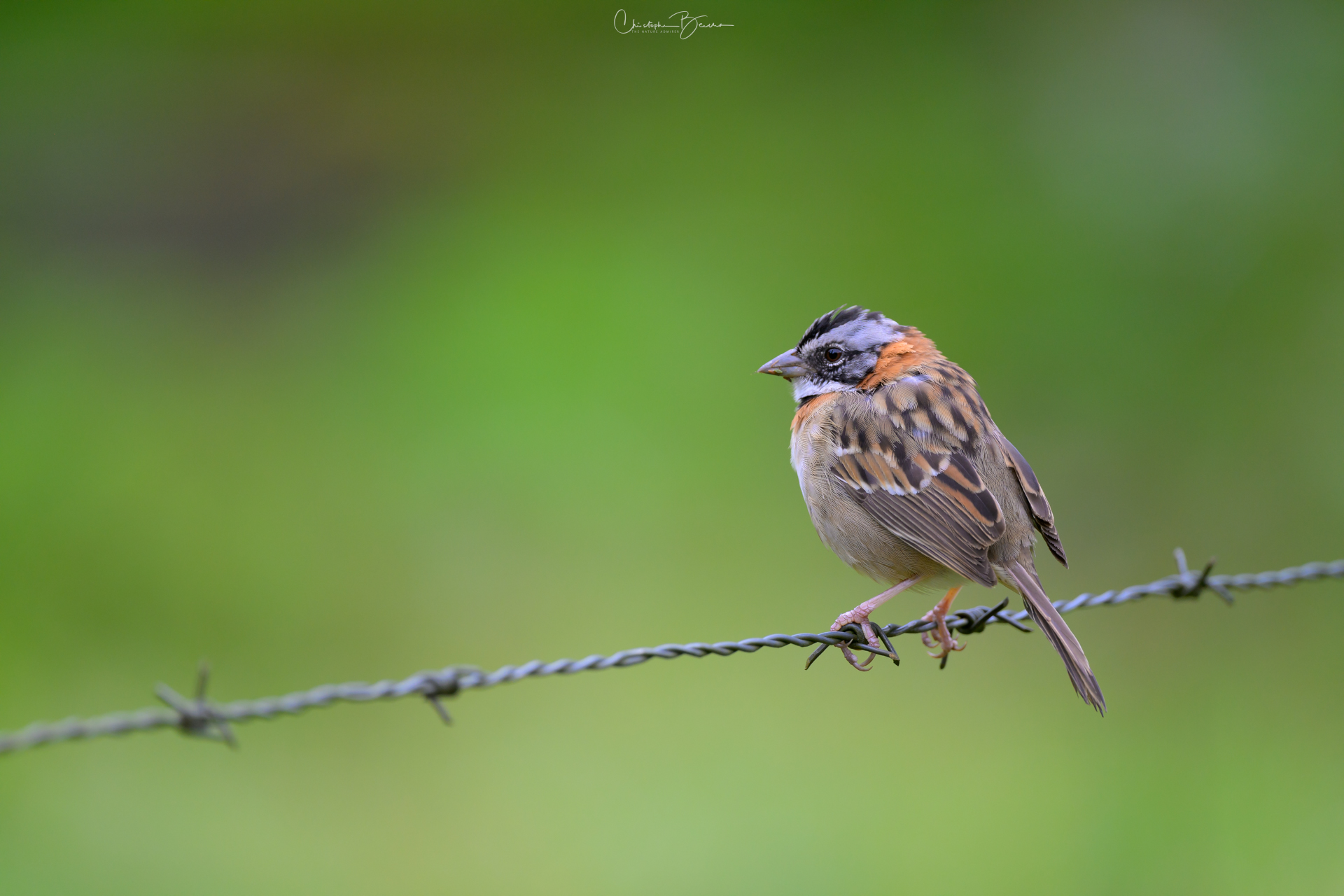
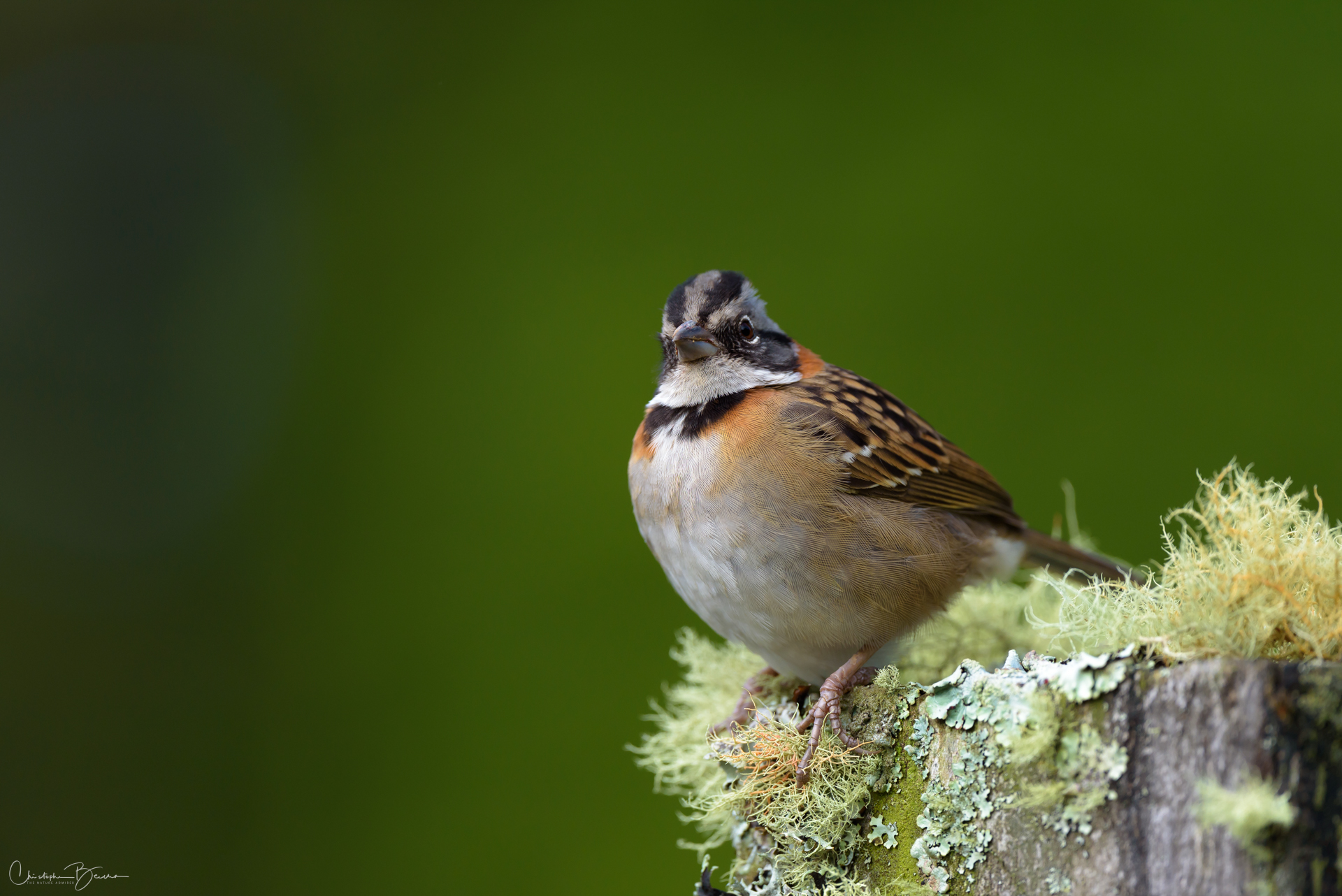
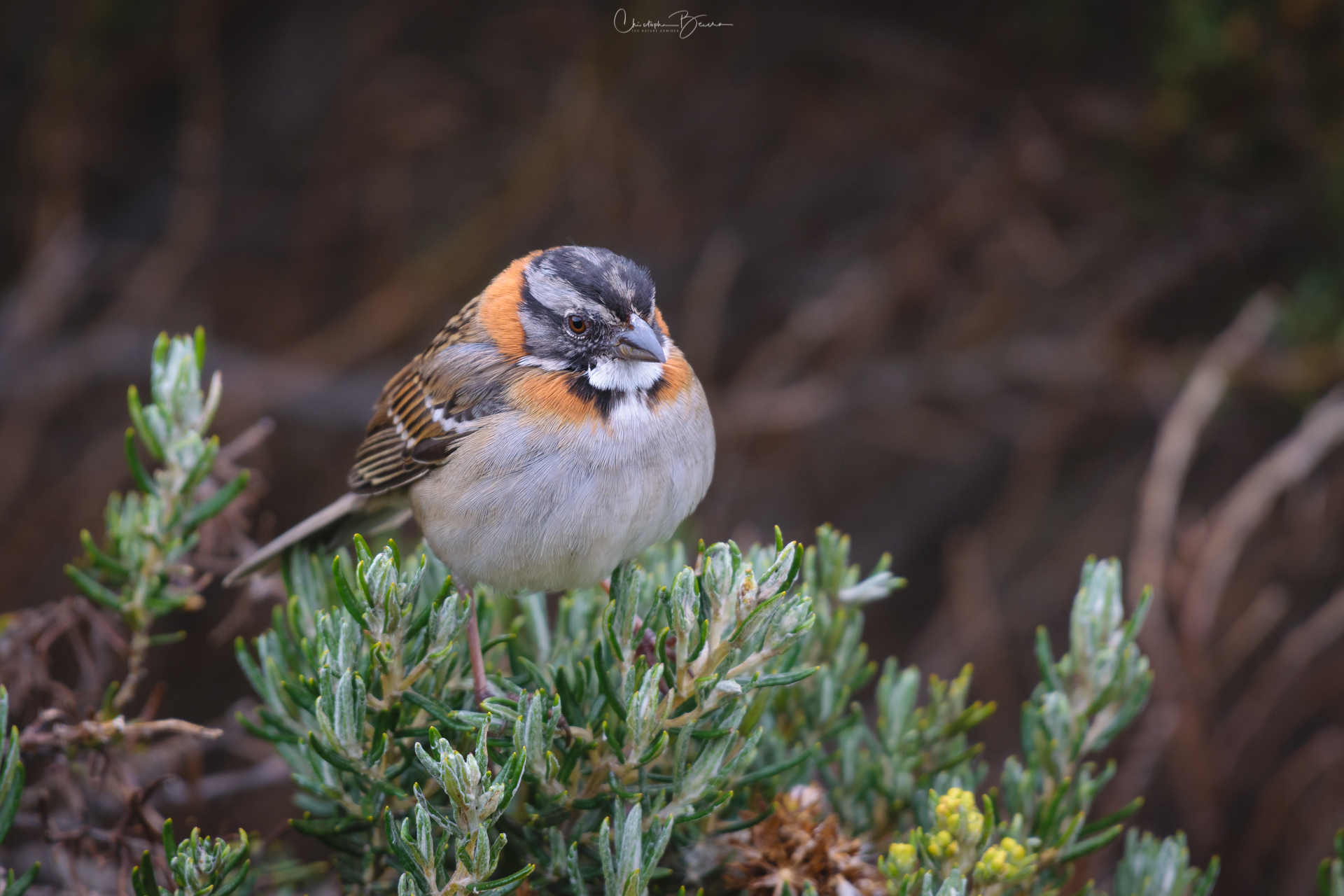
Rufous-collared Sparrow (Zonotrichia capensis)

The Rufous-collared Sparrow is a common sight in the Central Valley of Costa Rica and the surrounding mountains, and it is also common in the regions of Colombia that we visited. It can be seen hopping in the grass, on the lookout for small worms and insects. They are not shy at all of people and will enter houses and buildings looking for food that may lie on the floor. The Juvenile lacks the Rufous collar around the neck and back. Common does not mean any less fascinating, and the “Comemaiz” is one of those common birds in Costa Rica that has more than one trick down its sleeve.

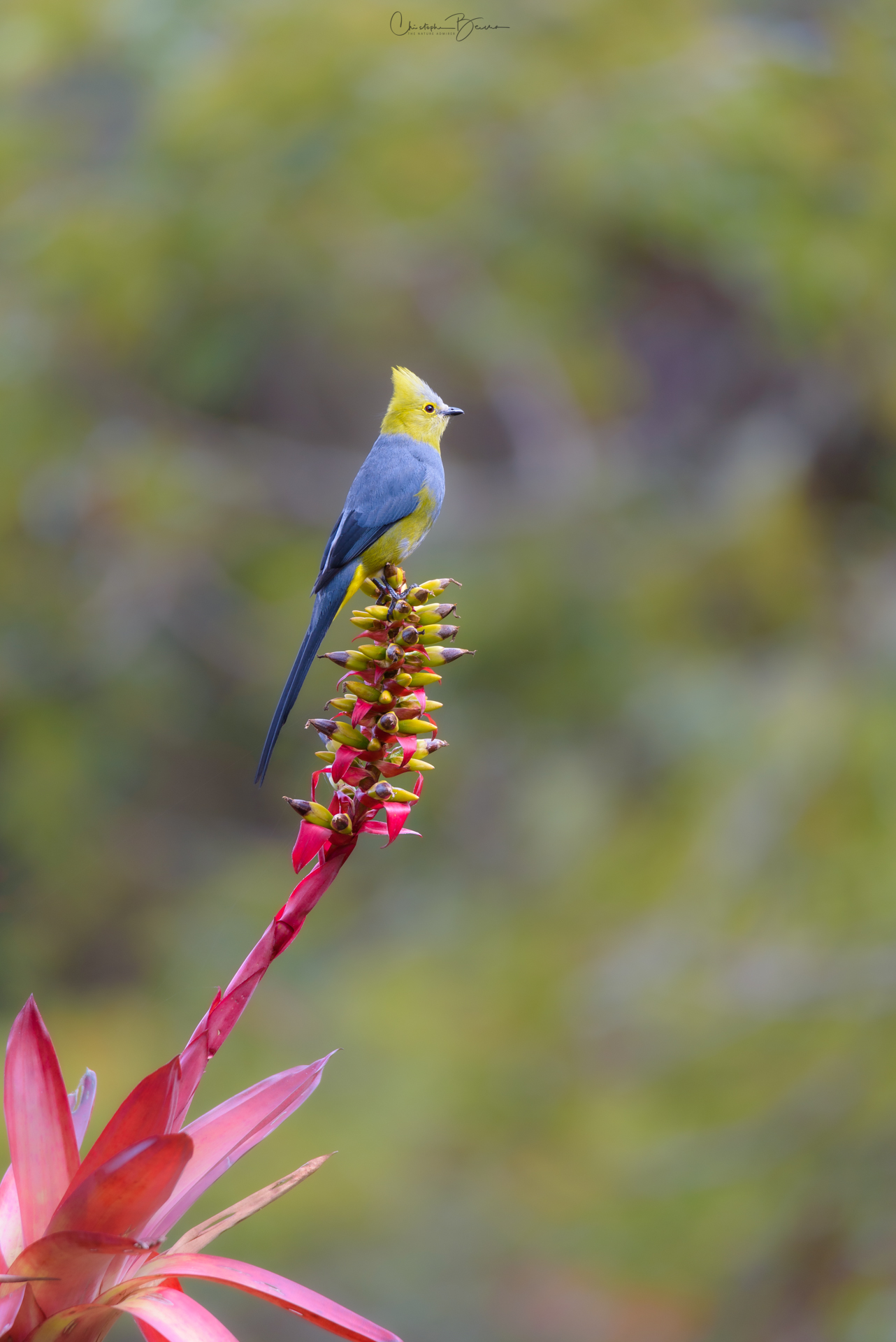
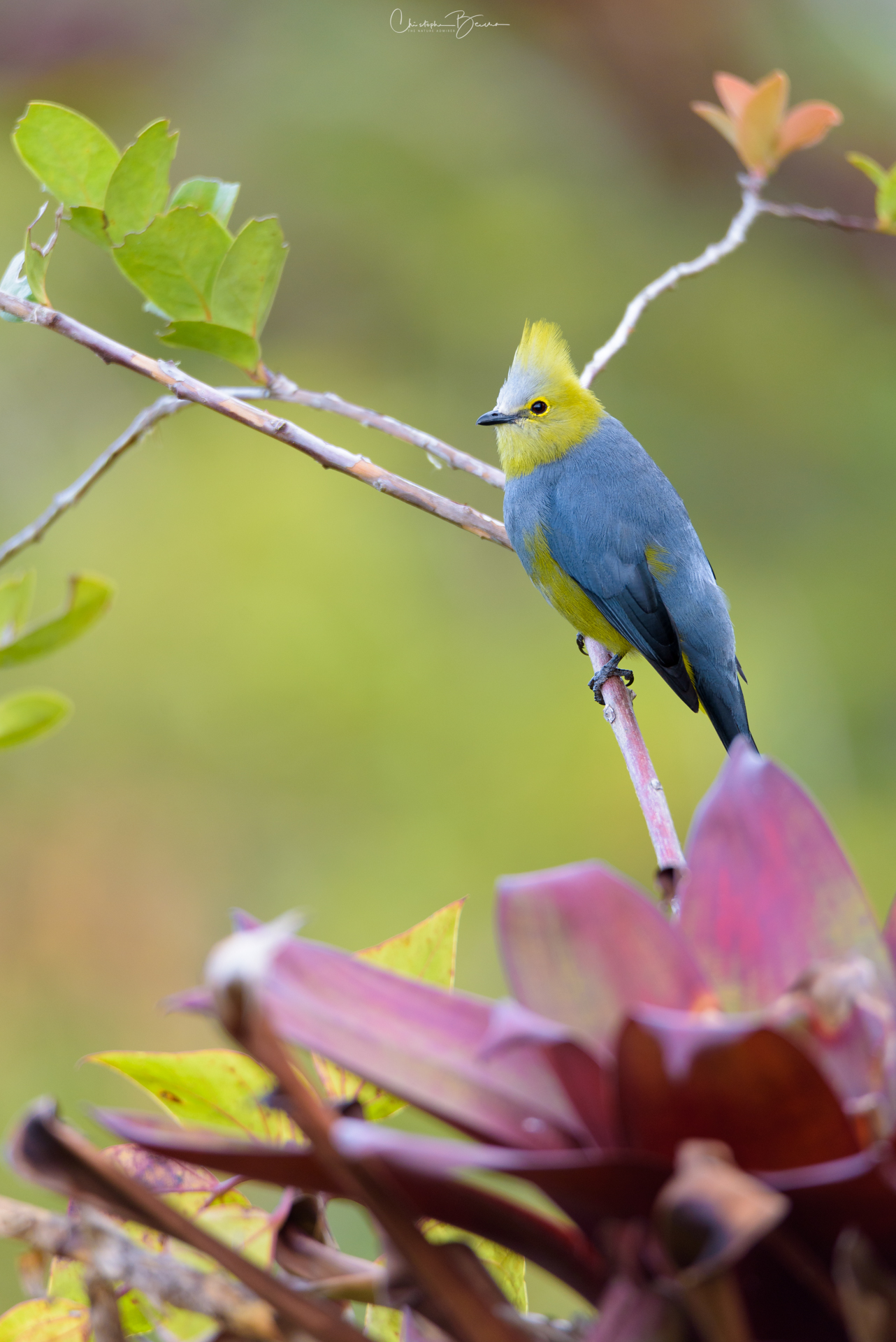
Long-tailed Silky-flycatcher (Ptilogonys caudatus)

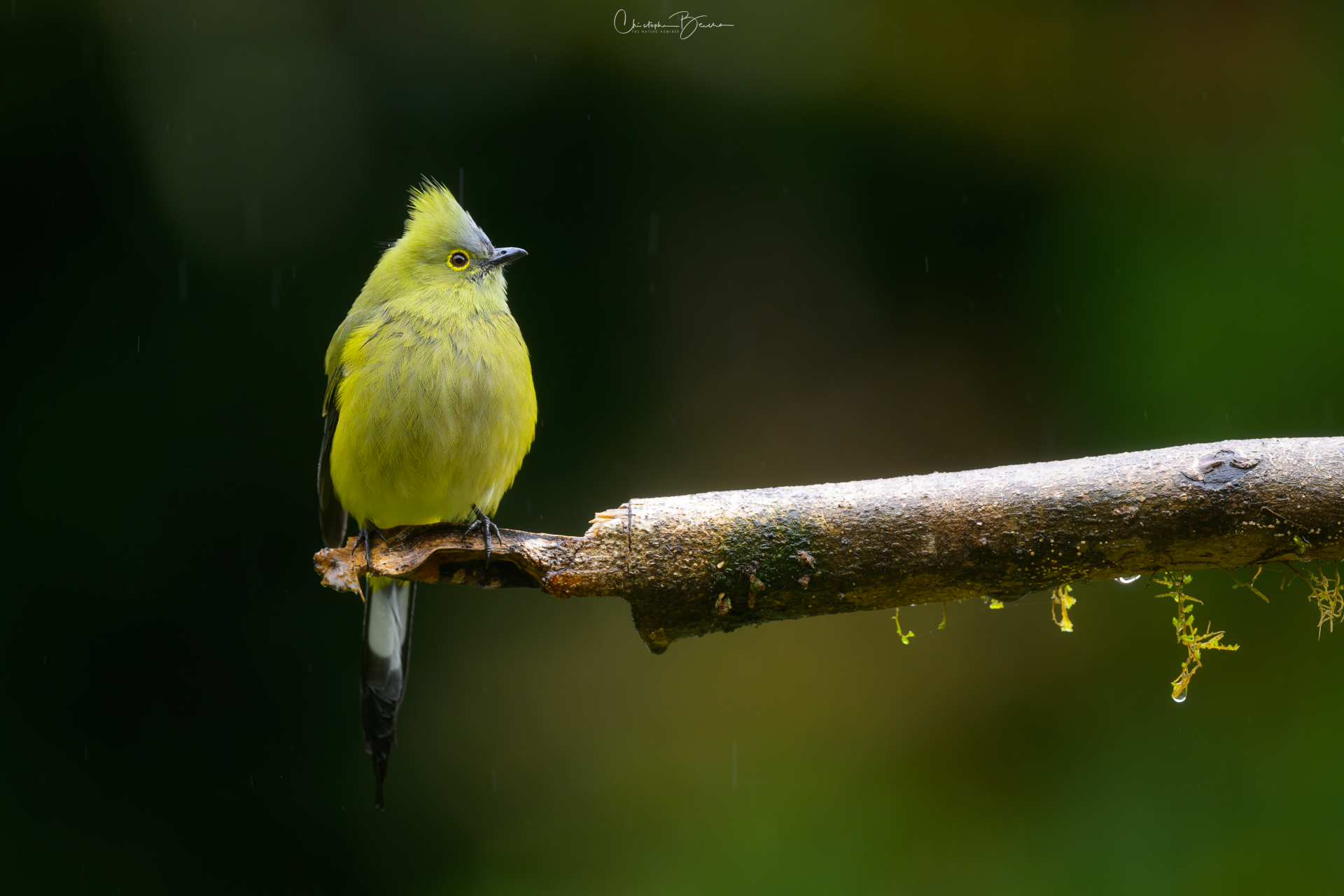
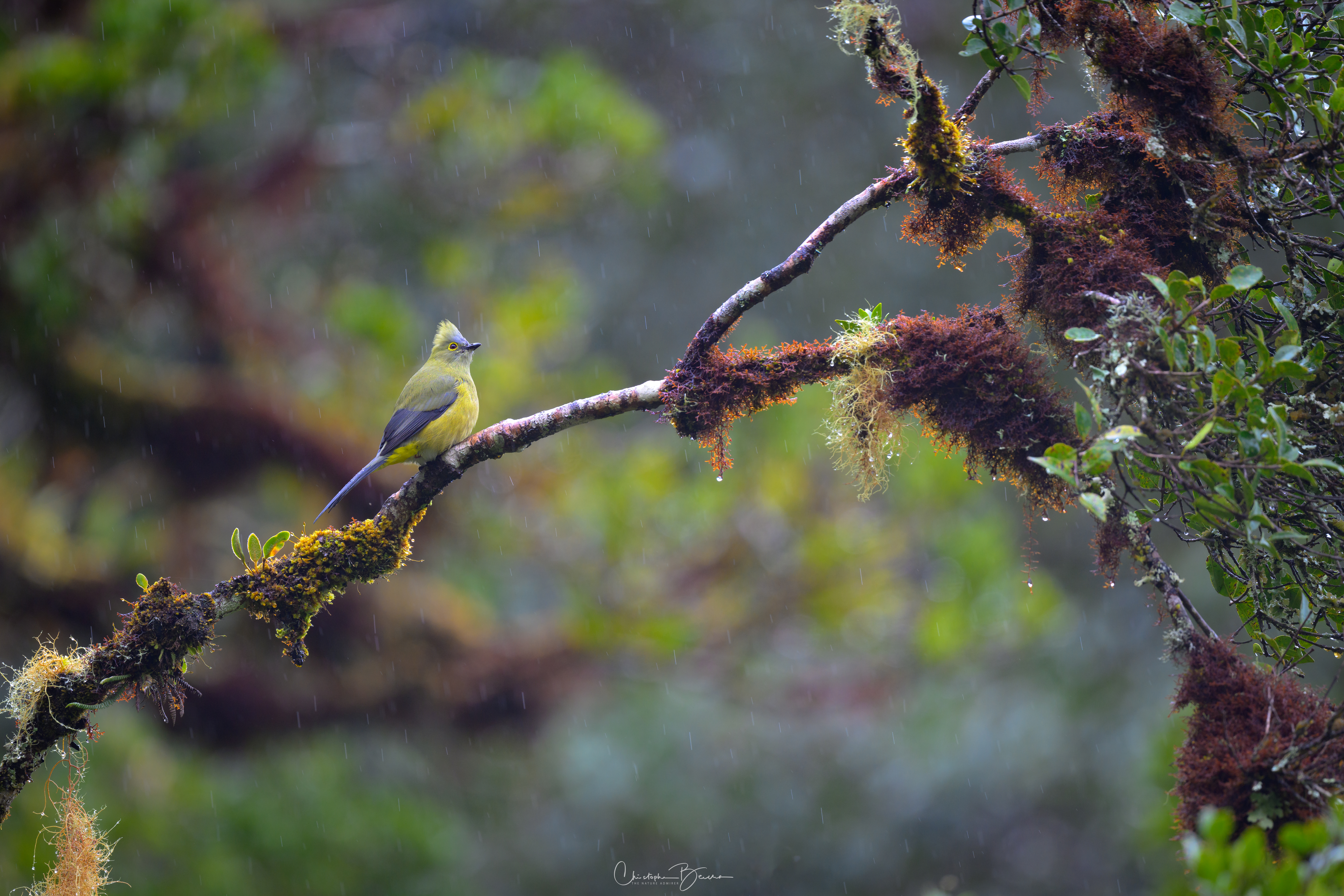
The Long-tailed Silky-flycatcher is an elegant bird that can be found in the highlands in Costa Rica. It’s long black tail contrasts with the gray and yellow body, ending with a yellow crest that is normally seen protruding from the head. The male is more colorful than the female, but overall they look similar and might be indistinguishable on bad lighting. Along the Black-and-yellow Silky-flycatcher, this species is part of a four species family around the world, with only the Black-and-yellow and the Long-tailed being present in Costa Rica, endemic to our country and western Panama.

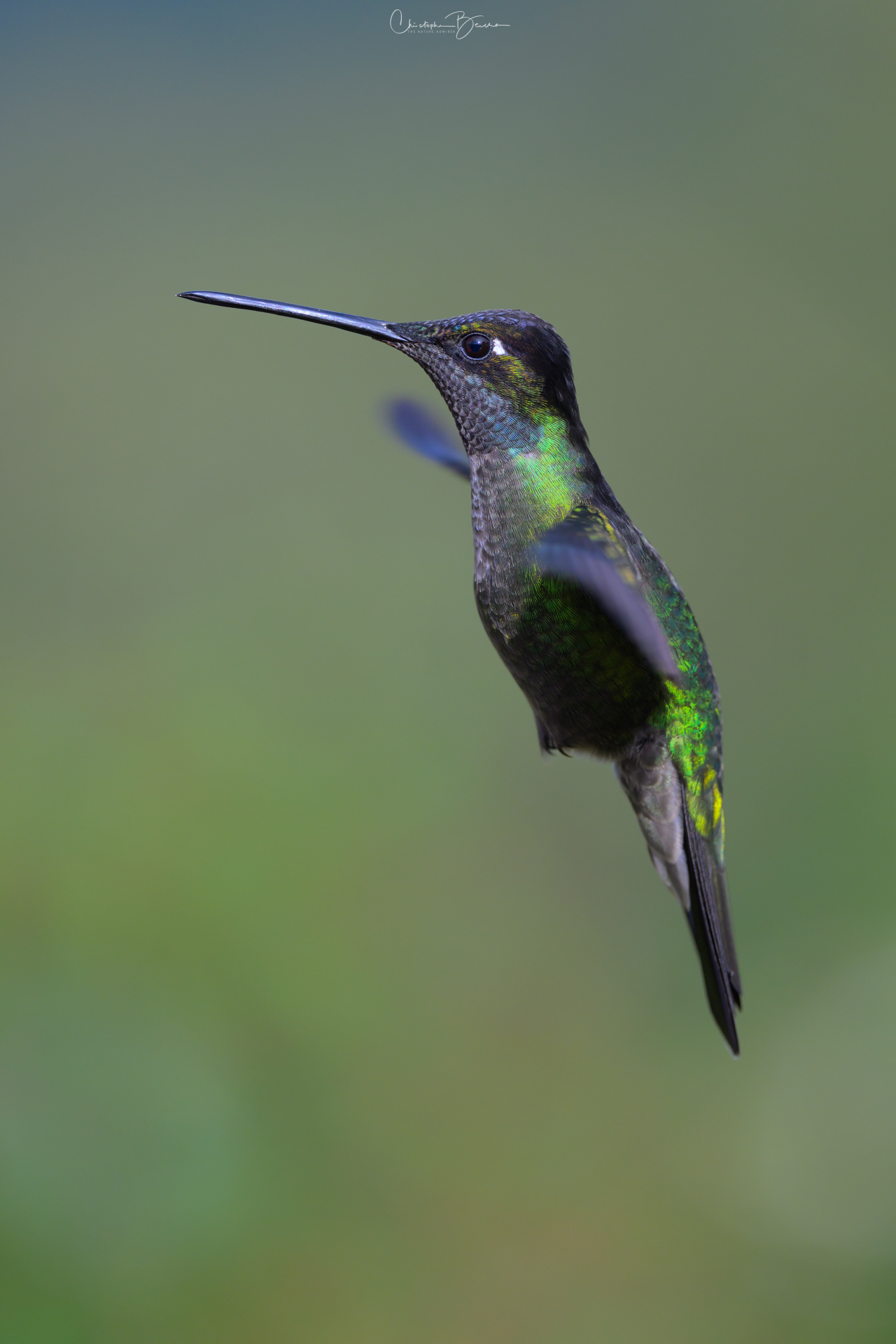
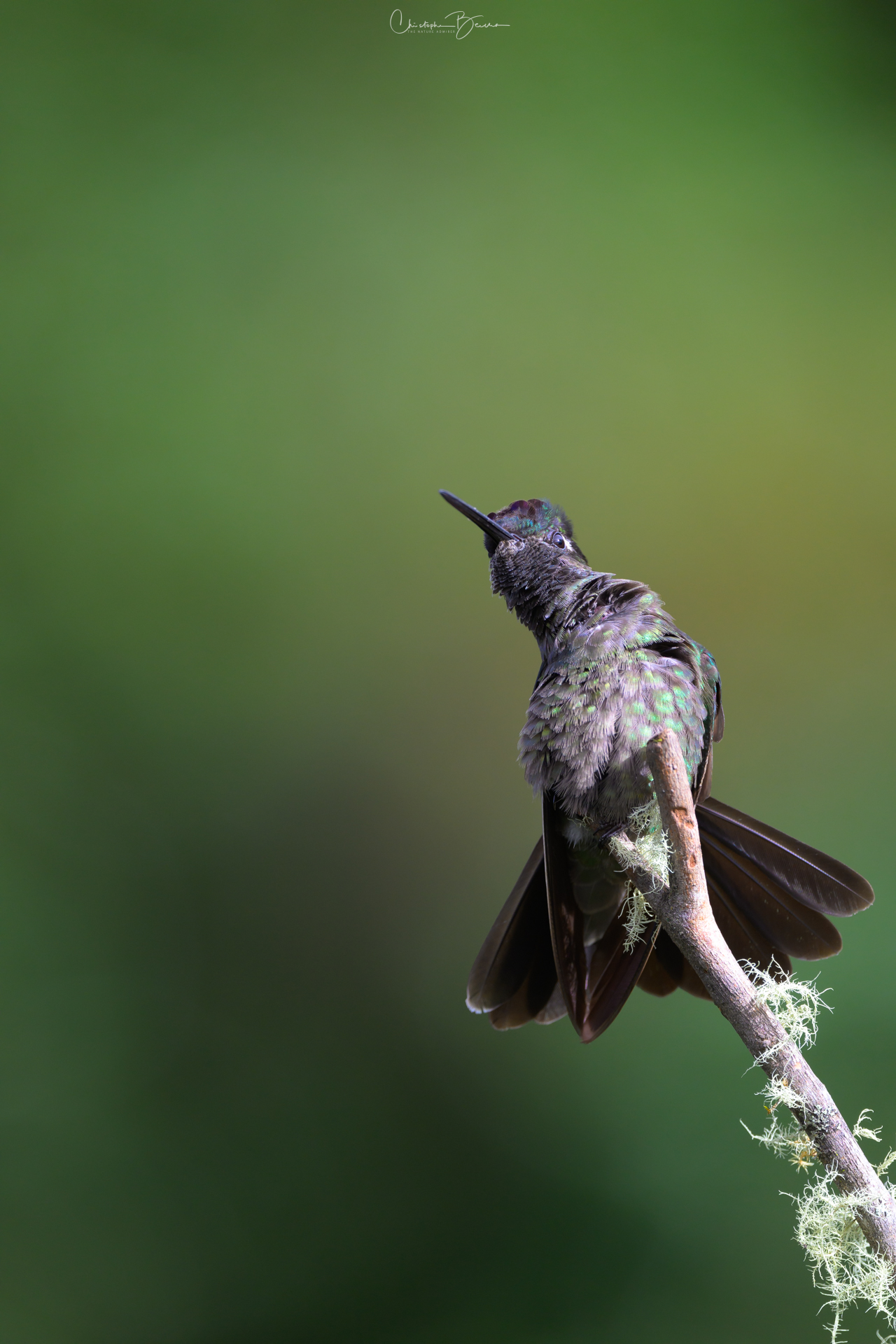
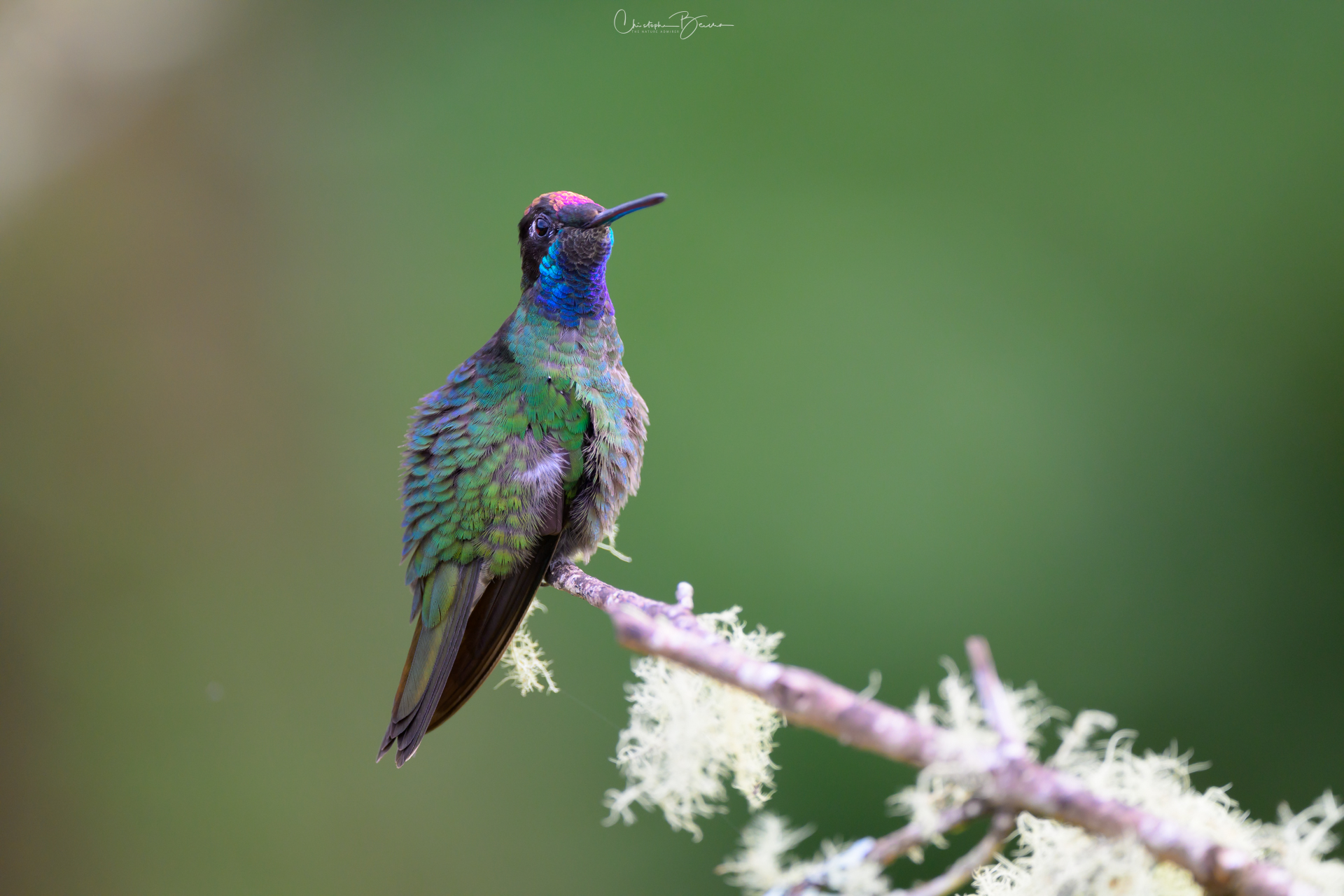
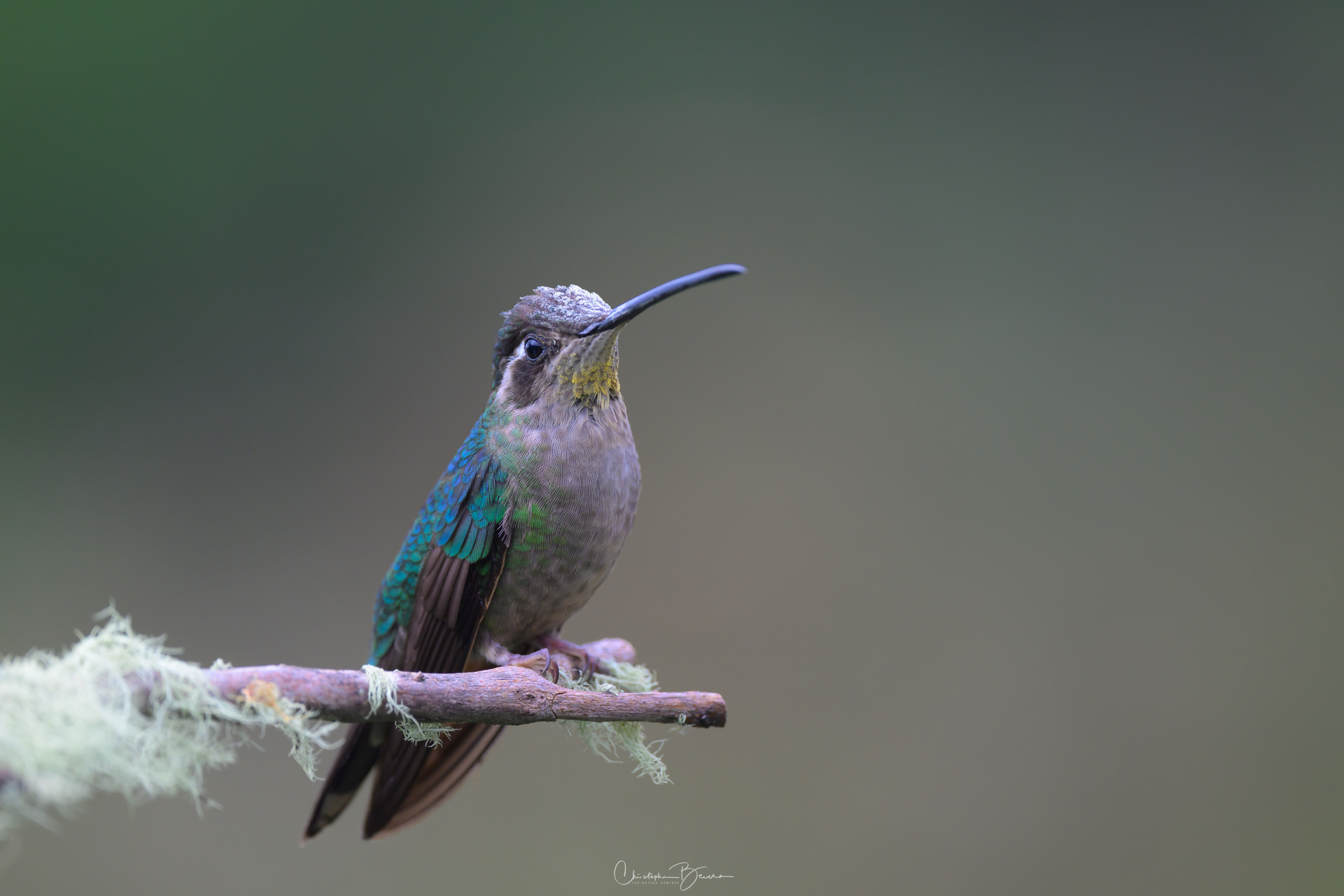
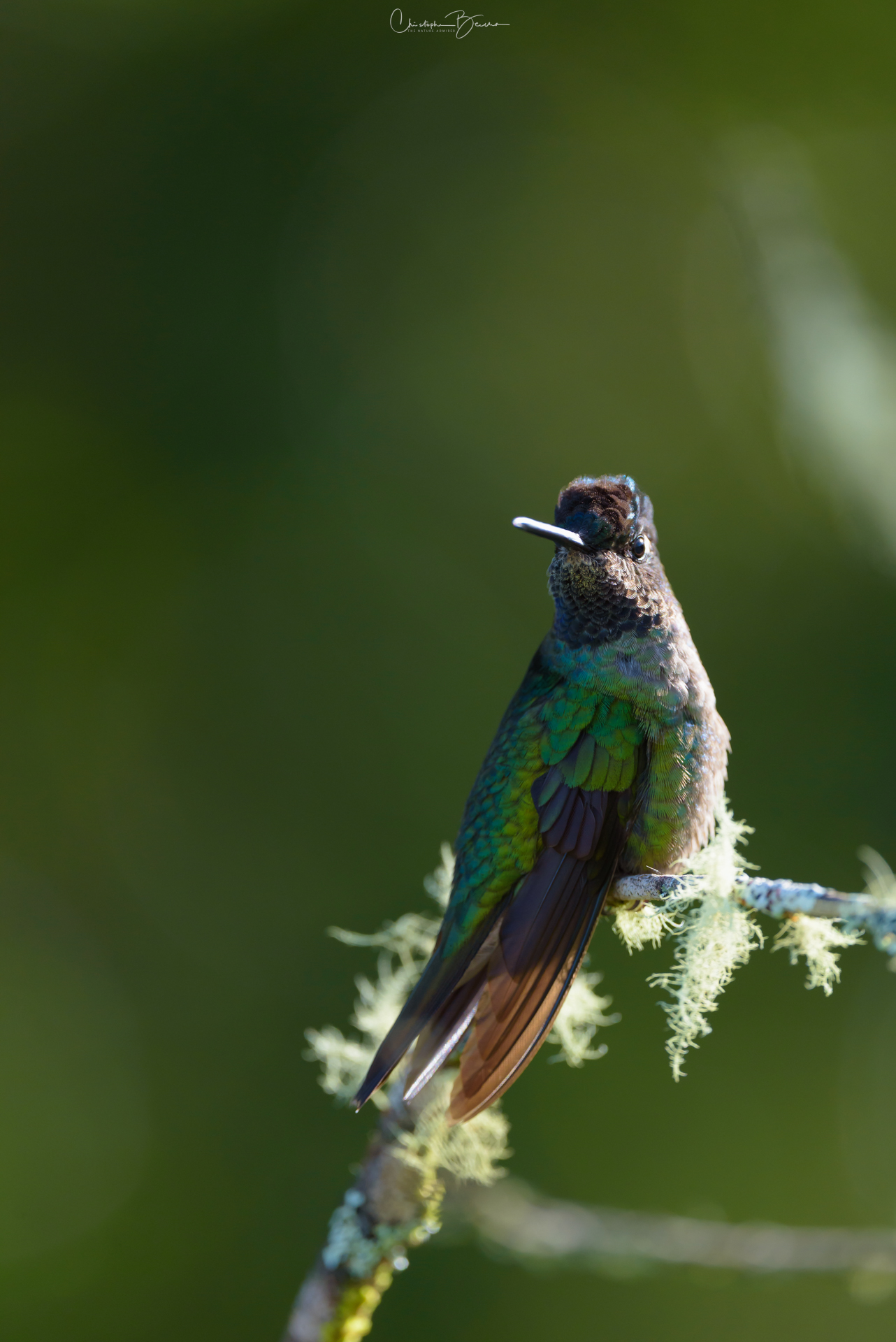
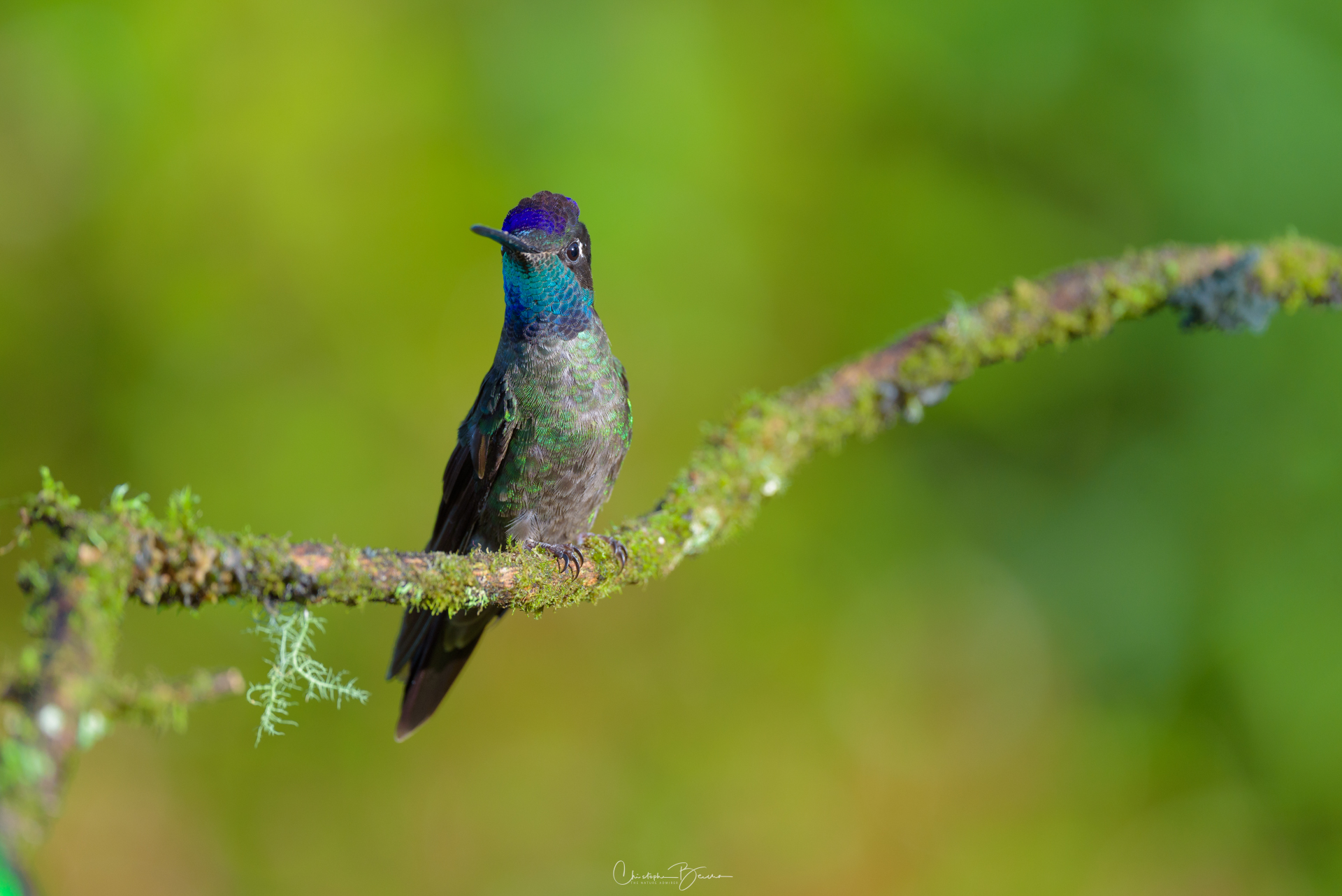
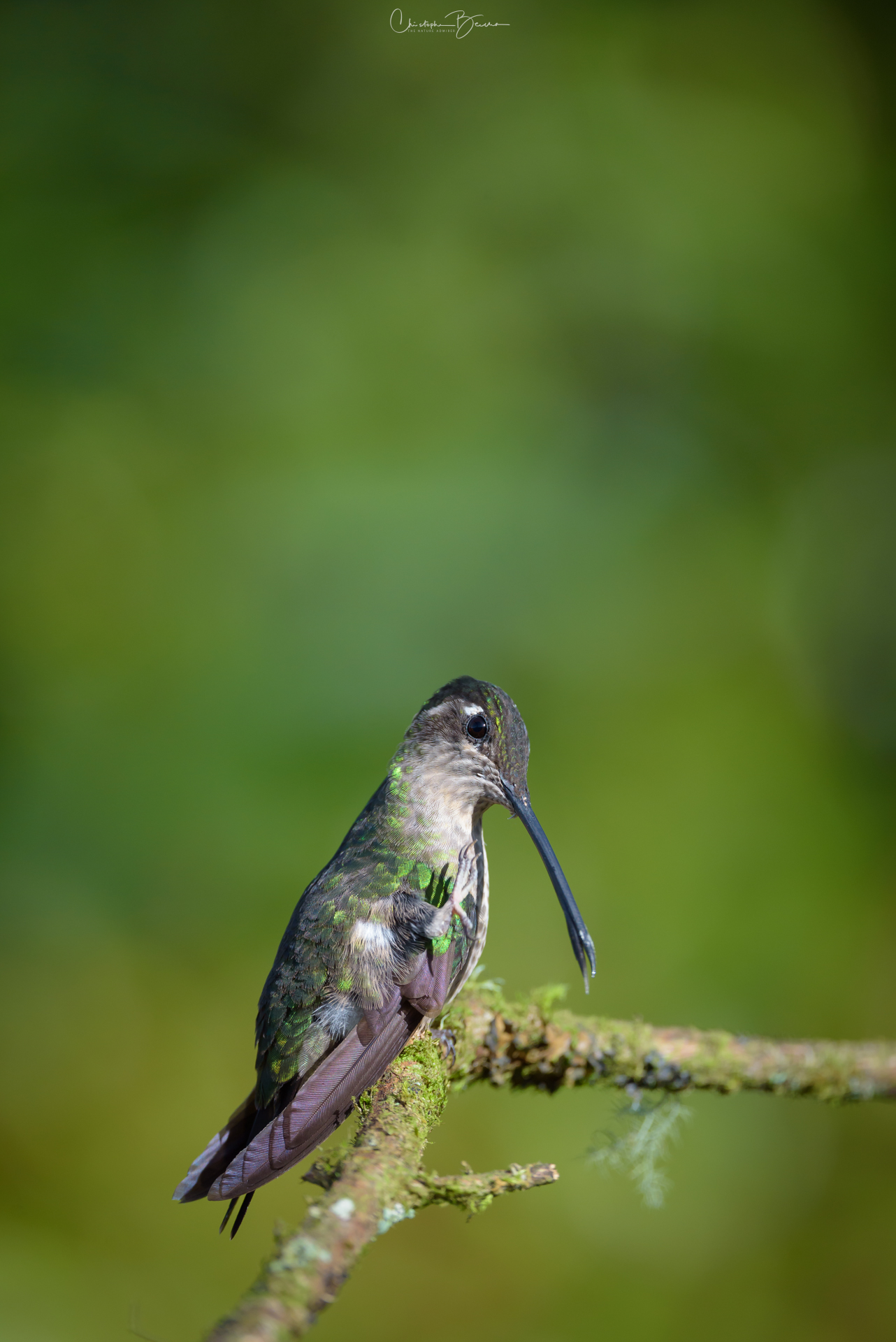
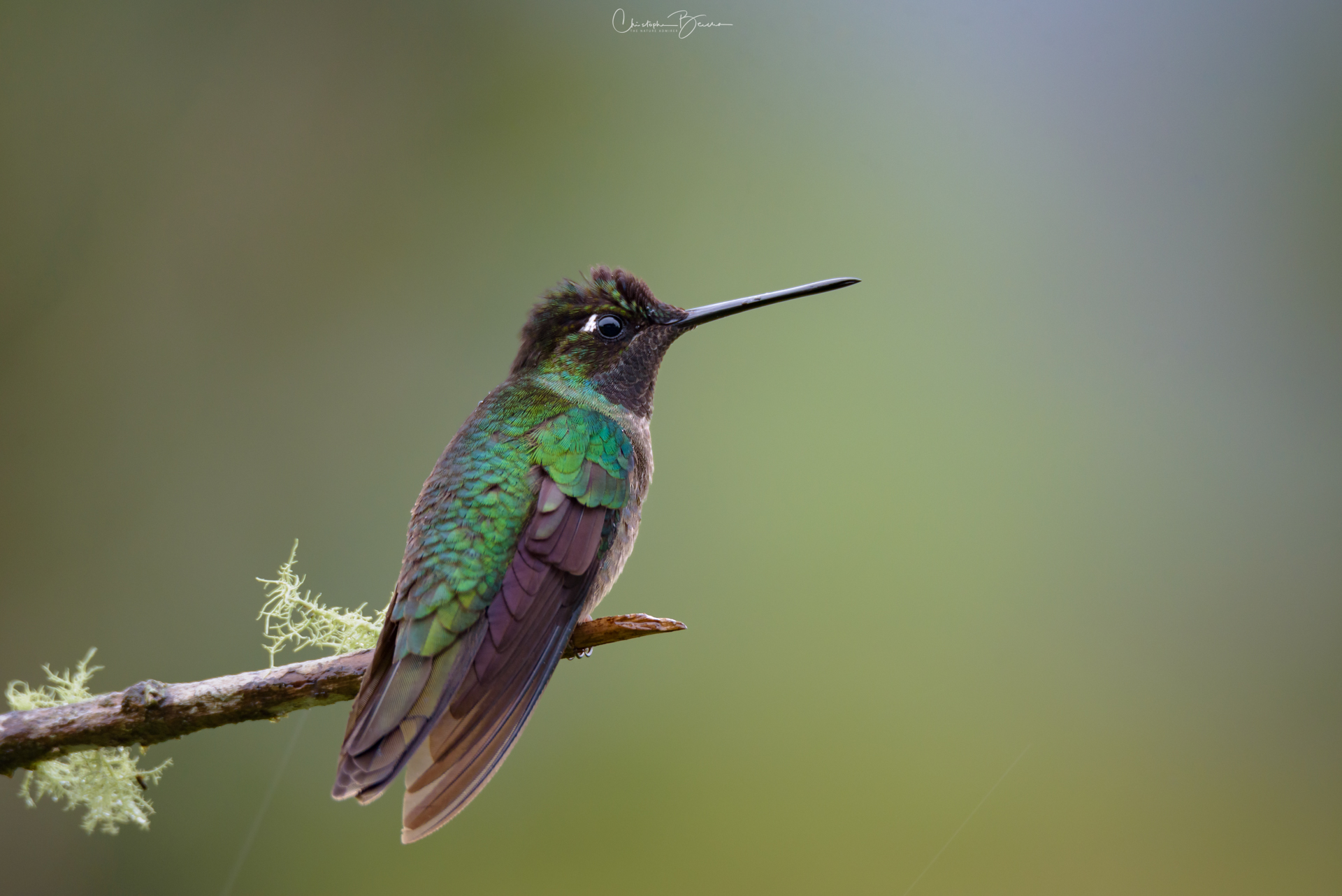
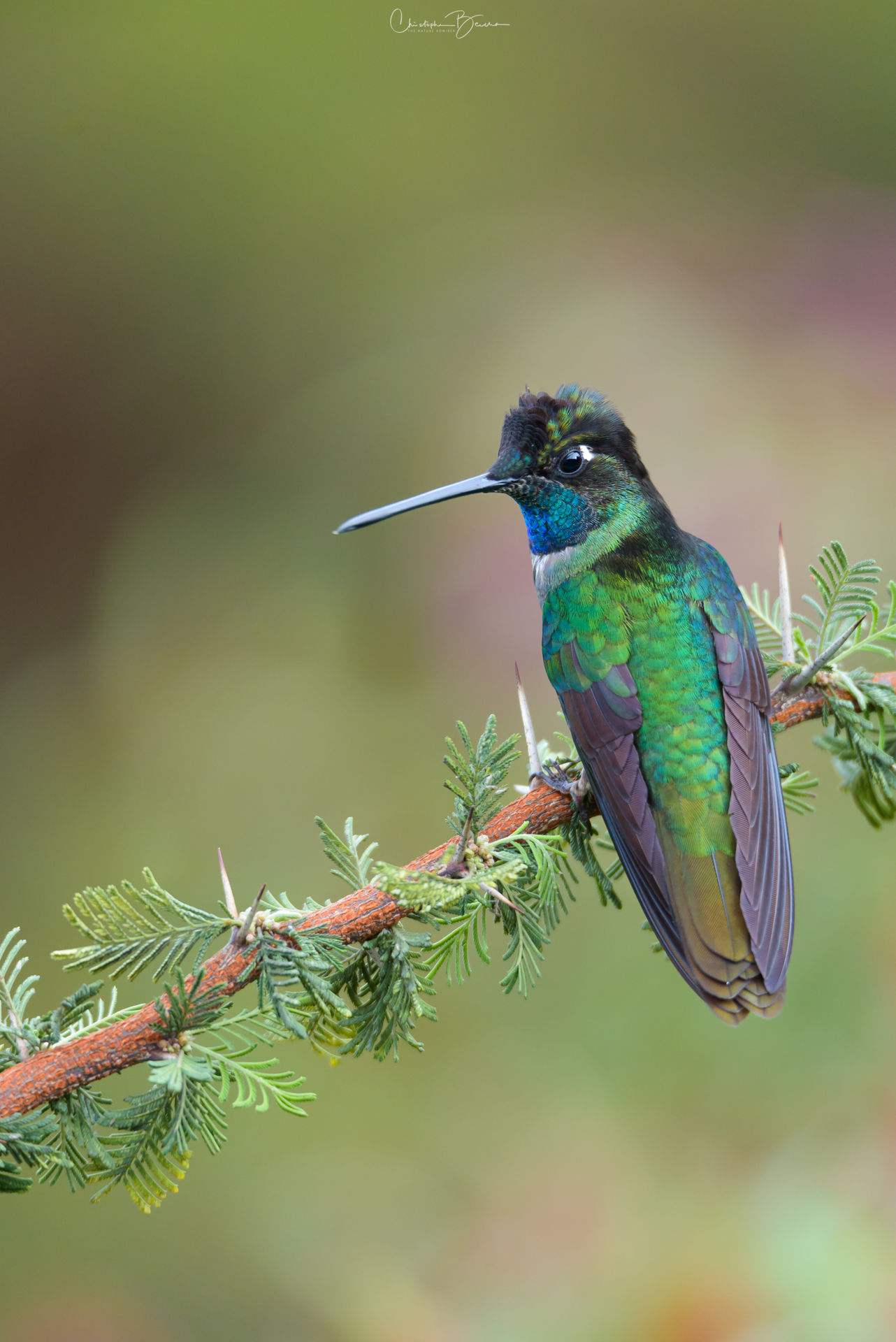
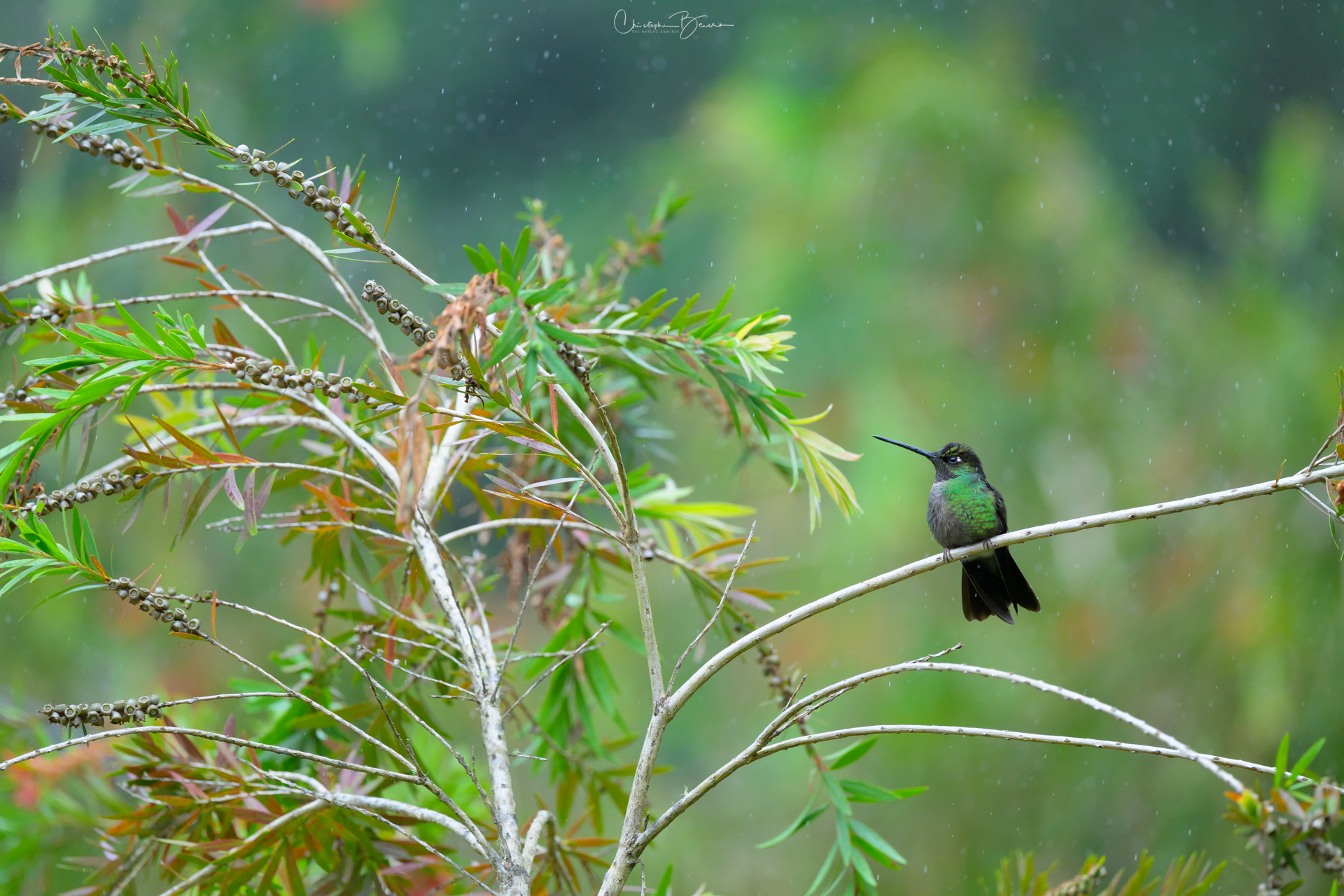
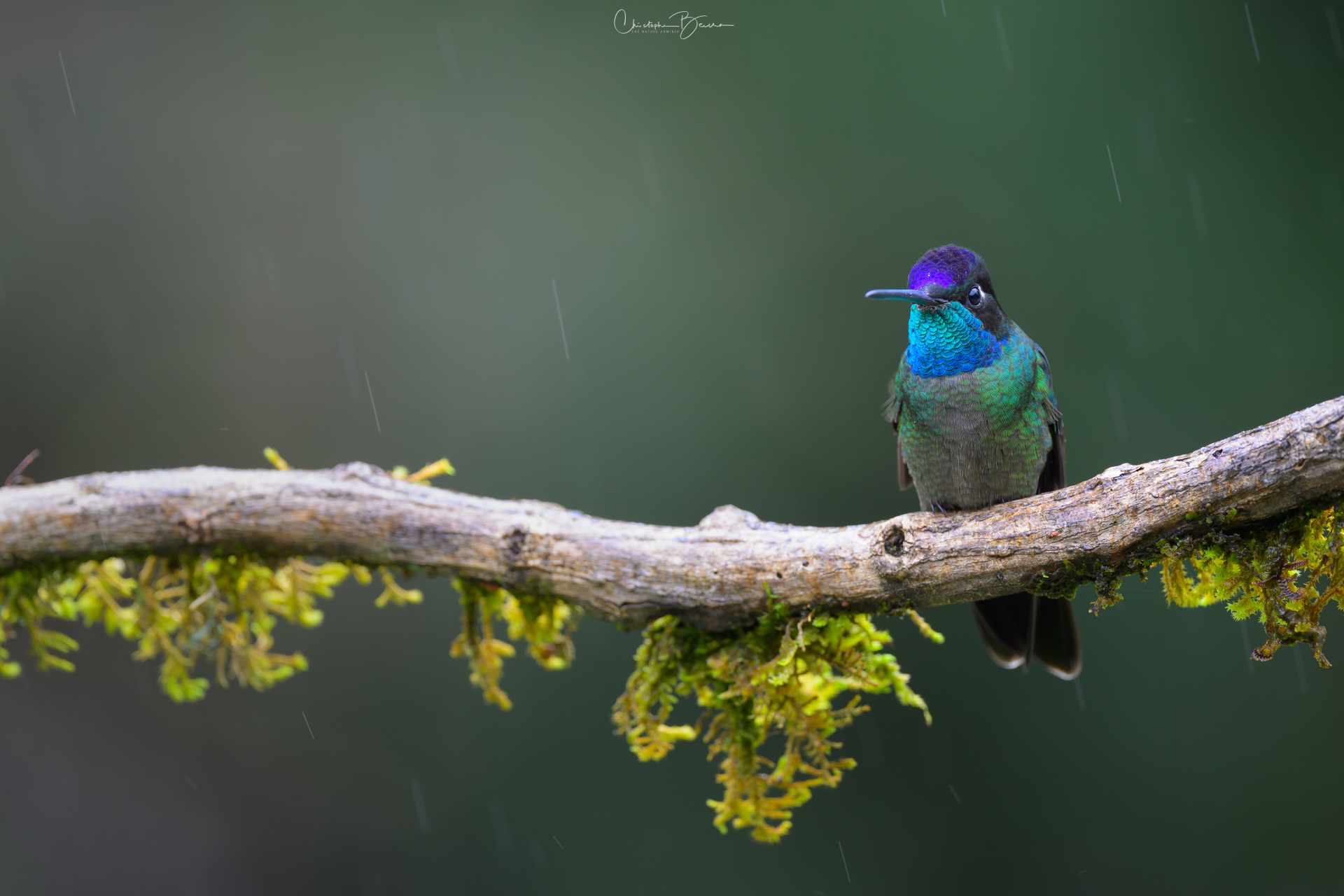
Talamanca Hummingbird (Eugenes spectabilis)

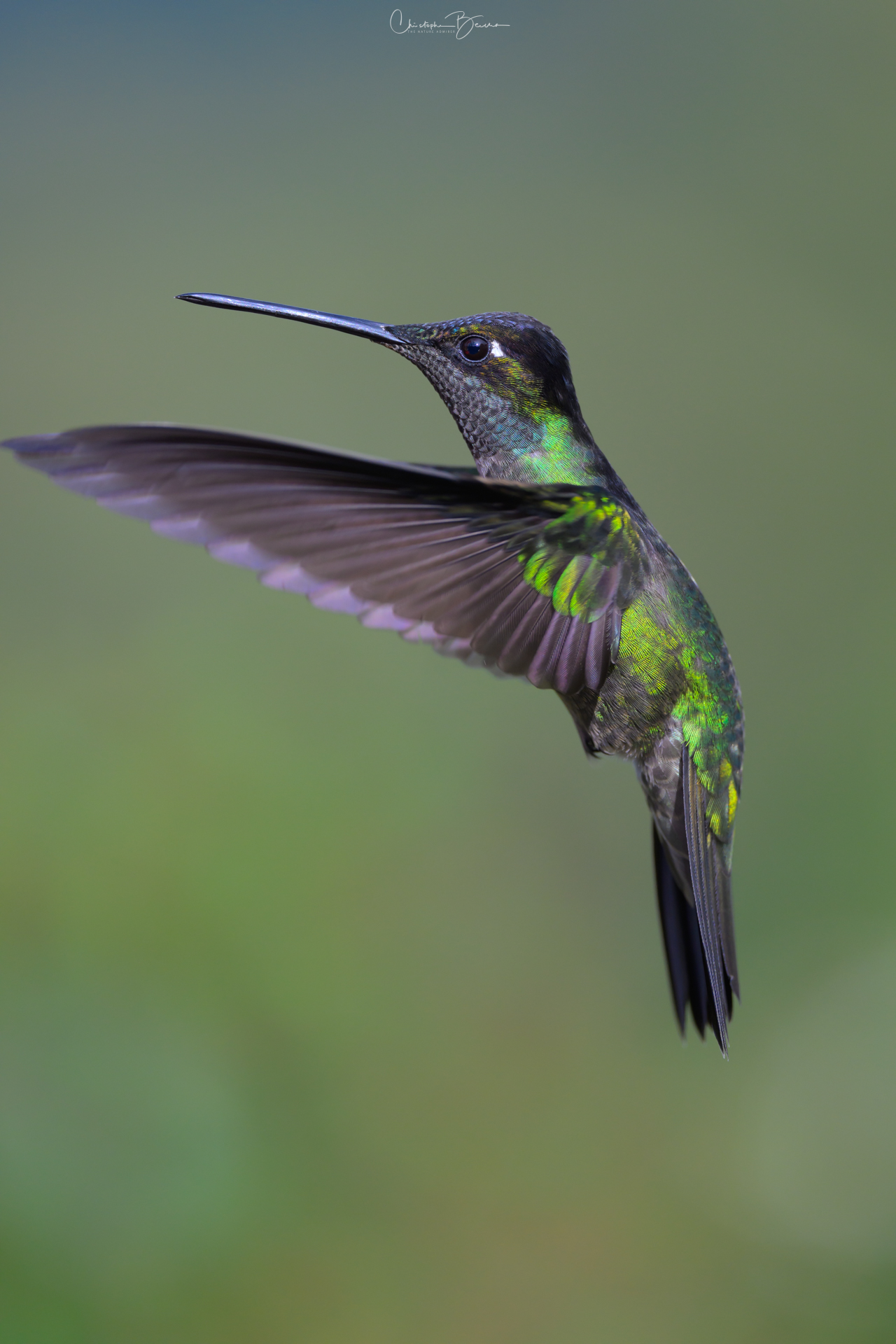
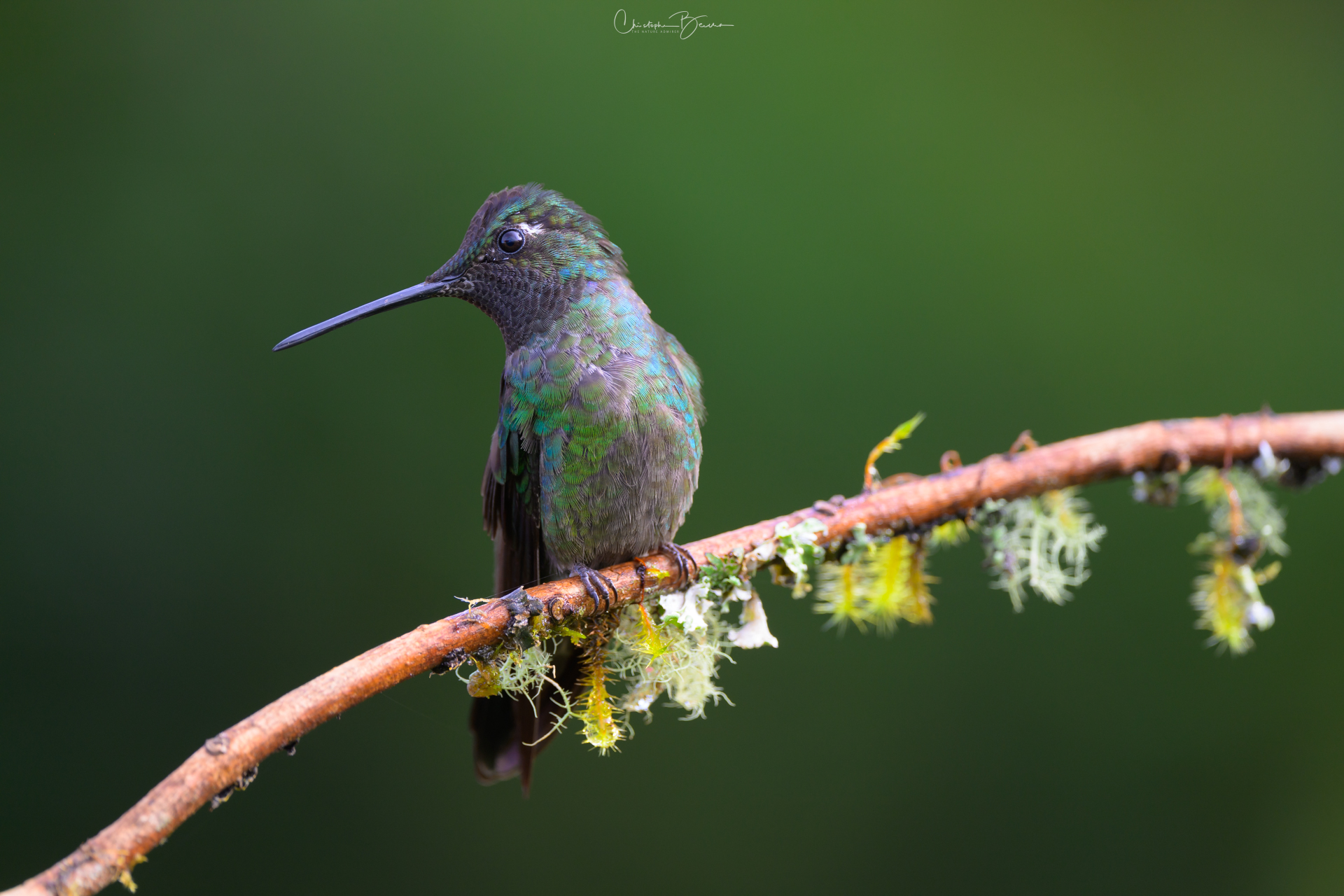
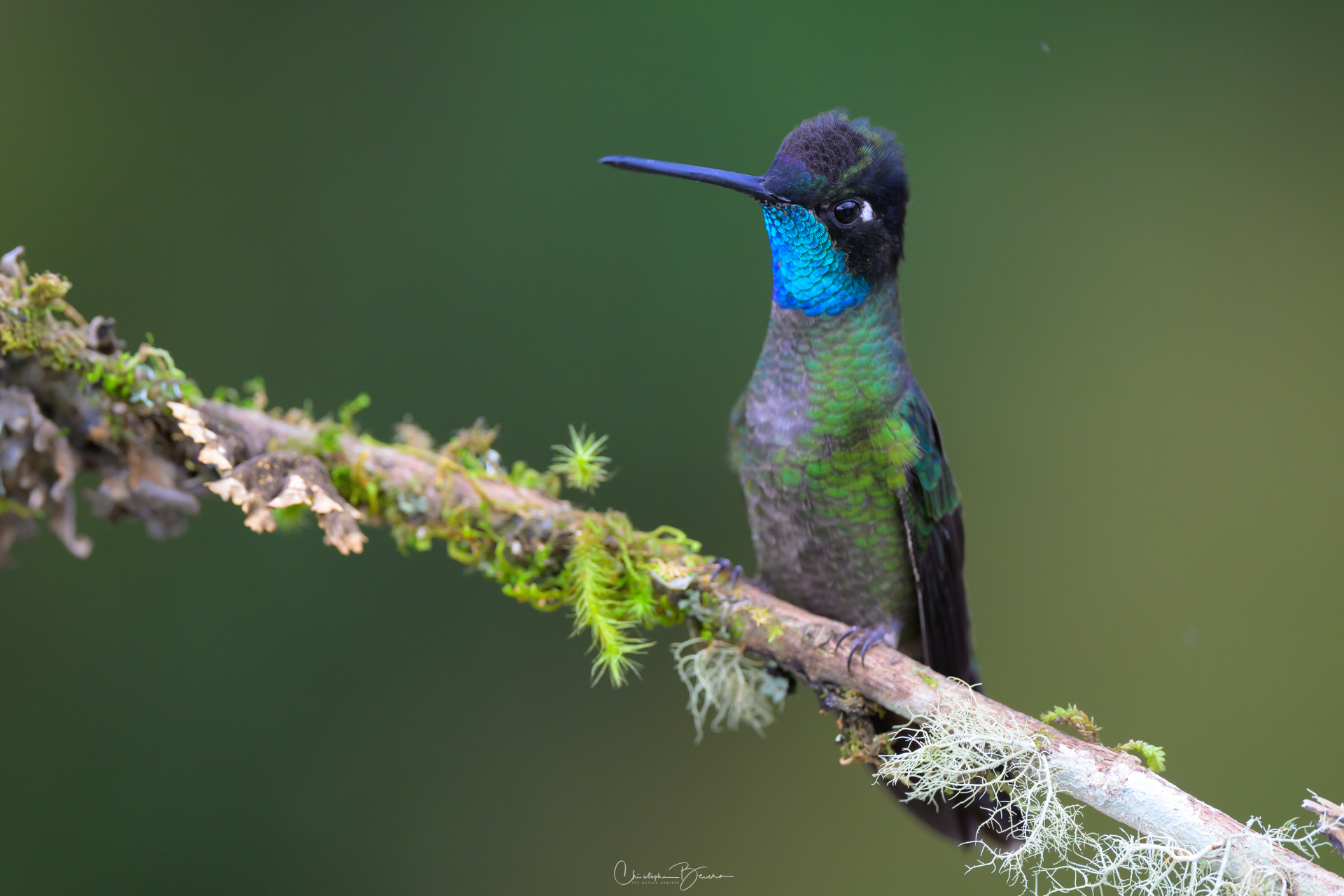
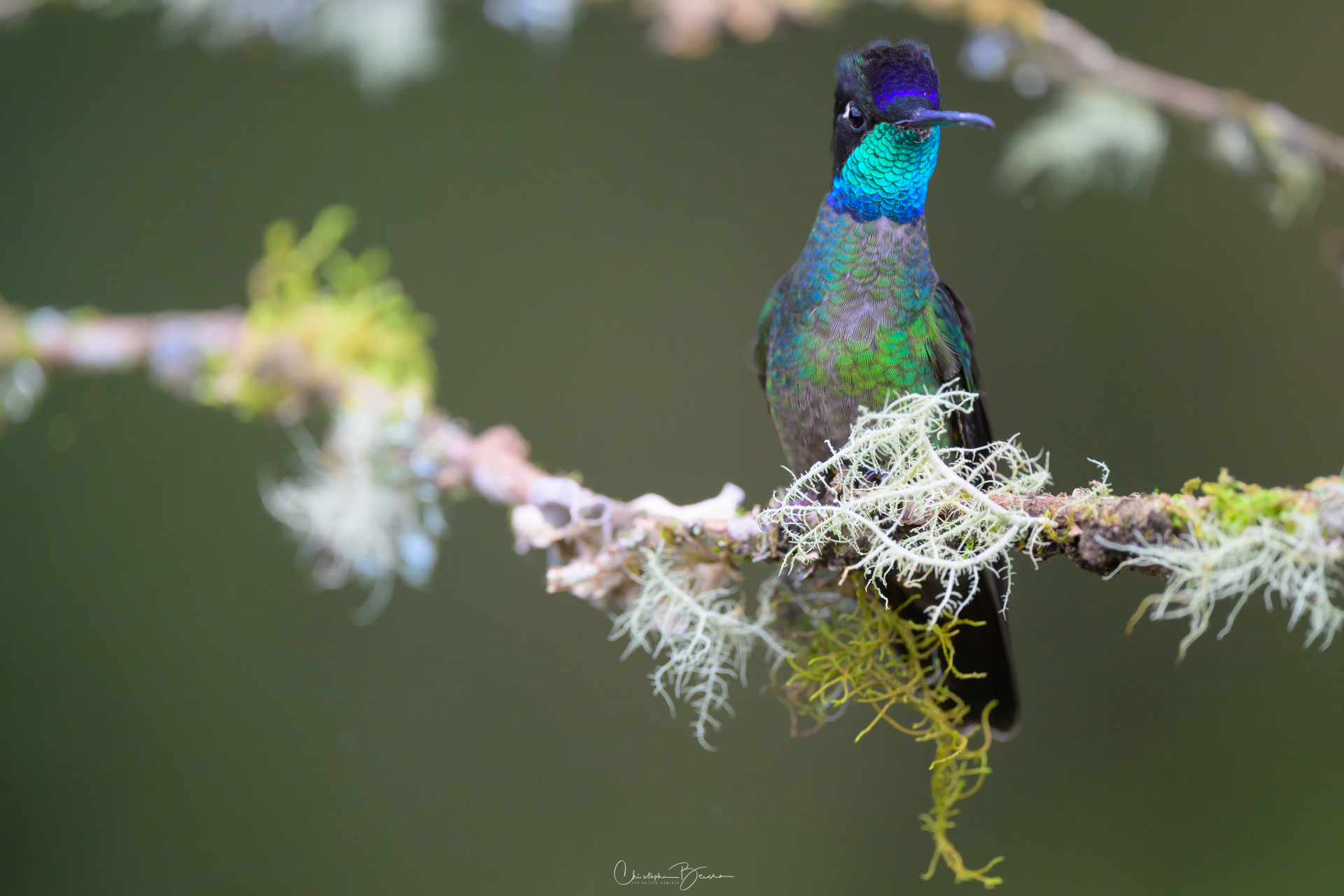
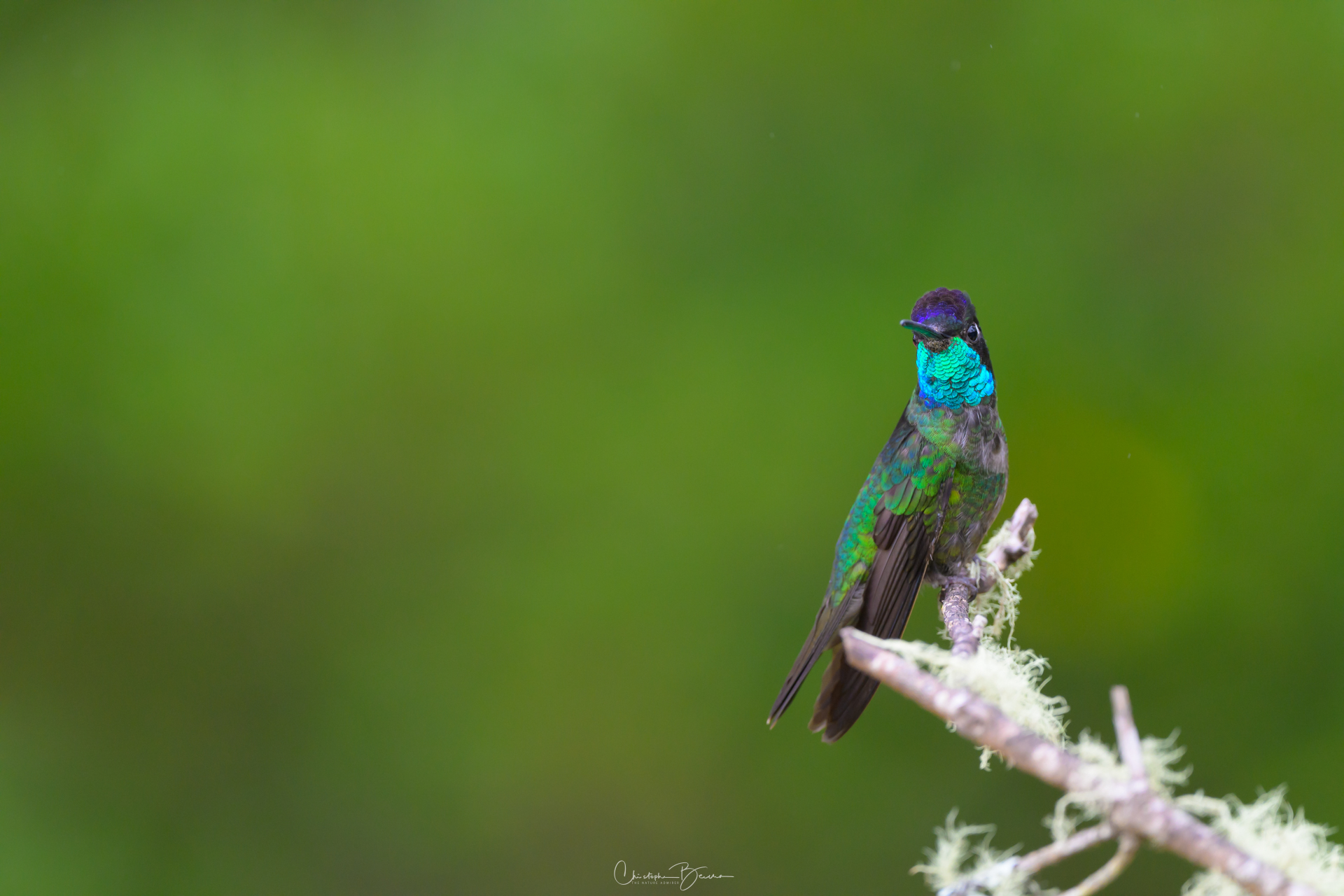
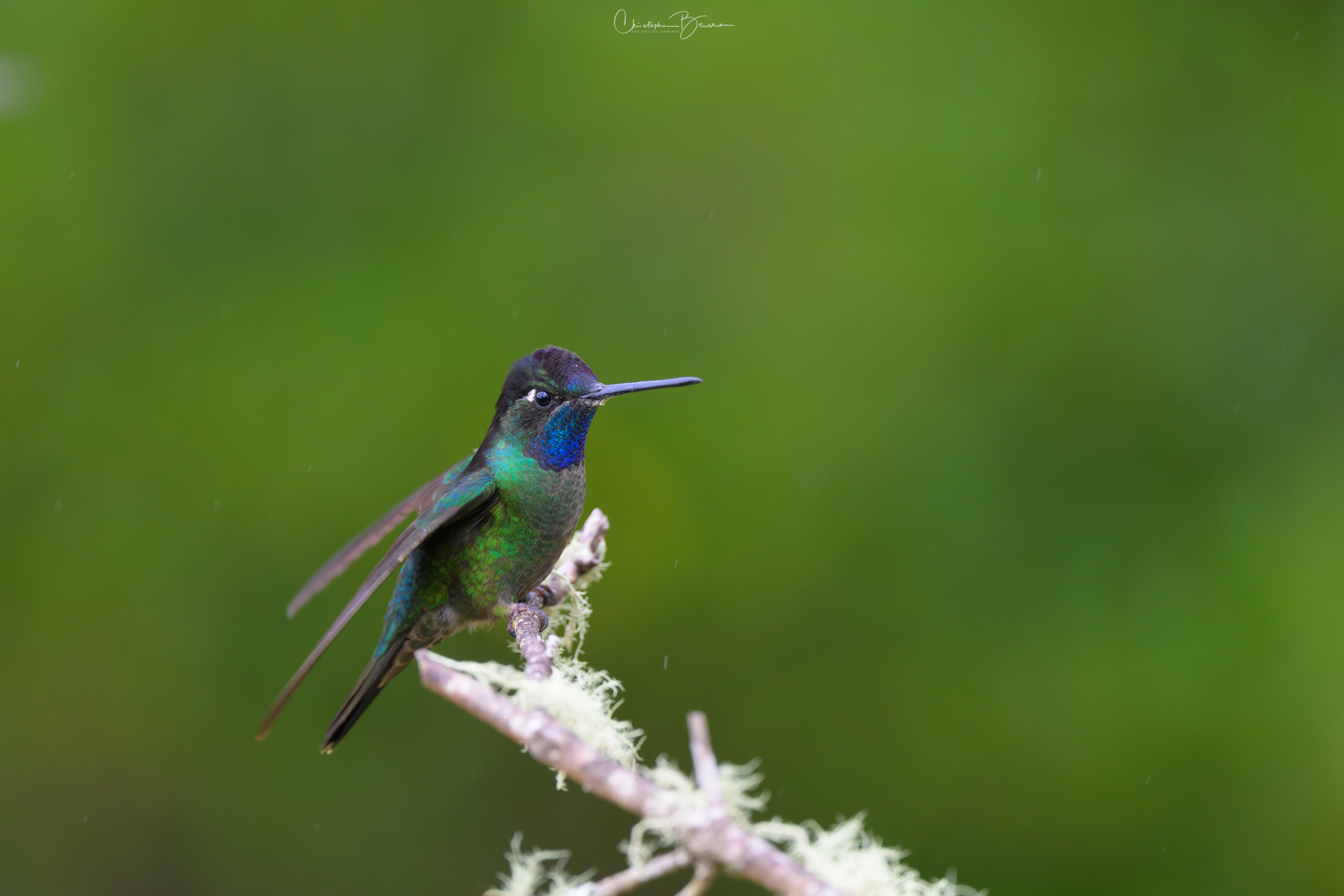
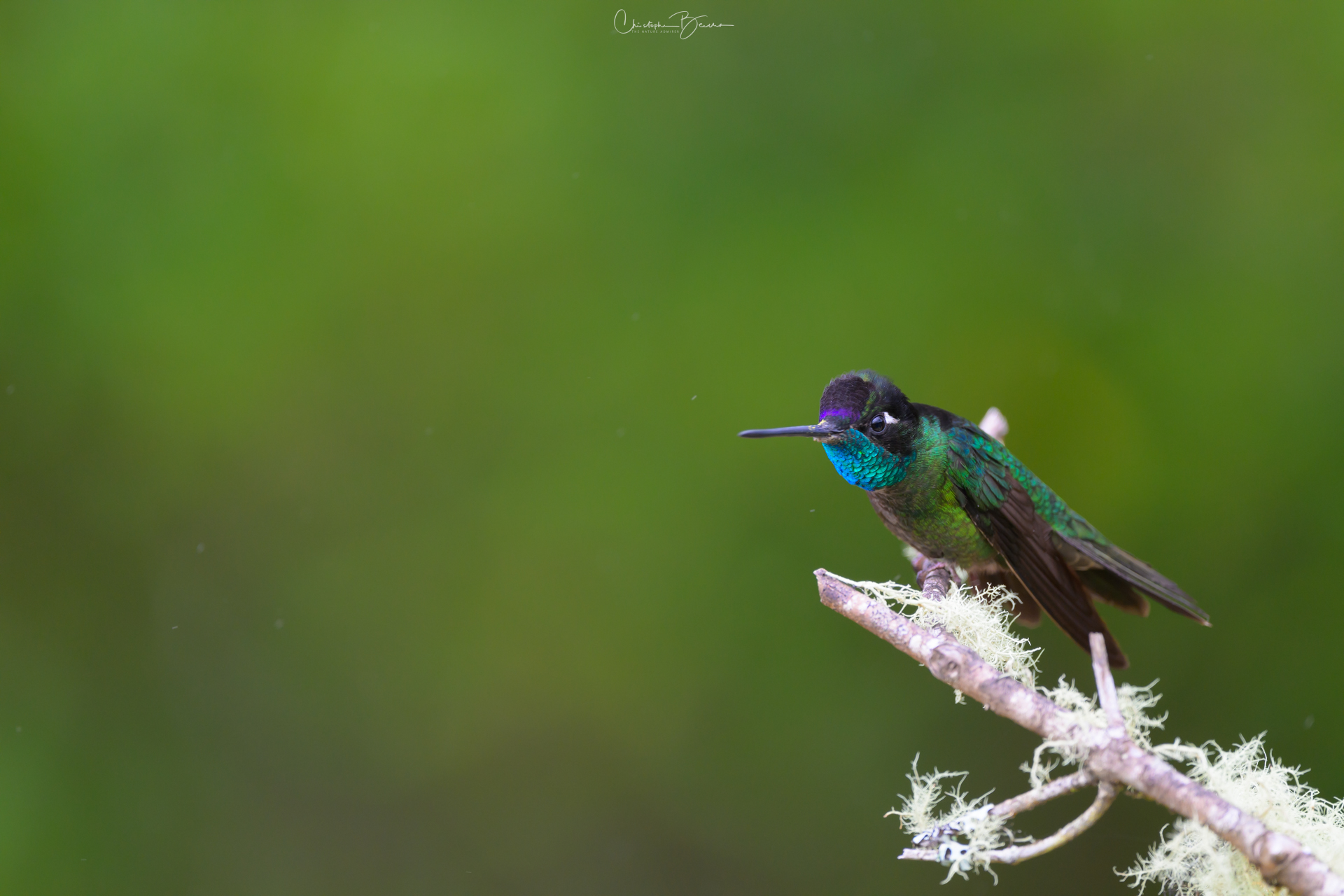
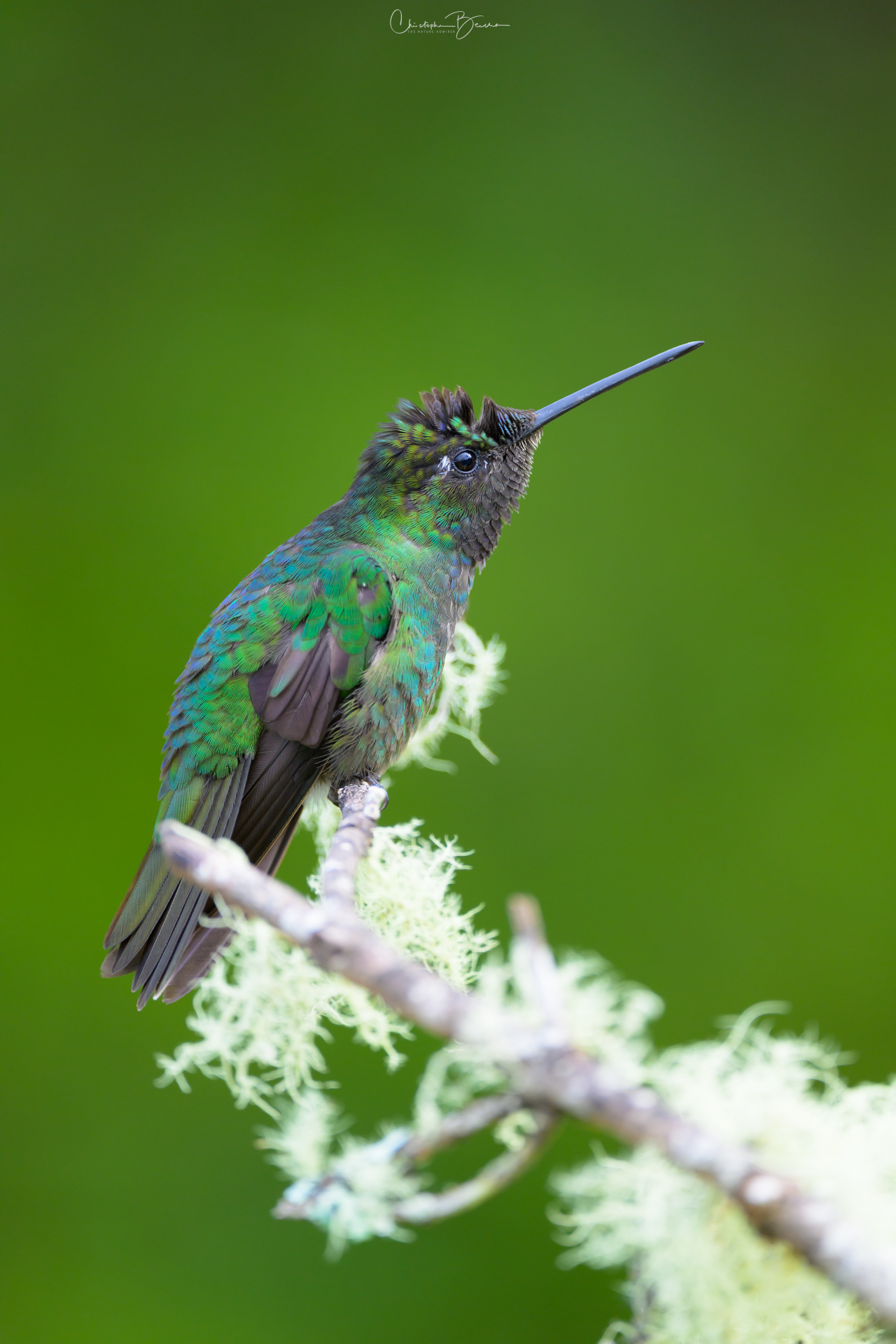
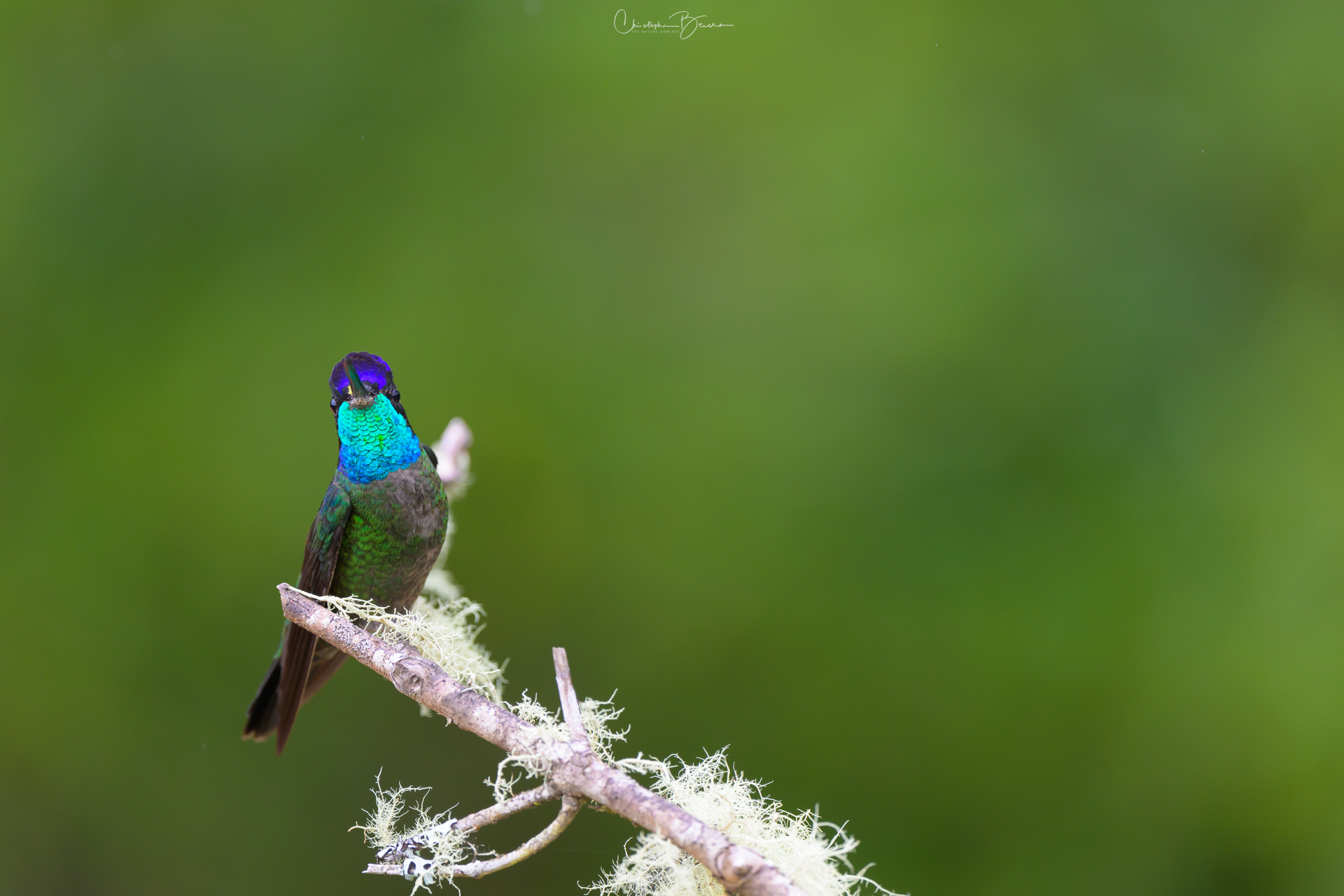
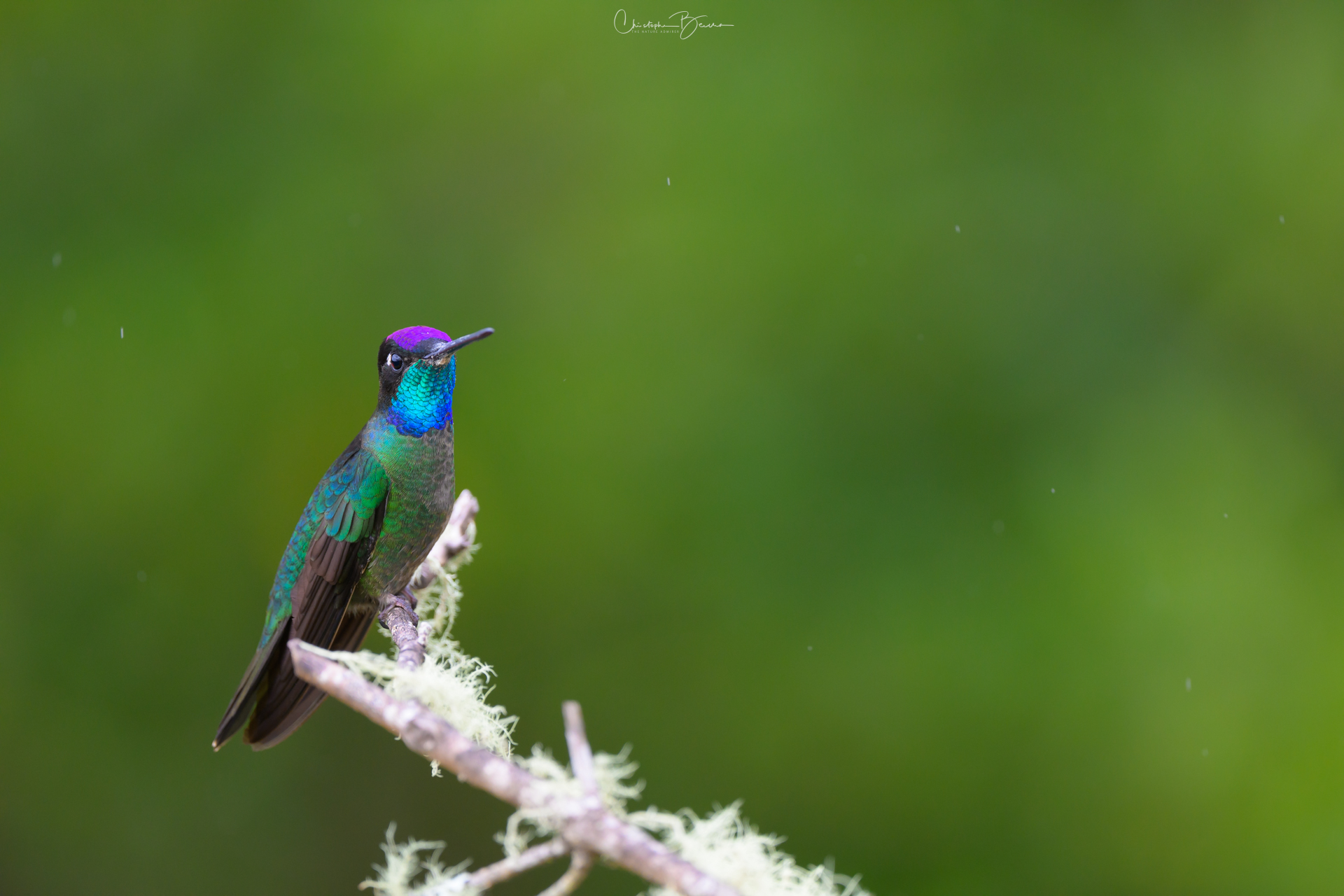
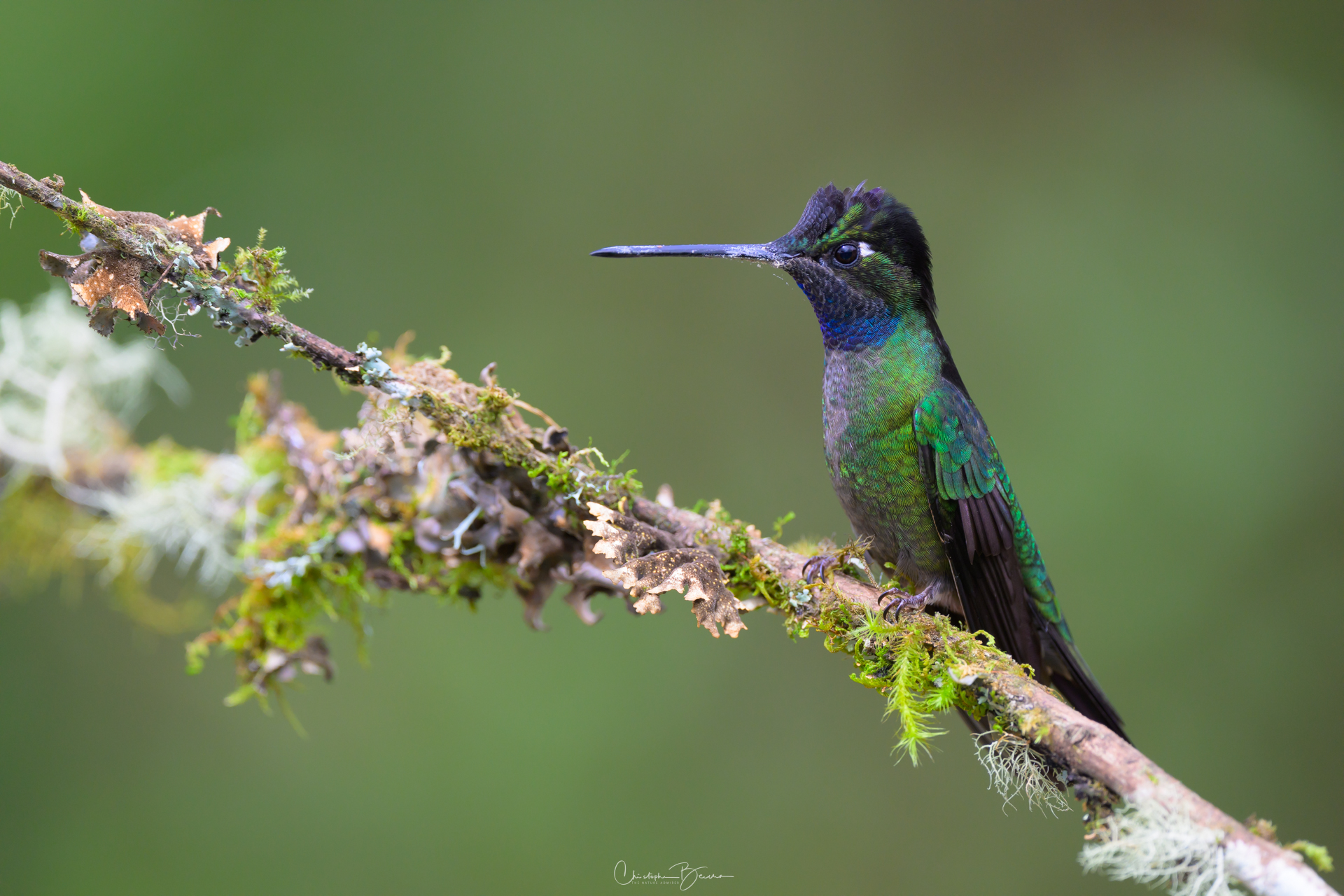
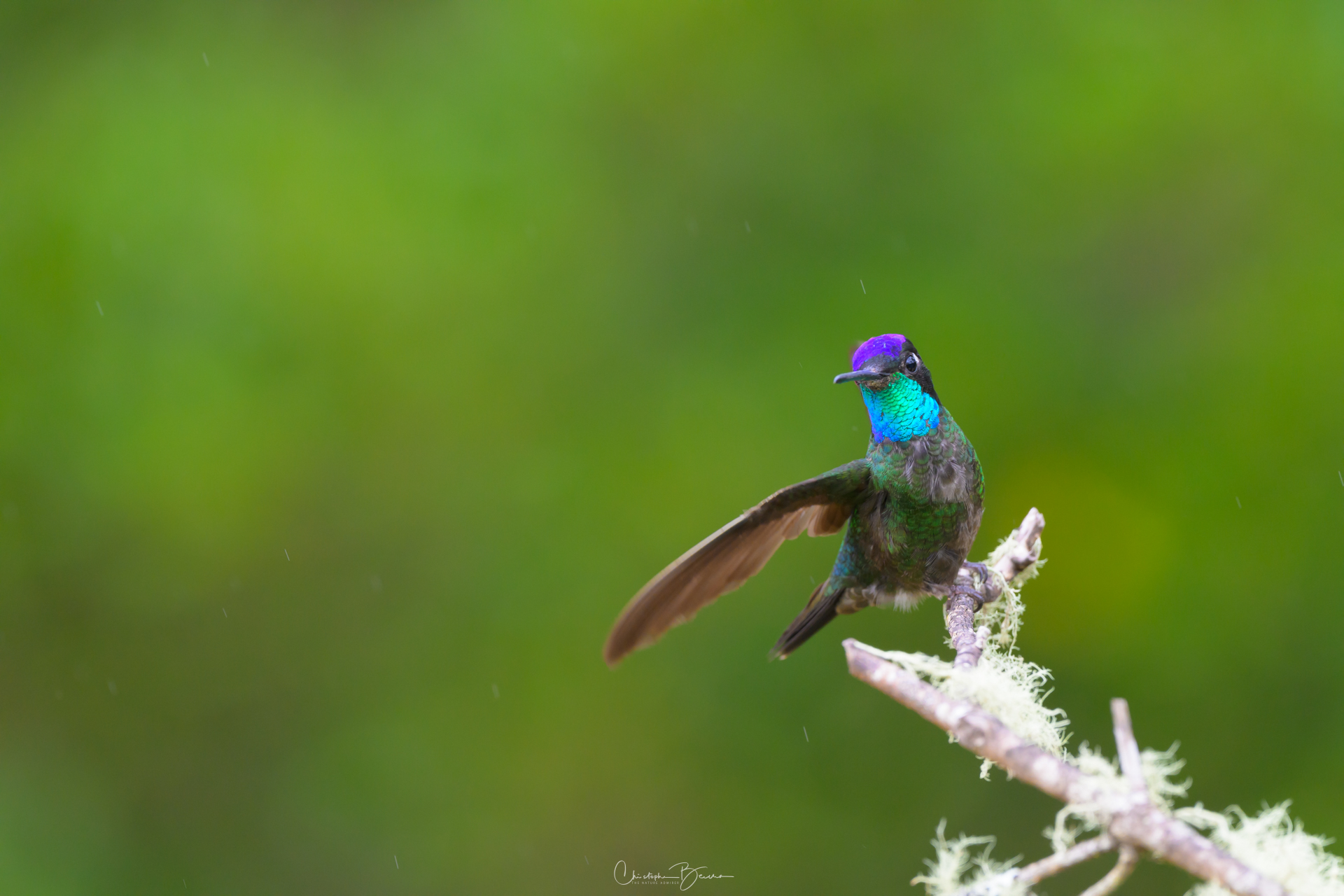
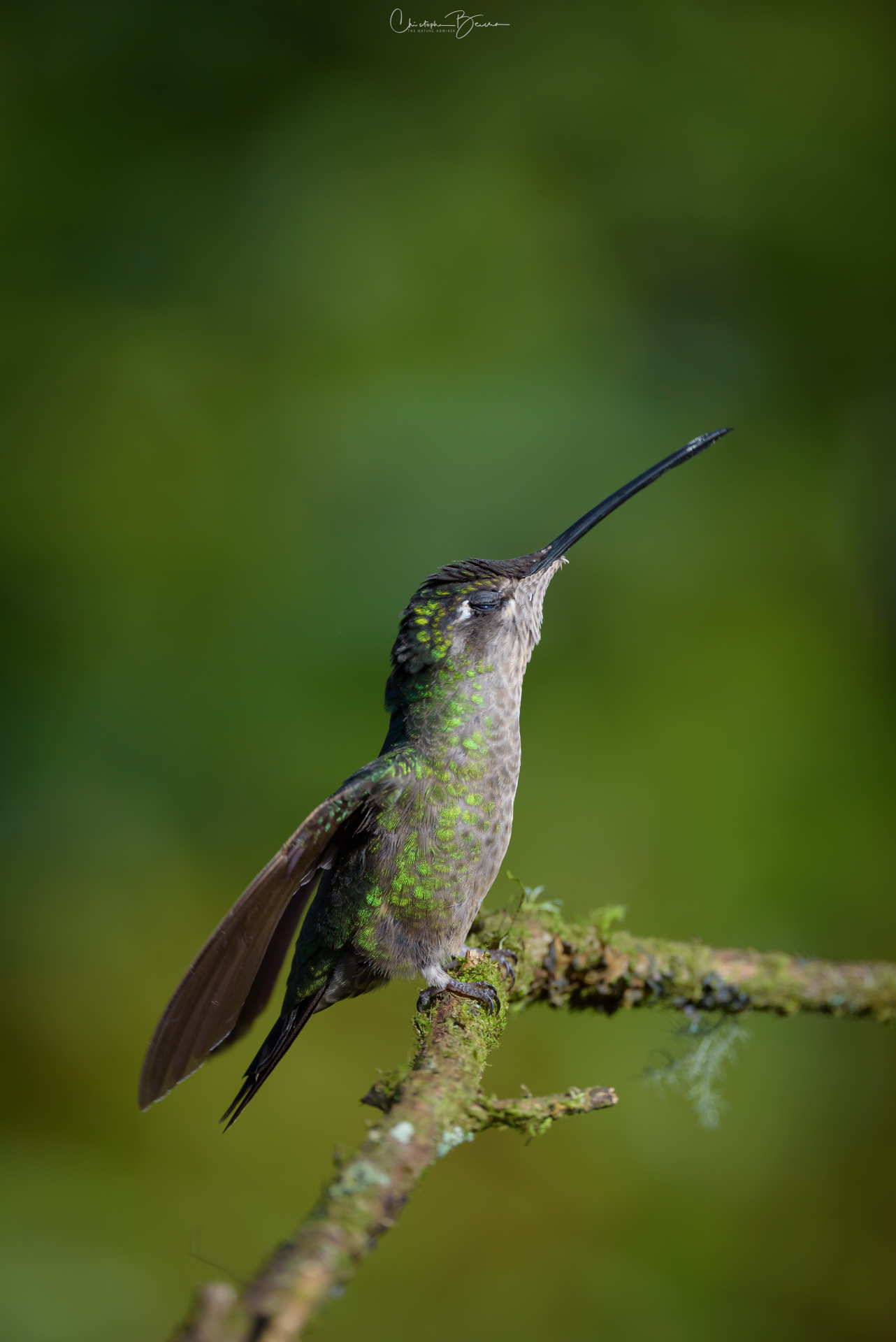
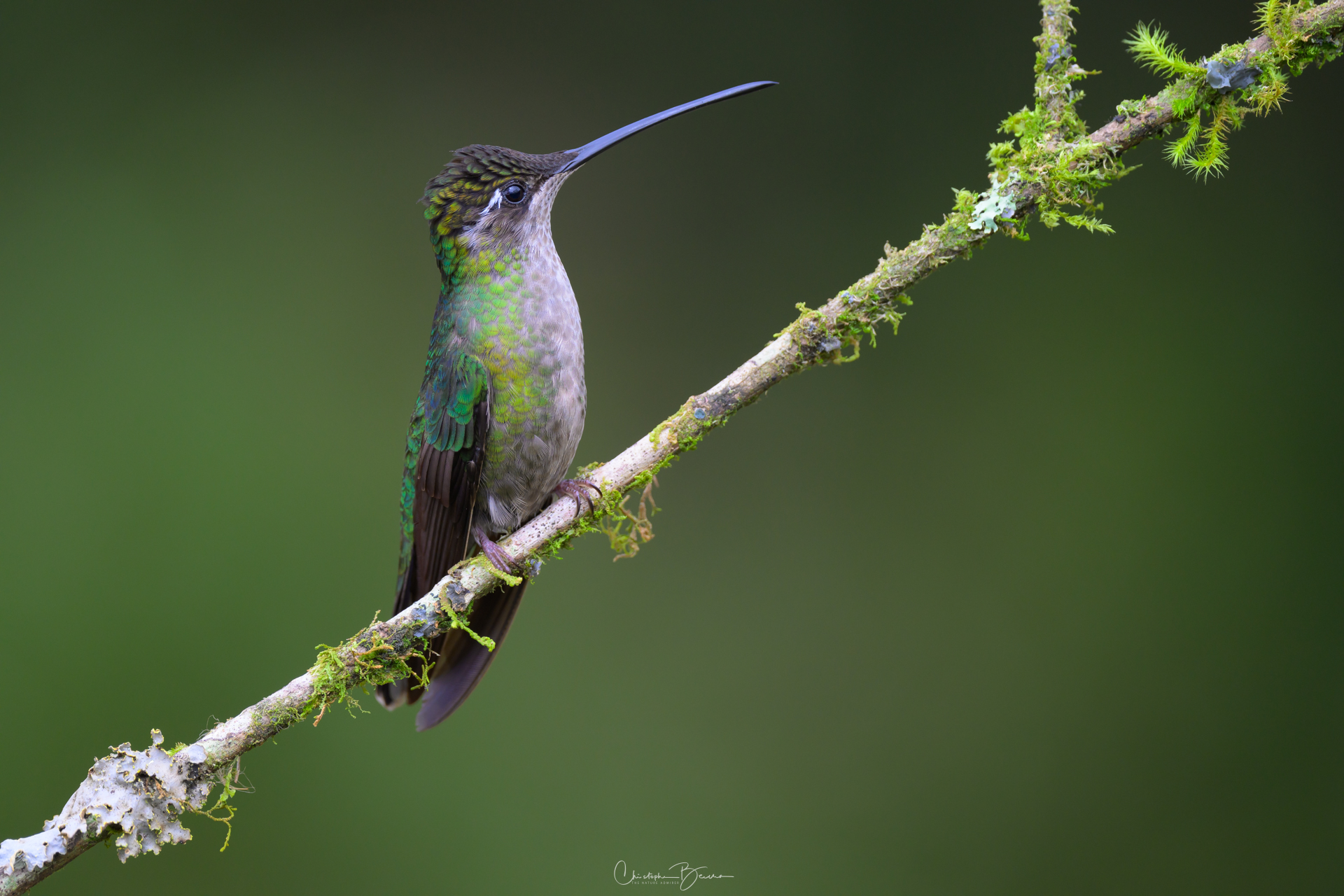
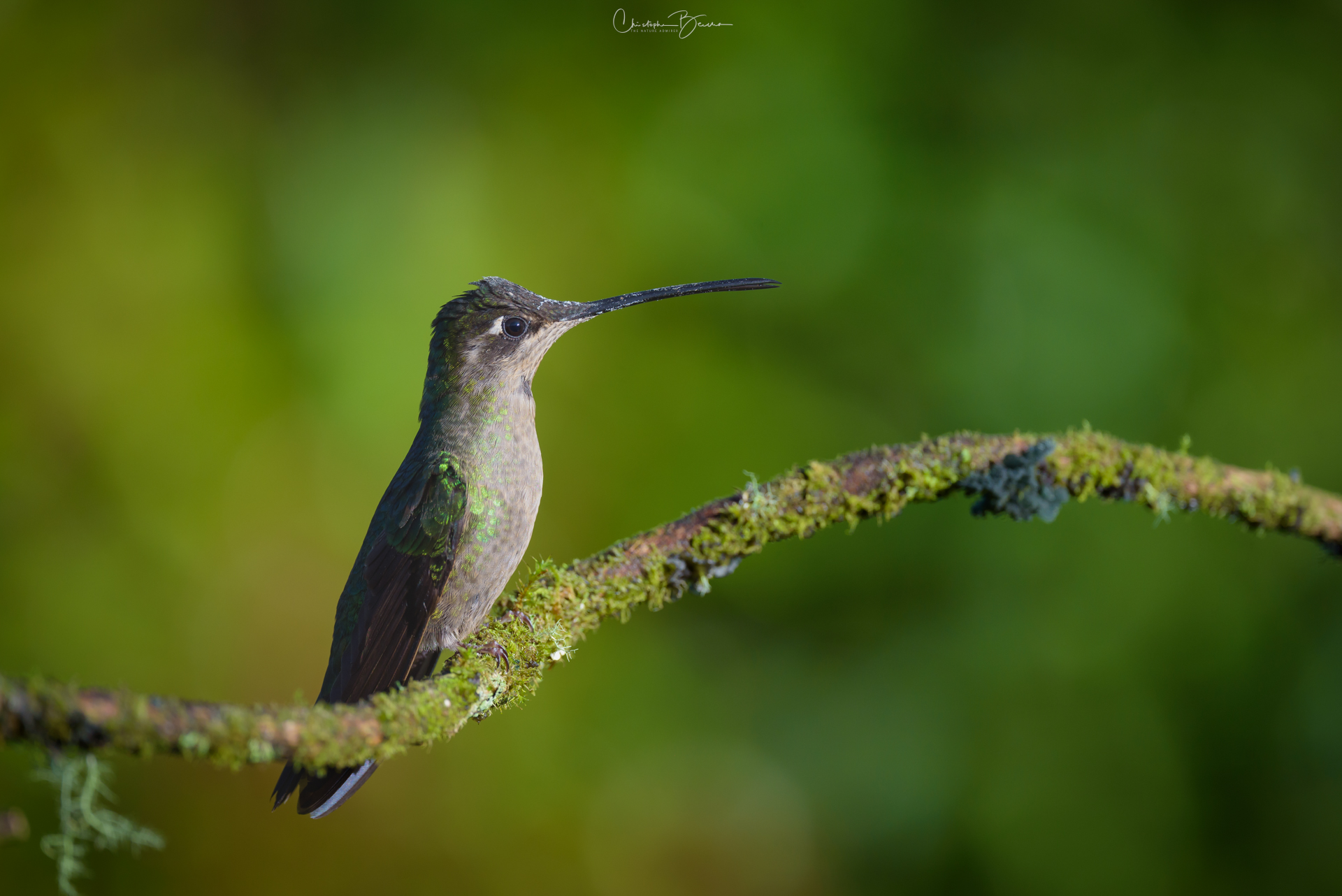
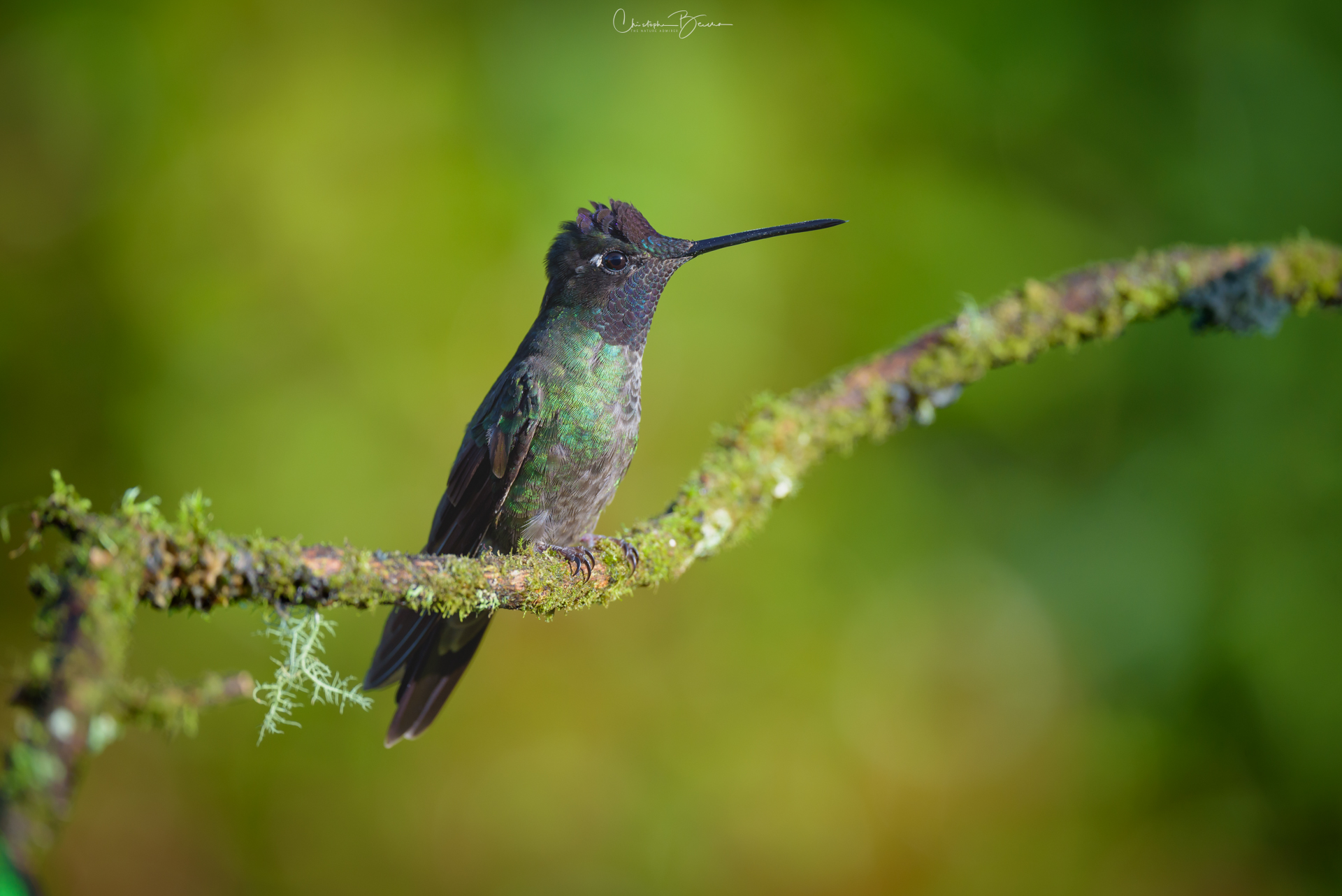
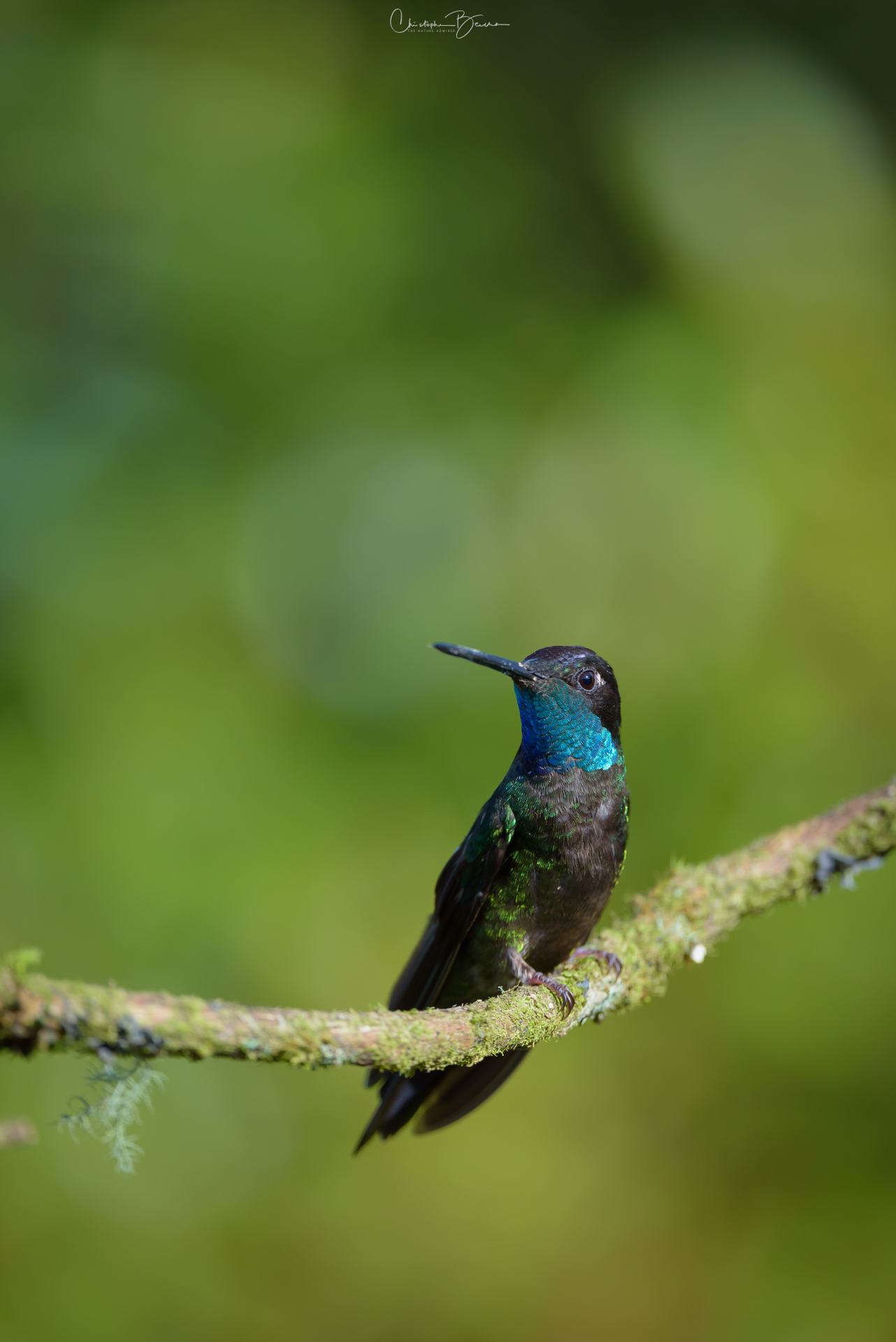
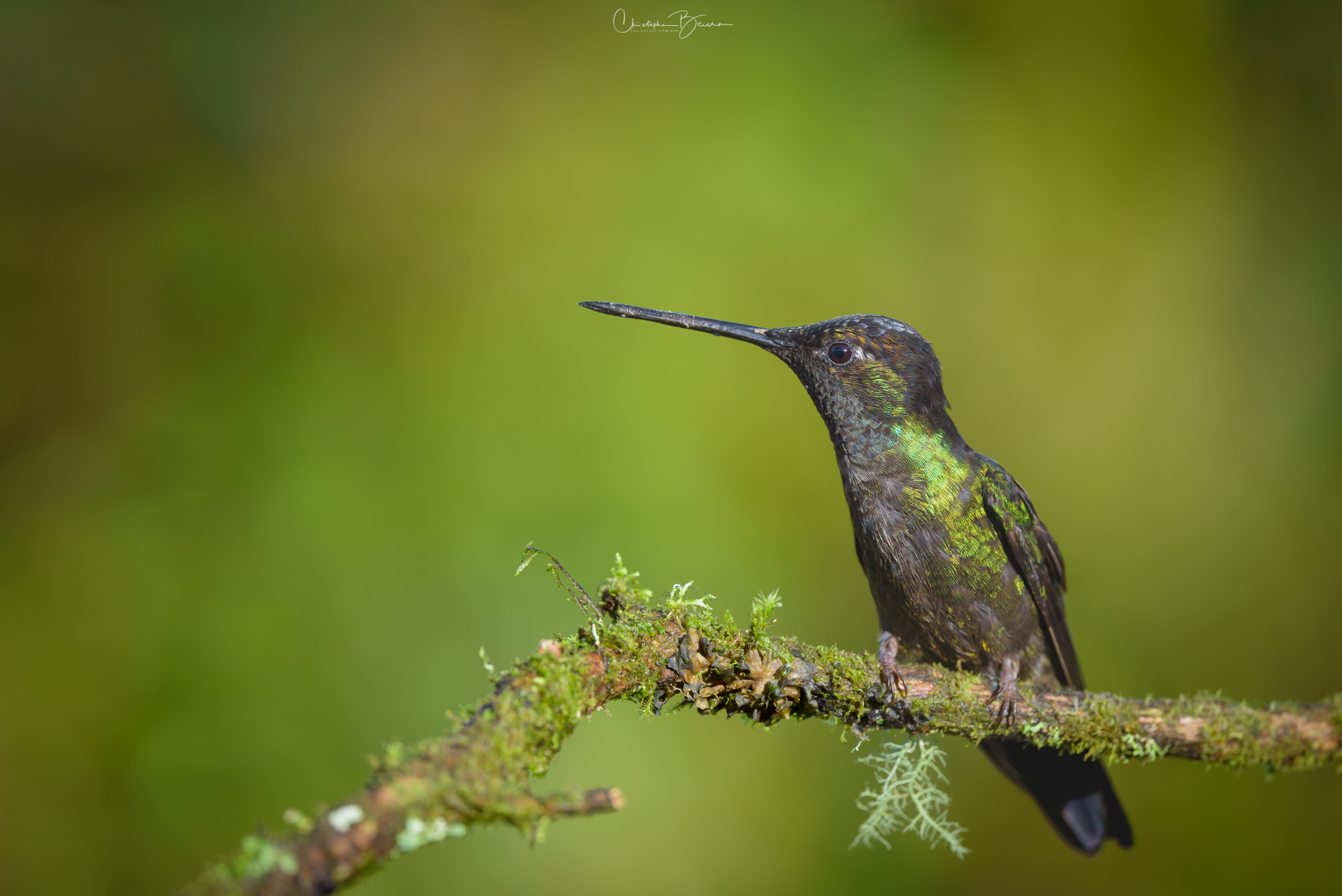
The Talamanca Hummingbird is pretty similar to the Fiery-throated Hummingbird and both inhabits similar environments, in the highlands of Costa Rica. The female has gray underparts, which makes it easier to identify against the Fiery-throated. The male is glittering green in the upperside, with iridescent throat and head that look black most of the time, but in certain angles reveal a deep turquoise-blue metallic color in the throat, and purplish-blue on the head.

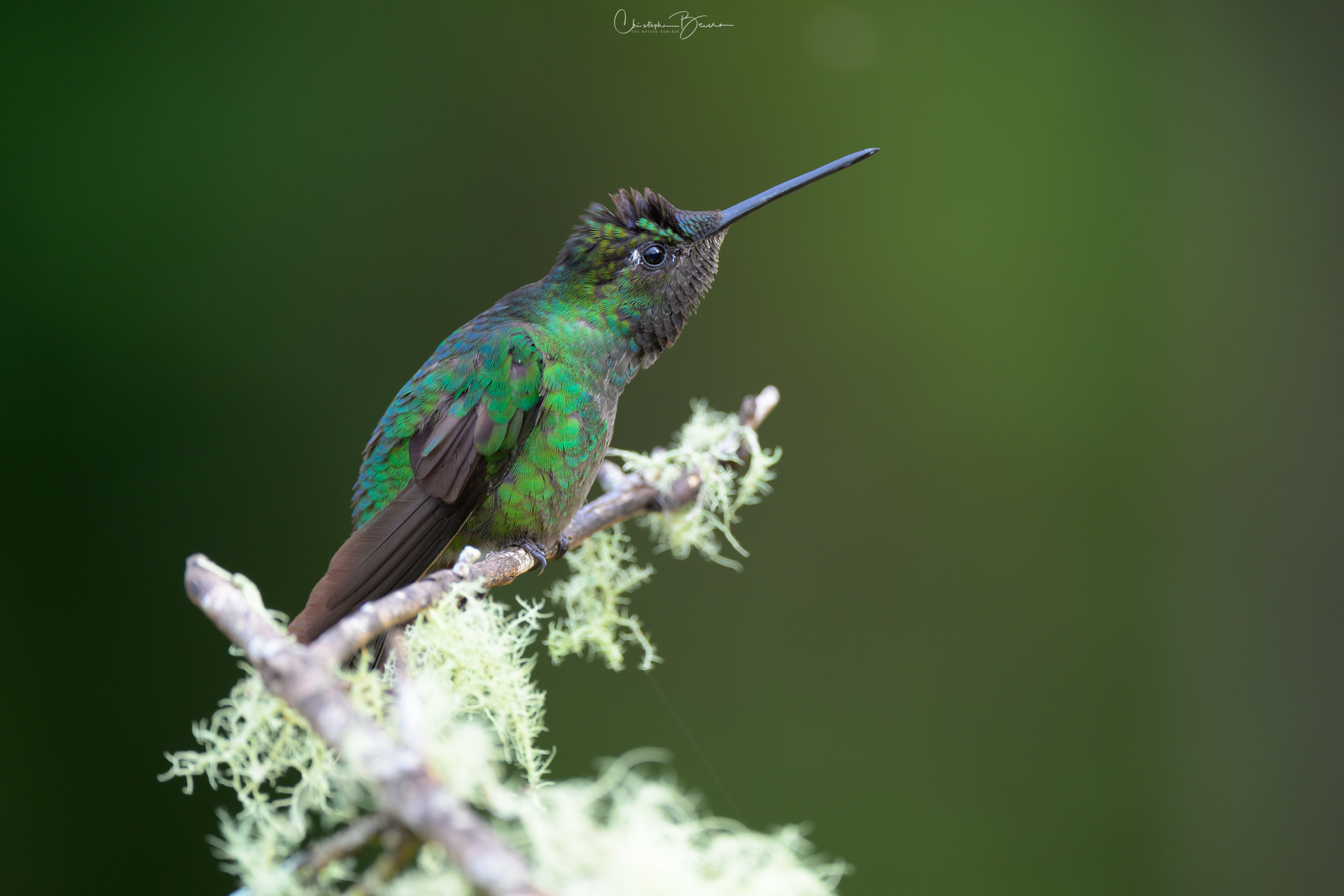
Fiery-throated Hummingbird (Panterpe insignis)

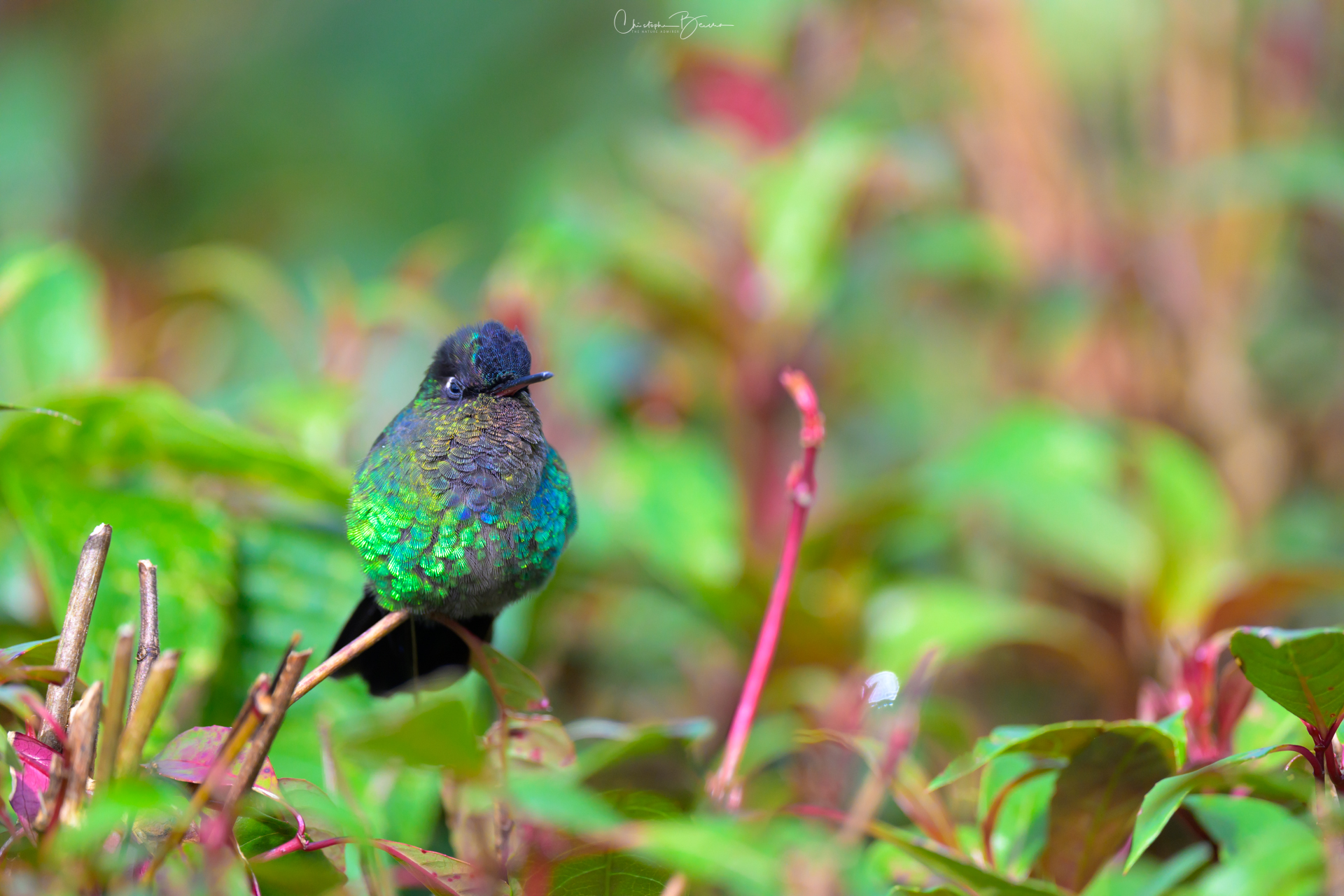
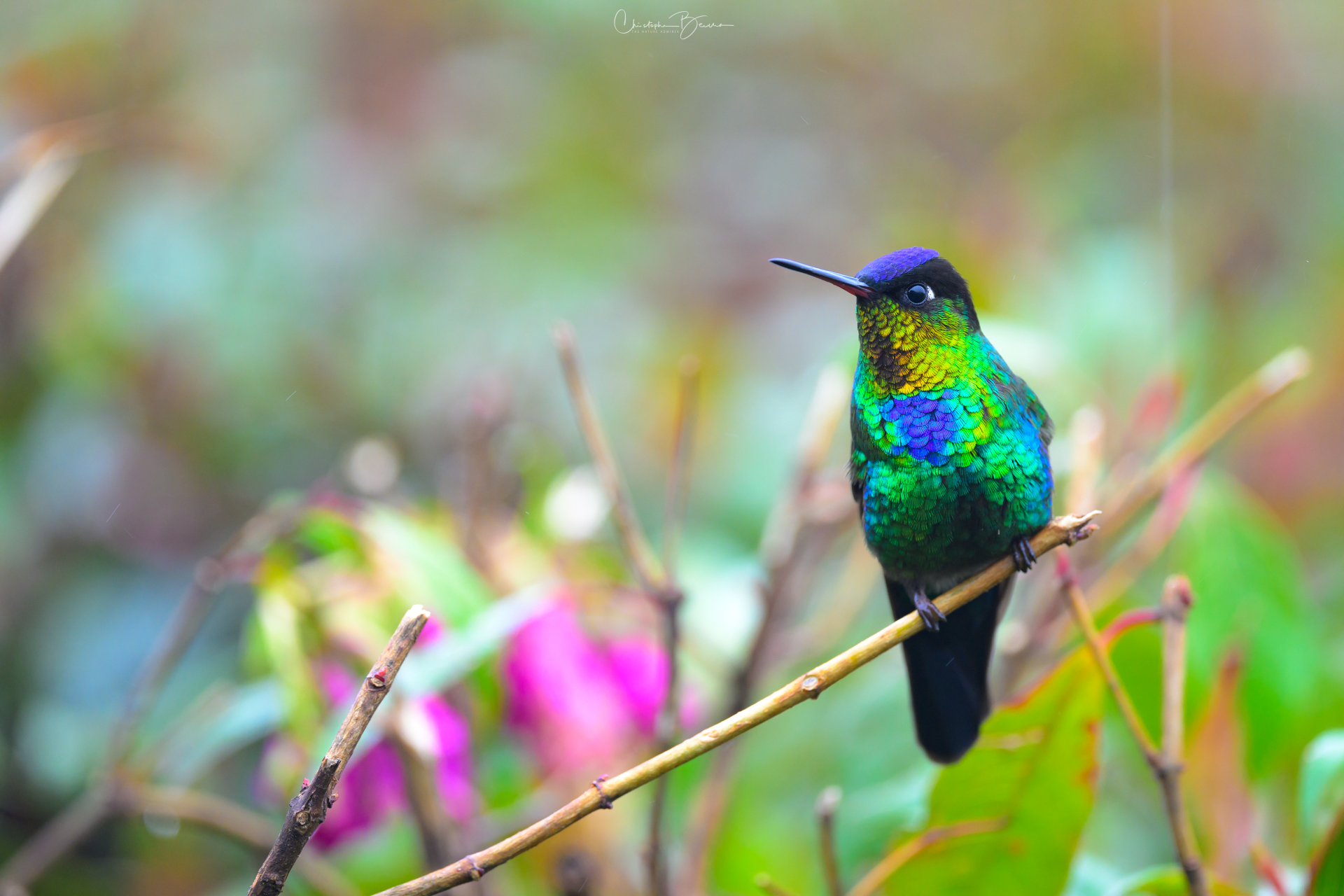
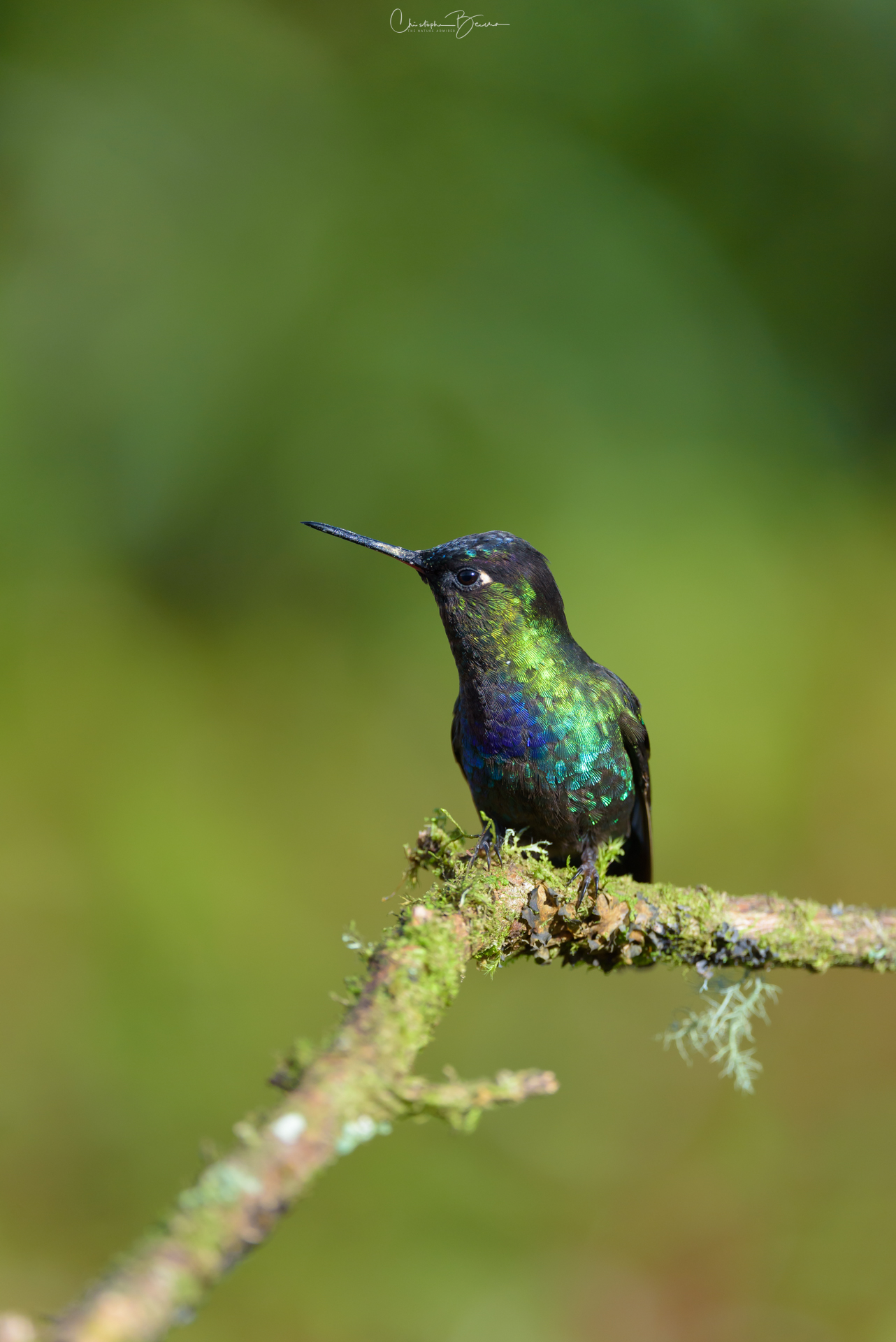
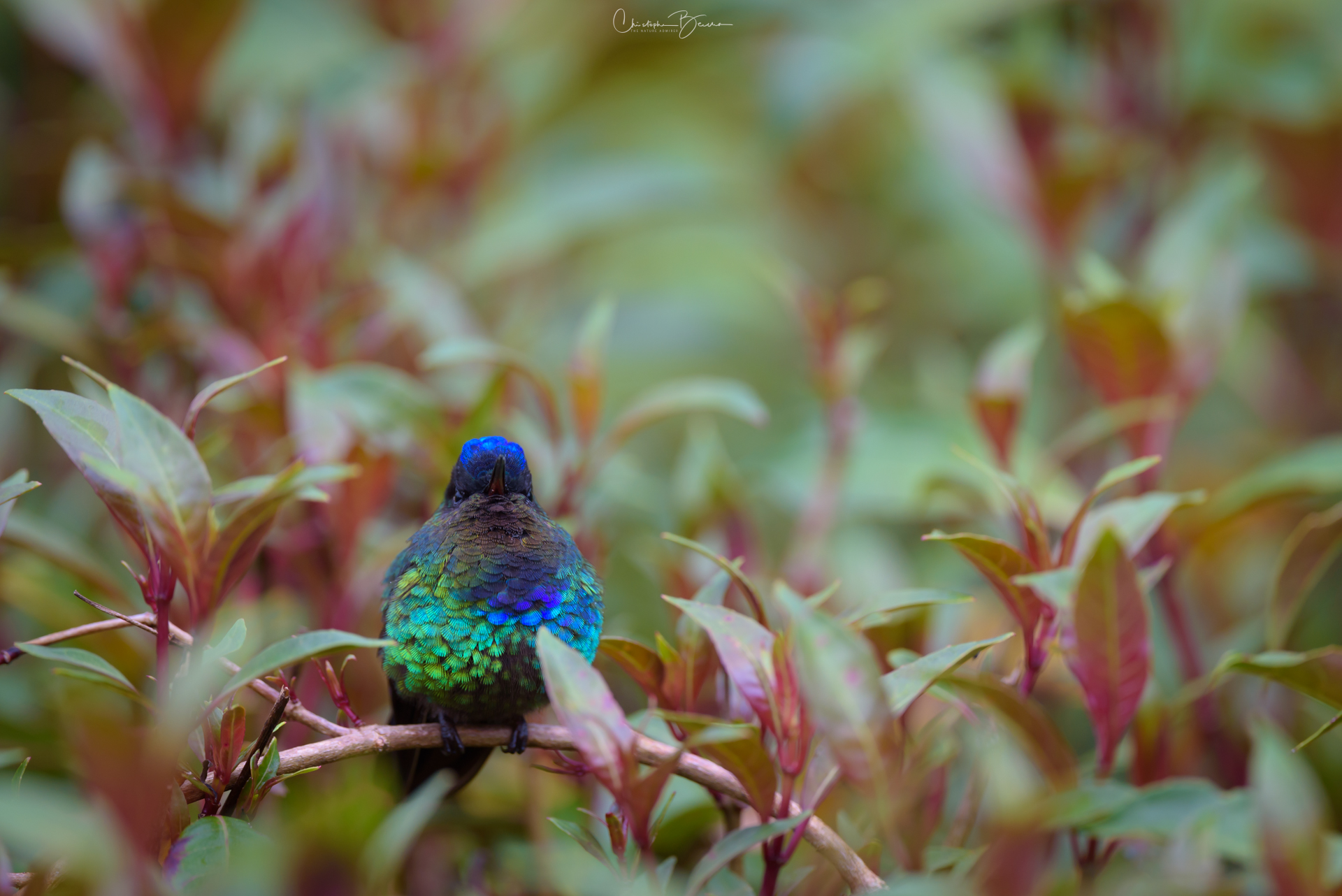
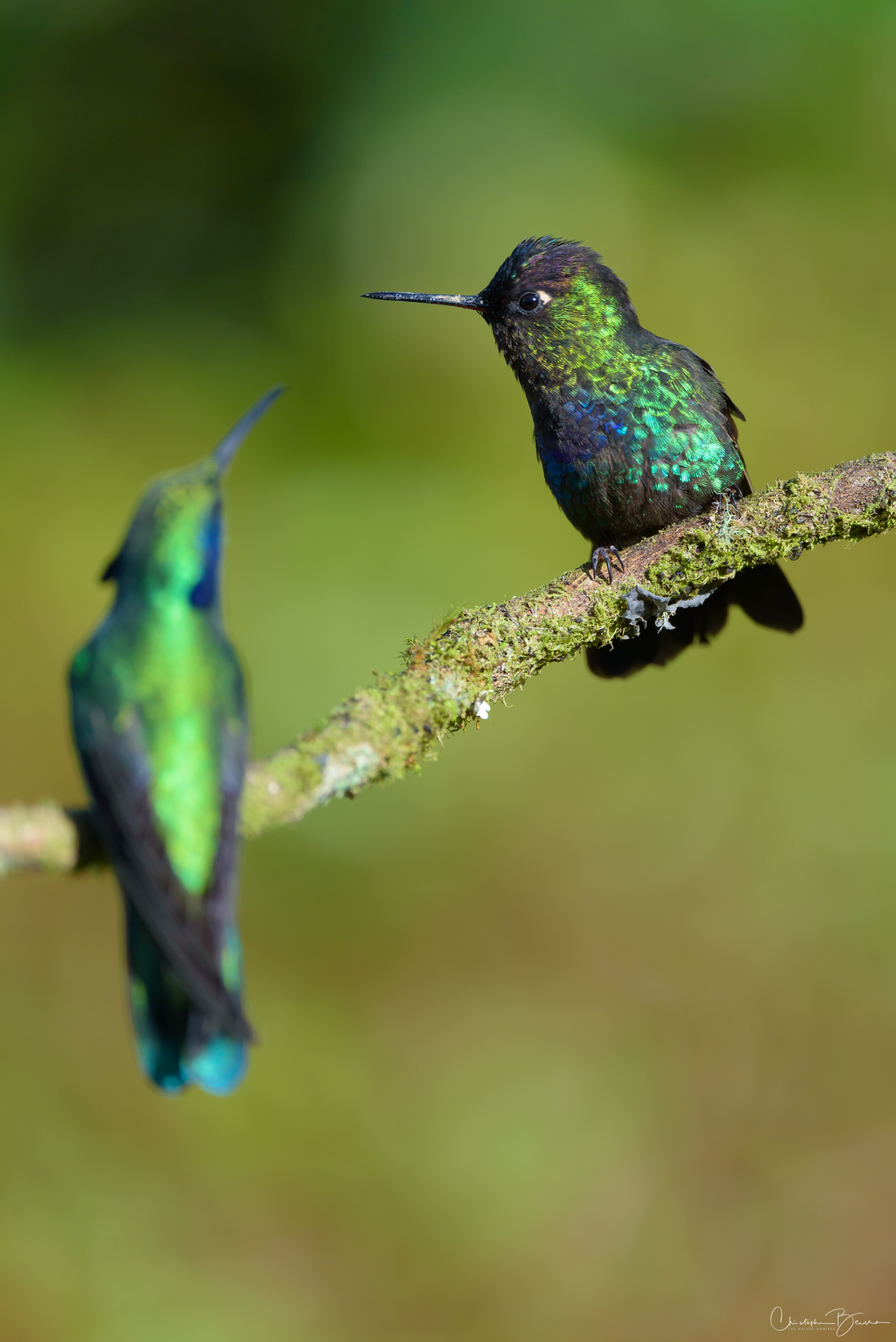
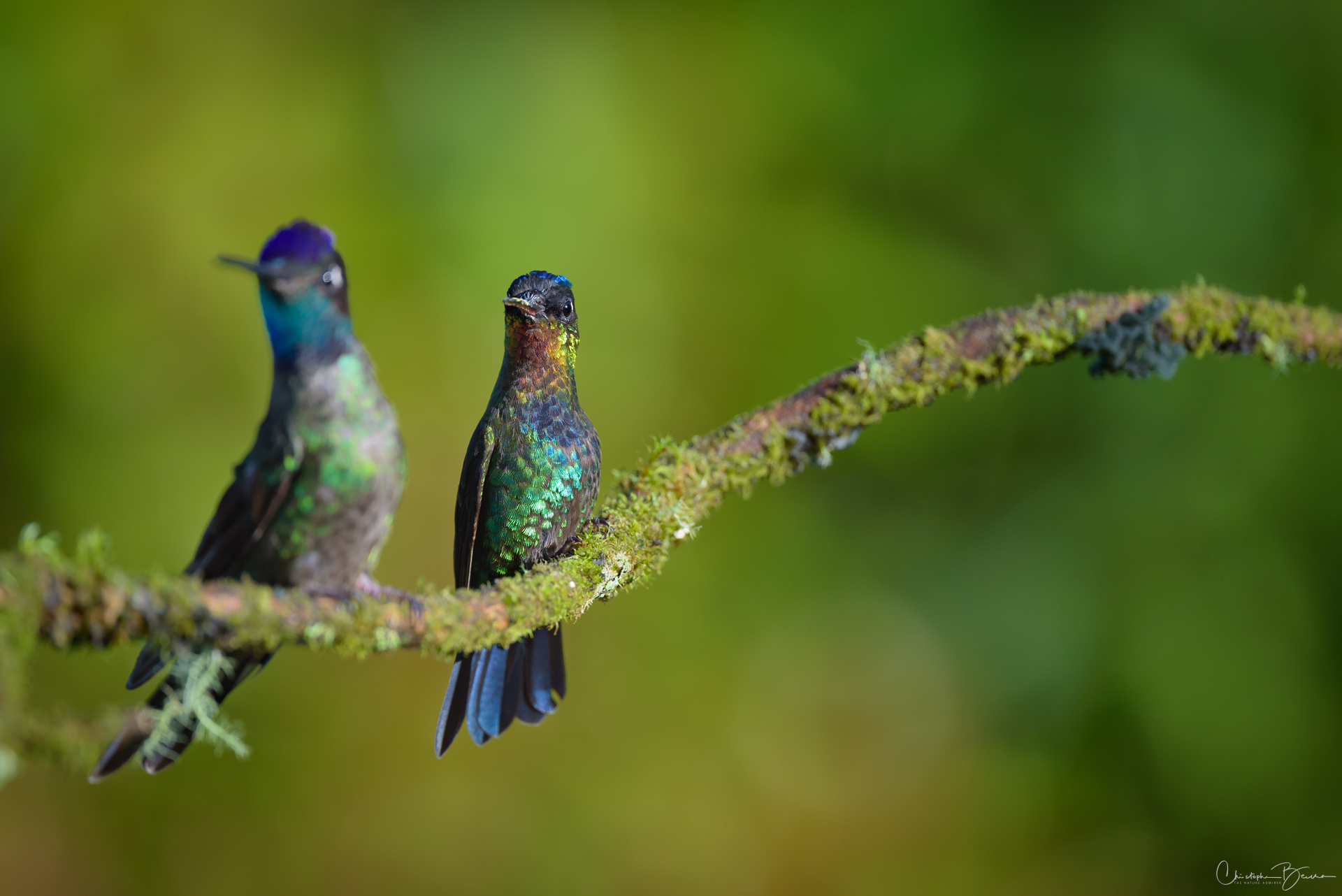
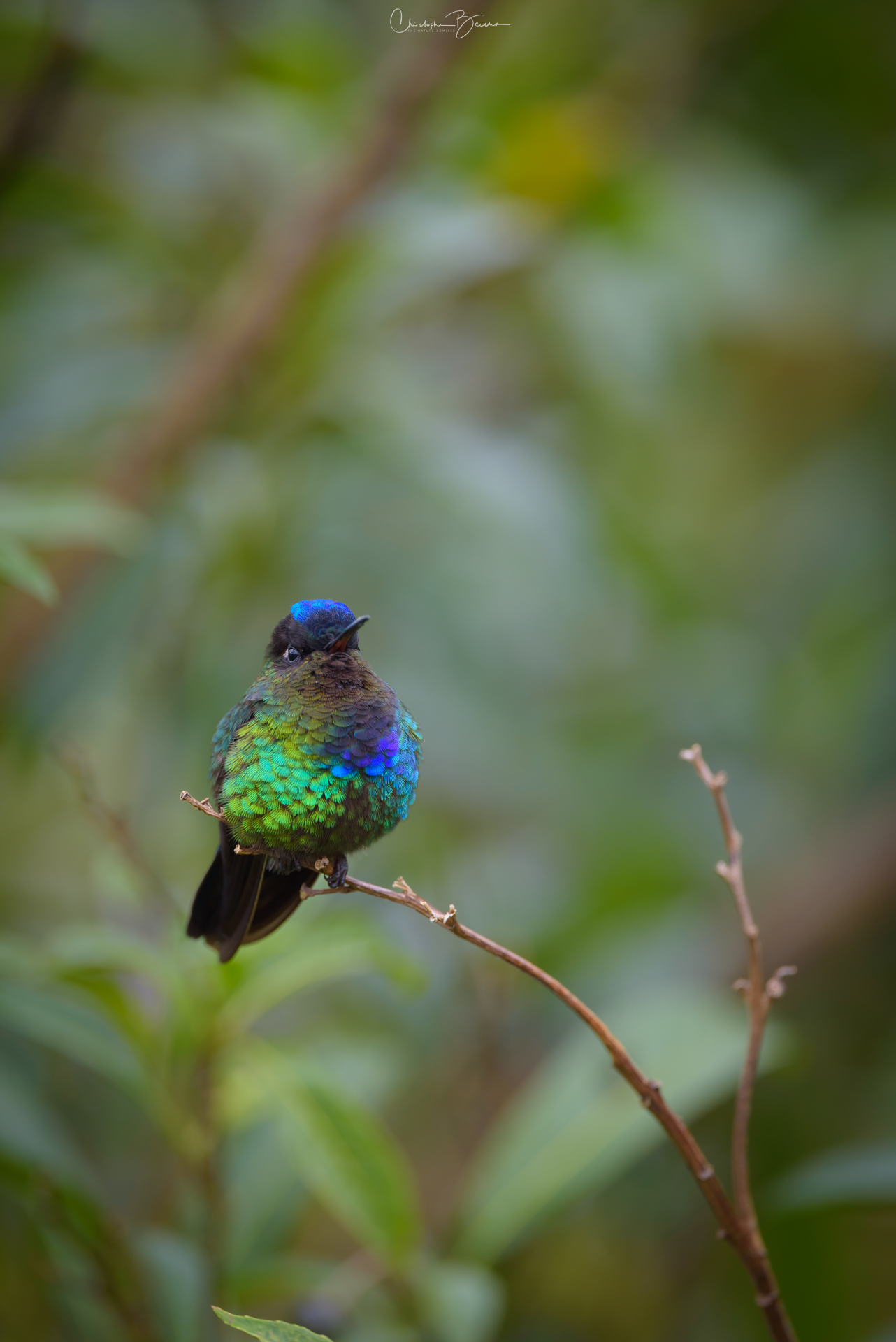
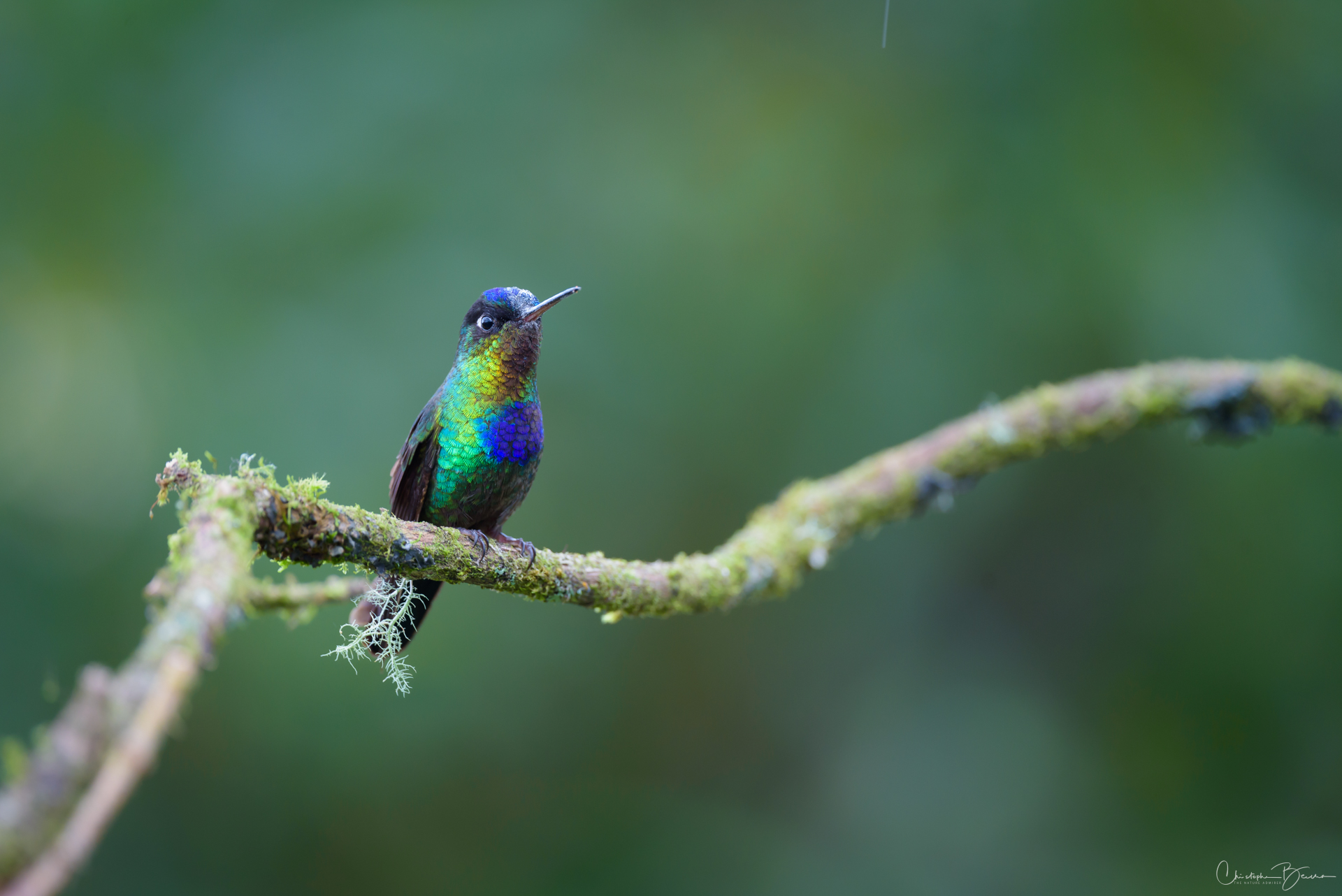
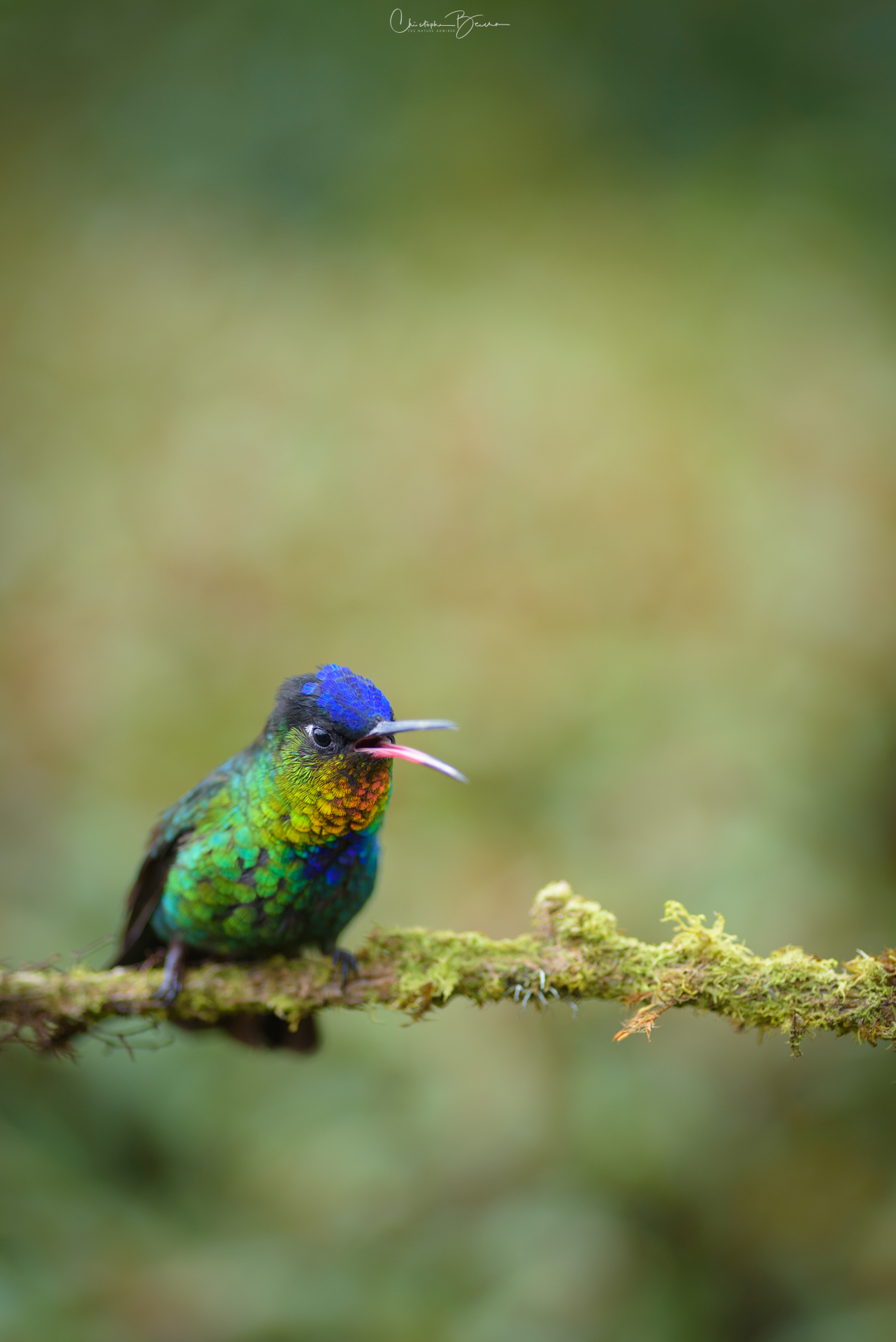
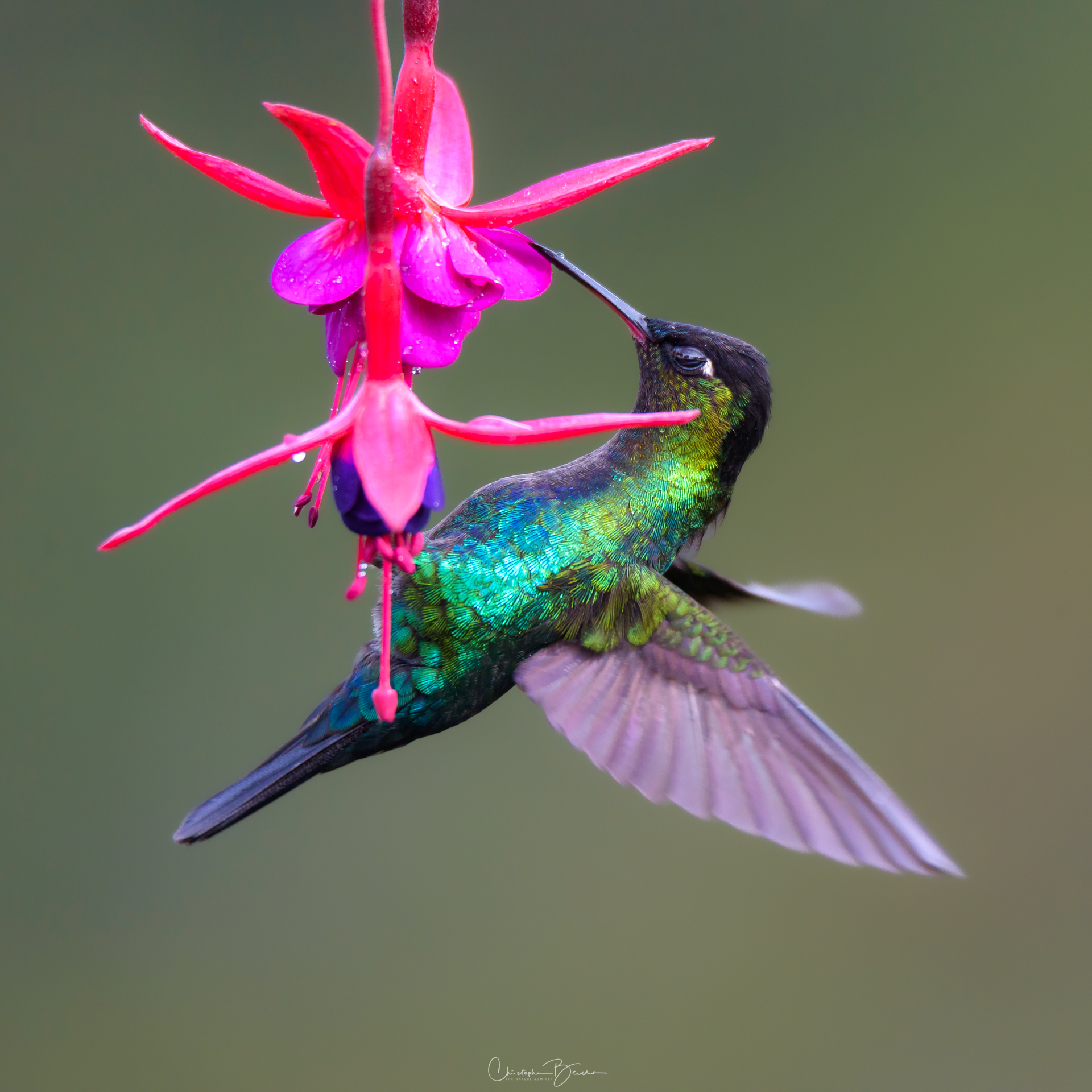
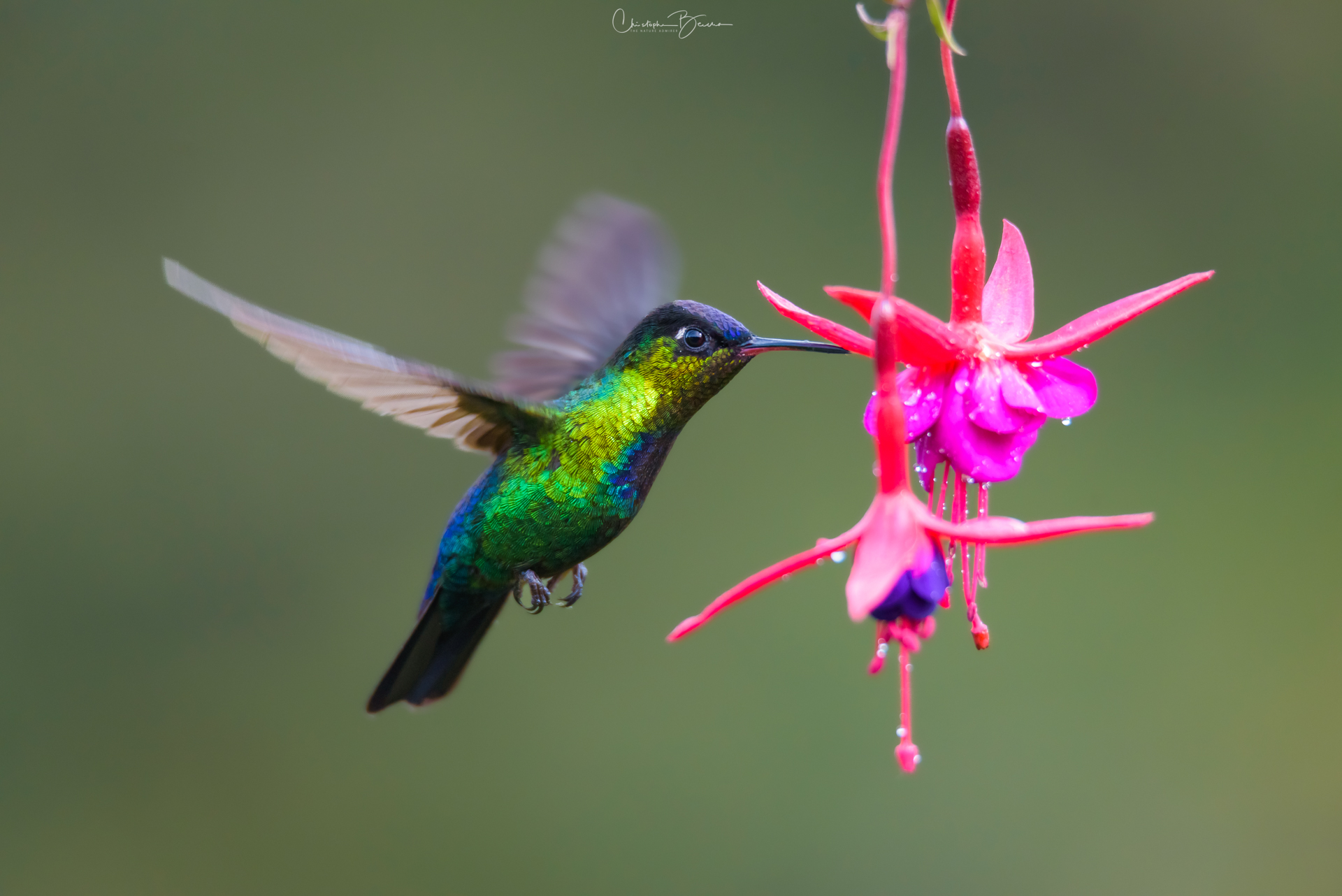
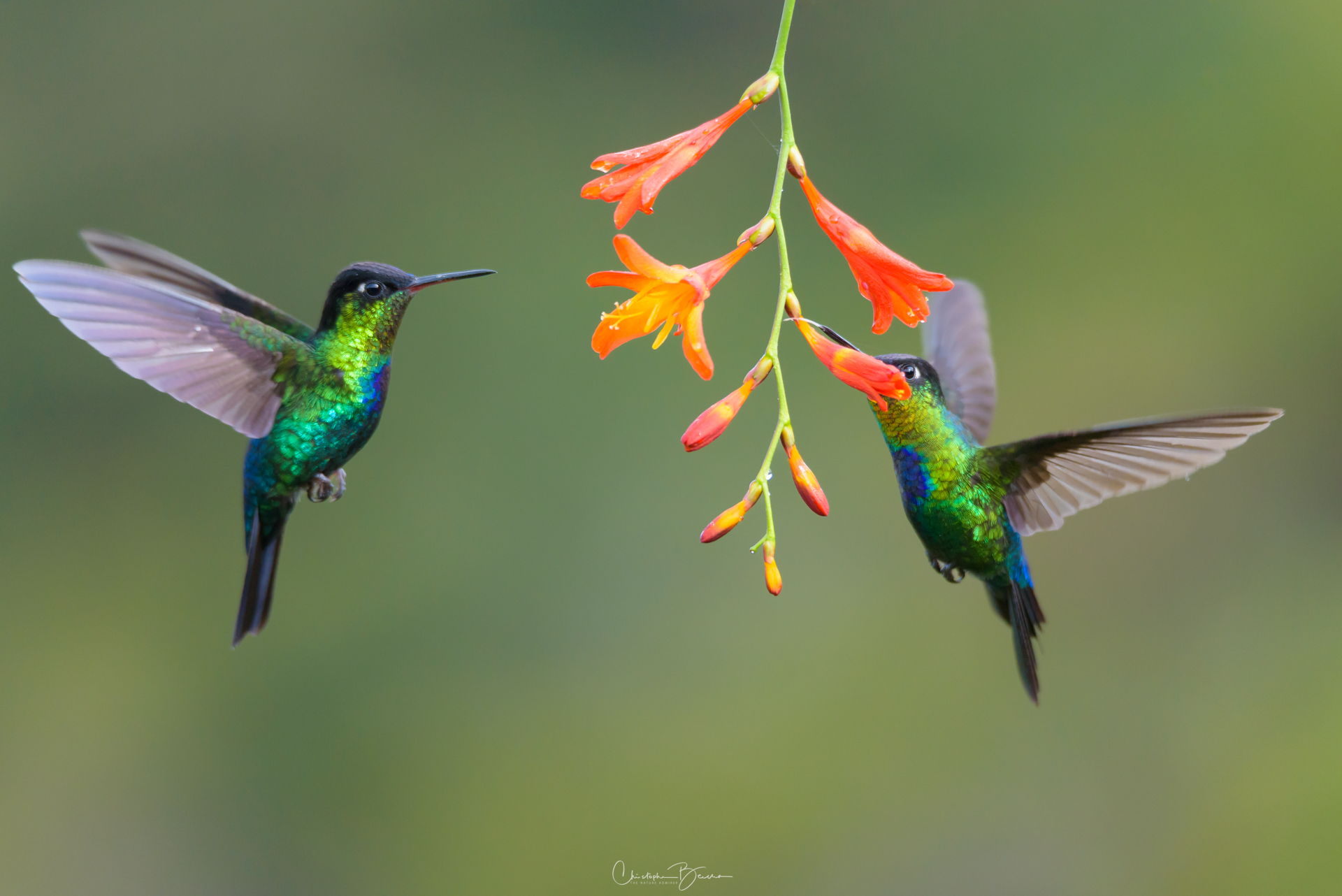
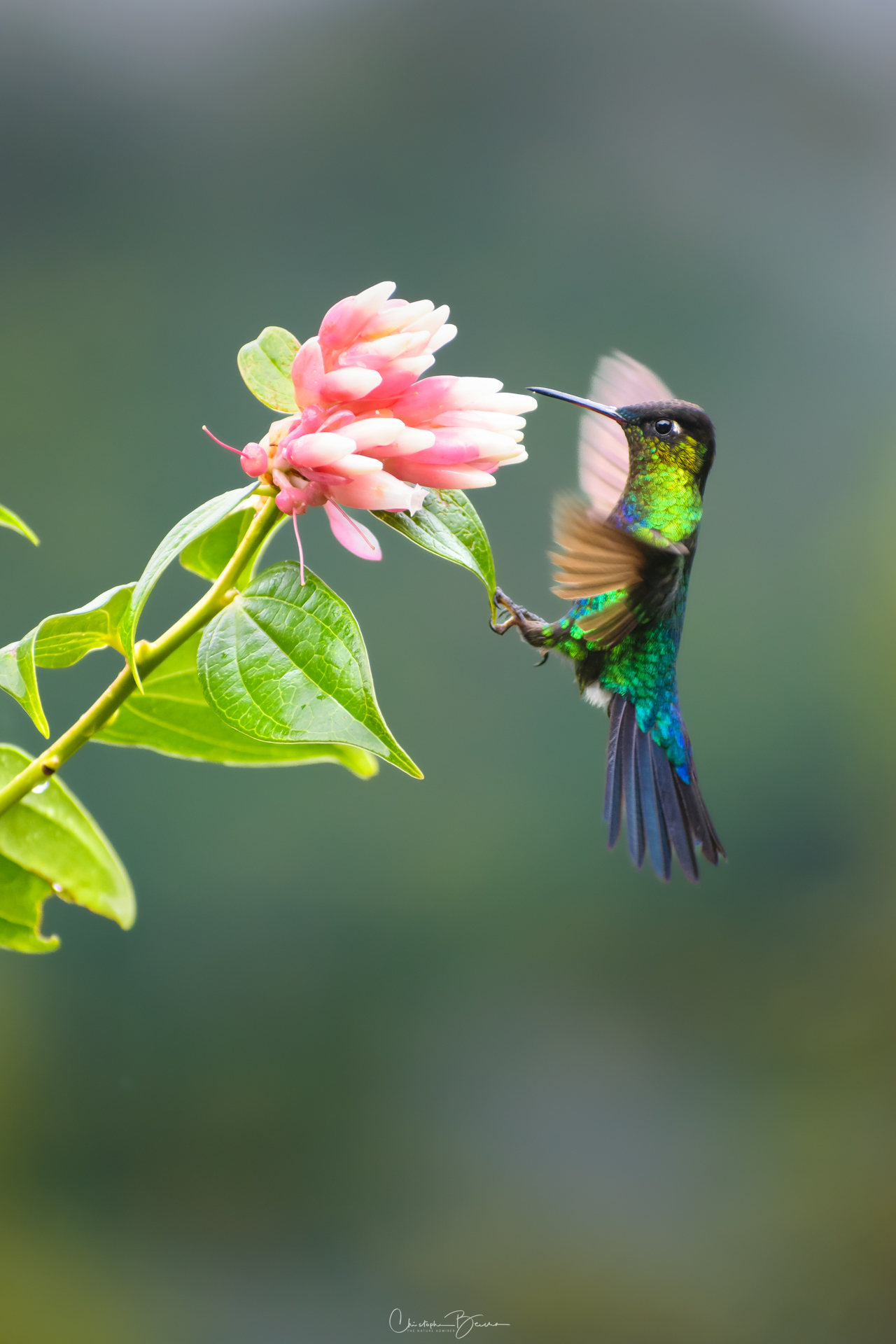
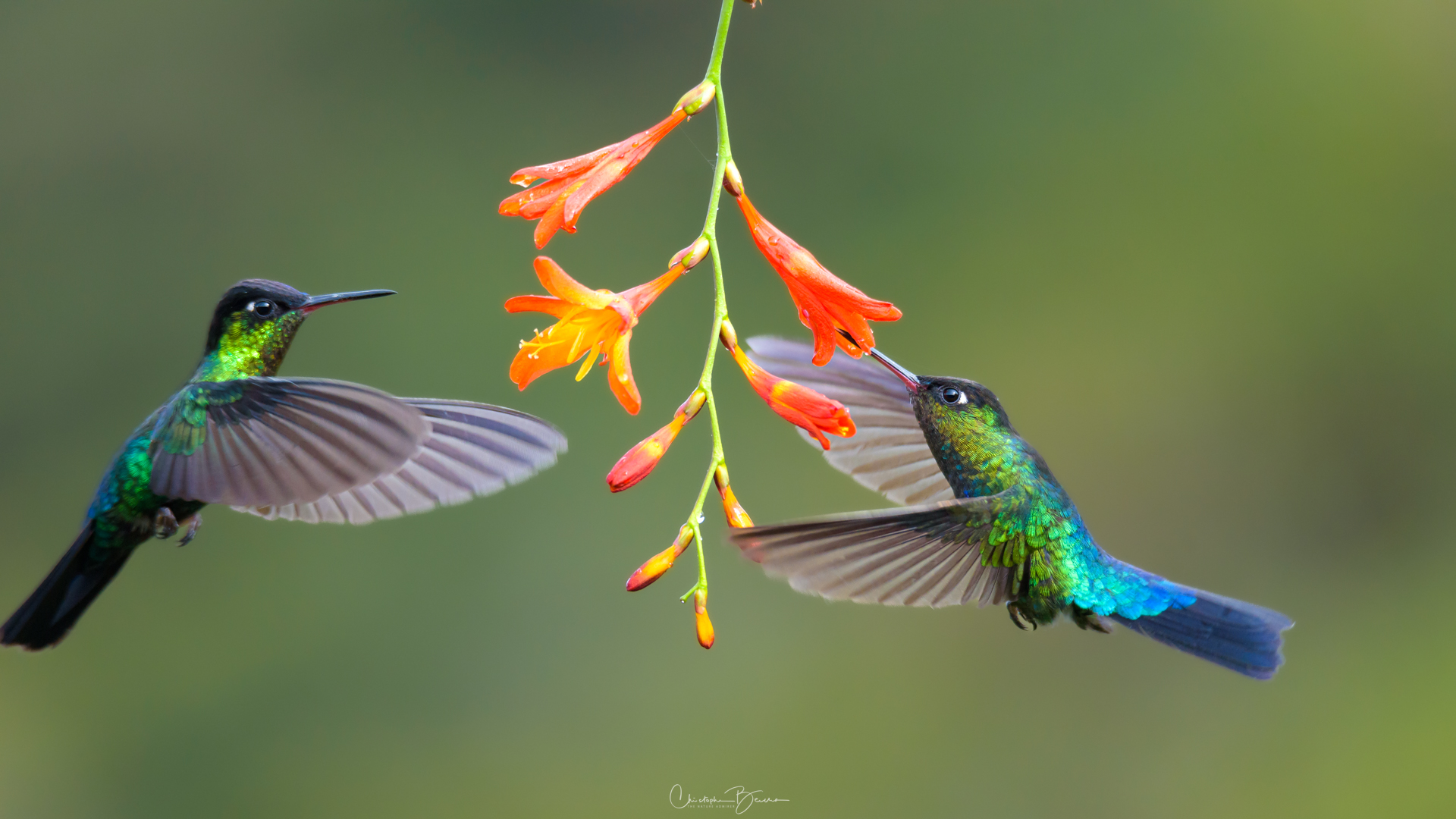
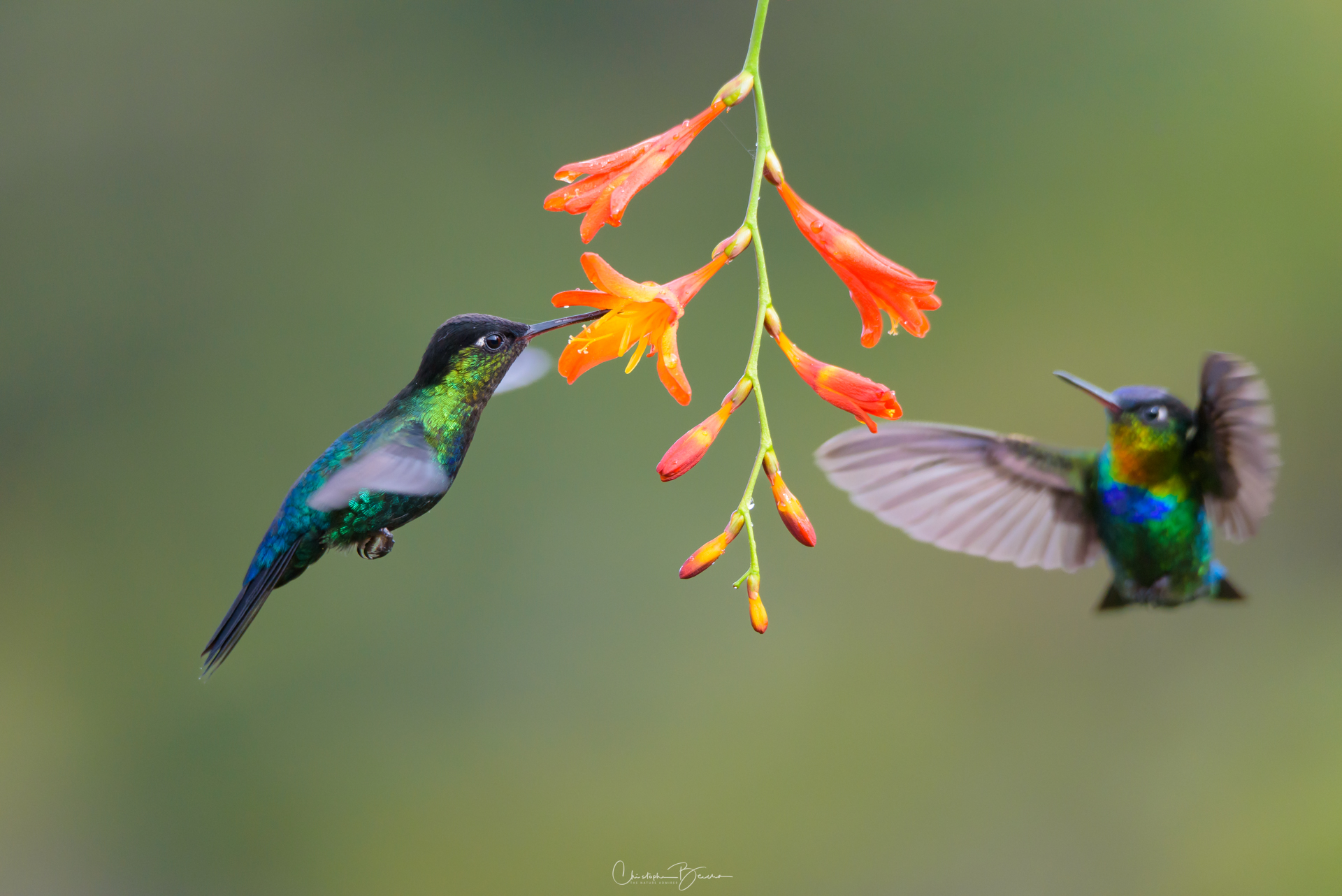
As is usual in Hummingbirds, the Fiery-throated Hummingbird shows iridescence in its plumage, by refracting light that hits in different angles and intensities. The result is a colorful plumage that changes with every so slight movement, and in the case of the Fiery-throated, it transforms into a rainbow of color. The challenge for any photographer is to obtain a picture of this active bird with the glowing yellow-red throat and blue chest. Getting that in-flight with natural light as the hummer approaches a flower with acrobatic movements is a matter of luck. To beat the odds, it is recommended to visit places like Paraiso Quetzal Lodge in Cerro de la Muerte, where these hummingbirds are abundant and have become used to people being around with their cameras. At times you can see tens of these birds in garden; they will often fight with one another and pass over your head at high speed. Other times they will perch in an almost catatonic state, ideal for classic portrait pictures.

Resplendent Quetzal (Pharomachrus mocinno)

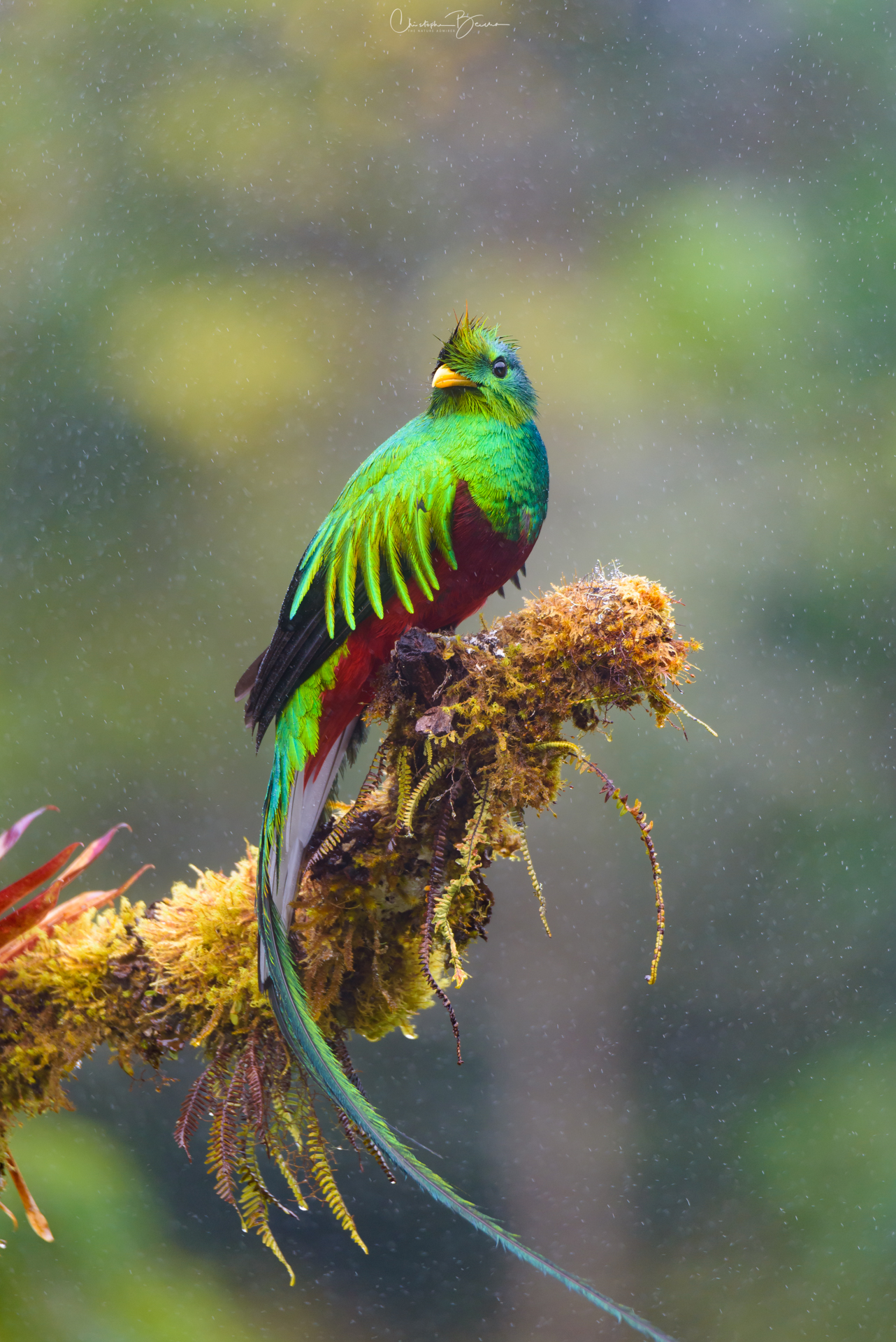
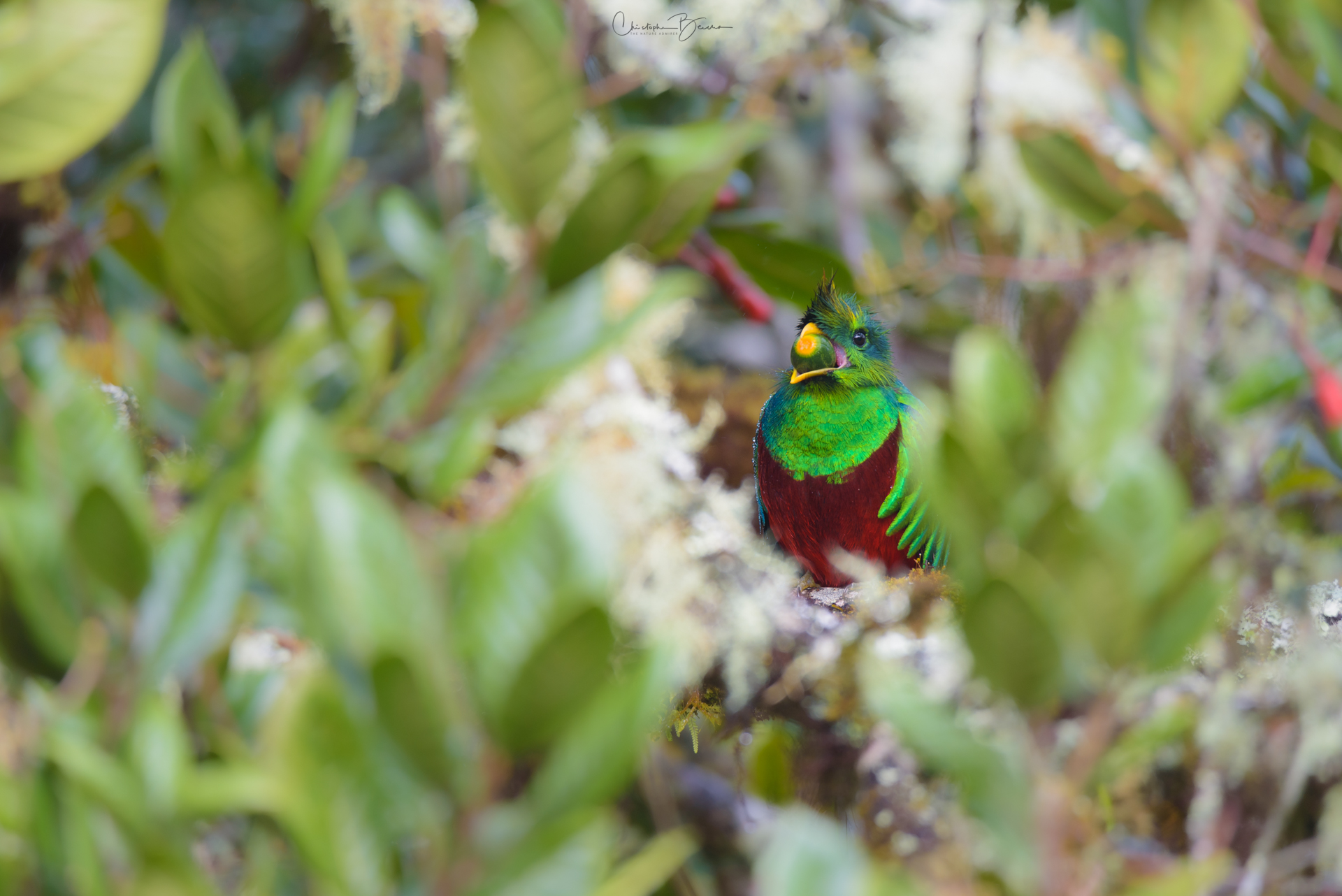
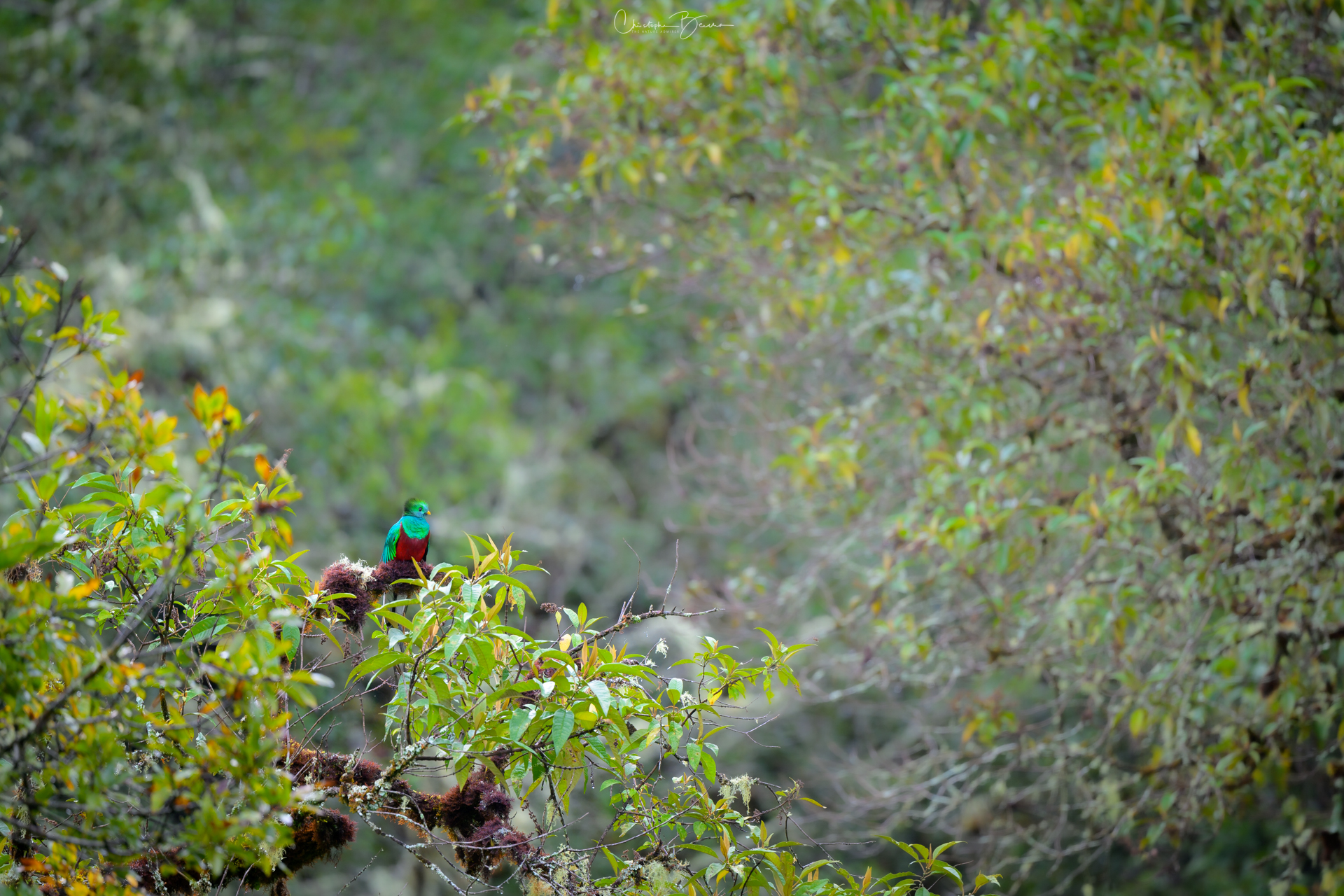
Few birds can claim legendary status, except the Resplendent Quetzal. To see it free, you have to go the Cloud Forest, either in Monteverde or in Cerro Buenavista, hike your way inside the dense canopy, and wait. Luckily, the conservation tourism efforts put forward by people in both areas ensure that we have easier access to them, while they live and nest in essentially undisturbed areas. Mountain hotels like Paraiso Quetzal Lodge are making the difference, protecting this sacred bird for the new generations to delight on their sight. The communities are also organized, with families cooperating to keep track of birds and nests, alerting the guides of its location to guarantee tourists a sight, but also raising data on activity of the birds that can be used for scientific research.

I could simply describe this bird as marvelous. The male has a scarlet belly and chest, with iridescent emerald green wing coverts, back and head. The wing feathers are actually green, while the underside of the true tail is white. The bill is yellow, and the iris is deep black. On the top of the head, some orange feathers break the green pattern. The most bizarre feature is the long “tail” feathers, measuring more than its standard body length, which breeding males carry fully grown from November to around May, at the end of the breeding season. They use those feathers to compete with other males to attract a female. While the female is not as exuberant, it is also a beauty. Their preferred food is the “Aguacatillo” fruit, which translates to “little avocado”. There are many species of this tree, which grow and bear fruit at different elevations and different times of the year, provoking what is known as altitudinal migration.

Summer Tanager (Piranga rubra)

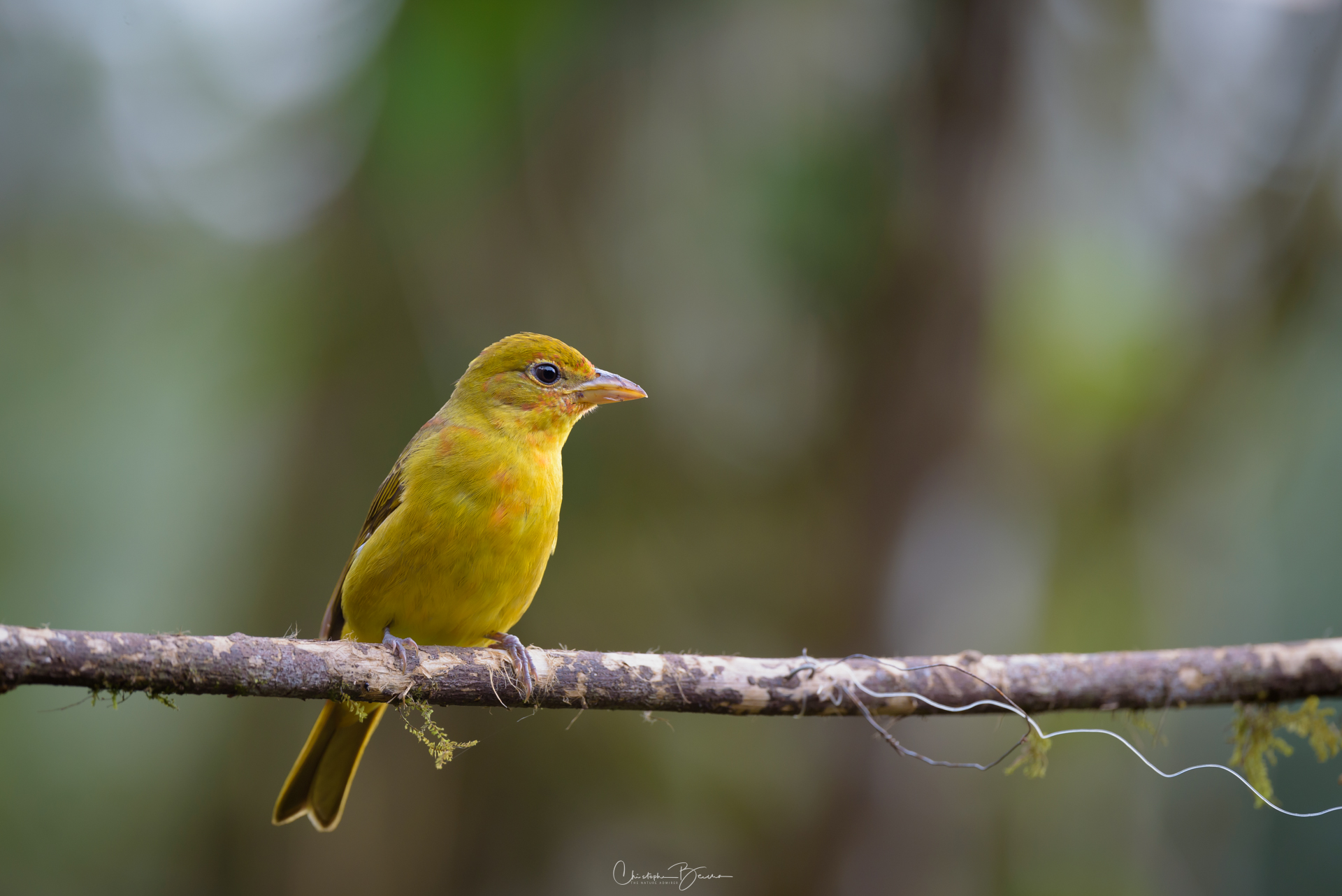
If there is one bird that represents migration in Costa Rica, is the Summer Tanager. The bright red coloration of the male is marvelous, and the orange of the female is equally striking. I have seen males in Santa Ana while riding my bike, perched on the electricity wires. I have seen the females on a number of places, including El Copal (Tucurrique), Estación Biológica La Selva (Sarapiquí), my parent’s home (Río Frío), and most recently at Laguna del Lagarto Lodge (Boca Tapada), during a birdwatching tour with Fundación Rapaces de Costa Rica, on November 25th and 26th, 2017. The pictures below were taken at the lodge, where the Summer Tanager shared the feeders with Honeycreepers, Orioles and other Tanagers.

It also became apparent to me that the Summer and Scarlet Tanagers are very much alike. Female Summer Tanager’s resemble a lot the Female and non-breeding male Scarlet, however the Scarlet has black wings, which render them unmistakable if seen side by side. Body size and shape are almost identical, so depending on the posture it was difficult to identify them accurately.

Gray-capped Flycatcher (Myiozetetes granadensis)

The Gray-capped Flycatcher is one of the birds with yellow chest that can easily be mistaken by one another. Size and a gray cap (as the name implies) are the main identification marks, tough it can be difficult to recognize the gray cap if the bird is perched above eye level. They look very similar to the Social Flycatcher, although it is more streamlined and the gray head is diagnostic, along the song more similar to the Great Kiskadee’s. It also resembles both the Great Kiskadee and Boat-billed Flycatcher, but both of those species are bigger and stockier, featuring different songs as well. The Tropical Kingbird is also similar, given its gray head, but it is bigger and has grayish upperparts, while the Gray-capped’s upperparts are brownish.

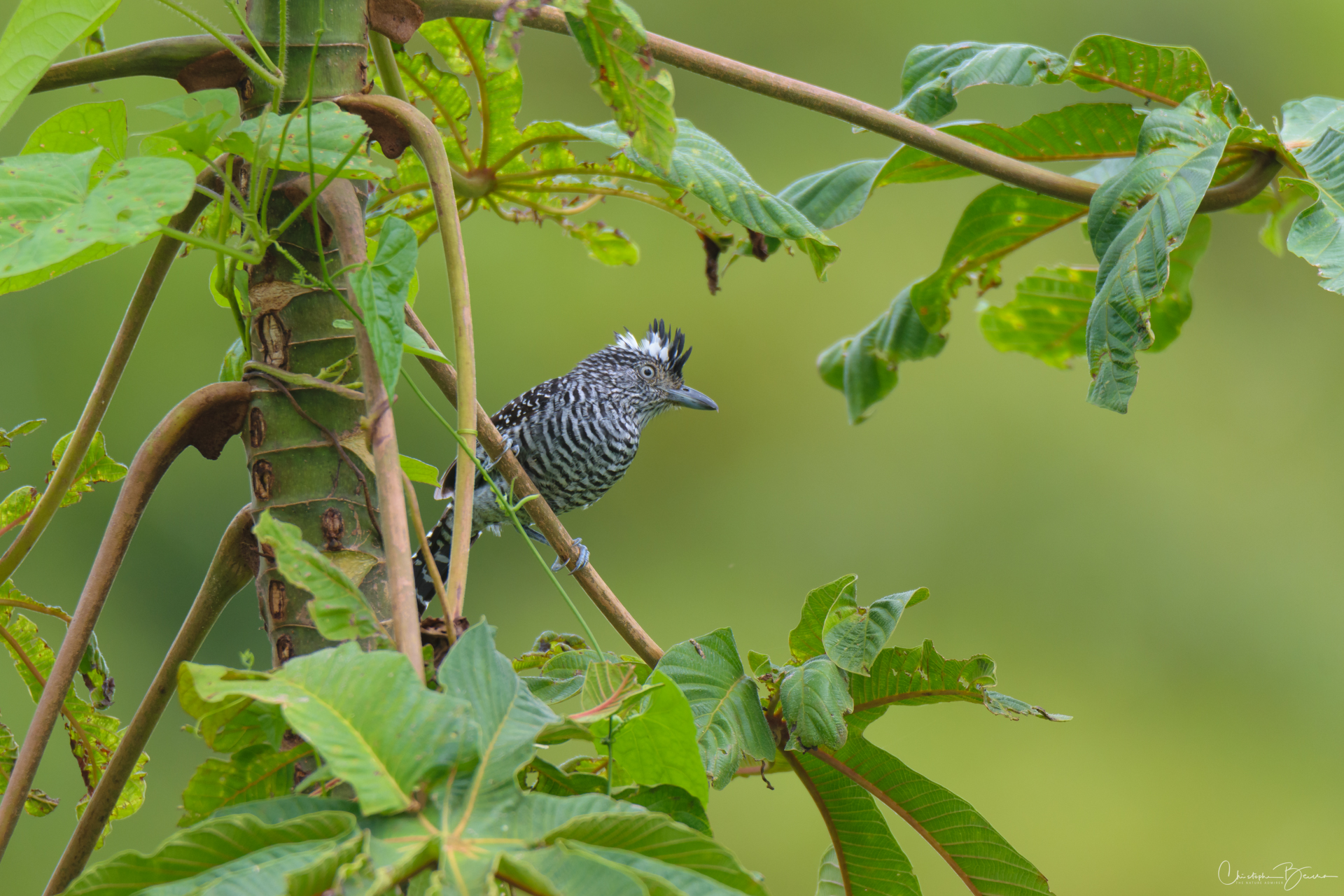
Barred Antshrike (Thamnophilus doliatus)

The Barred Antshrike is a beautiful bird. The male for one part is entirely barred, with white and black lines covering the whole body. The female is not barred, but the brown coloration is pretty in itself, with a tuft that looks the most elegant. I have seen them in Rio Frio and also in El Rodeo, near Ciudad Colón. Their song is also very intriguing, with a series of accelerating, high-pitched chirps that then end abruptly on a harsher note. While they sing, they also incline their bodies up and down, presumably on a display to show ownership of their territory.