Page 31 of 31

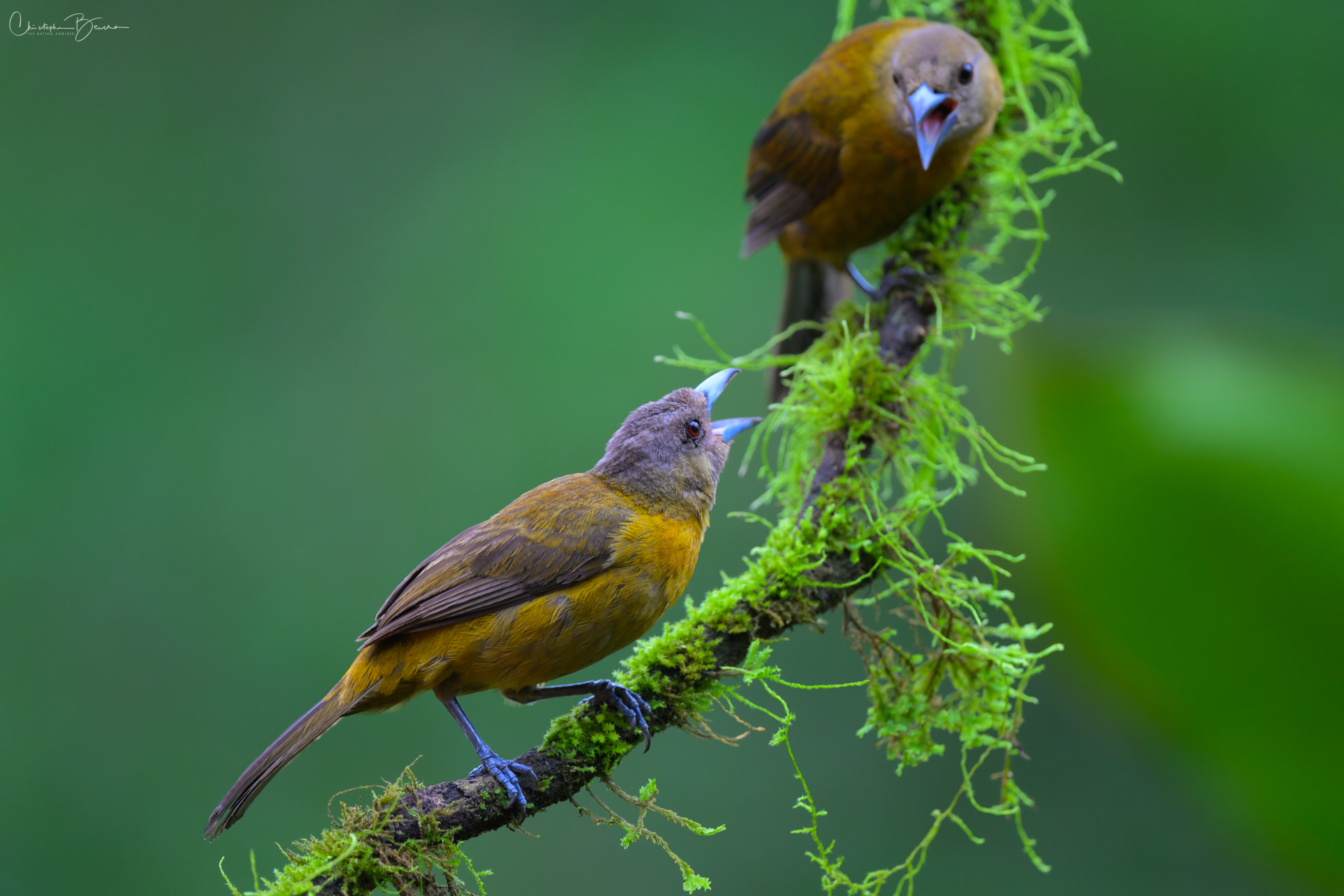
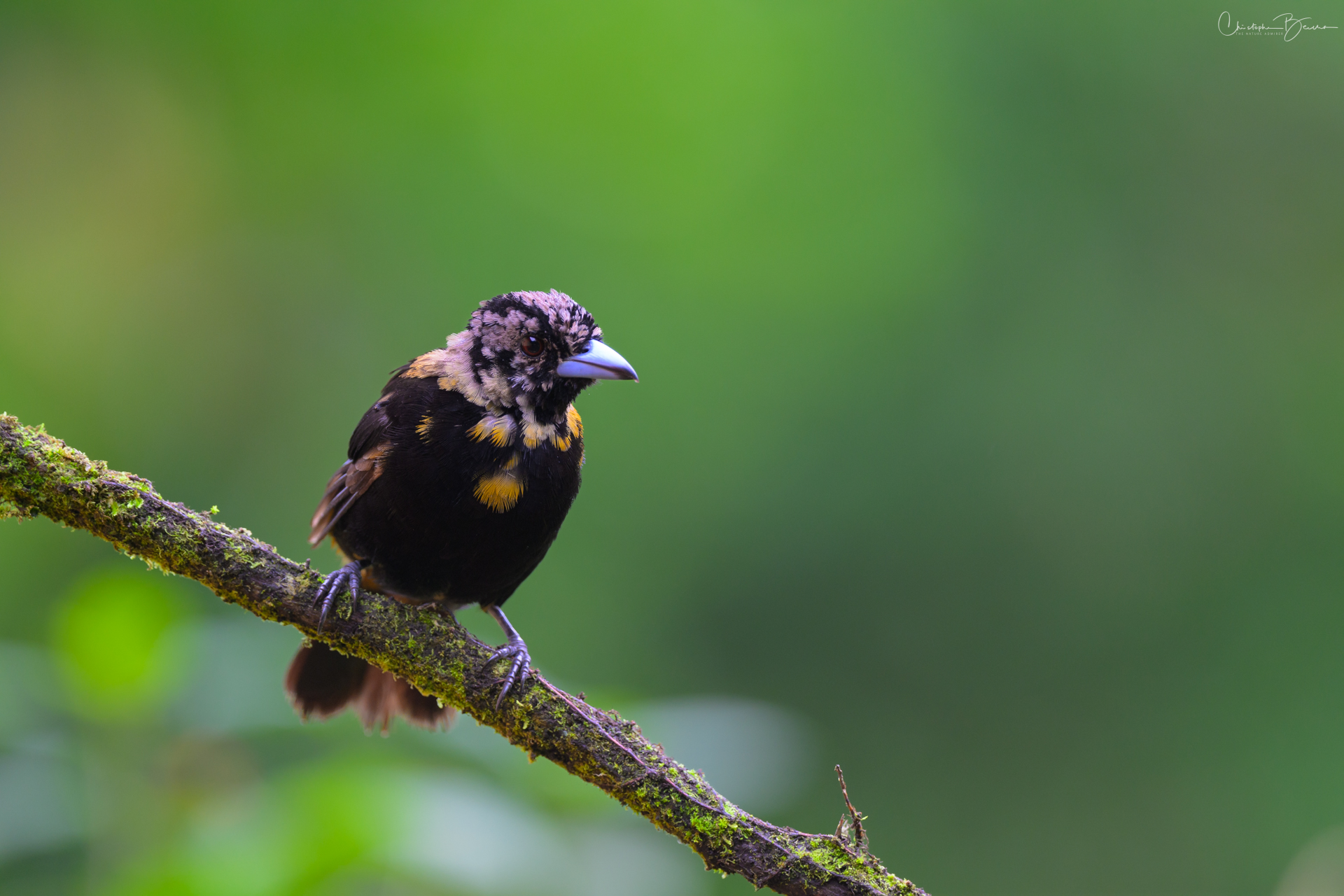
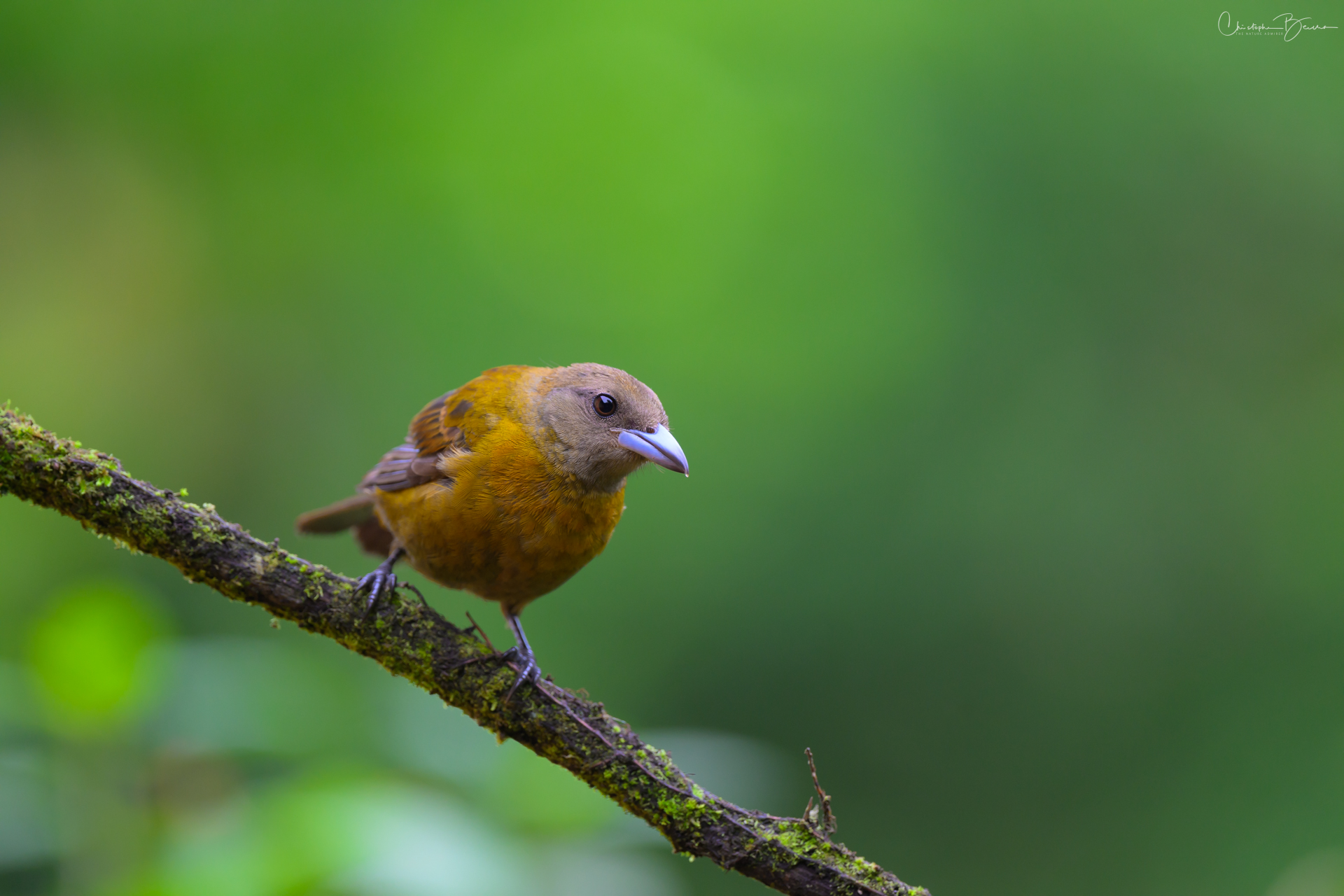
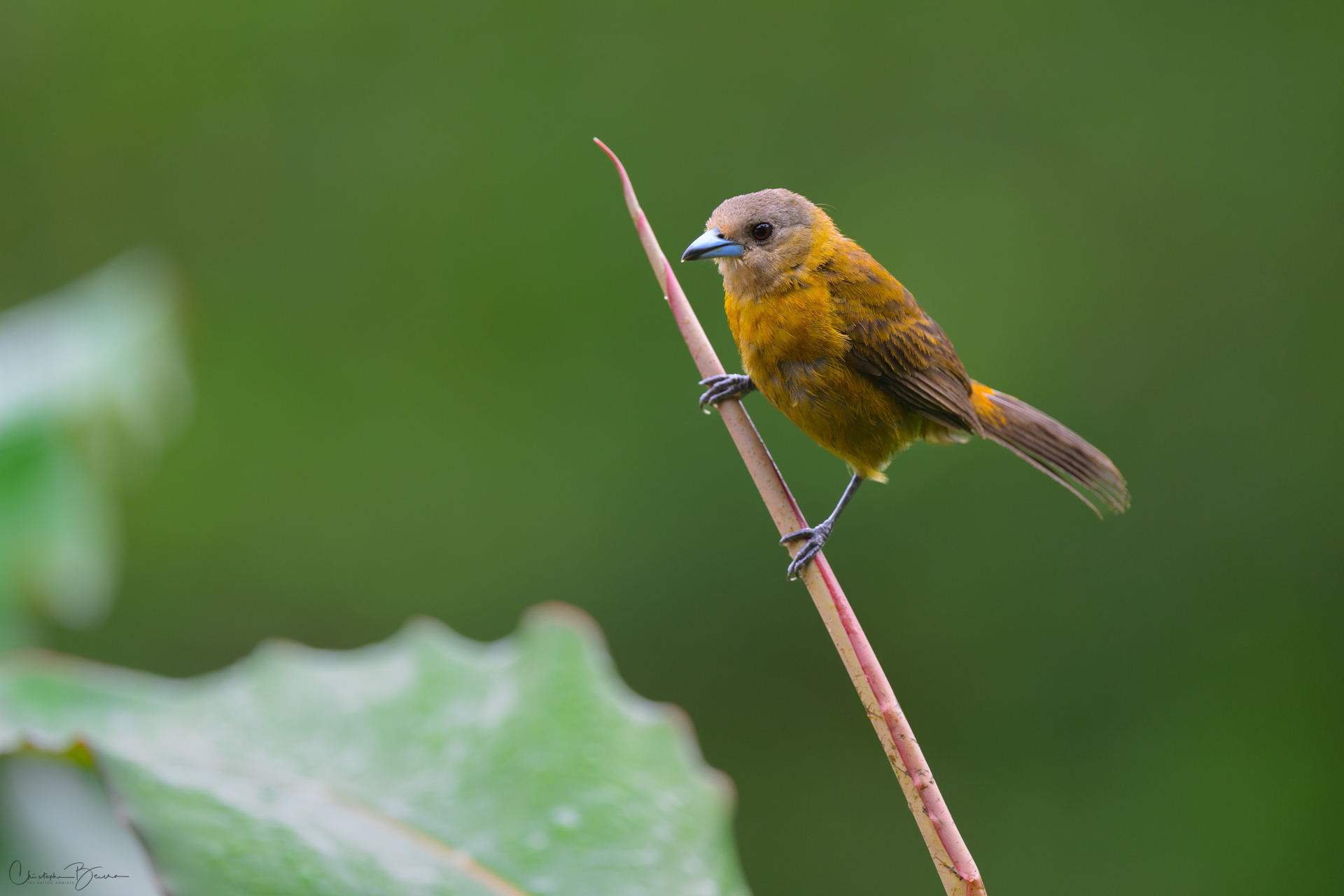
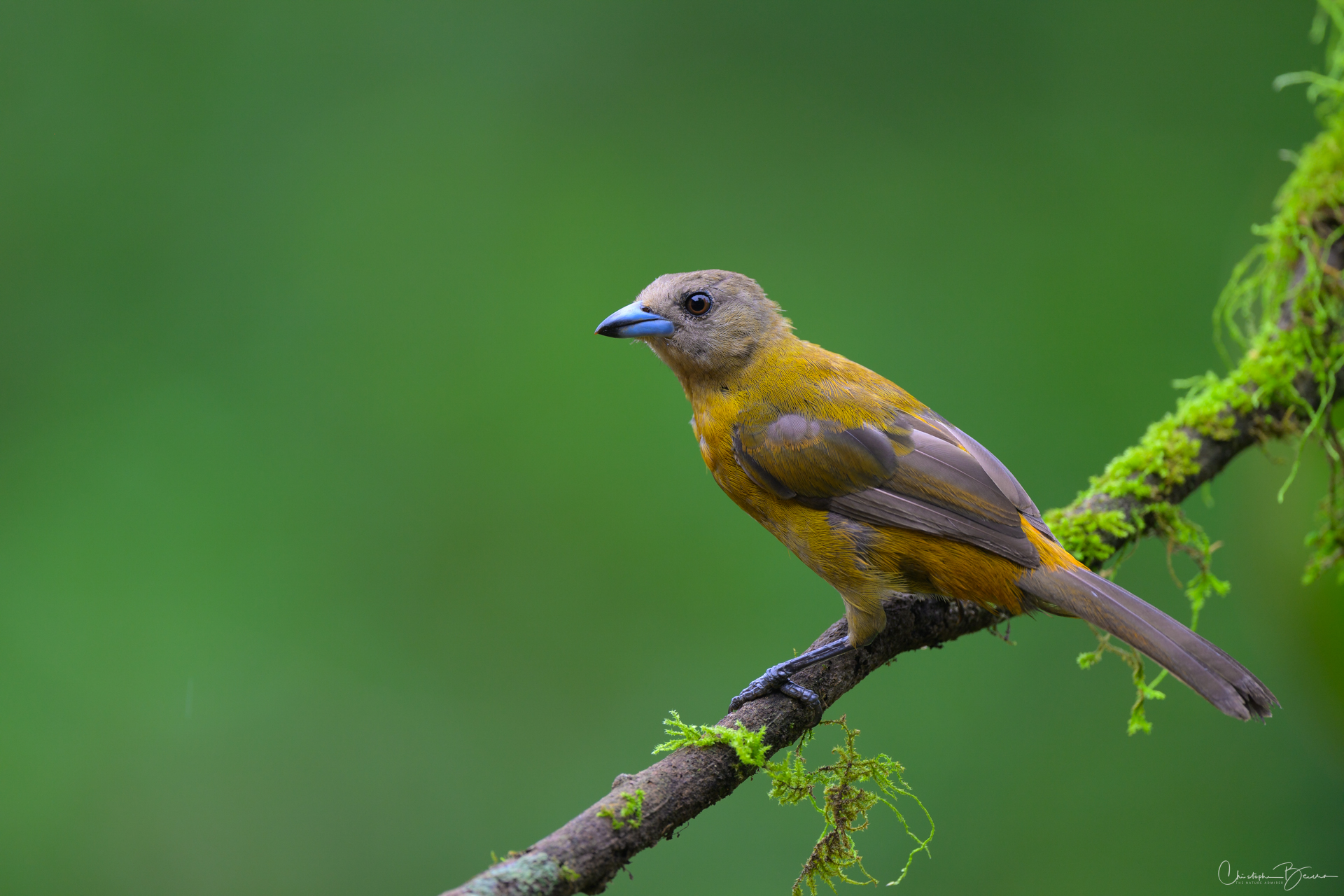
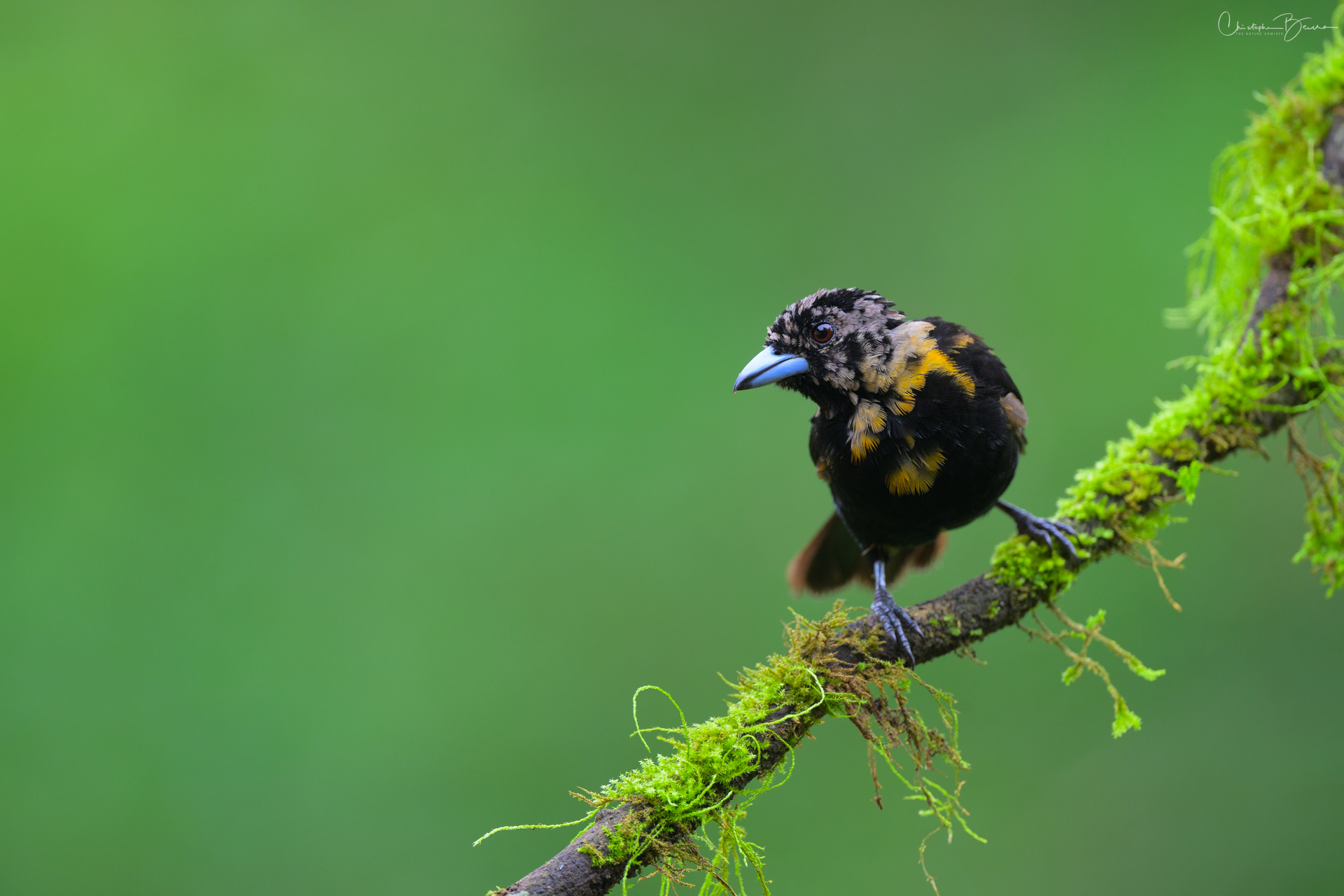
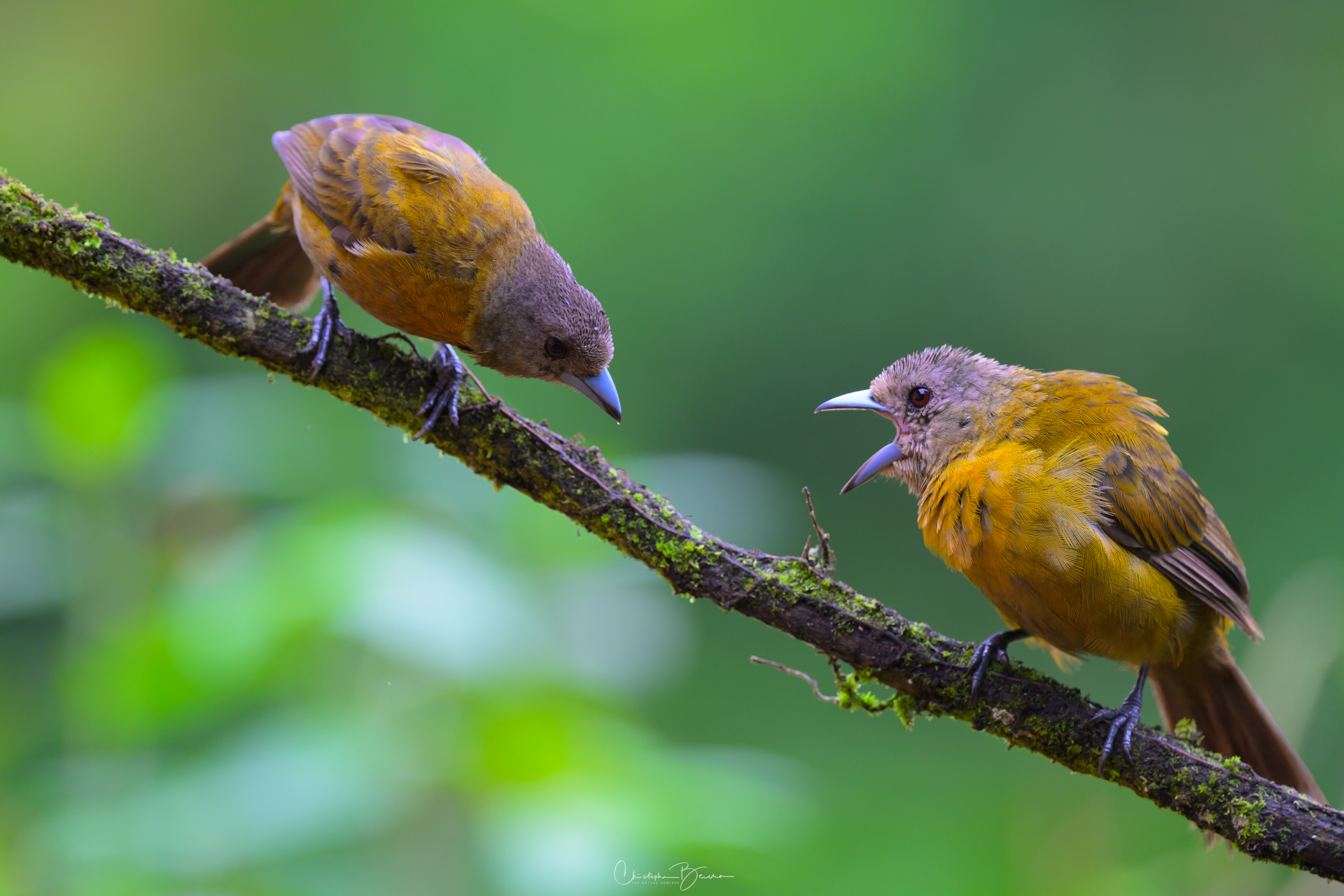
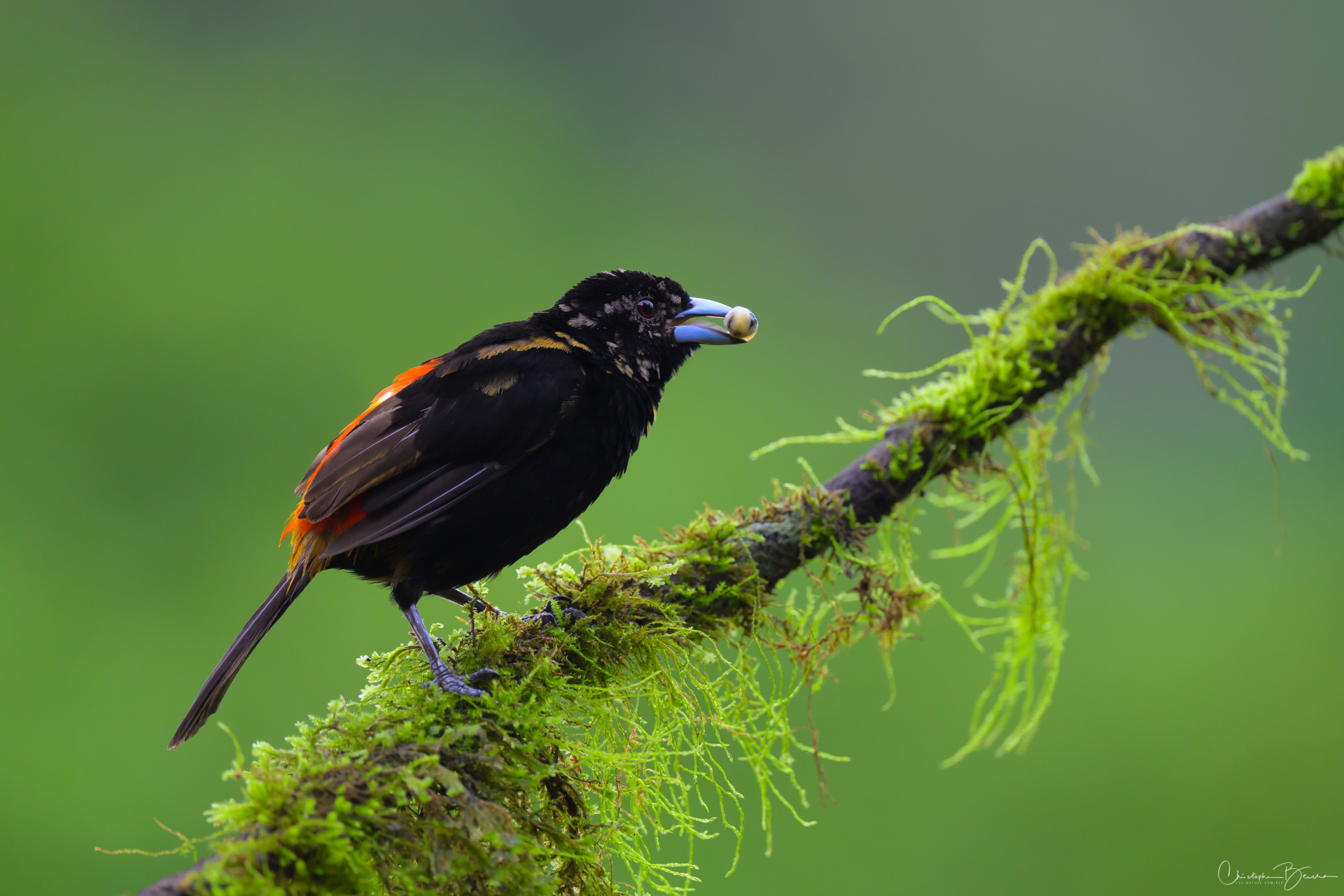
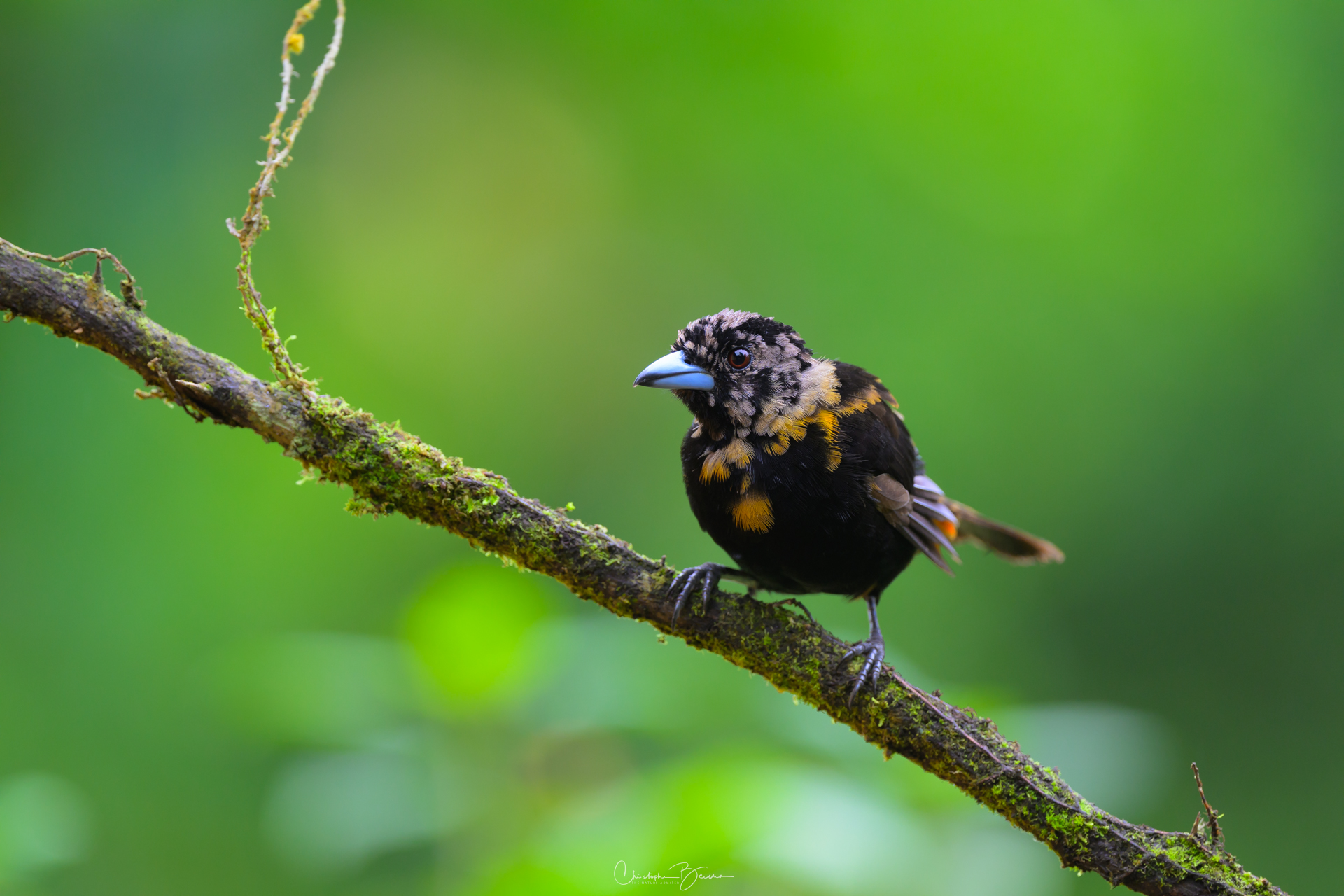
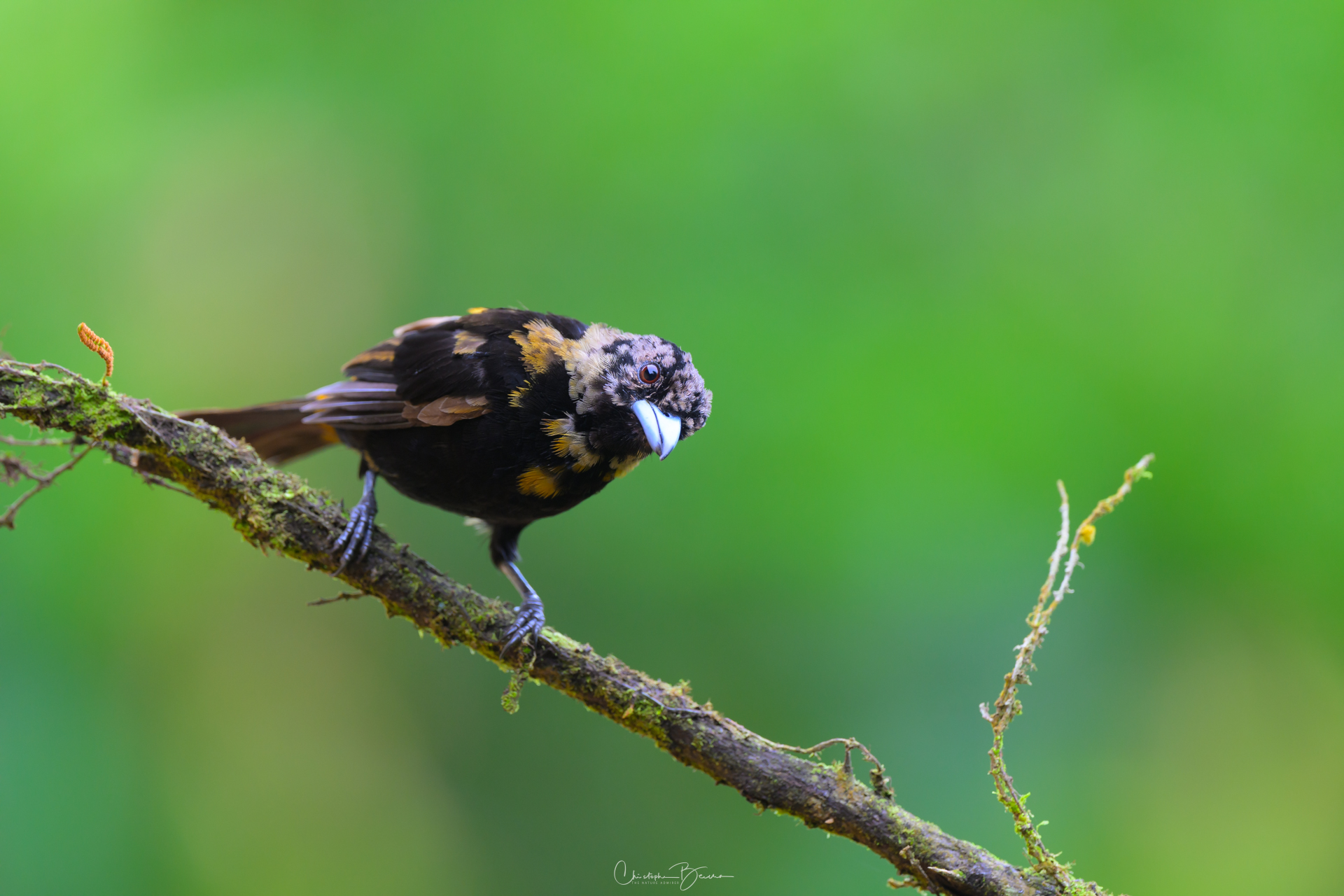
Scarlet-rumped Tanager (Ramphocelus passerinii)

The Scarlet-rumped Tanager is known locally as “Sargento” (Seargent) and “Sangre de Toro” (Bull’s blood), among other names. Previously it was known as the Passerini´s Tanager, being virtually identical to the Cherries Tanager, but only inhabiting the Caribbean, whereas the Cherries was only found in the pacific. In sunlight, the red rump of the male glows strongly, contrasting with the deep black in the eyes and the rest of the body. The female is brownish in coloration, and differs from the Cherries by not having the orange throat. The Juvenile male has the same coloration as the female, however as it morphs into adult plumage, patches of black start to show in the body, giving it kind of a Calico look.

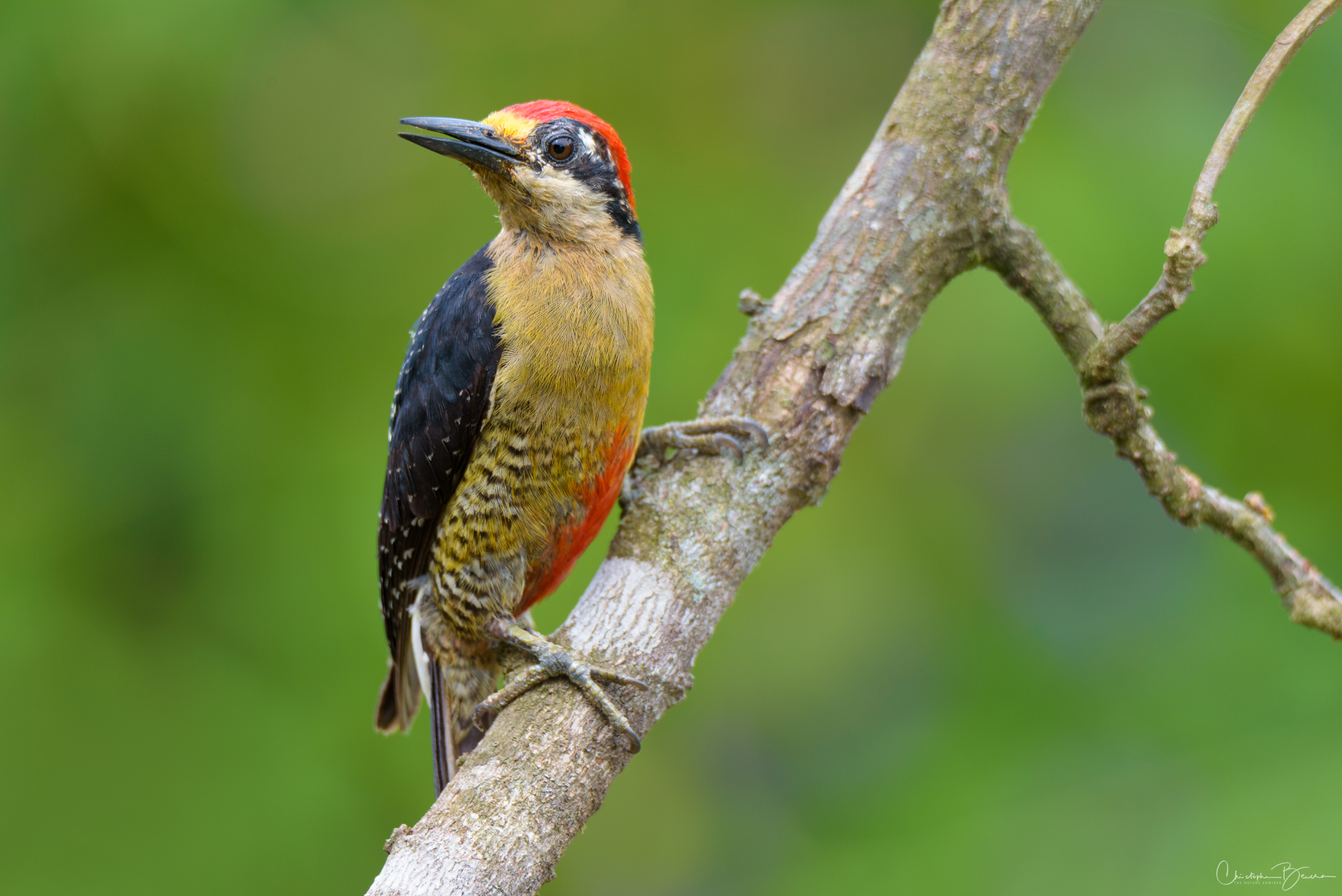
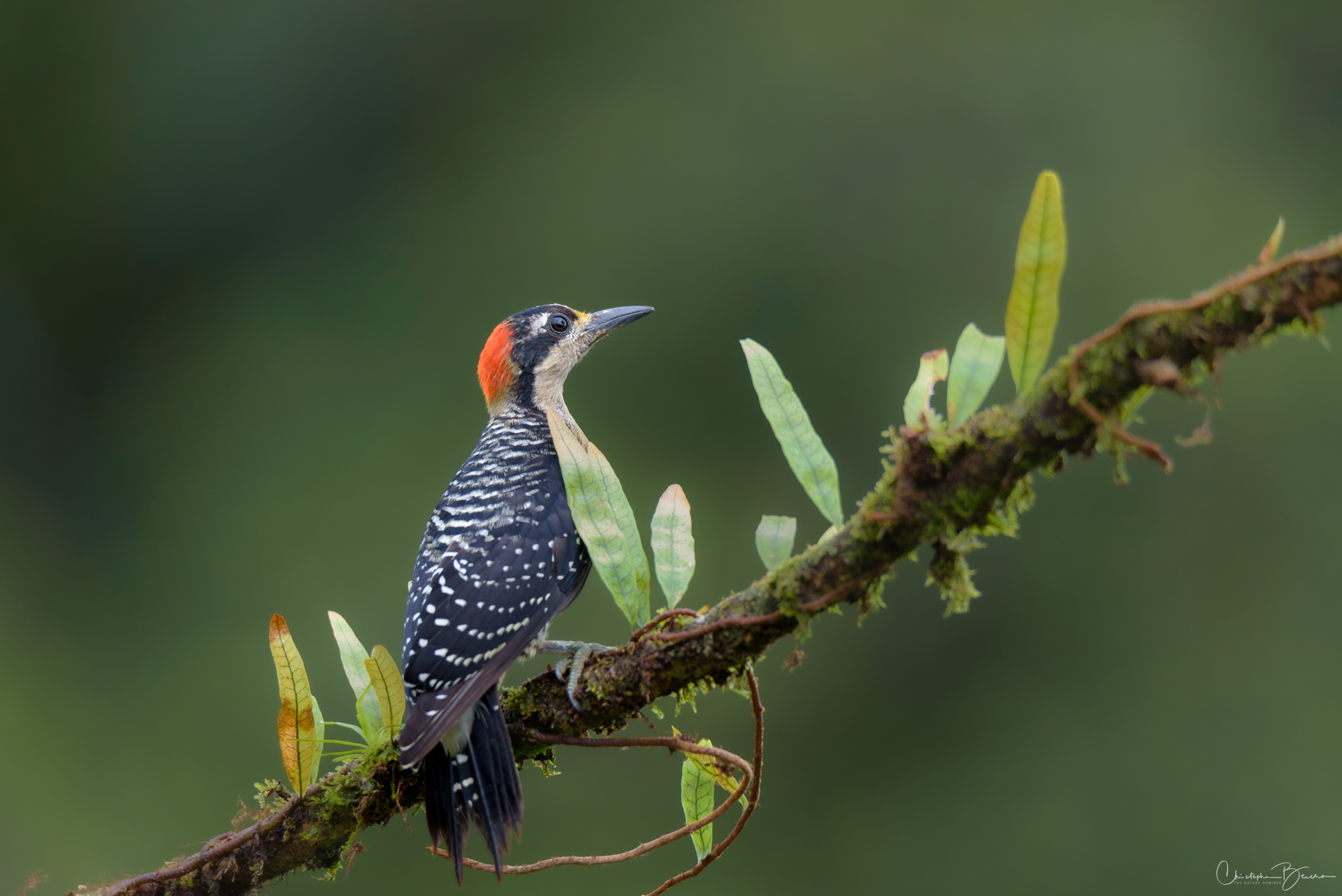
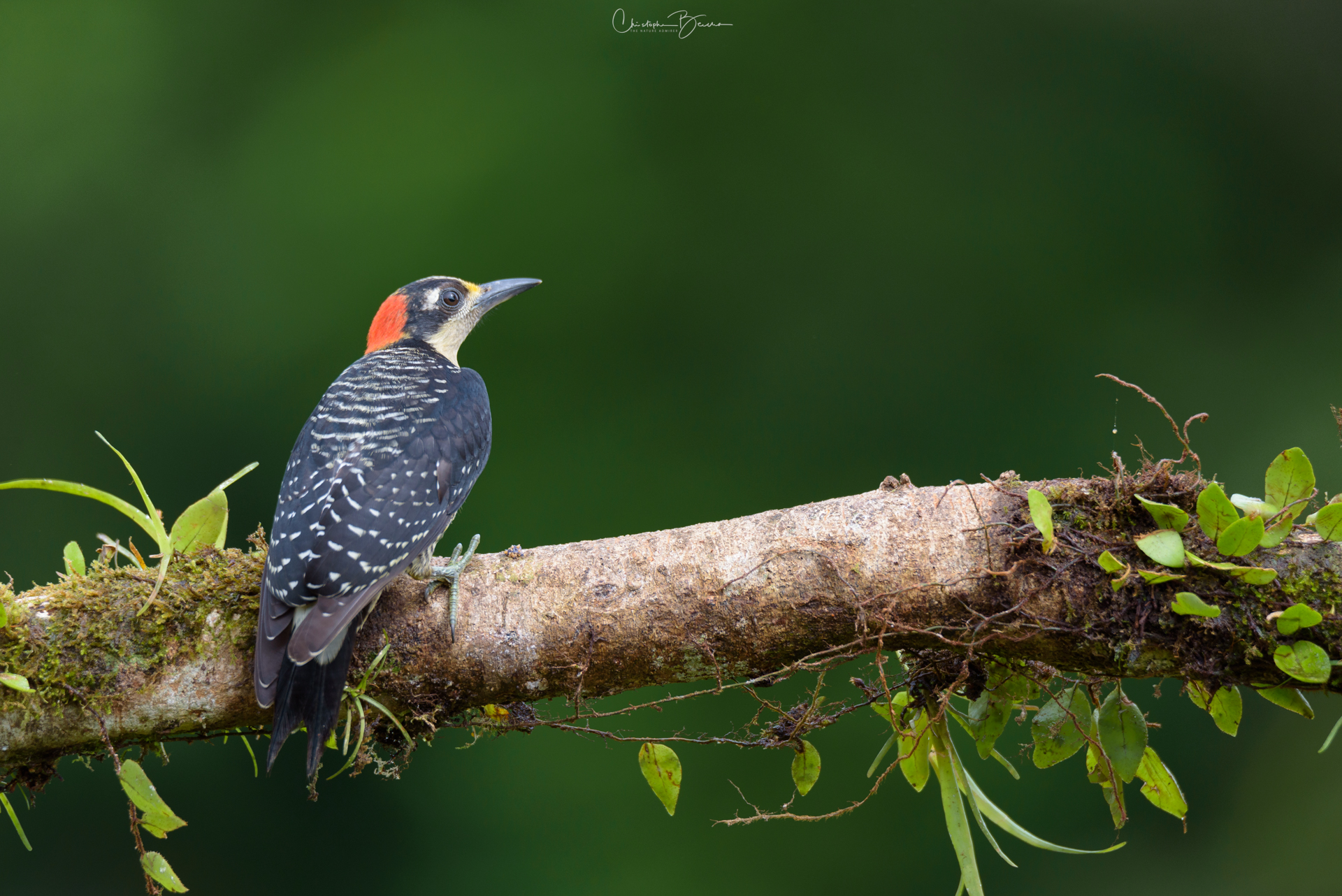
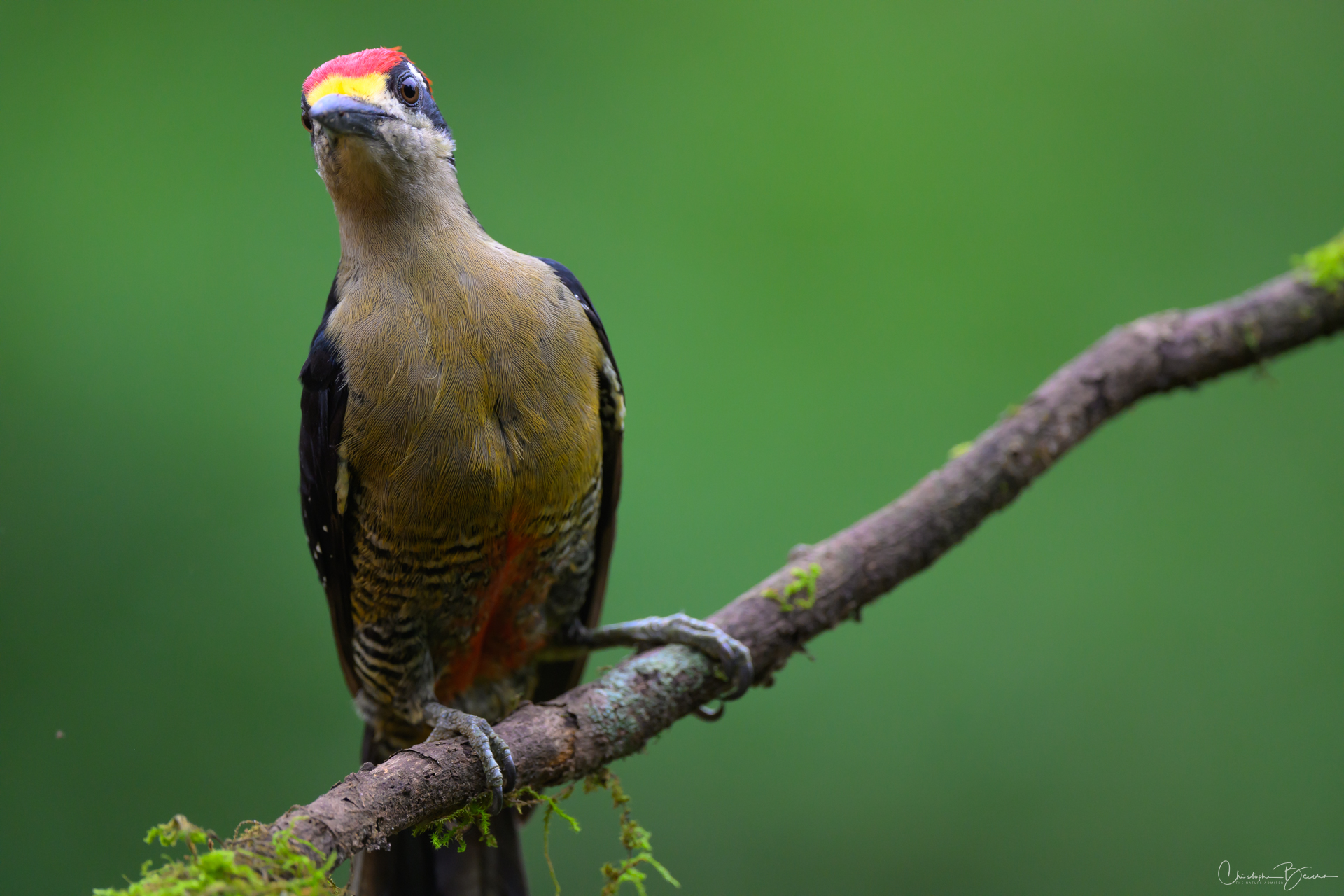
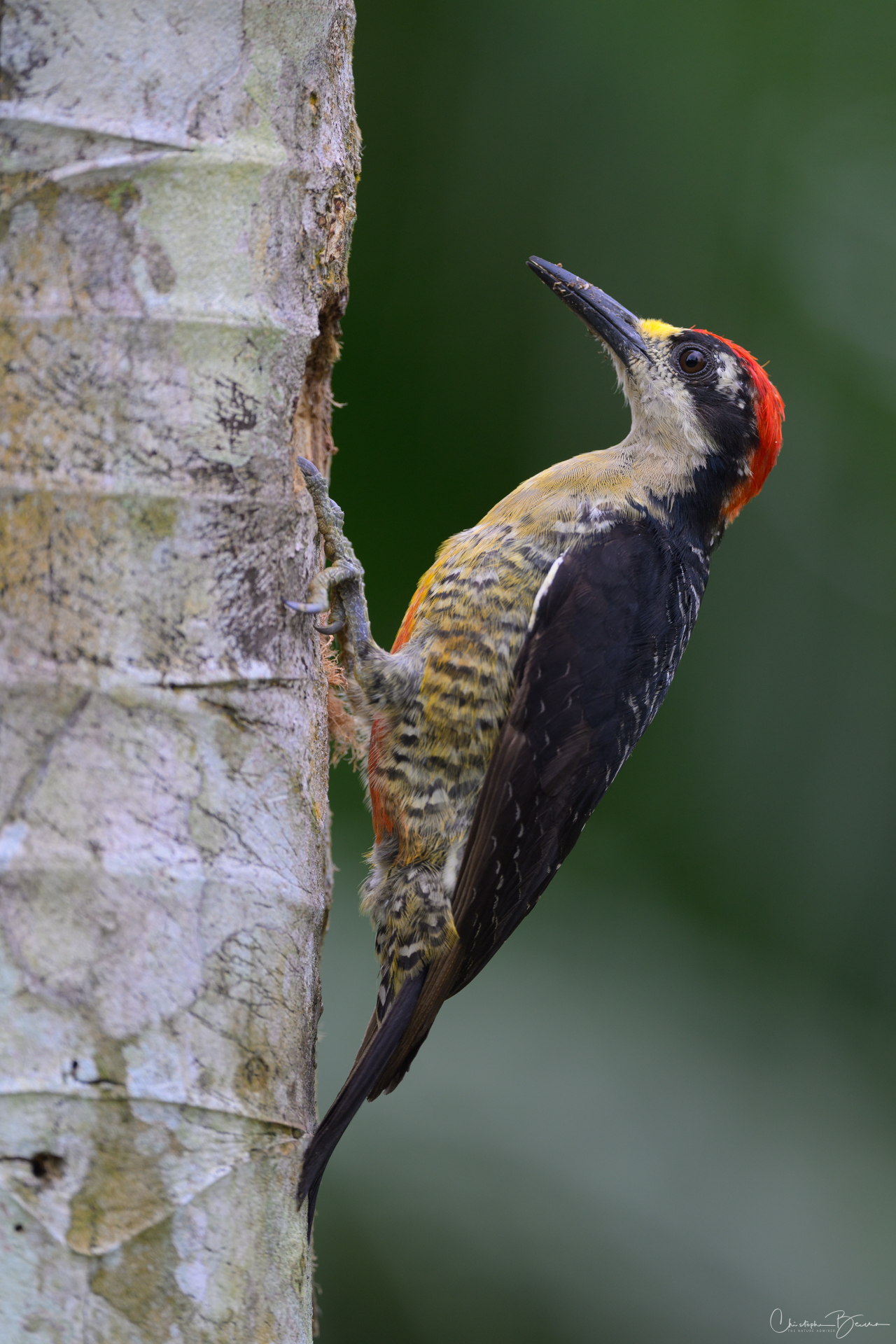
Black-cheeked Woodpecker (Melanerpes pucherani)

This is a medium sized woodpecker that can be found in the Caribbean and northern part of the country. The male has red back and top of the head, with a yellow patch in the front, while the female has whitish top of the head (nape). Both have black cheeks, which give this species its name. Other notable features are its black wings with white dots, black back with white barring, yellowish flanks with black barring and red belly, which gives the bird a very contrasty look. It’s call is a piercing chirrr, chirrr, chirrr that can be heard from afar and make identification of the species easier.

Like most woodpeckers, they make holes in trees for nesting, which are then reused by other species, hence their success can indirectly impact population sizes for other species. Many times the nests that they empty are reused by similarly sized birds to construct theirs, with Emerald Toucanets as one such example, but even some owls will make use of them. It’s not uncommon to see either the male or female inside the hole, with just the head out, watching out for potential predators as they keep their eggs or chicks safe inside. Something more peculiar is seeing these birds pecking at public lampposts made out of concrete, I have not yet deciphered why would they do that. On feeders, they like to eat papaya, but they will also catch small insects for food.

Red-legged Honeycreeper (Cyanerpes Cyaneus)

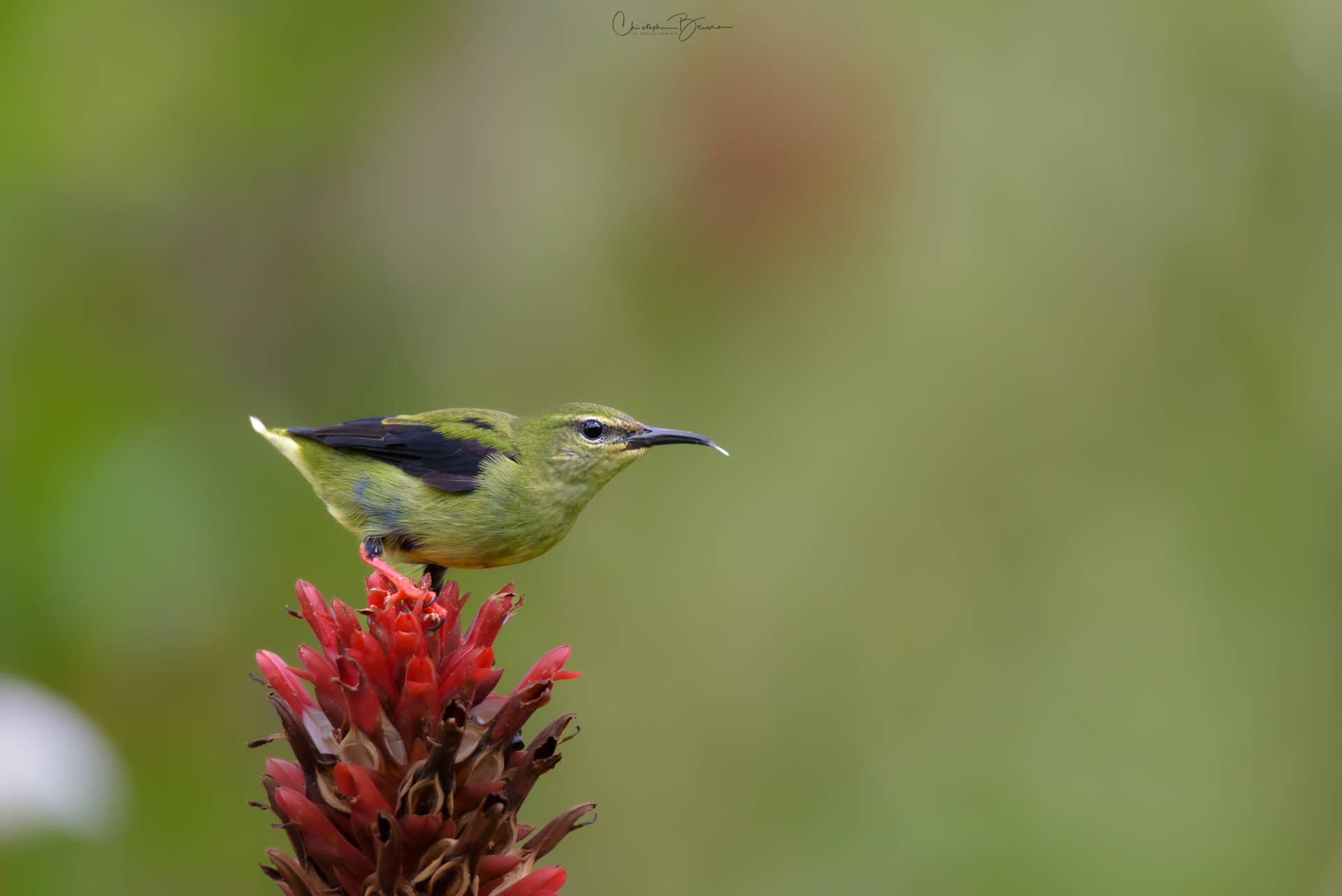
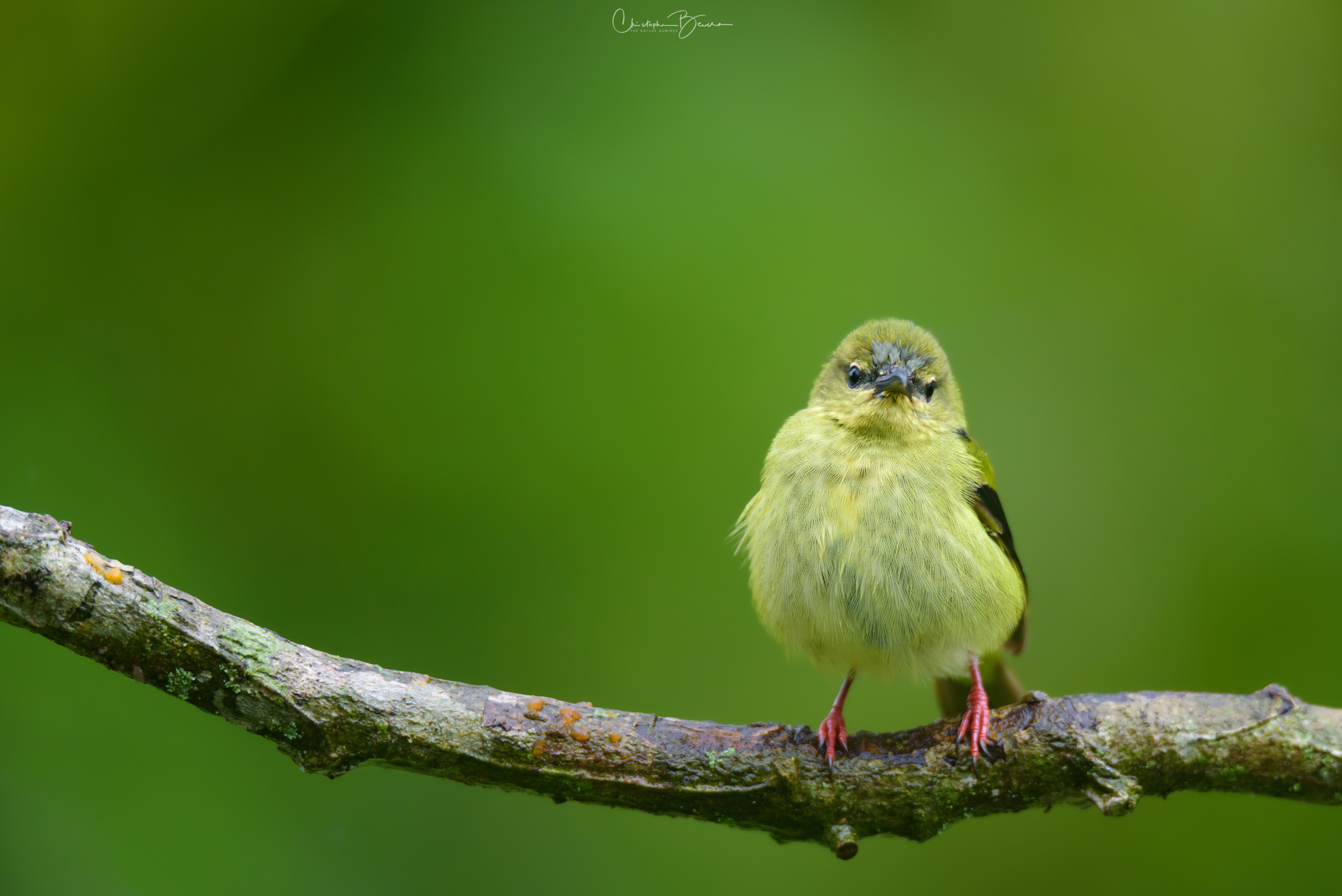
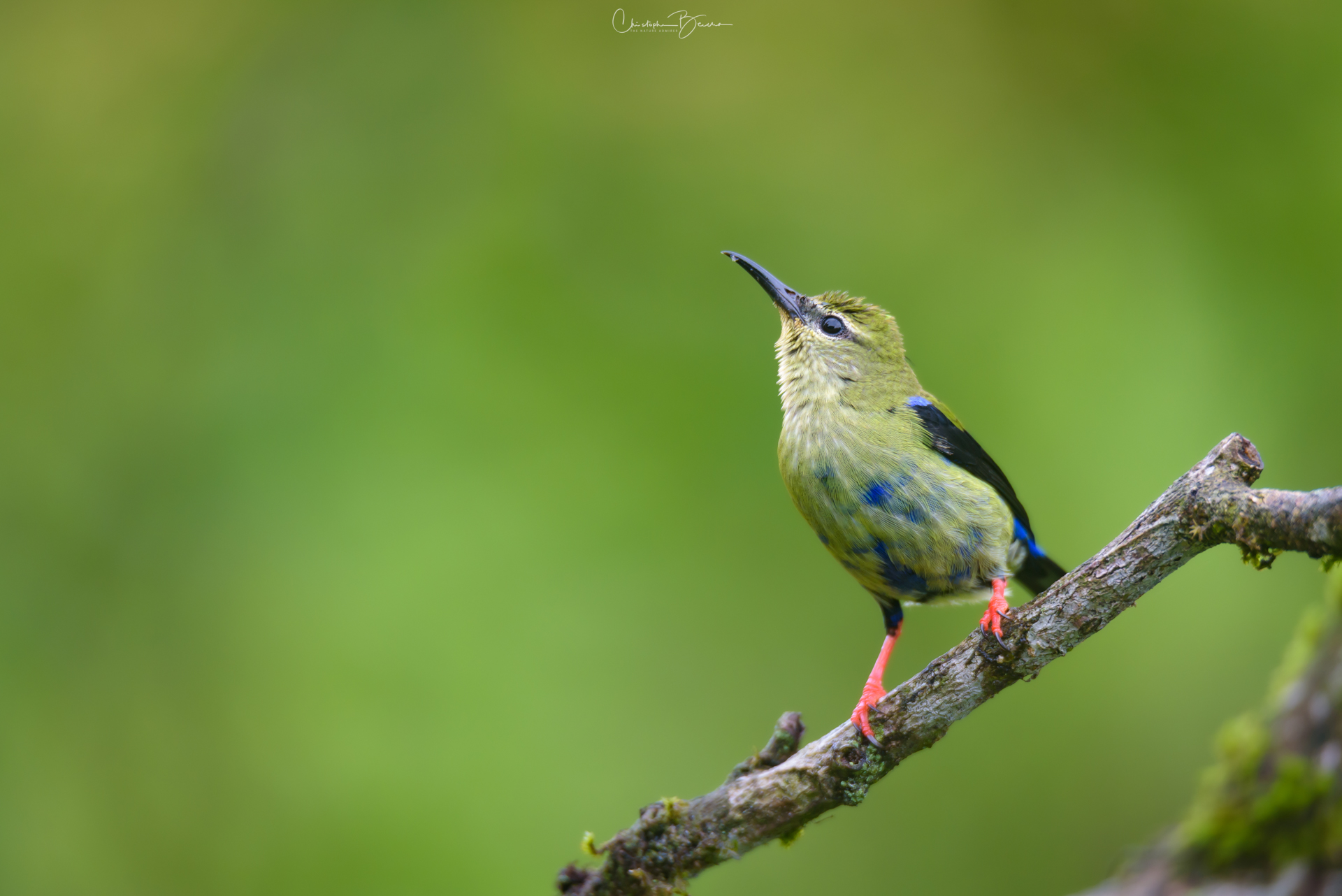
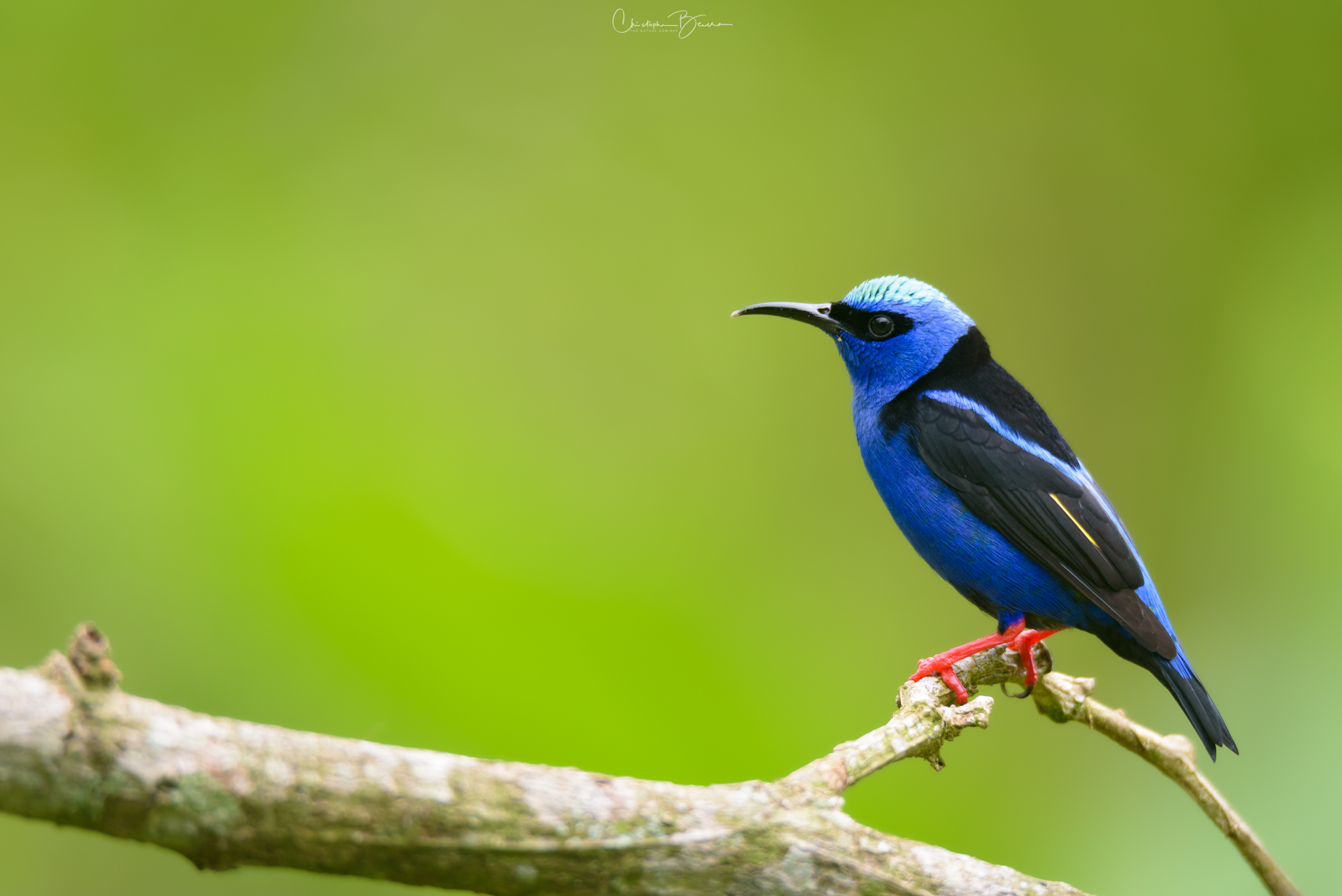
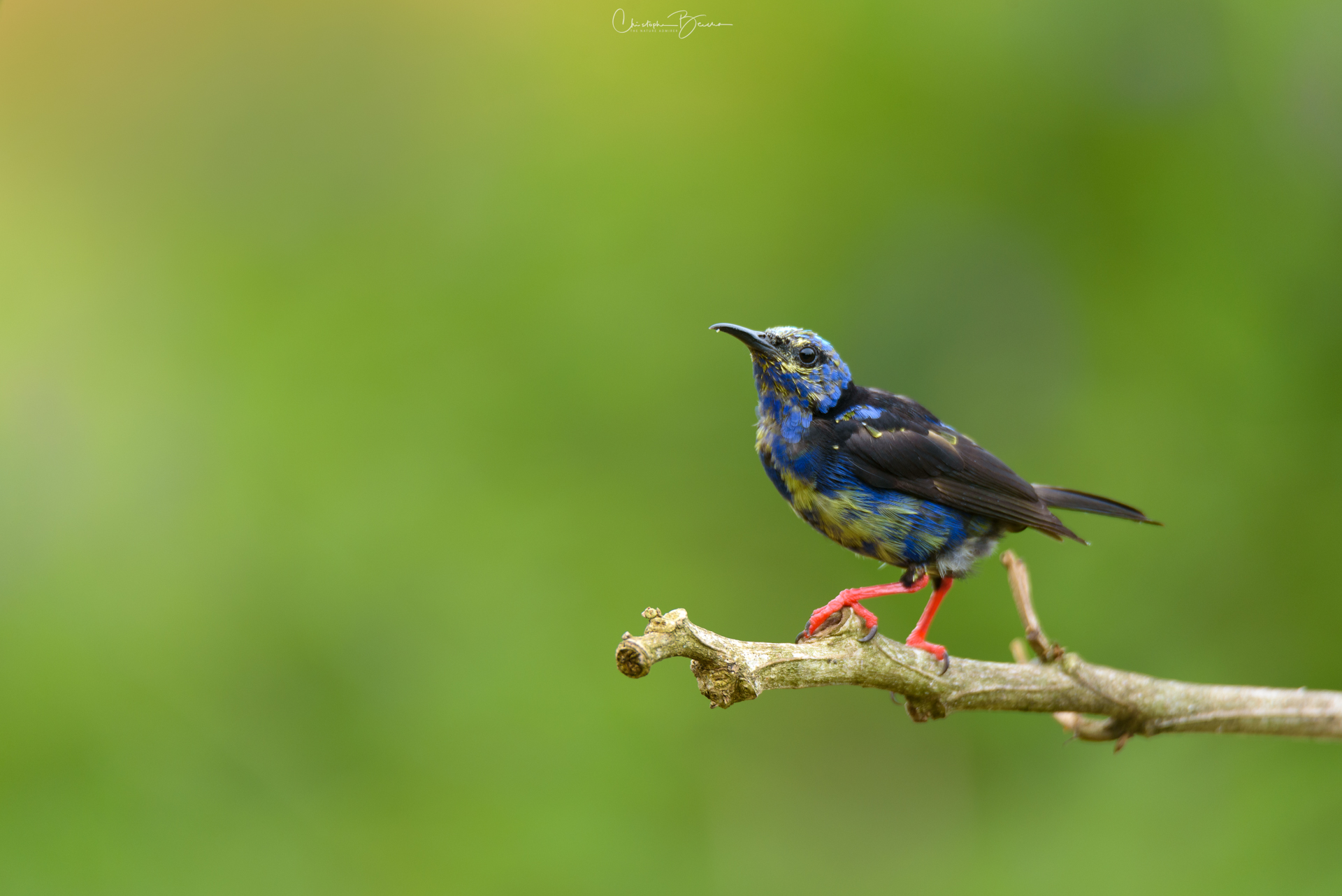
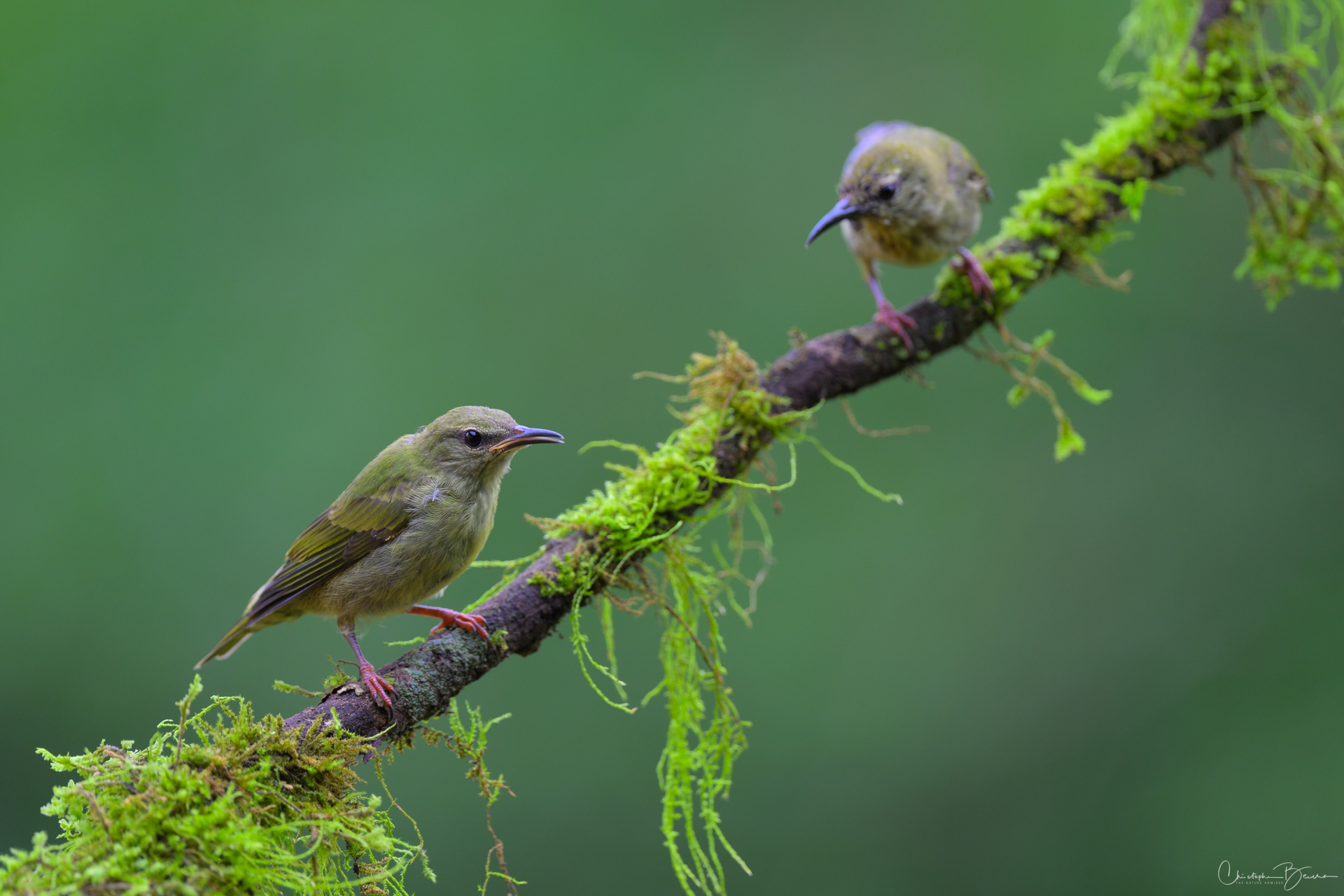
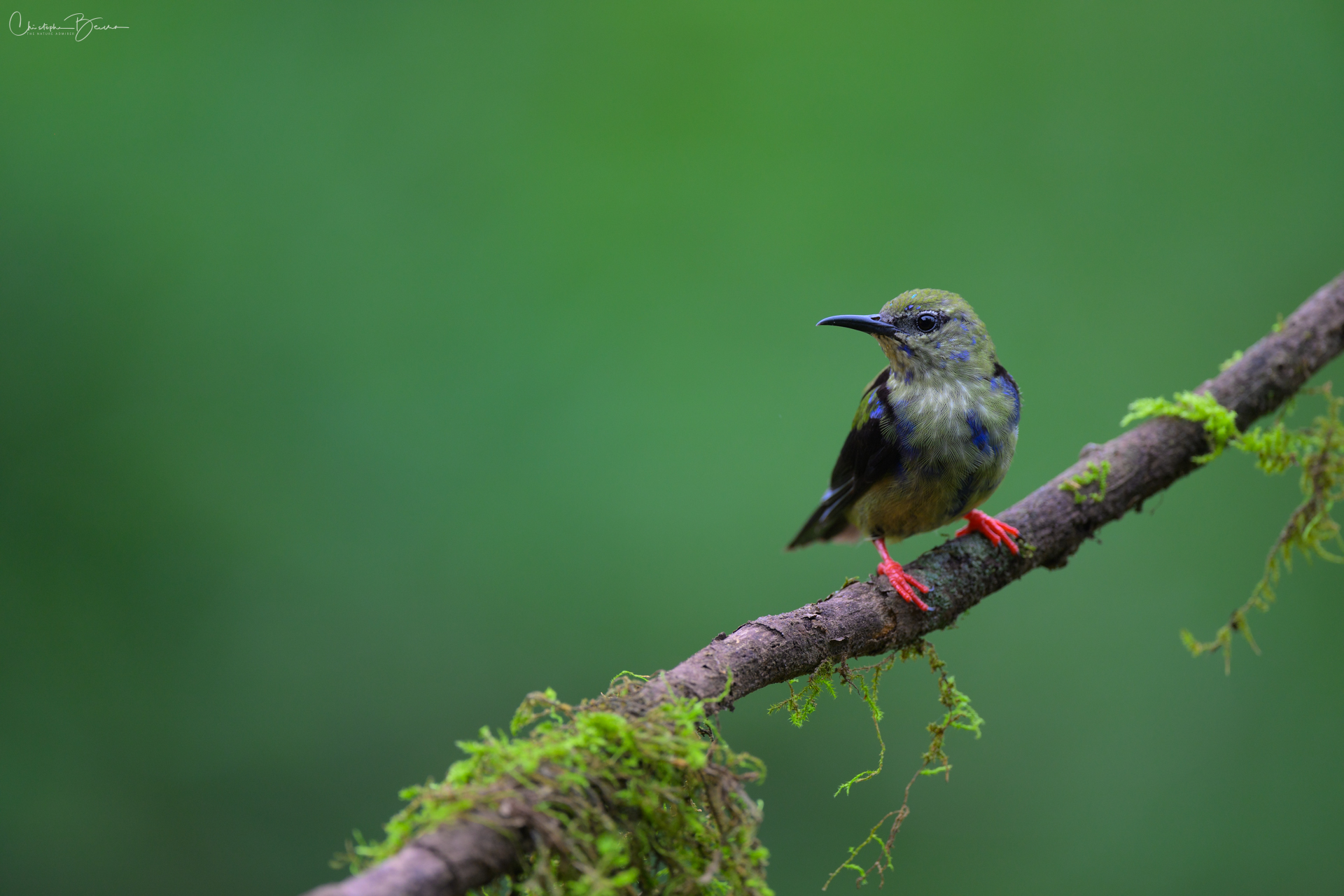
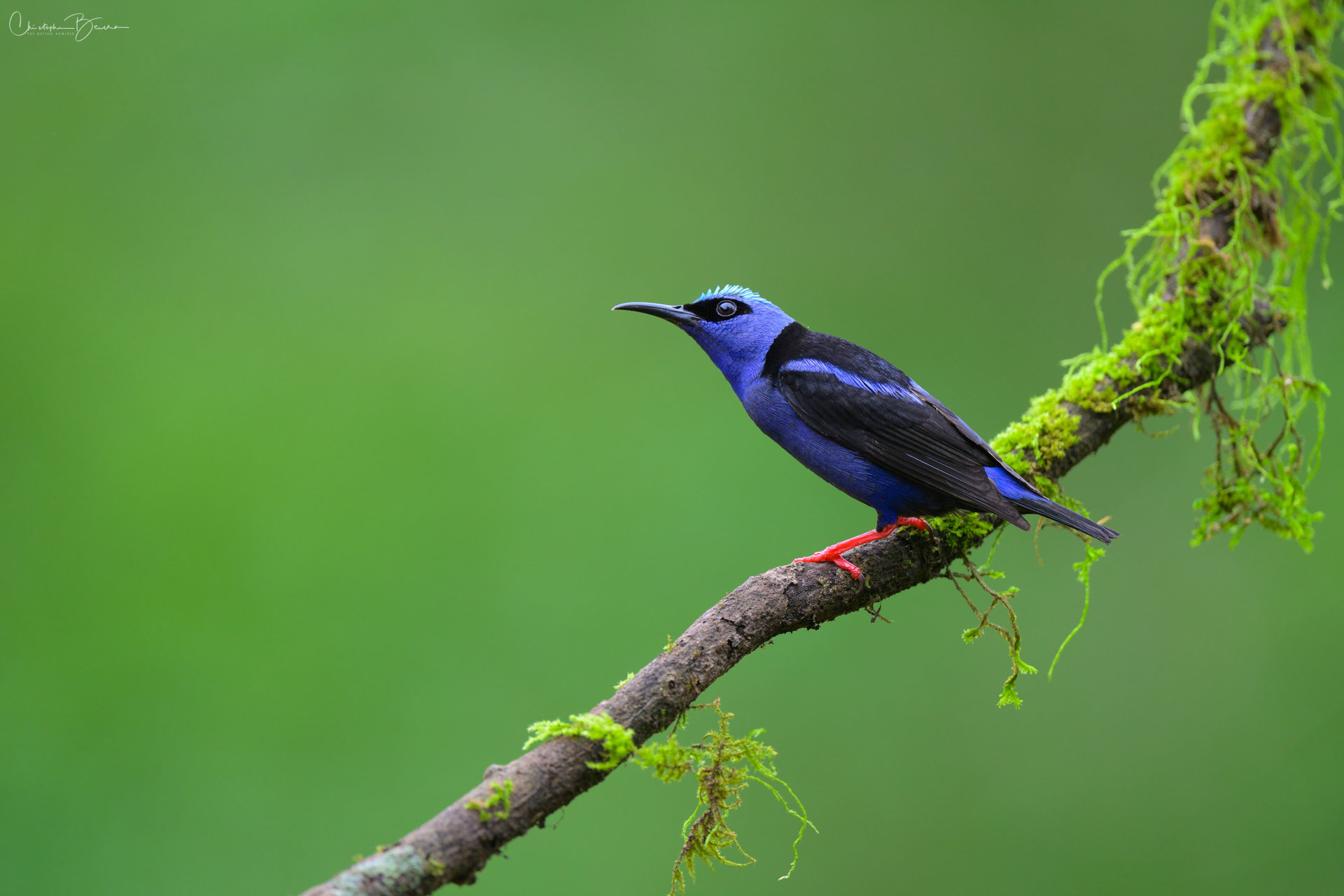
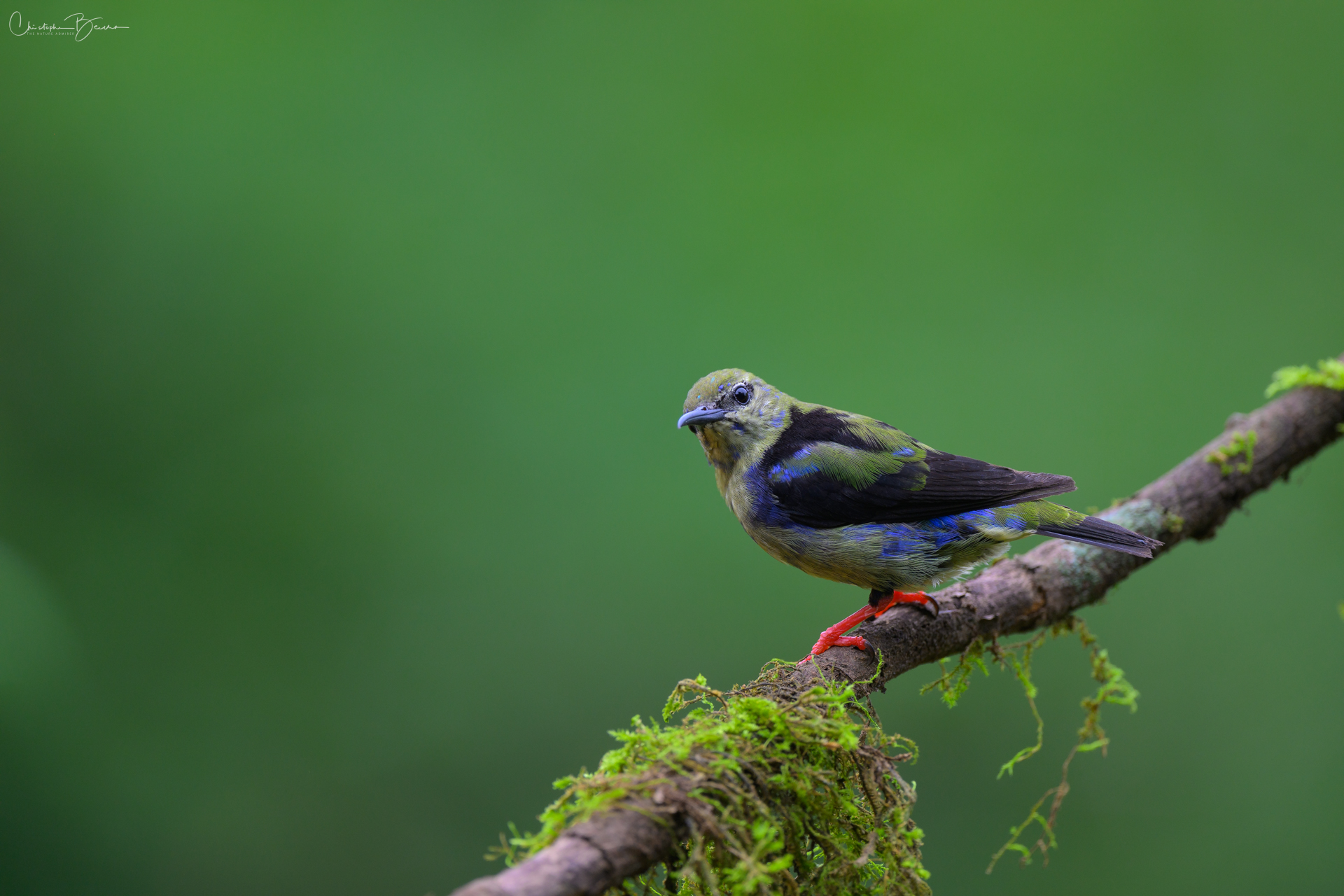
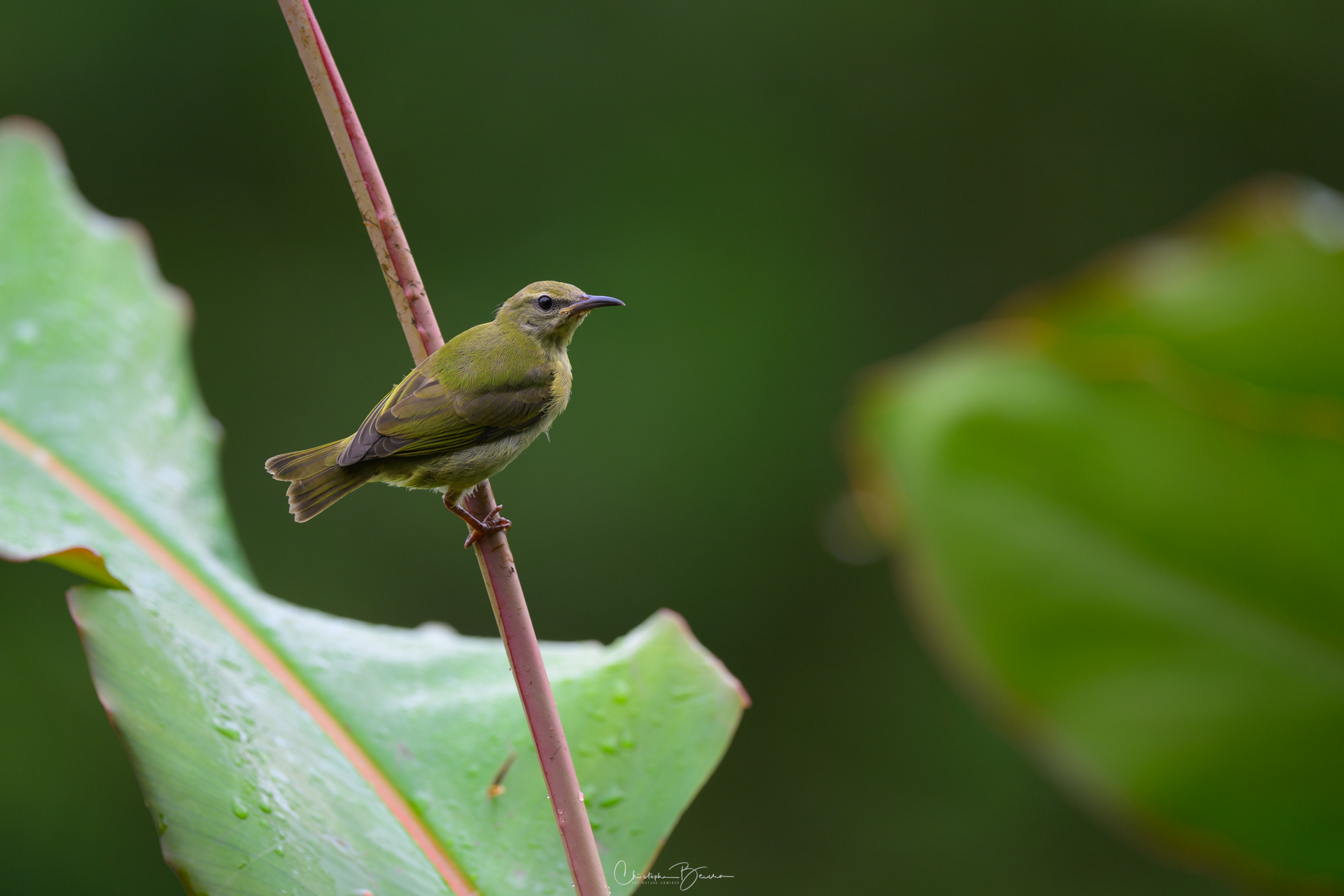
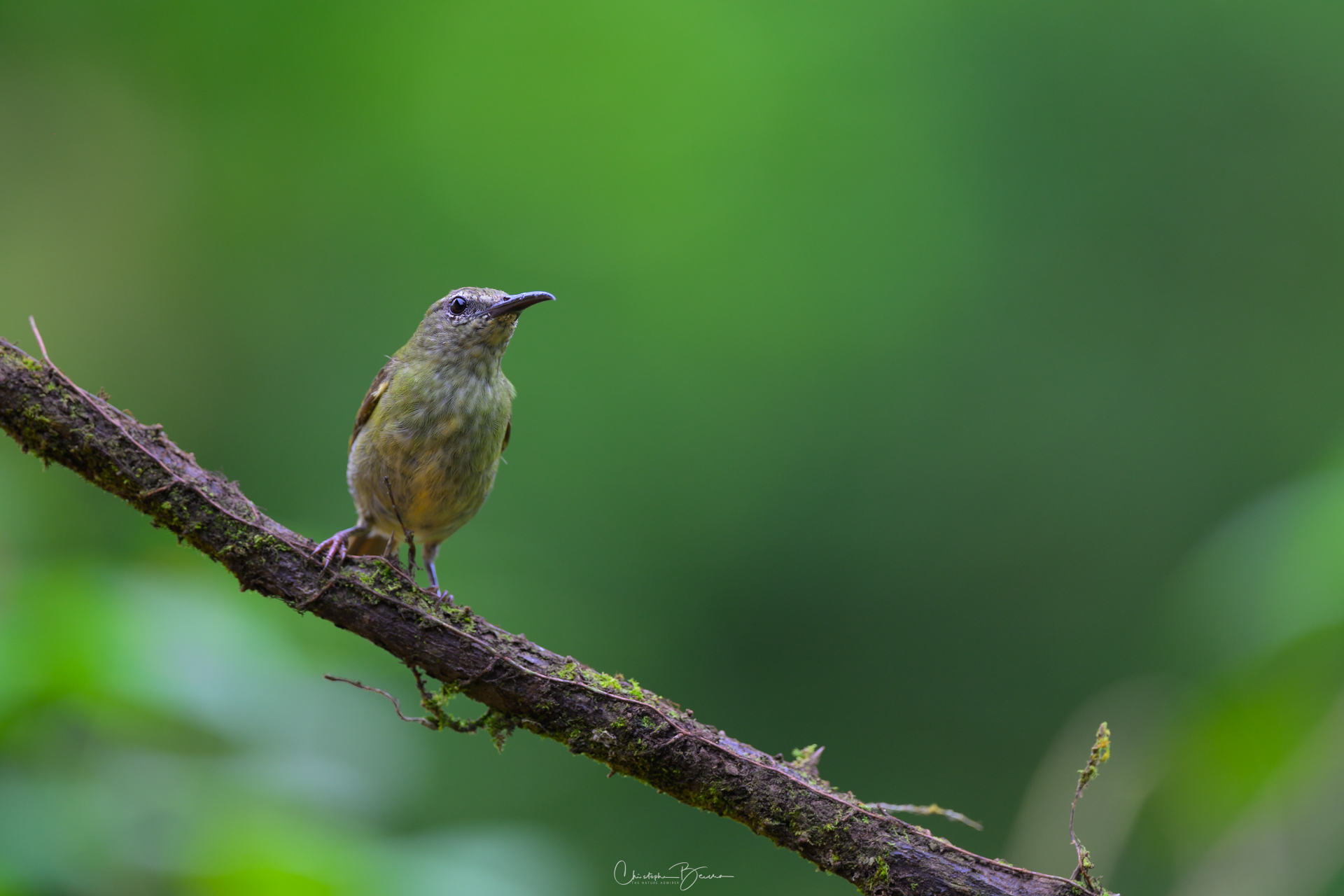
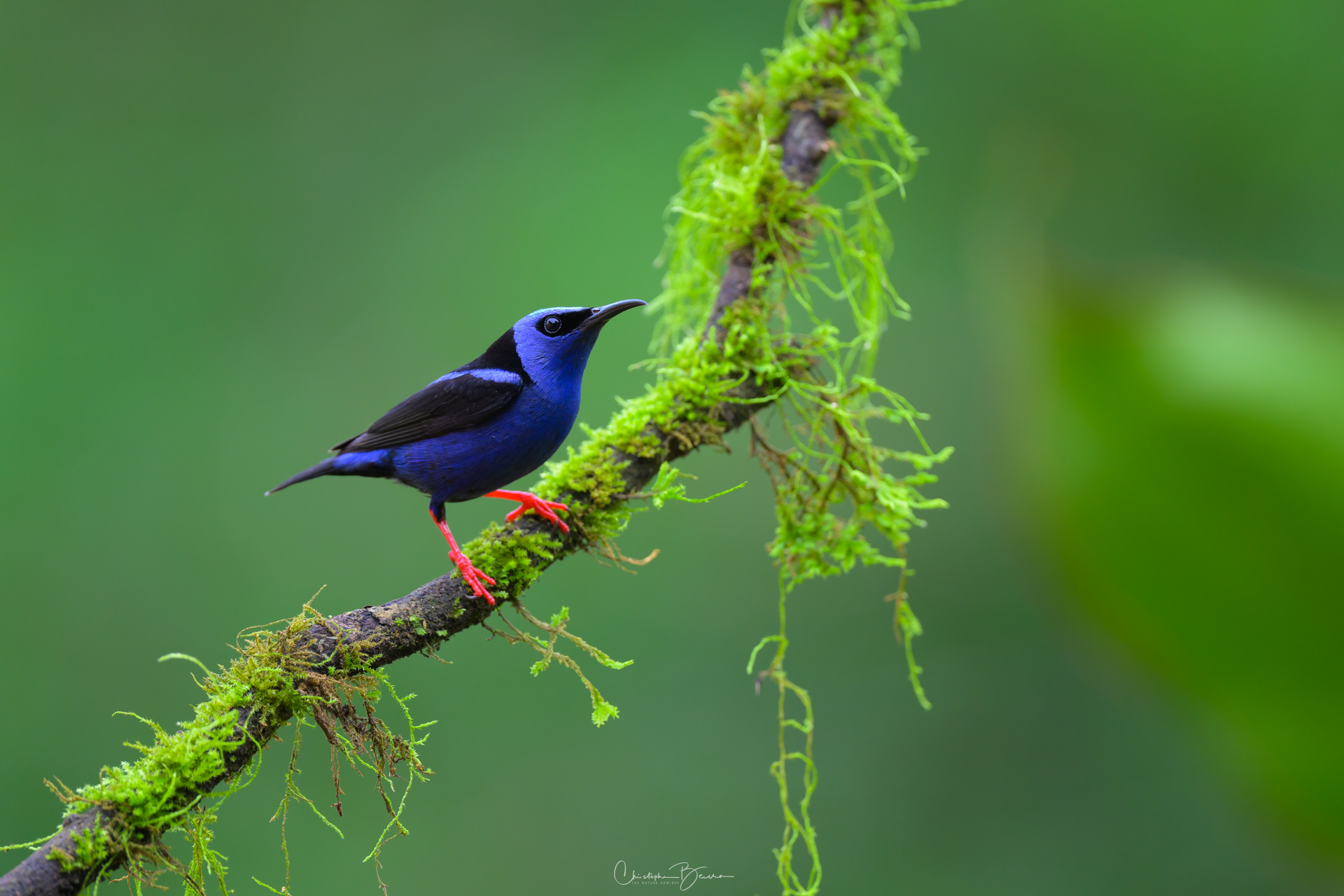
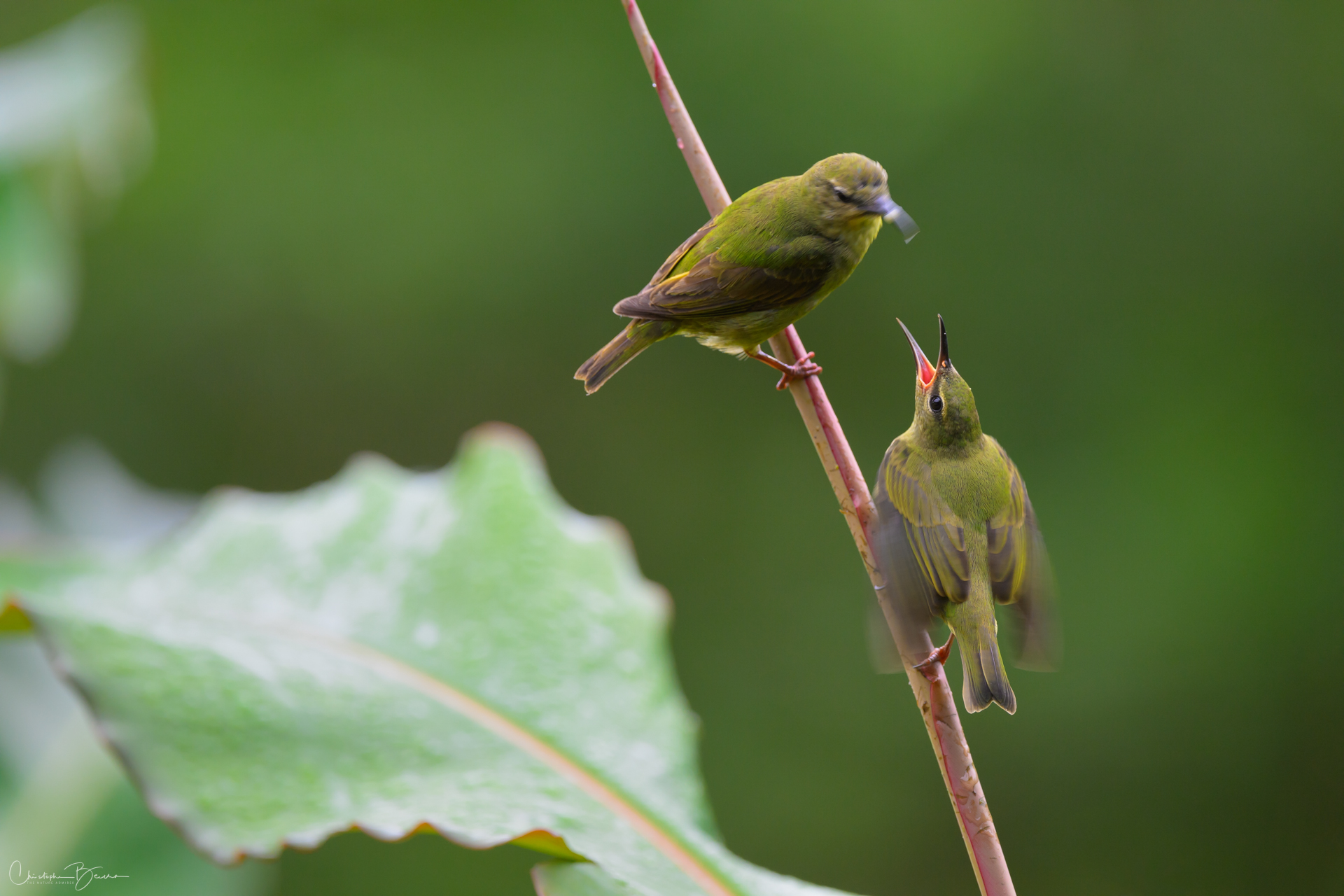
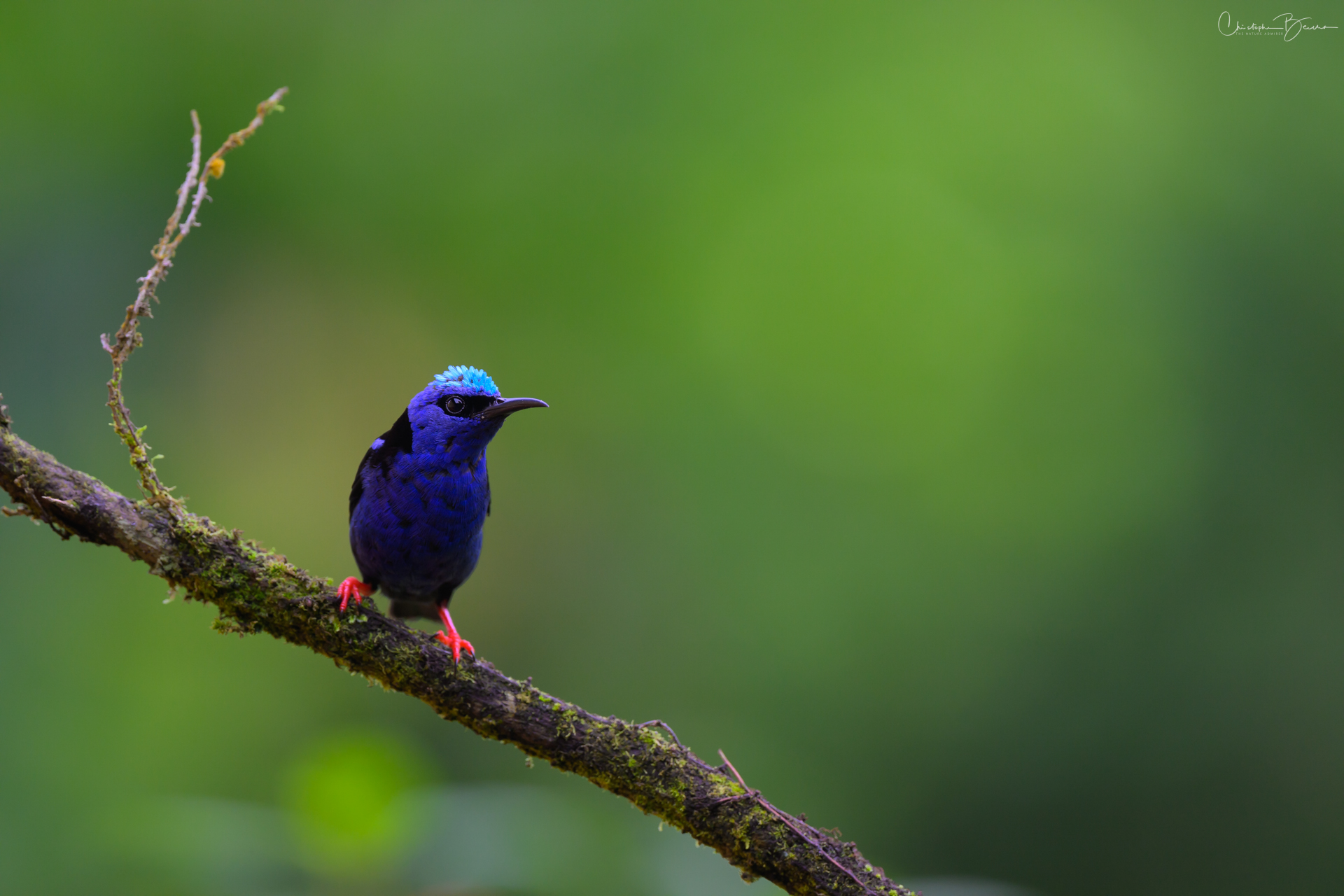
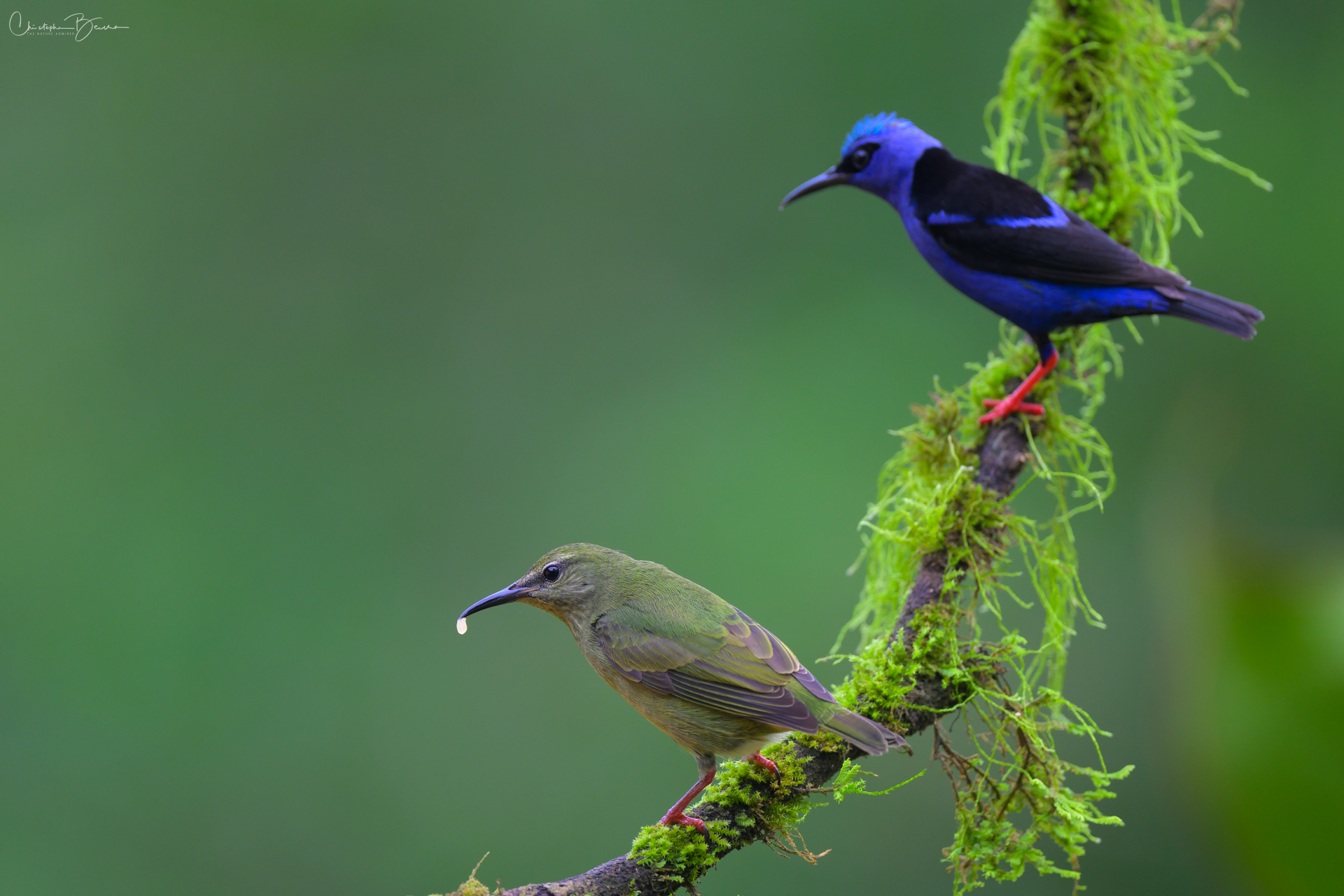
The moment I saw this bird for the first time, I knew it would become my favorite. It is fairly small, yet the blue body and red legs of the male just pop out in their normal habitat, which is fairly green. The female is more difficult to spot, since most of the body is dark green, and the legs are dull red, even brownish. And there is more, because the juvenile male starts with the same green color as the female, however as it matures it gets the blue body and bright red legs. After the breeding season, the male again turns green, but keeps the red legs. This means that males can also be seen in various molting stages, with patches of green, blue and black all over the body.

Note that while the Red-legged Honeycreeper is in the Tanager family, its body shape is slimmer and is in general smaller than the Tanagers. The closest one in size is the Plain-colored Tanager, however the body shape is entirely different, with shorter bill and fluffier plumage. In Costa Rica, there are two other Honeycreeper species, the Shining Honeycreeper (which belongs to the same Cyanerpes genus) with its yellow legs, and the Green Honeycreeper (which belongs to the Chlorosphanes genus), with a green body.

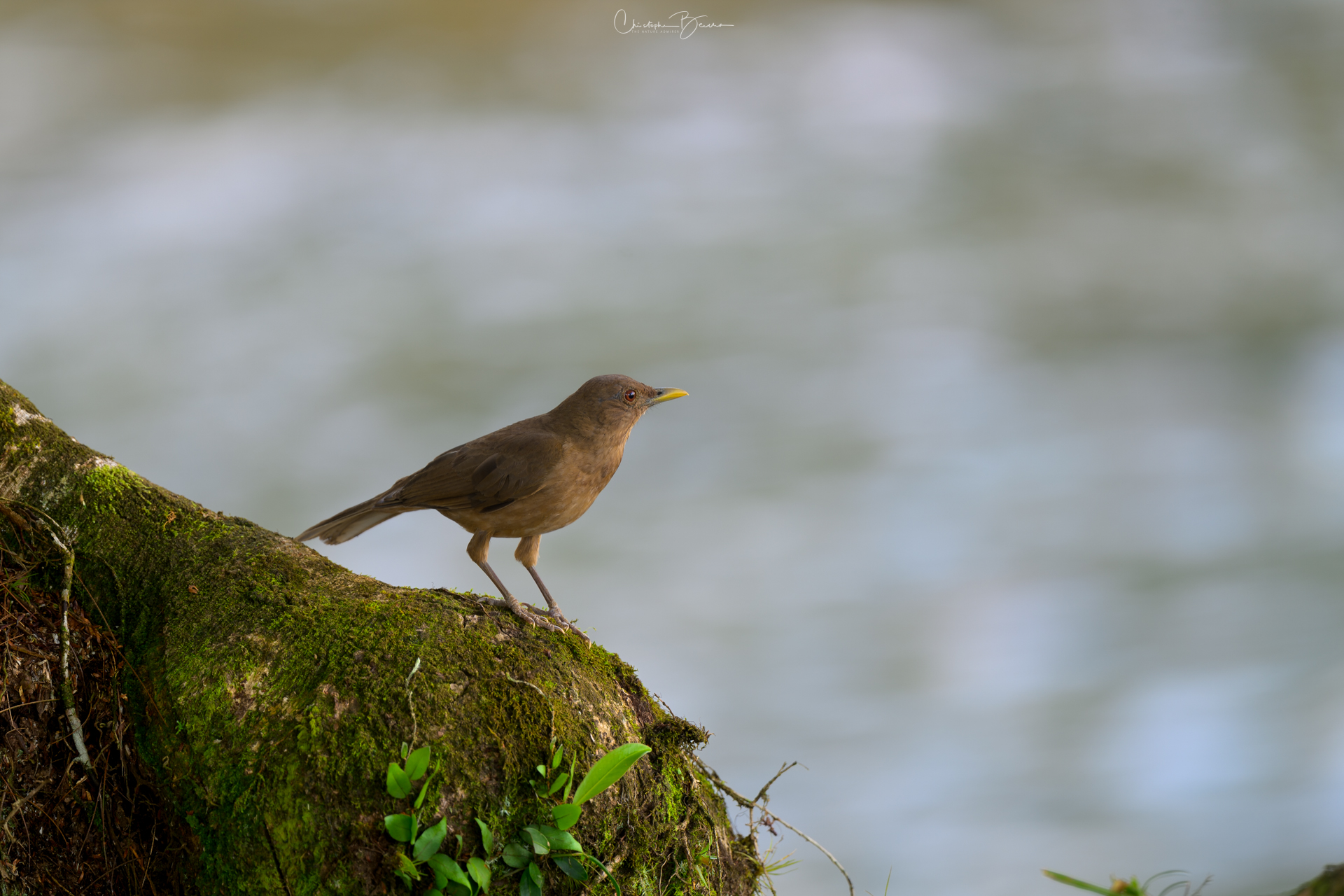
Clay-colored Thrush (Turdus grayi)

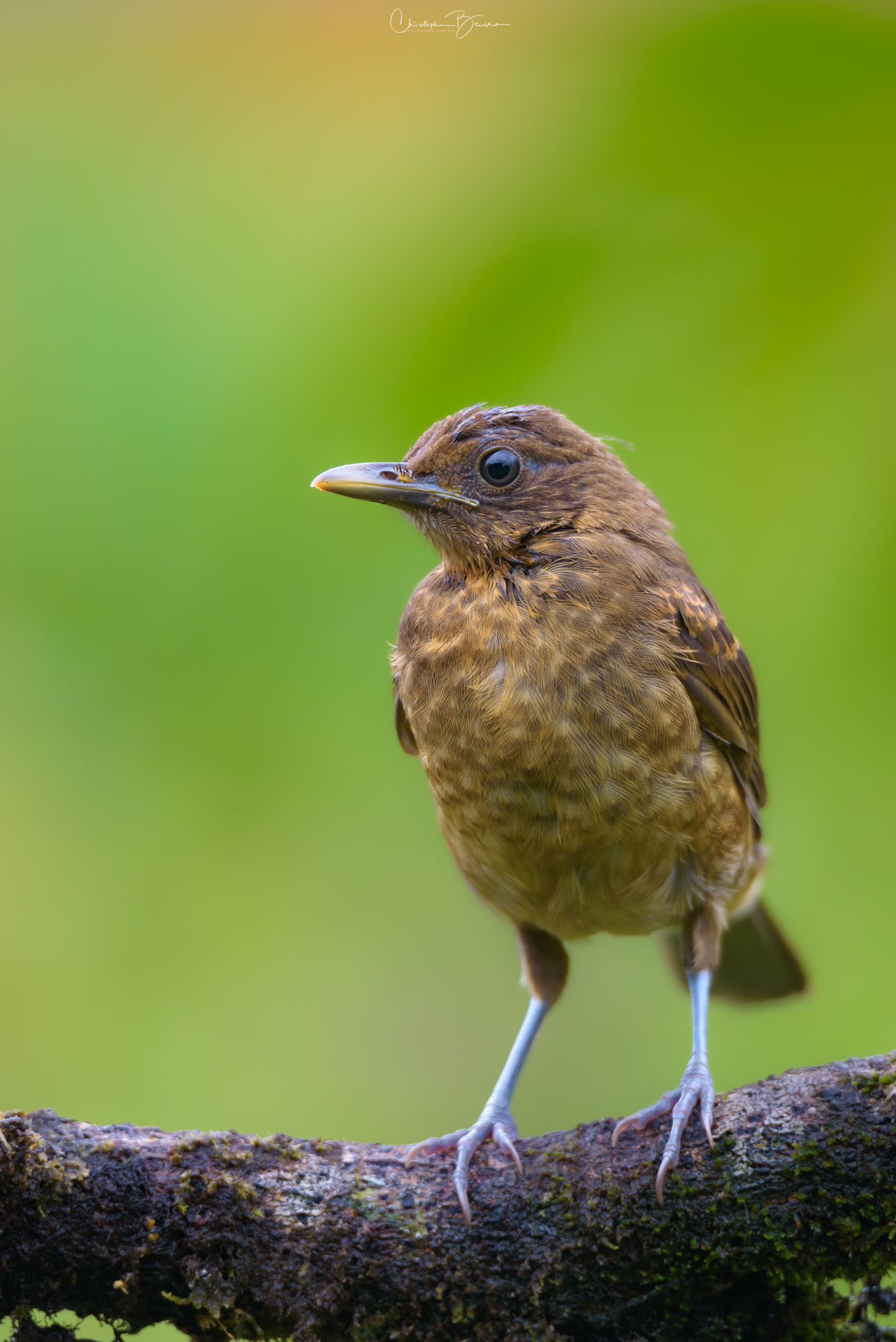
The national bird of Costa Rica, known locally as “Yigüirro”, has a beautiful song and can be found almost anywhere in the territory. It is said that their song marks the start of the rainy season, so in past century, farmers would schedule their crops accordingly. It is now known that males sing to attract females for mating, and that the start of the rainy season just coincides with the start of the breeding season for this bird. They like to eat insects, but also eat fruit like papaya and banana. They are most fond of the ground, where they move along by hopping instead of walking.

Green Heron (Butorides Virescens)

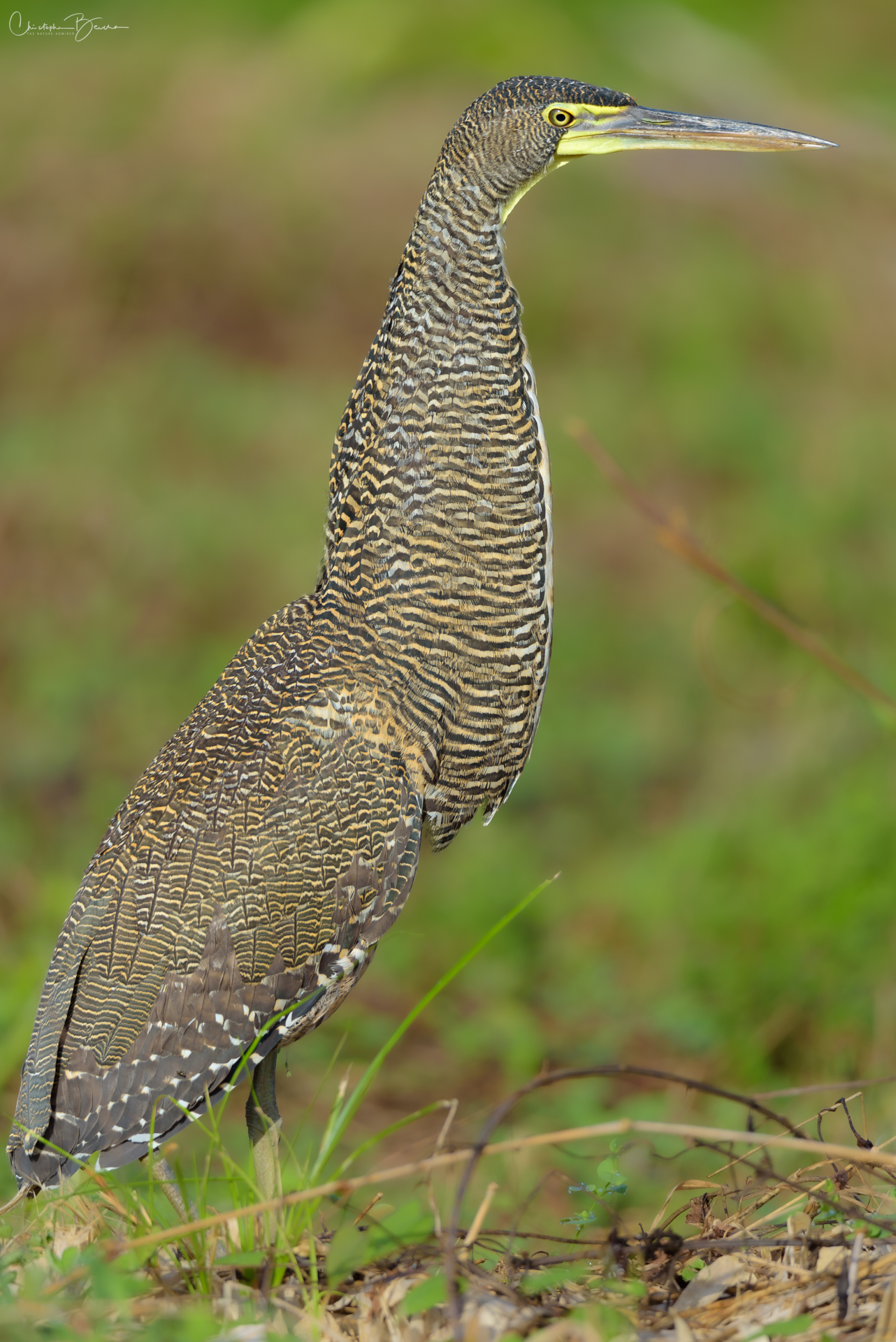
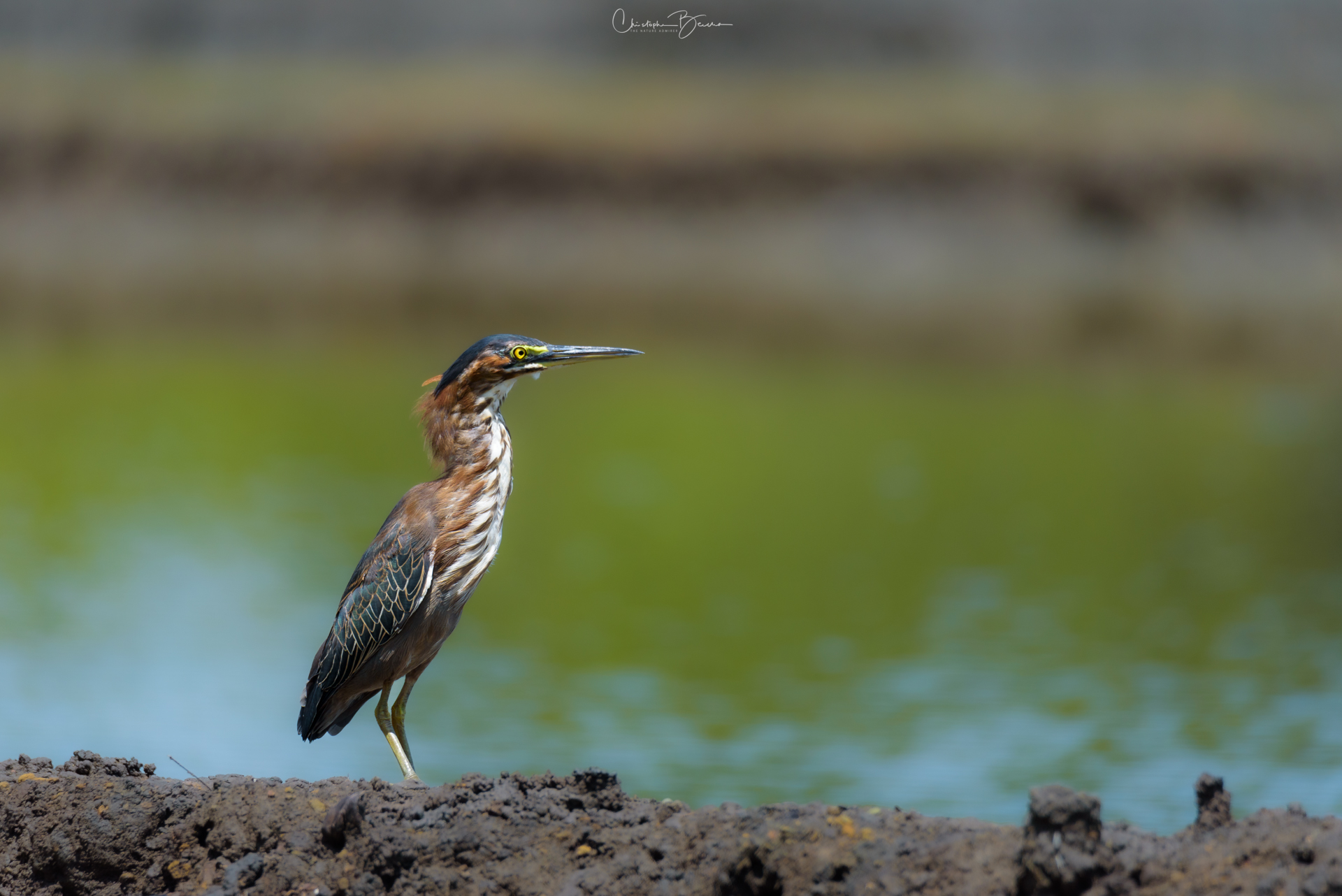
From what I have observed, the Green Heron shares some traits with the bigger Bare-throated Tiger Heron. Both maintain their necks coiled most of the time, and elongate them up to twice the size of their body when they are ready to attack. Both walk in a stealthy manner, not making a single sound, as they approach to unsuspecting prey. Both are startled easily and fly far away when you are too close. The differences are that the Green Heron is more likely to be found perching high up in the trees, and the obvious size difference; the Green Heron is pretty small, the size of a duck, while the Tiger Heron is bigger than a turkey. They stalk prey while wading in shallow waters using their long feet and toes or from the water edge, sometimes standing motionless for minutes until they launch their attach and grab their prey.