
Page 5 of 13









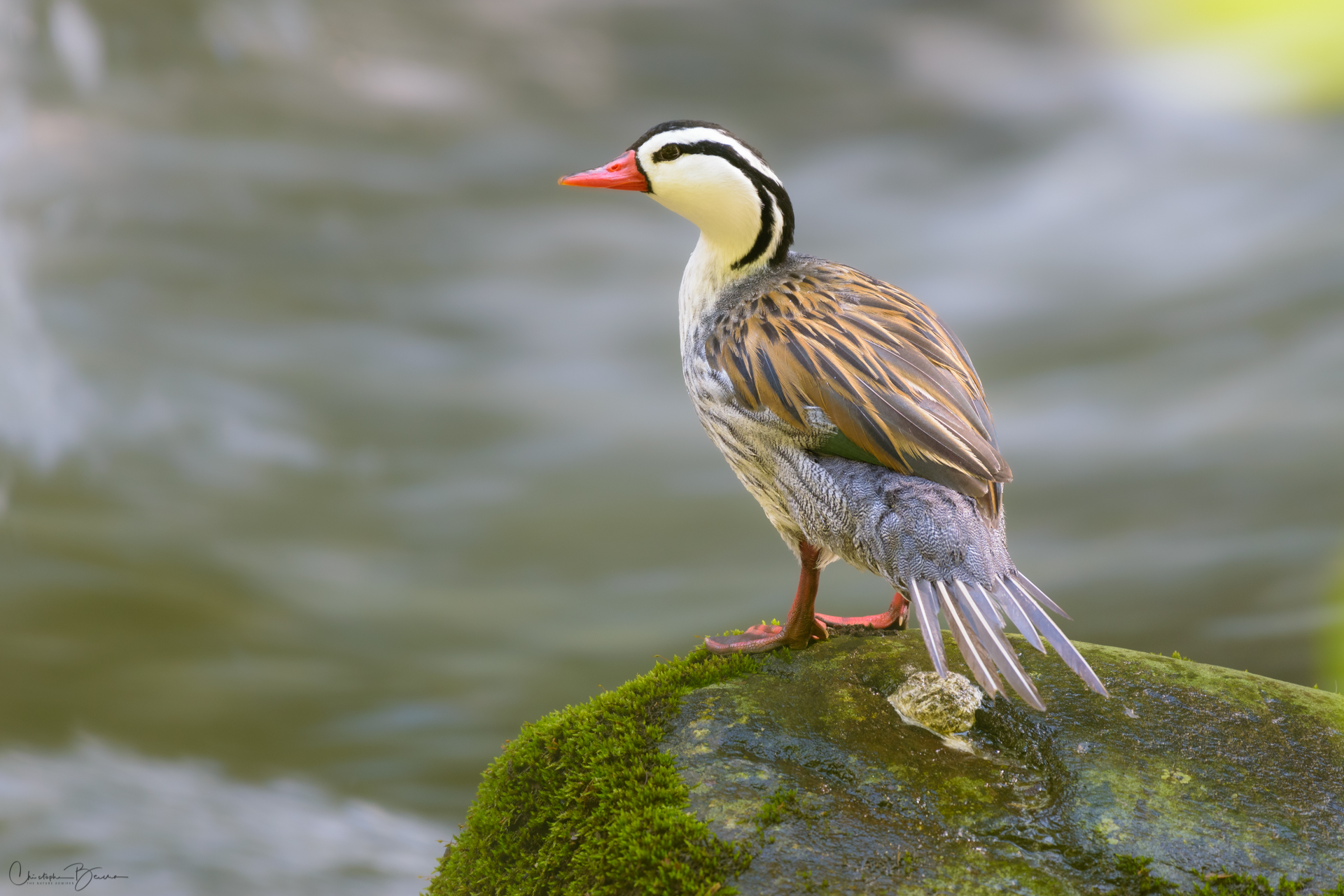
Torrent Duck (Merganetta armata)
The Torrent Duck is very special and one of the highlights of our trip to Colombia. They are only found living in the high courses of rapid flowing streams, with lots of rocks that serve as anchorage and resting places for them; most other ducks prefer calm waters and lakes to spend their time. This duck chooses a spot downstream for resting during the night, and at the morning it swims upstream against the strong current, until it finds a preferred feeding area. It then begins a cycle: Either the male or female mount guard from a comfortable rock, while the other feeds in a small pool or river region that has light current. When the food is gone, they both jump to the current and get dragged downstream until they reach the next feeding area, where again one of them mounts guard while the other one feeds. This is very unique behavior, one we could observe from very close at Yarumo Blanco SFF.
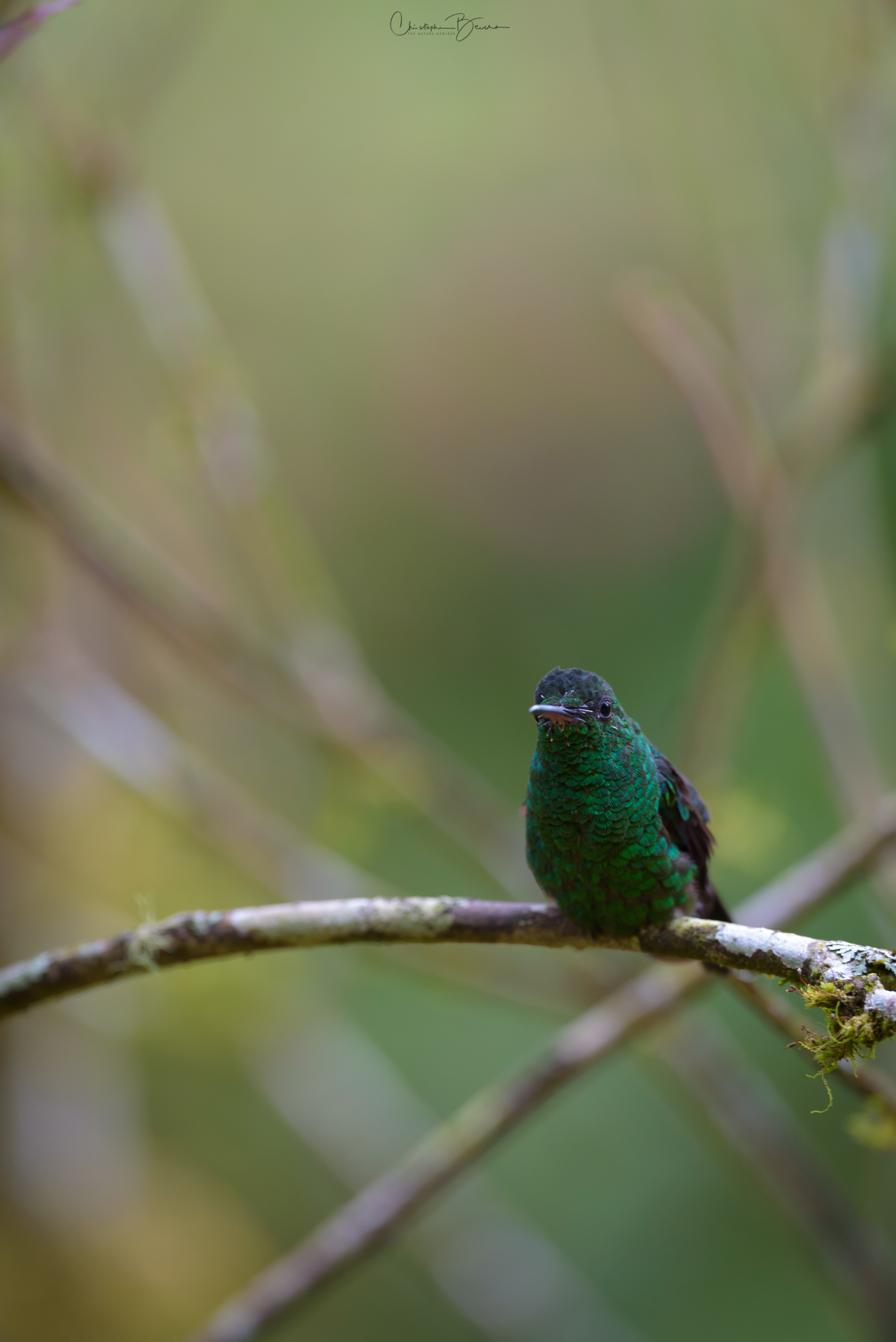
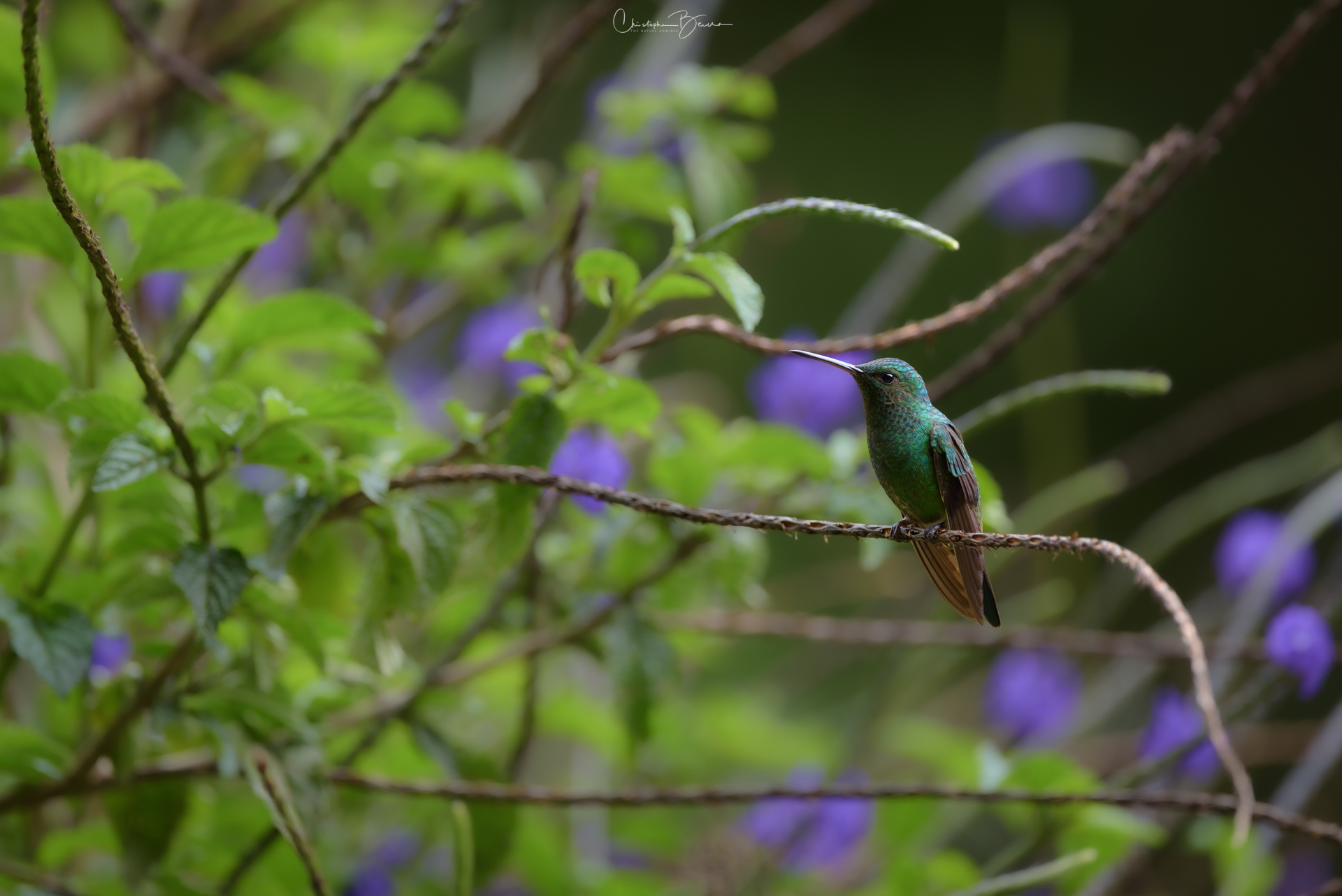
Steely-vented Hummingbird (Amazilia saucerrottei)
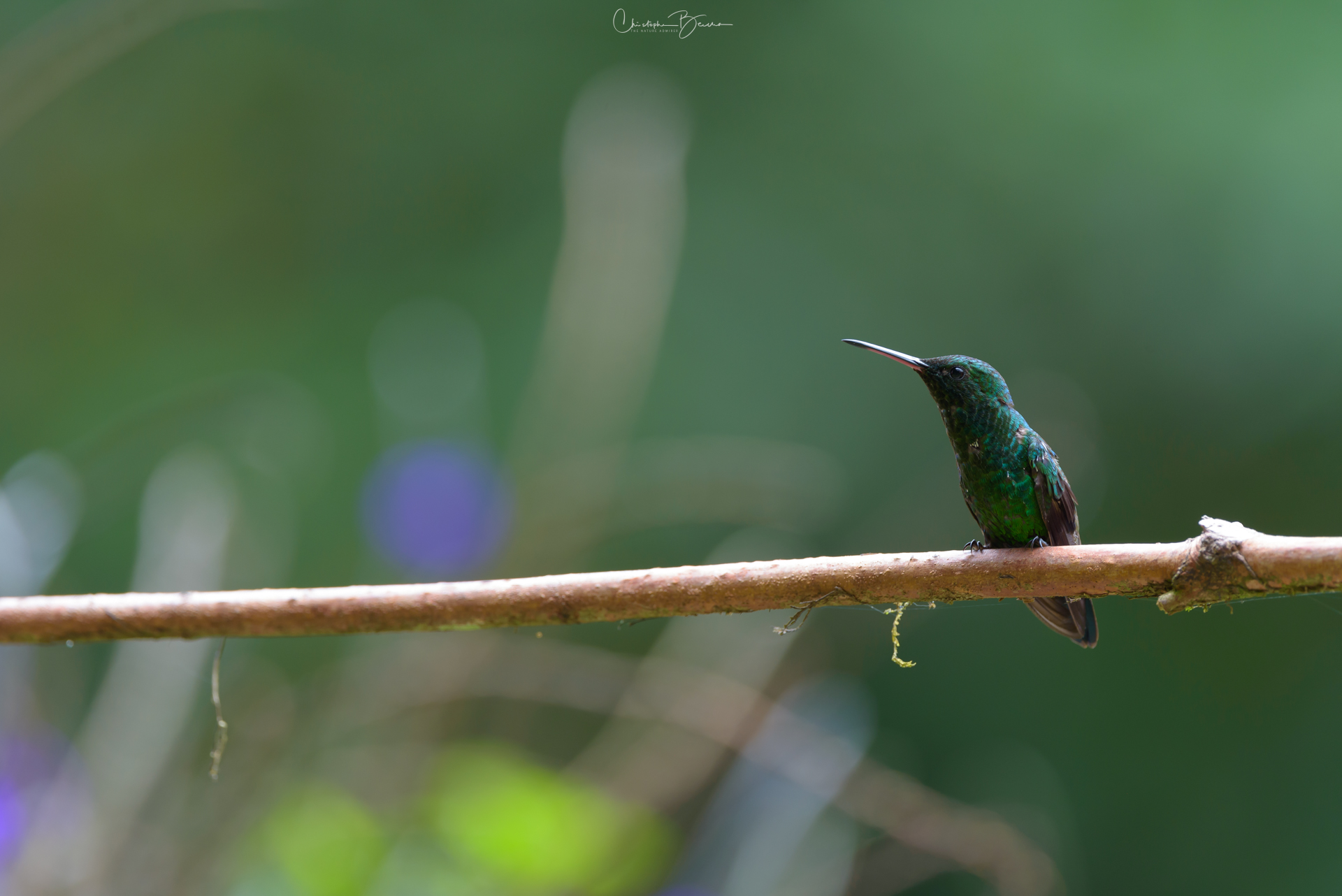
The Steely-vented Hummingbird belongs to the Amazilia genus, which contains a lot of similar hummingbird species like the Rufous-tailed and the Andean Emerald. They are all very similar in terms of body shape and size, but differ in their coloration and some of them in their habitat and behavior. It has a metallic green body with blue wings and tail, and shows yellow to magenta feathers on the rump. Their bill is thin and straight, and it has white feathers covering its legs. Like the Rufous-tailed, it is very aggressive and territorial.


Slate-throated Whitestart (Myioborus miniatus)
The Slate-throated Whitestart is part of the Myioborus genus that includes also the Golden-fronted and Collared Whitestart or Redstart, as are called sometimes. It is a varied genus of warblers that are present in all of the American continent, in different species. In Costa Rica, the Slate-throated is also found along with the Collared species, although here they are called Redstarts instead. They forage very actively on the ground or low in the bushes, flashing their tail to frighten insects that are then caught in the air. Their upper parts and throat are dark grey, while their underparts are yellow in the south, and red on the northernmost part of their range. It also shows a dark red crown that’s difficult to see unless in good light.


Scarlet-bellied Mountain-Tanager (Anisognathus igniventris)
Don’t get confused by the name, this is not the Scarlet Tanager, which incidentally has very bright red colors. The Scarlet-bellied Mountain-Tanager is just unbelievably handsome. It has a dark body which can look blueish under the right light. The belly is a deep scarlet color, although some subspecies may show different shades of this red. It also has a red patch on the ear, and two blue patches, one in the shoulder and the other on the rump. Just as its name, it is a very elegant bird, specially when set against a contrasting green background. It shares the same genus with the Blue-winged and the Lachrymose Mountain-Tanagers, however I really find this species to be pinnacle of beauty. We saw them at about 3,000 meters above sea level, during our visit to Termales del Ruiz.

Saffron-crowned Tanager (Tangara xanthocephala)
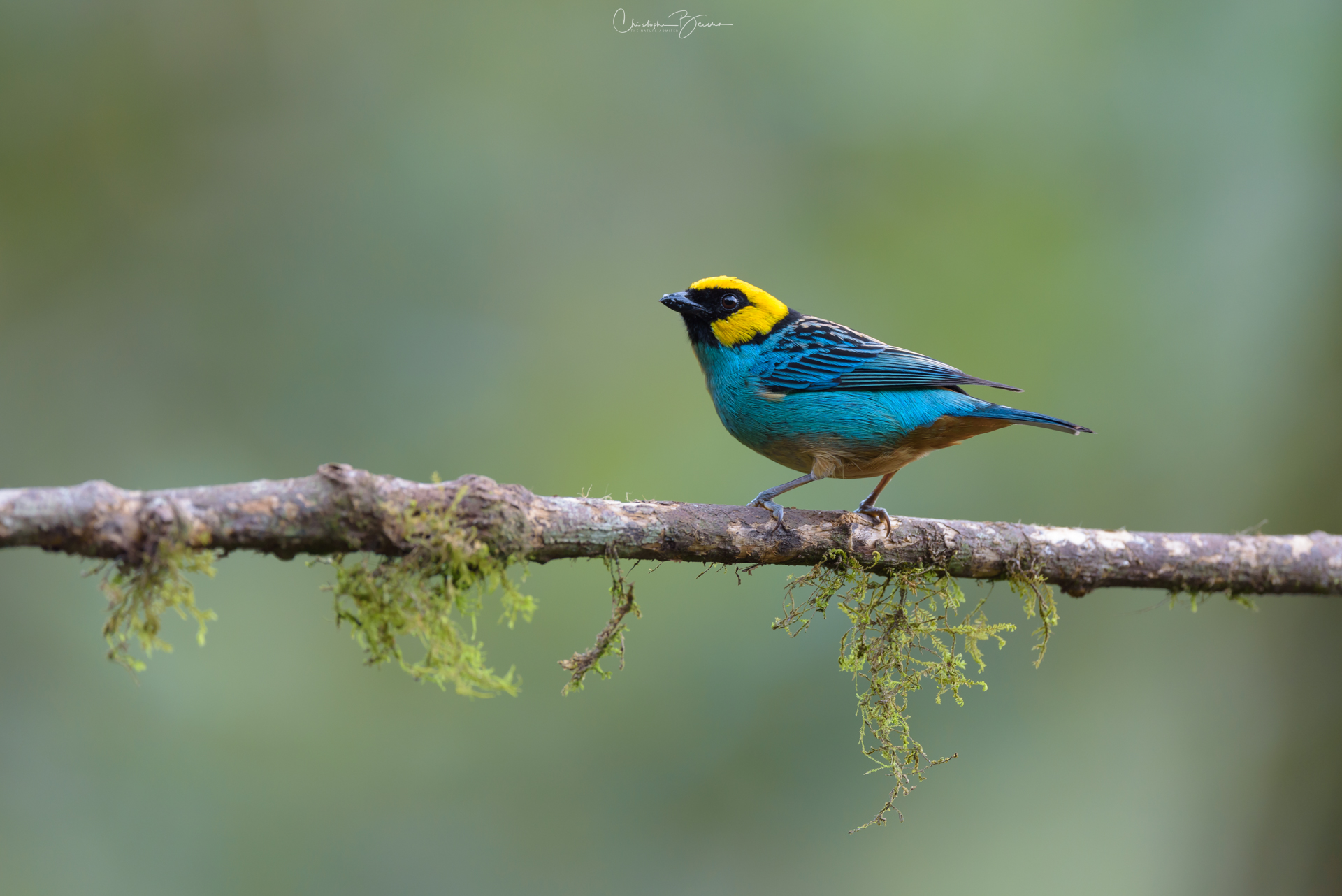
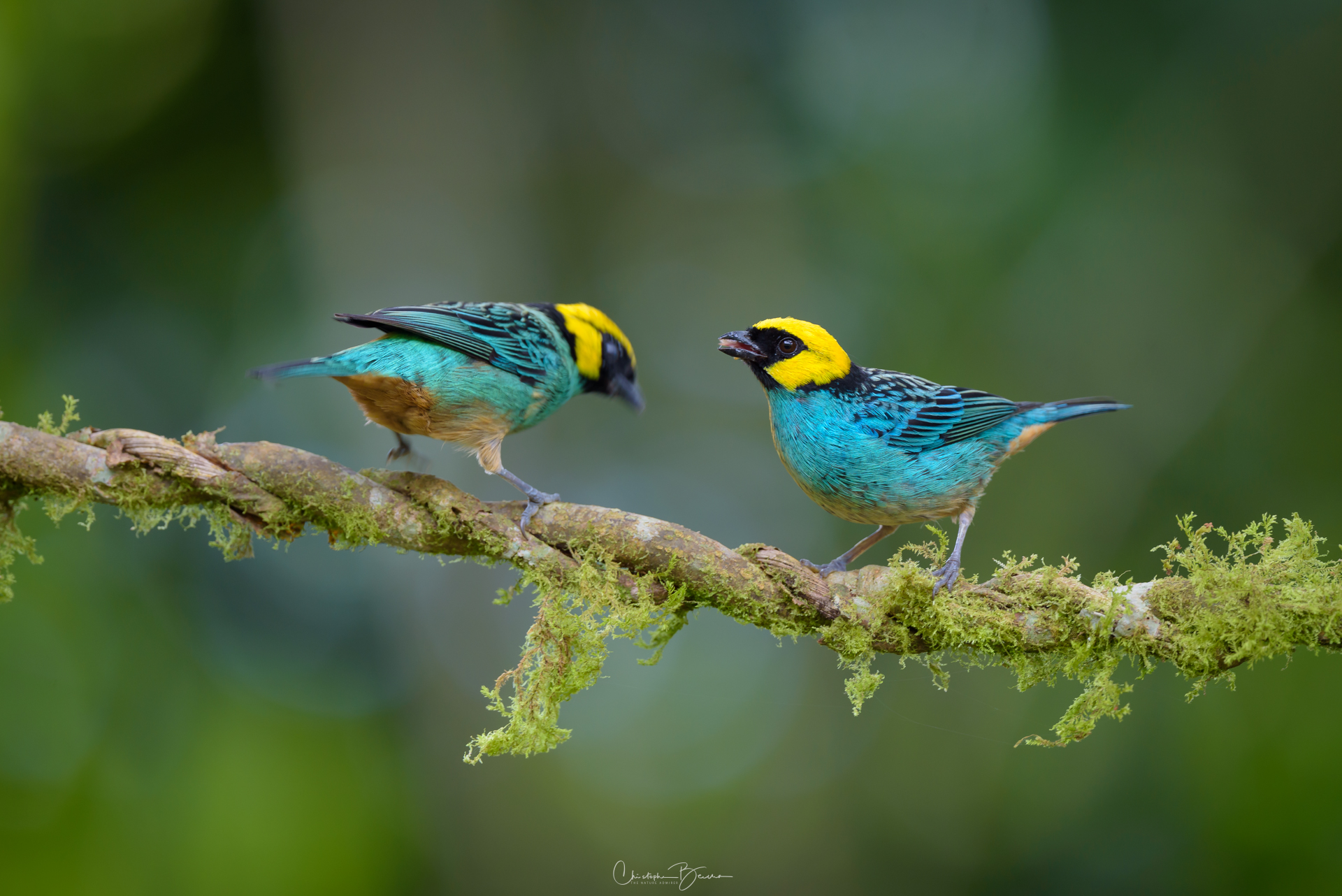
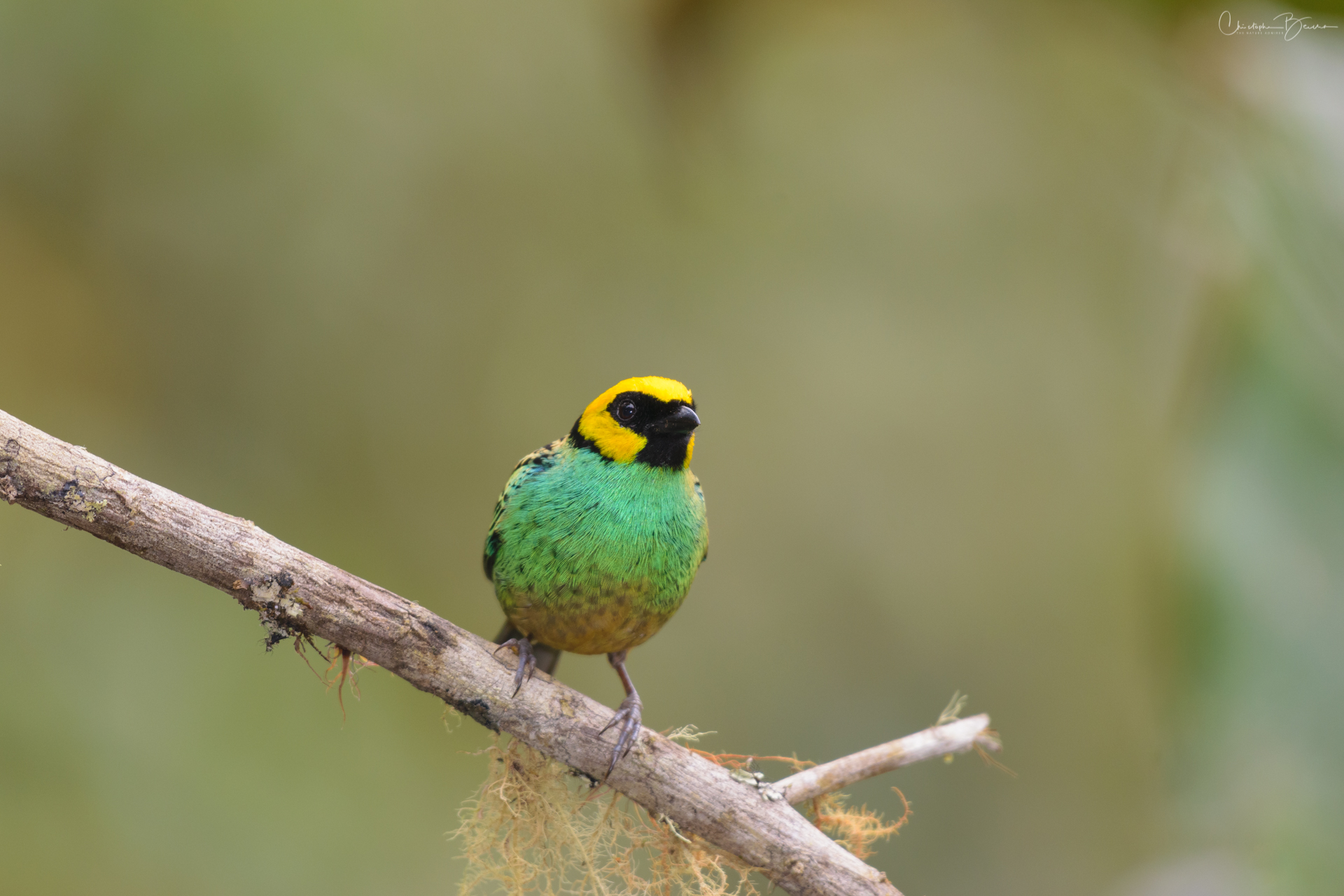
The Saffron-crowned Tanager is very confusing, since its plumage coloration can change a lot depending on the prevailing light. One thing that not changes and that really identifies this species is the yellow head with black mask. The body is either turquoise with green patches, or light green with turquoise patches. Whichever the color seen, it has a spotted appearance on the back and black wing feathers with turquoise/green linings. The belly and vent are white. In terms of body shape, it is very similar to the Gold Tanager, but with a very different coloration; this made them unmistakable even though they often shared the same feeder at Finca Alejandría.

Red-headed Barbet (Eubucco bourcierii)
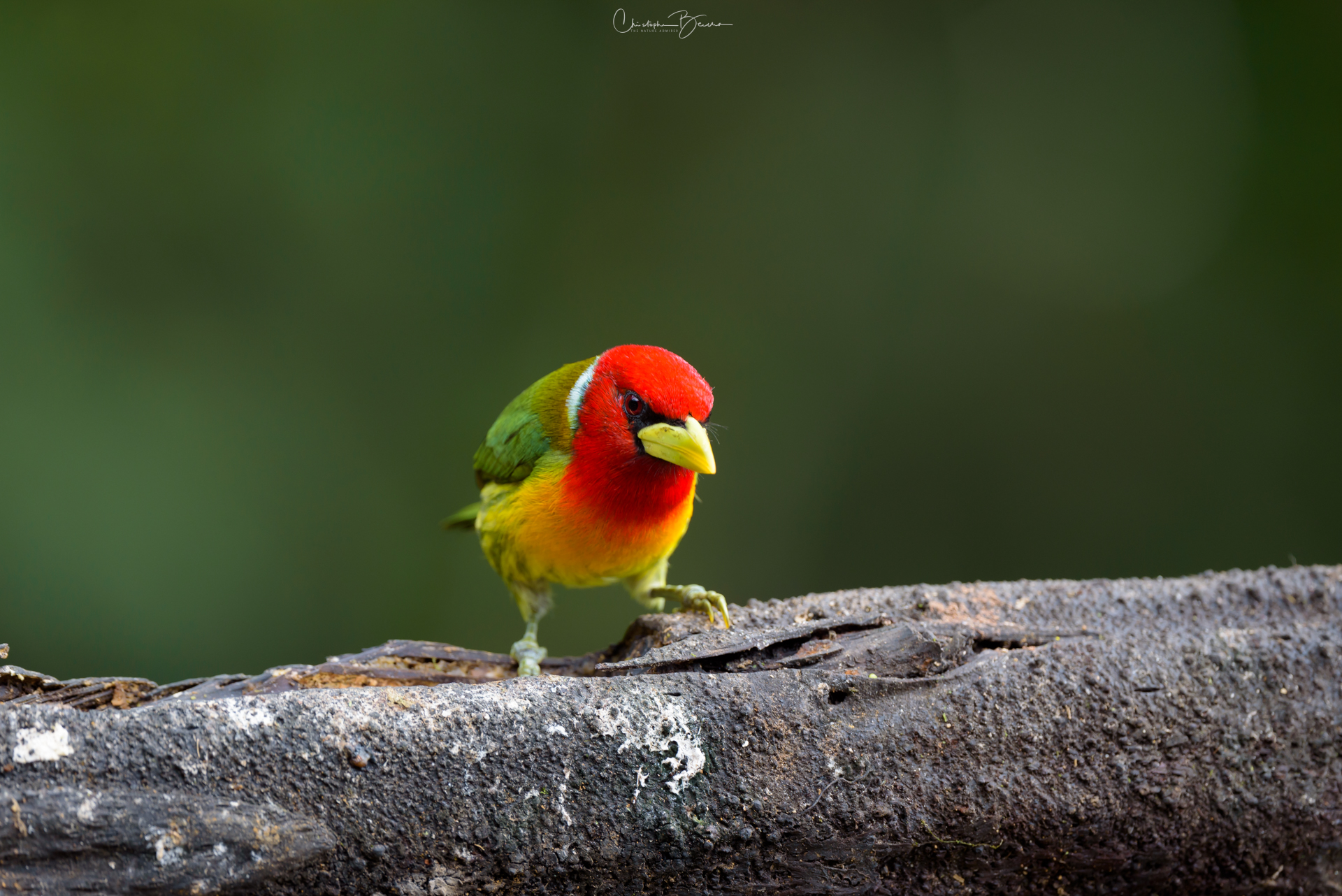
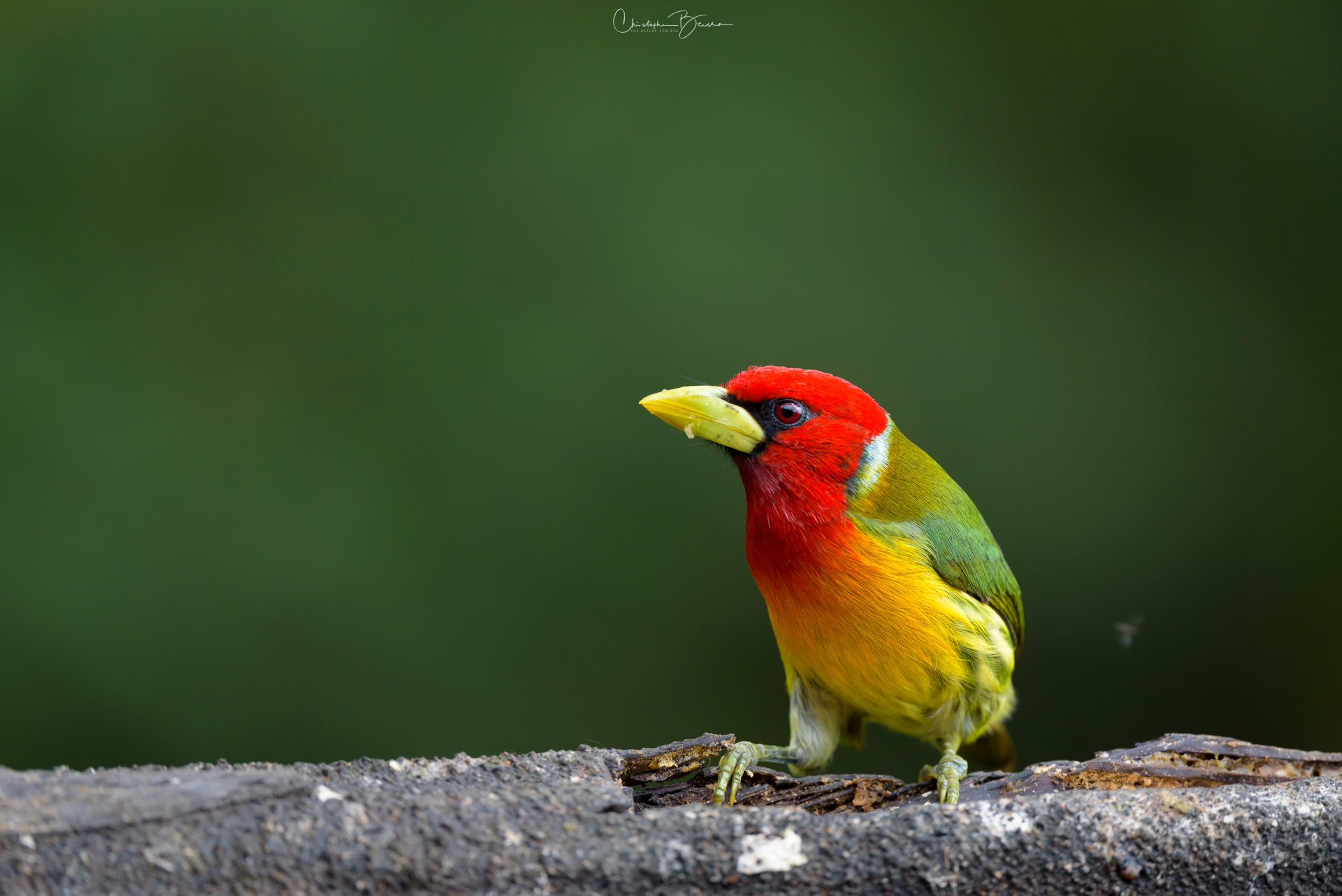
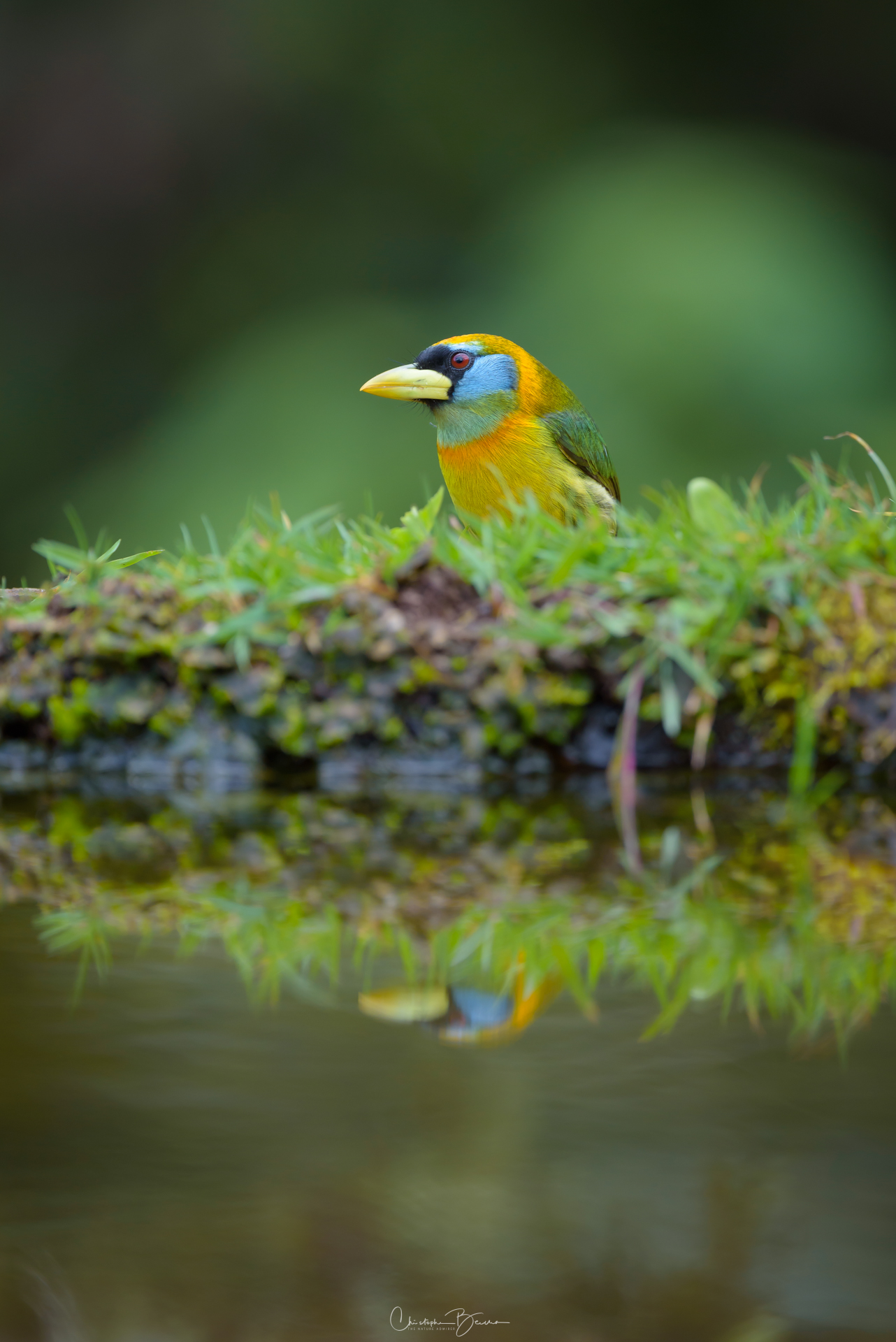
This bird is a beauty, one that we can find in some spots around Costa Rica like Cinchona and Braulio Carrillo. I first met it during this trip to Colombia in Finca Alejandría, where a pair of this species would come and go from the feeders frequently. It is bigger than most tanagers, however it is rather small when compared with how I imagined it. It is the sole species of the Eubucco genus that is found in Costa Rica, with Colombia also hosting the Lemon-throated Barbet. They are related to the toucans, and as such they eat a lot of fruit, however they do not share the Toucan’s behavior of raiding other birds’ nests for eggs and hatchlings. The male and female only share the green body and yellowish beak, with the male having a red face with a white ring separating it from the back, a belly that transitions from deep orange to yellow as it goes down, and flanks that are streaked green and light yellow. On the other hand, the female features a black face with light blue cheeks, orange half hood and patch on the chest, light yellow belly and again streaked flanks in green and light yellow.





Plain-breasted Ground-Dove (Columbina minuta)
Although very similar in coloration and shape to the Ruddy Ground-Dove, this species is the smallest of all ground doves. They lack the scaled appearance of the Common and the Inca Doves. Their body is mostly uniform brown, with the male having a light gray head, and the female being duller in coloration overall. They both have red legs and a short yellowish bill. They sport black markings on the upper side of the wings. The female is even slightly smaller than the male. They forage by walking fast through the ground, picking out seeds, insects and fruit remains as they go. When startled, they fly away a few meters and land onto the ground to continue feeding.


Phelps’ Brush-Finch (Arremon perijanus)
The Phelps’ Brush-Finch is part of the Arremon genus, which has a variety of species that distribute through all South America, a few of which occur in Costa Rica. They are small birds that hop in the ground and forage by snatching worms and insects from their hides. Its back and wings are olive in coloration, with gray flanks that join with the supercilliary. It has black cheeks and a black line above the supercilliary, with a gray line that goes through the center of the head, and those features give it a striped look. It has a white throat and chest. Their eyes are reddish-brown.

Long-tailed Sylph (Aglaiocercus kingii)
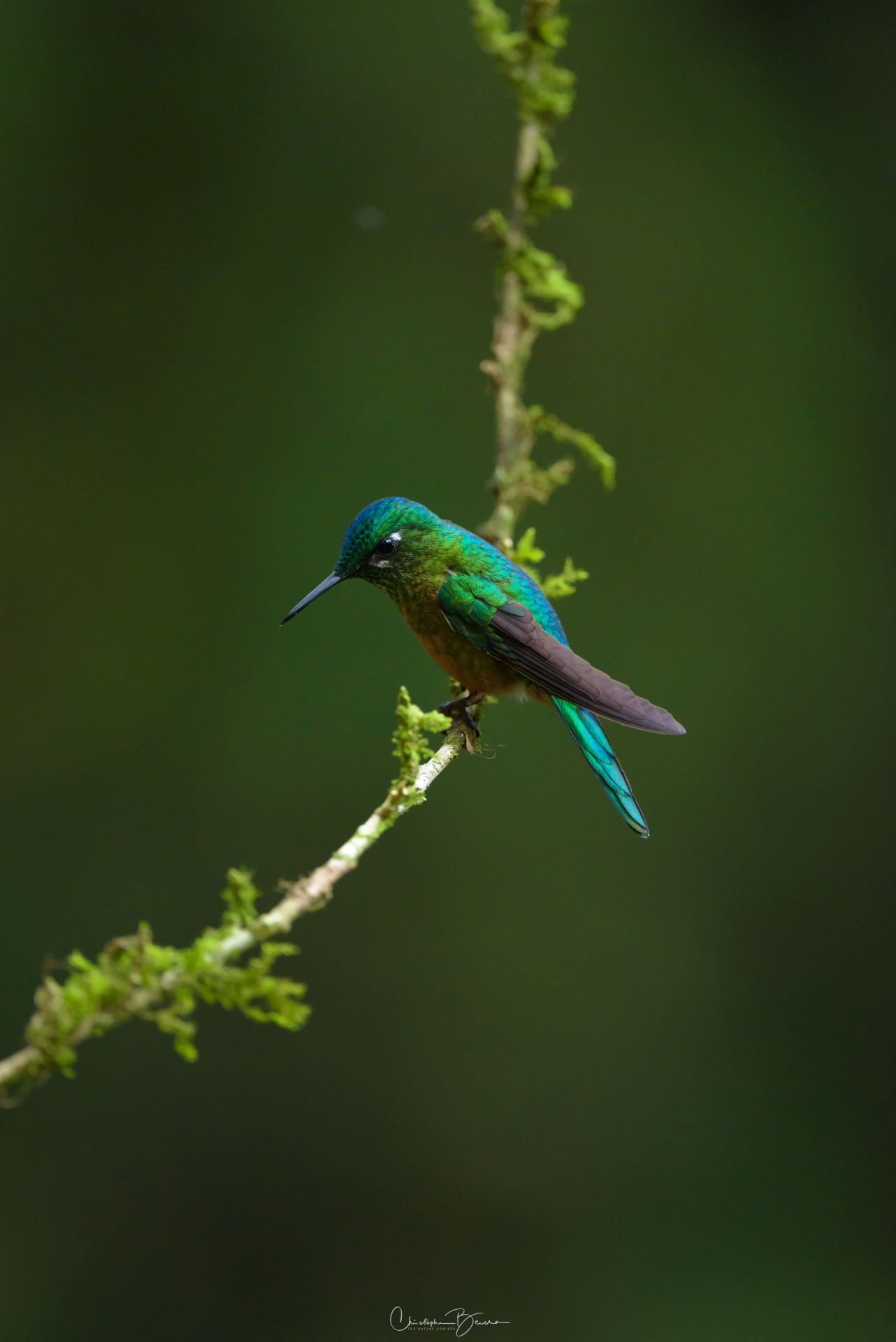
The Long-tailed Sylph is member of a genus with long tails, with the Violet-tailed Sylph being the other species that can be readily found in Colombia. The Long-tailed is overall very green, with a glittering emerald patch on the front of the head. The wings are very long and extend far beyond the base of the tail. However its most definitive feature is its long tail, which can measure up to 12 centimeters in length and account for around two thirds of the overall length of the bird; this is a huge burden for the bird as it flies around from flower to flower in search of nectar. The female has a fairly short tail instead, a characteristic known as dymorphism, which is very common in bird species.


 The Nature Admirer