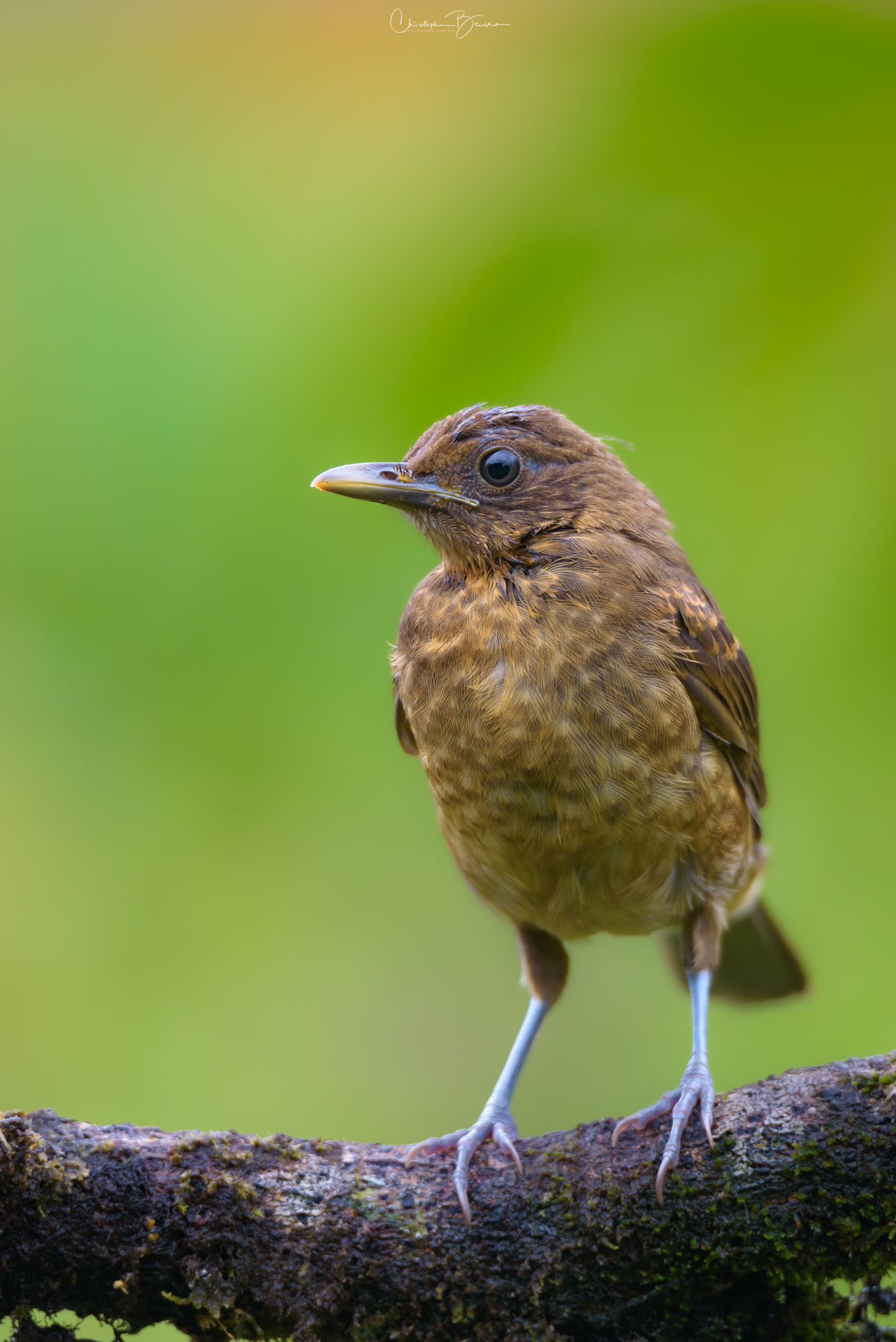
Buff-rumped Warbler (Myiothlypis fulvicauda)

The Buff-rumped Warbler is a small, loud bird of the Caribbean and Pacific lowlands, usually found in close proximity to water streams and rivers, much like the Torrent Tyrannulet does in higher elevations. The places it inhabits are dark, hence it is difficult to see; look for two essential clues: 1) An accelerating high pitched song that seems to come from a water source and 2) a small white patch that swings from one side to the other close to the ground, which is caused by the bird’s habit to swing its tail in such a fashion. It can also be spotted as it flies away rapidly when people approach them.

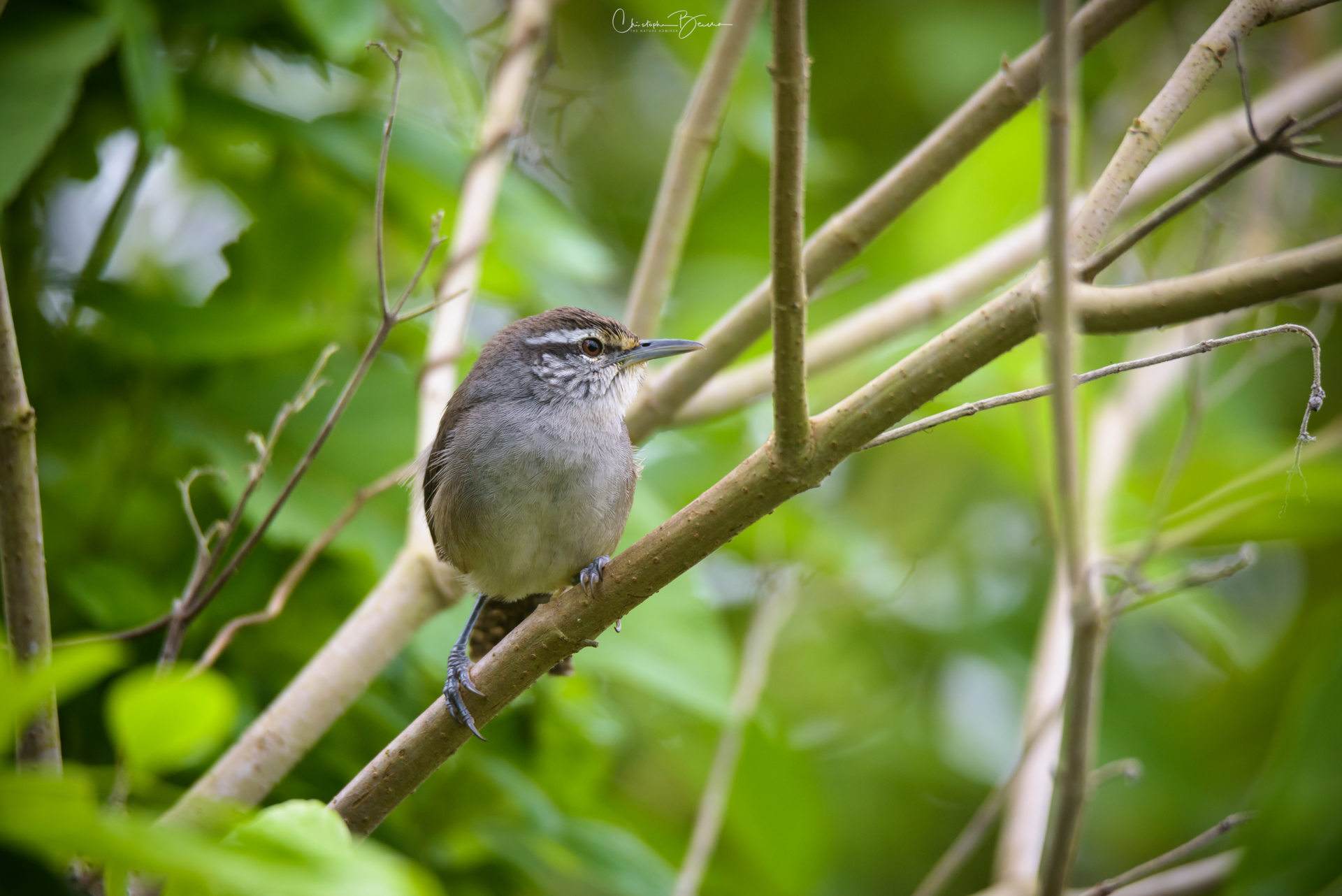
Cabanis’s Wren (Cantorchilus modestus)

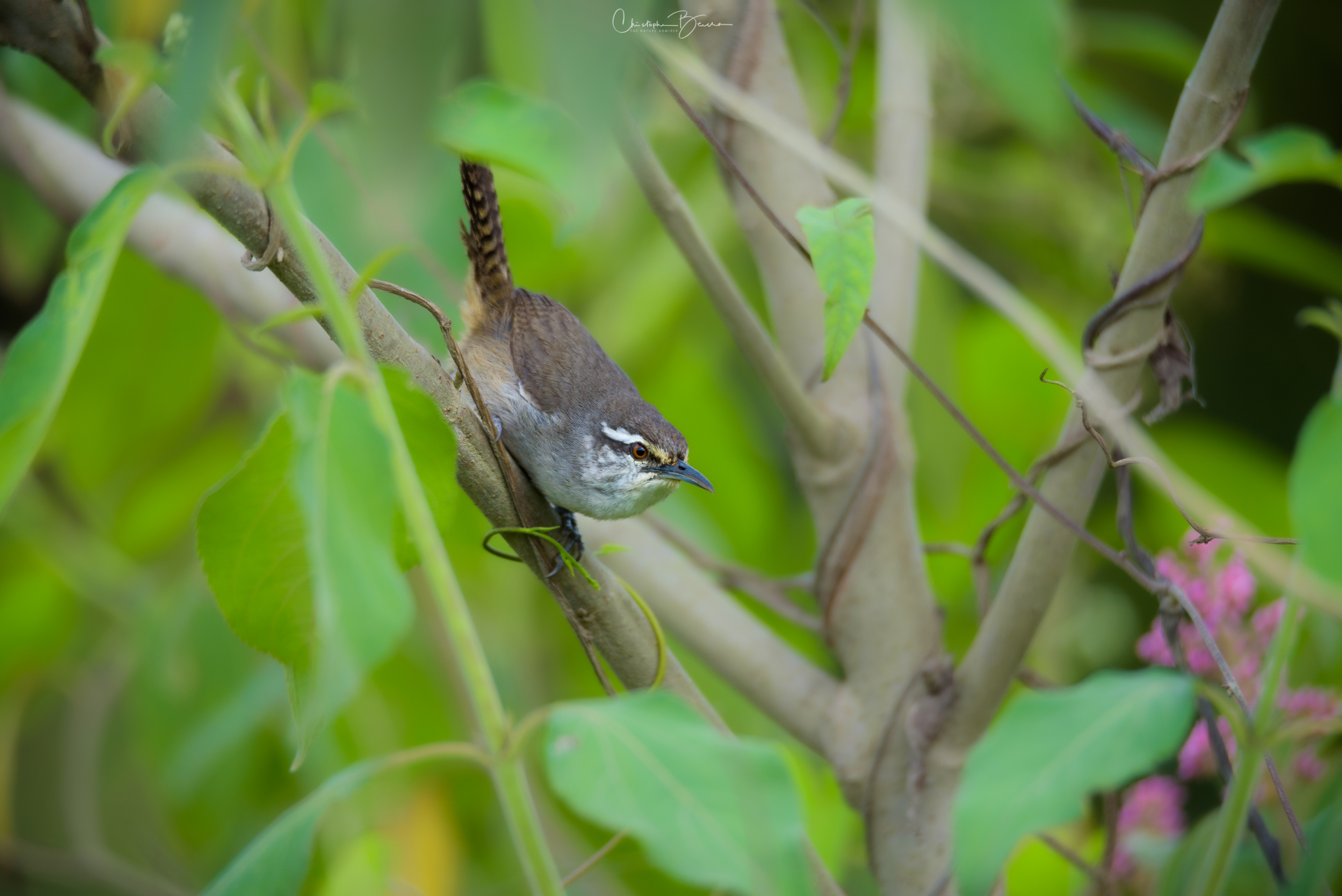
A recent split from the Plain Wren, all three species held this name because of the lack of most field marks when compared with most other wrens. Along the Cabanis’s which can be found in the northwest region of Costa Rica, the Canebrake Wren occupies the Eastern portion (Caribbean), and the Isthmian Wren is found in southern region of the country. These small birds have a brown eye with white supercilliary, brown upperparts with the tail showing black stripes. The underparts are grayish to white. Like most wrens, the Cabanis’s is an avid songbird. Its song is complex, consisting of a variety of high notes and chirps that give away their presence. Even so, they are difficult to locate as their main habitat is dense forest edges, where they jump from branch to branch, camouflaged by the leafs and branches of bushes and trees.

Tropical Pewee (Contopus cinereus)

The Tropical Pewee is very similar to the Wood-Pewees (Eastern and Western), however the Wood-Pewees are migratory birds, found in Costa Rica only during two periods, August to November when they pass through in their journey to South America, and March to May when they return to the Northern hemisphere. They are difficult to differentiate, as their appeareance is very similar, however the Tropical is slighly smaller and has a yellowish belly, while the Wood-Pewees have a gray to white belly. Both Eastern Wood-Pewee and Tropical Pewee have a yellow lower mandible with dark tip, while the Western Wood-Pewee only has a small portion of the lower mandible being yellow. The Tropical Pewee has a darker crest than the Wood-Pewees as well.

White-browed Spinetail (Hellmayrea gularis)

The White-browed Spinetail was the only species of Spinetails we ever saw in Colombia. It inhabits the paramo at Nevado del Ruiz, at an altitude of 4,200 meters above sea level. Its body coloration is composed of brown back and head, gray belly, chest and throat, and a gray supercilliary on top of the black eye. With this colors, it might look very dull and uninteresting, however it is an amazing fact for this little bird to withstand the lack of oxygen and low temperatures of this elevation, specially during the night.

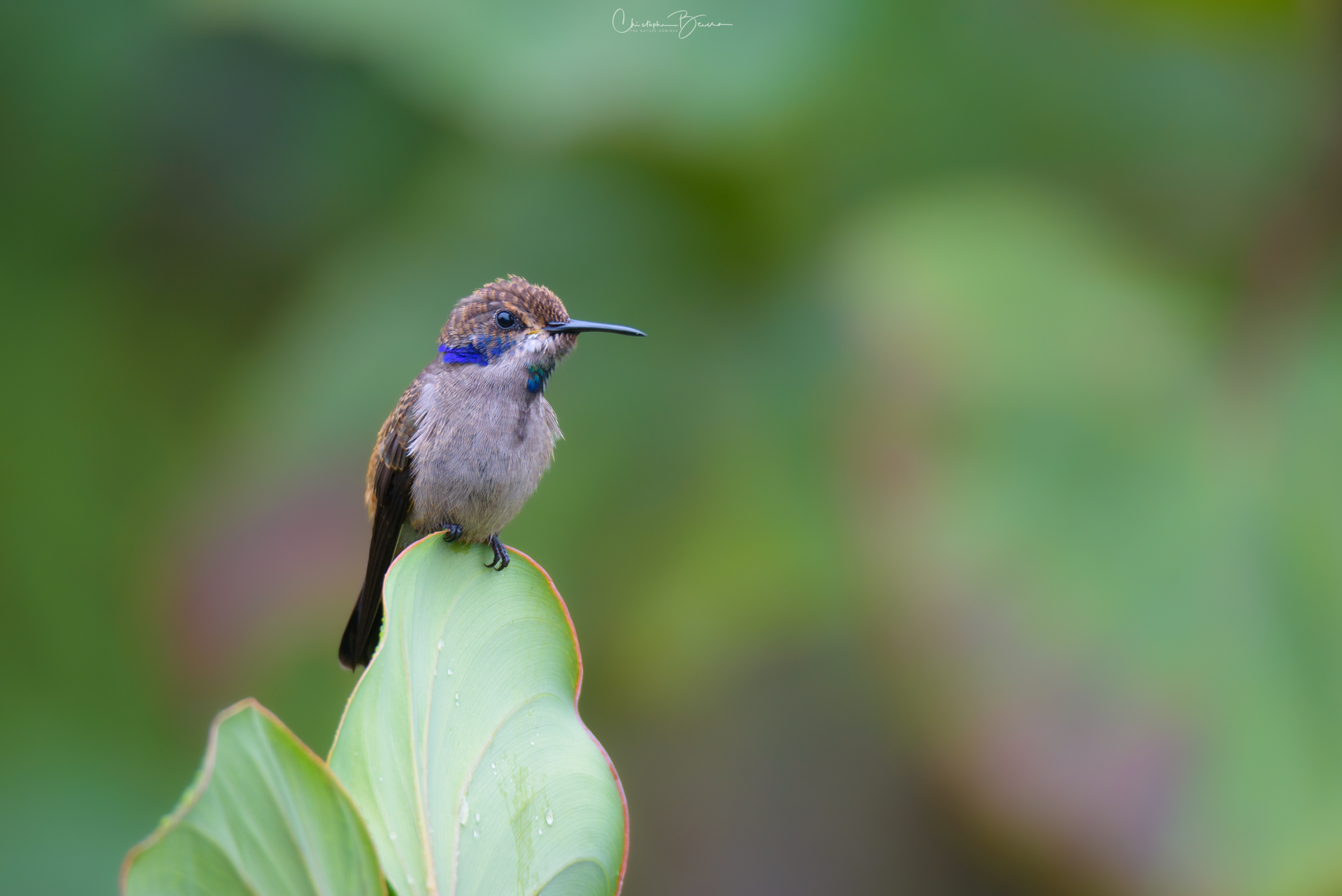
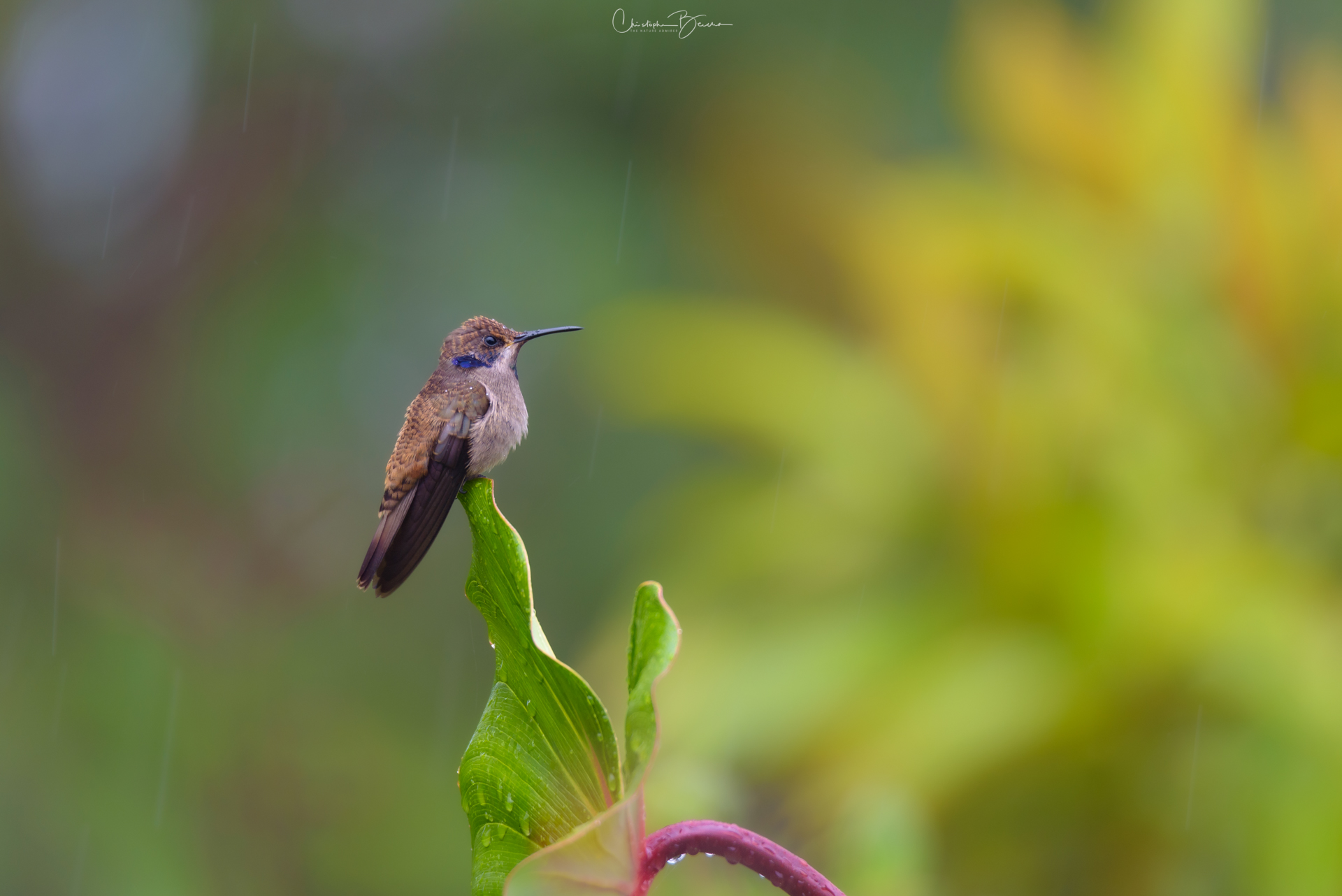
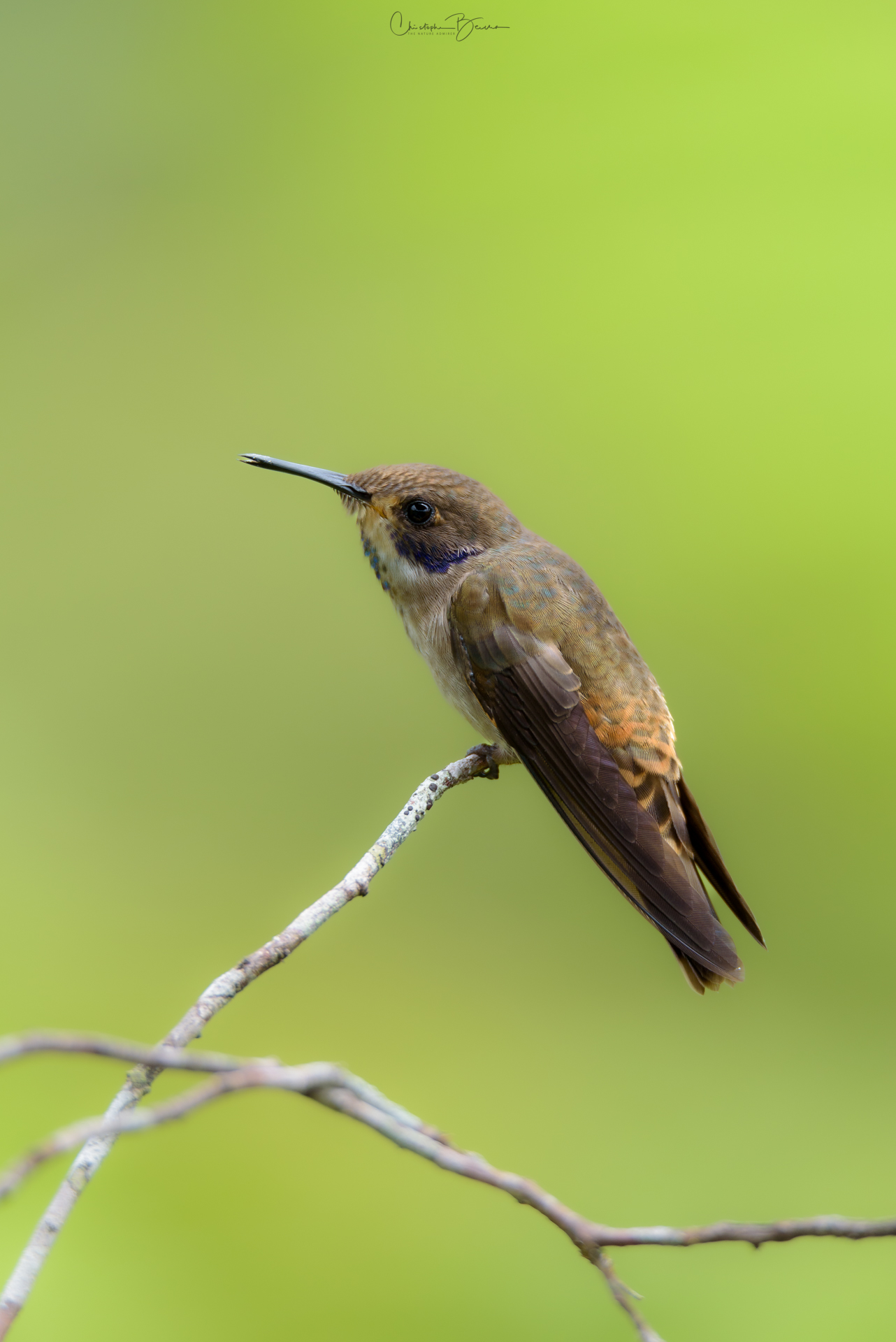
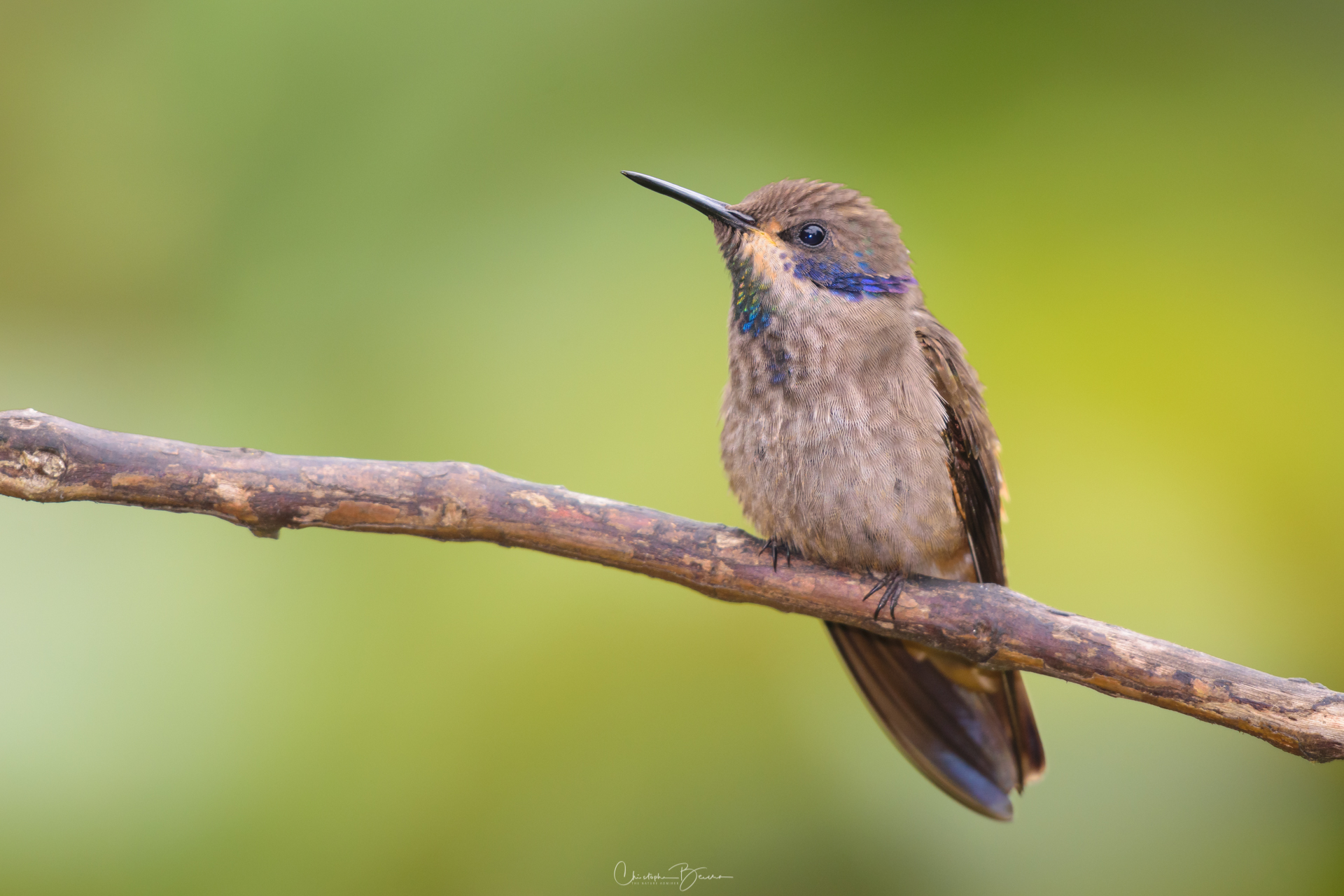
Brown Violetear (Colibri delphinae)

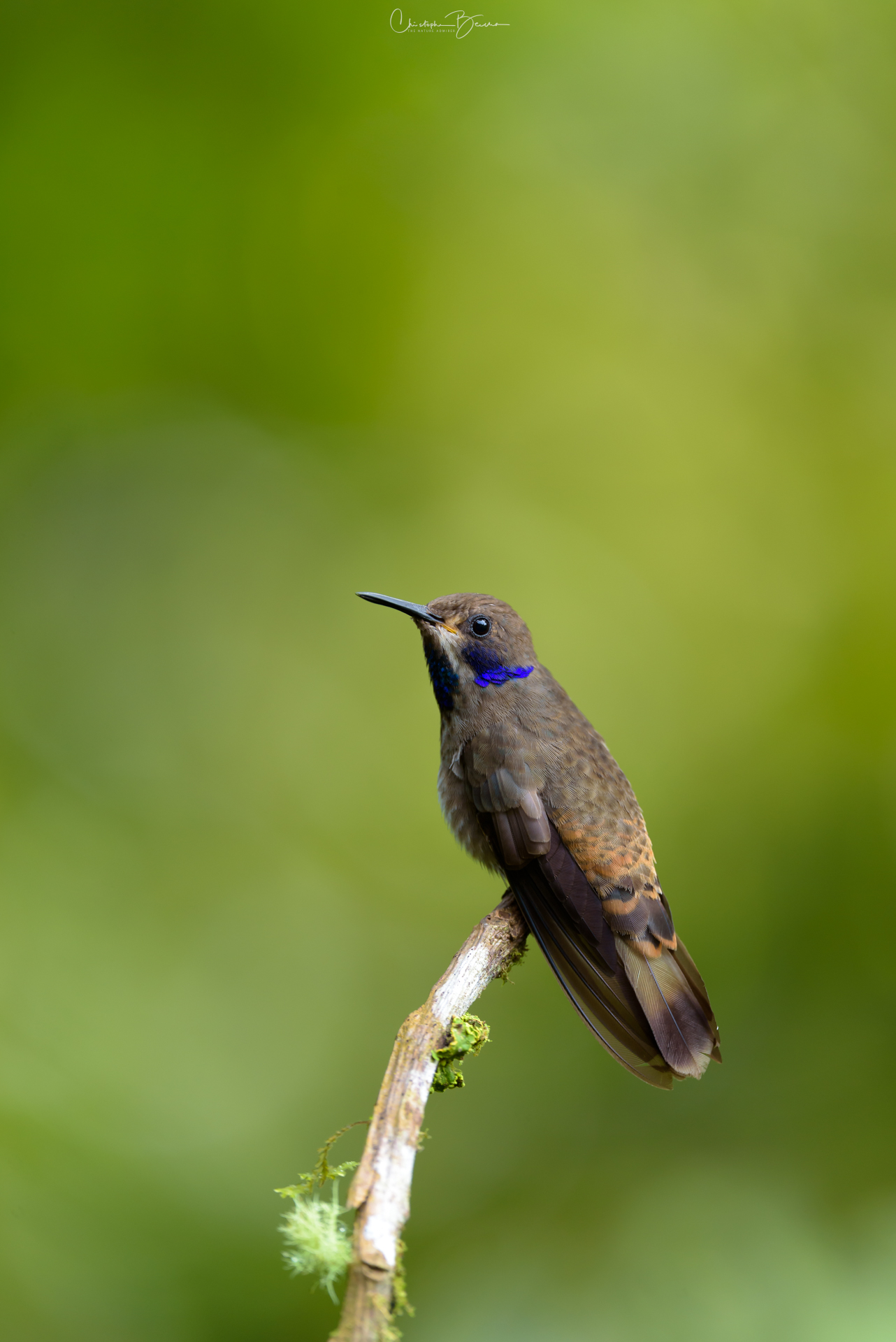
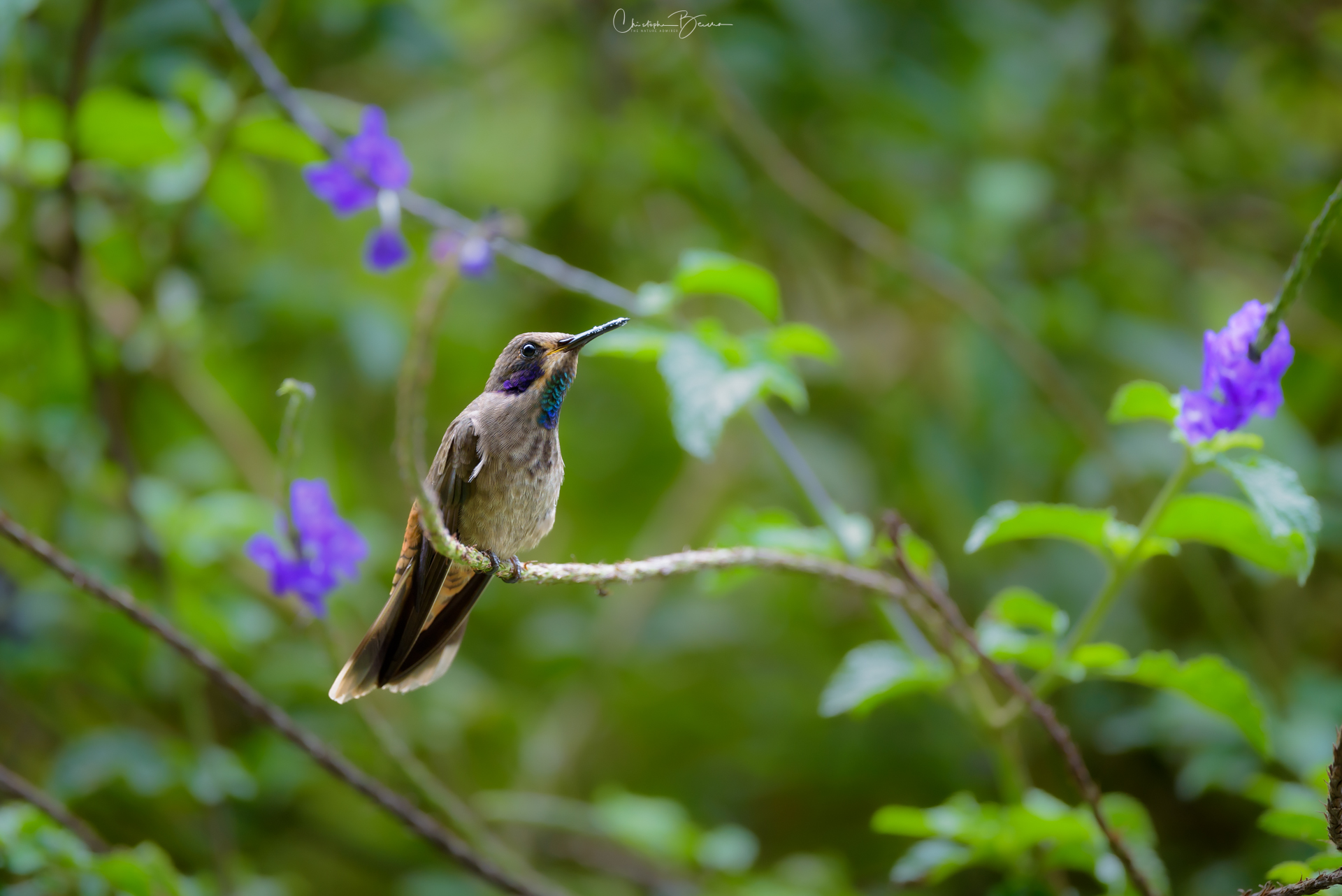
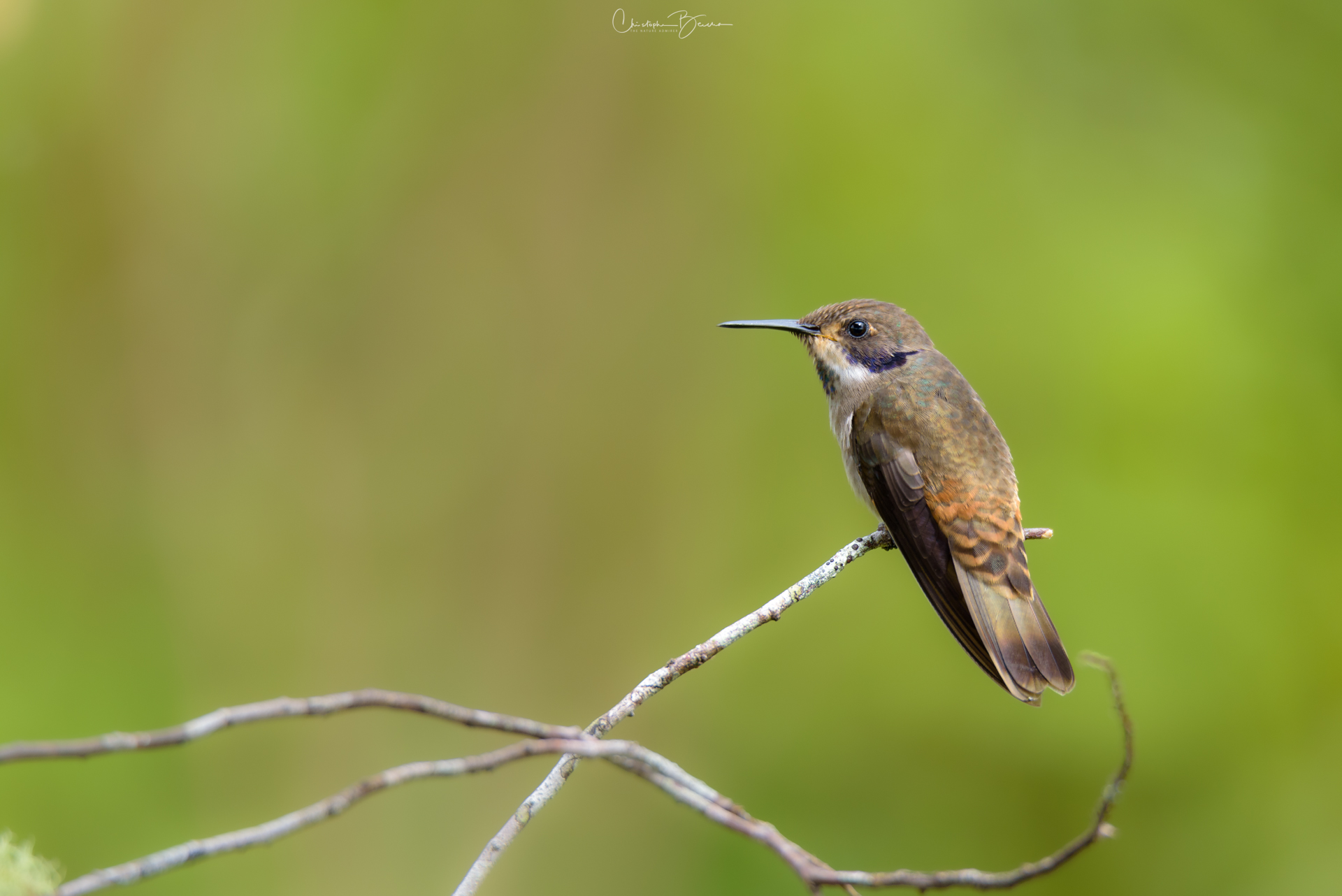
The Brown Violetear is a medium-sized hummingbird which has a violet ear patch, not surprising given its name. The body is mostly brown in coloration, with darker wing and tail feathers. The feathers covering its vent are whitish, as well as some of the throat feathers surrounding a small colorful patch in the center. It possesses a patch of green to blue iridescent feathers in the throat, something the Lesser Violetear does not possess. The black bill is relatively short and straight, which it uses to sometimes catch small insects on the flight. It is found in mid to high altitudes, particularly in humid areas where Porter Weed flowers are plentiful. Their small size and light weight let them perch in delicate branches without breaking them.
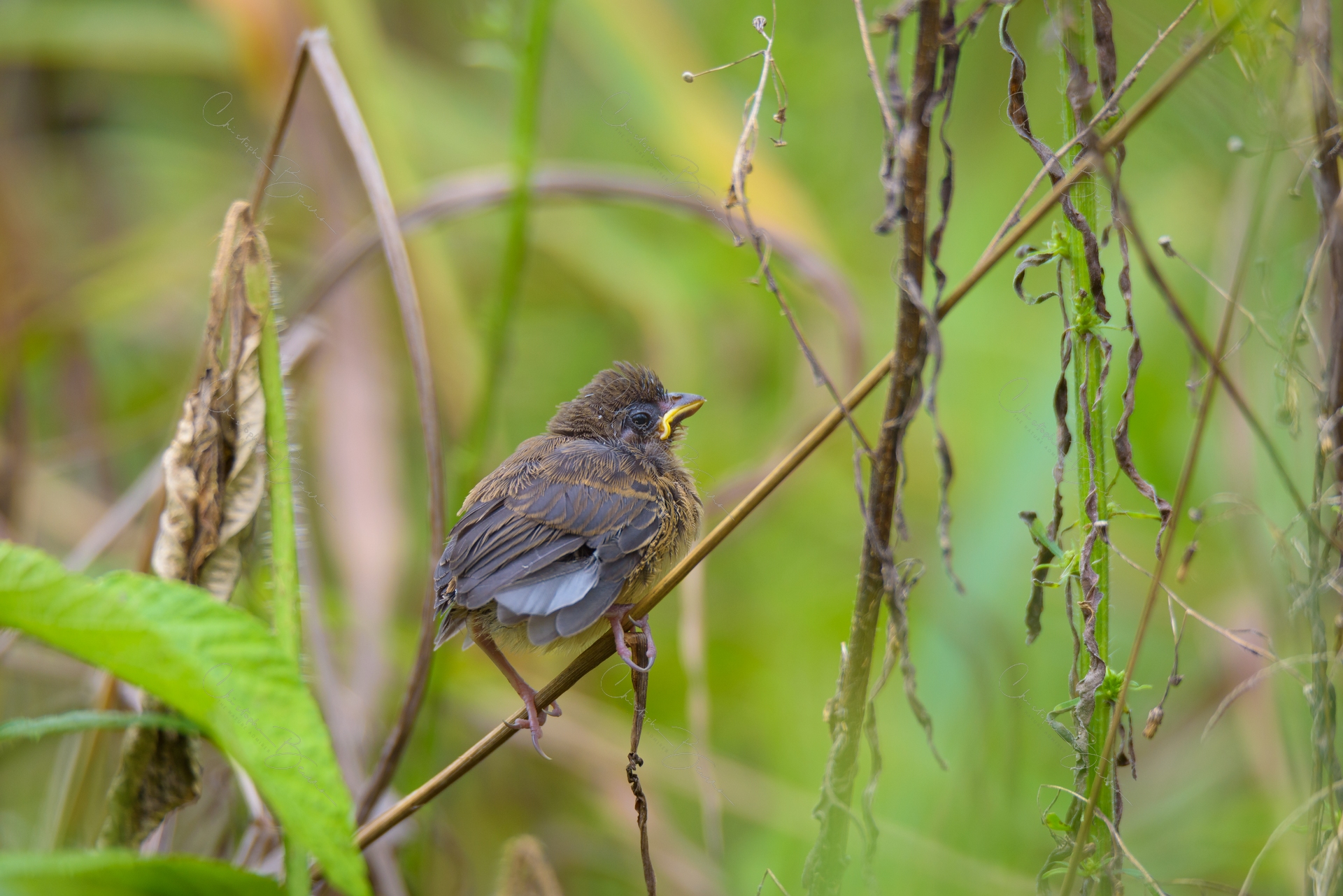
House Wren (Troglodytes aedon)

The House Wren is very common throughout Costa Rica, found in many habitats from plantain crops to open pastures; indeed as its name implies, they frequently approach homes and even construct their nests under the ceilings. It almost has not distinctive features, being brown overall with very fine barring on the wings. Its song is high pitched and composed of a great variation of chips and whistles, a delight to hear such a complex melody. They usually jump from one place to another very rapidly, not remaining in a single place for long.

White-winged Dove (Zenaida asiatica)

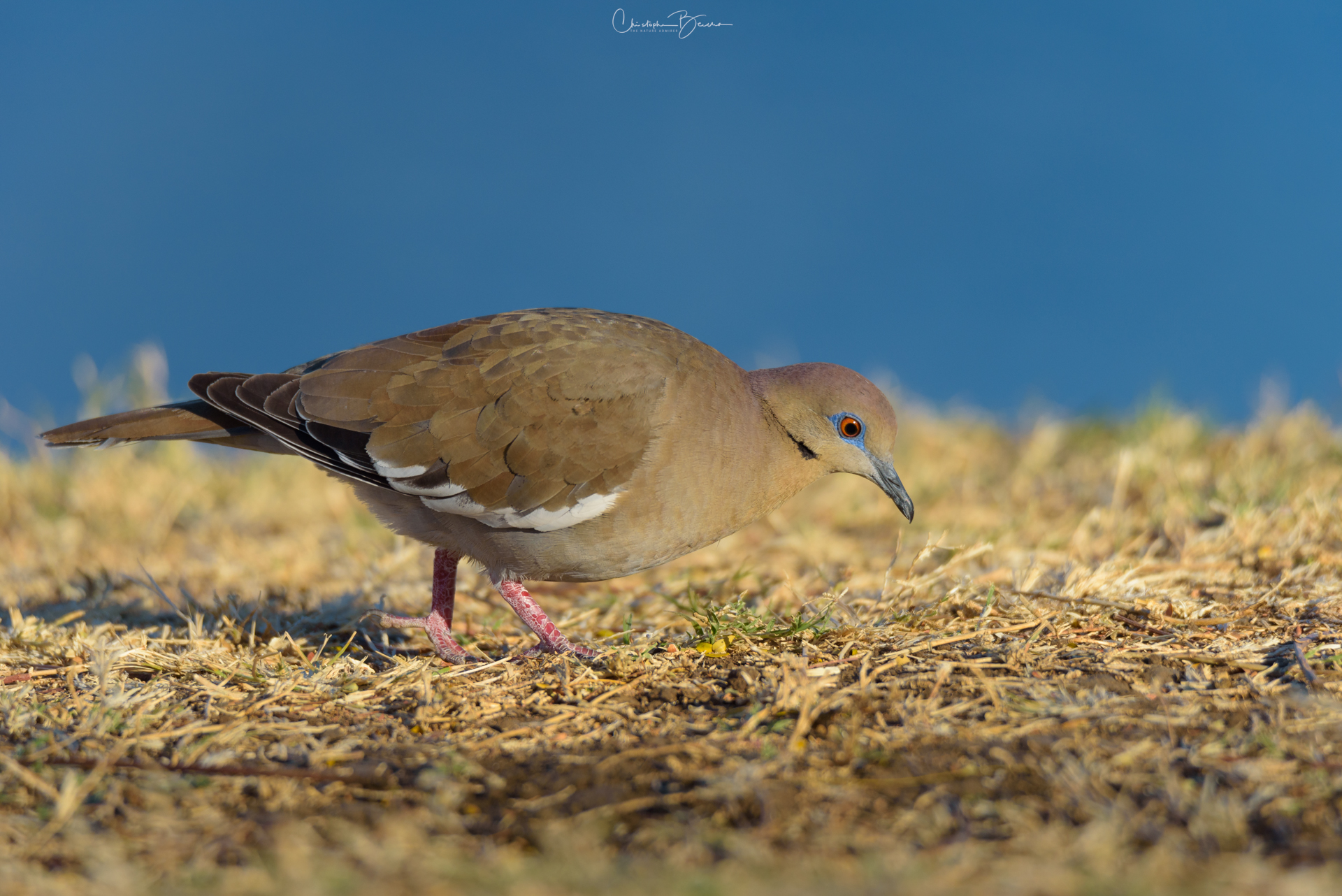
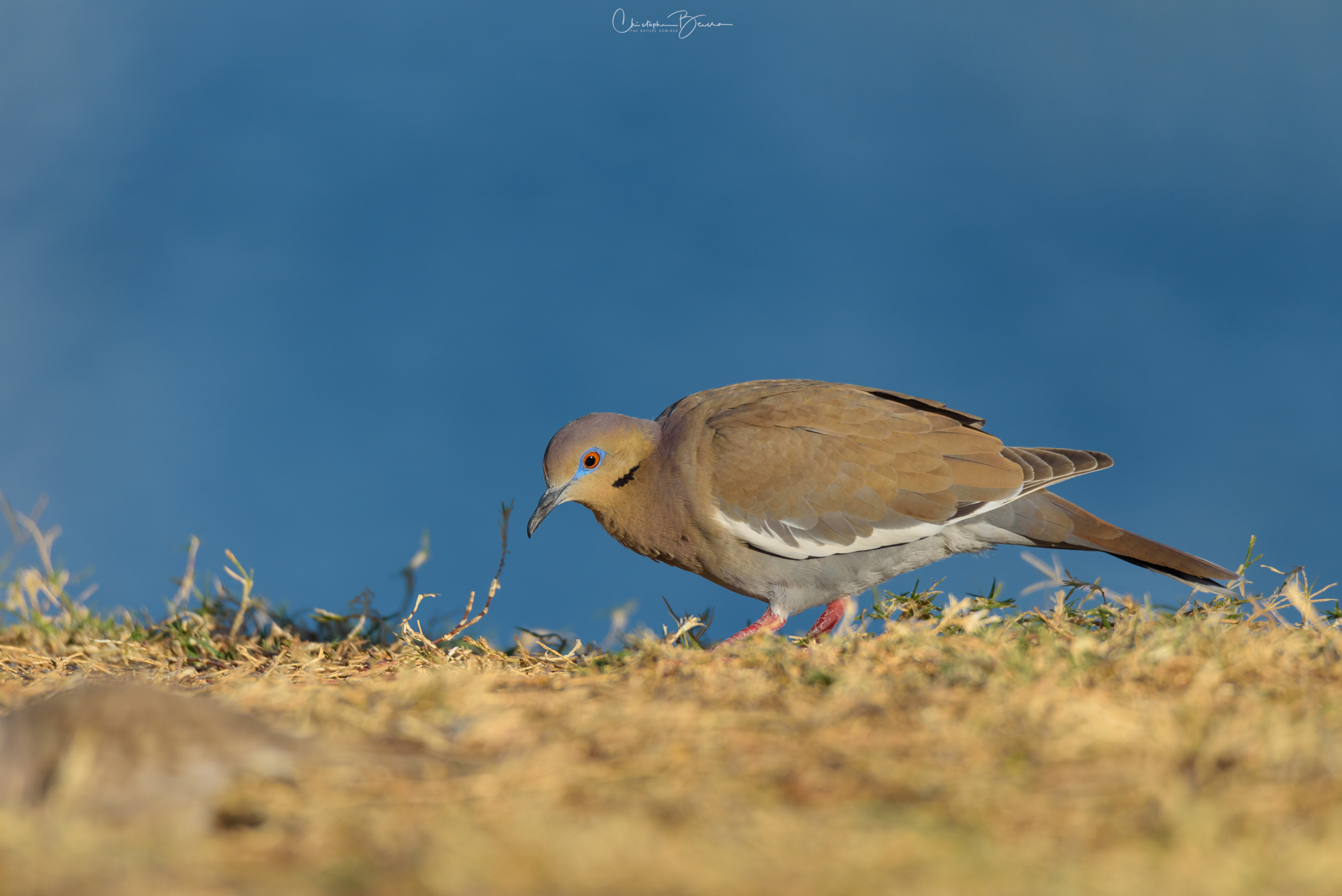
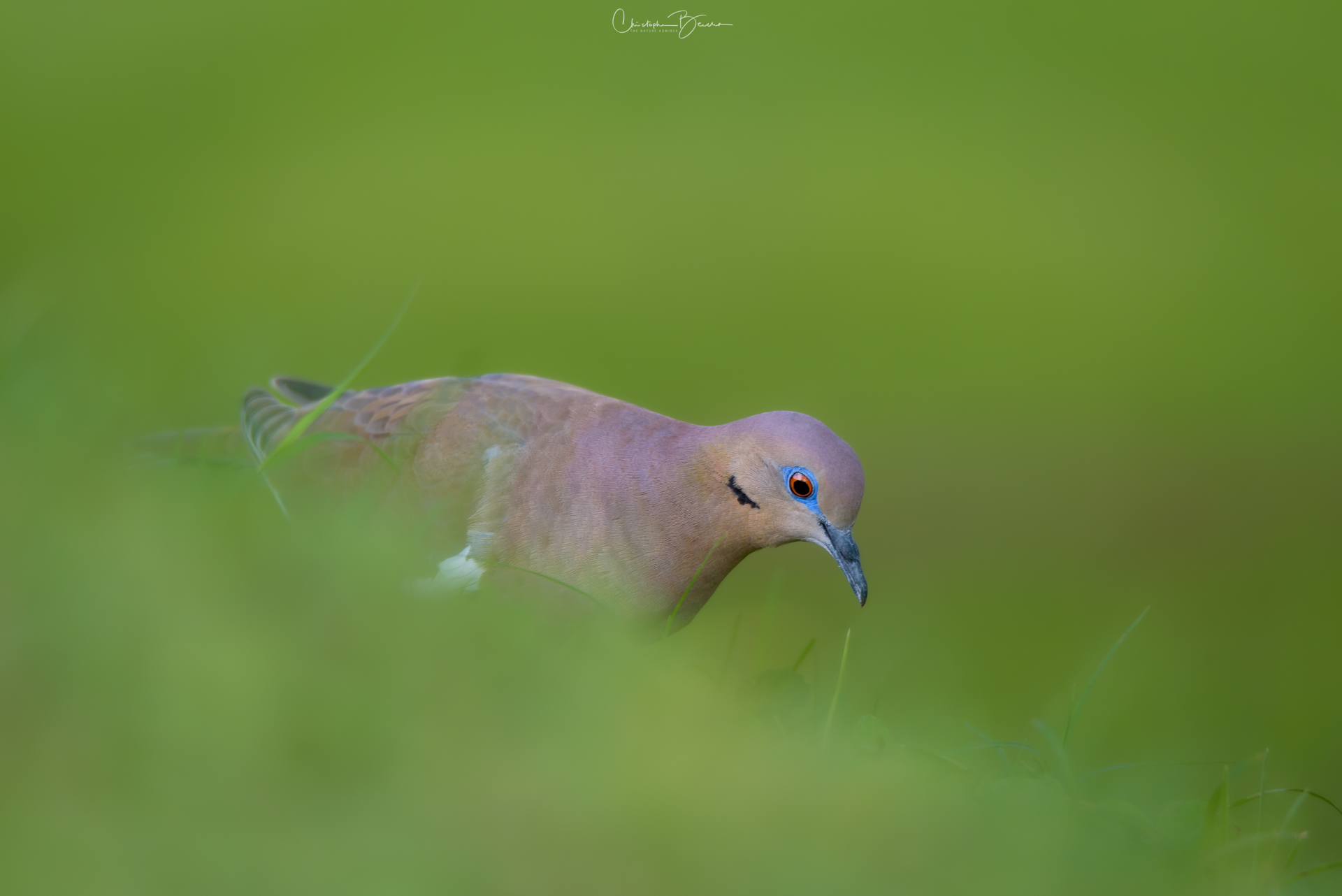
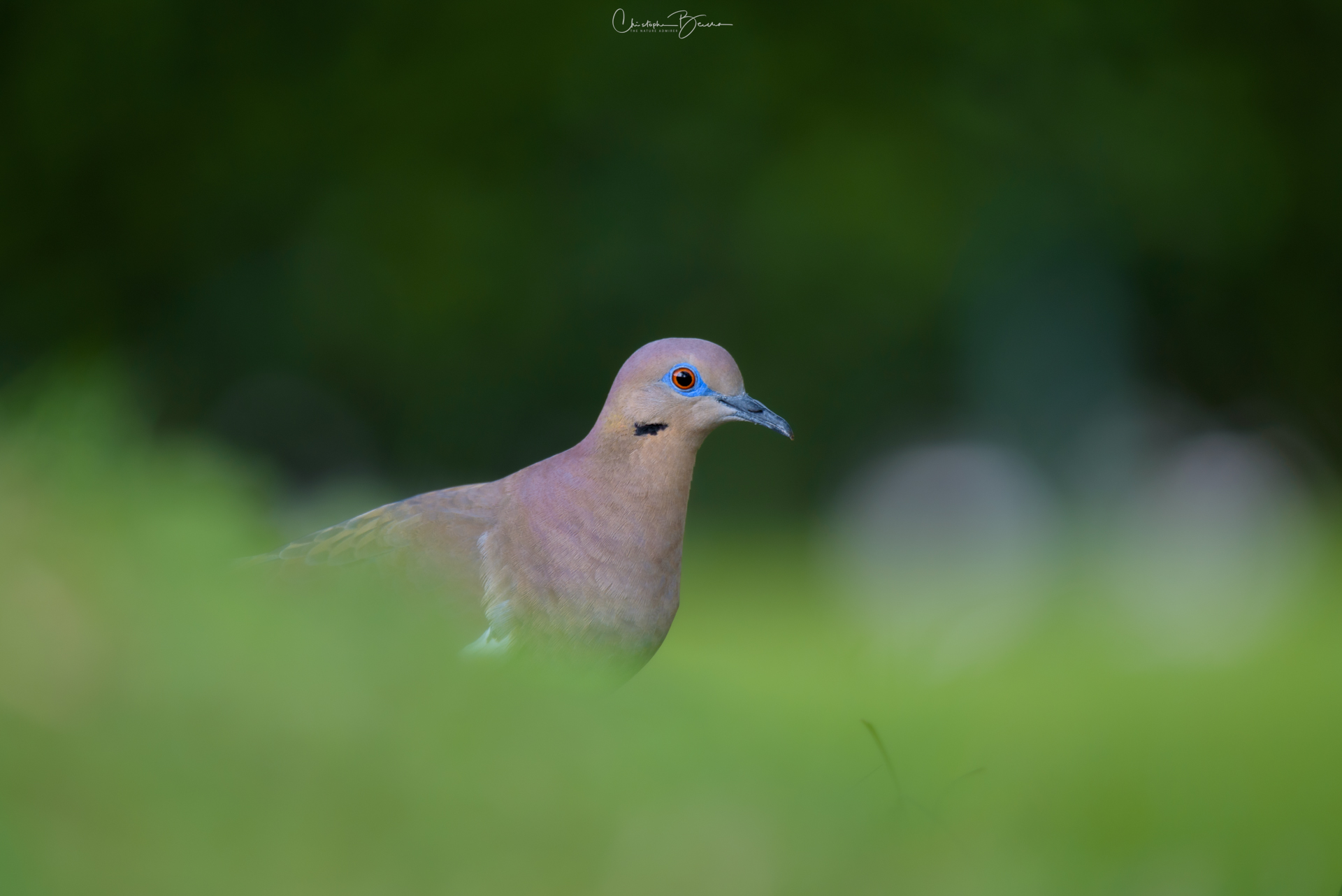
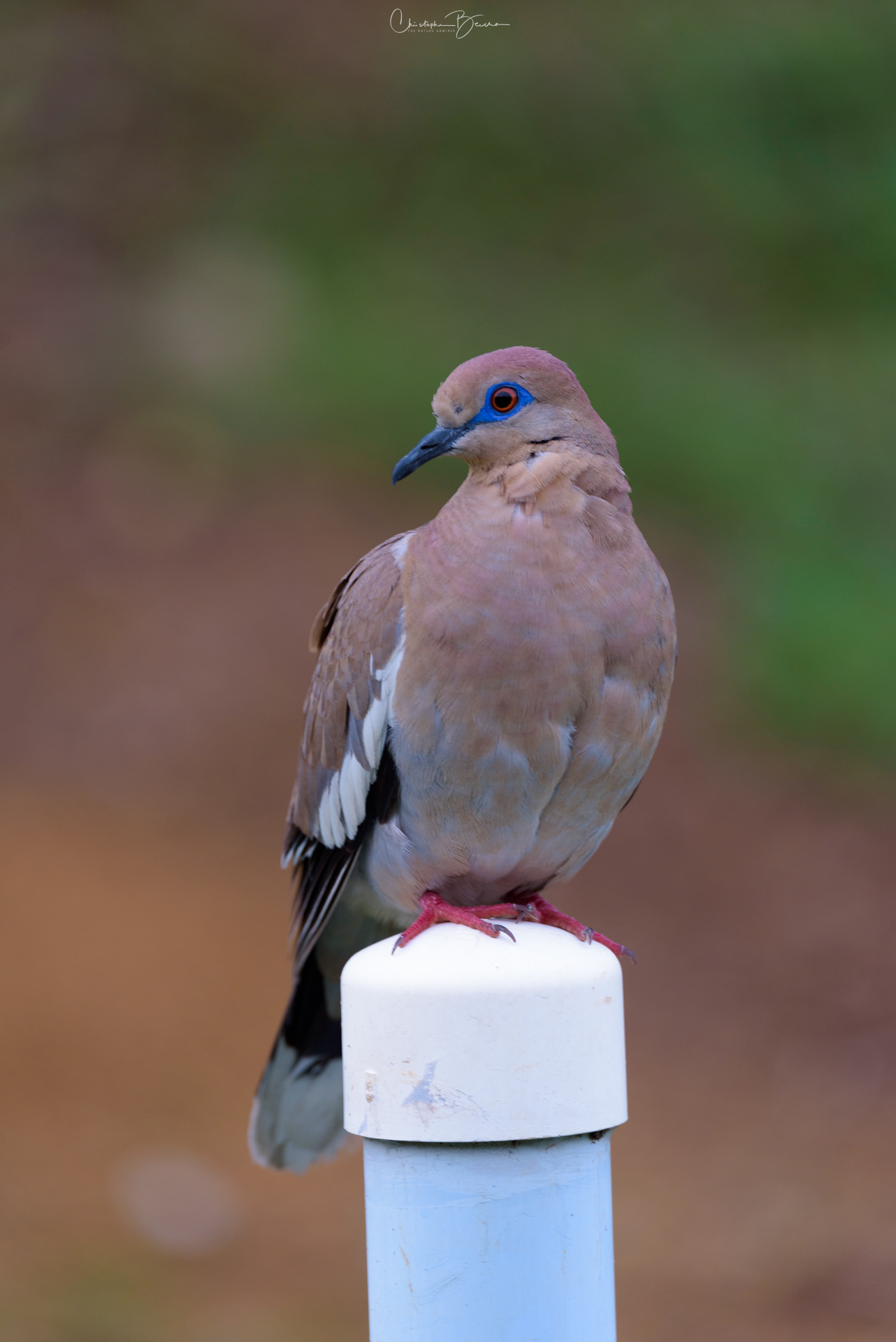
The White-winged Dove has pretty much colonized Costa Rican cities; every few meters you can hear an individual with its characteristic “Who-cooks-for-you” call. I have seen them perched in utility wires, as well as in any kind of tree. It is also interesting that as they sing, they display by raising their wings and then returning to the normal position. This is the only dove that I know makes a display together with its call. It is very similar to the White-tipped Dove in terms of size and body shape, however the White-tipped does not have white feathers on the wings, has lighter underparts and its tail feathers display white tips, from which it gets its name. The iris is red, with blue orbital skin that contrast very nicely with the dull feather pattern.

Clay-colored Thrush (Turdus grayi)

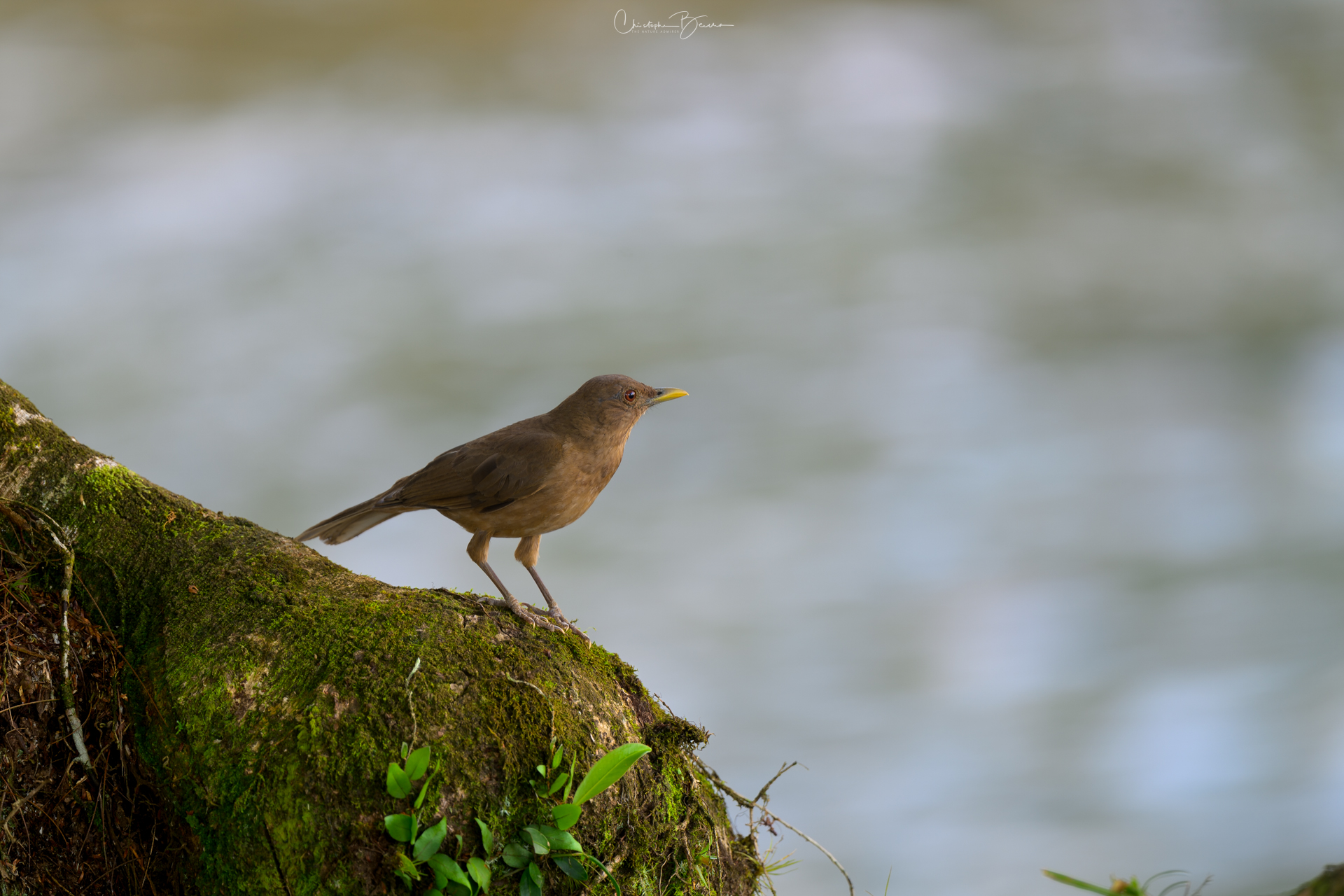
The national bird of Costa Rica, known locally as “Yigüirro”, has a beautiful song and can be found almost anywhere in the territory. It is said that their song marks the start of the rainy season, so in past century, farmers would schedule their crops accordingly. It is now known that males sing to attract females for mating, and that the start of the rainy season just coincides with the start of the breeding season for this bird. They like to eat insects, but also eat fruit like papaya and banana. They are most fond of the ground, where they move along by hopping instead of walking.