Page 4 of 6

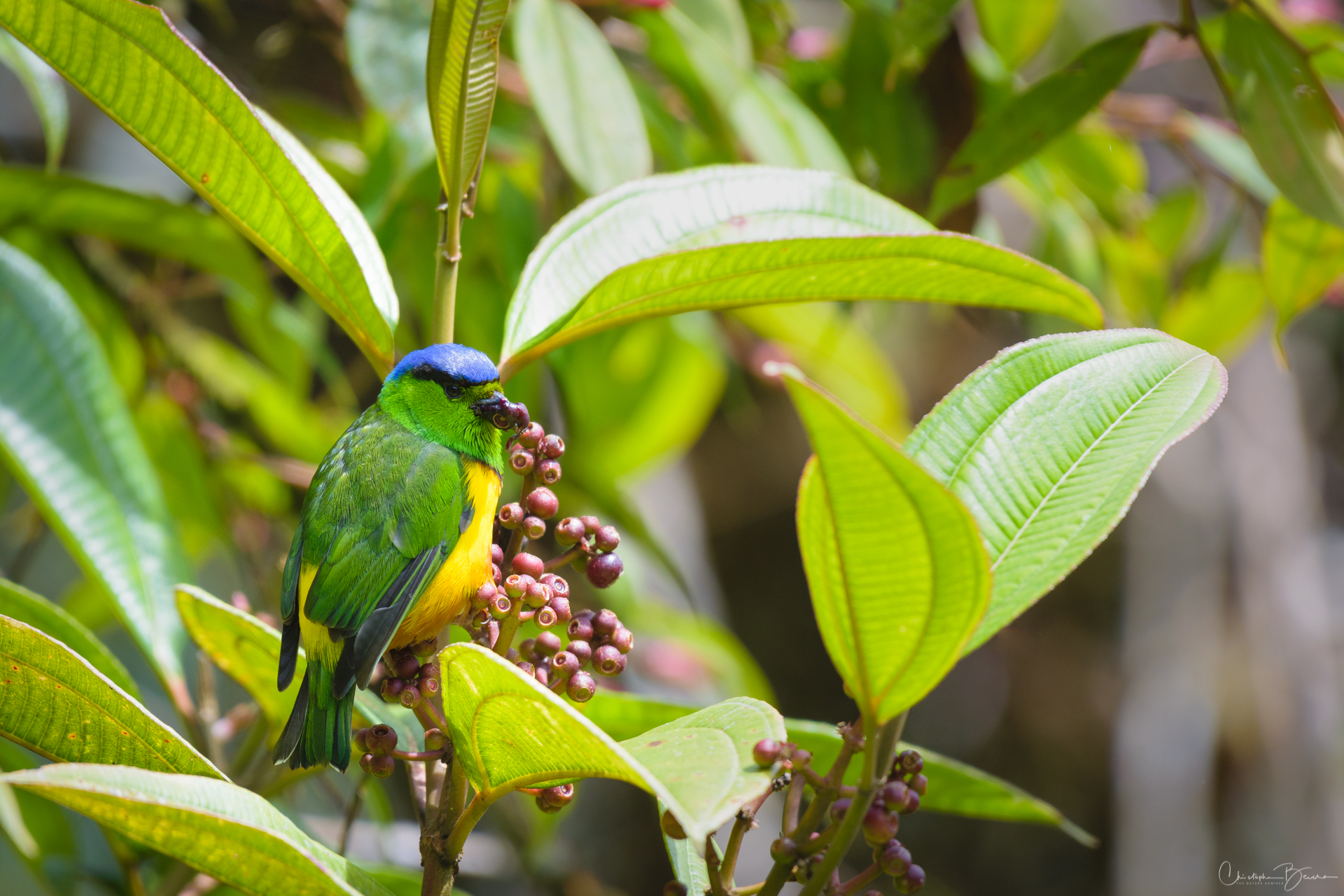
Chestnut-breasted Chlorophonia (Chlorophonia pyrrhophrys)

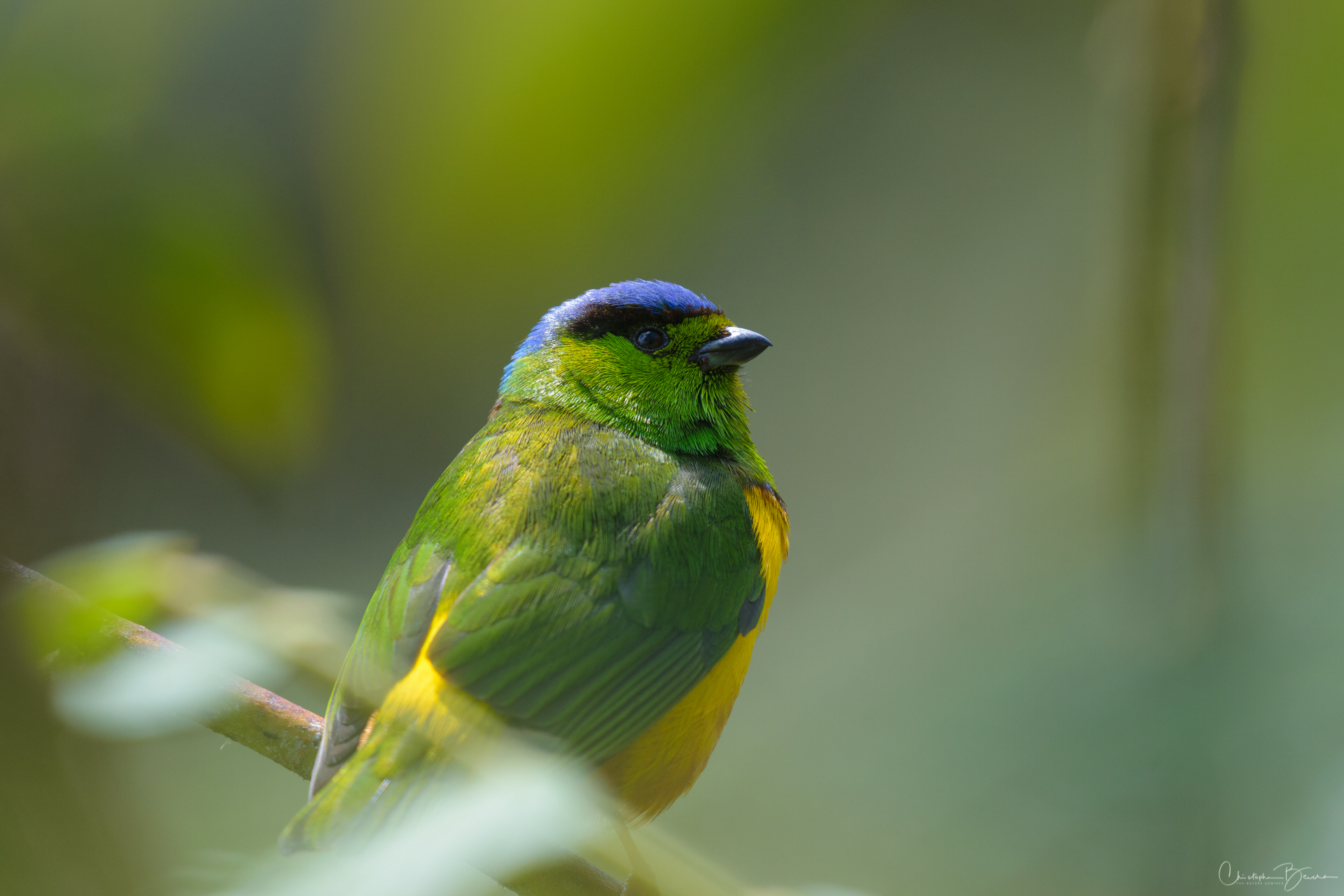
The Chestnut-breasted Chlorophonia has a very descriptive name, although I could not get any pictures where that breast is visible. Its colors range from dark green on the back and wings, lighter green on the throat and face, yellow rump, black supercilliary and blue cap. On the underside, the male features a yellow belly with a chestnut breast, whereas the female is mostly green below. They like to eat small fruits and do not seem to be too frightened of people. As a matter of fact, one bird almost perches on my lens but preferred to land on a nearby bush that could provide actual food. It stayed for about half an hour, not feeling threatened at all by us shooting pictures at him.
Buff-tailed Coronet (Boissonneaua flavescens)

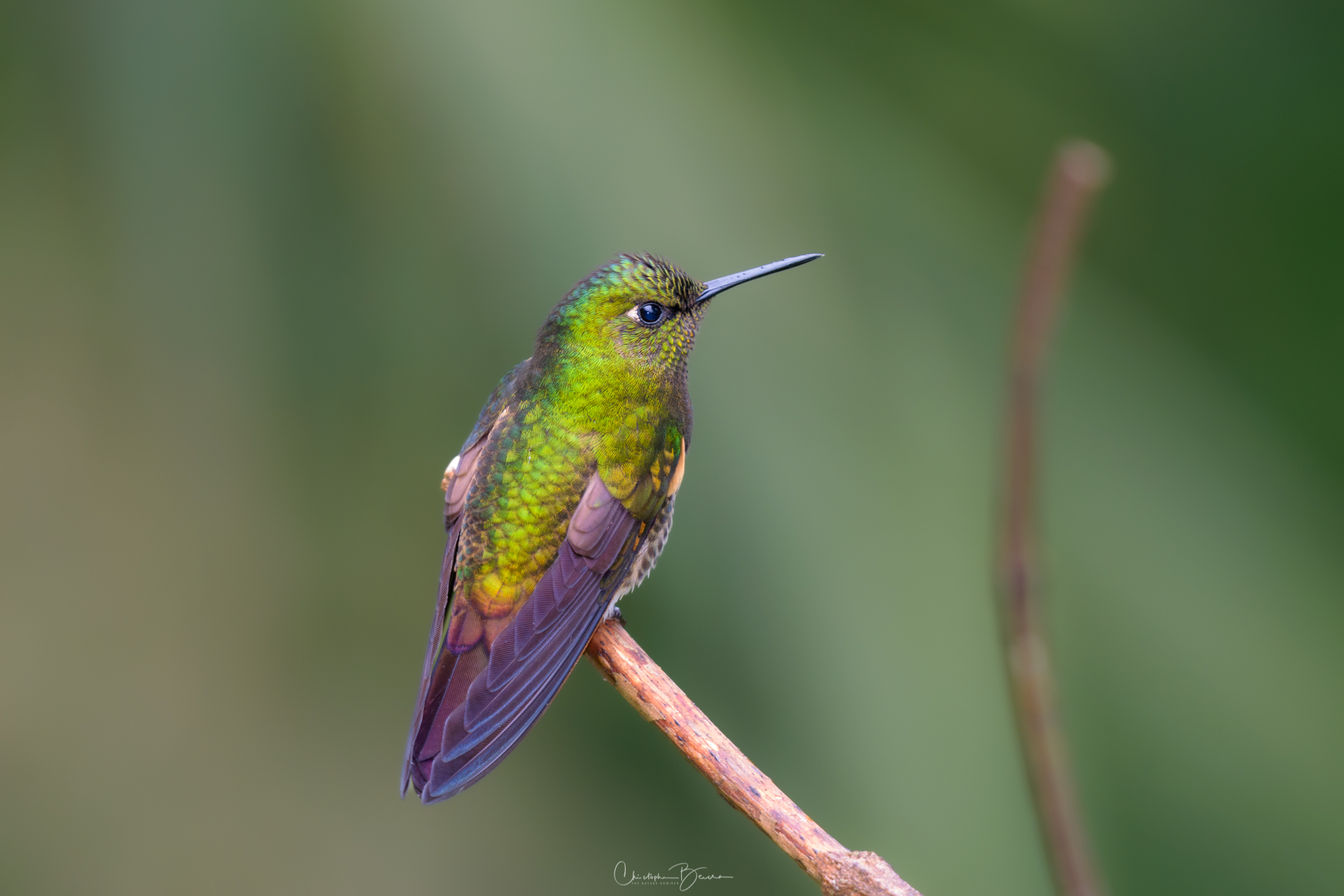
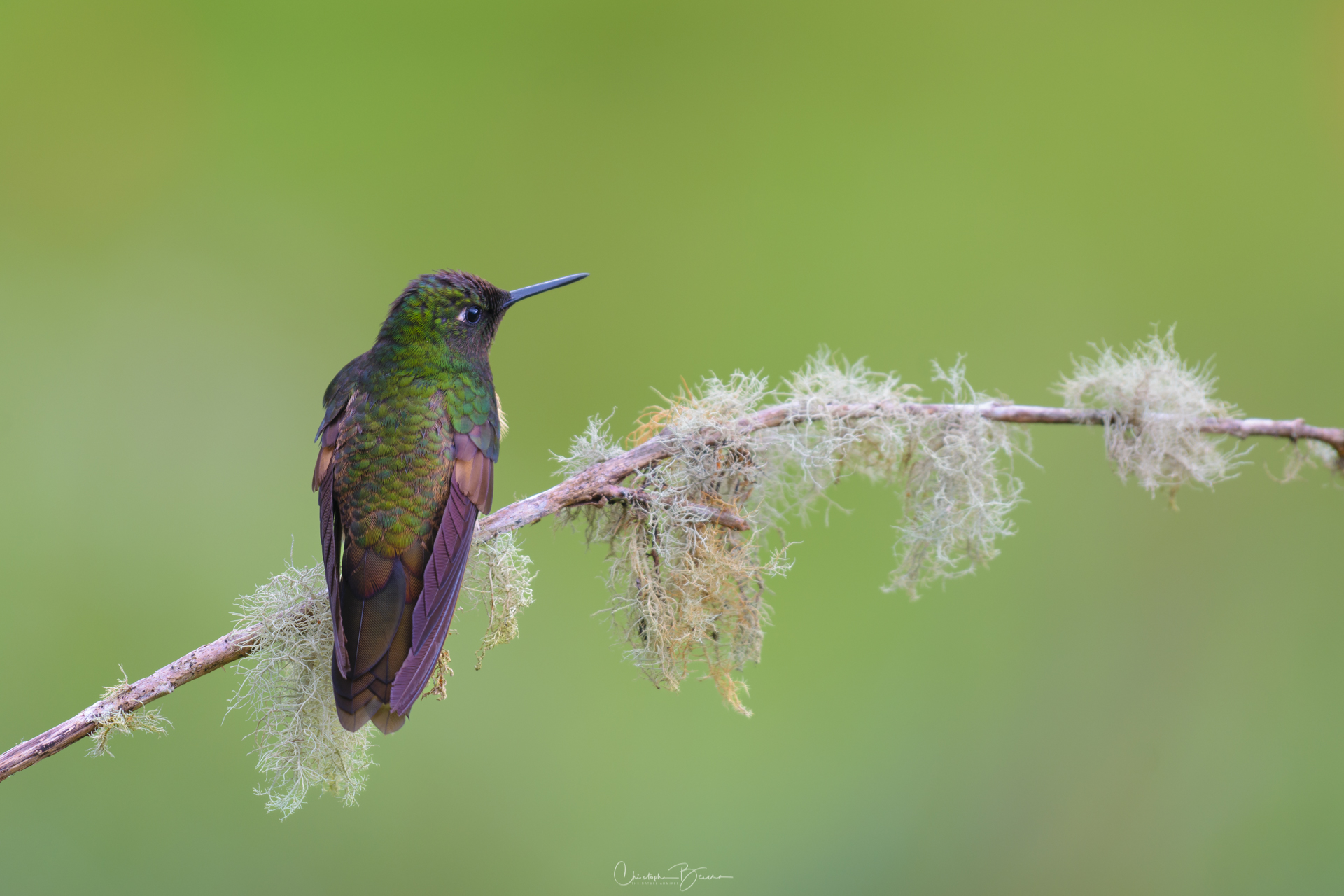
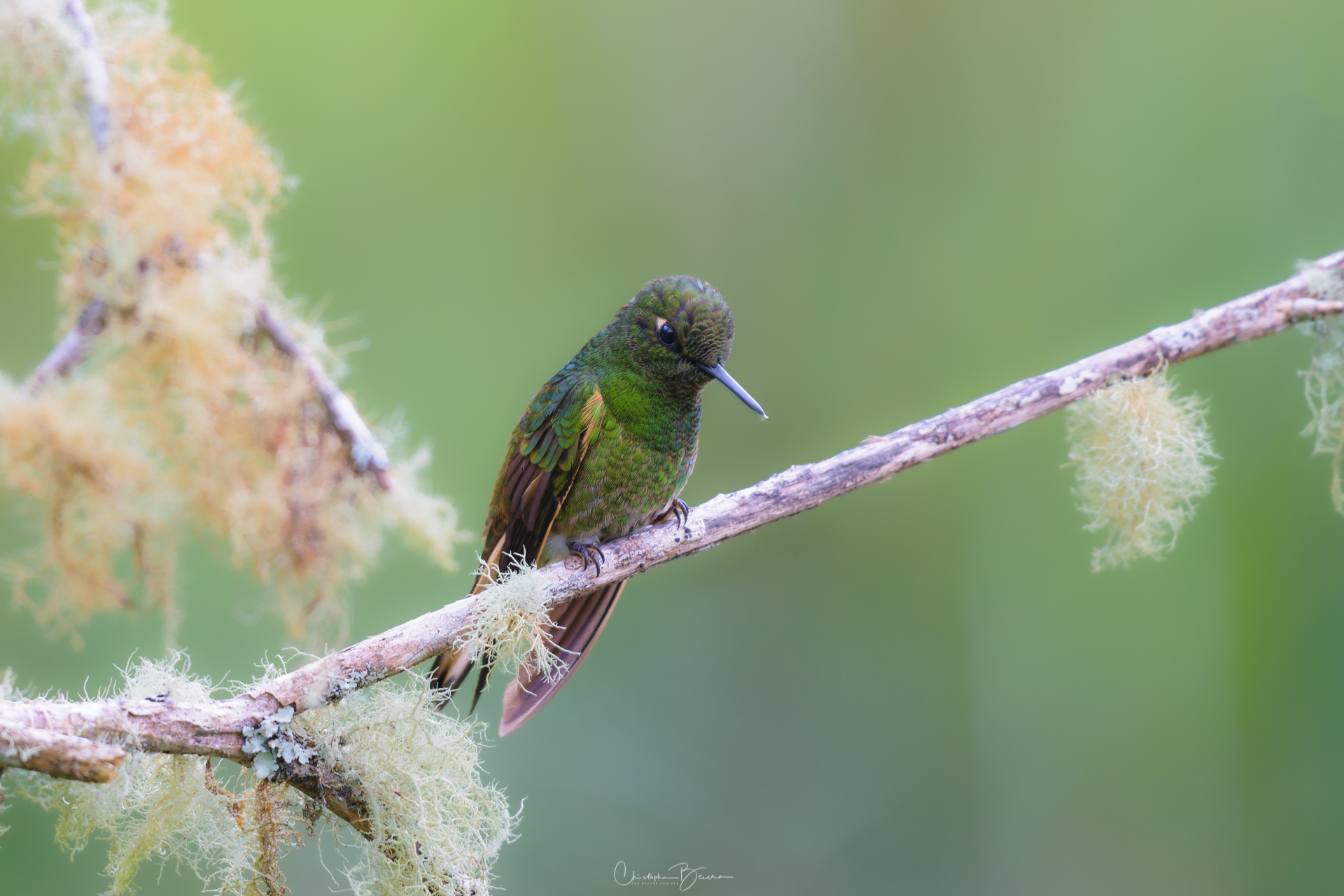
The Buff-tailed Coronet is among the most common hummingbirds in the areas of Colombia we visited. Its body color is green in general, with a scaled pattern on the belly, although the back can look reddish under the right light. The wings are brown and are long enough to cover the tail when folded down and perched. The white postocular spot is a defining feature, along with the buffy shoulders and white feathers that cover their feet, similar to the Booted Racket-tail. The bill is short and straight, entirely black. They like to perch for a few minutes in small branches, and when their feel their personal space is threatened by other individuals, they may put up a fight on the wing. Sometimes they perched alone, peacefully resting before flying again to drink more nectar, both from nearby flowers and from the feeders. It may not be the flashiest in terms of colors and anatomy, but it sure is beautiful to watch. In Rio Blanco Natural Reserve where we first saw them, they swarm in big numbers around the feeders, fighting each other and with other species.
Booted Racket-tail (Ocreatus underwoodii)

The Booted Racket-tail is simply a marvel of nature. It has a long tail, which is composed of bare rachises ending in a wide racket-like structure. At first glance, it can resembled the Long-tailed Sylph, but the tail’s shape is unmistakable once taken notice. The long, slim tail ending in a wide feather reminds me of a Motmot, albeit a very small one. Other than its most conspicuous trait, it has white feathers covering its legs, which explains why it is called Booted. The body is mostly green but iridescent like many hummingbirds, making it change in coloration with the view angle. The black bill is straight and short.

Andean Emerald (Amazilia franciae)

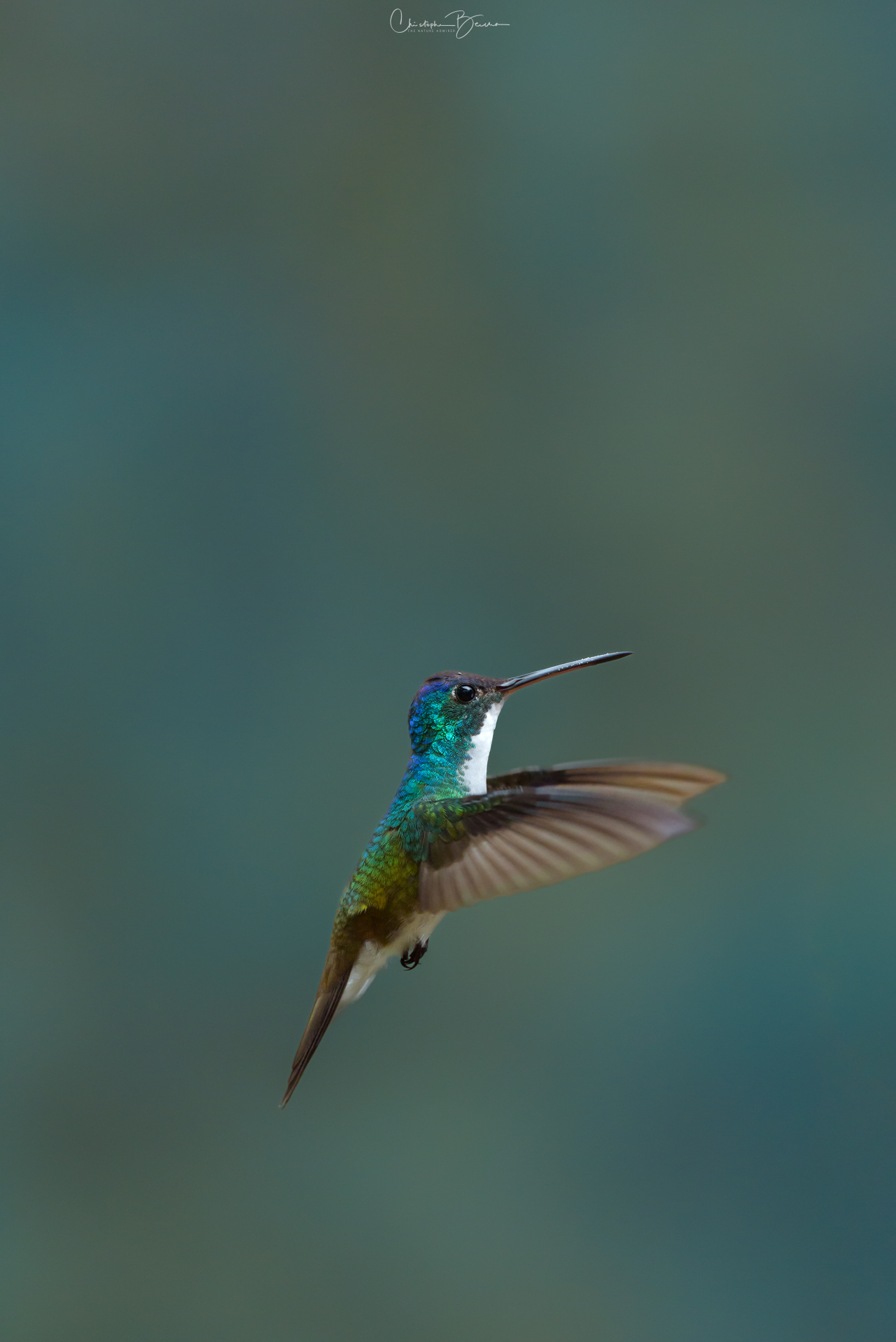
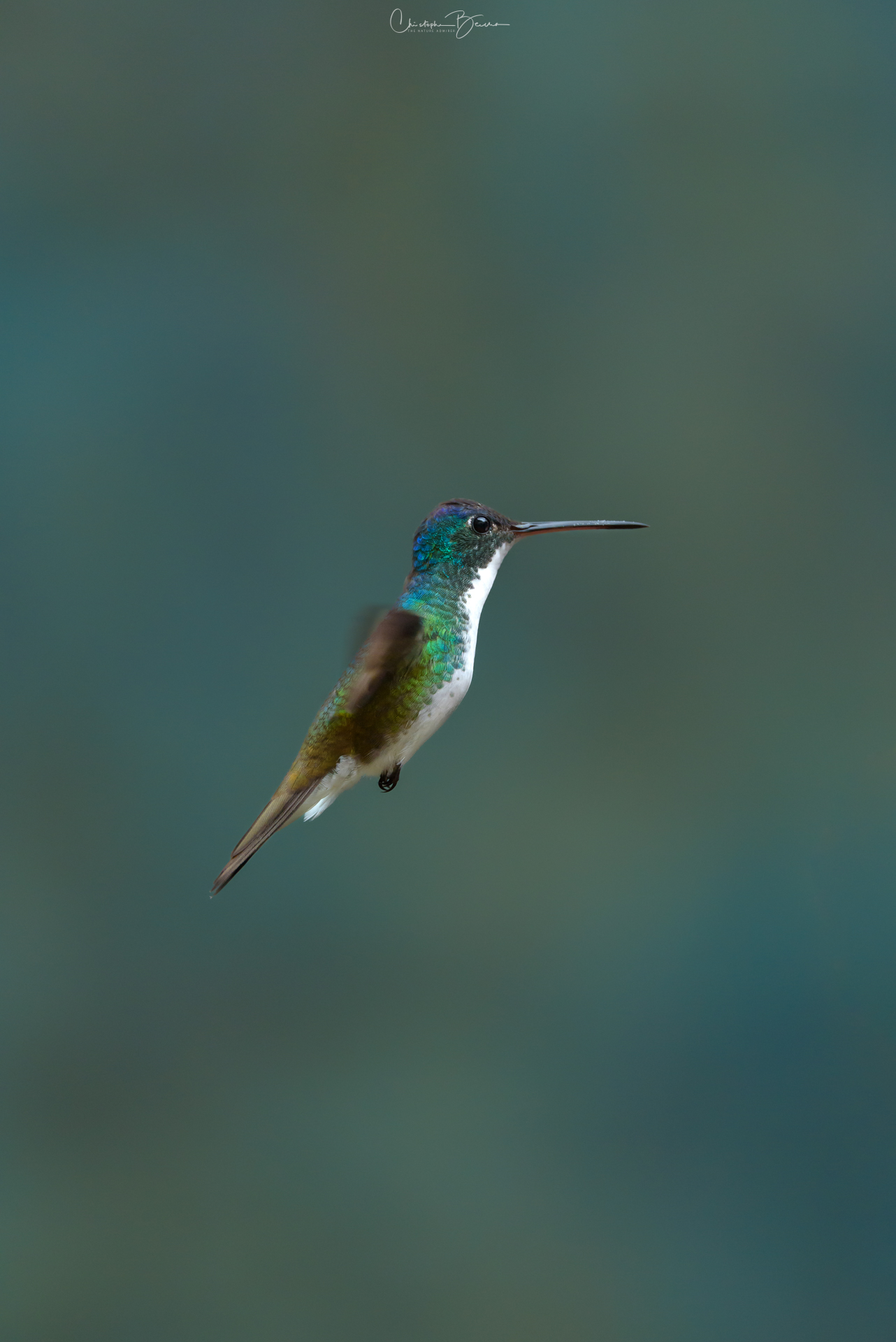
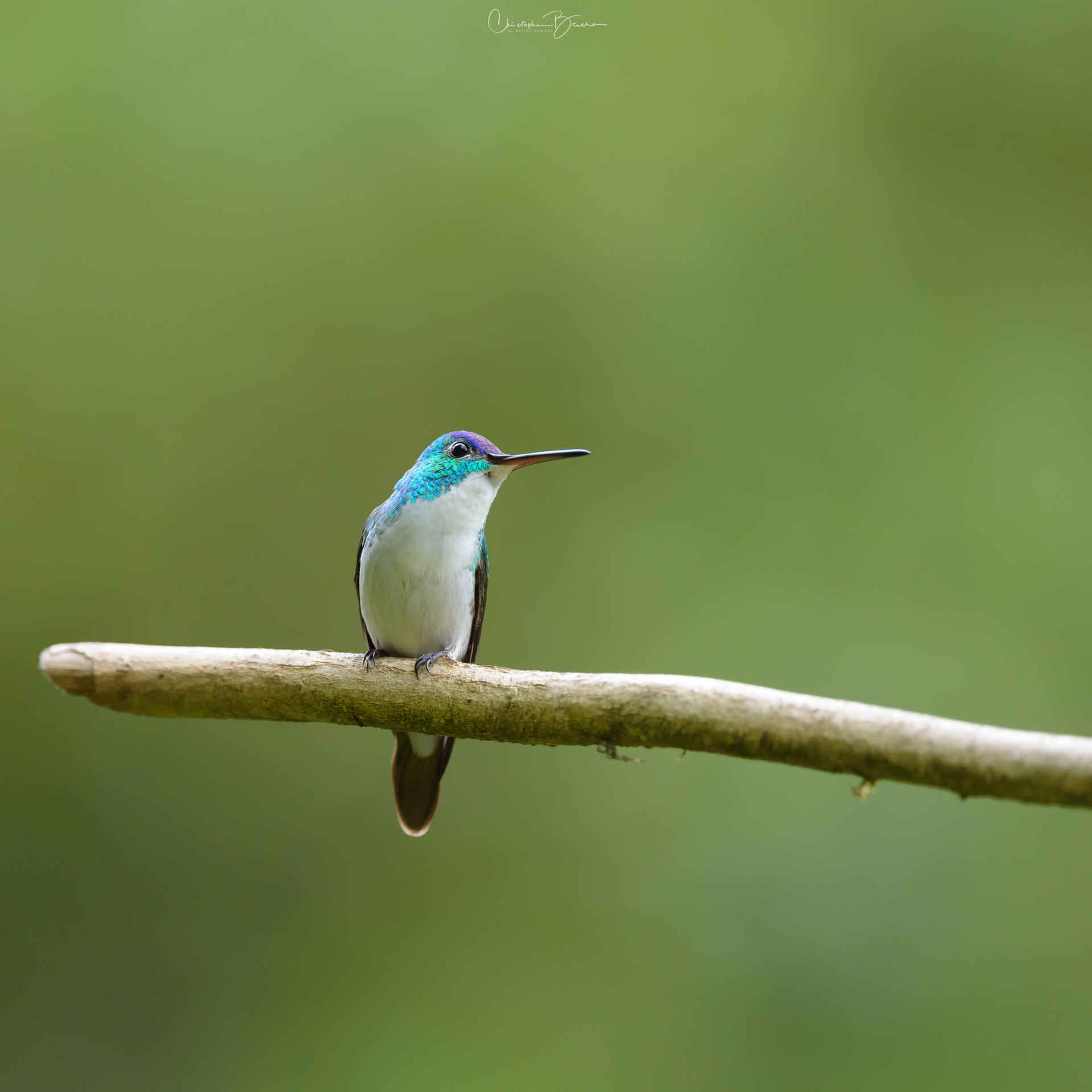
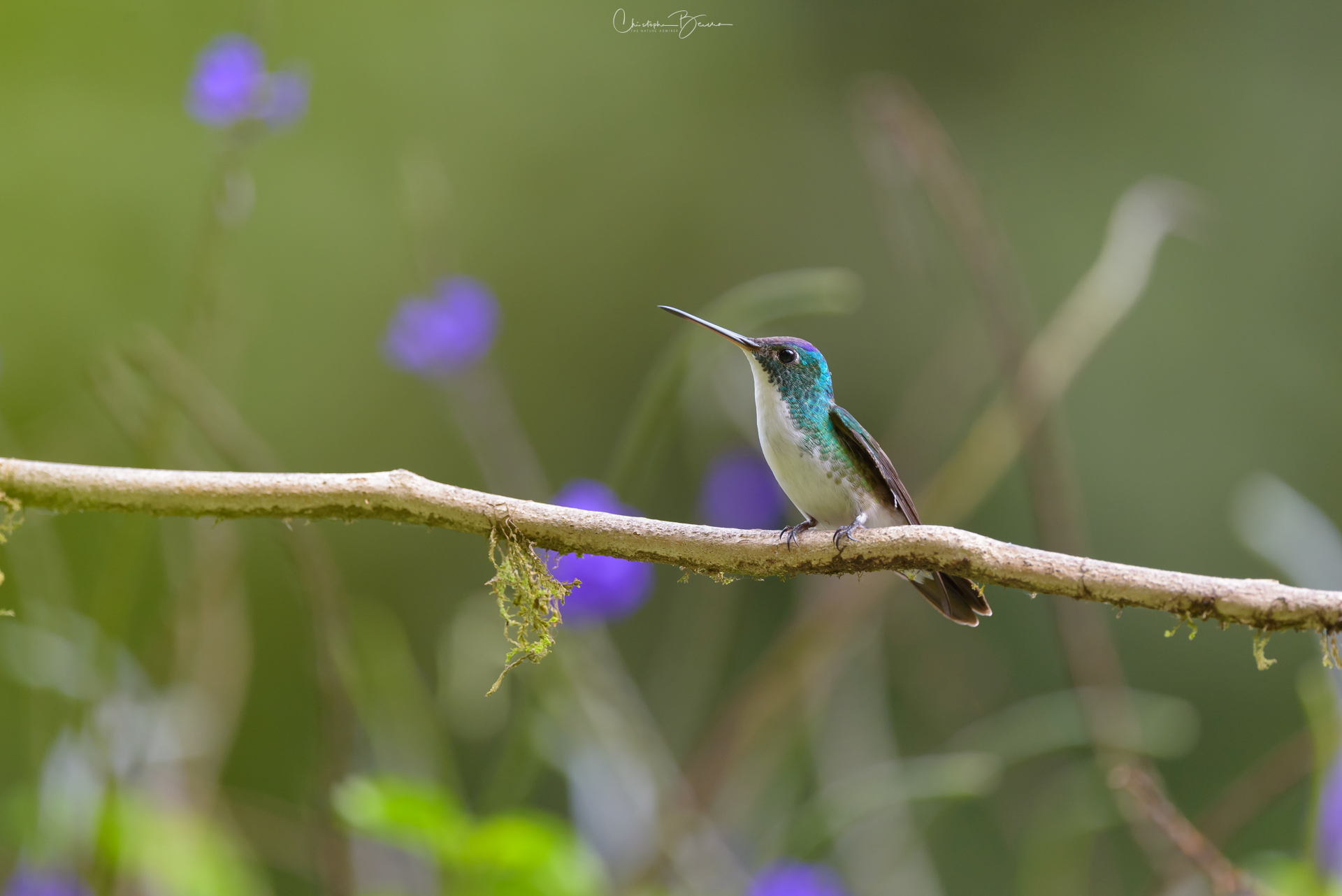
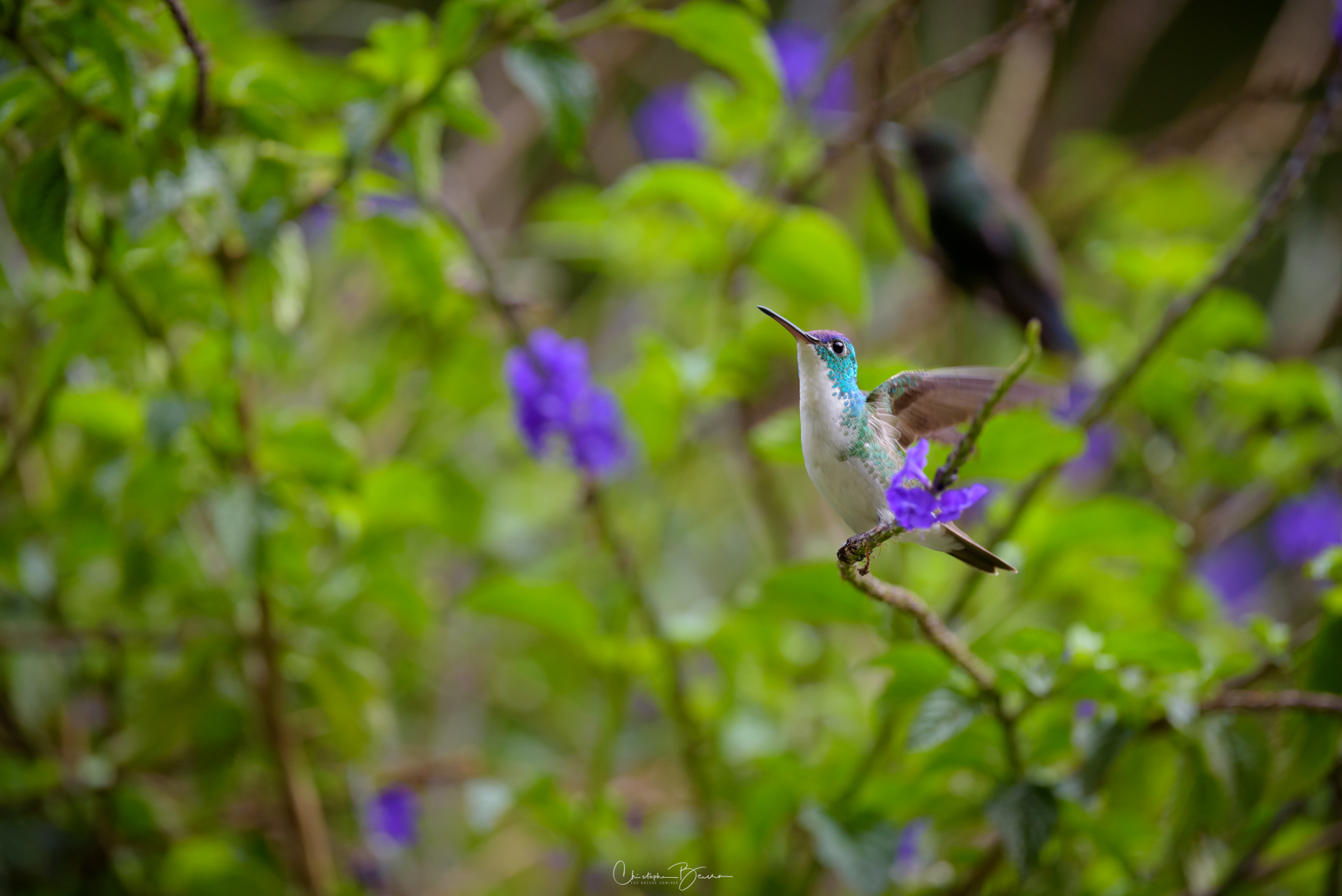
This is a medium-sized hummingbird that can be found in South America, specifically in Colombia, Ecuador and Peru. Males have a violet crown, while females have a green crown. It has iridescent plumage, like many other hummer species, which changes the color depending on the view angle and the angle of the light that bounces off it, giving away colors that look metallic and intense. In general it is green on the back and sides, white on the belly, chest and throat, and coppery in the upper tail. The bill is black, mostly straight and thin. The wings are brown, but glow blue when iridescent.

Variable Seedeater (Sporophila corvina)

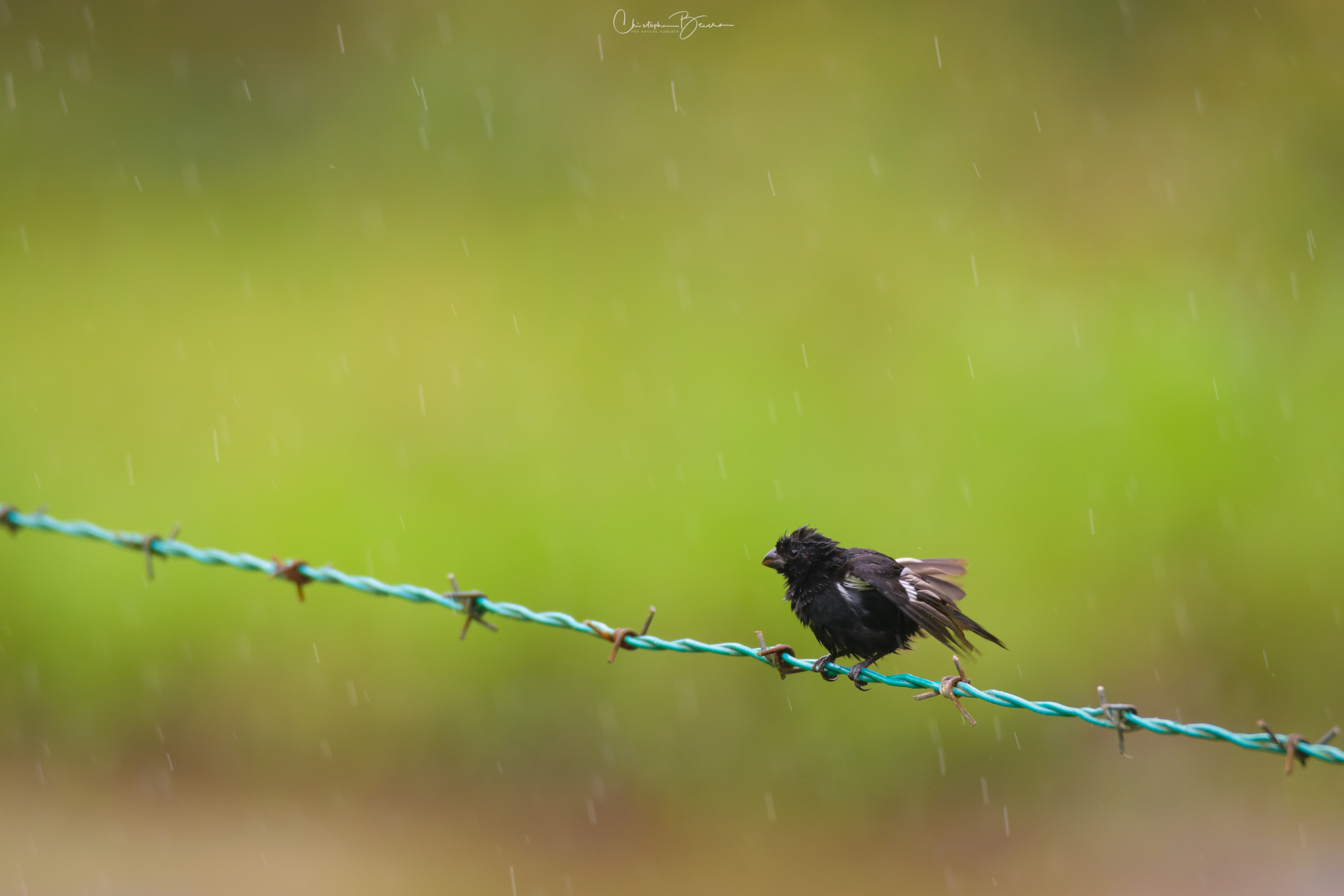
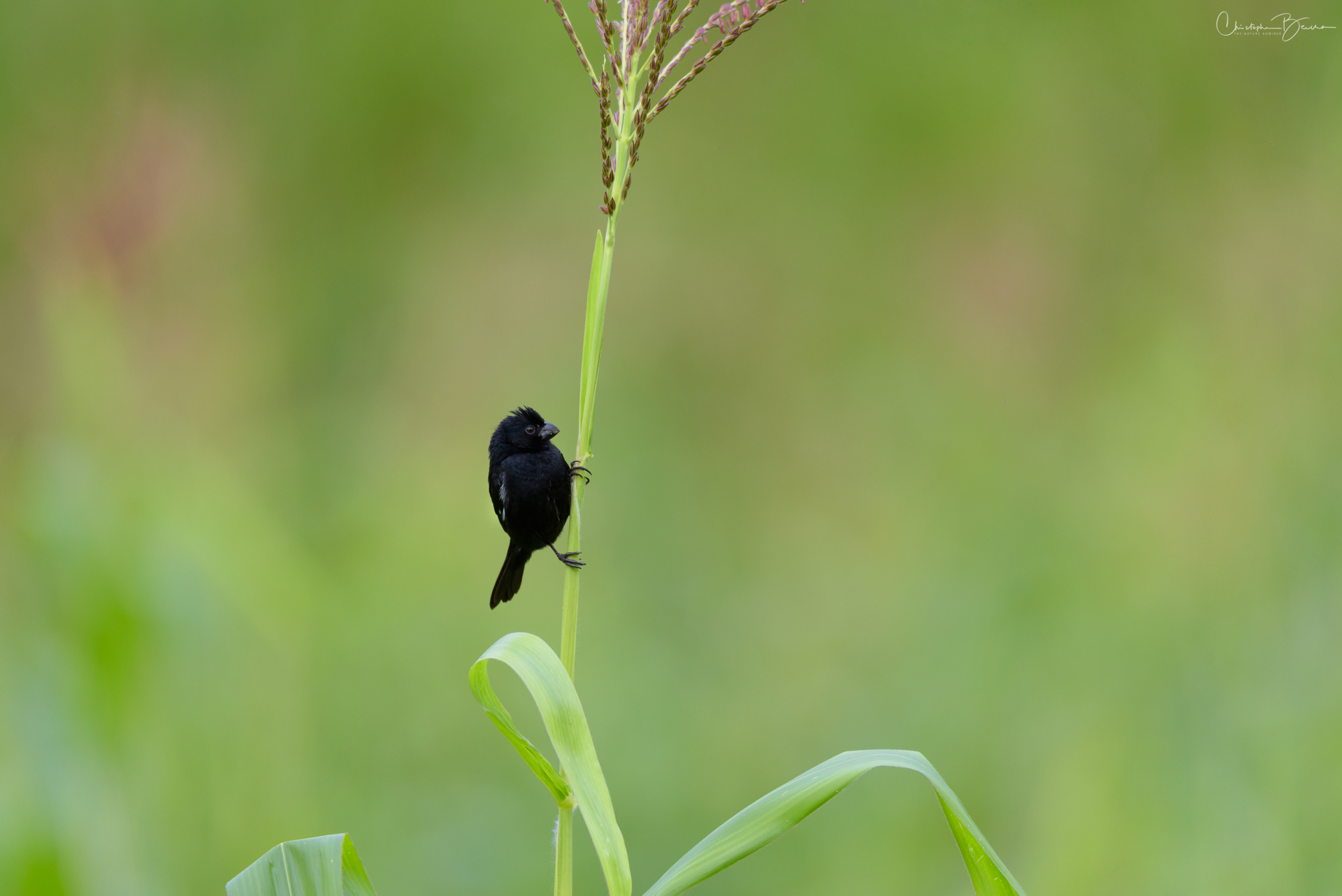
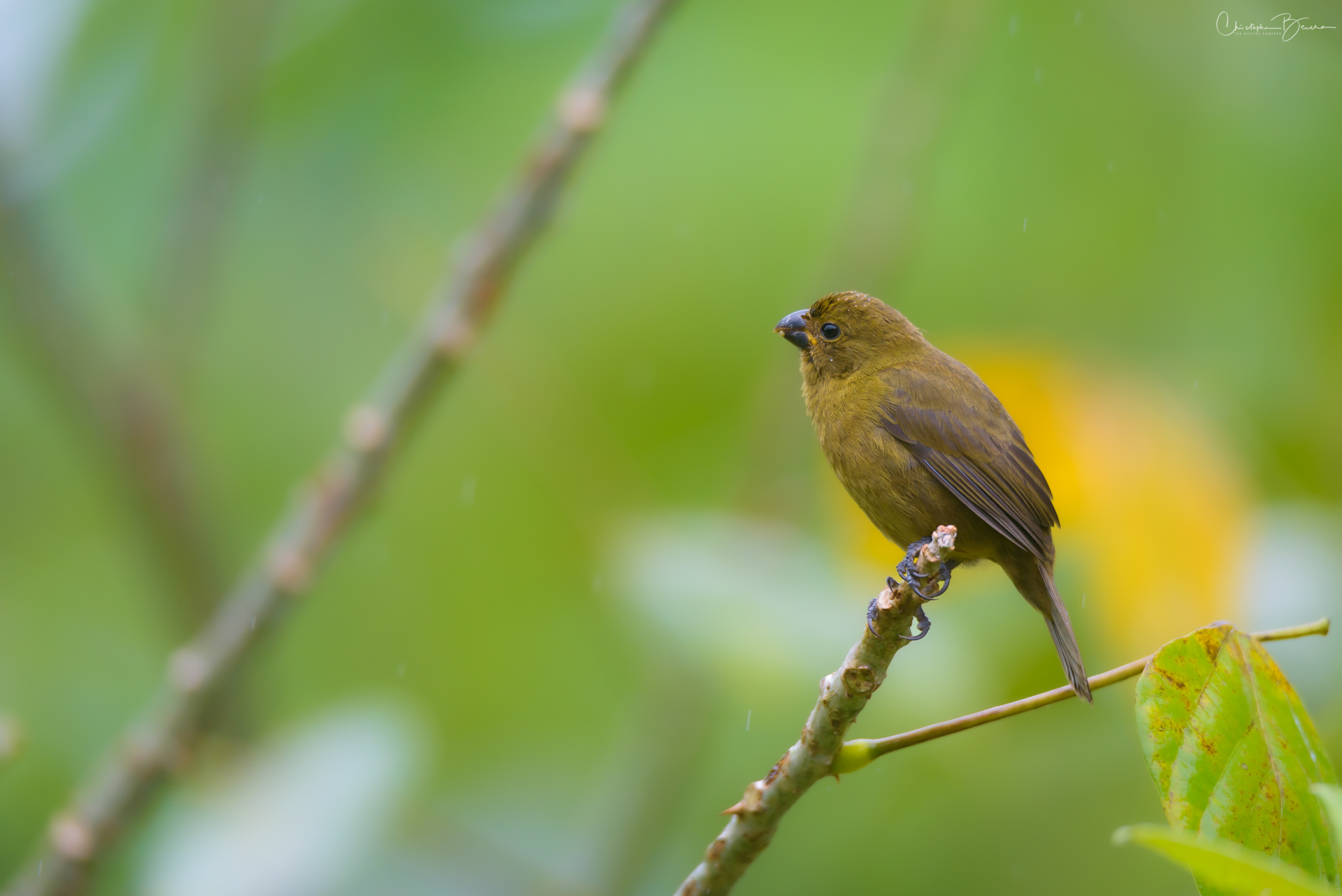
The Variable Seedeater is very common in Costa Rica, whenever there is grass either on lots or at the edge of roads. On the Caribbean side, the male is almost entirely black and looks pretty similar to the male Thick-billed Seed-Finch, but is smaller in size; on the pacific side, the male has white belly and rump. The female is drab brown, also very similar to the female Thick-billed Seed-Finch, but smaller and with duller colors. The juvenile has similar coloration to the female. In terms of behavior, it is common to see this species jumping into the air in an acrobatic fashion and then just fall in the same perch, which is part of the mating display of the male trying to attract nearby females.

Green Thorntail (Discosura conversii)

The Green Thorntail has a tail with a unique shape, where the feathers are disjoint and look like an X. While generally the body of the male is glittering green, its head looks grayish unless seen from the perfect angle. In low light, the head may take on dark purple tones. Both male and female show a white band on the back. The female also has white on the cheeks and belly, interspersed by black markings which join in a stripe running through the center of the belly. These are very small hummingbirds with a flight pattern very much like a bee, being smooth and slow, instead of the very fast movements that larger hummingbirds display.

Green Ibis (Mesembrinibis cayennensis)

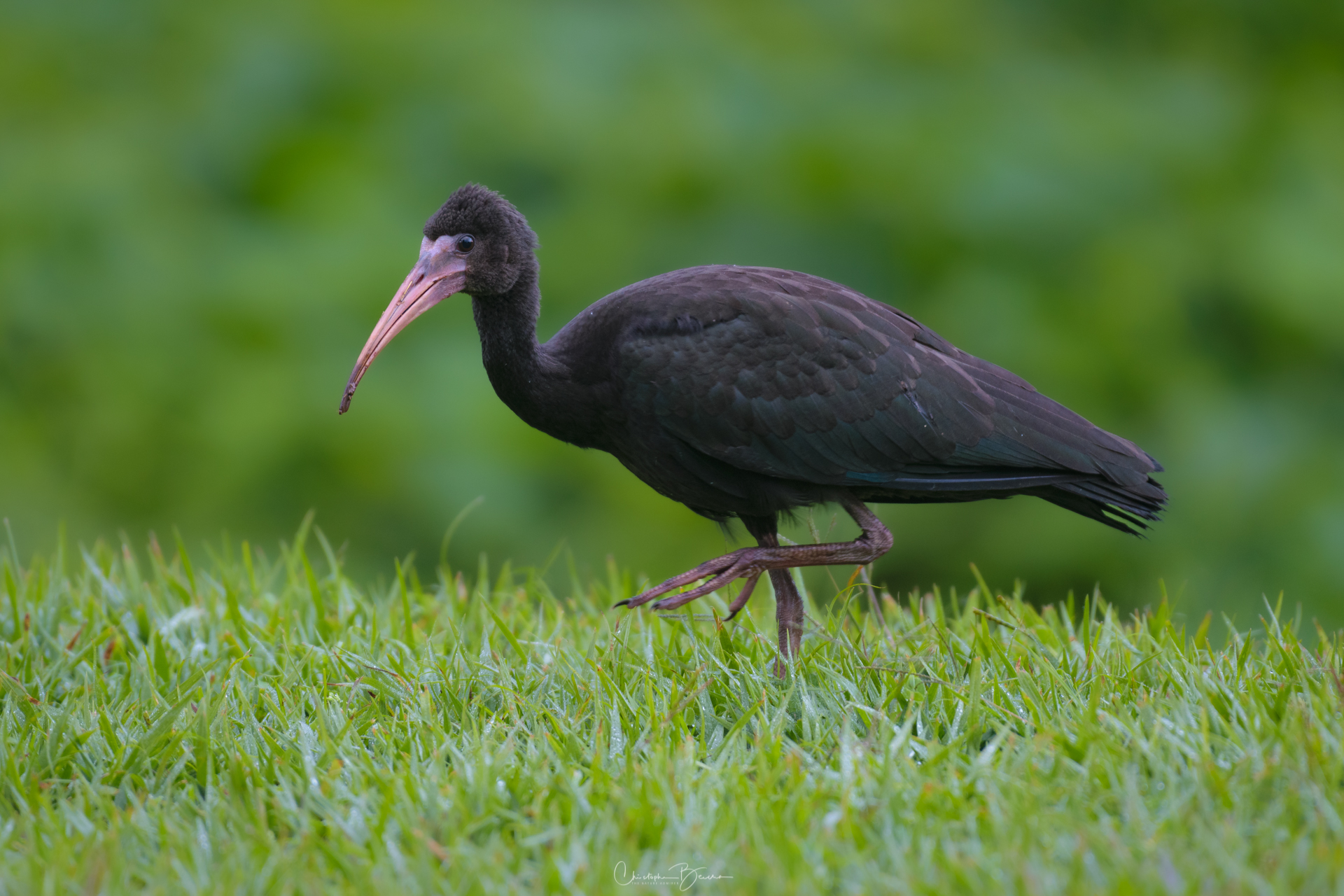
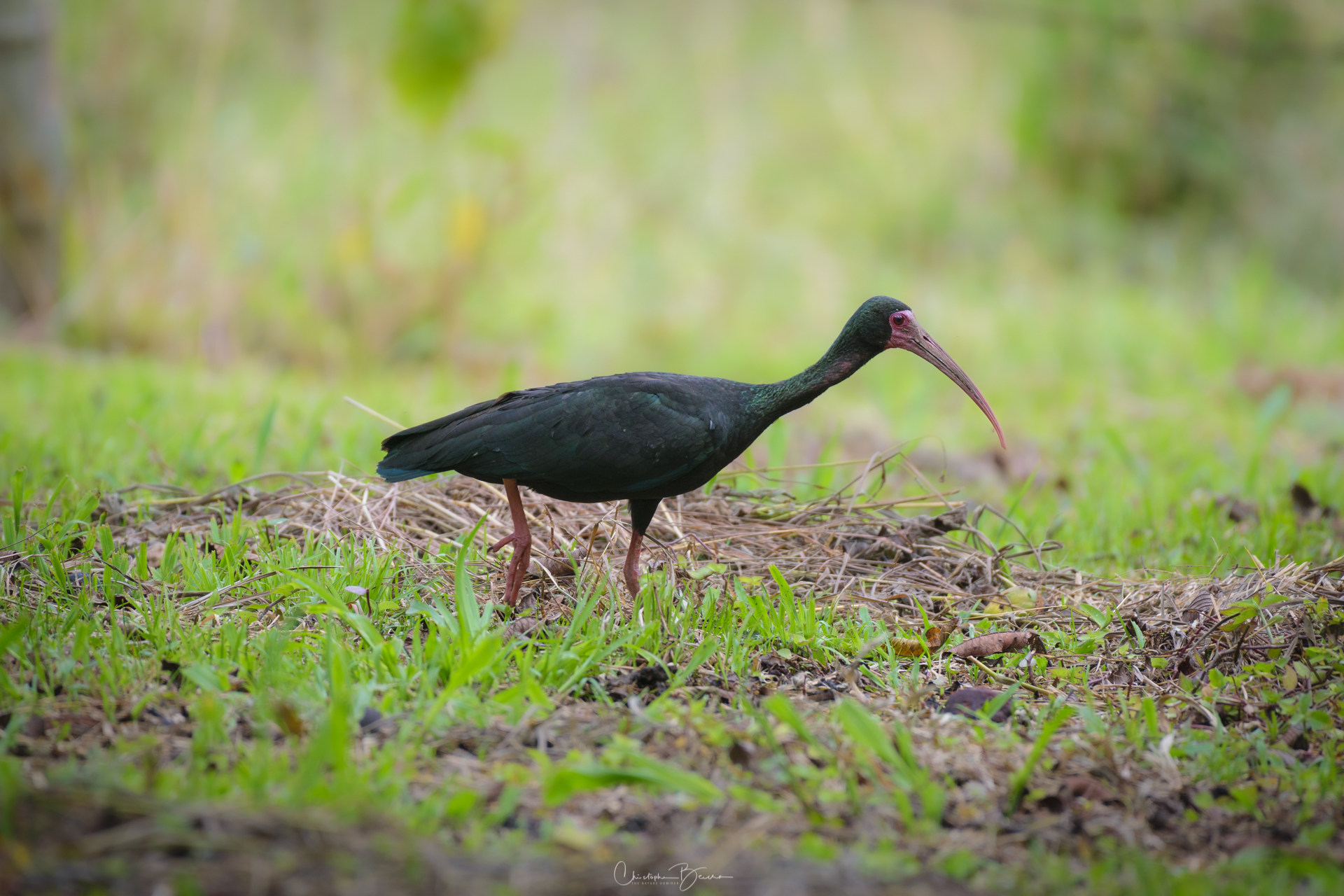
The Green Ibis is a large bird with a peculiar bill that almost looks like a sickle. The name is misleading, as most of the time this bird is found perched high in the trees early in the morning, so the lighting conditions make it look black. If you pay close attention, there is some green iridescence in the neck, and the body does look greenish, however most of the time it will resemble a Black Vulture. Their noisy call is only heard when they are flying from one tree to another one. They do come to the ground for feeding, but at the first sign of potential danger, they will fly off to safety high in a tree.

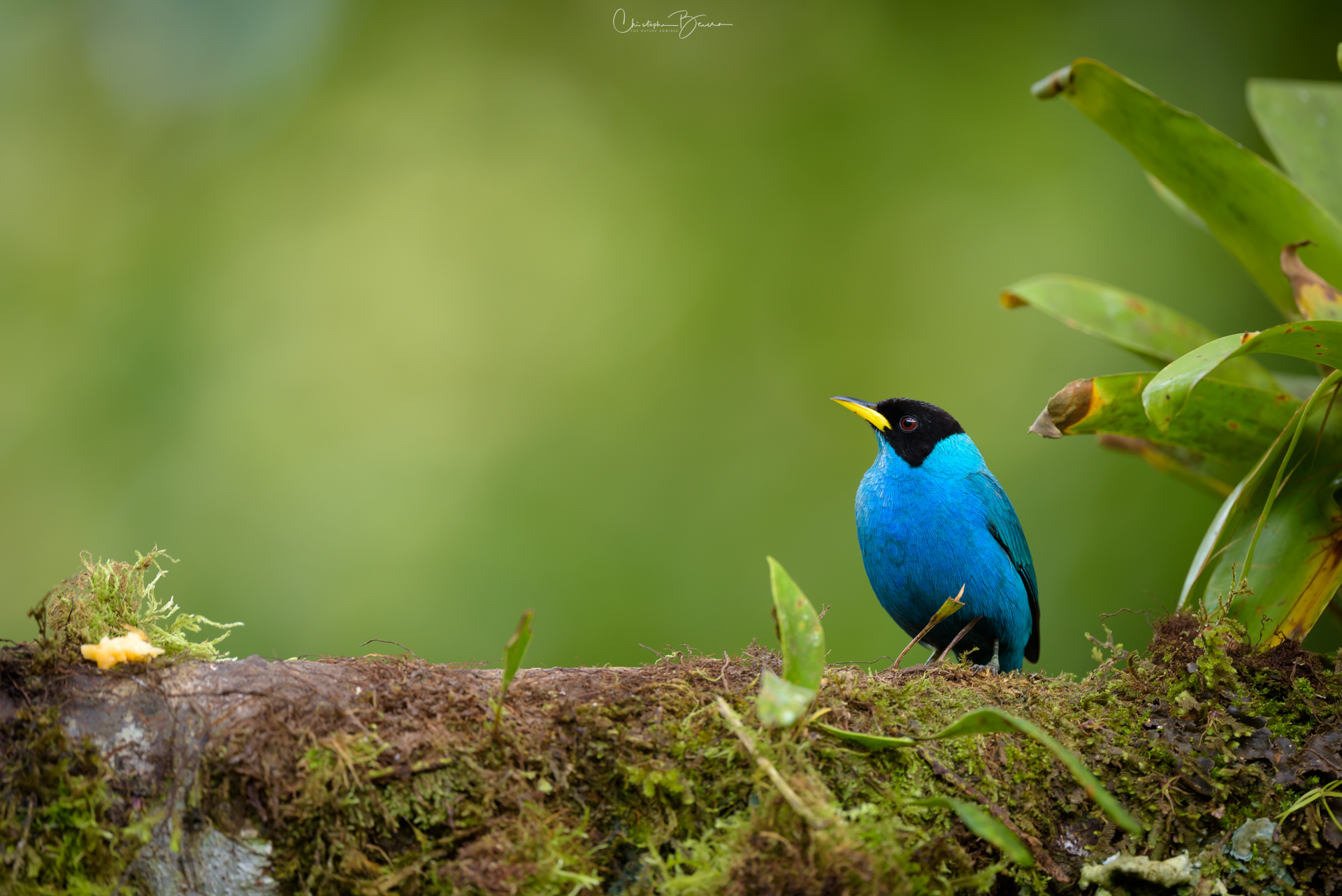
Green Honeycreeper (Chlorophanes spiza)

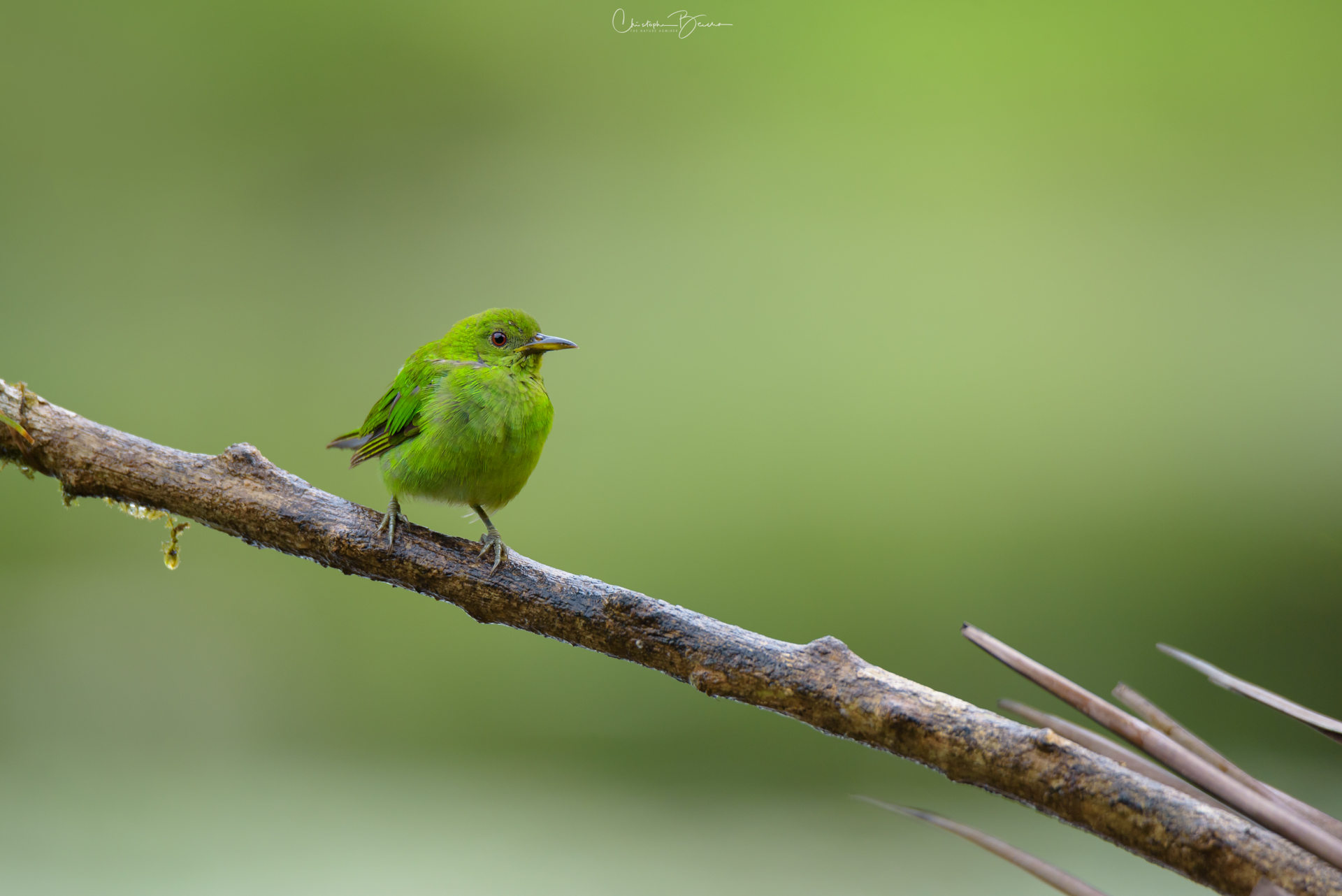
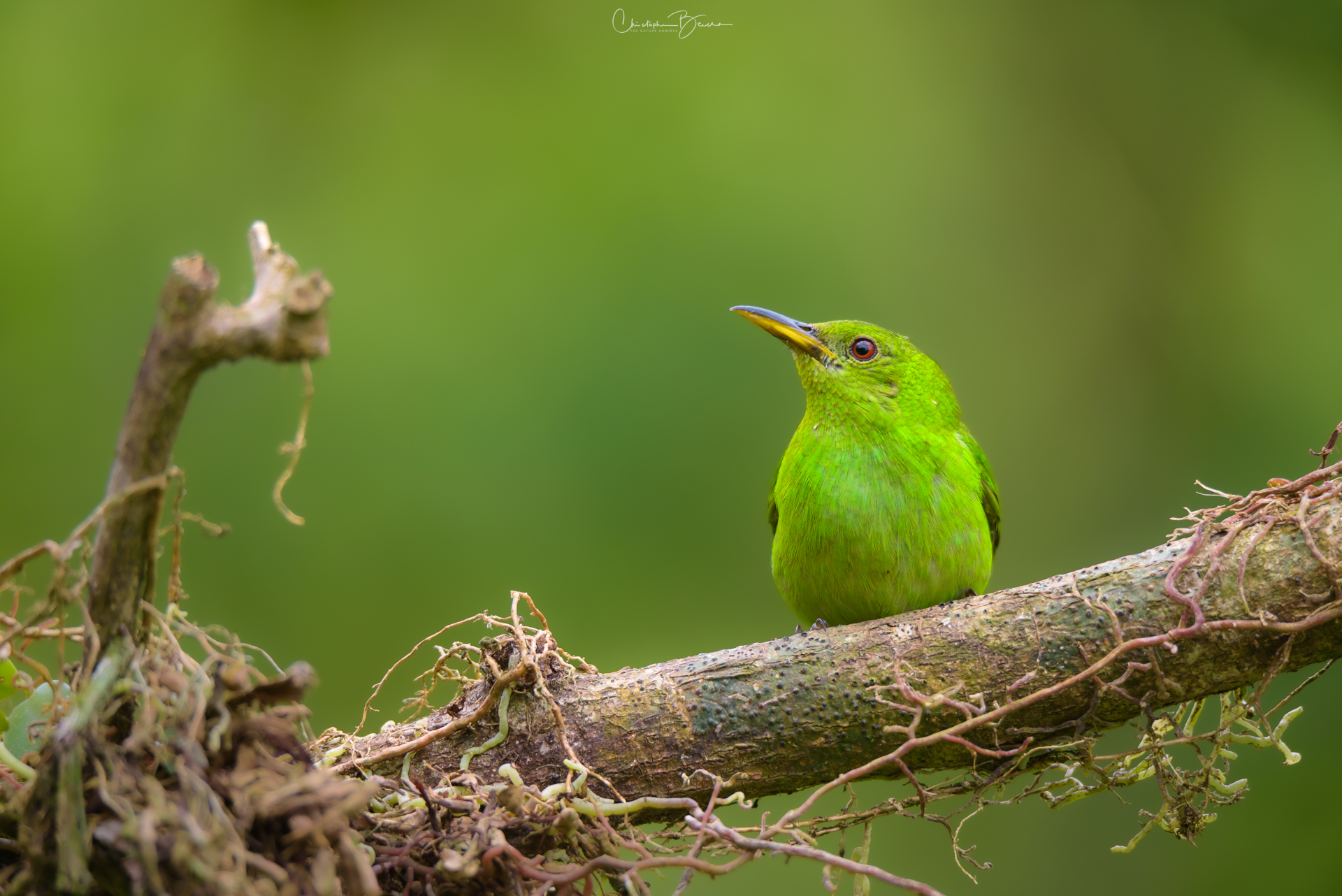
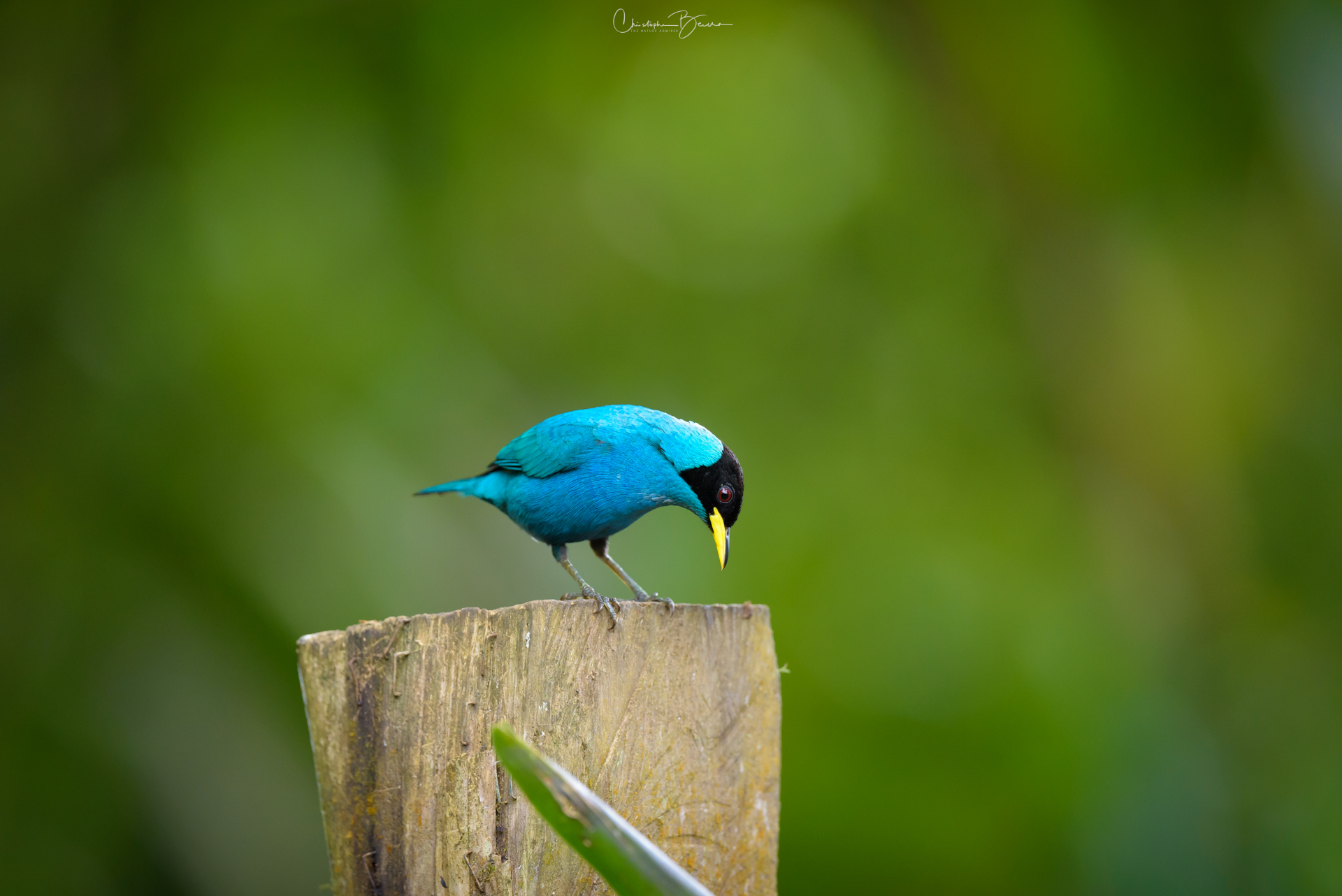
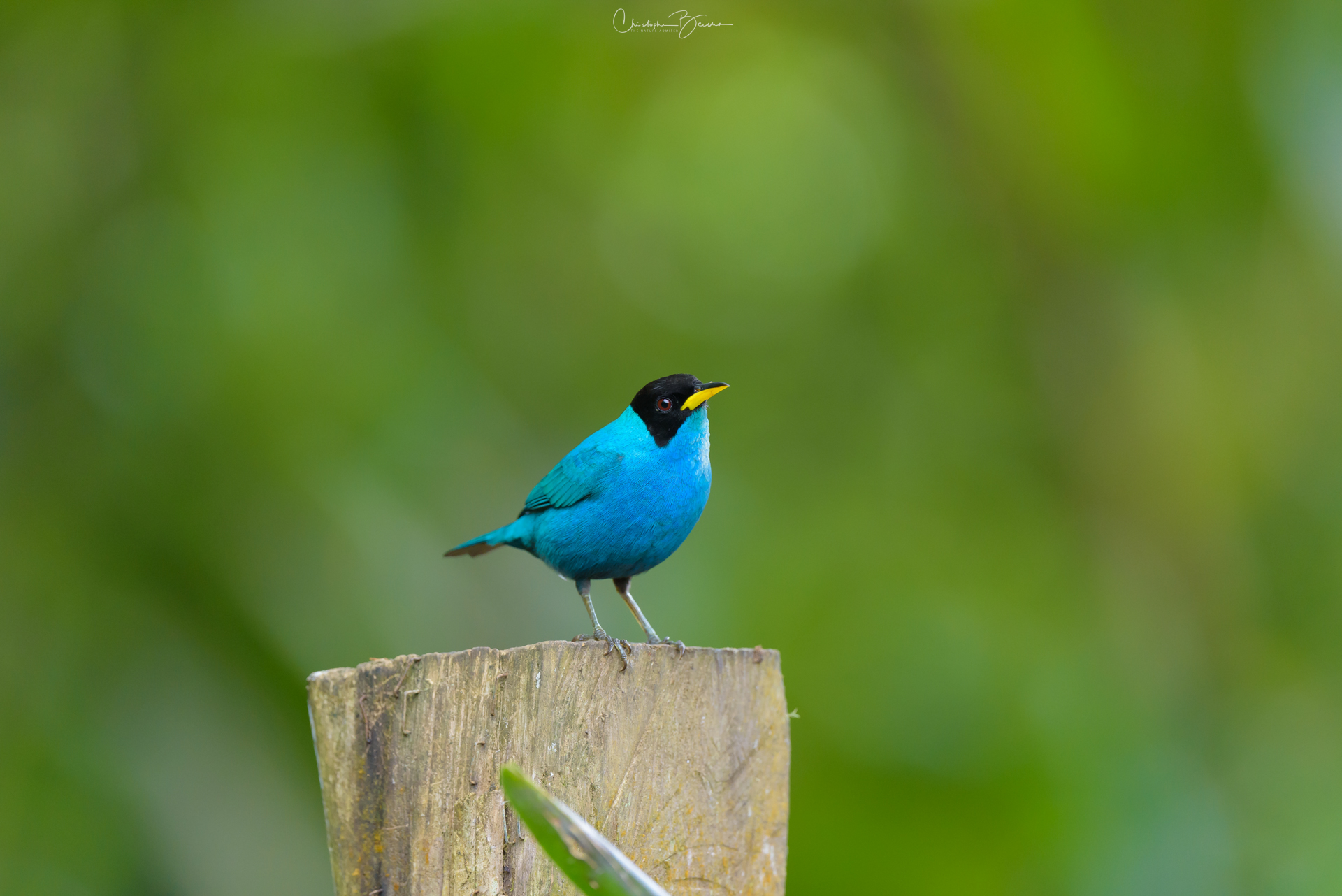
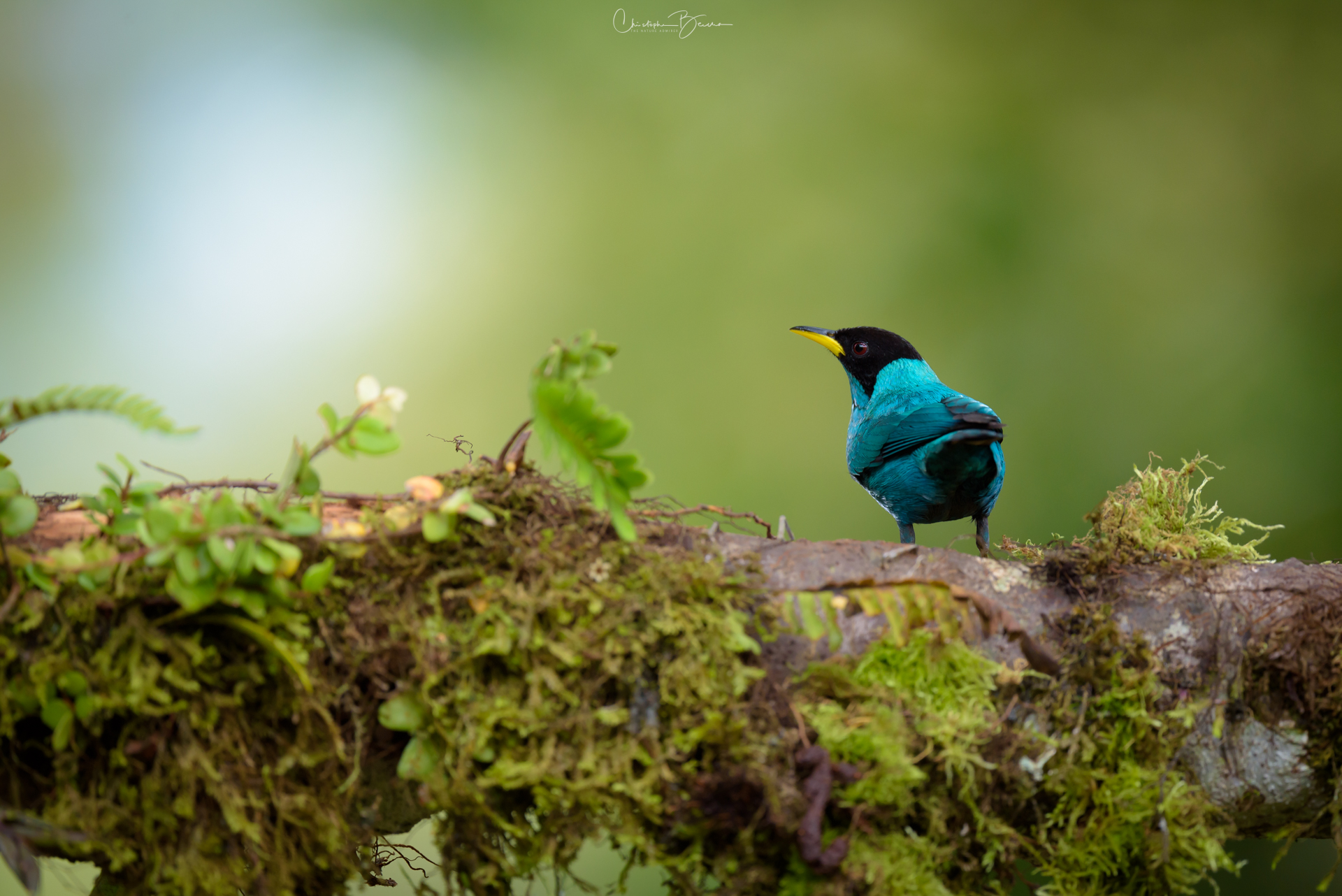
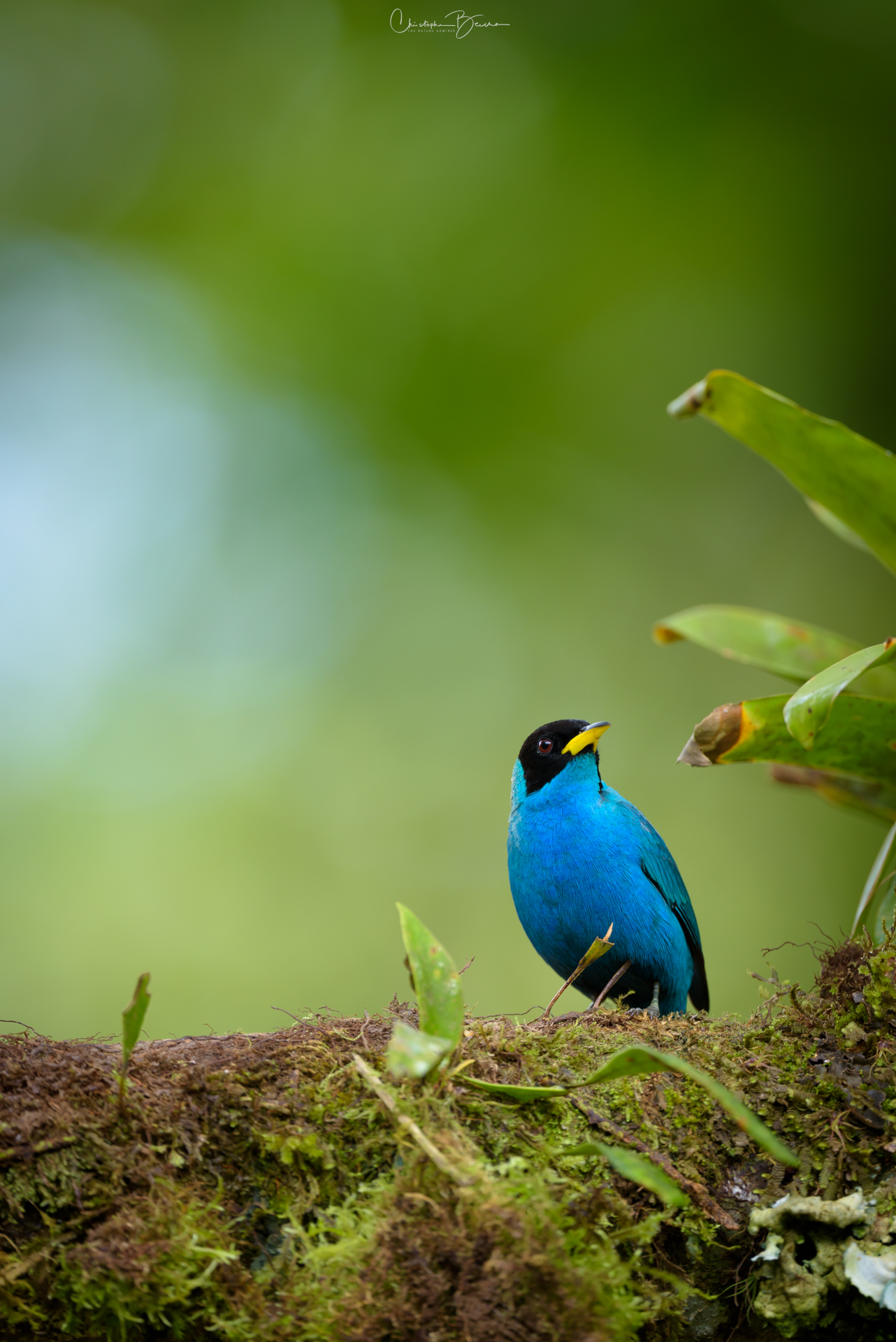
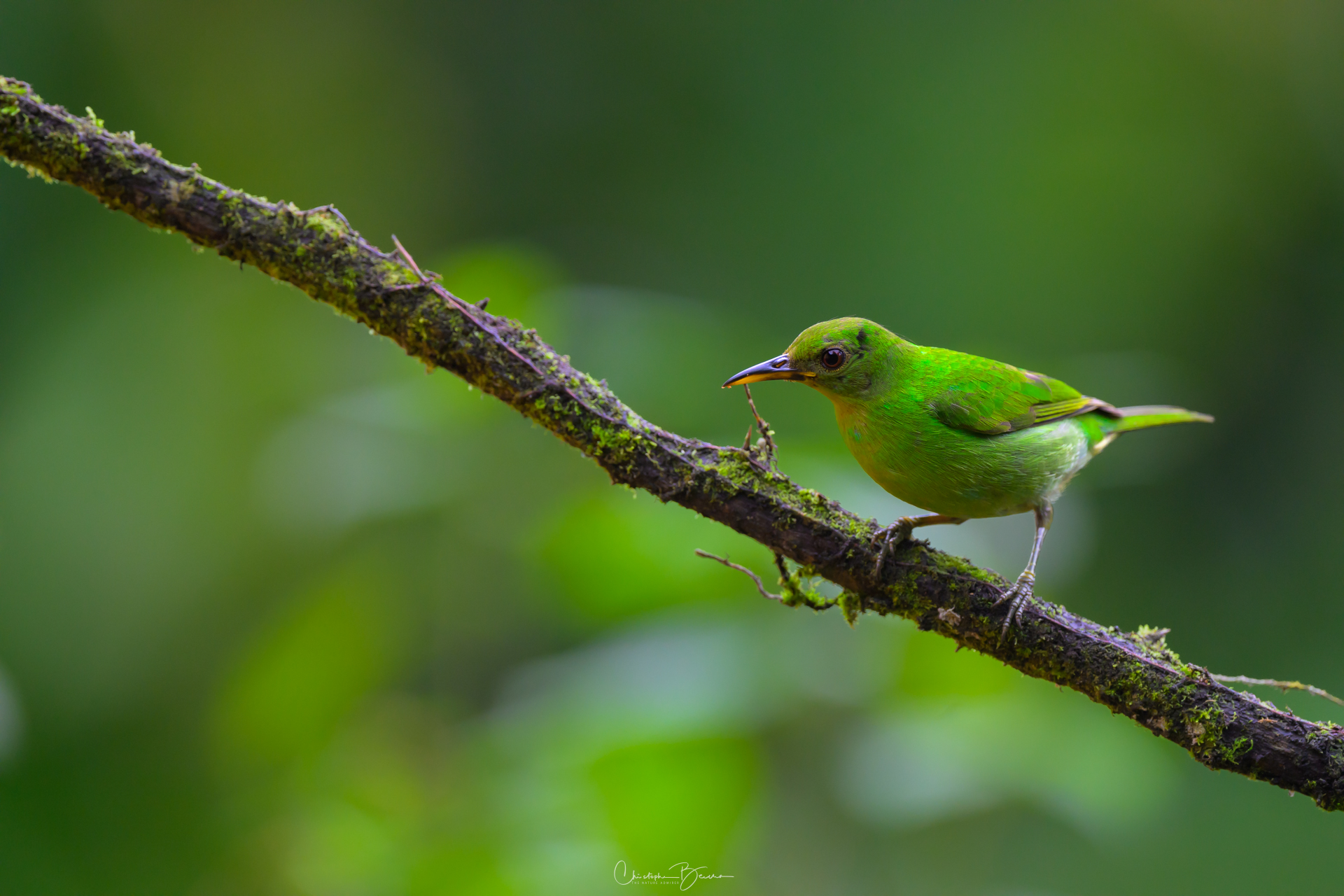
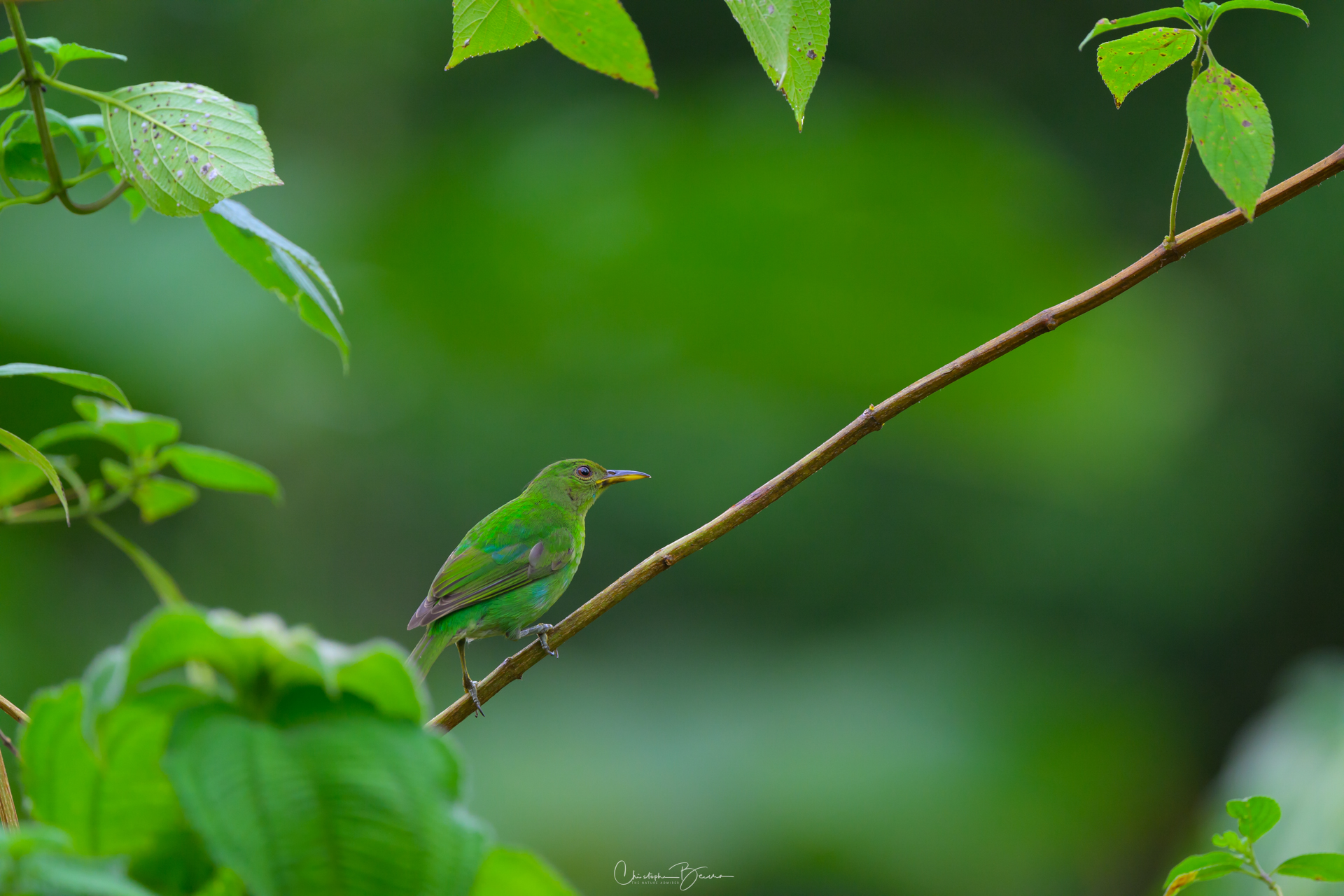
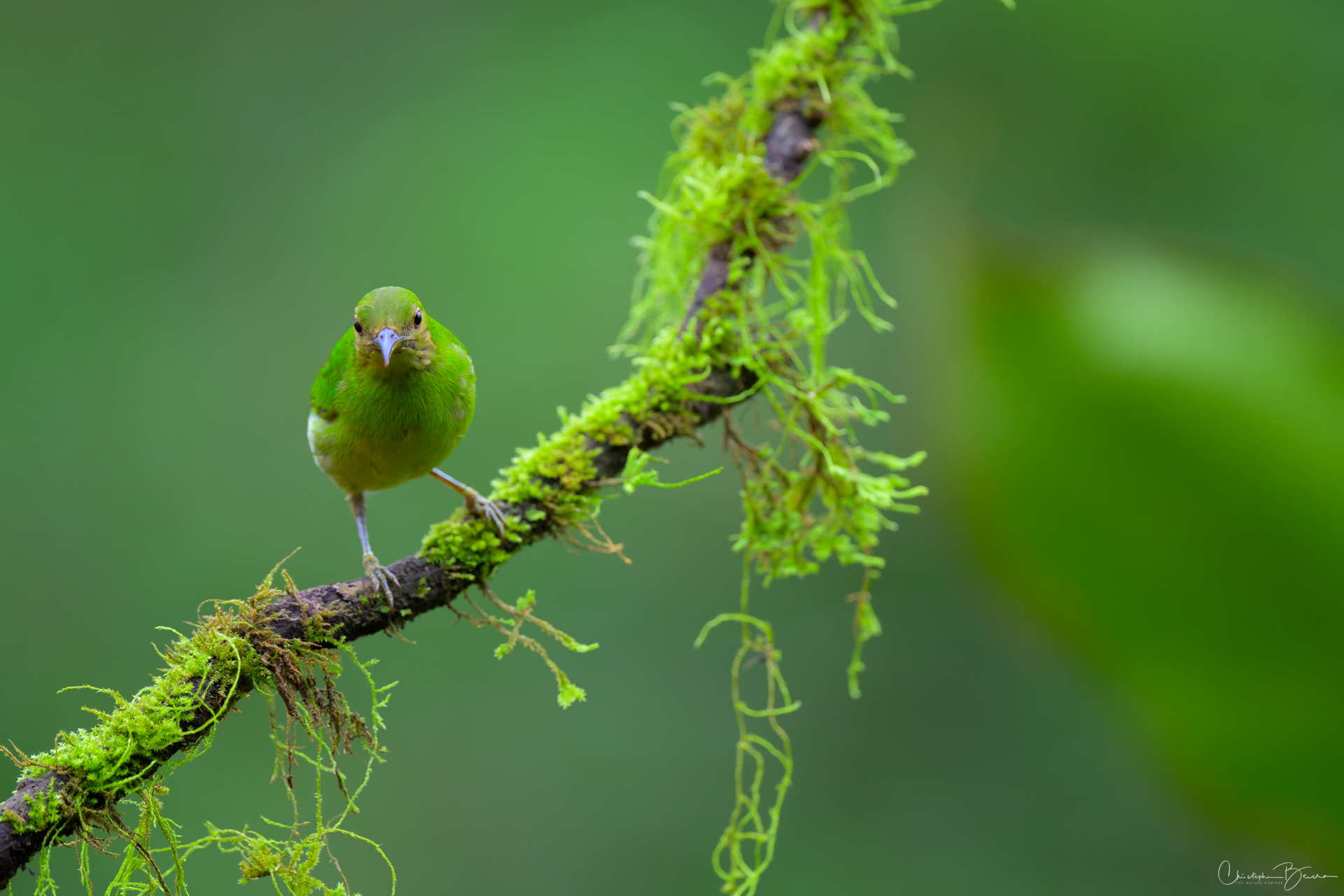
Ever since I first see the Red-legged Honeycreeper, I immediately knew I was seeing one of the most gorgeous species Costa Rica has. Then I met the Green Honeycreeper, and I stood delighted. The male has a striking combination of dark green body, deep black hood, bright yellow bill and dark red iris, which just looks amazing, even when wet. In fact, I would say a wet male screams Rain forest, that’s enough to love it. The female is not as exotic, however the green color of their feathers is so bright as to defy belief. I also spotted this species in Colombia, which seemingly looked more turquoise than green.

Great Green Macaw (Ara ambiguus)

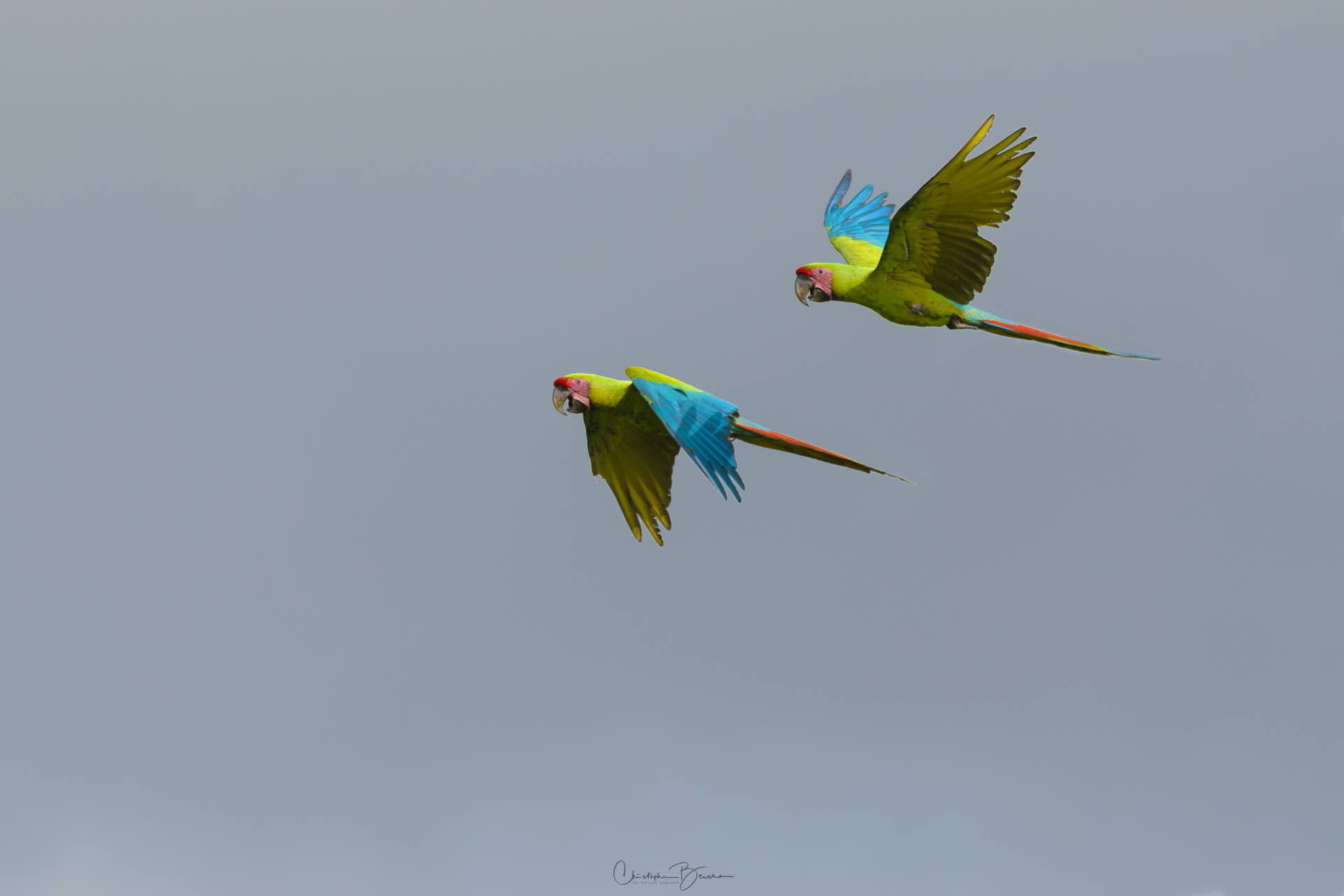
The Great Green Macaw is a pretty uncommon sight in Costa Rica. It is a huge bird, their calls are very loud. I had the opportunity to observe the birds very close in Rio Cuarto. Our wildlife photography guide explained that Green and Scarlet Macaws do not hybridize in the wild, however in this refuge, a pair of Macaws have been interbreeding in the last few years, resulting in hybrids being born. In Rio Frio, where my parents live, it is common to see a pair of these birds flying overhead most of the times I am there. Either they are more common in the area, or a single pair of birds has taken residence. They are easy to identify, as their harsh call is heard from very far away and no other parrot has such a characteristic call, other than the Scarlet Macaw. They like to feed on almond and are likely to be seen perching relatively high in those trees.