




Eastern Meadowlark (Sturnella magna)
The Eastern Meadowlark is an inhabitant of grass plains in Central Valley and the Caribbean areas. I have seen this species at my home in San Rafael de Alajuela, at La Guacima, at the Santa Ana Windmills (that’s 1,600 meters above sea level!) and most recently in San Bernardino, near Guápiles. Sometimes they perch in fence posts, other times they just find a comfortable place in the grass where they forage. Their song is very high-pitched and far-carrying. Indeed, many times I have been able to spot them as I bike through by listening to their song. Their belly is bright yellow, while their back is streaked in cream and dark brown. A key characteristic is the plump body, more similar to the antpittas than to any yellow-bellied flycatcher. When startled, they fly away and land on another patch of grass where they feel safe, the continue foraging. The juvenile is somewhat duller and never strays too far from its parent.



Common Ground-Dove (Columbina passerina)
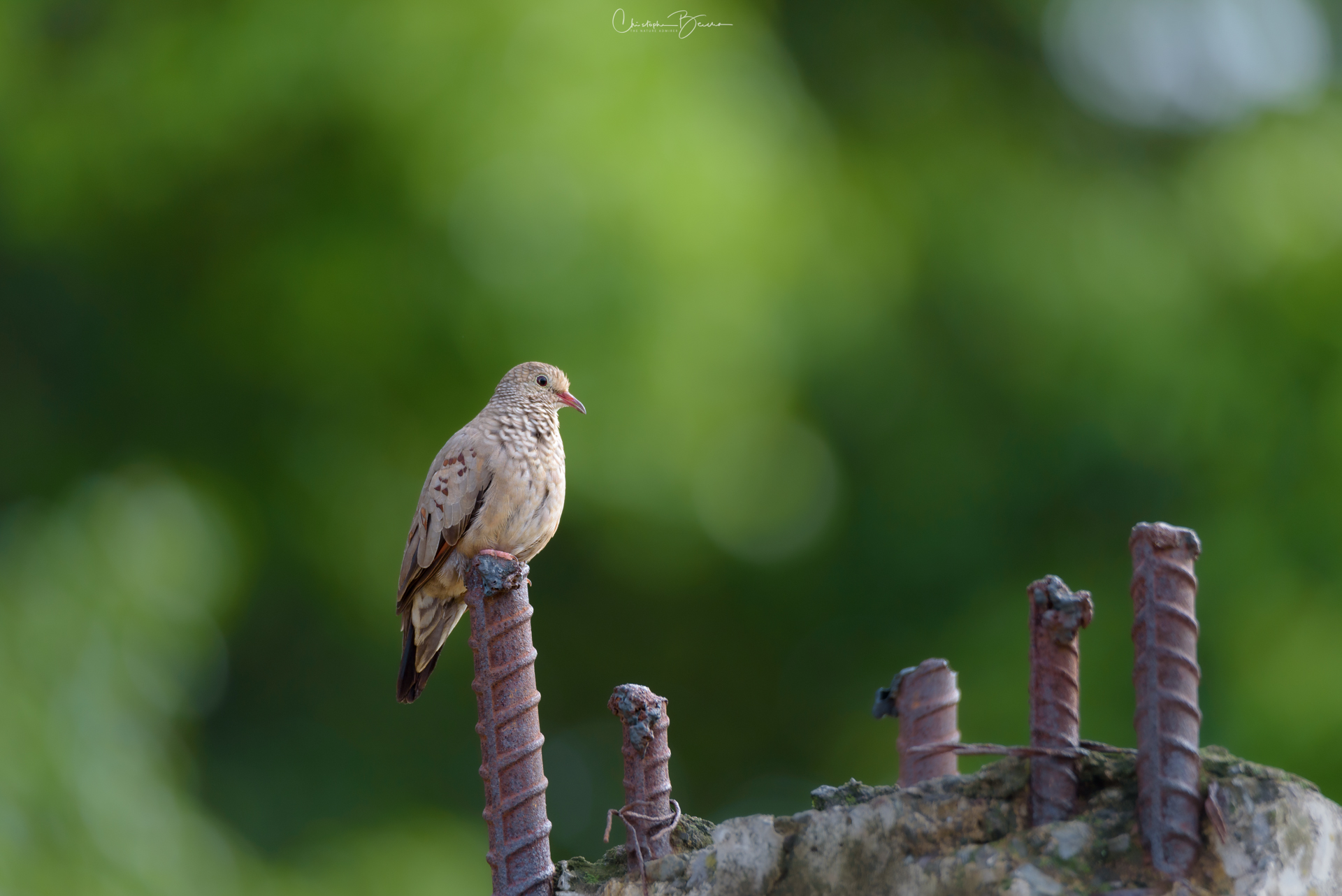
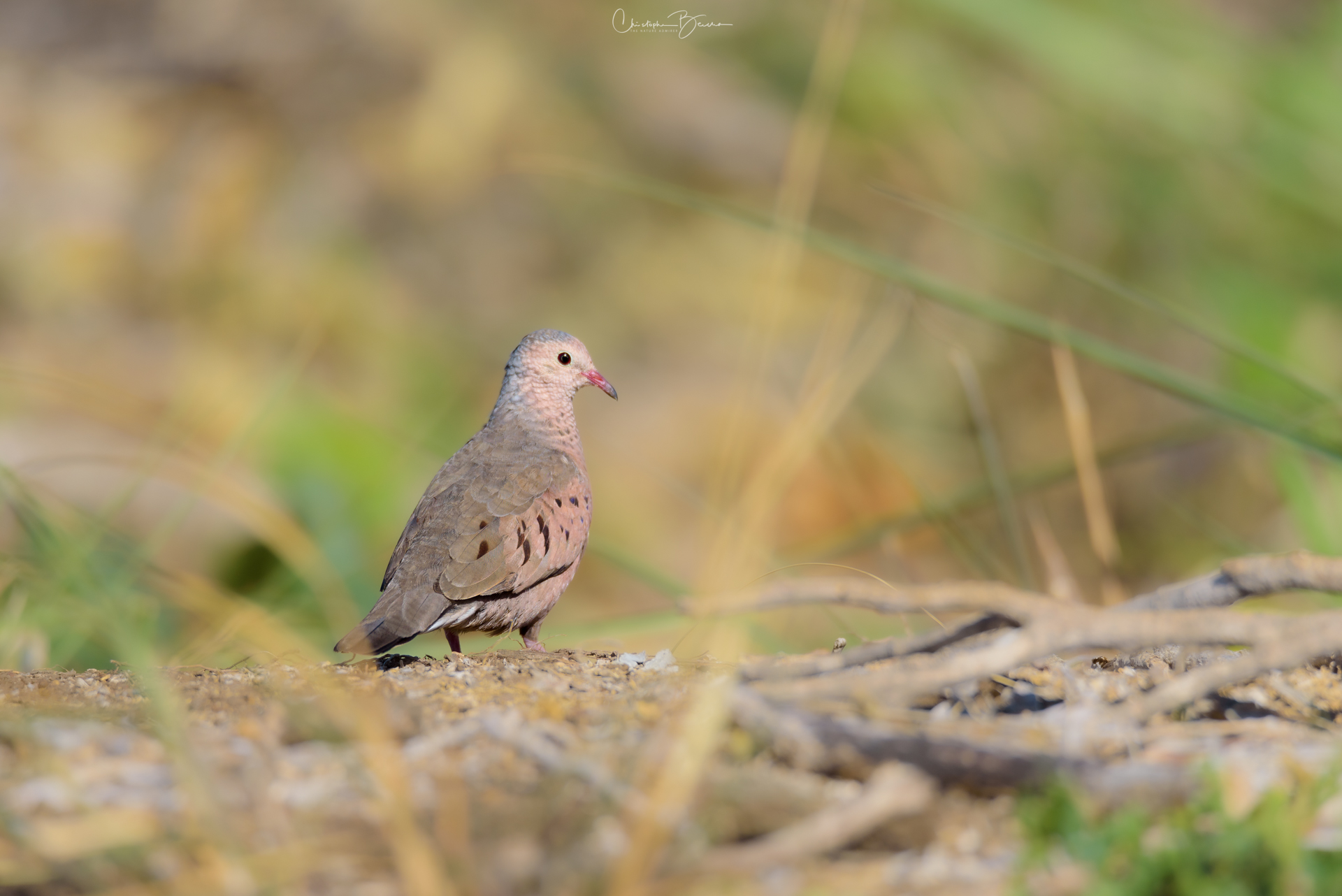
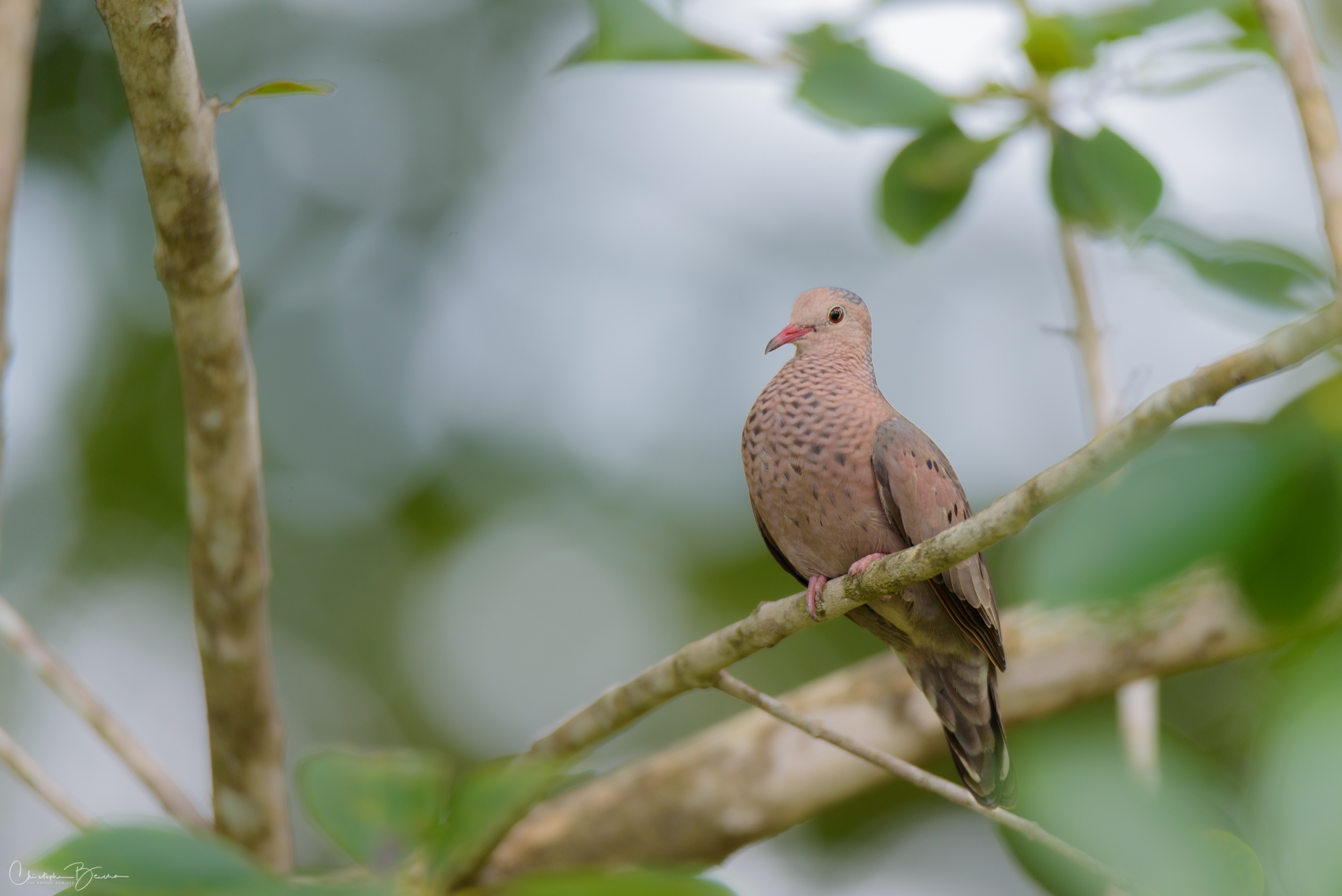
The Common Ground-Dove is very similar to related species Ruddy and Plain-breasted Ground-Doves, however the Common is lighter in coloration, with a pink bill that is diagnostic; it also shows a scaled pattern in the throat and neck, which is missing from the other ground doves. Also similar to these species is the Inca Dove, which even behaves similarly as it forages most of the time on the ground, however the scaled appearance in the whole body should preclude any confusion. The male is ligher than the female, which looks grayish. All ground doves feature dark spots in the tips of primaries and secondaries, which look like a curved line when the wings are closed, although the Common’s should area spots are more numerous and do not form a line.

Long-billed Starthroat (Heliomaster longirostris)
The Heliomaster genus contains four species, two of which occur in Costa Rica, including the Long-billed Starthroat that can be spotted in the Caribbean and northern lowlands, as well as in the south Pacific. It also includes the Plain-capped Starthroat, which is mostly seen in the north Pacific, central valley and some valleys in the south Pacific. Both Starthroats have longer than average bills which are straight, although both species have similar bills. The main difference between the Long-billed and Plain-capped is that the former displays a colorful blue-green forecrown, while the latter lacks that crown. To aid in identification, it can be noted that the Long-billed has a postocular spot, while the Plain-capped has a postocular strip. Other than those two specific traits, the two species are very similar, with olive upperparts and gray to white underparts, and a magenta throat that is iridescent. The tips of the tail feathers are white, which can be seen the most dramatically during flight.

 The Nature Admirer