Page 29 of 31

Bat Falcon (Falco rufigularis)

The Bat Falcon is colorful, combining orange underpants, white neck, and blue/grayish head and wings. In juveniles, the throat is buffy instead of white. Like its names implies, it mostly hunts bats, which forces them to be crepuscular in nature; it can also be seeing hunting small tanagers and swallows. As many other Bird of Prey, the female is a lot bigger than the male. It is among the smallest bird of prey in the world. It likes to perch in exposed branches in open spaces like in the picture below.

Bananaquit (Coereba flaveola)

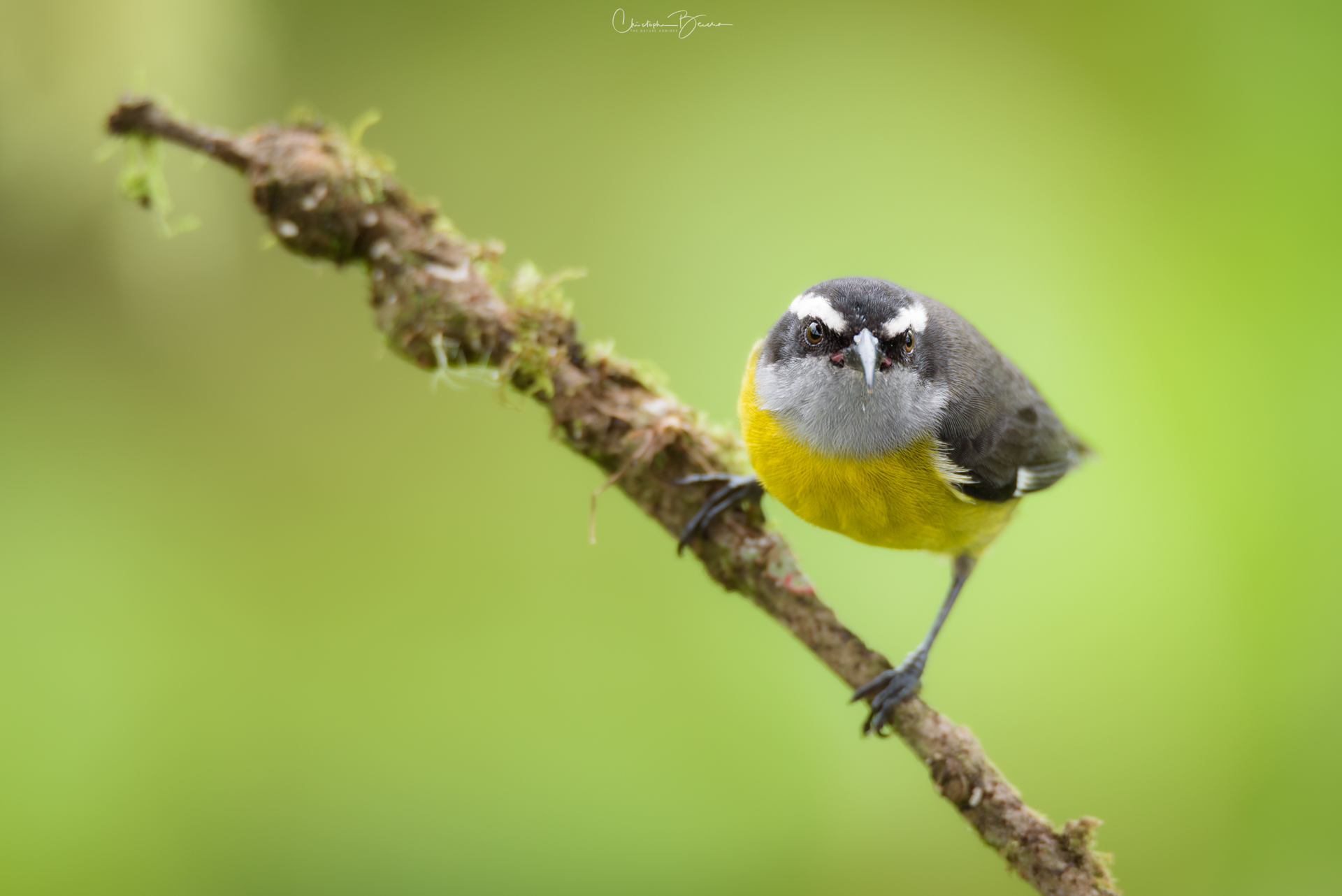
A small bird that’s placed in the tanager family, the Bananaquit has a thin, down curved bill that helps it drink nectar from flowers and feeders, thus becoming a pollinator. It has a yellow belly and chest with dark gray upperparts, which suggests a flycatcher, but unlike that family, this bird’s diet is not concentrated on insects. It can’t hover like a hummingbird, so it is limited to extracting nectar from flowers where there is a perch available to support its weight. This small bird has a down-curved bill, which helps to drink nectar from flowers in rather hummingbird-like fashion, without the hovering of course.

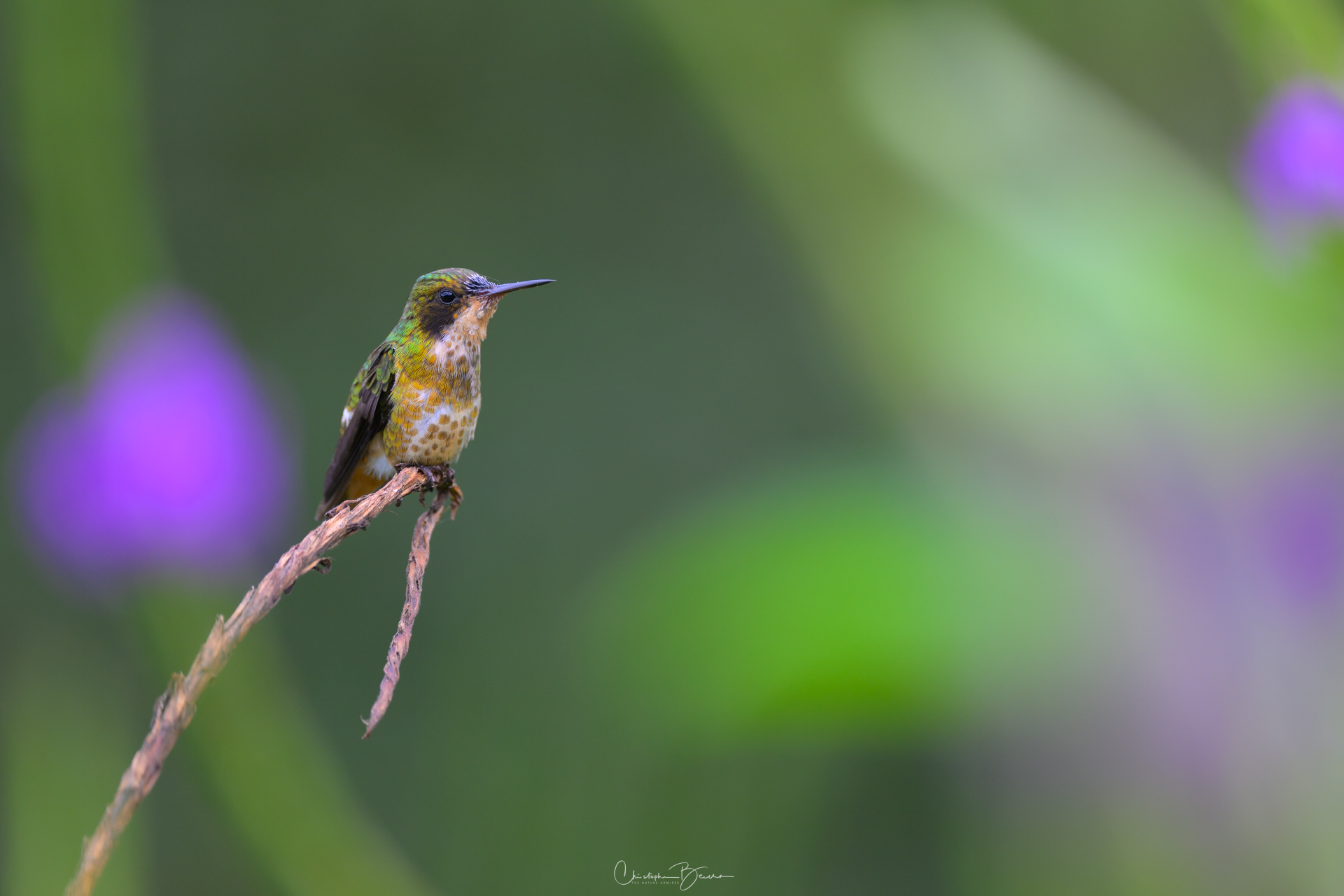
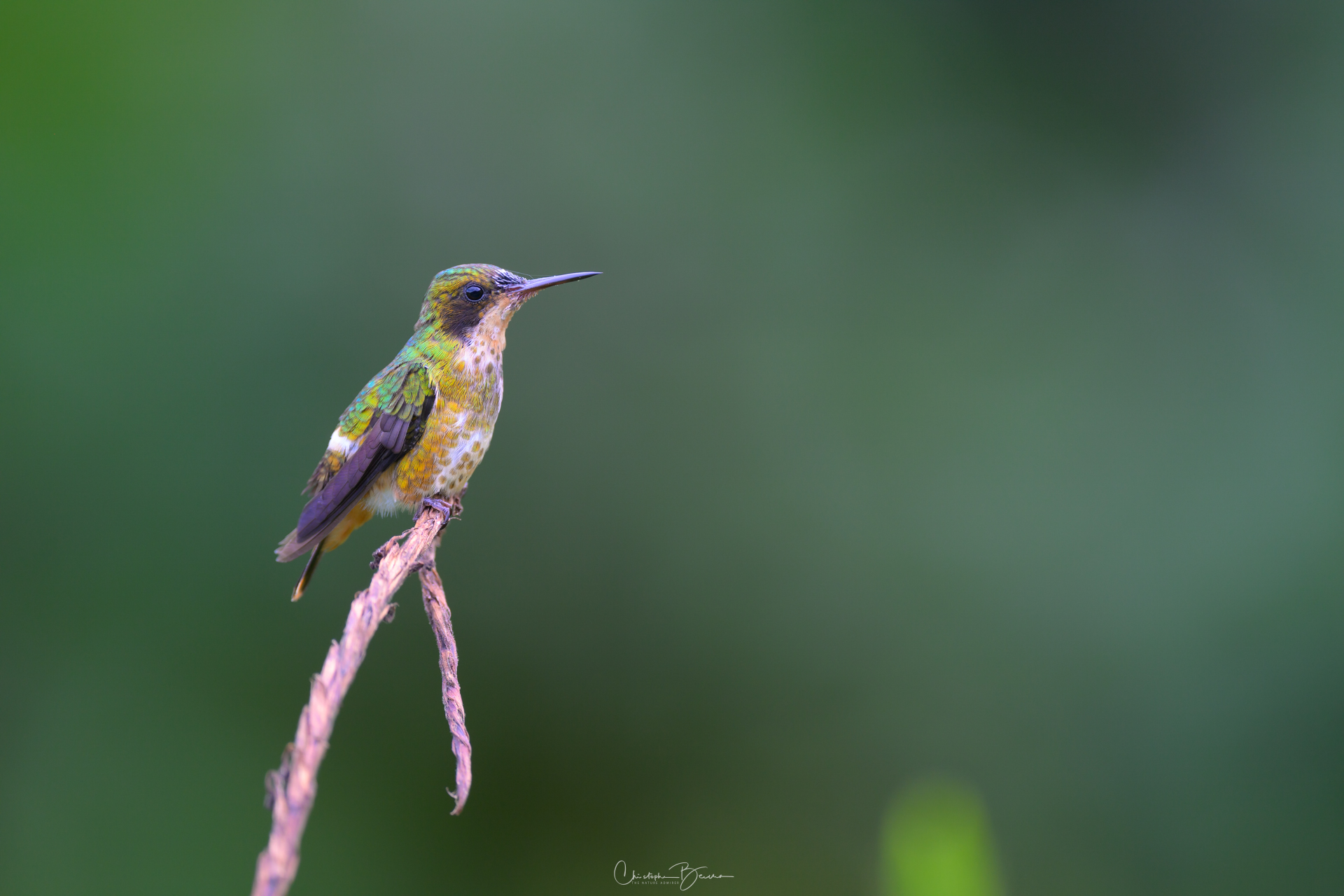
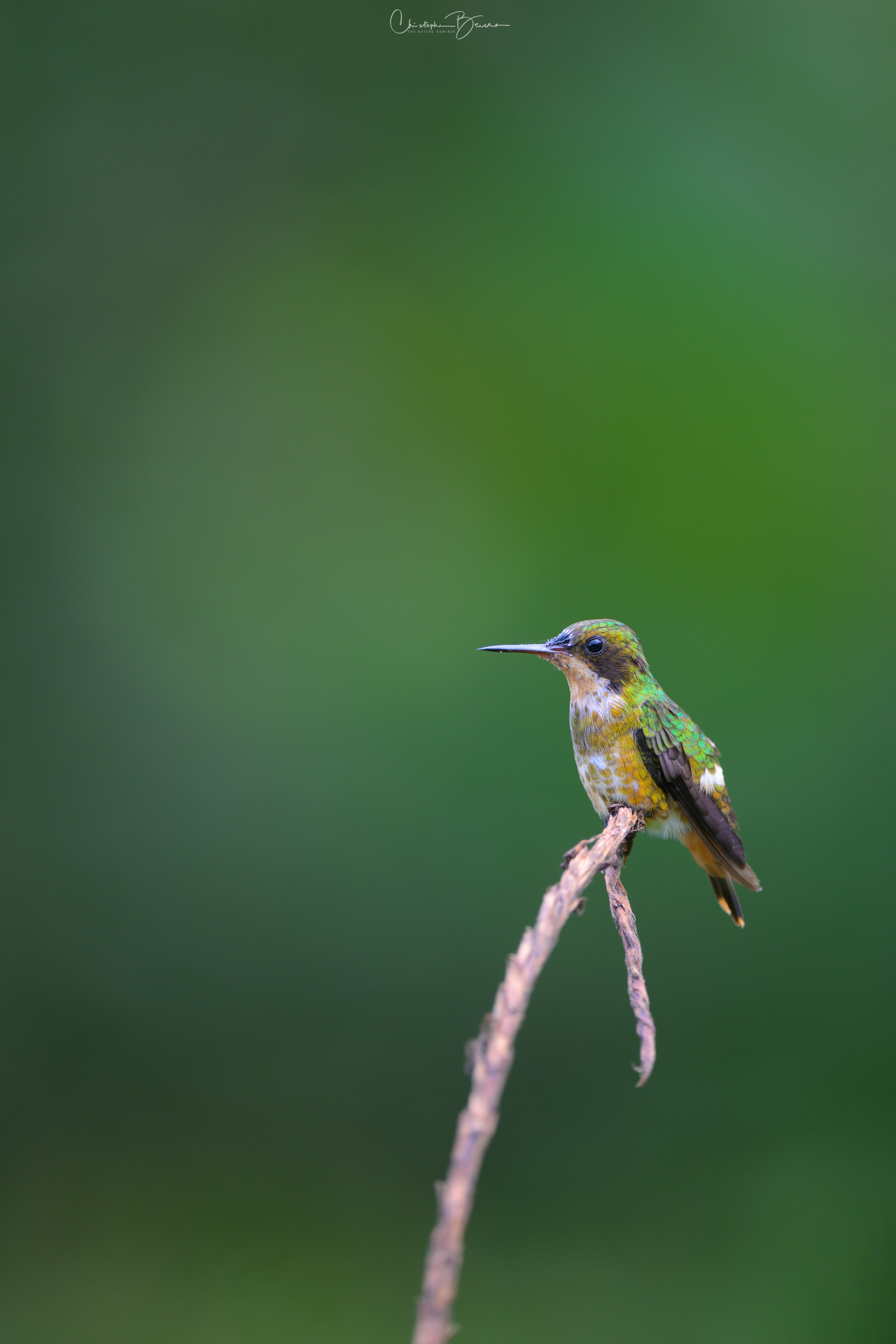
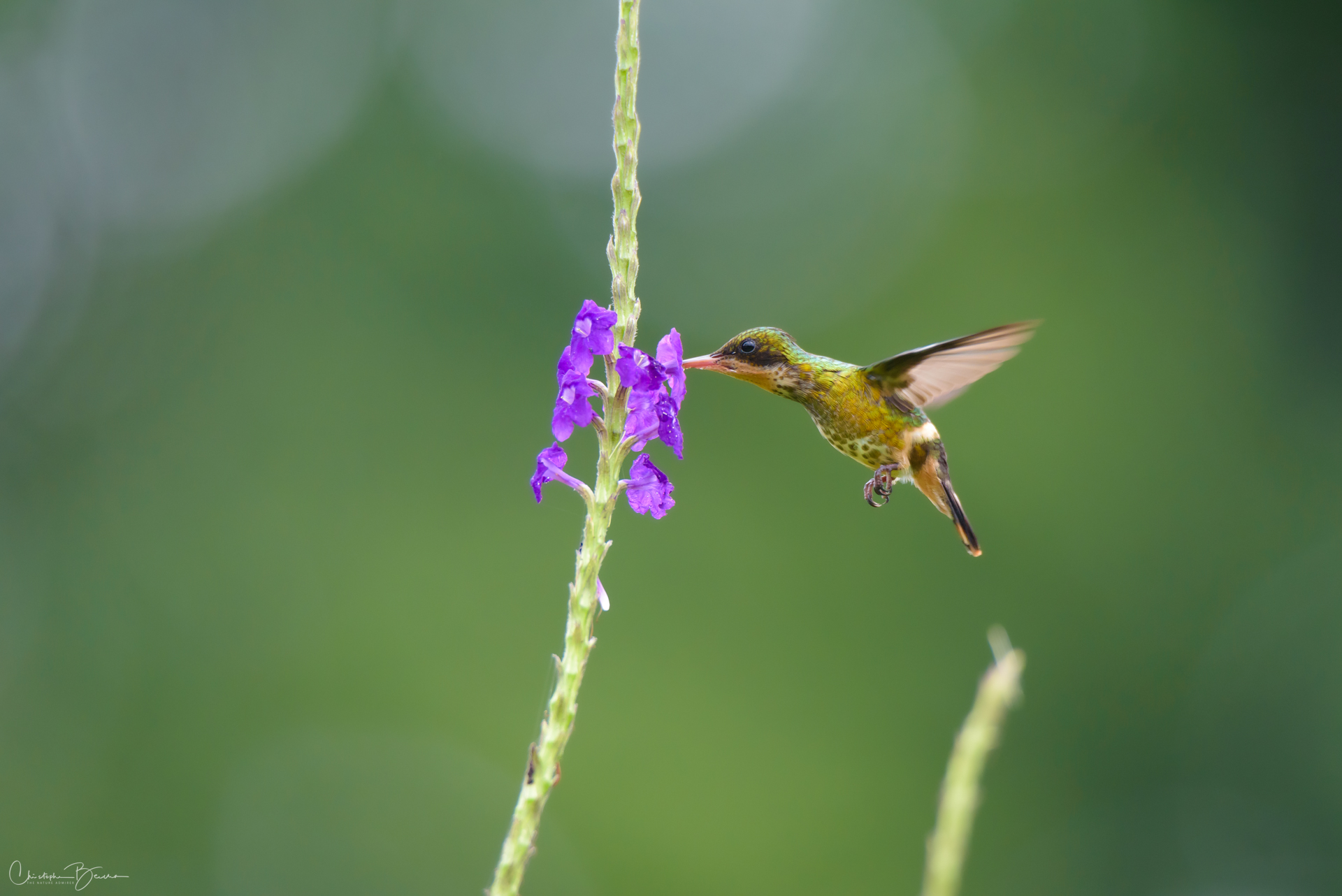
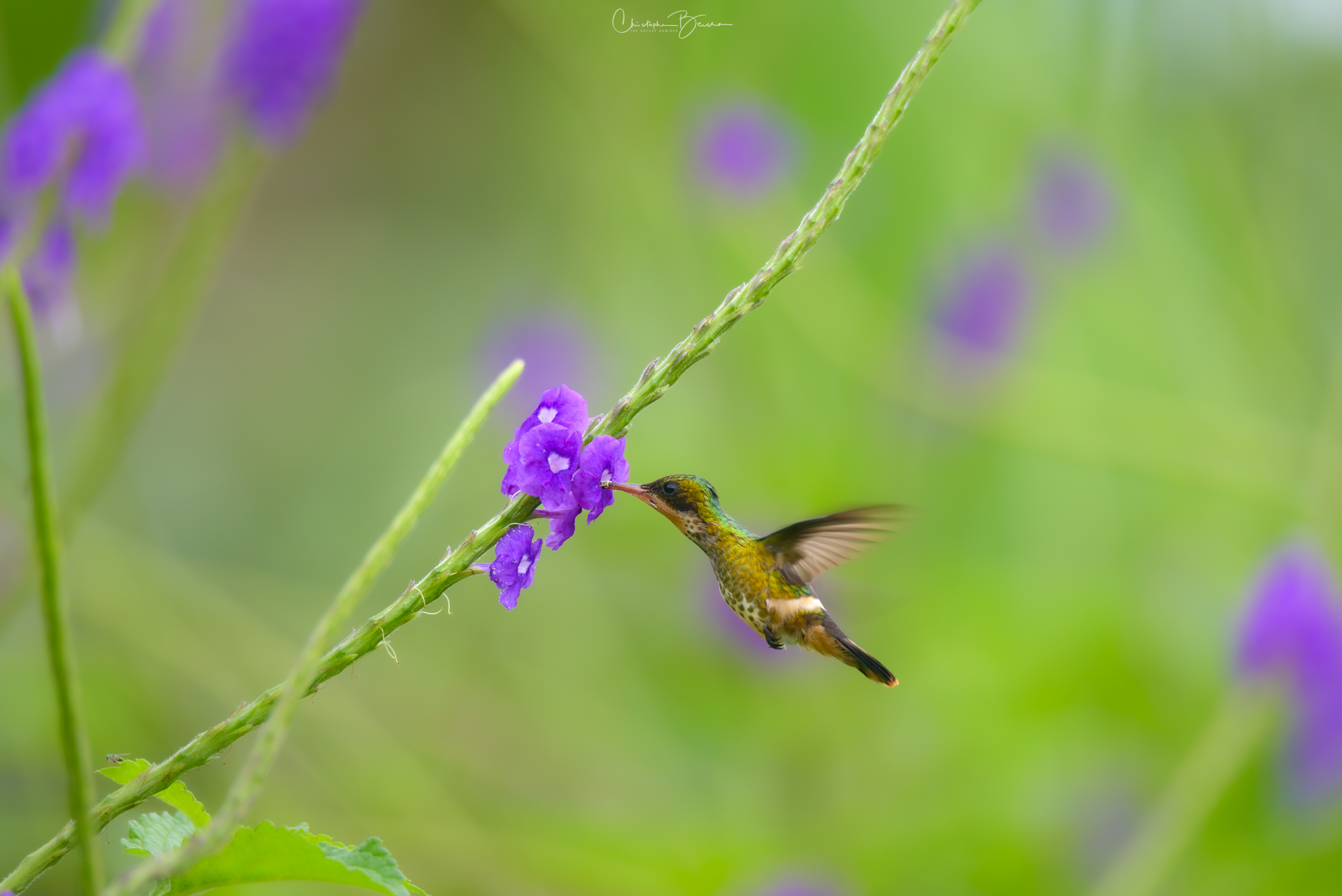
Black-crested Coquette (Lophornis helenae)

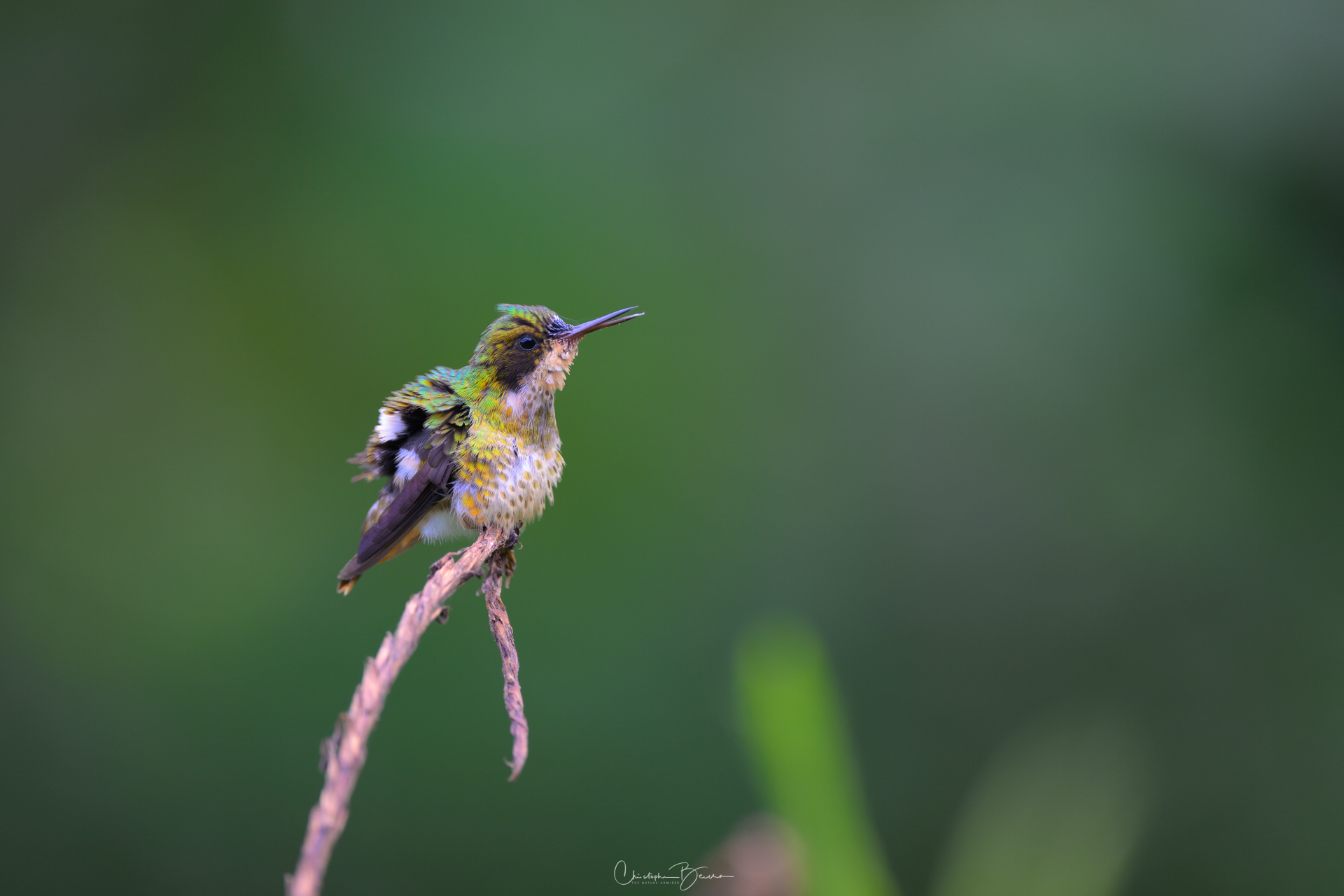
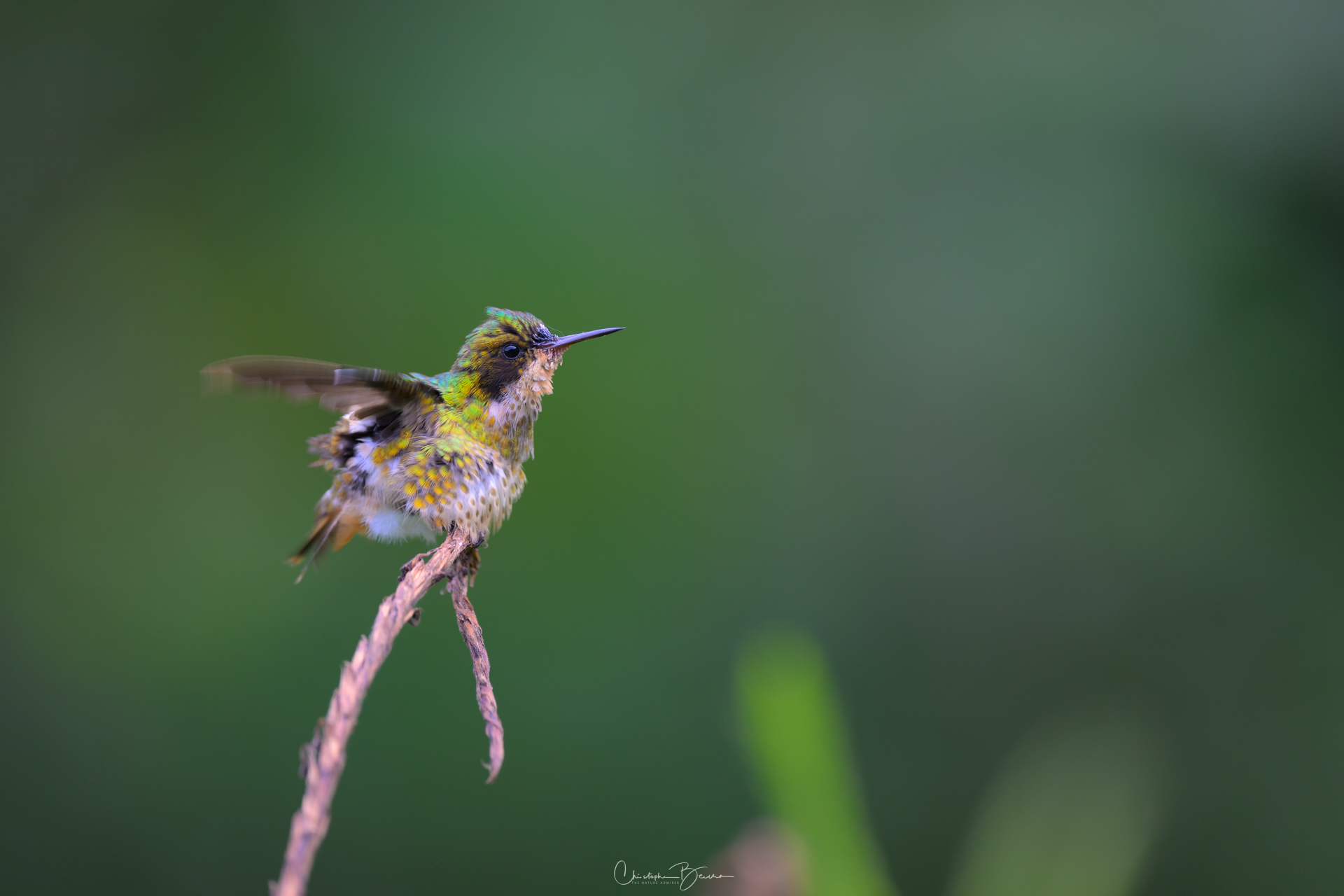
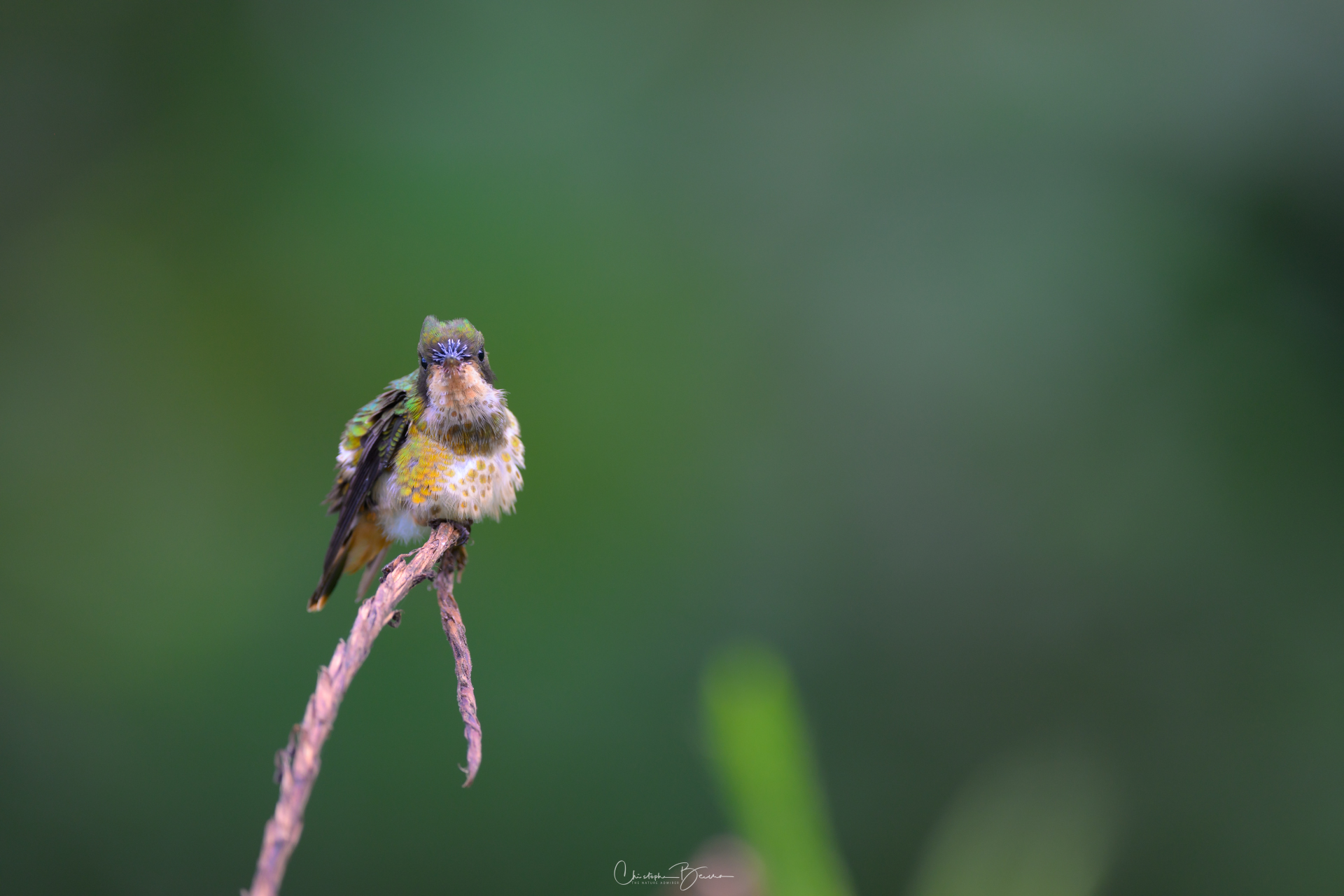
This coquette is a really small hummingbird, a little bit bigger than the Scintillant Hummingbird. When in the air, it resembles more a bee than a hummingbird, as it moves pretty smoothly. Most of the hummingbirds we normally see will move on short bursts of speed, and will constantly change from flower to flower, whereas this one had more predictable and swift movements. I have seen them in La Fortuna de San Carlos, and more surprisingly for me at my parent´s home in Rio Frio, right by the Porter Weed plantation that we created.

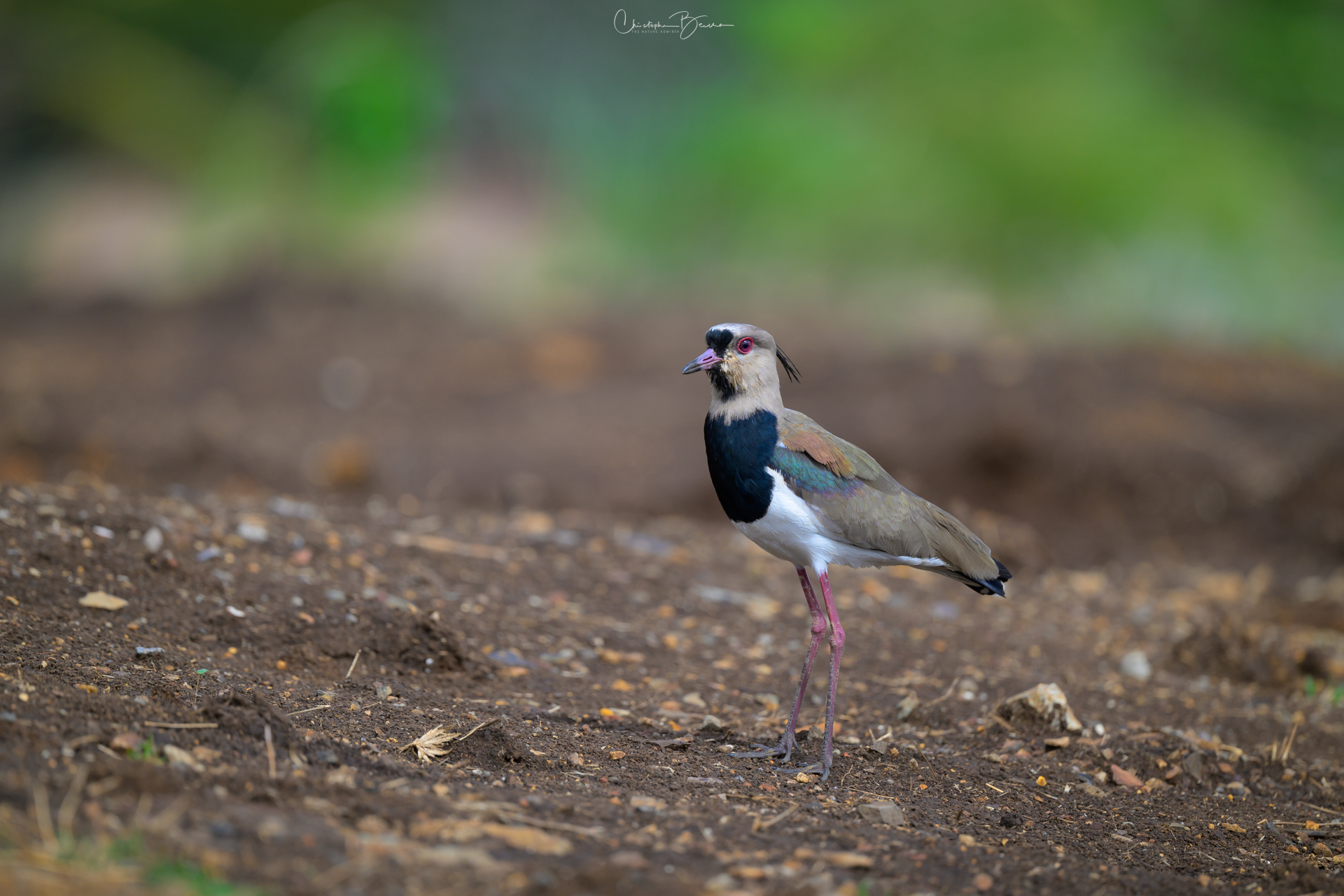
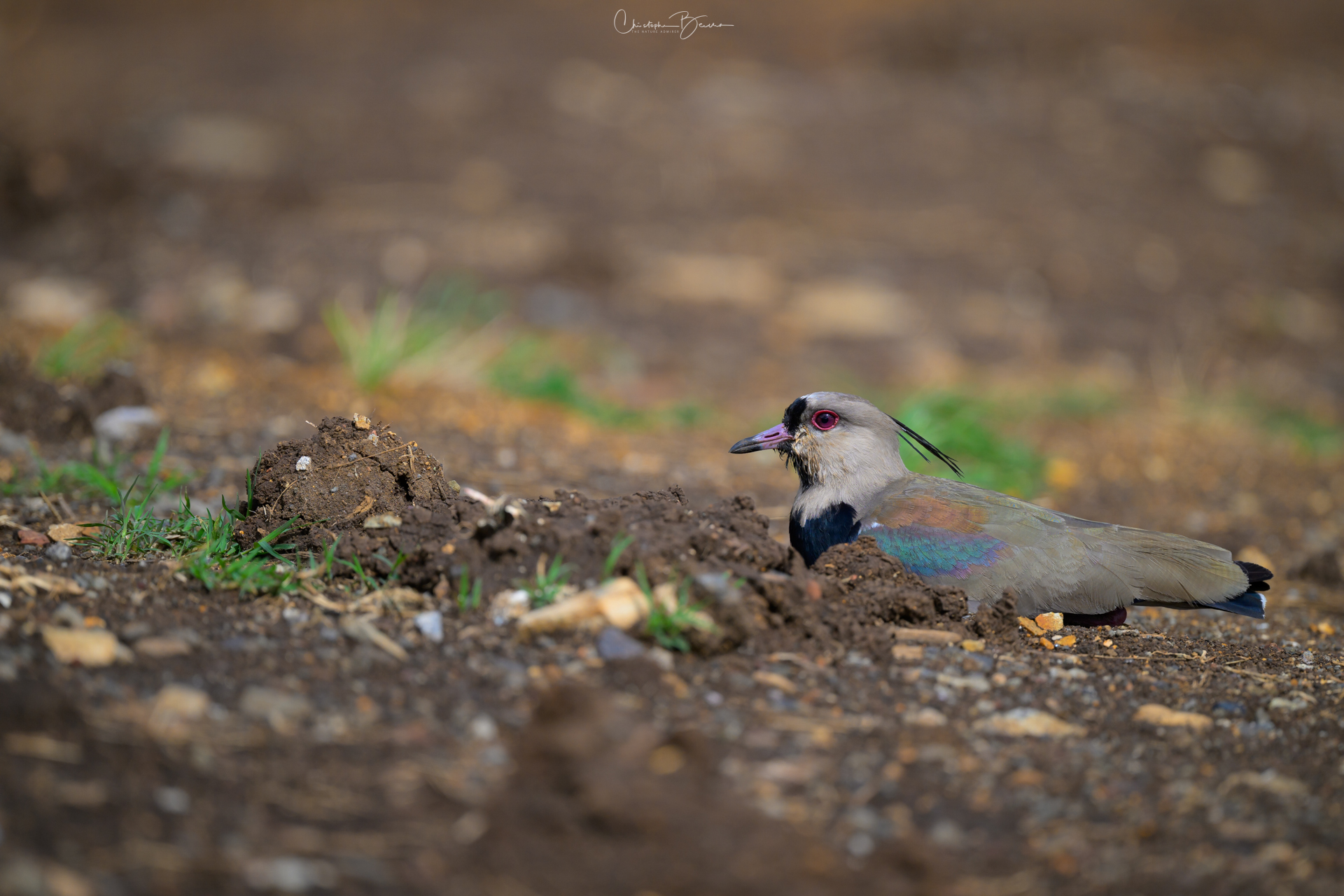
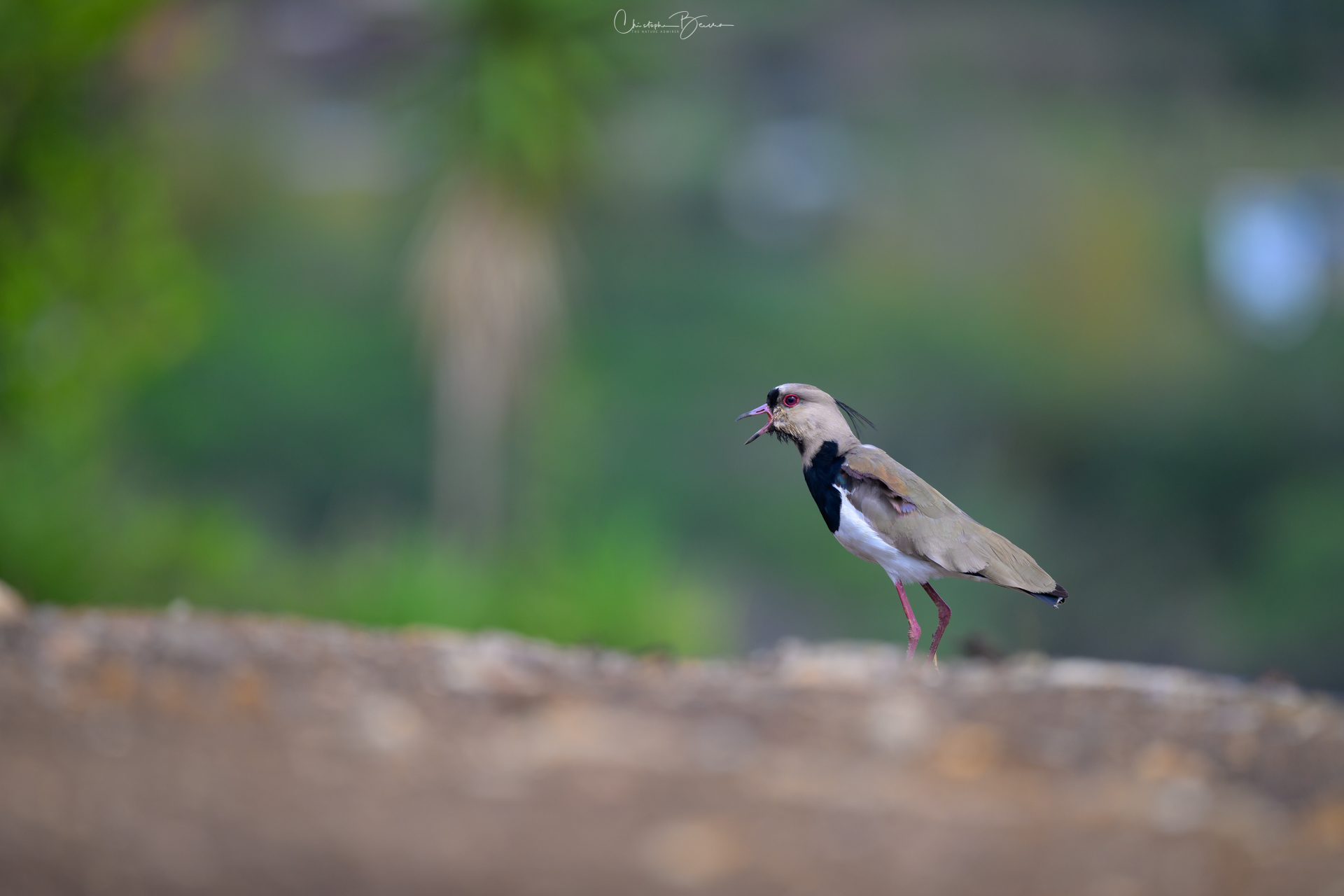
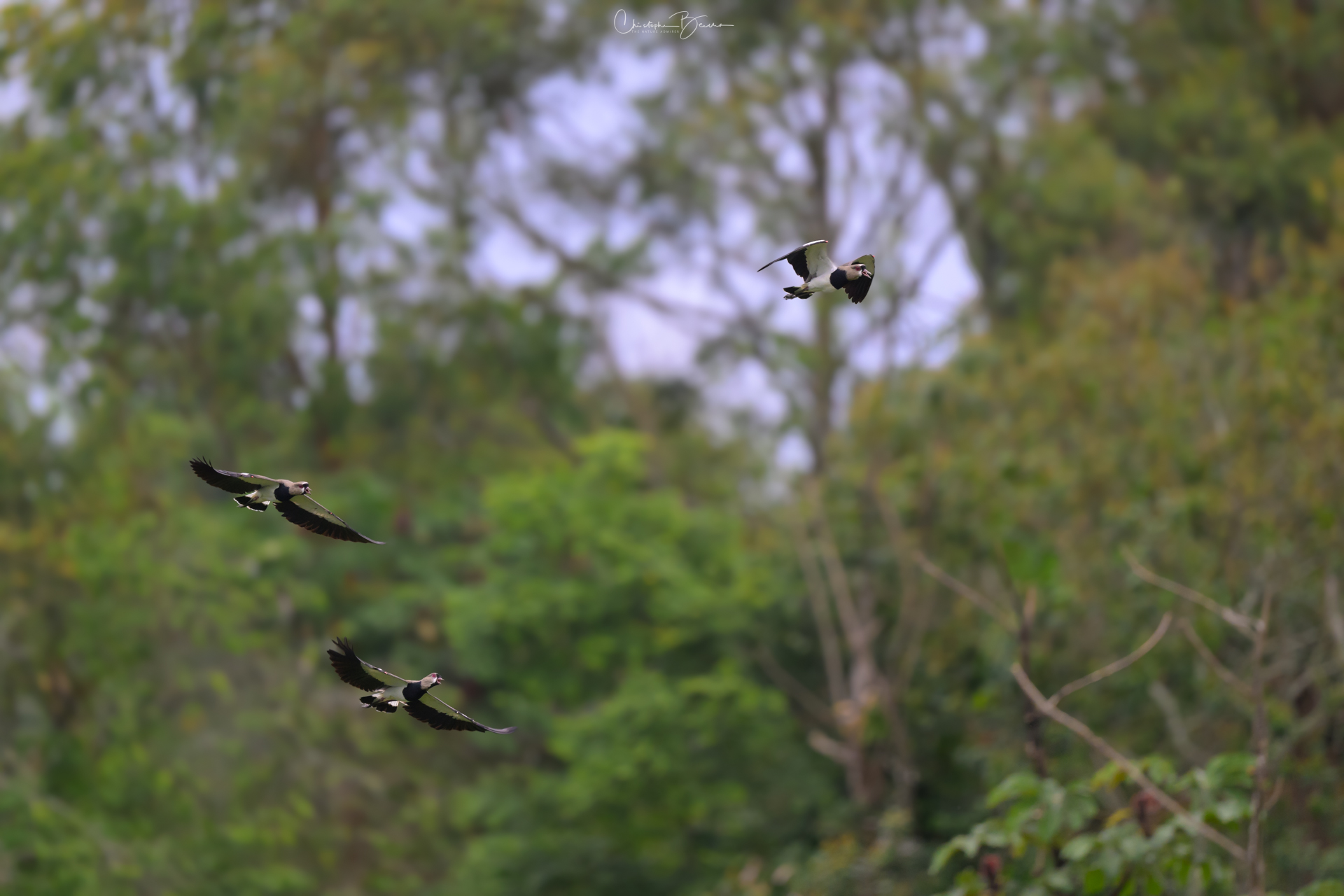
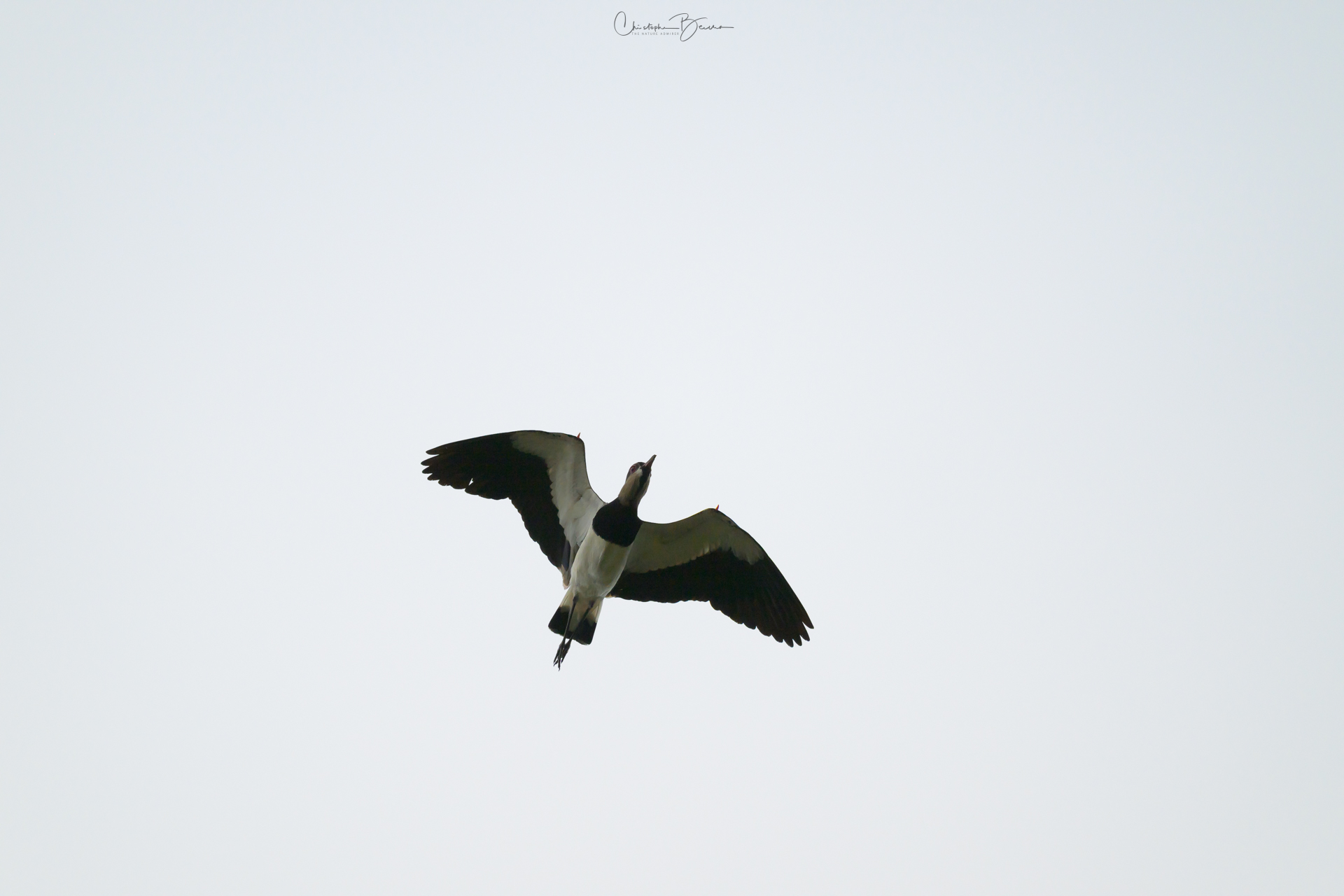
Southern Lapwing (Vanellus chilensis)

March 2nd, 2017 was a lucky day. I saw some Jacanas foraging in a small creek, so I thought I could bring my camera and try to get a nice shot. When I returned, I saw this speceis instead, which I had not seen before. It was late in the afternoon, so there was not much light to work with. The weird feathers on the top of the head were intriguing. Then on a trip to look for the Three-wattled Bellbird, we were lucky to find a group of about 5 individuals. They had at least one nest, as one individual would rest on the ground from time to time, while the others displayed aggressively towards us.

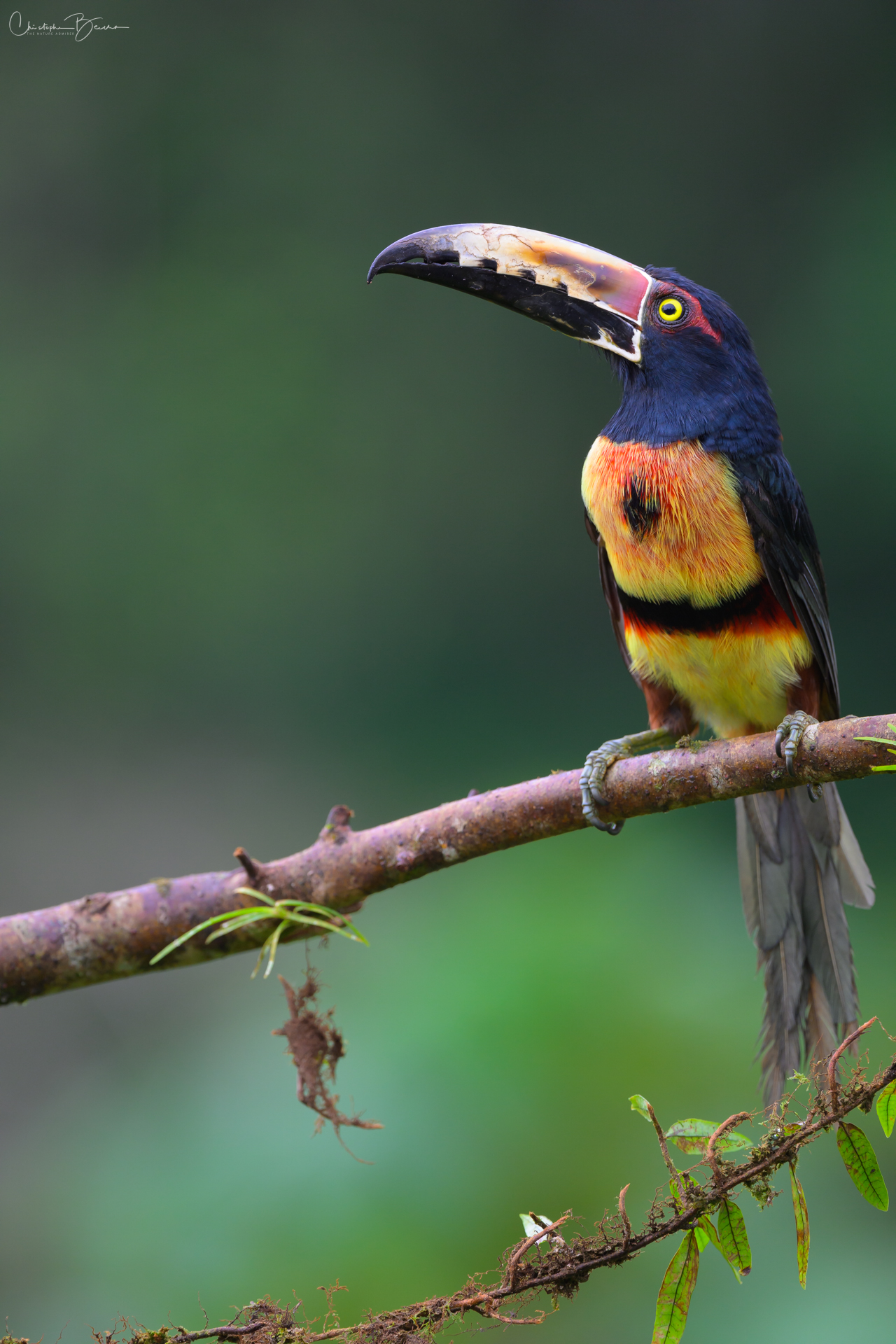
Collared Aracari (Pteroglossus torquatus)

The Collared Aracari is very similar to the Fiery-billed Aracari, but the upper part of the beak does not have the green-yellow-red coloration found on the Fiery-billed, and the ring around the belly is darker; also the ranges do not overlap, with the Fiery-billed Aracari seen in the Central and South Pacific, and the Collared Aracari seen in the Caribbean and the Northern Pacific. Both the Fiery and Collared Aracaris have a bright red rump, which differentiates them to the Yellow-throated and Keel-billed Toucans, which have white rumps. The juveniles have a very similar coloration, however their beaks and chest are duller in appearance, and overall the plumage is fluffier. The Collared Aracari is known in Costa Rica as the Gangster, as they always come in groups, bullying other birds that may be at food sources.

Yellow-throated Toucan (Ramphastos ambiguus)

The Yellow-throated Toucan is the bird most people think of when we say toucan. It is one of the species that appears on books and tourism guides, the other one being the Keel-billed Toucan, which is smaller. I had heard the calls of these birds, but I did not know it was this toucan until I got close enough to see the birds. All Toucans have a feature in common: While they like to eat fruit and small amphibians, they also predate nests, either for eggs or hatchlings. Most other bird species in Costa Rica are fearful of any kind of toucan, and some of them react violently to their presence, in an effort to steer them away from their nests. Only big predator birds (like the Crested Hawk-Eagle) are known to predate on them.

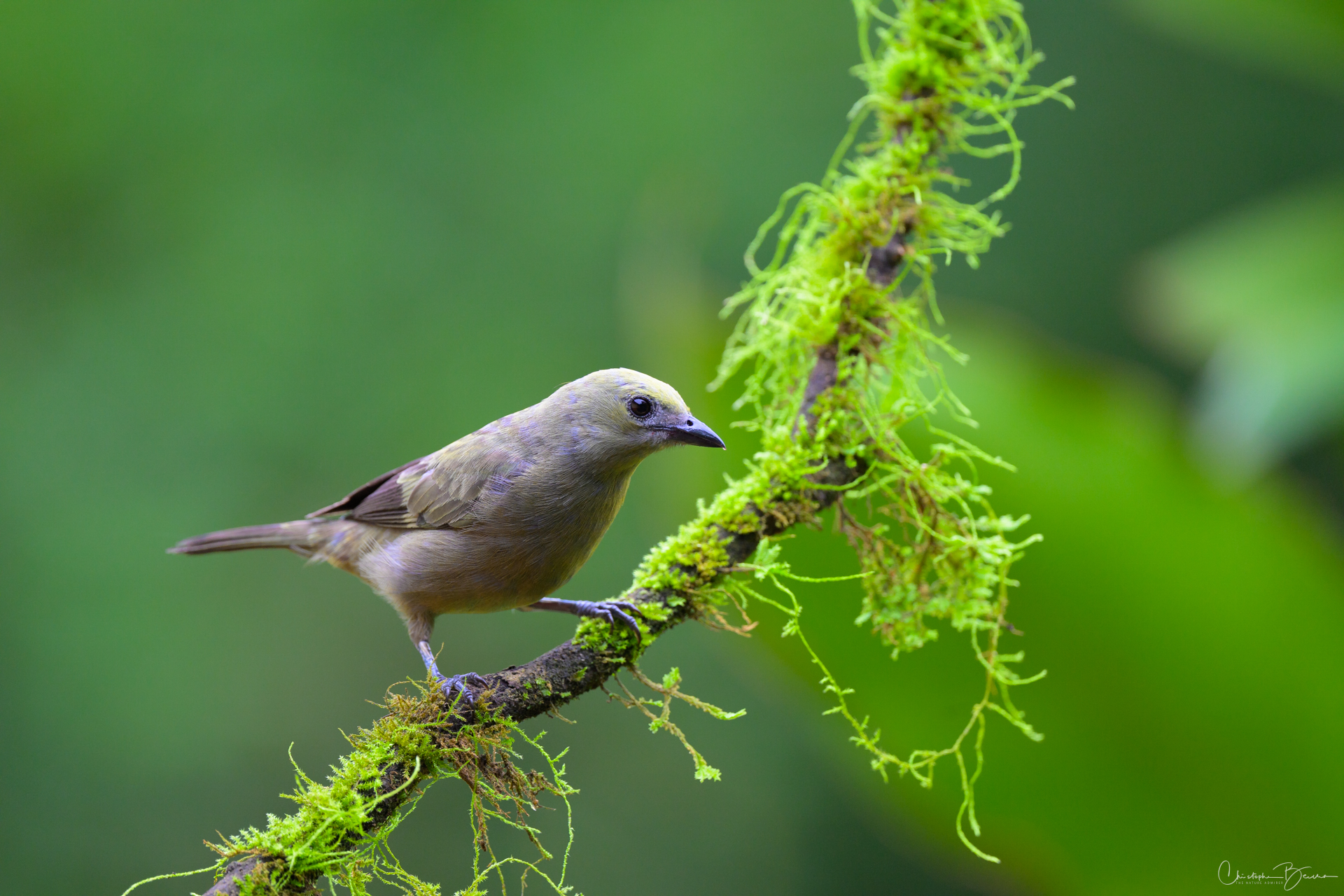
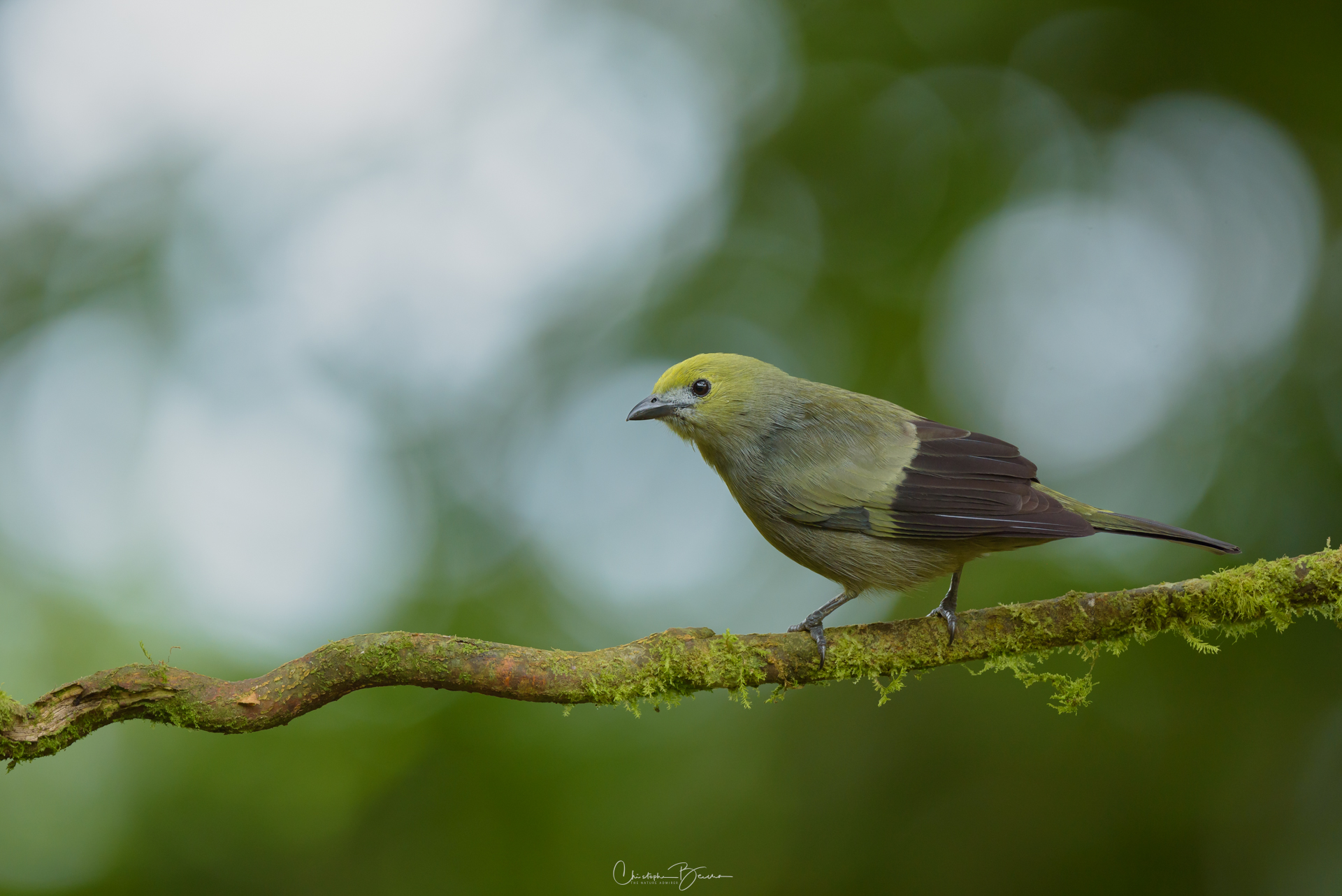
I have observed an interesting behavior many times: Tanagers, Orioles and Honeycreepers were feeding peacefully on the feeder, but whenever a Toucan closed in, all the other birds flew away and stayed in a nearby tree, calling and calling loudly. As soon as the Toucan left, all birds returned to the feeder in frenetic mode, like food was going to end soon.

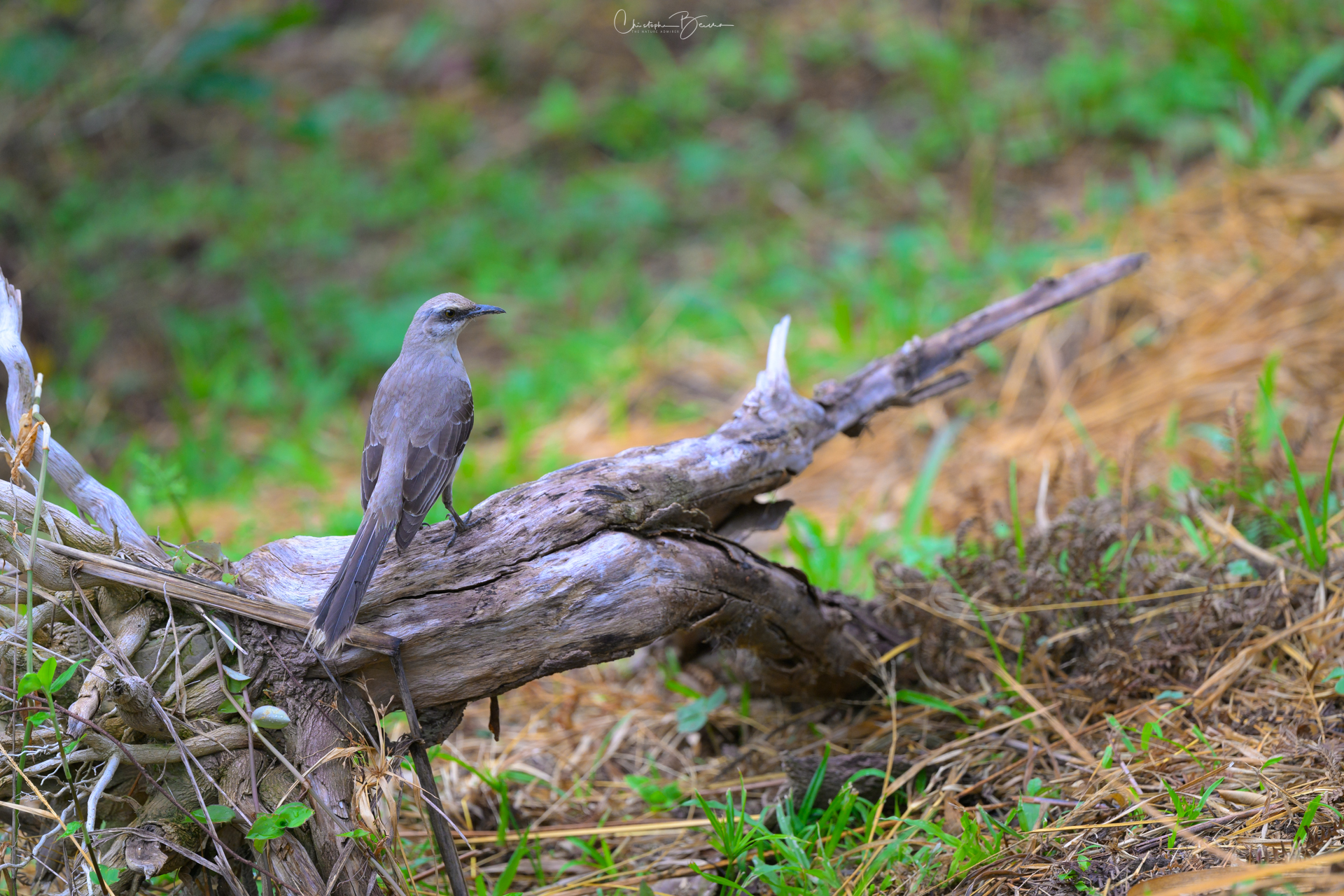
House Wren (Troglodytes aedon)

The House Wren is very common throughout Costa Rica, found in many habitats from plantain crops to open pastures; indeed as its name implies, they frequently approach homes and even construct their nests under the ceilings. It almost has not distinctive features, being brown overall with very fine barring on the wings. Its song is high pitched and composed of a great variation of chips and whistles, a delight to hear such a complex melody. They usually jump from one place to another very rapidly, not remaining in a single place for long.

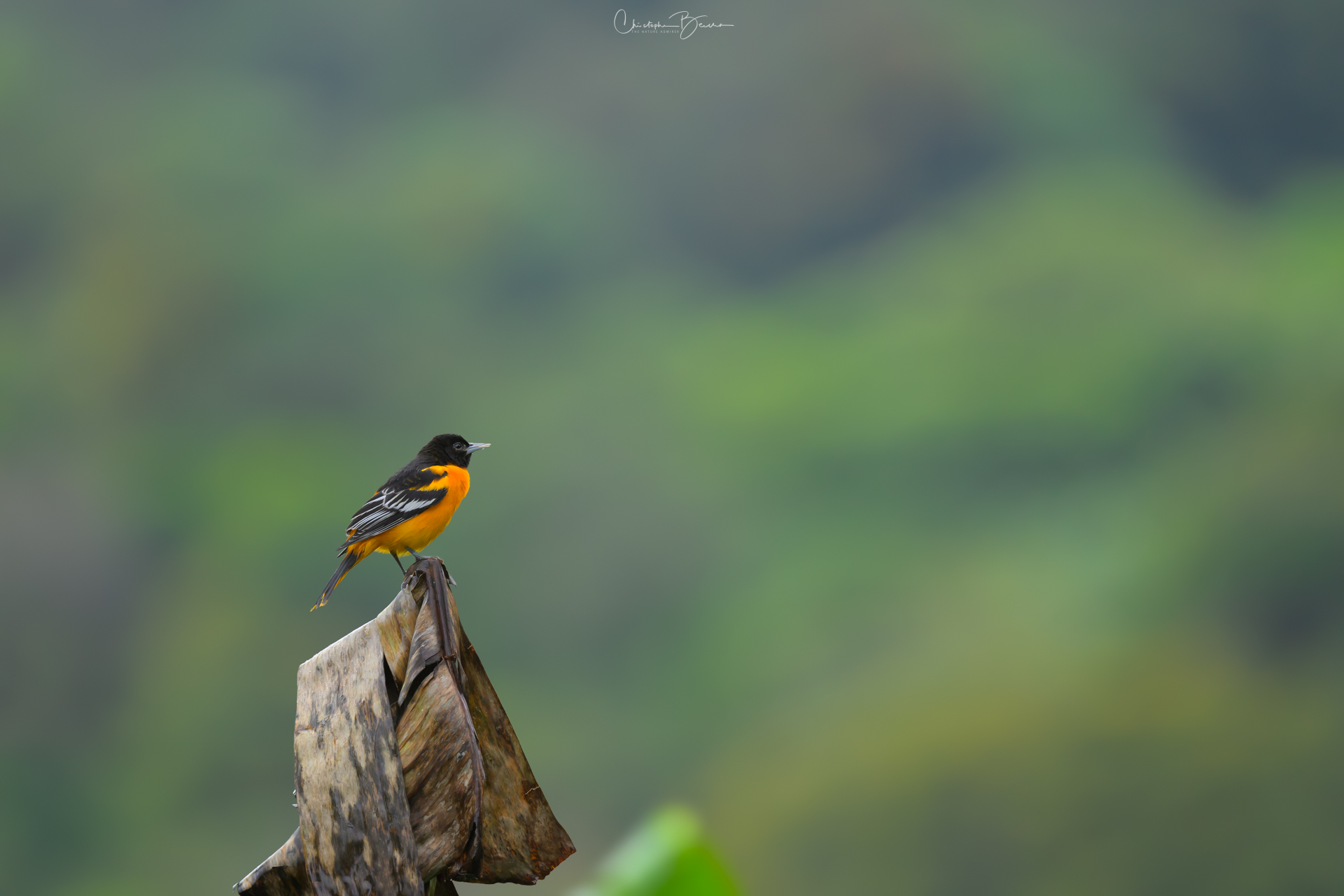
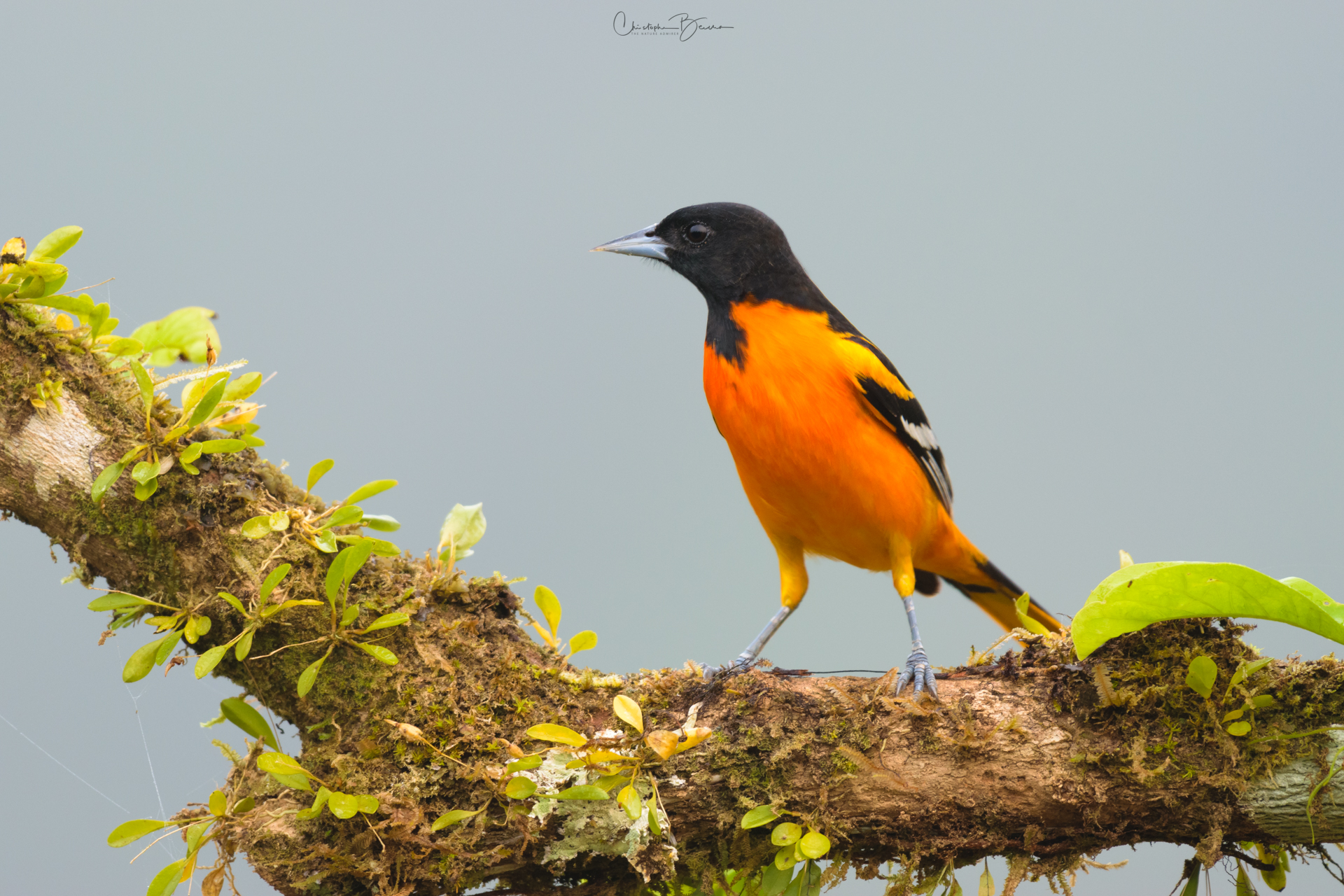
Baltimore Oriole (Icterus galbula)

The Baltimore Oriole is a colorful, migratory bird that can be seen all around the country during migration season. With such bright orange body and black head and wings, the male almost looks like a very poisonous beetle, but no bird species is poisonous to the extent of my knowledge. The female is duller, and does not have a black head as opposed to the male. The juvenile bird is even duller or pale when compared with both adults, though in low light it can be confused with the adult female.

This species comes from North America during late autumn and winter to escape the harsh, cold weather and find the abundance of the Costa Rican Tropical Rain Forest every year. I have seen it in various places, including Ciudad Colón, Río Frío, Sarapiquí and now Boca Tapada, where a lot of individuals were feasting on the fruit that the lodge administrator puts on the feeders. They can be seen fighting for the best feeding spots with Tanagers and Honeycreepers.