Eastern Meadowlark (Sturnella magna)

The Eastern Meadowlark is an inhabitant of grass plains in Central Valley and the Caribbean areas. I have seen this species at my home in San Rafael de Alajuela, at La Guacima, at the Santa Ana Windmills (that’s 1,600 meters above sea level!) and most recently in San Bernardino, near Guápiles. Sometimes they perch in fence posts, other times they just find a comfortable place in the grass where they forage. Their song is very high-pitched and far-carrying. Indeed, many times I have been able to spot them as I bike through by listening to their song. Their belly is bright yellow, while their back is streaked in cream and dark brown. A key characteristic is the plump body, more similar to the antpittas than to any yellow-bellied flycatcher. When startled, they fly away and land on another patch of grass where they feel safe, the continue foraging. The juvenile is somewhat duller and never strays too far from its parent.

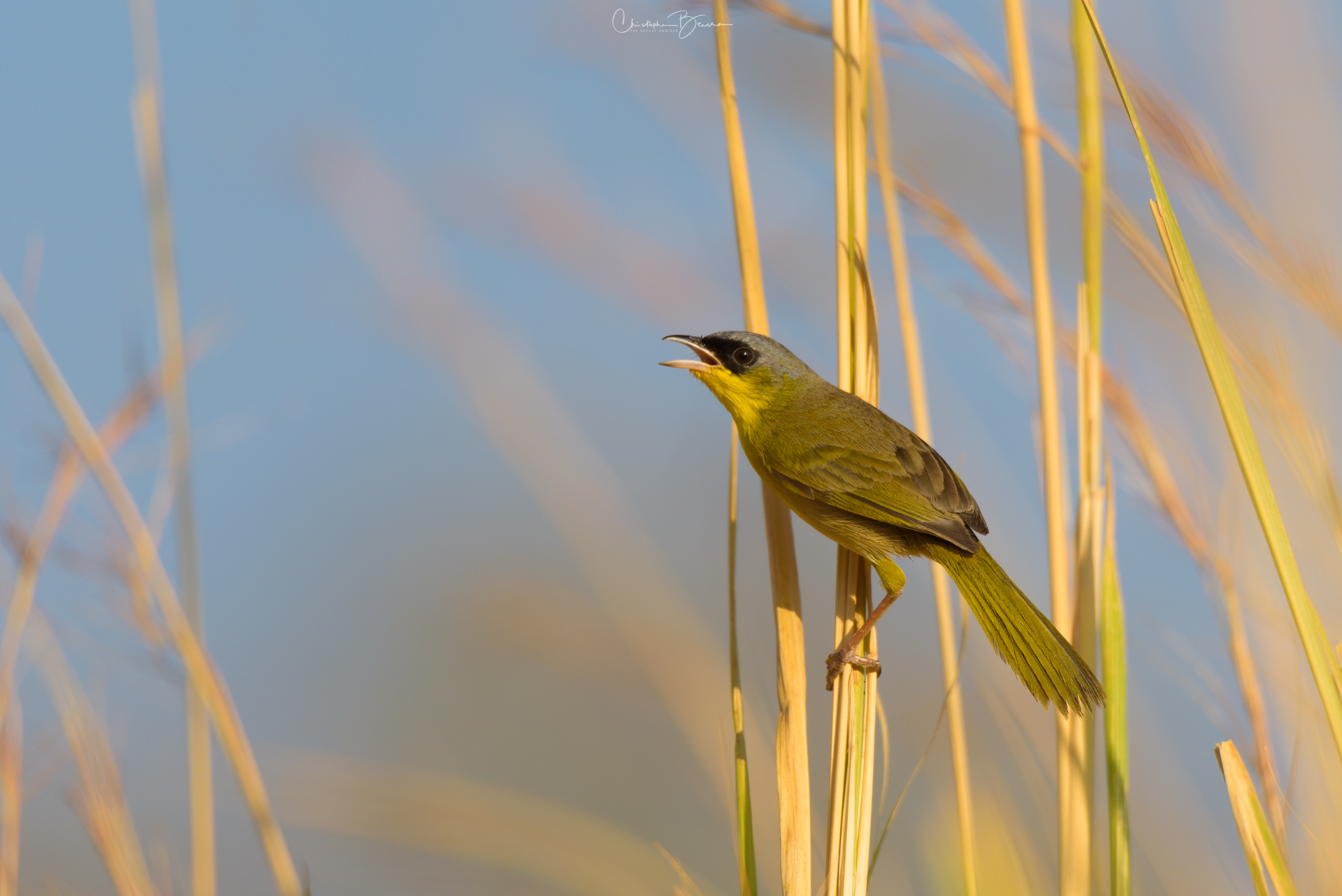
Gray-crowned Yellowthroat (Geothlypis poliocephala)

The Gray-crowned Yellowthroat is a member of the Warbler family. Its body is generally yellow, with a small black mask and gray crown in the male, features which are much smaller in the female. They have a longer tail and thicker bill than the other Yellowthroat species that occur in the country. The Gray-crowned Yellowthroat is resident and occurs throughout most of the country, while the Masked Yellowthroat is confined to a very small territory in San Vito, and the Olive-crowned Yellowthroat is only found on the caribbean lowlands and mid elevations. The Common Yellowthroat, on the other hand, is a passage migrant, seen from mid October to early April, with some individuals spending the whole winter in the country.

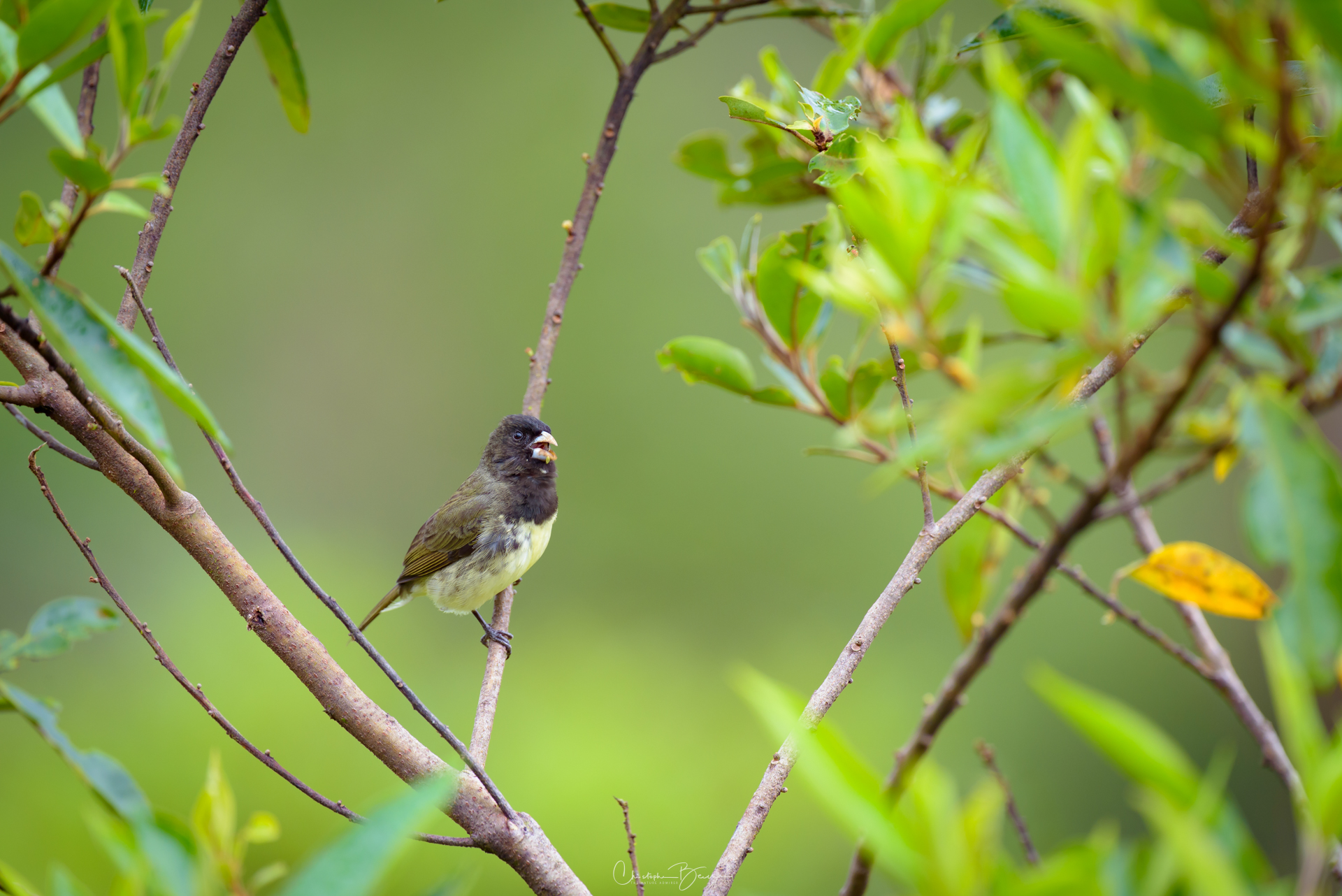
Yellow-bellied Seedeater (Sporophila nigricollis)

Yellow-bellied Seedeater seems to be a bad name for a species that has a white belly. In a true seedeater fashion, it is found eating seeds from the grass. Its upperside is gray, with a darker head. Its pale bill is short but very strong, enabling it to crack bigger seeds. It shows some dark patches on the flanks and on the separation of throat and chest.
Slate-throated Whitestart (Myioborus miniatus)

The Slate-throated Whitestart is part of the Myioborus genus that includes also the Golden-fronted and Collared Whitestart or Redstart, as are called sometimes. It is a varied genus of warblers that are present in all of the American continent, in different species. In Costa Rica, the Slate-throated is also found along with the Collared species, although here they are called Redstarts instead. They forage very actively on the ground or low in the bushes, flashing their tail to frighten insects that are then caught in the air. Their upper parts and throat are dark grey, while their underparts are yellow in the south, and red on the northernmost part of their range. It also shows a dark red crown that’s difficult to see unless in good light.

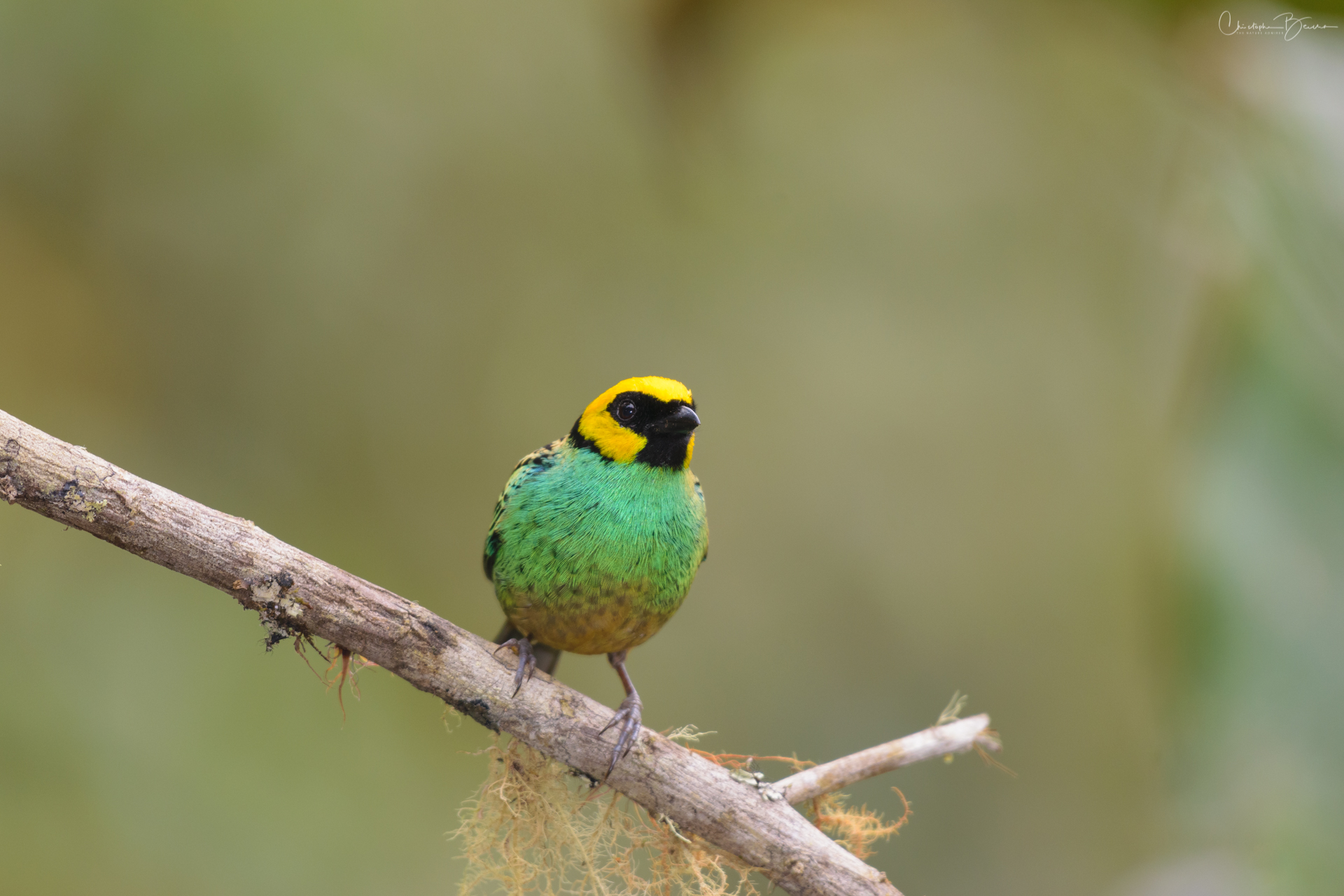
Saffron-crowned Tanager (Tangara xanthocephala)

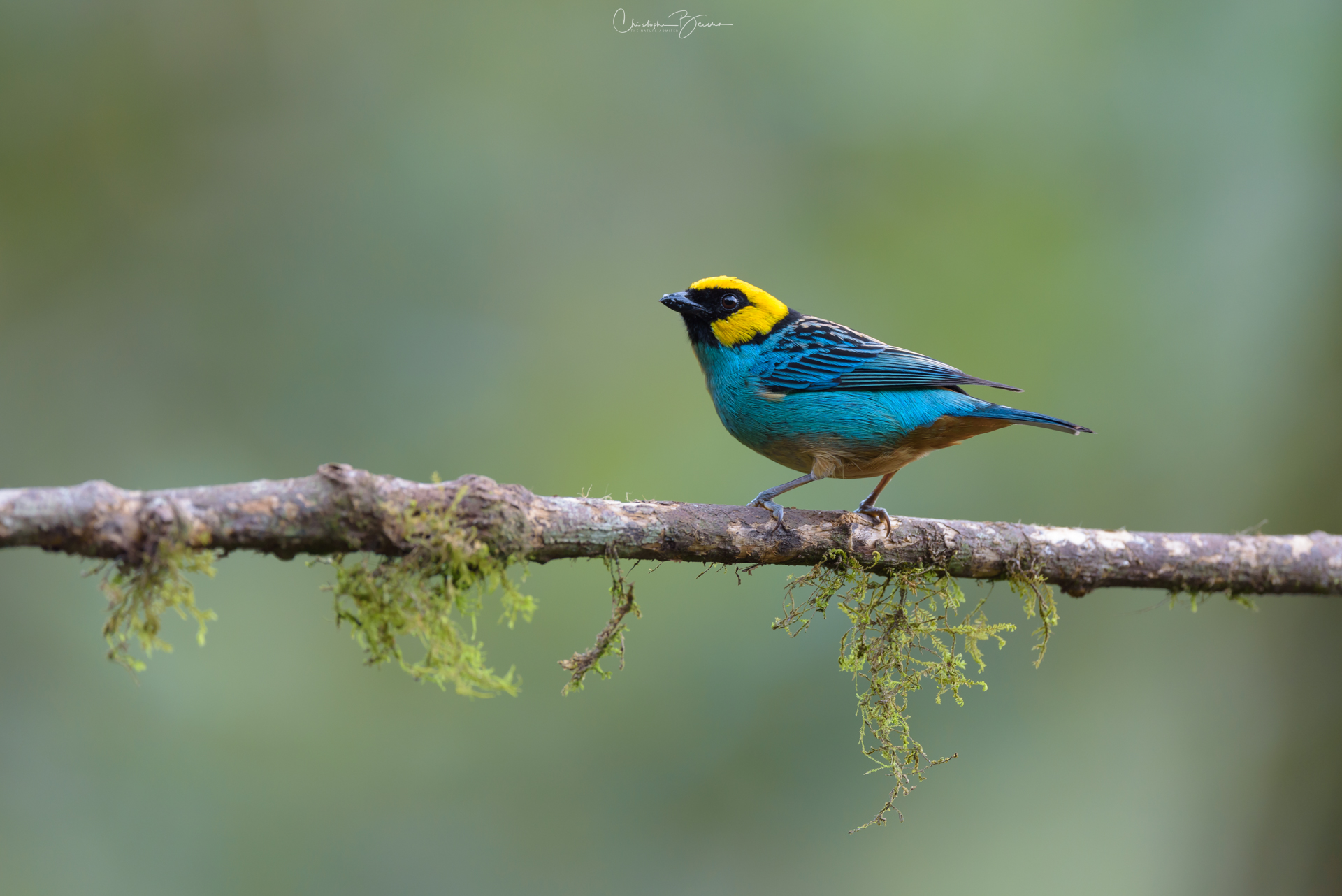
The Saffron-crowned Tanager is very confusing, since its plumage coloration can change a lot depending on the prevailing light. One thing that not changes and that really identifies this species is the yellow head with black mask. The body is either turquoise with green patches, or light green with turquoise patches. Whichever the color seen, it has a spotted appearance on the back and black wing feathers with turquoise/green linings. The belly and vent are white. In terms of body shape, it is very similar to the Gold Tanager, but with a very different coloration; this made them unmistakable even though they often shared the same feeder at Finca Alejandría.

Red-headed Barbet (Eubucco bourcierii)

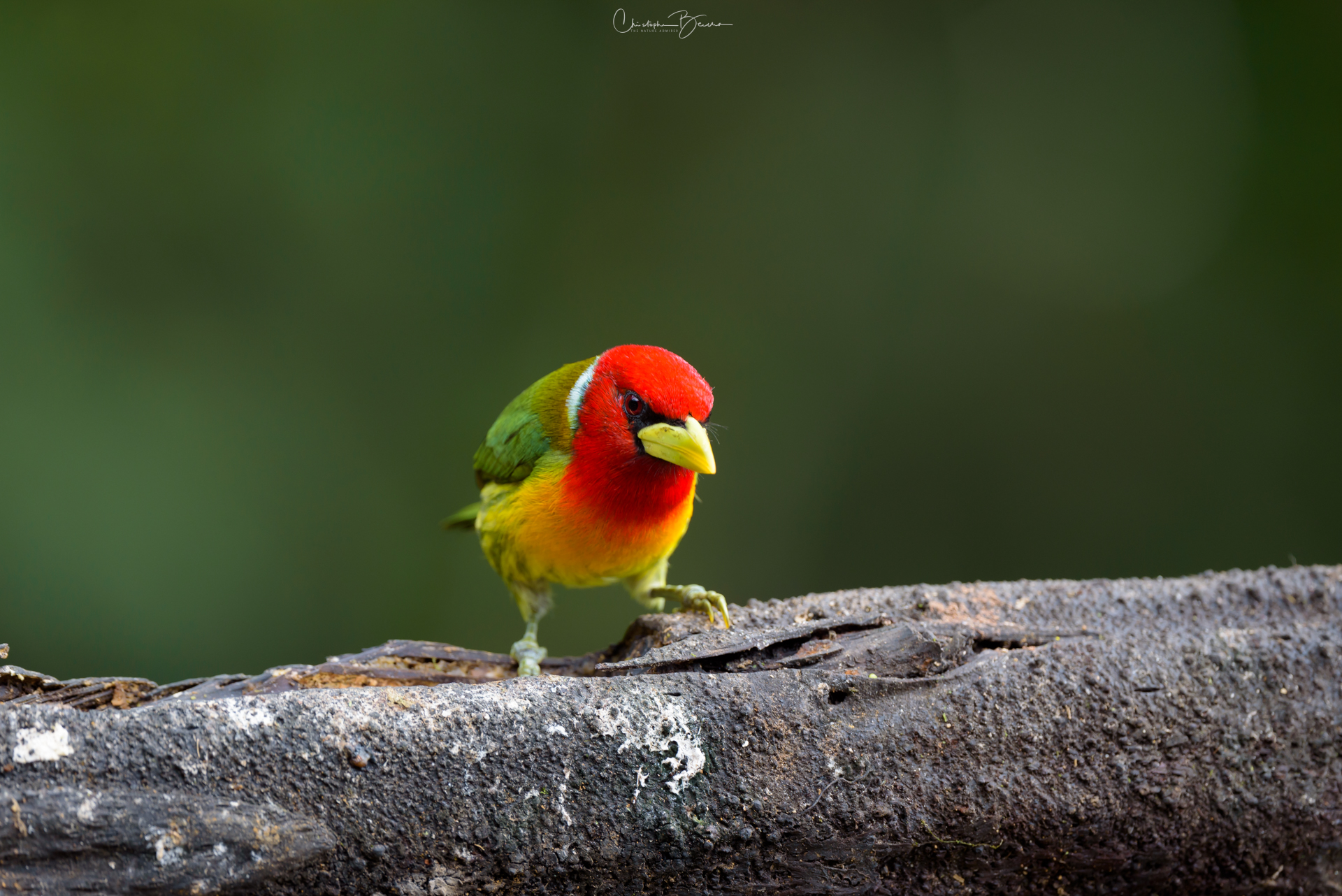
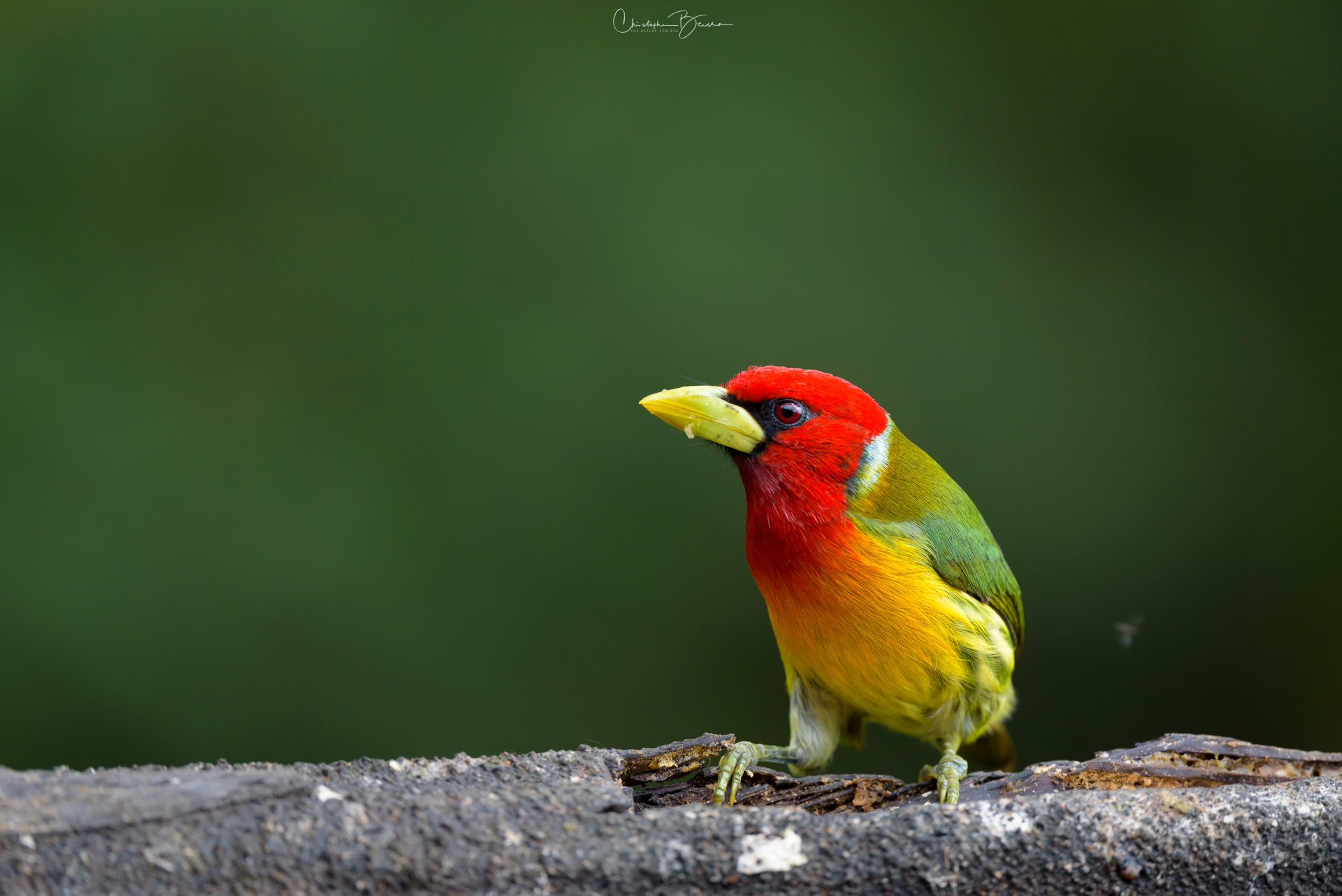
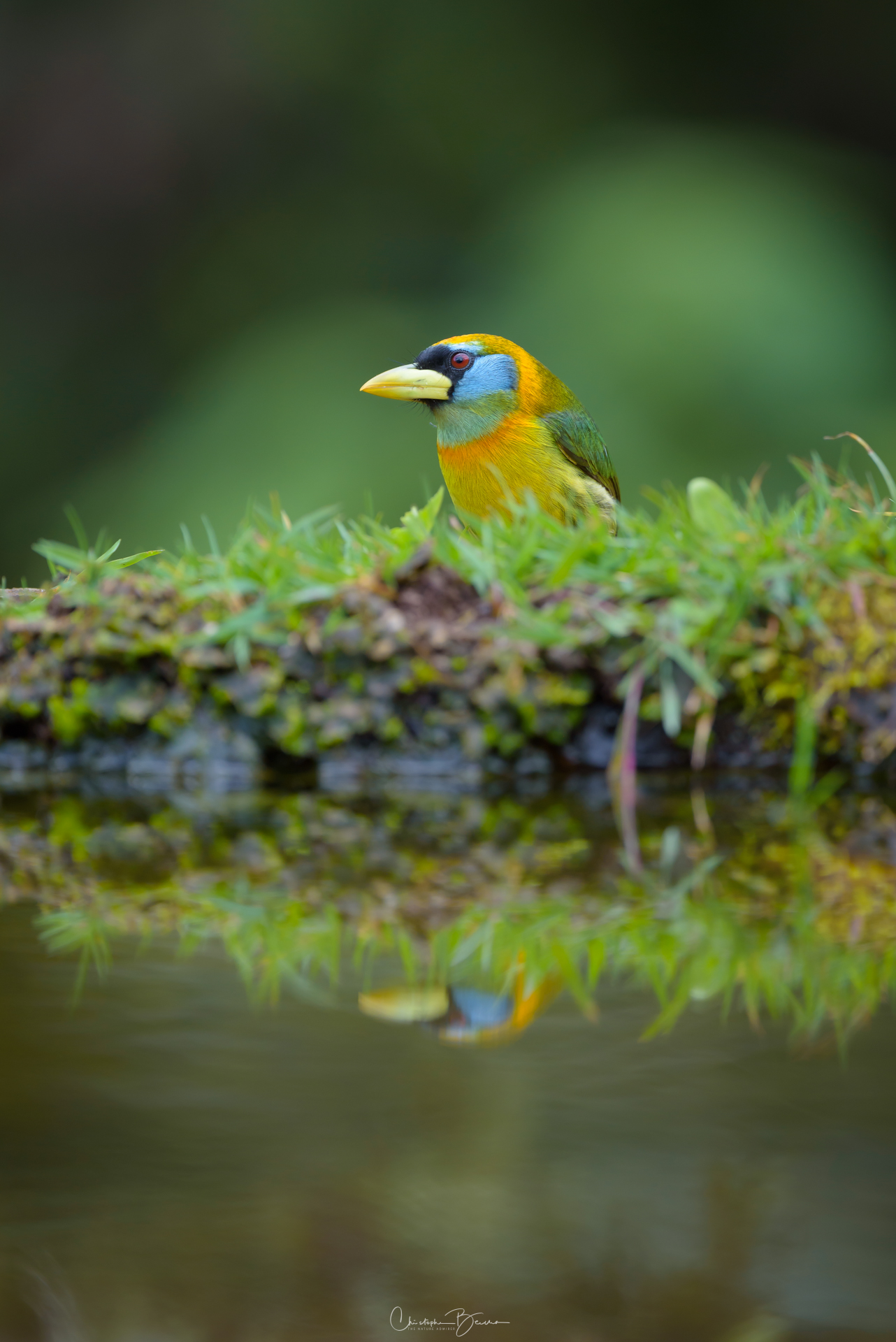
This bird is a beauty, one that we can find in some spots around Costa Rica like Cinchona and Braulio Carrillo. I first met it during this trip to Colombia in Finca Alejandría, where a pair of this species would come and go from the feeders frequently. It is bigger than most tanagers, however it is rather small when compared with how I imagined it. It is the sole species of the Eubucco genus that is found in Costa Rica, with Colombia also hosting the Lemon-throated Barbet. They are related to the toucans, and as such they eat a lot of fruit, however they do not share the Toucan’s behavior of raiding other birds’ nests for eggs and hatchlings. The male and female only share the green body and yellowish beak, with the male having a red face with a white ring separating it from the back, a belly that transitions from deep orange to yellow as it goes down, and flanks that are streaked green and light yellow. On the other hand, the female features a black face with light blue cheeks, orange half hood and patch on the chest, light yellow belly and again streaked flanks in green and light yellow.

Golden Tanager (Tangara arthus)

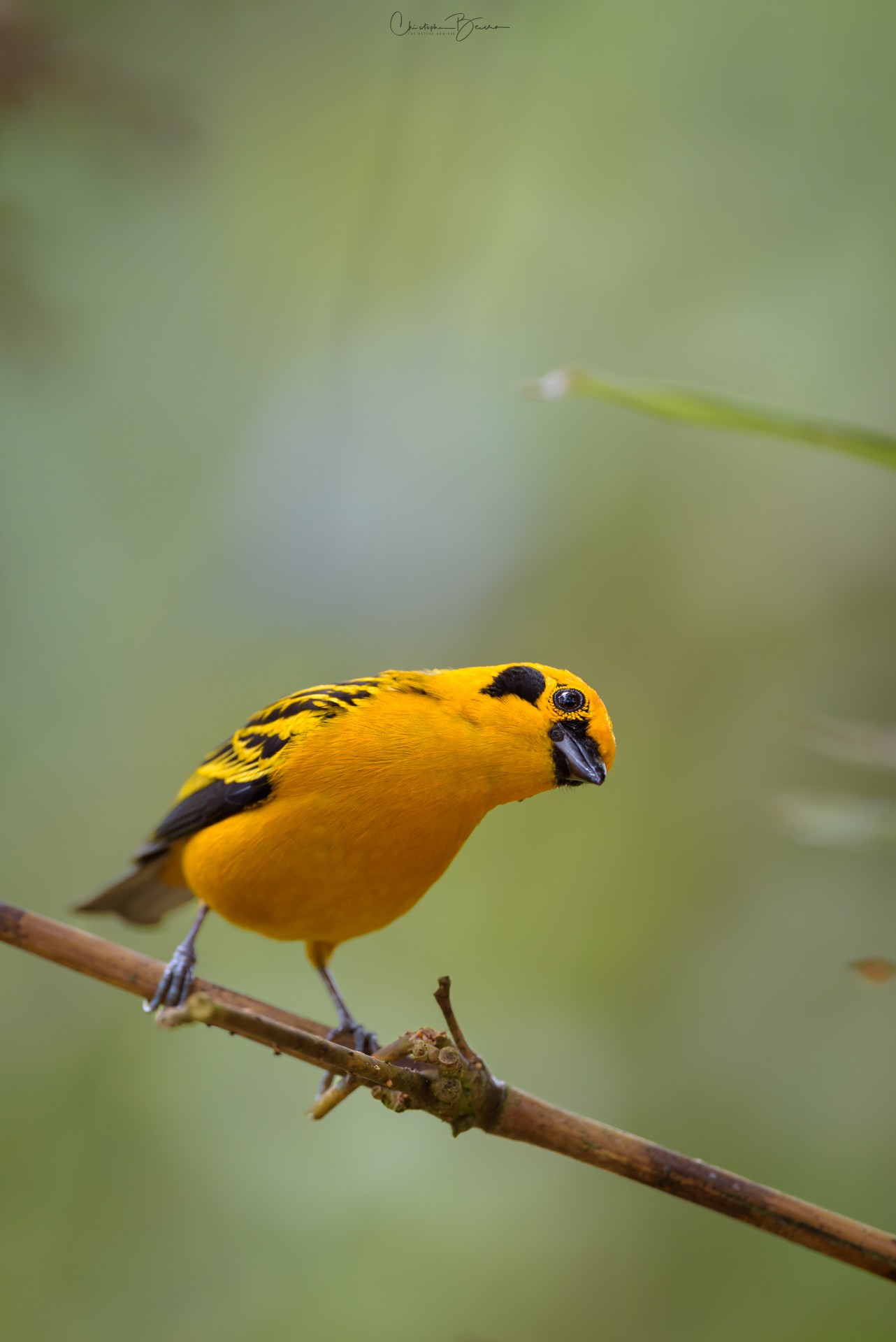
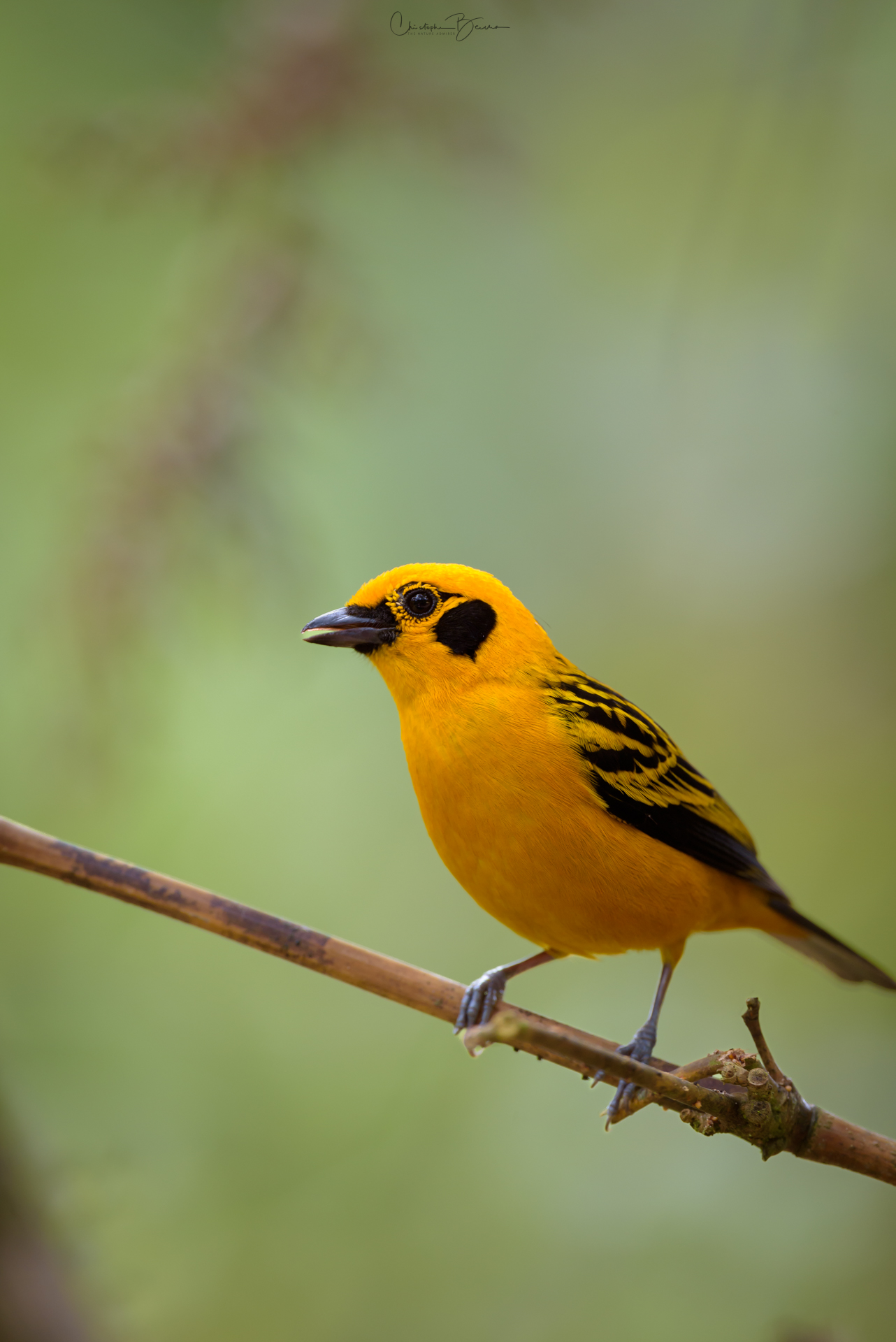
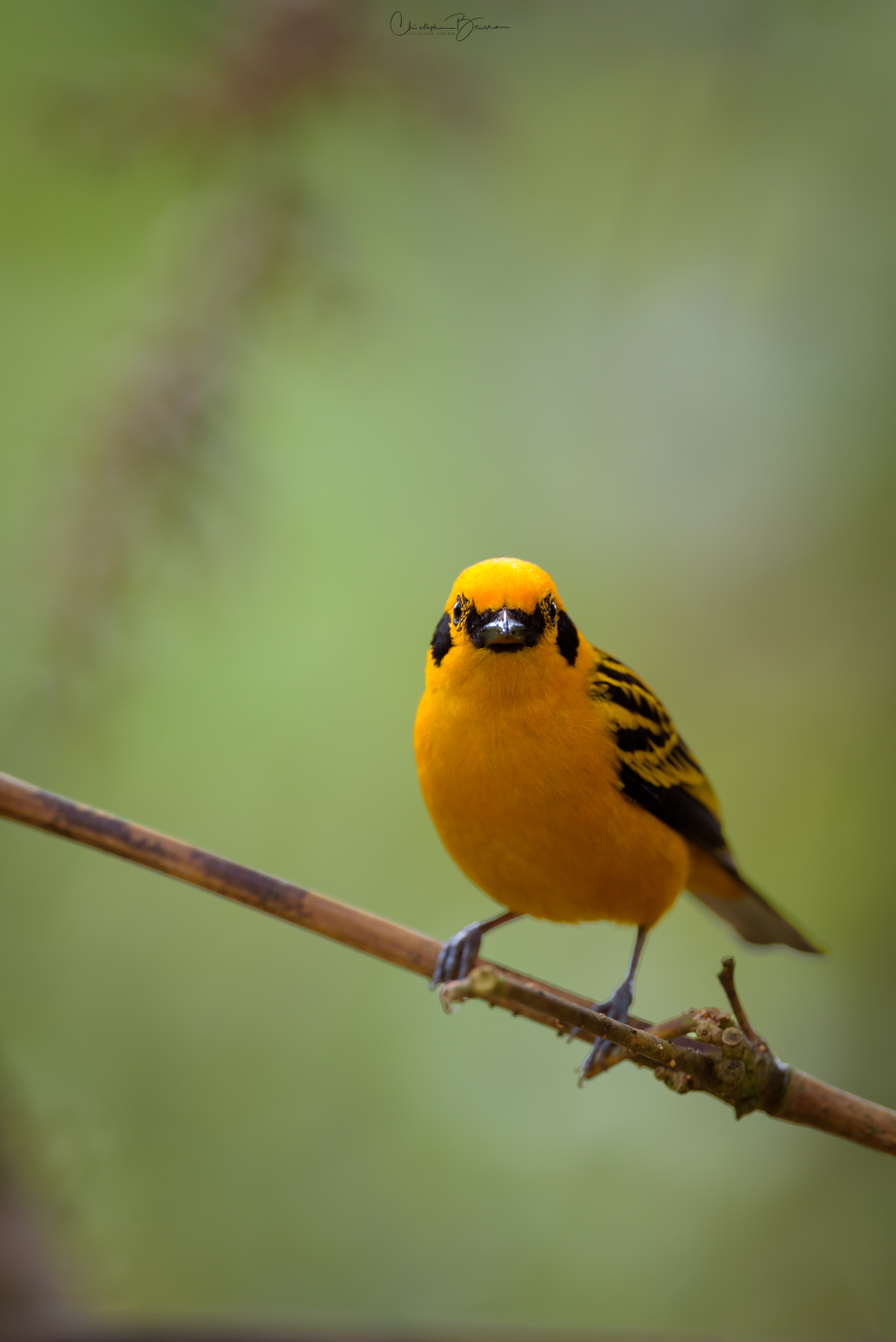
The Golden Tanager at first glance may resemble a bit the Silver-throated Tanager due to their similar body form, however the Golden is much darker in coloration with an orange body, and lacks the distinctive white throat of the Silver-thorated. Instead, it features a black ear patch. The back has heavy black markings all around, and the wings also are very contrasty. They readily come to fruit feeders and shares a space with other tanagers and honeycreepers.

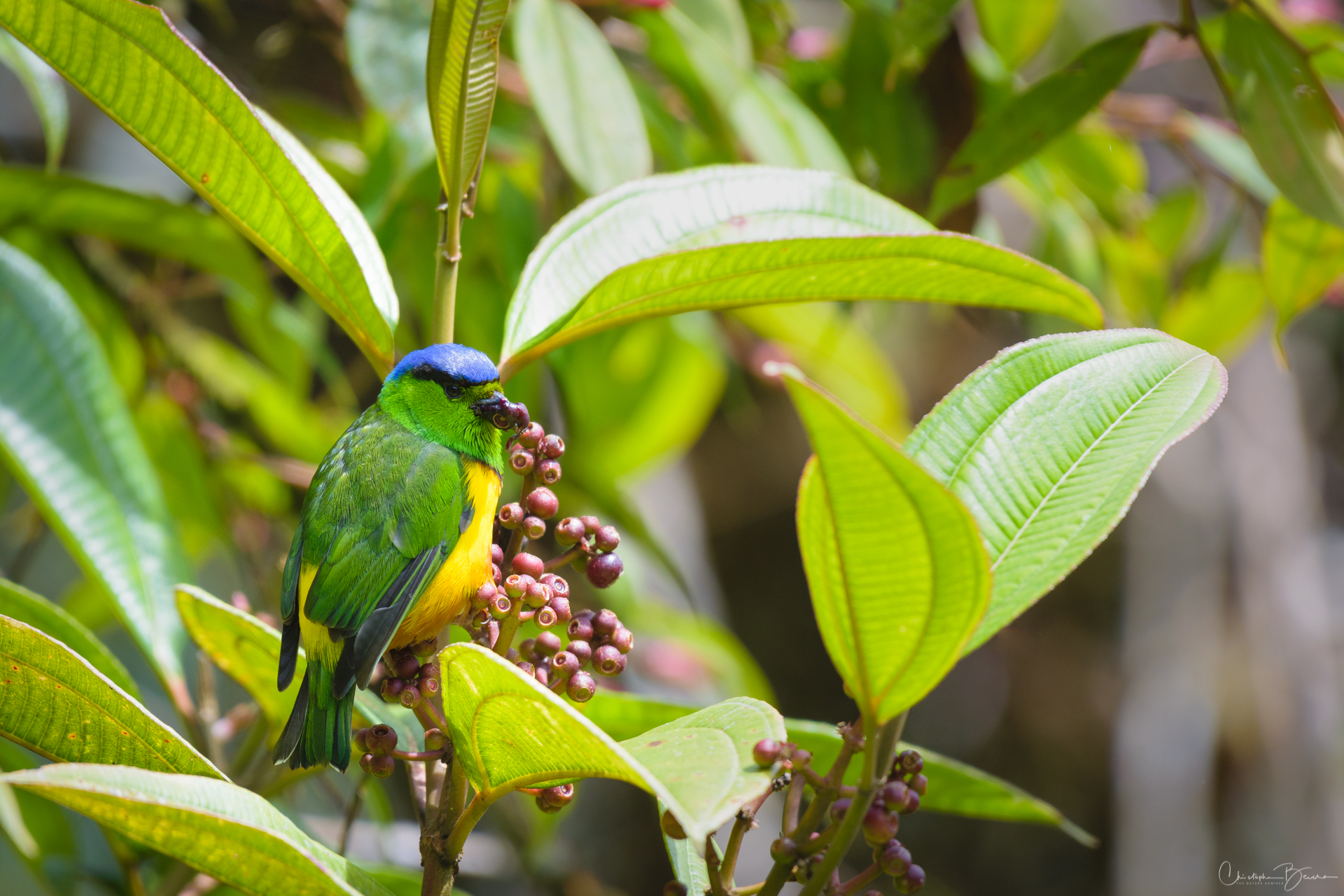
Chestnut-breasted Chlorophonia (Chlorophonia pyrrhophrys)

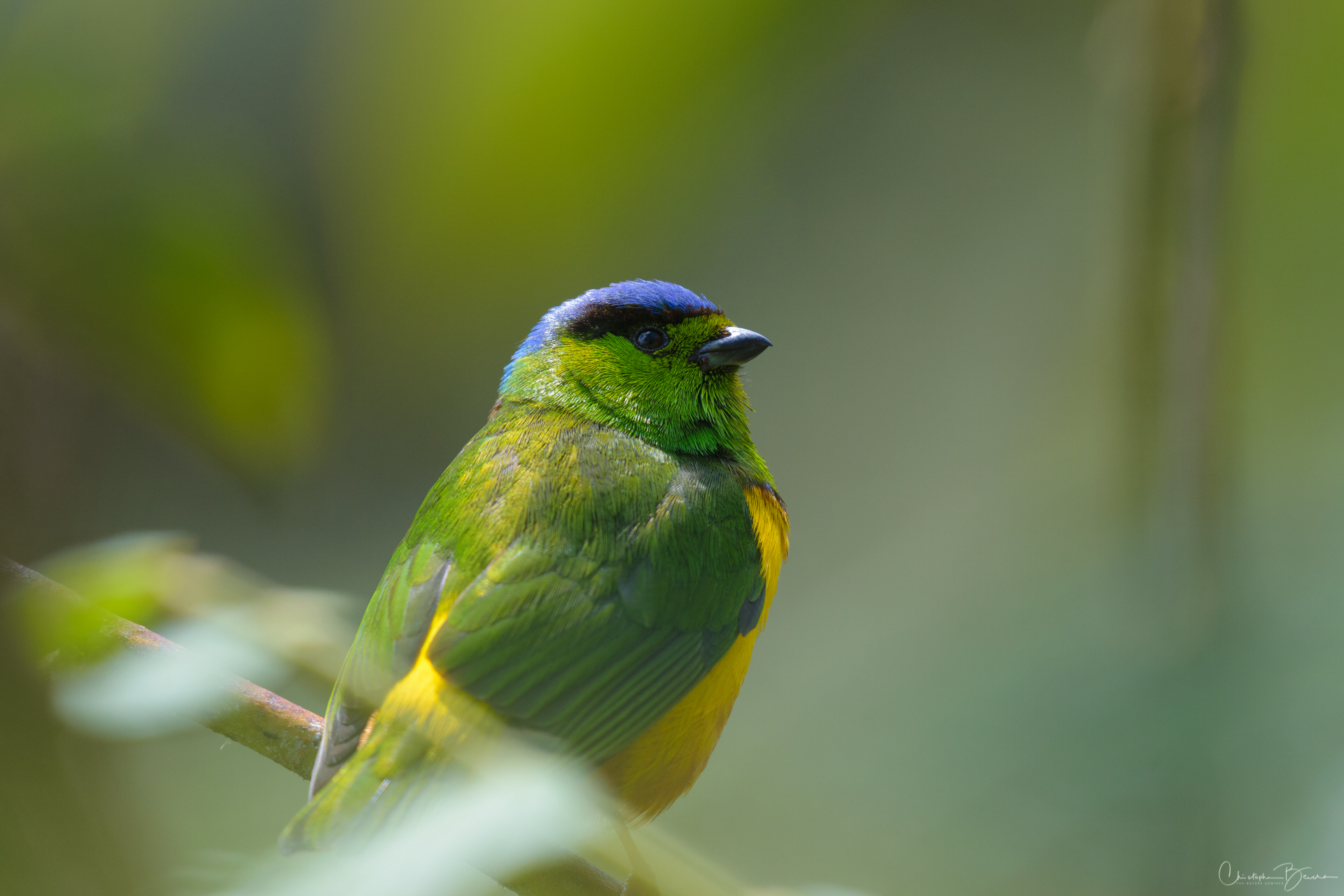
The Chestnut-breasted Chlorophonia has a very descriptive name, although I could not get any pictures where that breast is visible. Its colors range from dark green on the back and wings, lighter green on the throat and face, yellow rump, black supercilliary and blue cap. On the underside, the male features a yellow belly with a chestnut breast, whereas the female is mostly green below. They like to eat small fruits and do not seem to be too frightened of people. As a matter of fact, one bird almost perches on my lens but preferred to land on a nearby bush that could provide actual food. It stayed for about half an hour, not feeling threatened at all by us shooting pictures at him.