Page 3 of 3

Yellow-throated Toucan (Ramphastos ambiguus)

The Yellow-throated Toucan is the bird most people think of when we say toucan. It is one of the species that appears on books and tourism guides, the other one being the Keel-billed Toucan, which is smaller. I had heard the calls of these birds, but I did not know it was this toucan until I got close enough to see the birds. All Toucans have a feature in common: While they like to eat fruit and small amphibians, they also predate nests, either for eggs or hatchlings. Most other bird species in Costa Rica are fearful of any kind of toucan, and some of them react violently to their presence, in an effort to steer them away from their nests. Only big predator birds (like the Crested Hawk-Eagle) are known to predate on them.

I have observed an interesting behavior many times: Tanagers, Orioles and Honeycreepers were feeding peacefully on the feeder, but whenever a Toucan closed in, all the other birds flew away and stayed in a nearby tree, calling and calling loudly. As soon as the Toucan left, all birds returned to the feeder in frenetic mode, like food was going to end soon.

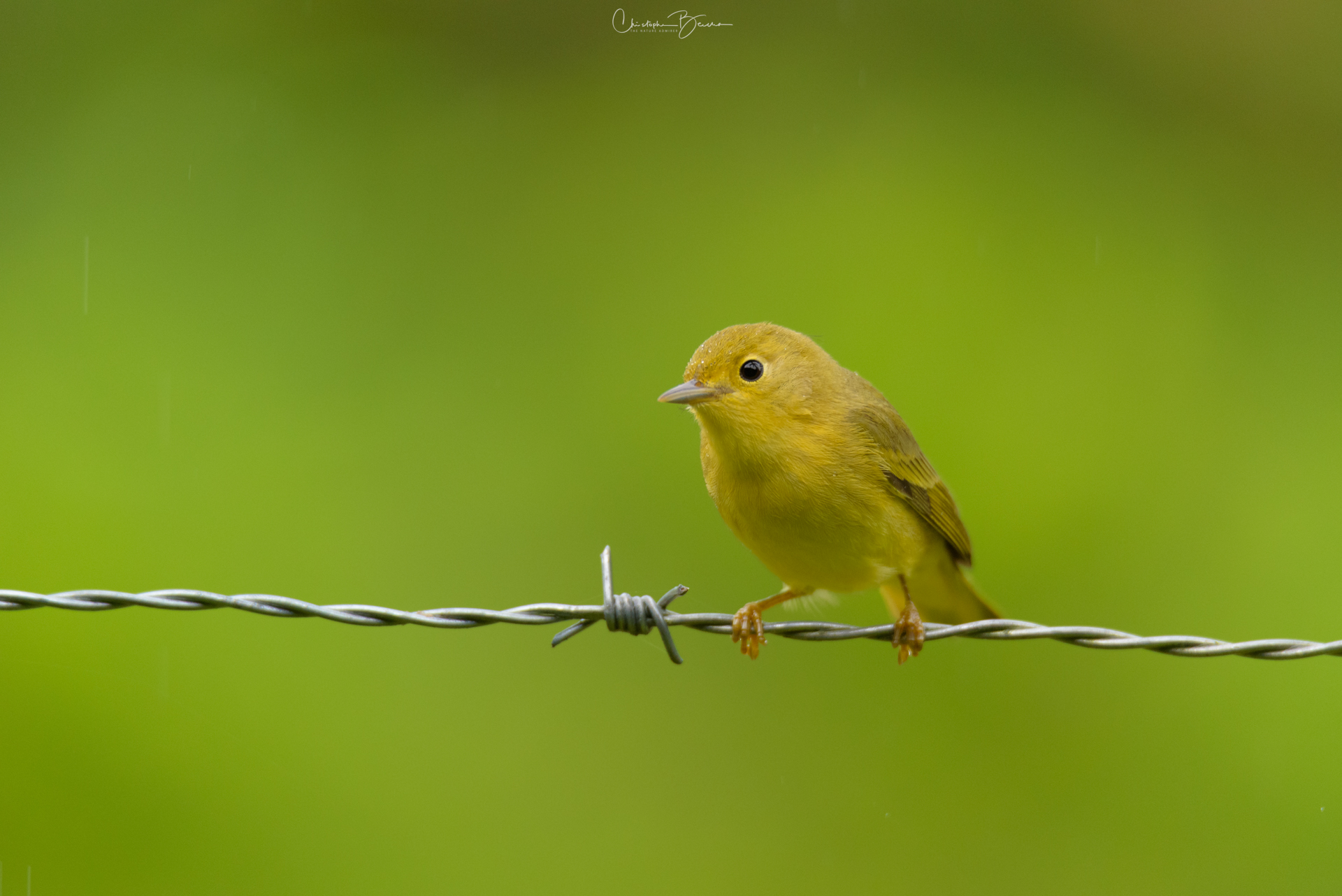
Yellow Warbler (Setophaga petechia)

As most warbler species, the Yellow Warbler moves very fast and frantically while foraging in small trees, giving out its characteristic “chip” song, which it repeats at length. It is very difficult to keep the bird in focus as it moves from place to place. It becomes a very common sight near home during September and October, when they migrate to the south, and during March and April when they return back to North America. The eye is deep black, which contrasts very nicely with the bird´s all-yellow body.

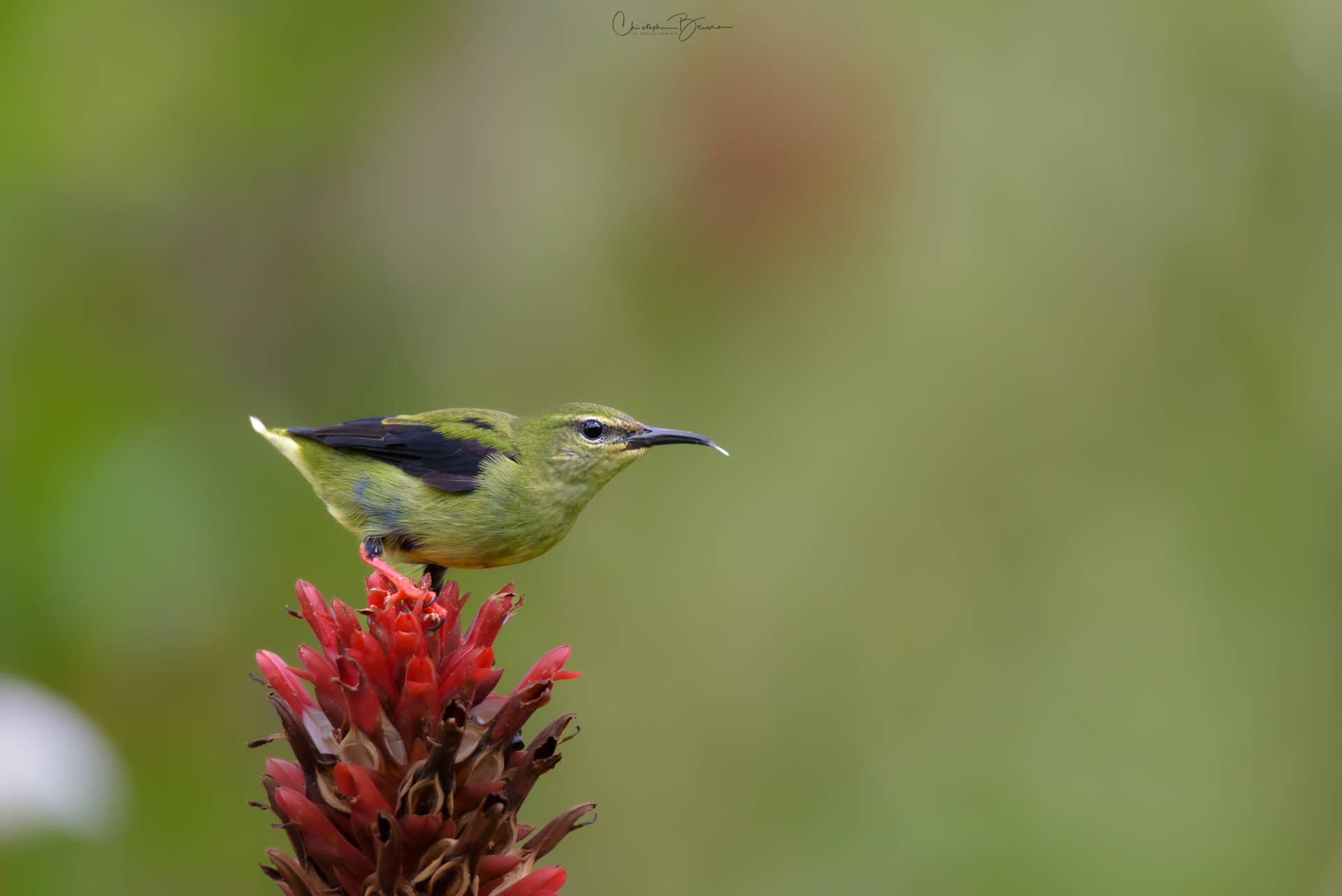
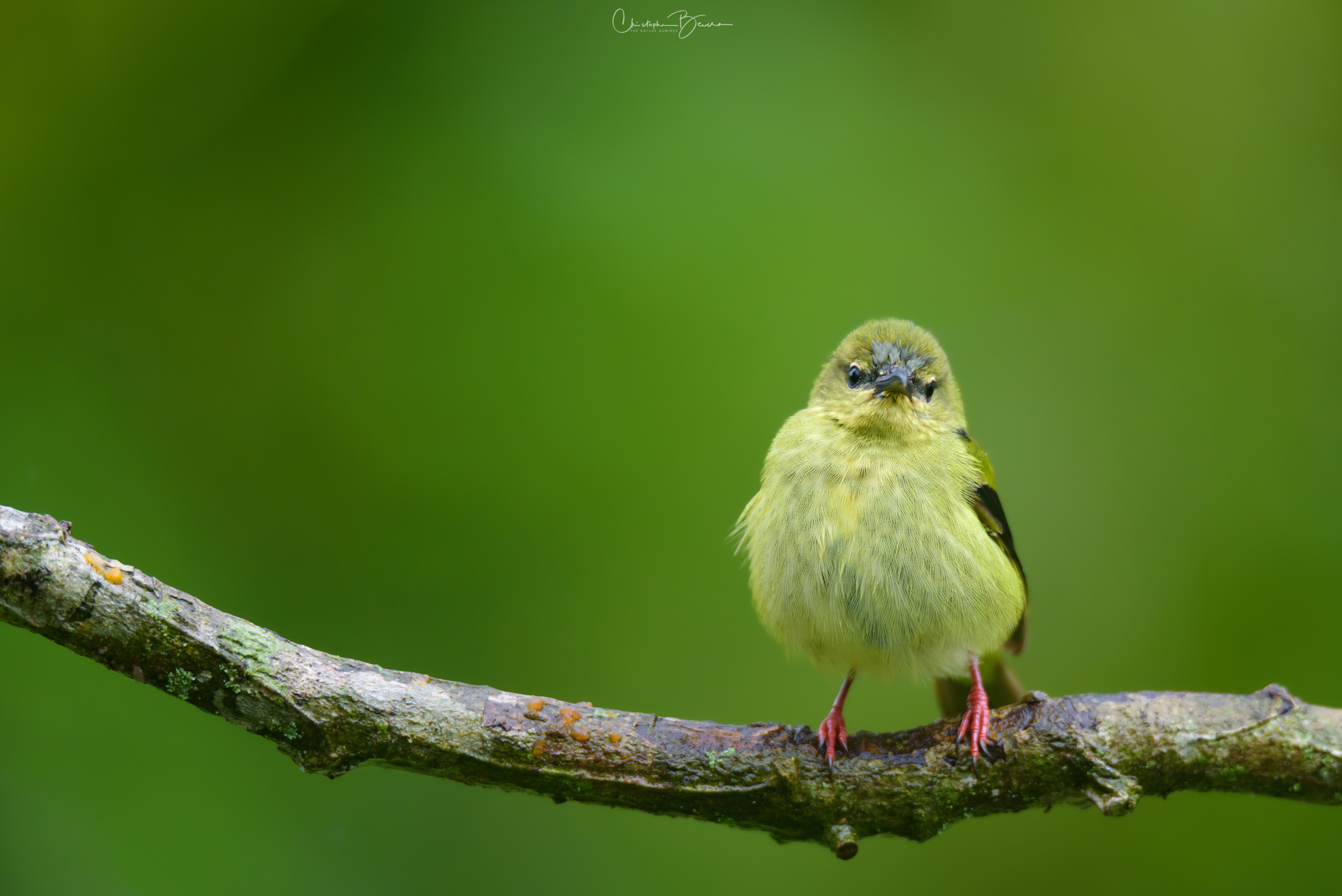
Red-legged Honeycreeper (Cyanerpes Cyaneus)

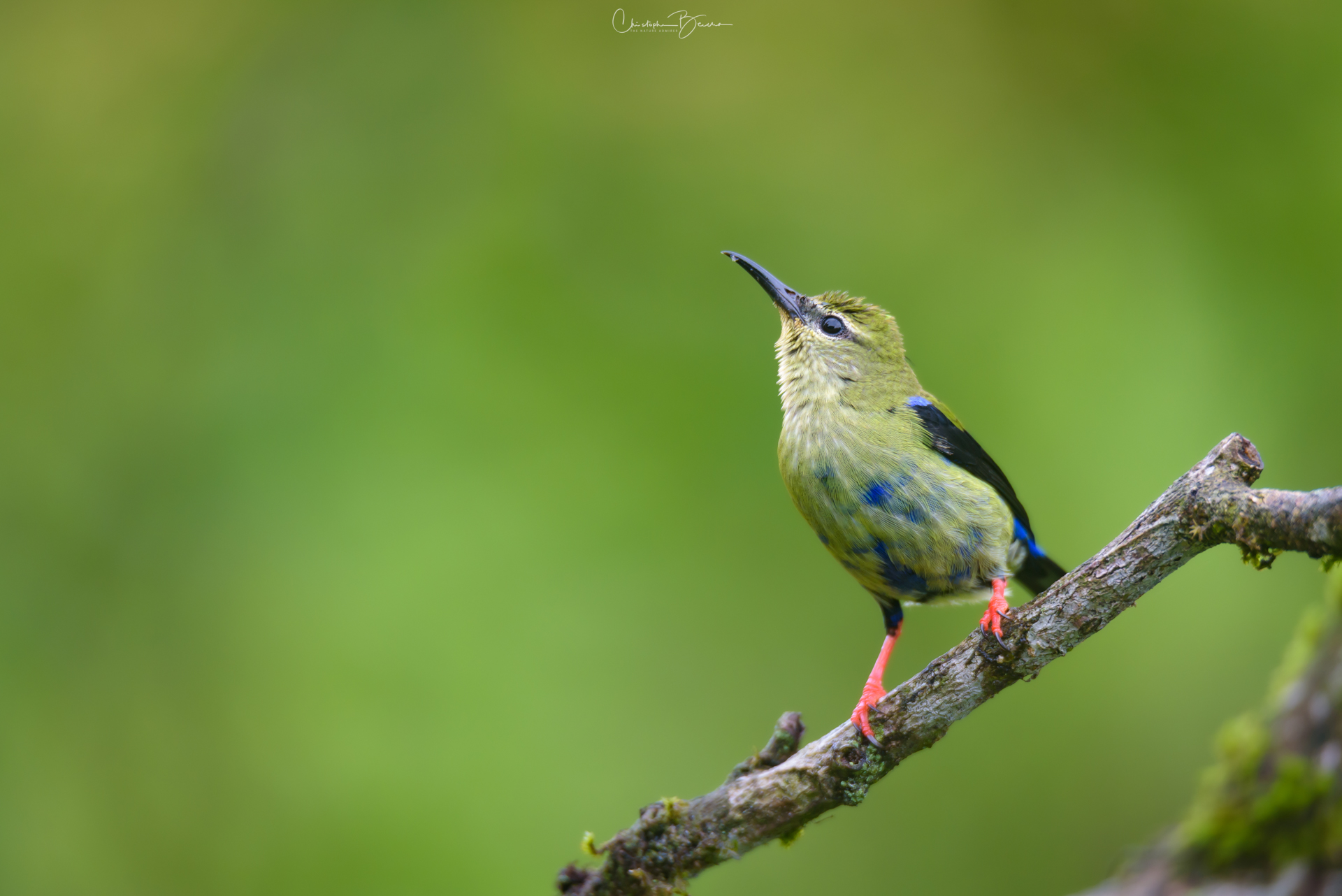
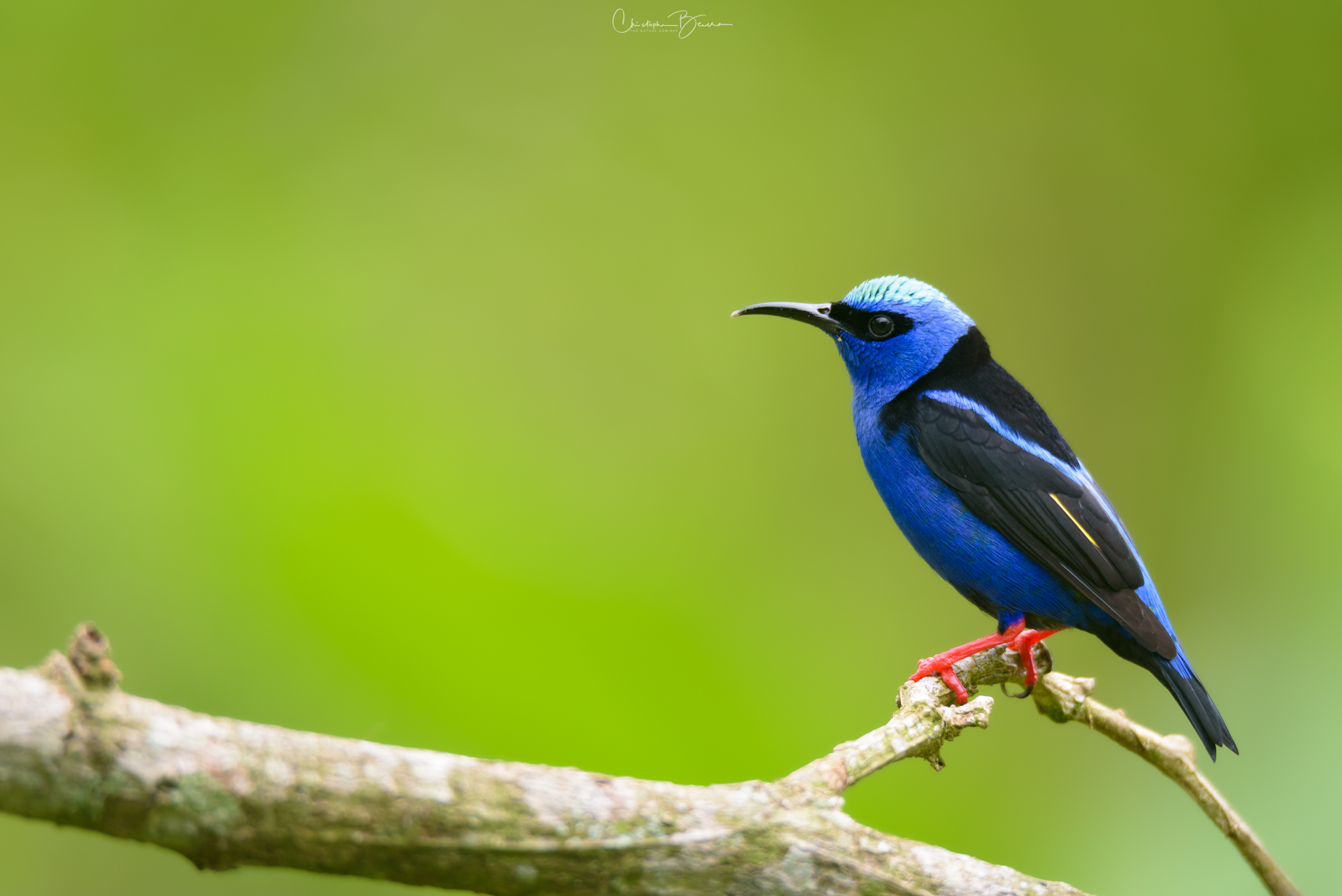
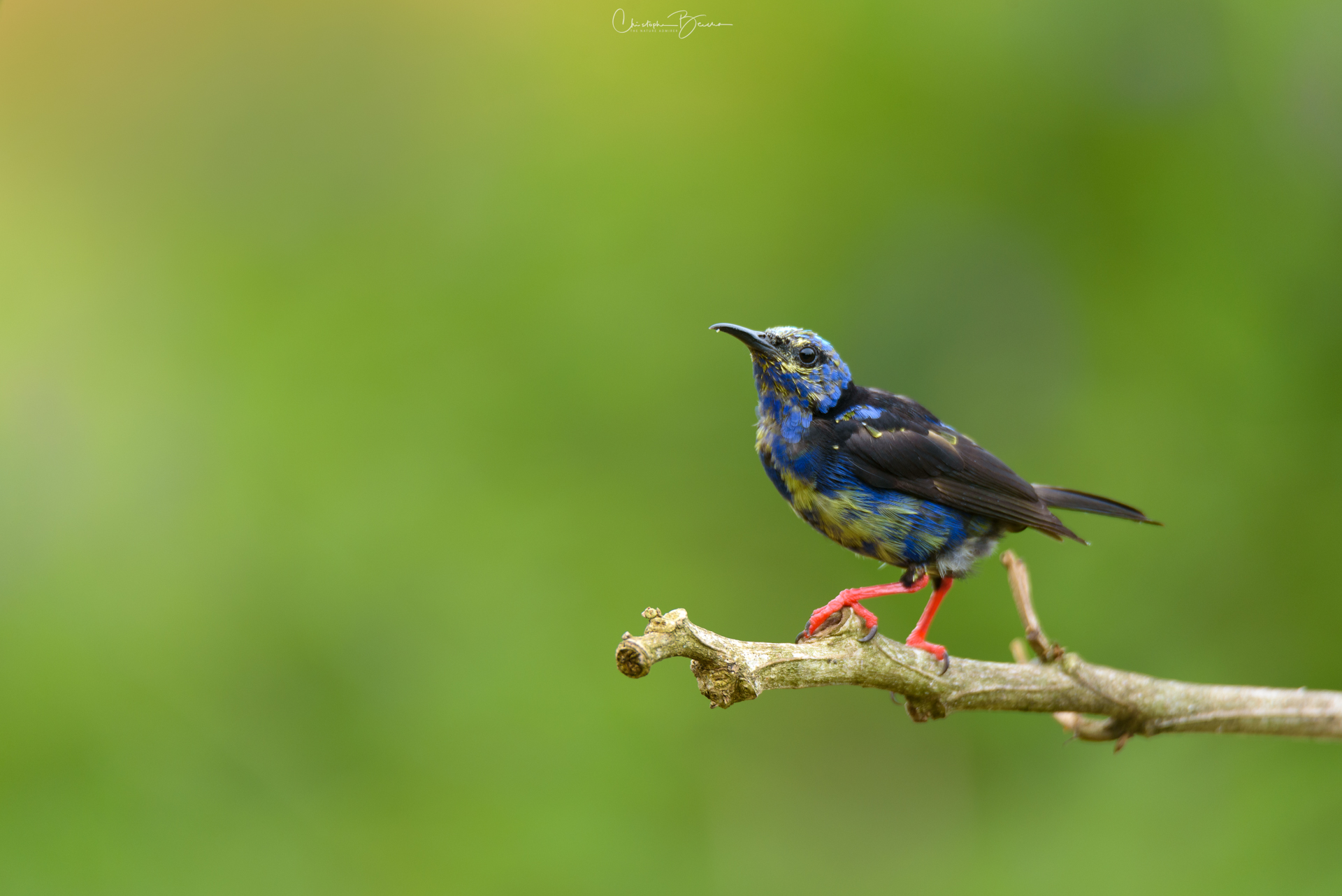
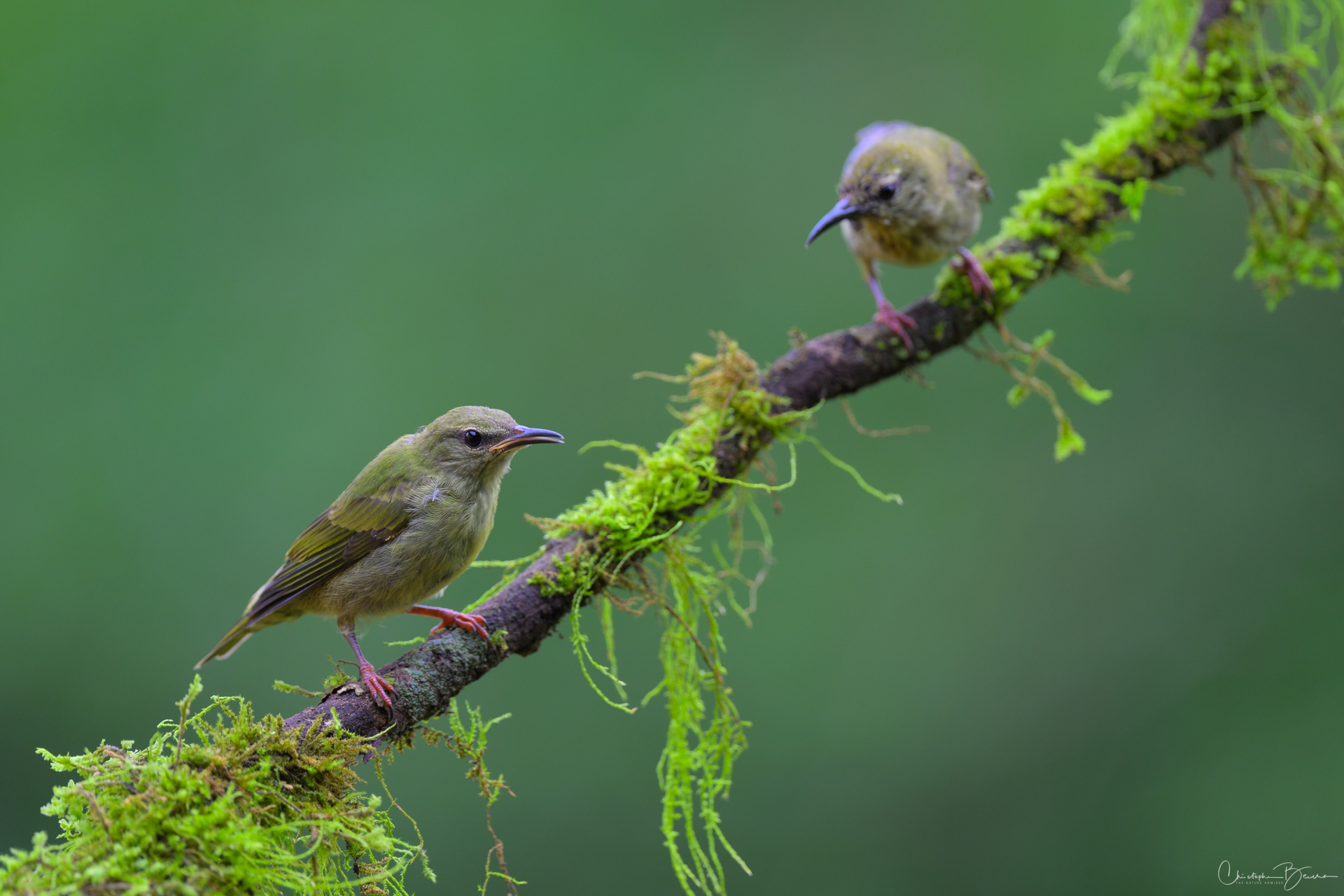
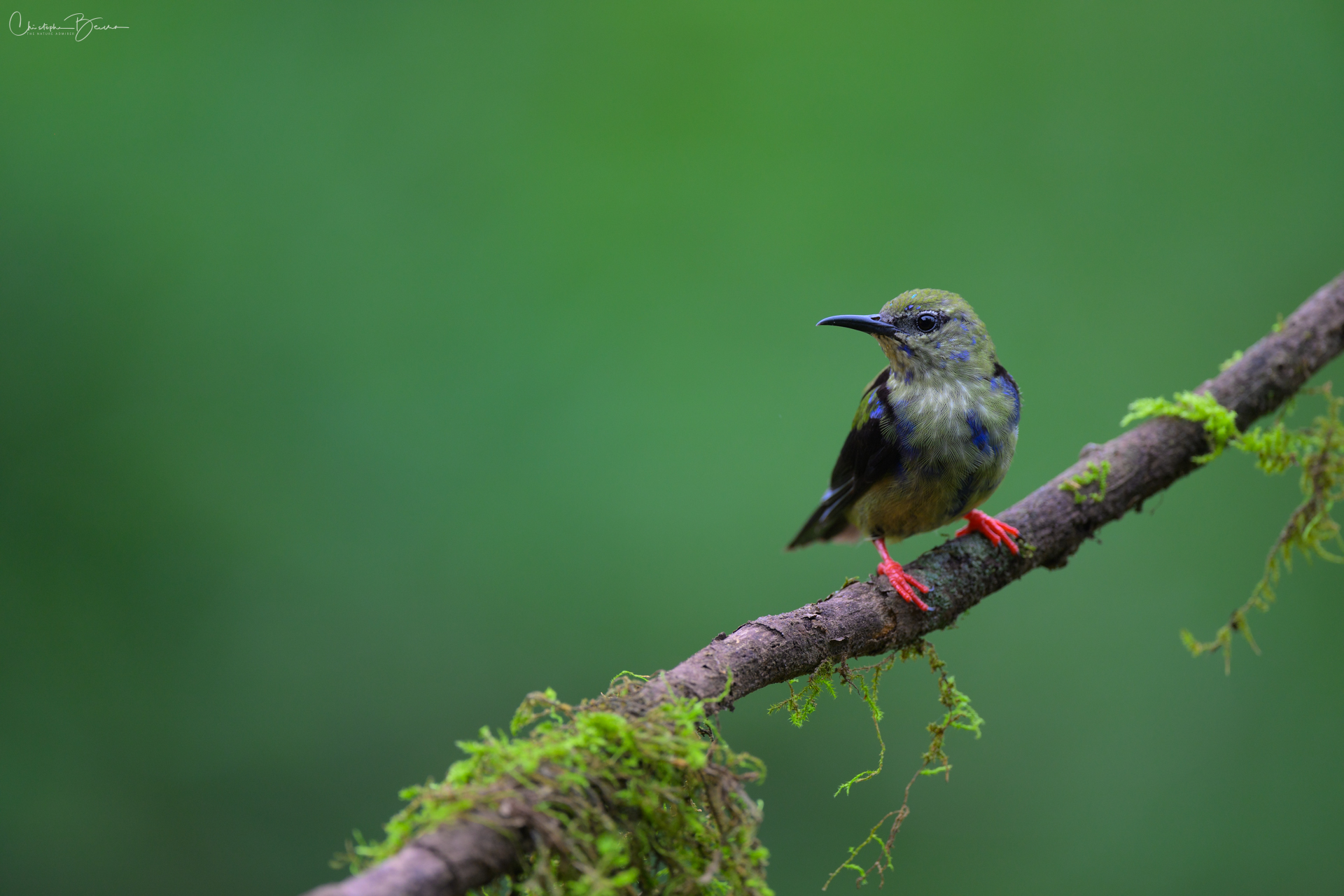
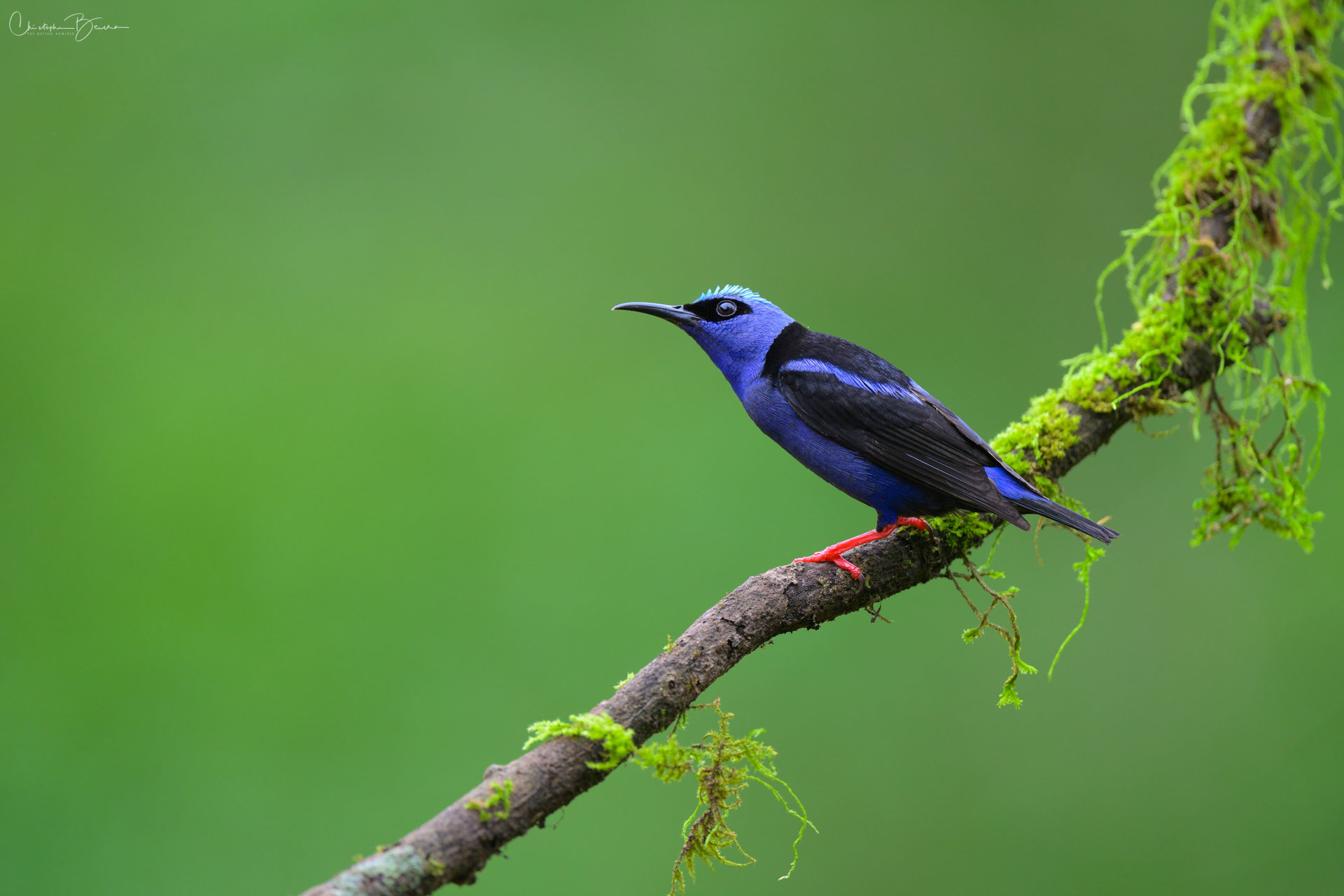
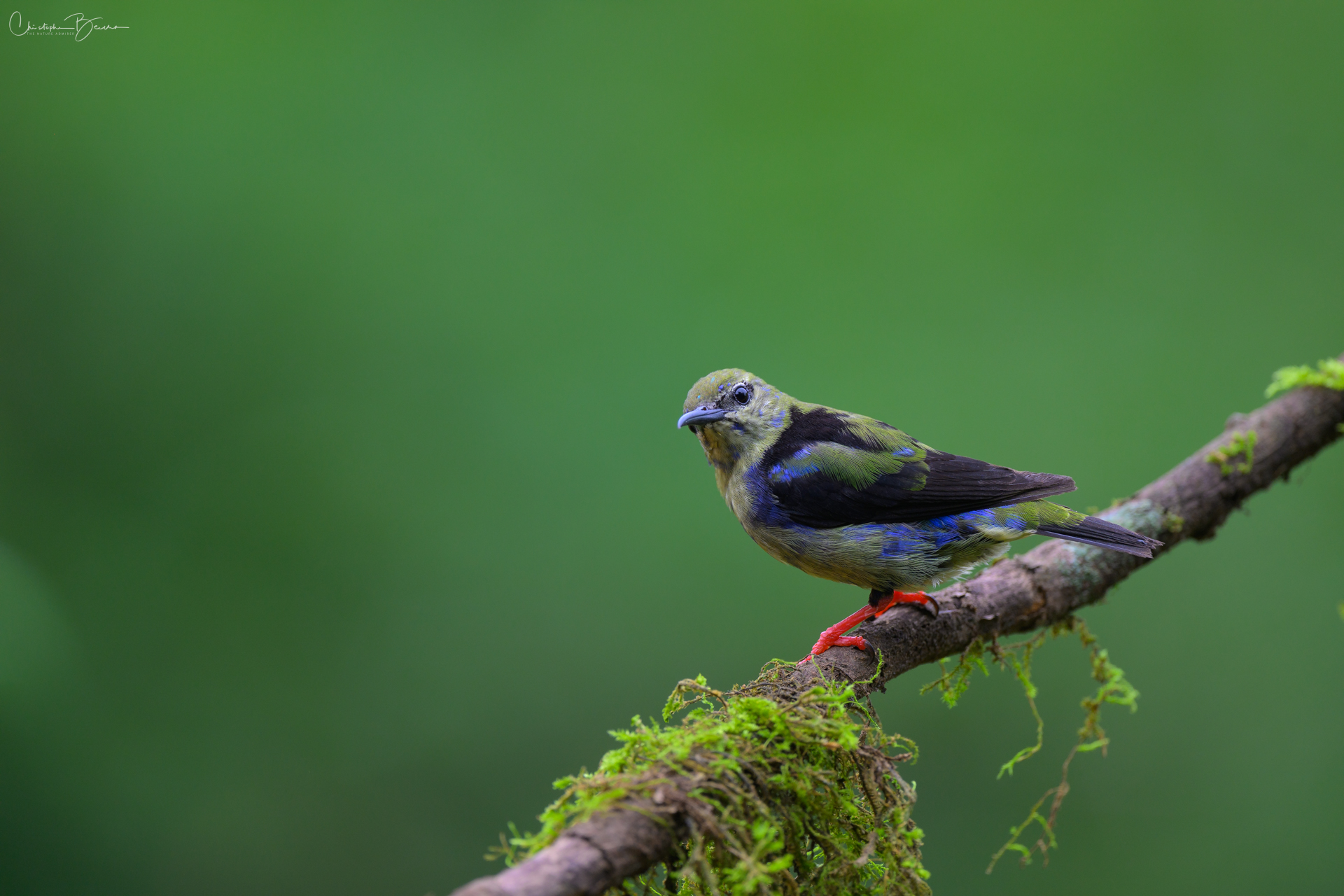
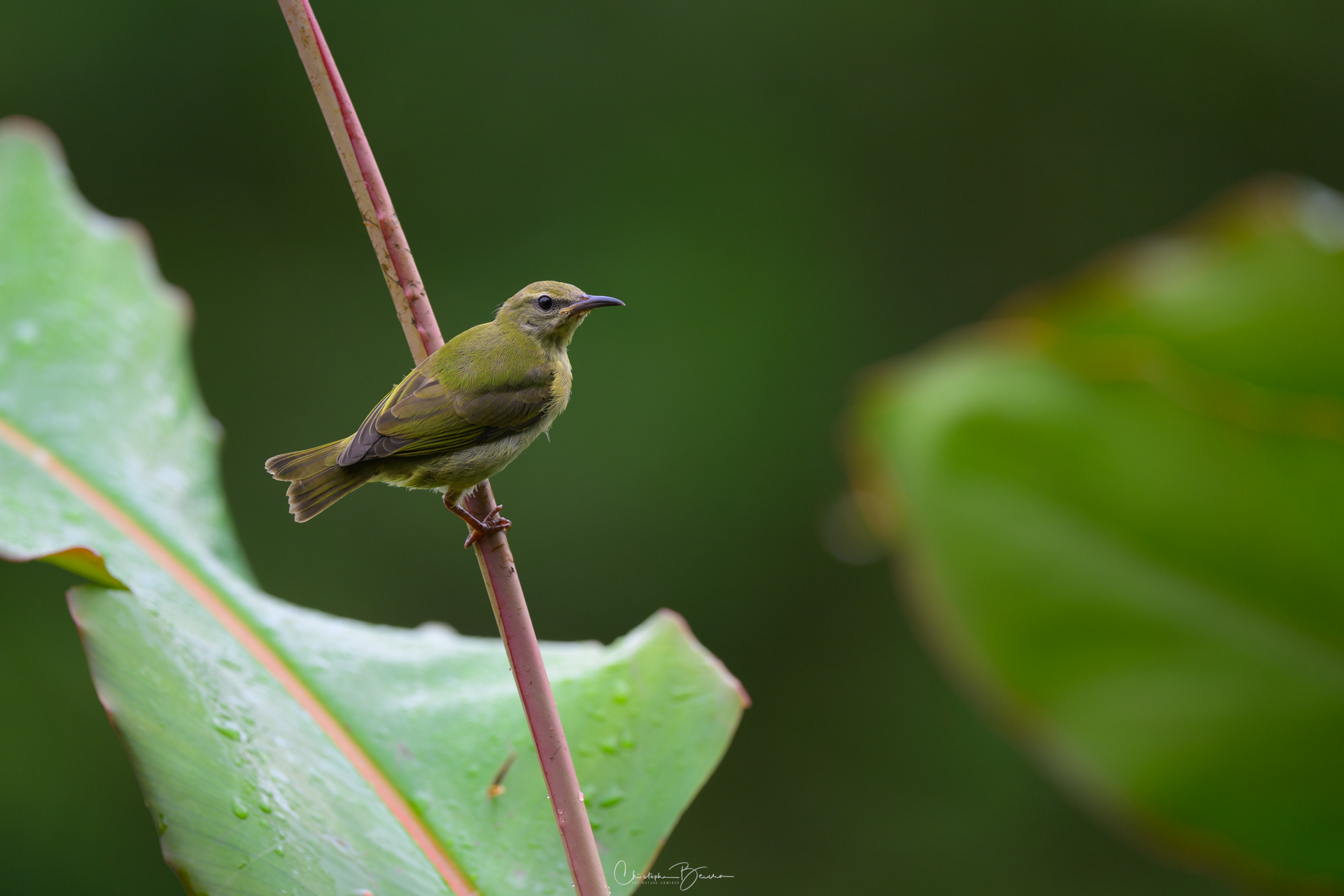
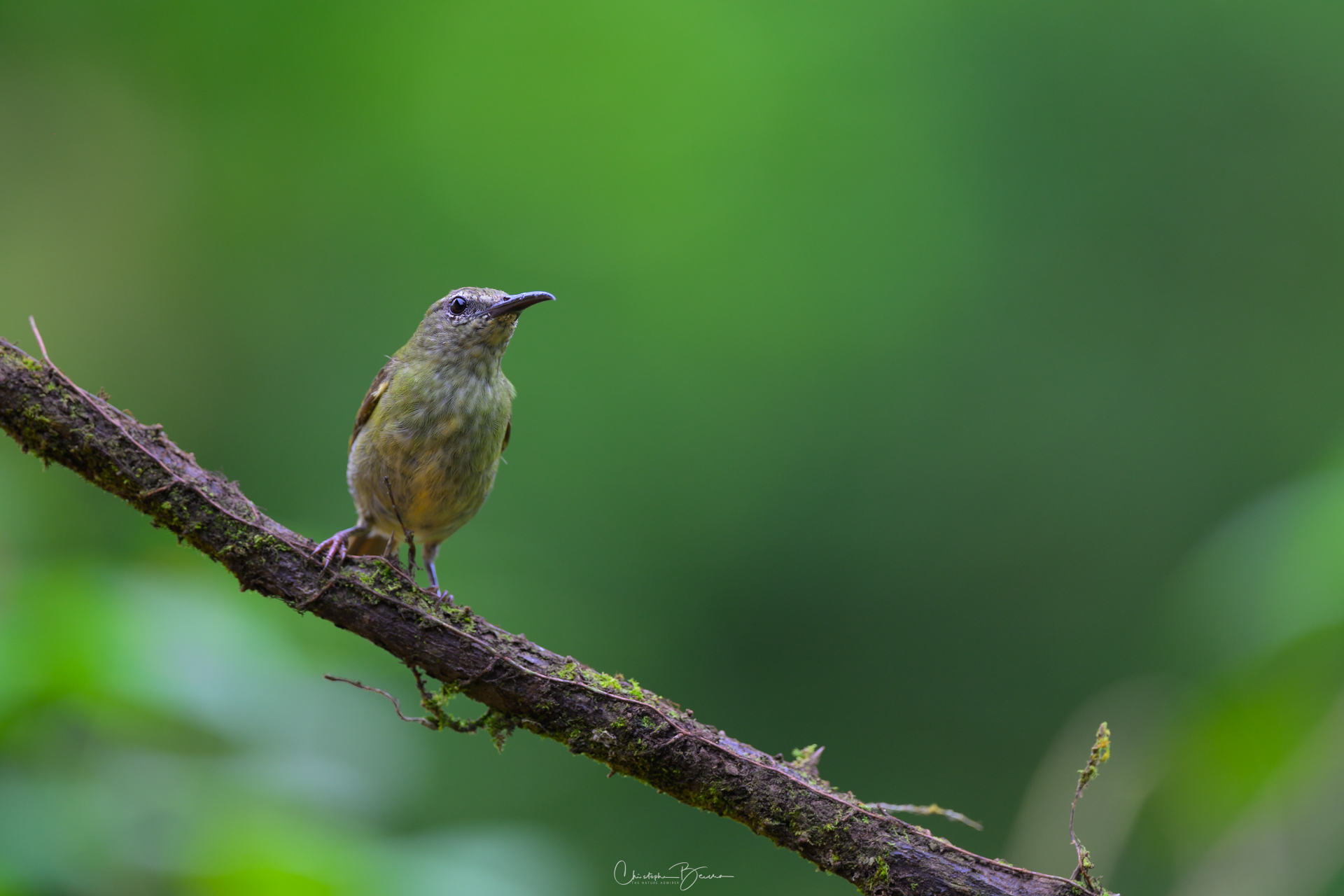
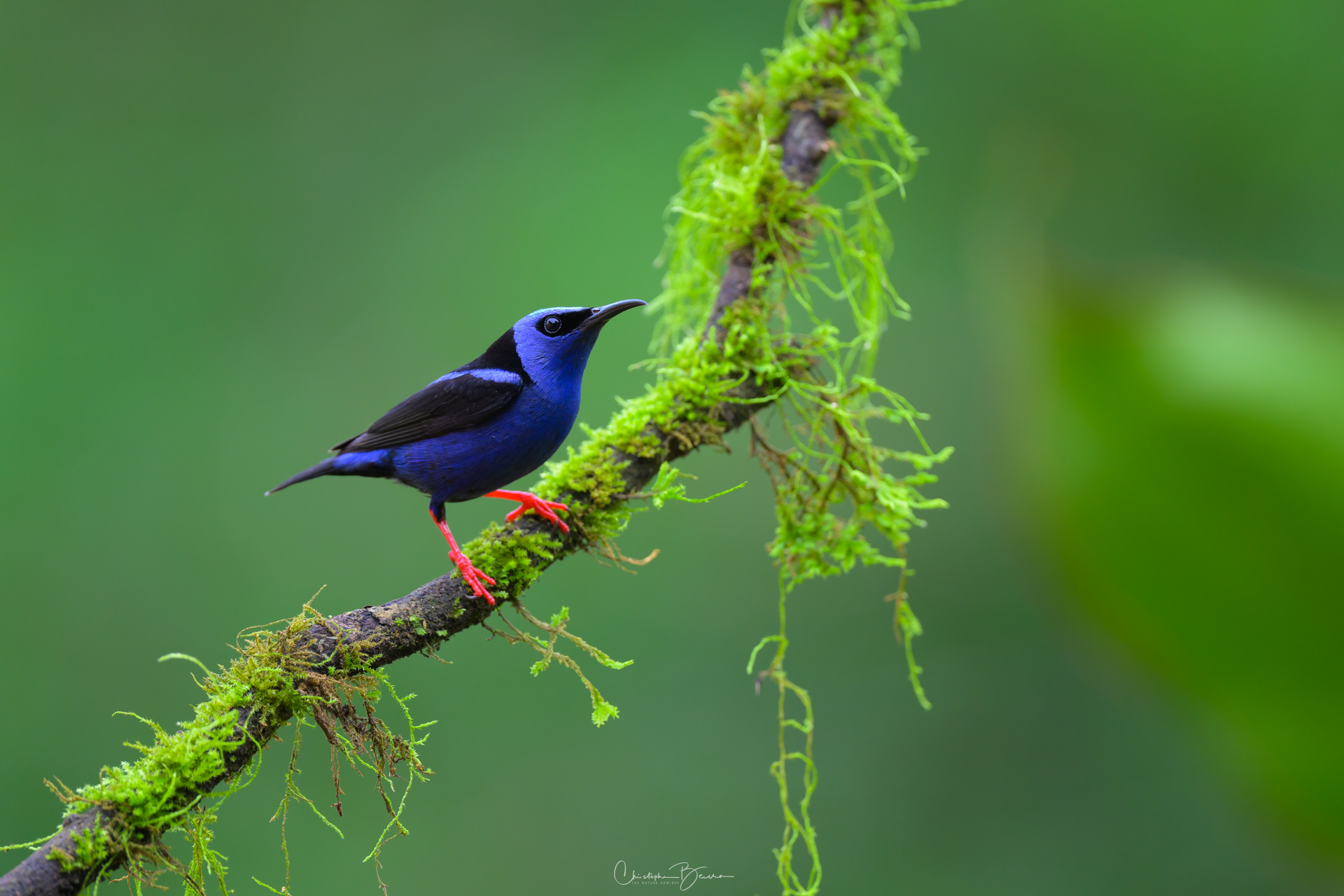
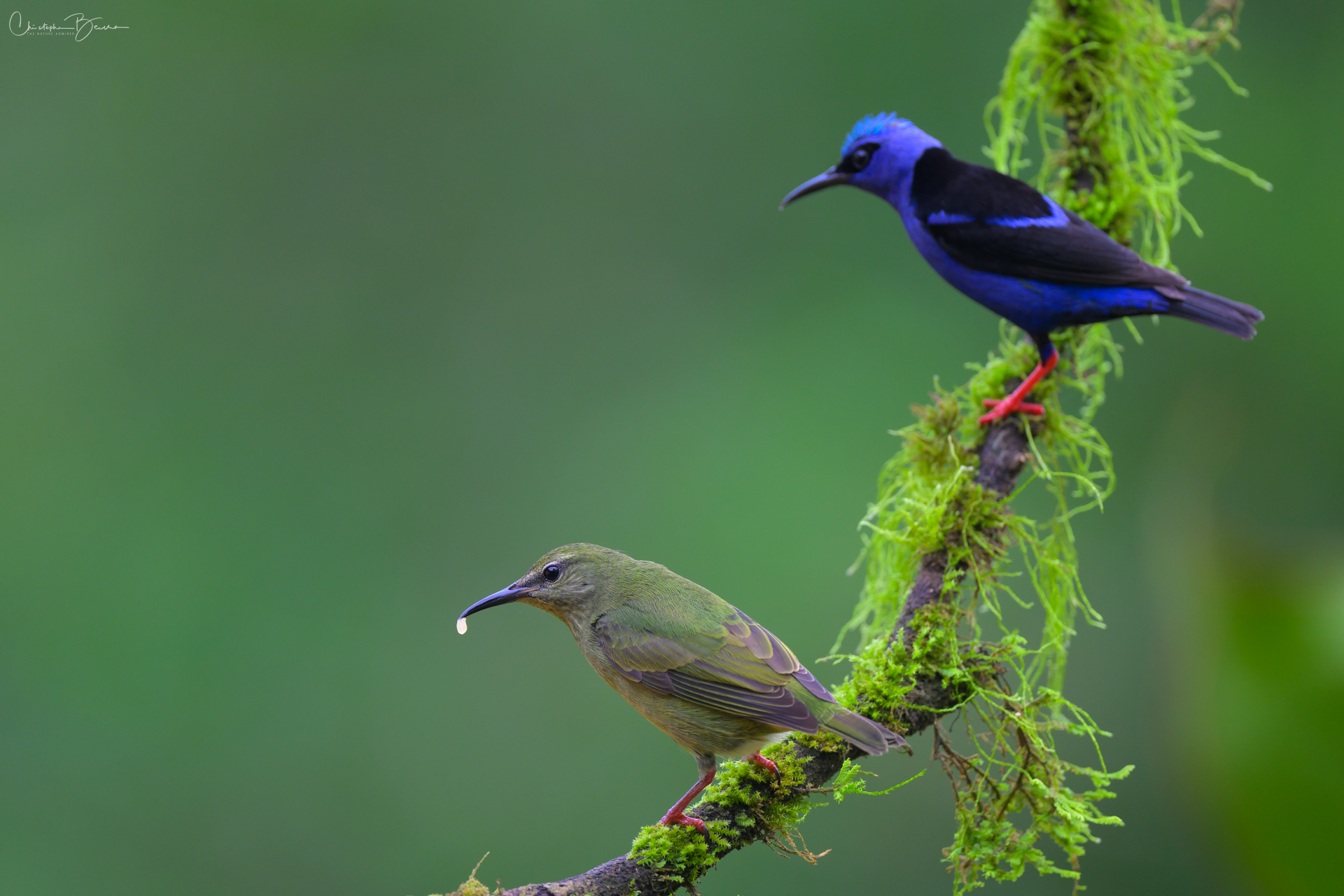
The moment I saw this bird for the first time, I knew it would become my favorite. It is fairly small, yet the blue body and red legs of the male just pop out in their normal habitat, which is fairly green. The female is more difficult to spot, since most of the body is dark green, and the legs are dull red, even brownish. And there is more, because the juvenile male starts with the same green color as the female, however as it matures it gets the blue body and bright red legs. After the breeding season, the male again turns green, but keeps the red legs. This means that males can also be seen in various molting stages, with patches of green, blue and black all over the body.
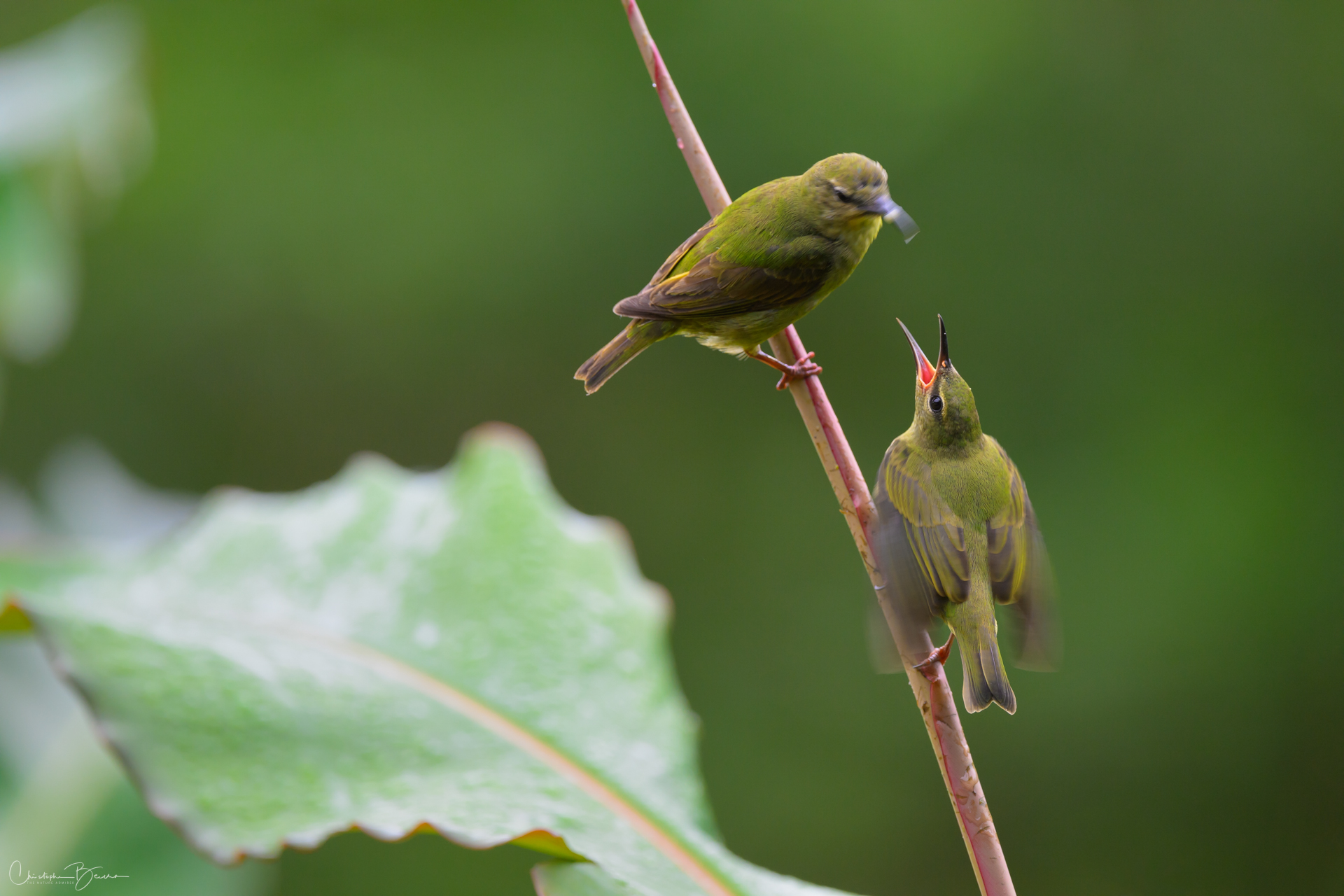
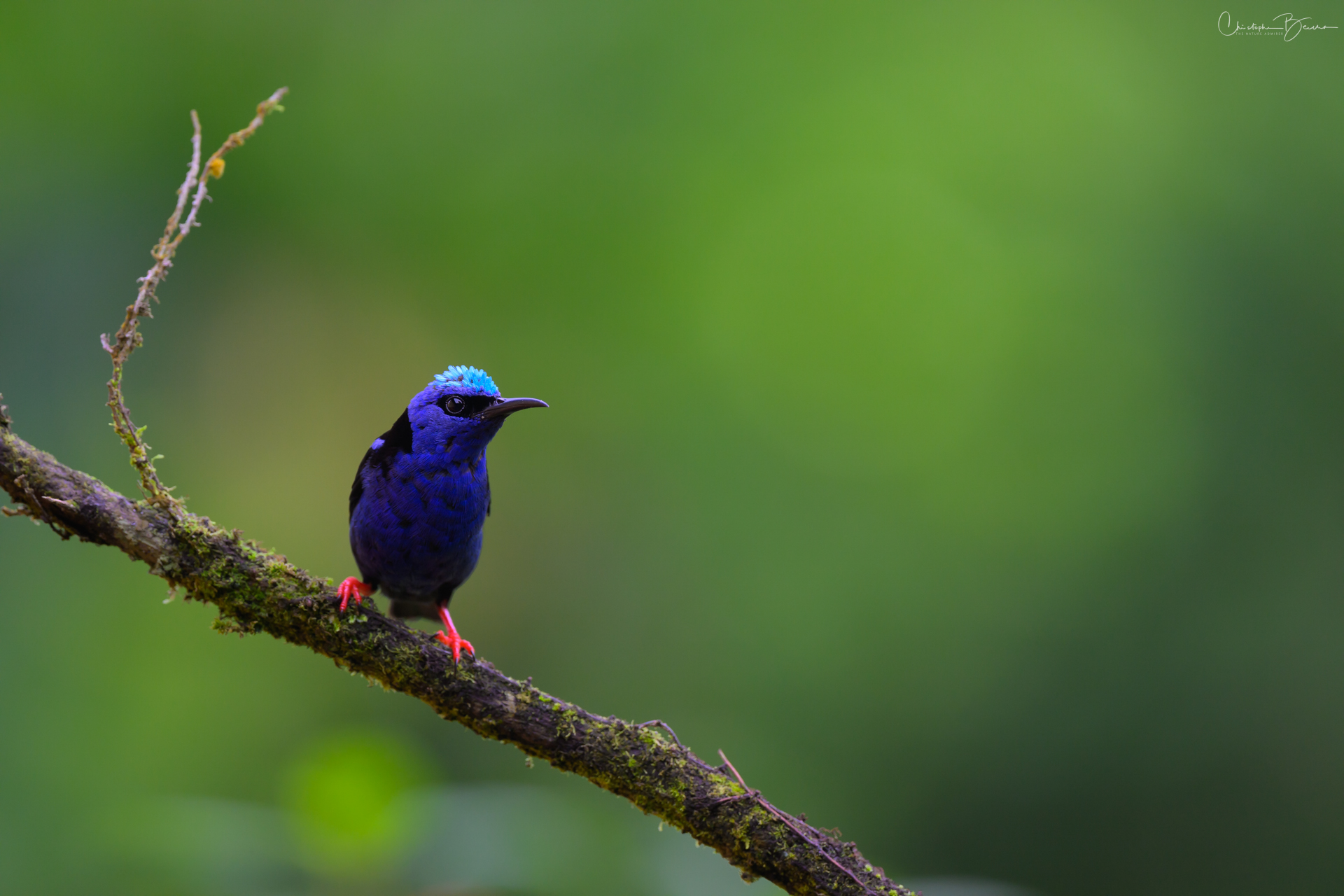
Note that while the Red-legged Honeycreeper is in the Tanager family, its body shape is slimmer and is in general smaller than the Tanagers. The closest one in size is the Plain-colored Tanager, however the body shape is entirely different, with shorter bill and fluffier plumage. In Costa Rica, there are two other Honeycreeper species, the Shining Honeycreeper (which belongs to the same Cyanerpes genus) with its yellow legs, and the Green Honeycreeper (which belongs to the Chlorosphanes genus), with a green body.